
Thanks to my friend Dmitry, I’ve added some exciting Wagner performances to my CD collection over the past few weeks: parts of two historic RING Cycles, a 1976 Met broadcast of LOHENGRIN conducted by James Levine (I was there!), and a surprisingly thrilling Act I of WALKURE from Hamburg 2008, conducted by Simone Young.

Chronologically the earliest of these acquisitions – the WALKURE, third Act of SIEGFRIED, and GOTTERDAMMERUNG – come (in surprisingly good sound) from the 1953 Bayreuth Festival. These are conducted by Josef Keilberth (above) who shared the RING podium duties with Clemens Krauss at the ’53 festival. The Krauss Cycle has been isssued commercially and is considered legendary; Keilberth’s 1955 Cycle is also available (from Testament) but this ’53 Keilberth seems a real rarity, at least here in the USA (I’ve seen import copies selling for $300+, while Dmitry and I found it at Opera Depot for considerably less).
Dmitry gave me the GOTTERDAMMERUNG first and it’s a tremendous performance; this prompted me to ask for more and I’m really pleased with what I’m hearing. Keilberth is grand but never ponderous; his Twilight of the Gods unfurls like a magnificent sonic banner. The maestro has a powerhouse cast to work with.

I’ve never ‘gotten’ Martha Modl (above) until very recently, but she’s teriffic here as Brunnhilde. Her voice production reminds me somewhat of Irene Dalis’s. Modl’s flaming intensity and the colour and vitality of her singing are something to hear. Wolfgang Windgassen meets the huge demands of Siegfried with tireless power and is a good match for the soprano in terms of vocal generosity. A splendid Hagen from the Josef Greindl bristles with black-hearted malevolence, and in the most thrilling rendering of the role of Gunther that I’ve ever experienced, Hermann Uhde is overwhelming. With her rather odd tmbre, Natalie Hinsch-Grondahl nevertheless makes a mark as Gutrune. Ira Malaniuk’s superb singing as Waltraute makes me wish her long scene was even longer, and the mezzo is also a distinguished Second Norn in the prologue where she is joined by Maria von Ilosvay and then-soprano Regina Resnik.
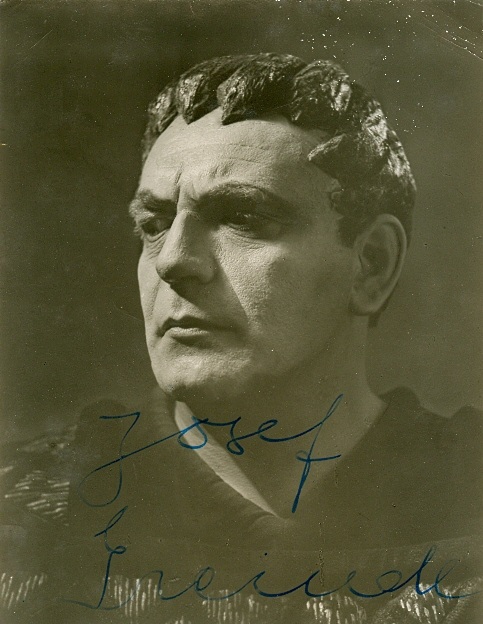
Back-tracking, I then took up the WALKURE from the same 1953 Keilberth RING and was again impressed by the immediacy of the sound. Herr Greindl (above) is again in cavernous voice, this time as Hunding. Regina Resnik and Ramon Vinay are the strong-voiced Walsung twins, though neither attain the heights that others have in this passionate music. The tenor’s baritonal sound is sturdy but not particularly poetic and at one point the prompter gets involved, feeding him lines word for word. Miss Resnik gets lost at one point and her highest notes show a very slight sense of discomfort; her decision to switch to mezzo was a brilliant move and sustained her career for many years. In spite of these minor misgivings, Resnik and Vinay keep the temperature of the drama high, and Keilberth steers us thru the first act with true surety of hand.

Hans Hotter (above) opens the second act grandly, and this performance shows why his Wotan was considered a revelation. Both in terms of godlike vocal heft and wonderfully nuanced shaping of the text, Hotter’s monolog is a masterpiece. Martha Modl flashes thru a spirited Ho-Jo-To-Ho though surprisingly later in the act, after the annunciation of death, she seems to tire a bit as she assures Siegmund she’ll protect him in the coming battle. Ira Malaniuk is a particularly fine Fricka; she doesn’t wheedle or whine but deals from the strength of her rightness. She is vocally so pleasing to experience, the registers even and the timbre filled with feminine dignity. Resnik and Vinay are effective here as the desperate lovers, seeking escape…waching over his sleeping sister-bride, Vinay finds the tenderness of the character. Resnik lets out a blood-curdling scream when Hunding strikes Siegmund dead. Hotter’s contemptuously whispered dismissal of Hunding followed by his towering rage as he sets out to punish Brunnhilde end the act with a veritable bang.
In the Ride of the Valkyries, the sopranos swoop upward at will, not always in unison. Resnik handles the great scene of Sieglinde’s blessing of Brunnhilde quite exctingly; Hotter storms in and rages at his daughters who finally flee in terror. And then, starting with Brunnhilde’s ‘War es so schmalich’ the performance becomes something else altogether.
Modl finds the magic that made her GOTTERDAMMERUNG so spell-binding, and Hotter is simply magnificent. The sound quality is pretty remarkable and the two singers give a performance that ranks wth my greatest experiences in 50+ years of listening to opera. Modl begins Brunnhilde’s self-defense with colours of deep despair, slowly gaining self-confidence. When she courageously tells her father that Sieglinde now keeps the sword Nothung, Hotter thunderoulsy reminds her “The sword that I shattered!!” Hotter outlines the punishment Brunnhilde will face; her pleading with him not to humiliate her is in vain. But Modl’s last desperate and gloriously sung passage finally wins the day; Hotter opens the floodgates and hs entire final scene is both vocally thrilling and wrenchingly expressive of a father’s longing and grief. Adjectives become superfluous on hearing this kind of vocalism.
The third act of SIEGFRIED from this cycle is very exciting, commencing with Hotter’s majestic summons of Erda. As the act proceeds, it seems the great bass-baritone’s voice was recorded in a rather odd, somewhat echo-chamber acoustic. It doesn’t deter from his performance in the least, but it’s not quite as pleasing to listen to as the WALKURE. Maria von Ilosvay is a firm-toned and not overly weighty Erda; like her colleague Ira Malaniuk, Ilosvay seems largely to have been forgotten these days, which is a shame, It’s a wonderful voice. Windgassen arrives for his confrontation with his grandfather in fine vocal fettle; the two long-standing colleagues play up the dark humour of their banter at first, but after Siegfried puts Wotan in his place by breaking the spear, the once-powerful god slinks away in shame. Windgassen manages to hold his own against the fresh-voiced Modl, awakening as Brunnhilde and singing with remarkable intensity: despite her successful but less-than-blooming forays to the high-Cs, Modl’s voice is both maternal and seductive, with an unsettlling sexual sorcery in her timbre that makes it utterly distinctive.
Overall this Keilberth cycle is fascinating in so many ways and seems to have caught the singers mostly at their peaks. I suppose I’ll want to eventually have the RHEINGOLD also.
~~~~~~~~~~~~~~~~~~~~~~~~~~~~~~~~~~~~~~~~~~~~~~~~~~~~~~~~~~~~~~~~~~~~~~~~~~~~~~~~~~~~~~~~~~~
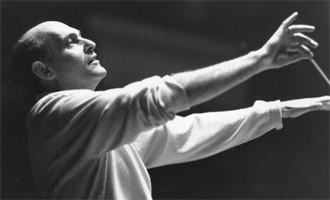
From London’s Royal Opera House comes a RING Cycle conducted by Sir Georg Solti (above), from which the WALKURE (in very good sound) makes a strong impression, notably in the radiant singing of Dame Gwyneth Jones as Sieglinde. Apart from Ernst Kozub as Siegmund, the principals are all from the Royal Opera “home team”. Mr. Kozub is bright-voiced and steady, and Dame Gwyneth – just coming into fame – is already showing signs of the great Wagnerienne she was to become. Michael Langdon’s powerful Hunding anchors the first act, excitingly led by Solti.
Amy Shuard is a bit uneven as Brunnhilde though overall she makes a positive impression; a bit of flatness here and there – most notable in the early pages of the Todesverkundigung – is offset by her bright Battle Cry and her moving singing of the opera’s final scene. Josephine Veasey starts off as a rather ladylike Fricka, but she soon works herself into a fine fettle of self-righteous indignation and casts off vivid dramatic sparks, her vocalism fervent and secure.
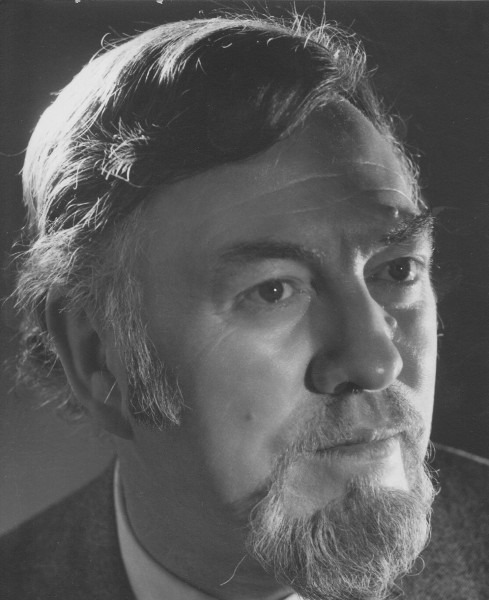
It is especially gratifying to hear David Ward (above) as Wotan. I still vividly recall hearing him as The Dutchman on a Met broadcast in 1965 opposite Leonie Rysanek. I love his Wotan here for its humanity. Ward is more a lyrical than a thunderous singer, and his bass-oriented sound give him a solid springboard thru the music. His monolog is intense and personal, with a miraculous reflective piano on “Das ende!” while his choked whisper of “Geh!” as he dispenses with Hunding at the close of Act II is breath-taking. Ms. Shuard is at her best as she joins Mr. Ward for the opera’s final scene: their exchanges have an intimate feel, dynamically subtle and with deep undercurrents of heartache. Pleading to be spared dishonor, Ms. Shuard’s feminine urgency spurs the bass-baritone on to a wonderful outpouring in “Leb wohl, du kunhes, herrliches Kind!”. Later, Mr. Ward’s great tenderness as he quietly kisses Brunnhilde’s godhood away is so moving. Sir Georg, on the podium, cuts a majestic path thru this glorious score.
~~~~~~~~~~~~~~~~~~~~~~~~~~~~~~~~~~~~~~~~~~~~~~~~~~~~~~~~~~~~~~~~~~~~~~~~~~~~~~~~~~~~~~~~~~~
The 1976 series of LOHENGRINs at The Met marked Maestro Levine’s first experiences of conducting this opera in the House; he moulds the great arcs of music, from the ethereal to the thunderous, with grandeur; and his violins underline the great confrontation between Elsa and Ortrud with furiously driven playing.
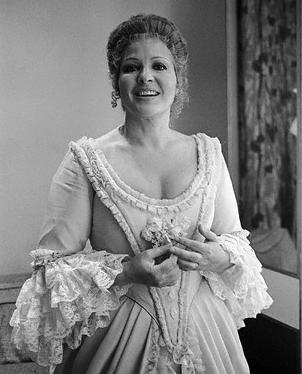
Pilar Lorengar (above) was a rapt, visionary Elsa, and her silvery and utterly feminine sound projected clearly into the great hall, cresting the ensembles radiantly. Rene Kollo in his debut role as Lohengrin (he sang only one other role at The Met: Bacchus in ARIADNE AUF NAXOS) sounded splendid in the House (yes, I was there!) though the recording shows some chinks in the vocal armor which the unforgiving mikes pick up. Still, it’s an impressive rendering of the music, especially his poetic ‘In fernam land’. Mignon Dunn sings with thrilling passion as Ortrud, meeting all the demands of what is essentially a dramatc soprano role. In the house, Mignon was made a tremendous impact with her acting, especially her raging discomfort at having to carry Elsa’s train during the bridal procession. Unable to contain her bitter fury, she breaks free and lashes out at her virginal rival in a confrontation that brought the performance to the boiling point. Donald McIntyre’s powerful Telramund and Allan Monk’s sturdy Herald make strong impressions, and Bonaldo Giaiotti (a great favorite of mine, presently celebrating his 80th birthday) is a splendid-sounding King Henry.
Metropolitan Opera House
December 4, 1976 Matinee Broadcast
LOHENGRIN
Wagner
Lohengrin...............Rene Kollo
Elsa....................Pilar Lorengar
Ortrud..................Mignon Dunn
Telramund...............Donald McIntyre
King Heinrich...........Bonaldo Giaiotti
Herald..................Allan Monk
Gottfried...............Rex James
Noble...................Robert Goodloe
Noble...................Andrea Velis
Noble...................Philip Booth
Noble...................Charles Anthony
Conductor...............James Levine
~~~~~~~~~~~~~~~~~~~~~~~~~~~~~~~~~~~~~~~~~~~~~~~~~~~~~~~~~~~~~~~~~~~~~~~~~~~~~~~~~~~~~~~~~~~
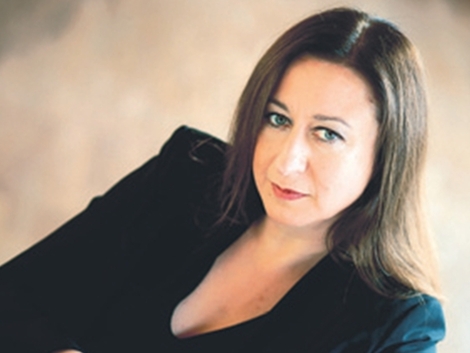
The single act of the Hamburg WALKURE literally knocked me for a loop on first hearing; I’d never given Simone Young (above) much thought as a conductor, but from now on I’ll need to. She makes this thrice-familiar music sound incredibly fresh and alive. Her trio of singers, while perhaps unlikely to go into the history books alongside such names as Lehmann, Melchior, Rysanek or Vickers, are superbly tuned into both the music and the words. Following Young’s lead, they seem to give a feeling of music that is newly-discovered. Yvonne Naef’s Fricka and Waltraute at The Met in 2009 RING Cycles (the last performances of he “Levine” RING) were especially memorable in my view. There was some talk of her possibly taking on the Brunnhildes at one point, but she was probably wise to resist (exciting as the prospect would have been). Here she is a vivid Sieglinde, her middle voice and parlando so persuasive – the role lies right in her comfort range – and her top rings out excitingly. The sound of Stuart Skelton’s voice may not be intrinsically beautiful, but he is a strong and verbally alert singer, bringing some imaginative colours to his music. His cries of “Walse! Walse!” are steady and sustained, and he shows a sense ofSiegmund’s poetic side, long-buried in the hardships the Volsung has faced in his life. Mikhail Petrenko is a more lyrical Hunding than we usually hear; he sings well and fits finely into Young’s vision of the act. There are many felicitous passages in the conductor’s scheme of things, with a particular ‘lift’ of the tempo after Sieglinde concludes “Der manner sippe” that really took my breath away.
After a lapse of ten days, I played this WALKURE Act I again just to be sure it was as good as I thought it was. It’s even better on second hearing, with some really fine playing from the individual instrumentalists. The singers and conductor make this very familiar music feel startlingly vivid. What more could we ask?
 Oberon's Glade