Tag: Kristian Bezuidenhout

  • Kristian Bezuidenhout @ The OSL Bach Festival

    Kristian Bezuidenhout

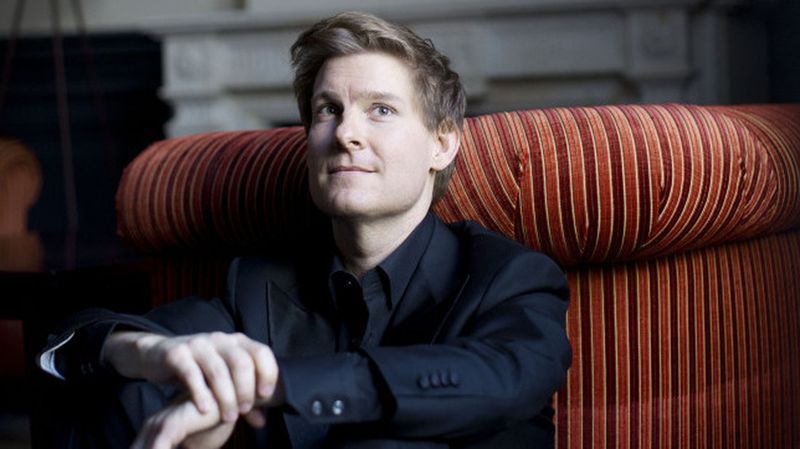
    Above: Kristian Bezuidenhout, photo by Marco Borggreve 

    ~ Author: Oberon

    Tuesday June 25th, 2024 – The Orchestra of St. Luke’s brought their Bach Festival 2024 to a close tonight at Zankel Hall with a program titled Bach and Sons. Kristian Bezuidenhout (above) was conductor and soloist. The concert was sold out, with audience enthusiasm running high. The popularity of the series has prompted to OSL to announce a 4-performance festival for next year.

    This evening’s program featured works by J S Bach and two of his sons, and ended with Mozart. The opener, Johann Christian Bach’s Symphony in G-Minor, Op. 6, No. 6, immediately engaged the audience. From the scurrying start of the opening Allegro, the music sounded thoroughly fresh and inviting. Horns and oboes join the strings, and the OSL’s bass player, John Feeney, marked the epicenter of the entire evening. The Andante opens with a unison passage, leading to a steady, pulsing beat decorated with stealthy trills. A lovely violin theme is heard. An urgent start to the concluding Allegro molto develops into roller coaster up-and-down scale passages, hunting horns, and exaggerated string tremolos.

    Next, Mr. Bezuidenhout at the pianoforte commenced J. S. Bach’s Contrapunctus XIV from The Art of Fugue, BWV 1080, performed in an adaptation for strings. The cello, viola, and bass – and eventually the violins, seemingly one by one – join in this lament-like work. Poignant harmonies abound, the music gradually becoming somewhat animated.

    Music of C. P. E. Bach came next, with Maestro Bezuidenhout taking up the Keyboard Concerto in D-Minor, Wq.17, H 420. The energetic opening Allegro was masterfully played, with a cadenza that displayed Mr. Bezuidenhout’s technical assurance and intriguing subtlety. The ensuing Adagio has a dreamy feeling, with periodic interjections of drama. Gracious harmonies invite the keyboard to join, with enticing turns and trills woven in. The turbulent opening of the final Allegro has a trace of a Spanish feel. Delicious playing from Mr. Bezuidenhout kept the audience entranced.

    Following the interval, more from C.P.E. Bach: his String Symphony No. 3 in C-Major, Wq. 182, H. 659. From its speedy start, swirling violin motifs come to a sudden change of mood when the Adagio suddenly takes over: here, an interlude of affecting violin passages is interrupted by urgent stabbing tones from the bass. In the final Allegretto, melodic phrases are intruded upon by insistent bass and cello comments.

    What finer end for a Bach Festival than music of Mozart! While Bach and his progeny are the source from which all musical blessings flow, their music – so meaningful to the mind and spirit – seldom touches heart. Thus, Mr. Bezuidenhout’s outstanding rendering of the Mozart’s Piano Concerto No. 9 in E-flat Major, K. 271, “Jeunehomme”, reached me on an altogether different level.

    The 9th, composed in 1777, is considered Mozart’s first truly mature piano concerto. In terms of musical scope, technical demands, and depth of feeling, it seems to signal a new phase for the composer. The string ensemble, reinforced with horns and oboes, plays a unison introductory passage, and then Mr. Bezuidenhout immediately captivates us with a sustained trill. His playing throughout is remarkable for its dynamic range, with a delicacy of touch that charms the ear.

    Having been a frustrated horn player in my teens, a brief horn solo reminds me of the fact that I didn’t take it seriously until my senior year: a lesson too late for the learning. Mr. Feeney’s bass resonance – such a pleasure to hear all evening – was of special appeal here. The piano cadenza, a jewel in the musical diadem of the evening, included spine-tingling nuances and hushed pianissimi which were vastly pleasing to the ear.

    Dolorous might be too heavy a word for the concerto’s Andantino…wistful is perhaps more apt. All I know is, this music went straight to my heart…which has been in a tormented state of late. A full-bodied theme, brief but later repeated, was impactful. And the Bezuidenhout cadenza was immaculate and engrossing: a series of trills was a joy in and of itself.

    But…no time for reverie. The pianist commences the concluding Rondo as a solo, which will recur; of particular charm was a keyboard cantabile played over plucked accompaniment.

    Mr. Bezuidenhout has always been a prince among pianists, and with the redoubtable artists of St. Luke’s all on such fine form, the evening was a balm to the ear and the soul. I simply did not want this concert to end; it was the final live musical event of my seventy-fifth year; next week, the fourth act of my life/opera commences. For the moment – like Alceste – Je sens une force nouvelle.”   

    ~ Oberon
  • An Evening With Freiburg Baroque

    Bb_freiburger-barockorchester-kristian-bezuidenhout-werke-von-haydn-mozart-und-j-chr-bach-2018_01_20170608

    ~ Author: Ben Weaver

    Saturday May 19th, 2018 – The period instrument ensemble Freiburg Baroque Orchestra (above) has been a favorite of mine on records for some time. I was glad to finally be able to hear them live – along with one of my favorite pianists, Kristian Bezuidenhout at the fortepiano. This concert of works by Haydn, J.C. Bach and Mozart was part of Lincoln Center’s Great Performers series. 

    Conducting from the keyboard in the uncomfortably warm Alice Tully Hall, Mr. Bezuidenhout launched the Freiburg Barockorchester into the opening chords of Haydn’s Symphony No. 74 (composed in 1781) with great enthusiasm. The musicians, standing around the fortepiano, all wore black and played beautifully.

    Period instruments can be an acquired taste. These instruments can go out of tune easily, and there is sometimes a nasal quality to the sound of the strings. But personally I love it, errant pitches and all. Though it should be noted that for the Freiburg Baroque musicians pitch was not an issue. Their ensemble work is flawless and the small number of players do not surrender anything in fullness and richness of sound. For this concert the orchestra was made up of 9 violinists, 3 violas, 2 cellos and 1 double-bass; with an assortment of winds and 2 horns.

    Haydn’s 74th Symphony was one of the first works he was able to publish independently and for his own profit while working for the Esterházys in Eisenstadt, Austria. It may be true that many of Haydn’s symphonies can be a bit workmanlike, but the 74th is one of his finest works, filled with lovely melodies and inventive orchestration. The second movement especially is lovely: an Adagio of muted violins playing lovely theme and variations over the cello playing a repeated motif, like a guitar accompanying a serenade. A lively Trio leads to an exciting whirlwind of the Allegro finale.

    Johann-christian-bach

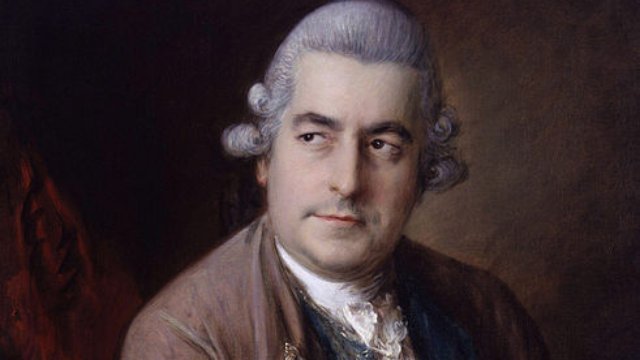
    Johann Christian Bach (above) was the youngest of Johann Sebastian Bach’s sons and formed a direct link from the great Baroque master to the soon-to-be most important composer of the Classical era. When the Mozarts visited London in 1764, Wolfgang was 8 years old and J.C. Bach, recognizing talent in the young boy, played duets with him on the harpsichord and let him borrow music. Two years later, when Mozart tried his hand at composing piano concertos, he used J.C. Bach’s music as the foundation: 10 year old Mozart’s first 3 Piano Concertos are based on Johann Christian’s themes. And when Mozart heard of J.C. Bach’s death in 1782 he was in the middle of composing his 12th Piano Concerto. Mozart paid tribute to his old friend by basing the slow movement of the concerto on a melody from one of Bach’s operas, La calamità del cuore.

    While Johann Christian could never eclipse his father – a true titan – as a composer, he nonetheless became a very respectable musician in his own right. More than that, Johann Christian’s Symphony in G minor, Op. 6, No. 6 is something of a trailblazer of the symphonic repertoire. Composed some time in the 1760s, the G minor Symphony went beyond the usual sunny allegros and dances of other composers. Johann Christian offered something of a “sturm und drang” darkness in this work that would reach the peak of passion with Beethoven. The symphony opens with stormy strings and horns’ call to arms. There is an urgency to the music that an older Mozart and then Beethoven would bring over the edge. The slow movement, the Symphony’s longest movement, brings respite from urgency, but not darkness. Menacing horns return in the final Allegro molto. In this movement you can hear the winds Beethoven would one day raise in his Pastoral Symphony. But strangest of all is the Symphony’s conclusion: it simply stops, unresolved, in the middle of a thought. This is something no composer would seriously attempt until the end of the 19th century.

    Both Haydn and J.C. Bach were friends and mentors to the young Wolfgang Mozart. All 3 men composed memorable piano concertos, but Mozart’s compositions in the genre surpassed anyone who came before. Mozart’s 9th Piano Concerto, composed in Salzburg in 1777, is one of his most important compositions. It was the largest and most substantial composition of his to date, and it launched Mozart’s extraordinary development of the Piano Concerto into a centerpiece of not only his own output, but of the genre overall. The musicologist Alfred Einstein once called it “Mozart’s Eroica.”

    For many years the concerto was incorrectly called “Jeunehomme.” Nobody really knew who Jeunehomme was and it is only in 2004 that historian Michael Lorenz established that the confusion arose from the incorrect spelling of Victoire Jenamy, the highly regarded pianist and daughter of famous dancer and balletmaster Jean-Georges Noverre. The Mozarts had known the Noverres for some time, and Wolfgang gave the concerto to Ms. Jenamy as a gift of friendship between the two families when she stopped in Salzburg on her way to Paris from Vienna in 1777.

    The concerto opens with an unusual, almost instant entry of the fortepiano. Typically concertos began with extended orchestral introductions; indeed, most of Mozart’s own piano concertos do. But here Mozart wasted no time for the soloist. It’s a feature other major composers would not attempt until Beethoven’s 4th and 5th Piano Concertos a quarter century later. Composers like Grieg, Tchaikovsky and Rachmaninoff celebrated this invention with unforgettable results in their own times. The second movement, a lovely Andantino, contains magnificent writing for the piano, written almost like for a singing voice, and the final Rondo contains a surprising slow Minuet, perhaps Mozart’s nod to Ms. Jenamy’s father’s dancing career.

    The 17th Piano Concerto, written in 1784, may be from the early stages of Mozart’s maturity as a composer, but it is a fully developed and wonderful work. The orchestra begins the piece with a lively and extended introduction, like most of Mozart’s concertos. But once the pianoforte enters, Mozart displays an unerring sense of balance between the solo instrument and orchestra, the play between them, passing of melodies from one to the other – and to other solo instruments within the orchestra – was something few could do with the confidence of Mozart. The beautiful Andante is in a long line of unforgettable Mozart slow movements, at once charming and sad, with flashes of light and sudden clouds. Beautiful writing for the winds in the movement is particularly moving as well. The exuberant final movement is a reminder that Mozart often sounds easy – effortless – but, in fact, requires extraordinary virtuosity.

    Photos-4x

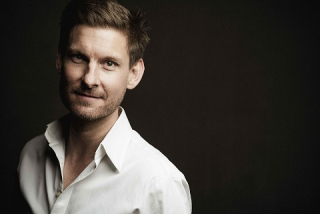
    Kristian Bezuidenhout (above, in a Marco Borggreve) portrait played these works magnificently. He played, of course, on a period fortepiano and hearing these concertos played on an instrument Mozart would have recognized is a fascinating experience. We are so used to the behemoth sound created by the modern Steinway Grand in a concert hall (accompanied by a far larger ensemble) that we forget how light and almost fragile these sounds originally were. The instrument (alas, the Playbill does not mention the specific period it replicates) has a pearly, mildly hollow sound. There are, of course, no pedals, so the sound produced is uniform and it is up to the player to truly create the effect he/she wishes to present. Mechanical trickery is not an option. Mr. Bezuidenhout is a magician in this regard. He may well be our most brilliant interpreter of Mozart’s music today. Undaunted by technical demands, he manages to conjure universes out of a small wooden box and a few strings. The rapport between him and Freiburg Baroque players is obvious; they have perfectly synced tempos and dynamics, and there were the warm glances and smiles exchanged as cues and between movements.

    The players all sat down on the risers to hear Mr. Bezuidenhout play an encore, a magical Allemande from Mozart’s unfinished Suite in C major (sounding like Papa Bach by way of Mozart).

    ~ Ben Weaver

  • At the Miller Theatre: Baroque Vanguard

    K_bezuidenhout_wide-b5b77ed093080035c7e24bf4f5b150b17823af5a-s40

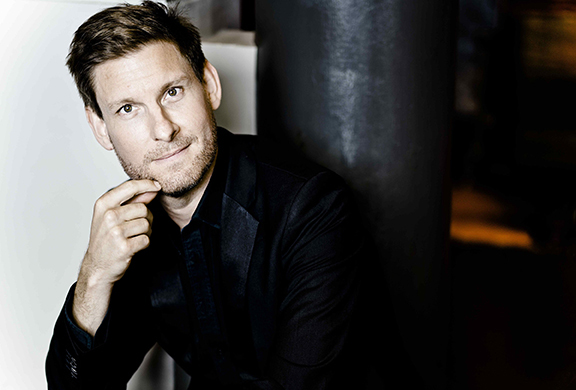
    Saturday April 27th, 2013 – The brilliant South African harpsichordist Kristian Bezuidenhout (above, in a Marco Borggreve photo) teamed up with Ensemble Signal to present an intriguing programme at Columbia University’s Miller Theatre. The event had been on my calendar for months and it lived up to expectations in every way.

    Two hundred and sixty years separate the composition dates of the evening’s opening and closing works. In this fusion of olde and new, Mr. Bezuidenhout and the Ensemble’s conductor Brad Lubman shook hands across the centuries, commencing the performance with the wildly discordant and precursive opening statement of Jean-Fery Rebel‘s “Chaos” from LES ELEMENTS. The work, which dates from 1737, has a startling freshness, even when it subsides into a more expected Baroque feeling. Despite its forward-looking beginning, this piece also seems to look back to the late Renaissance and the composer explores all the musical facets with a keen imagination.

    Two of the sons of Johann Sebastian Bach were represented next by a pair of sinfonias, the first by Carl Philipp Emanuel Bach (in D major, composed in the 1770s) and the second by Wilhelm Friedemann Bach (in D minor, dating from the 1740s). In the first, a complement of wind players join the strings and keyboard: horns, flutes, oboe and bassoon; the flutes remain to play the second sinfonia as well. The music is all delightful and superbly rendered, yet the work of the father which followed the intermission showed that the sons never quite attained the miraculous level of Johann Sebastian’s perfection.

    The harpsichord concerto in D-minor (1738) found Mr. Bezuidenhout at his most elegant in the gently rippling cadenzas, while the musicians of the Ensemble gave full-toned and scrupulously musical support. The harpsichordist’s speed and accuracy were dazzling, and he played with a passion and intensity that drove out any notion of this music as being a dry technical exercise.

    The harpsichord then vanished and six players (violins, viola, cello and double bass) ranged themselves in a semi-circle to tackle Michael Gordon’s devilsihly delightful WEATHER ONE. Dating from 1997, this work was inspired by chaotic shifts in weather patterns; the aural wind machine starts cranking up in the bass range and soon all six musicians are bowing furiously thru the swirling motifs in a staggering, shifting skyscape of rhythmic and textural elements. As the twenty-minute work finally subsided into calm, the audience erupted in cheers for Mr. Lubman and his valiant players: this score seems a great test of both concentration and physical stamina for the musicians. The composer appeared onstage, embracing each of the players in turn. I was left to imagine what sort of dancework could be made to this fantastical piece; the counts alone would be a major challenge for the dancers.

    As the Bach concerto was being played, I was recalling my childhood wish to play the harpsichord. My mother had bought me a recording entitled ‘Said The Piano to The Harpsichord‘ and I played it til it wore out. I had been playing the piano by ear starting at a very young age, but once I heard this recording I started asking for a harpsichord; my parents had no idea of where or how to get one in our god-forsaken little town, but the sound of the instrument always brings back this memory. Amazingly, I found the ancient recording on YouTube.

    The repertory of tonight’s Baroque Vanguard concert:

    Rebel: Chaos from Les Elements
    C.P.E. Bach: Sinfonia in D Major, Wq 183
    W.F. Bach: Sinfonia in D minor, F. 65
    J.S. Bach: Concerto in D minor, BWV 1052
    Michael Gordon: Weather One