
A performance from France 3 of Verdi’s LA TRAVIATA given in the Spring of 2019, conducted by Daniele Rustioni with Ermonela Jaho (above), Francesco Meli, and Placido Domingo in the leading roles.
Watch and listen here.
A performance from France 3 of Verdi’s LA TRAVIATA given in the Spring of 2019, conducted by Daniele Rustioni with Ermonela Jaho (above), Francesco Meli, and Placido Domingo in the leading roles.
Watch and listen here.
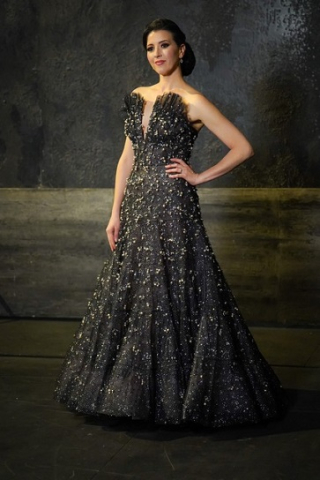
When the COVID-19 pandemic forced the Teatro alla Scala to abandon their planned opening night performance of a new production of LUCIA DI LAMMERMOOR with Lisette Oropesa in the title-role, the theatre instead honored their traditional opening date – December 7th, the Feast of Saint Ambrose – with a televised gala featuring a number of prominent singers performing arias pre-filmed on the Scala stage, without an audience.
Lisette, wearing an Armani gown, sang Lucia’s Act I aria. Watch and listen here.
The Cuban-American soprano is currently in Barcelona for performances of Verdi’s LA TRAVIATA.
~ Author: Oberon
By chance, I came upon this lovely Louis Melançon photo (above) of Anna Moffo and Robert Merrill in Verdi’s LA TRAVIATA in the Met’s 1966 Cecil Beaton production of the Verdi classic, which evoked in me memories of their partnership in this opera. From Moffo”s debut in 1959 til her final Met appearance in a staged opera there in 1976, they sang these roles together 50 times with the Company, in New York and on tour. They also made a beautiful recording of the opera together for RCA. Listen to a portion of their Act II duet here.
Moffo’s 1959 Met debut came at The Old Met in the Tyrone Guthrie production. On September 24th, 1966, during the second week at the New Met, Cecil Beaton’s lavish production opened with Moffo, Merrill, and tenor Bruno Prevedi in the leading roles. Georges Prêtre was on the podium. I saw the Moffo Violetta four times, twice with Merrill as Germont, and twice with Mario Sereni, who was very good in the role, and a less ‘wooden’ actor than Merrill.
Above: Moffo as Violetta in the scene at Flora’s party
Anna Moffo had two Saturday matinee broadcasts of TRAVIATA in the Beaton production, nine months apart. For me, they offered tell-tale signs of what would be the diva’s eventual vocal decline. In the first broadcast, on March 25th, 1967, she sounded fantastic: the voice lyrical and free-flowing, the top gorgeous, the drama expressed thru colour rather than force: in sum, one of her great performances.
During June, 1967, I saw two more Moffo Violettas (one with Merrill, the second with Sereni) and she was very impressive indeed, receiving huge ovations. I met her at the stage door; she was extremely beautiful in person, and very kind.
On December 30, 1967, Moffo had her second matinee broadcast in the Beaton production. I was very excited to be seeing her onstage again, but from her very first line – “Flora, amici, la notte che resta...” – something had changed. On “…che resta..” she really leaned heavily on the low notes, sounding almost chesty. I was still a novice opera-lover at that time, but alarm bells went off. Moffo continued to pressurize her lower notes throughout the first act, but the coloratura and high notes of “Sempre libera” seemed fine.
During the intermission, I asked a fellow Moffo fan if her vocalism that day was worrisome to him; he felt she was making an effort to sound more ‘dramatic’, and he didn’t feel panicky about it. The soprano continued singing in this manner for the rest of the opera, and – since the drama gets increasingly intense as the story unfolds – we heard these big, juicy lower notes from Moffo throughout the afternoon.
As it turned out, I never saw Anna Moffo on The Met stage again after that, though she continued singing there for nearly a decade. On February 1, 1969, came the disastrous LUCIA DI LAMMERMOOR broadcast, which I listened to in disbelief, which gave way to despair. The voice was wildly unpredictable: woozy in the middle, over-ripe in the lower range, and screamy at the top. Awkwardly, I ran into her in the Met lobby a couple of weeks afterward and she recognized me; she asked if I had heard the LUCIA broadcast, and I gave a neutral response. She said she had been ill that day, but that now things were back to normal.
I cannot say for certain whether she ever regained peak form again, but from reports from friends, she was not singing with the lustre and ease we’d come to expect from her. Her later recordings are so sad…I cannot listen to them.
In 1975, TJ and I – living in Hartford – tuned in for her broadcast of Nedda in PAGLIACCI. Moffo sounded dreadful, the voice unsupported. “What is she thinking?” I asked TJ. “I guess she feels she still has something to offer,” he replied.
In 1979, I was still living in Hartford (but no longer with TJ) when Moffo came to The Bushnell to sing MERRY WIDOW in English. I decided to go, and always regretted it afterwards.
Anna Moffo and Robert Merrill reunited on the Met stage one last time for the Met’s 100th Anniversary Gala on October 22, 1983. They sang the duet “Sweethearts“ from Sigmund Romberg’s MAYTIME. The audience greeted them affectionately, and they managed to get thru their duet without mishap.
I hadn’t intended to delve into the story of Moffo’s decline when I posted the photo at the top of the article; I prefer simply to remember her lovely performances from the first decade of her Met career. But one thing led to another once I started writing.
One of the most moving passages in her performances as Violetta was her farewell to Alfredo in Act II, when she thinks she will never see him again. In the Beaton production, this was staged so that Violetta came downstage while sustaining the top B-flat and sank to her knees, clasping Alfredo’s hand. Here is the phrase – “Amami, Alfredo…!” as Ms. Moffo sang it at La Scala in 1964:
Anna Moffo – Amami Alfredo! ~ TRAVIATA (Live)
And here is Moffo at her best, from a commercial arias compilation, conducted by Sir Colin Davis:
Anna Moffo – TRAVIATA ~ Act I scena (commercial recording)
~ Oberon

~ Author: Oberon
By chance, I came upon this lovely Louis Melançon photo (above) of Anna Moffo and Robert Merrill in Verdi’s LA TRAVIATA in the Met’s 1966 Cecil Beaton production of the Verdi classic, which evoked in me memories of their partnership in this opera. From Moffo”s debut in 1959 til her final Met appearance in a staged opera there in 1976, they sang these roles together 50 times with the Company, in New York and on tour. They also made a beautiful recording of the opera together for RCA. Listen to a portion of their Act II duet here.
Moffo’s 1959 Met debut came at The Old Met in the Tyrone Guthrie production. On September 24th, 1966, during the second week at the New Met, Cecil Beaton’s lavish production opened with Moffo, Merrill, and tenor Bruno Prevedi in the leading roles. Georges Prêtre was on the podium. I saw the Moffo Violetta four times, twice with Merrill as Germont, and twice with Mario Sereni, who was very good in the role, and a less ‘wooden’ actor than Merrill.
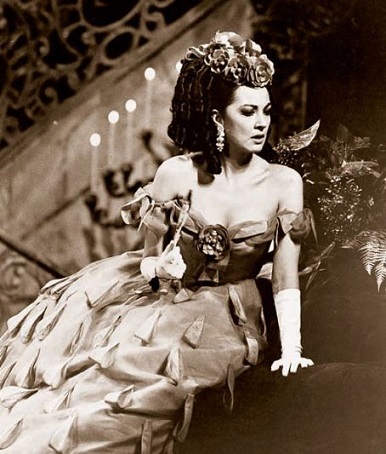
Above: Moffo as Violetta in the scene at Flora’s party
Anna Moffo had two Saturday matinee broadcasts of TRAVIATA in the Beaton production, nine months apart. For me, they offered tell-tale signs of what would be the diva’s eventual vocal decline. In the first broadcast, on March 25th, 1967, she sounded fantastic: the voice lyrical and free-flowing, the top gorgeous, the drama expressed thru colour rather than force: in sum, one of her great performances.
During June, 1967, I saw two more Moffo Violettas (one with Merrill, the second with Sereni) and she was very impressive indeed, receiving huge ovations. I met her at the stage door; she was extremely beautiful in person, and very kind.
On December 30, 1967, Moffo had her second matinee broadcast in the Beaton production. I was very excited to be seeing her onstage again, but from her very first line – “Flora, amici, la notte che resta...” – something had changed. On “…che resta..” she really leaned heavily on the low notes, sounding almost chesty. I was still a novice opera-lover at that time, but alarm bells went off. Moffo continued to pressurize her lower notes throughout the first act, but the coloratura and high notes of “Sempre libera” seemed fine.
During the intermission, I asked a fellow Moffo fan if her vocalism that day was worrisome to him; he felt she was making an effort to sound more ‘dramatic’, and he didn’t feel panicky about it. The soprano continued singing in this manner for the rest of the opera, and – since the drama gets increasingly intense as the story unfolds – we heard these big, juicy lower notes from Moffo throughout the afternoon.
As it turned out, I never saw Anna Moffo on The Met stage again after that, though she continued singing there for nearly a decade. On February 1, 1969, came the disastrous LUCIA DI LAMMERMOOR broadcast, which I listened to in disbelief, which gave way to despair. The voice was wildly unpredictable: woozy in the middle, over-ripe in the lower range, and screamy at the top. Awkwardly, I ran into her in the Met lobby a couple of weeks afterward and she recognized me; she asked if I had heard the LUCIA broadcast, and I gave a neutral response. She said she had been ill that day, but that now things were back to normal.
I cannot say for certain whether she ever regained peak form again, but from reports from friends, she was not singing with the lustre and ease we’d come to expect from her. Her later recordings are so sad…I cannot listen to them.
In 1975, TJ and I – living in Hartford – tuned in for her broadcast of Nedda in PAGLIACCI. Moffo sounded dreadful, the voice unsupported. “What is she thinking?” I asked TJ. “I guess she feels she still has something to offer,” he replied.
In 1979, I was still living in Hartford (but no longer with TJ) when Moffo came to The Bushnell to sing MERRY WIDOW in English. I decided to go, and always regretted it afterwards.
Anna Moffo and Robert Merrill reunited on the Met stage one last time for the Met’s 100th Anniversary Gala on October 22, 1983. They sang the duet “Sweethearts“ from Sigmund Romberg’s MAYTIME. The audience greeted them affectionately, and they managed to get thru their duet without mishap.
I hadn’t intended to delve into the story of Moffo’s decline when I posted the photo at the top of the article; I prefer simply to remember her lovely performances from the first decade of her Met career. But one thing led to another once I started writing.
One of the most moving passages in her performances as Violetta was her farewell to Alfredo in Act II, when she thinks she will never see him again. In the Beaton production, this was staged so that Violetta came downstage while sustaining the top B-flat and sank to her knees, clasping Alfredo’s hand. Here is the phrase – “Amami, Alfredo…!” as Ms. Moffo sang it at La Scala in 1964:
Anna Moffo – Amami Alfredo! ~ TRAVIATA (Live)
And here is Moffo at her best, from a commercial arias compilation, conducted by Sir Colin Davis:
Anna Moffo – TRAVIATA ~ Act I scena (commercial recording)
~ Oberon
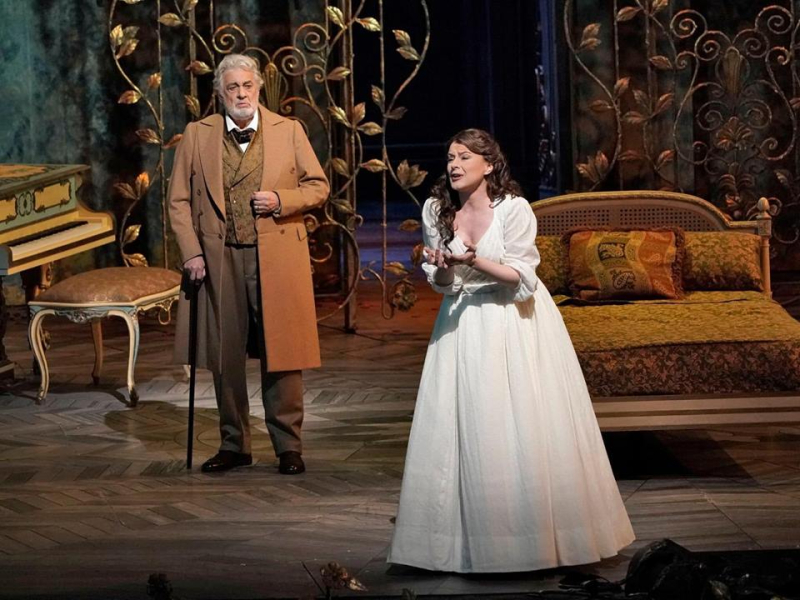
Above: Placido Domingo and Anita Hartig in LA TRAVIATA; a Ken Howard/Met Opera photo
~ Author: Oberon
Wednesday April 24th, 2019 – TRAVIATA is the opera I’ve seen more than any other. Along with Tosca and Turandot, Violetta is my idea of a test role; I’ll go to see almost anyone who tries it. From A to Z – from Licia Albanese to Teresa Zylis-Gara, from Ainhoa Arteta to Virginia Zeani – I’ve experienced every kind of Violetta: good, bad, or indifferent. Patricia Brooks, Anna Moffo, and Diana Soviero remain among the most memorable in the role; and in recent seasons, Hei-Kyung Hong and Marina Rebeka have struck gold in the part. Inexplicably, I missed seeing Tucci, Sutherland, Lorengar, Scotto, and Sills as the fragile courtesan. But as Lois Kirschenbaum always said: “You can’t go to everything!”…a notion she herself seemed to disprove.
Knowing I’ll be seeing the Met’s current TRAVIATA (which some have described as Disneyesque) next season, when Lisette Oropesa takes on the role of Violetta at The Met, I took a score desk for tonight; my main reason for being there was to hear Anita Hartig, whose Mimi and Liu in recent season captivated me.
Ms. Hartig’s voice, with a mixture of enticing vibrato and curiously effective straight tone, was sadly beset by pitch problems tonight (and, from comments I have read, throughout her run here as Violetta). The voice was annoyingly sharp, at times excruciatingly so. The allure of her timbre, her sense of lyricism, and her brightish upper range should have made her a fascinating Violetta; instead, it became something of a trial to listen to her.
Stephen Costello’s Alfredo has improved considerably since I last heard him in the part, though he too showed some vagaries of pitch during the evening. I sometimes feel that Mr. Costello doesn’t sense the heartbeat of the music, but tonight he sounded like an ardent, passionate young man with reckless streak.
Hearty applause greeted the entrance of Placido Domingo, the beloved tenor-turned-baritone, as Germont. After sorting out the voice for a bit, he settled in at “È grave il sacrifizio…” and thereafter sang quite beautifully, finding a nice emotional connection to Ms. Hartig’s Violetta in the great duet “Dite alla giovine“, which is the very heart of the opera. Some small chokes or sobs, perhaps to indicate empathy, were unnecessary; but Domingo impressed by singing the phrase “Dio mi guido…dio mi guido…” in his big aria without breaking for breath.
In comprimario roles, so important in the opera, the male contingent excelled: Scott Scully (Gastone), Jeongcheol Cha (D’Obigny), Paul Corona (Dr. Grenvil), the characterful singing of Dwayne Croft (Baron Douphol), and even – in the very brief role of Giuseppe – tenor Marco Antonio Jordão, each made an impression.
Maestro Nicola Luisotti’s TRAVIATA was overall on the fast side, which is fine. He suddenly sped up the final reprise of the Brindisi, which felt exhilarating in a way, and he took “Di Provenza” at a fast clip: maybe that’s what Mr. Domingo wanted. I could have done without that aria’s cabaletta, though.
The ballet music had gypsy charm at first, and vigor as the matador theme took over. I was recalling the many times I heard it at New York City Opera, when the incredible Esperanza Galán transformed this scene with her Flamenco flair, castanets blazing.
Listening to Violetta’s touching reply to Alfredo’s public insult, “Alfredo, Alfredo, di questo core…”, I was yet again reminded of one of the most painful things in life: living with remorse.
~ Oberon
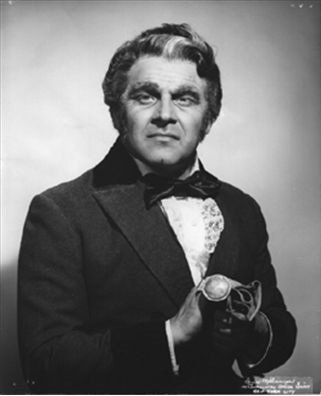
Above: Mario Sereni as Giorgio Germont in Verdi’s LA TRAVIATA
Mario Sereni, the Italian baritone who sang over 550 performances with The Metropolitan Opera between 1957 and 1984, has reportedly died at the age of 87.
Sereni had a warm, rich sound with an easy top, and an instinctive feel for phrasing off the words of his native language. I first saw him at the Old Met as Belcore in L’ELISIR D’AMORE (with Freni, Gedda, and Corena, no less!); once the new House opened and I was going to the opera frequently, Sereni was a singer I saw often. He was popular with the fans, and always very cordial when we greeted him after a performance.
Although he sang many of the great Verdi roles – Germont in TRAVIATA being particularly well-suited to his voice, and he also appeared as Amonasro, Count di Luna, Posa, Ford in FALSTAFF and Don Carlo in LA FORZA DEL DESTINO – it was in the more verismo-oriented operas that Sereni made his best impression, at least for me. His Tonio in PAGLIACCI was outstanding, and he was often cast in the sympathetic roles of Sharpless (MADAMA BUTTERFLY) and Marcello (LA BOHEME). One performance that I recall with special affection was his Carlo Gerard in ANDREA CHENIER, where he appeared opposite Raina Kabaivanska in her only Met performance as Maddalena. In the French repertoire, Sereni sang Valentin in FAUST and Escamillo in CARMEN; he even made a foray into Wagner, as the Herald in LOHENGRIN. Among other Sereni roles were Rossini’s Figaro, Donizetti’s Malatesta (DON PASQUALE) and Enrico (LUCIA), and Lescaut in the Puccini opera. Near the end of his Met career, he sang several performances of Schaunard in BOHEME, and that was the role of his final Met performance in 1984.
Mario Sereni appears on several complete opera recordings; my personal favorite is (again) his Carlo Gerard in CHENIER on EMI, opposite Antonietta Stella and Franco Corelli. Also on EMI, he sings with Victoria de los Angeles on her classic recordings of BUTTERFLY and TRAVIATA. And he is in fine fettle on the RCA recording of LUCIA DI LAMMERMOOR, with Anna Moffo and Carlo Bergonzi. Here is the Wolfscrag Scene from that recording, in which Bergonzi and Sereni make such a vivid impression, both vocally and dramatically.
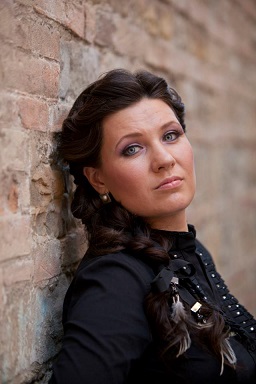
Above: soprano Marina Rebeka
Saturday December 27th, 2014 matinee – The Met’s lame production of La Traviata – yet another attempt to make opera ‘relevant’ – isn’t worth seeing, but I thought this particular cast might be worth hearing, so I bought a score desk for today’s matinee. In the event, Marina Rebeka (Violetta) and Quinn Kelsey (Germont) made for a particularly exciting afternoon: their singing of the great Act II duet – the heart of the opera – was indeed memorable. And both of them were in fact excellent throughout. It’s good to experience this kind of singing in a standard-rep work at The Met, for there’s no guarantee of it in this day and age.
On the podium, Marco Armiliato seemed more intent than usual on molding a convincing rendering of the score: sometimes he is too hasty, too loud, too provincial. But today he showed great attention to details of tempo and dynamic, and allowed his singers plenty of leeway to linger on favorite notes and pamper beloved phrases. The orchestra played very well.
Aside from Maria Zifchak (Annina) and James Courtney (Dr. Grenvil), the singers in the smaller roles were more serviceable than memorable.
In a role which has been sung in living memory at The Met by such luminaries as Richard Tucker, Alfredo Kraus, Carlo Bergonzi, Nicolai Gedda, Neil Shicoff, Placido Domingo, and Jonas Kaufmann, Stephen Costello – today’s Alfredo – seemed like a case of sending a boy to do a man’s job. A feeling of uncertain pitch pervaded quite a bit of Costello’s singing, and despite a lovely passage here and there, he seemed unsure as the music ventured higher, and his breath-line sometimes didn’t sustain. His offstage serenade in Act I was flat, and he struggled with the cabaletta “O mio rimorso”, sounding tentative and uneasy. It’s sad to hear a young and promising voice in this state; it might be a good idea for him to take a break and address the problems that seem to have cropped up in his singing.
But Marina Rebeka and Quinn Kelsey swept Verdi’s immortal score to triumph with their outstanding vocalism all afternoon. Ms. Rebeka, who has proven vastly pleasing in Rossini’s Moïse et Pharaon at Carnegie Hall and in Don Giovanni at The Met, moved into the upper echelons of the many Violettas I have encountered in-house – more than 60 of them to date – in my many years of opera-going. Her voice has a pearly sheen; she displays impressive dynamic control, appealing turns of phrase, vibrant top notes, agile coloratura; and it’s a voice with a personality behind it. Her singing of the Act I scena was some of the most aurally stimulating I have heard in recent seasons, with plenty of verve in “Sempre libera” and a nicely placed E-flat to polish it off.
In Act II, the soprano met her vocal equal in Quinn Kelsey, who had sung an excellent Marcello in Boheme earlier this season. This vocal duo of Met-sized voices brought to this scene the kind of tonal allure, dramatic nuance, passion, and sheer vocal glamour that made the theatre seem to pulsate with emotion. Trading phrases, each seemed to produce one magical effect after another: the sopranos pppp “Di due figli?”, the baritone’s twinge of heartache at “Deh, non mutate in triboli…” and later his deeply felt “…tai detti a un genitor!” led us to Ms. Rebeka’s superbly delicate “Dite alla giovine…”: the absolute turning point of the opera. Throughout this duet, the two singers gave the kind of involved, emotionally engaging singing that seems often to be missing in performances today. I scrawled the word “Wow!” in my Playbill.

Mr. Kelsey (above) returned for a big-toned, finely-modulated and tender “Di Provenza”, winning a burst of sincere applause from the crowd (who were rather stingy with aria-applause today but went nuts at the end of the opera). I kind of wish they’d left off the baritone’s cabaletta – which Kelsey sang very well but which seems musically trite to me and de-rails the impetus of the drama.
In the scene at Flora’s, Mr. Costello sounded flattish and seemed to lack reserves of power for the denunciation scene, but Mr. Kelsey upbraided his son with some grand singing to which Costello’s response was perhaps his best moment of the evening. Ms. Rebeka sailed over the ensemble with gleaming tone, having sung the opera’s most moving passage – “Alfredo, Alfredo…di questo core…” (where she prays that God will spare her beloved from remorse for his callous behavior) – beautifully.
Moving directly from the country-house to Flora’s party scene to the final scene in succession, without pause, makes for a very long sing for the soprano, but Ms. Rebeka took it all in stride and did some of her most ravishing singing in “Addio del passato” where she worked some piano magic along the way and for once made the second verse seem necessary. Despite Mr. Costello being again off-pitch in “Parigi, o cara” the soprano managed to carry it off, moving on to a pensive “Ma se tornando…” as the reality that Alfredo’s love cannot save her sinks in; she bursts out thrillingly in “Gran dio, morir si giovine”, though the tenor’s response is effortful…and later in an ensemble passage he seems quite taxed by a couple of B-double-flats.
Her chance for happiness has come too late; but with a big build-up of hope, Violetta speaks of her pain having vanished. Rising to a stunning top-A on “O gioia!”, Ms. Rebeka draws the opera to a heart-rending close.
Big ovations for the soprano and baritone at their curtain calls; the House was still resounding with cheers as I left. If my upcoming two performances of Aïda come close to the level of today’s Traviata, I’ll be more than pleased.
Metropolitan Opera House
December 27, 2014 matinee
LA TRAVIATA
Giuseppe Verdi
Violetta.....................Marina Rebeka
Alfredo......................Stephen Costello
Germont......................Quinn Kelsey
Flora........................Maya Lahyani
Gastone......................Eduardo Valdes
Baron Douphol................Jason Stearns
Marquis D'Obigny.............Kyle Pfortmiller
Dr. Grenvil..................James Courtney
Annina.......................Maria Zifchak
Giuseppe.....................Juhwan Lee
Messenger....................Joseph Turi
Guest........................Athol Farmer
Gentleman....................Paul Corona
Conductor....................Marco Armiliato
 Oberon's Glade