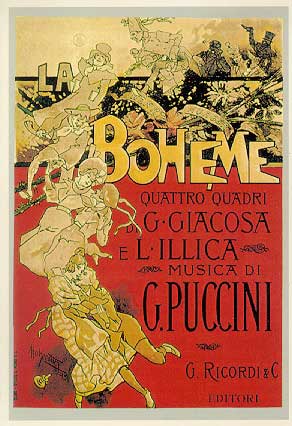
Tuesday September 23rd, 2014 – After a touch-and-go Summer of contract negotiations where – at one point – it seemed inevitable that there would be a lock-out at the Metropolitan Opera, the shut-down was miraculously averted and The Met opened last night with a new production of LE NOZZE DI FIGARO. The casting of the three major female roles in the Mozart opera didn’t appeal to me, so I skipped it and started my season on the second night.
The house seemed fuller than on most evenings last season, perhaps an indication that New York City opera-goers prefer traditional productions. And yes, curtain-rise on Franco Zeffirelli’s Cafe Momus still evokes a big round of applause.
Admittedly tonight’s cast, on paper, didn’t have much allure. The Met seem to be putting all their eggs in one basket this first week: the singers aligned for MACBETH (Netrebko, Lucic, Calleja, Pape) are about the closest you can come to an all-star cast in this day and age. Friends asked me why I bothered with this BOHEME and as the curtain fell on the Cafe Momus scene I in fact asked myself why I was there.
Bryan Hymel in the role of Rodolfo was the main attraction for me tonight; his impressive performances in LES TROYENS and MADAMA BUTTERFLY drew me back to hear him in this, his second Puccini role at The Met. He did not seem at his best tonight though there were many appealing moments in his singing of the role. He was not much helped by conductor Riccardo Frizza who tended to unleash too much orchestral volume at key moments. Hymel’s account of the famous aria “Che gelida manina” was nice, and he sustained the high-C to fine effect despite the conductor’s overdrive of volume. At the end of the big Cafe Momus ensemble, the two sopranos were perched none-too-sweetly on their high-B when Hymel chimed in on the same note and gave the climax the necessary zest.
Neither of the women were very pleasing to the ear. Ekaterina Scherbachenko (Mimi) lacked a persuasive feeling for the Italian style and didn’t bring a lot of nuance or colour to Mimi’s Act I narrative. When she ventured to the upper register, an uncomfortable feeling set in. Oddly, she did not attempt the written high-C at the end of the love duet; instead she sang an E-natural whilst Mr. Hymel sustained a high-C. This put me in mind of the 1968 Met broadcast of BUTTERFLY where Teresa Stratas ducked the final high-C of Act I, leaving her tenor Barry Morell to finish on his own.
Myrto Papatanasiu revealed a dime-a-dozen overly-vibrant lyric soprano as Musetta, snatching at her interjectory phrases until she got to the Waltz which was reasonably well-sung despite rather shallow tone. I don’t suppose we’ll ever again experience a Musetta the likes of Carol Neblett or Johanna Meier: big voices and big personalities.
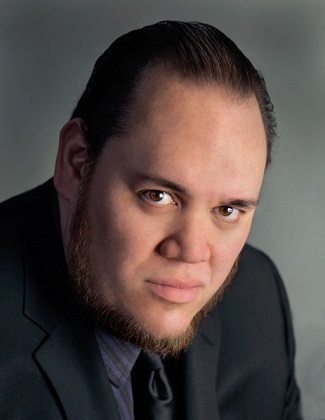
The evening’s most impressive singing came from baritone Quinn Kelsey (above, in a Ken Howard headshot) as Marcello. This is a Met-sized voice for sure and I got a vast amount of pleasure listening to him nail Marcello’s music, phrase after phrase. I would have liked to have heard him in the third and fourth acts where the character has so much great music to sing, but the overall lack of magic in the evening sent me home after Momus. I hope The Met will give Quinn Kelsey more opportunities.
Of the remaining members of the cast, no one managed to make a special impression. The children’s chorus deserve a note of praise.
There’s nothing wrong with taking curtain calls after each act provided the audience is displaying sufficient enthusiasm to summon the singers out before the gold curtain. After both of the first two acts tonight, the applause had completely stopped but the bow lights came on and the singers came out, forcing people to clap for them out of a sense of obligation. I understand that the bows are ‘scripted’ into the performance but someone needs to determine whether there is any applause happening before sending the singers out.
Metropolitan Opera House
September 23, 2014
LA BOHÈME
Giacomo Puccini
Mimì....................Ekaterina Scherbachenko
Rodolfo.................Bryan Hymel
Musetta.................Myrtò Papatananasiu [Debut]
Marcello................Quinn Kelsey
Schaunard...............Alexey Lavrov
Colline.................David Soar
Benoit..................Donald Maxwell
Alcindoro...............Donald Maxwell
Parpignol...............Daniel Clark Smith
Sergeant................Jason Hendrix
Officer.................Joseph Turi
Conductor...............Riccardo Frizza


 Oberon's Glade