Tag: Leonie Rysanek

  • ELEKTRA @ Orange 1991

    Jones elektra

    Dame Gwyneth Jones (above) sings the title-role in a performance of Richard Strauss’s ELEKTRA given at Orange in 1991.

    Watch and listen here.

    Elektra: Gwyneth Jones; Chrysothemis: Elisabeth Connell; Klytemnestra: Leonie Rysanek; Orestes: Simon Estes; Aegisth: James King

    Conductor: Marek Janowski

  • Rysanek’s 25th Anniversary @ The Met

    Leonie

    So many wonderful things have popped up on YouTube during the pandemic. An audio-only recording of the Leonie Rysanek 25th Anniversary Gala at the Metropolitan Opera House in 1984 provides a document of a truly exciting performance…which I attended. 

    Listen here.

    Before the performance began, I heard people seated near us asking: “Do you think she will scream?” The general consensus was that, being a concert performance, she would refrain from including her trademark screams as both Kundry and Sieglinde.

    She screamed.

  • Rysanek’s 25th Anniversary @ The Met

    Leonie

    So many wonderful things have popped up on YouTube during the pandemic. An audio-only recording of the Leonie Rysanek 25th Anniversary Gala at the Metropolitan Opera House in 1984 provides a document of a truly exciting performance…which I attended. 

    Listen here.

    Before the performance began, I heard people seated near us asking: “Do you think she will scream?” The general consensus was that, being a concert performance, she would refrain from including her trademark screams as both Kundry and Sieglinde.

    She screamed.

  • Leonie Rysanek as Lady Macbeth

    Scanned Section 13-1

    A year before her Met debut in the same role, Leonie Rysanek made her New York debut as Verdi’s Lady Macbeth in a concert performance with The Little Orchestra Society. Overall, she gave an exciting (if somewhat uneven) performance; she galvanized the audience with her thrilling singing of “La luce langue“.

    Leonie Rysanek – La luce langue ~ MACBETH – Little Orchestra Society 1958

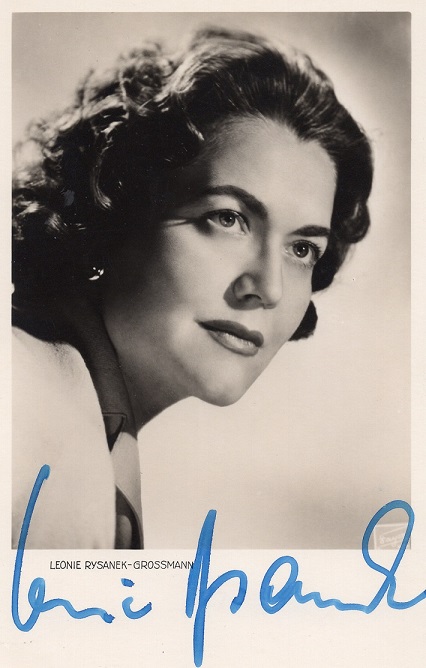
    After hearing Leonie Rysanek’s voice for the first time on a Texaco/Metropolitan Opera broadcast of BALLO IN MASCHERA, I wrote to her and received the photo (at the top of this article) a few days later. She became one of the most potent forces in my enduring obsession with opera. I saw her many times at The Met, including her unforgettable 25th anniversary gala. She was my first Senta, Ariadne, Kaiserin, and Salome; her Met 25th anniversary gala in 1984 was one of the greatest thrills of my opera-going career.

    ~ Oberon

  • Leonie Rysanek as Sieglinde

    Scanned Section 6-1

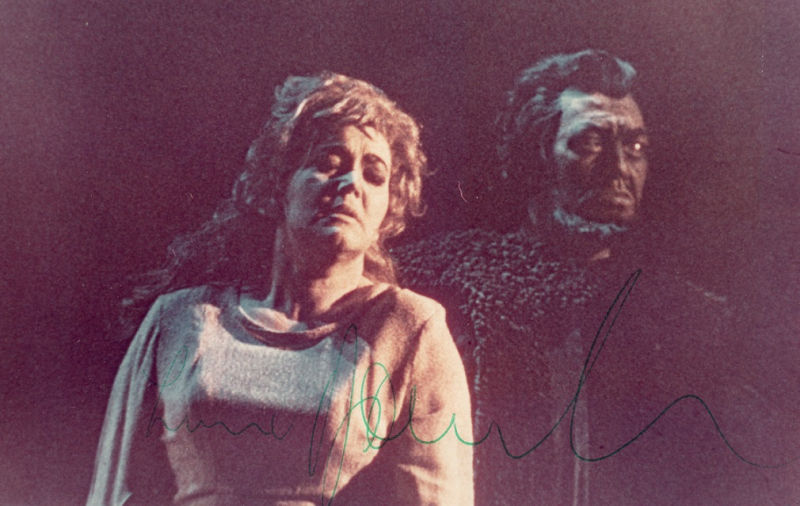
    I brought this photo of Leonie Rysanek with me for her to autograph after a performance of FRAU OHNE SCHATTEN at The Met in 1971. Why she was signing photos with a green pen I am not sure…her signature is barely legible; but she loved the photo. With her in the picture is basso David Ward, as Hunding.

    I did not see Rysanek as Sieglinde until 1988, in a matinee performance that marked the last time she sang this signature role of hers at The Met. Hildegard Behrens, to whom Rysanek later left the Lotte Lehmann Ring, was Brünnhilde. The two divas took many bows together after the performance, to the delight of the huge crowd.

    Walkure6465.01

    Among the great tenors who sang Siegmund to Rysanek’s Sieglinde was Jon Vickers (Met Opera Guild photo, above).

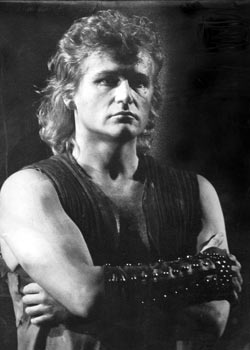
    In 1985, Rysanek sang Sieglinde in the first act of WALKURE as part of her 25th anniversary gala celebration at The Met; Peter Hofmann was her Siegmund that afternoon. My friend Paul Reid and I were there. Rysanek had become famous for her scream at the moment Siegmund pulls the sword from the tree; this was apparently Wieland Wagner’s idea, and it became a signature moment whenever the soprano sang Sieglinde anywhere in the world. 

    As the 1985 gala was a concert performance, with the orchestra onstage and the singers in gown and tux, there was some speculation as to whether Rysanek would include the scream. “It would break the frame of the concert,” said the woman sitting behind us. “She won’t scream.” She screamed.

    As a sampling of Rysanek in the role of Sieglinde, here she is – in fabulous voice – at Bayreuth in 1967, opposite James King:

    Leonie Rysanek – Der Männer Sippe ~ WALKURE – with James King – Böhm cond – Live @ Bayreuth 1967

  • Nilsson & Rysanek in WALKURE

    Nilsson Rysanek

    In their signature roles of Brunnhilde and Sieglinde, I believe this series of performances may have been the last time Birgit Nilsson and Leonie Rysanek sang in DIE WALKURE together. Otmar Suitner conducts.

    Nilsson & Rysanek – WALKURE – scene from Act III – San Francisco 1982

  • Nilsson & Rysanek in WALKURE

    Nilsson Rysanek

    In their signature roles of Brunnhilde and Sieglinde, I believe this series of performances may have been the last time Birgit Nilsson and Leonie Rysanek sang in DIE WALKURE together. Otmar Suitner conducts.

    Nilsson & Rysanek – WALKURE – scene from Act III – San Francisco 1982

  • SALOME @ The Met

    Salome1

    “You know, there are three kinds of Salomes: those who can sing it, those who can dance it, and those who should be shot!” ~ Leonie Rysanek

    Wednesday December 28th, 2016 – My friend Dmitry and I had really been looking forward to seeing SALOME at The Met this season; it’s among our favorite scores. I bought tickets in advance for two performances, since I wanted to hear both Željko Lučić and Greer Grimsley as Jochanaan.

    Then came the news that the scheduled Salome, Catherine Naglestad, had withdrawn from the title-role, and was to be replaced by Patricia Racette. Racette used to be a particular favorite of mine, going back to her performances as Emmeline in Tobias Picker’s opera at NYCO. She was a marvelous Met Mimi, Violetta, and Ellen Orford, and I very much enjoyed her Elisabetta in DON CARLO. But as the seasons have passed, the wear-and-tear has really begun to show in Racette’s singing. Still, as recently as 2013, she gave a striking performance in Dallapiccola’s IL PRIGIONIERO with The New York Philharmonic.

    Since then, anything I have heard from her has sounded sadly worn and unpleasant. I suppose there’s something honorable about “the sword wearing out the sheath” in the service of art, but after a while the artistry and dedication no longer compensate for the sound being produced.

    I don’t want to dwell on the negative, but much of Racette’s singing was really off-putting. In the lower-to-middle-range passages, she was often covered by the orchestra. The heavy usage the soprano has subjected her voice to really shows in this music: the vibrato has spread so that in the upper range there’s no core to a sustained note; the louder the note, the wider the fluctuation.

    Salome is supposedly a teenager, but Strauss wrote the part in a way that only a mature and experienced soprano can cope with it. Thus the Dance of the Seven Veils must be handled with kid gloves; soprano and choreographer have to find ways for a woman of a certain age who is capable of singing the role to be reasonably credible in the dance-moves. For this famous scene, Racette chose an unflattering get-up: a sort of tuxedo affair with hot pants and a top hat. The choreography was duly carried out by the soprano and two men, but it was about as provocative as an after-dinner mint (to quote from the film CABARET). As the dance ended, Dmitry and I quietly left the theater.

    To briefly note the evening’s positive elements: Greer Grimsley was a powerful Jochanaan – though the amplification of his voice from the cistern was unflattering – and Gerhard Siegel was pretty much perfect as Herod. Excellent singing and portrayals from Nancy Fabiola Herrera as Herodias (great high notes!) and Kang Wang, who was vocally clear and thrilling as Narraboth. I loved seeing John Hancock onstage again, and there was fine work from Carolyn Sproule, Kathryn Day, Nicholas Brownlee, Richard Bernstein (ever the impressive stage figure, as when he kept the prophet on a long leash), Mikhail Petrenko, and Paul Corona. Allan Glassman led a strong quintet of Jews who were well-differentiated as personalities and just as annoying as one imagines Strauss intended them to be.

    The orchestra played superbly, and conductor Johannes Debus did well to highlight the myriad hues of the opera’s marvelous orchestration. Debus did not, however, always maintain an ideal union between pit and stage, sometimes drowning out the singers.

    Neither Dmitry nor I could recall the fanciful fore-curtain of angels, but perhaps we’ve suppressed the memory of it. The audience seemed pretty much captivated by the whole performance, though the woman seated in the adjoining box giggled and commented aloud during the dance. 

    Over the years and through repeated hearing, I’ve found that my favorite passage of SALOME is Jochanaan’s admonition to Salome to seek Christ at the Sea of Galilee. Tonight, Mr. Grimsley and concertmaster David Chan rendered this moment so beautifully; I suppose it’s odd that an atheist should be moved by this affirmation of faith, but to be honest, I often find expressions of deep and simple belief to be truly touching.

    Metropolitan Opera House
    December 28th, 2016

    SALOME
    Richard Strauss
    Salome..................Patricia Racette
    Herod...................Gerhard Siegel
    Herodias................Nancy Fabiola Herrera
    Jochanaan...............Greer Grimsley
    Narraboth...............Kang Wang
    Page....................Carolyn Sproule
    Jew.....................Allan Glassman
    Jew.....................Mark Schowalter
    Jew.....................Noah Baetge
    Jew.....................Alex Richardson
    Jew.....................David Crawford
    Nazarene................Mikhail Petrenko
    Nazarene................Paul Corona
    Soldier.................Nicholas Brownlee
    Soldier.................Richard Bernstein
    Cappadocian.............John Hancock
    Slave...................Kathryn Day
    Executioner.............Reginald Braithwaite

    Conductor...............Johannes Debus

  • At Home With Wagner VIII

    1310368-Richard_Wagner

    In 1968, Lorin Maazel conducted the RING Cycle at Bayreuth and from that cycle, the WALKURE looked especially tempting to me: not only are the ever-thrilling pairing of Leonie Rysanek and James King cast as the Wälsungs and such stalwart Wagnerians as Berit Lindholm, Theo Adam and Josef Greindl featured, but a rare performance as Fricka by Janis Martin – a singer in whom I’ve recently taken a renewed interest and who in December 2014 passed away – drew me to purchase this set. It’s an exciting performance in many ways, and Ms. Martin’s Fricka is one of the best-sung I have heard.

    Leonie Rysanek and James King sang Sieglinde and Siegmund together often, including on the commercial release of the entire Cycle conducted by Karl Böhm; the two singers know these roles inside-out but somehow they always manage to make the music seem fresh and genuinely exciting. Rysanek, always a powerhouse singer at The Met, scales down her voice here to suit the more intimate space of the Bayreuth Festspielhaus. She creates many poetic effects but when the emotional temperature of the drama rises, Rysanek – as ever – turns up the voltage. In Act I she produces her trademark hair-curling top notes and the famous scream (at Wieland Wagner’s bidding) as the sword is pulled from the tree. 

    James King is in superb voice; he sings with tireless generosity – his Sword Monolog one of the finest I’ve heard, with his astonishing cries of “Walse! Walse!” sustained with epic fervor – and he’s always vivid in the expressing the passions of the final pages of Act I. That pillar of Wagnerian basso singing, Josef Greindl, is as ever a strong and fearsome Hunding. The three singers, with vital support from Masetro Maazel (his tempos tending towards speed rather than breadth) make for a truly stimulating rendering of this act.

    As Wotan, Theo Adam’s powerful voice greets his favorite daughter; Berit Lindholm is bright and true in Brunnhilde’s battle cry, and then Janis Martin as Fricka arrives to throw a monkey-wrench into her husband’s plans. Ms. Martin, at this point in her career about to transition from mezzo to soprano (in the 1970s she was to be my first in-house Sieglinde, Kundry and Marie in WOZZECK); thus the highest notes of Fricka’s music hold no terrors for her. Her singing is clean, wide-ranging, and impressive. As she and Mr. Adam debate the matters at hand, Lorin Maazel’s orchestra underscores both sides of the argument. Ms. Martin exits, secure in her triumph.
    T adam

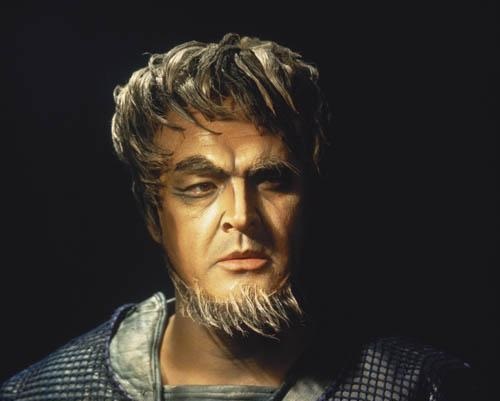
    Theo Adam (above) was my very first Wotan at The Met in RHEINGOLD in 1969, and I saw him some 20 years later, still very impressive in WALKURE. His sound per se is not highly individualized – it’s basically darkish and grainy – but he always manages to use it to optimum effect. His long monolog, with keen support from Maazel and increasingly urgent responses from Lindholm, is appropriately central to the drama of the performance.

    Rushing on, pursued by Hunding’s hounds, Rysanek and King make much of their scene together. For Ryssanek, moments of lyric tenderness veer off to outbursts of hysteria; King is heroically comforting. Rysanek emits a demented, curdled scream at the sound of Hunding’s approaching horns, and as she swoons, King sings “Schwester! Geliebte” as tenderly as I have ever heard it done. 

    In the great Todesverkundigung scene (the Annuncation of Death, where Brunnhilde appears as in a vision and warns Siegmund of his impending death in battle), Maazel brings weightiness without impeding the forward flow. A doom-ladened feeling of tension and barely controlled urgency underscores the exchange between soprano and tenor, with Ms. Lindholm expressing increasing desperation as she feels herself losing control of the situation. Maazel brilliantly emphasizes Brunnhilde’s shift of allegiance: a feeling of high drama as she rushes off. 

    The poignant cello ‘lullabye’ as Siegmund blesses Sieginde’s slumber is taken up by the orchestra with a rich sense of yearning, til Hunding’s horns intrude to terrifying effect. Awakening in a daze before grasping the situation, Rysanek’s mad scene reaches fever pitch. Adam thunders forth Wotan’s intercession, Rysanek screams as Siegmund is slain. After Wotan has dispatched Hunding with great contempt, Adam and Maazel rise to a thunderous finish as Wotan storms away to catch the traitorous Brunnhilde.

    Synek_Portrait1a

    Above: Liane Synek

    An excellent Helmwige from Liane Synek (sample her singing here, as Brunnhilde in a passage from a WALKURE performance in Montevideo 1959): she stands out from some rowdy singing by her sister-Valkyries. 

    Sieglinde’s desperate plea to be slain turns to joy as Brunnhilde informs her that she is with child, giving wing to Leonie Rysanek’s cresting ‘O hehrstes Wunder!’, the crowning moment of one of the soprano’s greatest roles.

    The scene is then set for the final father-daughter encounter; both Lindholm and Adam have moments of unsteadiness and the sound-quality is sometimes marred by overload. But both singers are truly engaged in what they are singing, with Theo Adam particularly marvelous in the long Act III passage starting at “So tatest du, was so gern zu tun ich begehrt…” (“So you did what I wanted so much to do…”) Once Brunnhilde has fallen into slumber, the bass-baritone and Maestro Maazel give an emotionally vibrant performance of Wotan’s farewell.

    ~~~~~~~~~~~~~~~~~~~~~~~~~~~~~~~~~~~~~~~~~~~~~~~~~~~~~~~~~~~~~~~~~~~~~~~~~~~~~~~~~~~~~~~~~~~

    Lilowa

    Above: mezzo-soprano Margarita Lilowa

    A RHEINGOLD from Vienna 1976 piqued my curiosity – mainly to experience the conducting of Horst Stein whose superb 1975 Bayreuth GOTTERDAMMERNG I wrote about here. I was also wanting to hear Margarita Lilowa’s Erda, having recently really enjoyed her singing as Mary in a recording of FLIEGENDE HOLLANDER, and Peter Hofmann in what is said to be his Vienna debut performance, as Loge.

    The recording is clearly not from a broadcast but rather was recorded in-house; the sound varies – some overload in spots, some distancing of the voice, a couple of dropouts – and in quieter passages the breathing of the person making the recording can be heard: an unsettling effect. Also during the Alberich/Mime scene there’s some annoying mike noise. But overall, with steadfast concentration, the performance has many rewards. And chief among them is Maestro Stein’s expert shaping of the score.

    The Rhinemaidens are Lotte Rysanek (Leonie’s sister, who sometimes sounds a bit like her famous sibling), Rohangiz Yachmi, and Axelle Gall. Their more attractive moments come in solo lines rather than in a vocal blend. Zoltán Kelemen, the Alberich of the era, is superb here. He paints a full vocal portrait of the dwarf, from his early semi-playful pursuit of the Rhinemaidens thru the rape of the Gold, on to the vanity of his bullying Lord of Nibelheim, his shattering fall into Loge’s trap, and the vividly expressed narrative leading up to the Curse.

    Grace Hoffmann and Theo Adam are experienced Wagnerians who inhabit their roles thoroughly. The mezzo’s voice is no longer at its freshest (she was in the twenty-fifth year of her career here) but she is authoritative in characterization. Adam, strong and true of voice, makes a fine impression throughout, especially in his final hailing of Valhalla.

    Hannelore Bode’s voice seems too weighty and unwieldy for Freia, but the giants who pursue her are impressive indeed: Karl Ridderbusch and Bengt Rundgren are so completely at home as Fasolt and Fafner, and their dark, ample voices fill the music richly. Hale and hearty one moment, and wonderfully subtle the next, both bassos make all their music vivid. A lyric Froh (Josef Hopferweiser) and an ample-toned Donner (Reid Bunger – his “Heda! Hedo” has a nicely sustained quality) are well-cast.      

    Peter-Hofmann-calendar-250x350px

    Above: tenor Peter Hofmann

    Peter Hofmann’s Loge has a baritonal quality, and he blusters a bit but soon settles in to give a sturdy if not very imaginative performance of the Lord of Fire. The Nibelheim scene finds Adam, Hofmann, and Kelemen all at their keenest in sense of dramatic nuance, and Heinz Zednik is a capital Mime, well-voiced and inflecting the text with eerie colours.

    Ms. Lilowa’s Erda, sounding from a distance at first, comes into focus after her first line or two and has a round-toned, steady voice, making the most of her brief but important scene.

    Horst Stein’s overall vision of the score seems nearly ideal to me, and there are a number of particularly satisfying passages: his underscoring of the big lyric themes in Loge’s narrative, the detailing of the orchestral parts at Loge’s mention of Freia’s apples, the descent to Nibelheim. And once in Alberich’s domain, Stein shows keen mastery of nuance, both in colorfully supporting the dialogue and in a truly ominous “dragon” theme for Alberich’s transformation. Throughout the performance, it’s Stein who keeps us keenly focused on this marvelous score.

    ~~~~~~~~~~~~~~~~~~~~~~~~~~~~~~~~~~~~~~~~~~~~~~~~~~~~~~~~~~~~~~~~~~~~~~~~~~~~~~~~~~~~~~~~~~~
    Mcintyre

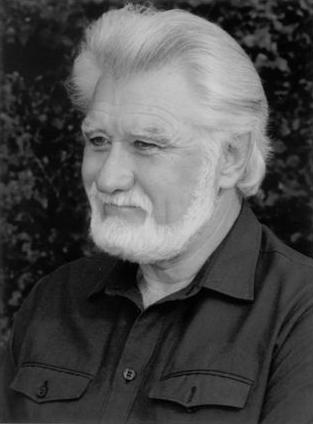
    Above: Sir Donald McIntyre

    Another RHEINGOLD – a recording of a performance I actually attended – is from a Met broadcast of February 15th, 1975. It’s interesting to compare my reactions to the recording with what I had written in my opera diary on the day of the performance, some forty years earlier.

    The 1974-75 season was a rich one for me; I was living (though not enrolled) at Sarah Lawrence College with TJ. We’d had our summer on Cape Cod together and, as we prepared to part company and resume our separate lives, we found we’d become so attached to one another that, only a few days after I’d returned to the tiny town and he’d moved into the college dorm, we threw caution to the wind and I went down and got a temp job at IBM in Westchester County and slept with him in his twin bed (he had drawn, luckily, one of the few ‘private’ room on the entire campus). We went down to Manhattan for the opera and the ballet three or four times a week.

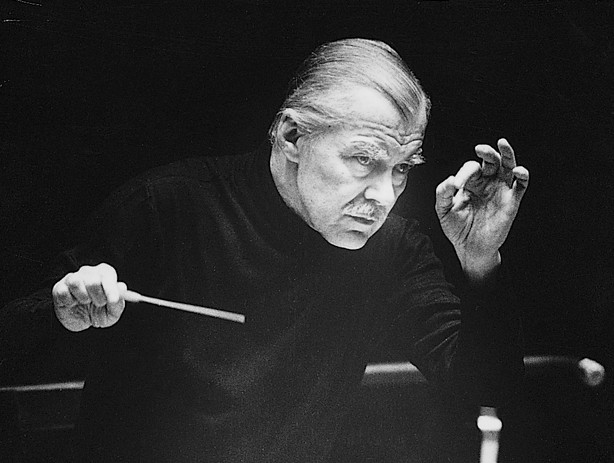
    The Met were doing the RING Cycle that season, with Sixten Ehrling conducting. The virtues (or not) of his readings of the scores were hotly debated by the fans; he was sometimes booed when entering the pit, and sometimes cheered when he took his bows at the end of each opera. I thought at the time his conducting was “maybe lacking in grandeur, but well-paced and considerate of the singers.” Listening to it now, his RHEINGOLD seems perfectly fine, with many very satisfying passages…despite some fluffs from the horns here and there.
    Ehrling-Sixten-05

    Above: Sixten Ehrling

    (Note: in 1998, when I started working at Tower Records, I met Maestro Ehrling and his charming wife, a former ballerina. The first day I met him, he was in a cantankerous mood because all the clerks were busy and he was in a rush. I stepped up, greeted him with a little bow, and immediately began to talk to him about his RING Cycle. He became a regular customer and regaled me with all sorts of wonderful stories about the singers he had worked with. He also liked to correct my pronunciation; when I referred to Wotan’s daughter as “Broon-HILL-da” he yelled: “BROON-hil-d…” I ended up really enjoying our little friendship, and missed him when he became too ill to come to the store…though he’d often send his wife to us, with strict instructions as to what to buy for him. He passed away in 2005.)  

    Christine Weidinger, Marcia Baldwin, and – especially – Batyah Godfrey are good Rhinemaidens; they raise the performance level starting with the first appearance of the ‘gold’ motif. Marius Rintzler seems at first to be a bass-oriented Alberich (though later his topmost notes are wonderfully secure) and he becomes actually scary as his plan to steal the treasure takes over his mind. Abetted by Ehrling, the scene of the rape of the gold is dramatically vivid.

    Ehrling scores again in his super-reading of the descent to Nibeheim. Rintzler as Alberich, in his own domain, lords it fabulously over his brother and his slaves. Later, betrayed, Rintzler’s performance rings true in its desperation and his powerful declaiming of the curse.

    The opera’s second scene shows Ehrling at his best, with a nice sense of propulsion and excellent support of his singers. This matinee marked the Met debut of Donald McIntyre as Wotan; he would become known and beloved worldwide a few years later when the Chereau RING was filmed for international telecast at the Bayreuth Festival. On this afternoon in 1975, he makes a superb impression: he begins a bit sleepily (Fricka has just awakened him) but once he claps eyes on the finished Valhalla, his godliness rises to full stature. His singing throughout is generously sustained; by turns imperious and subtle, he makes an ever-commanding dramatic impression. McIntyre’s final scene, hailing the new home of the gods and dismissing the Rhinemaidens who plead from below for the return of the ring, is really exciting.

    Mignon Dunn, always a great favorite of mine, is an immediately distinctive Fricka. The role is rather brief, but Mignon makes the most of every opportunity, and her gift for vocal seduction manifests itself near the end, as she lures Wotan’s thoughts away from the mysterious Erda and turns them instead towards Valhalla (where she hopes to keep him on a tighter tether…but, it doesn’t work.)

    Glade Peterson, as Loge, seems rather declamatory at first. His ample voice serves him well in the monolog, despite some moments of errant pitch. He lacks a bit of the subtlety that can make Loge’s music so entrancing. As the hapless Mime, Ragnar Ulfung is both note-conscious and characterful; he makes a string impression though once or twice he too wanders off-pitch.

    The giants are simply great: John Macurdy’s Fafner is darkly effective – he has less to sing than his brother Fasolt, but he will eventually get the upper hand…violently. Bengt Rundgren as the more tender-hearted of the two is truly authoritative, with page after page of finely inflected basso singing.

    Mary Ellen Pracht, a Met stalwart, does well as Freia, and William Dooley is a splendid Donner…his dramatic, full-voiced cries of “Heda, Hedo!” are in fact a high point if the opera, and are punctuated by a fantastical thunder-blast. Tenor Kolbjørn Høiseth is rather a fuller-toned Froh than we sometimes hear; there’s something rather ‘slow’ about his delivery. (A few days later, he sang a single Loge at The Met, and then a single Siegmund.)

    In the house, the amplifying of Erda’s Warning ruined the moment musically, but this does not affect the broadcast which is picked up directly from the stage mikes. And so Lili Chookasian makes an absolutely stunning effect with her rich, deep tones. Where are such voices as hers today? After “Alles was ist, endet!” and “Meide den Ring!”, one feels chills running up and down the spine. Magnificent!

  • First Encounter: ARIADNE AUF NAXOS

    Ariadne6263.07
    Above: Leonie Rysanek, the Met’s first Ariadne

    As the 150th anniversary of the birth (on June 11th, 1864) of Richard Strauss draws near, I was recalling the first time I heard what was to become my favorite opera – the composer’s ARIADNE AUF NAXOS. This opera had come rather late to The Met: some fifty years after its world premiere, The Met presented ARIANDE with the following cast:

    Metropolitan Opera House
    December 29, 1962
    Metropolitan Opera Premiere

    ARIADNE AUF NAXOS
    R. Strauss

    Ariadne.................Leonie Rysanek
    Bacchus.................Jess Thomas
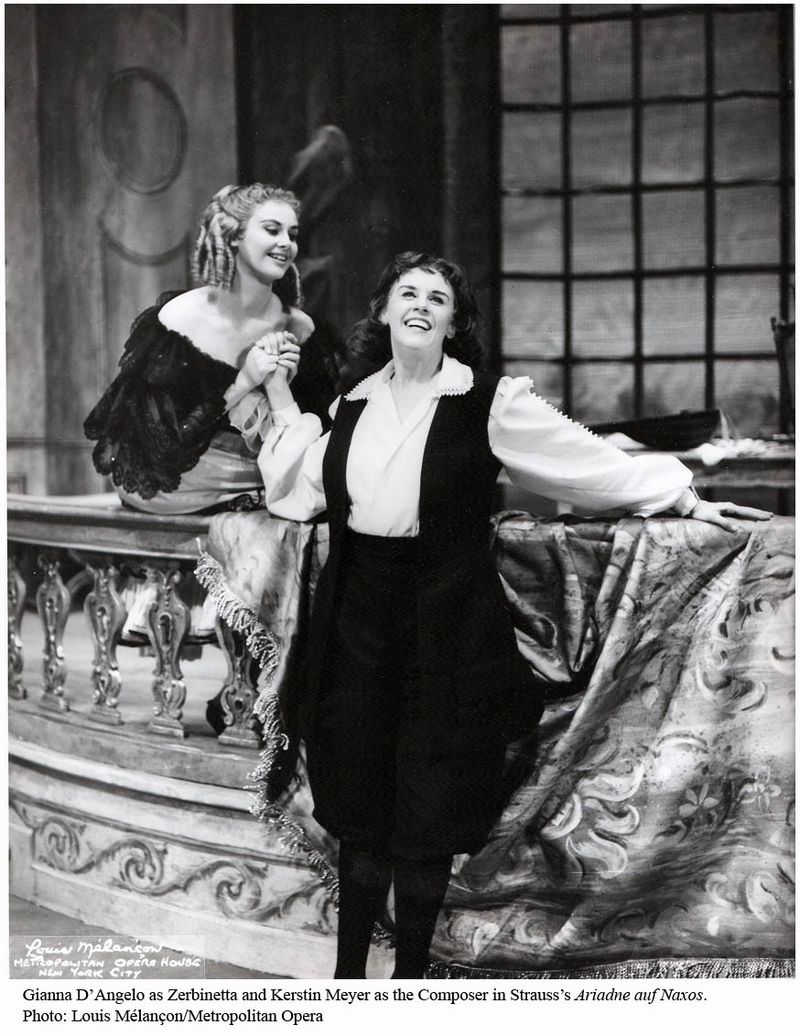
    Zerbinetta..............Gianna D'Angelo
    Composer................Kerstin Meyer
    Music Master............Walter Cassel
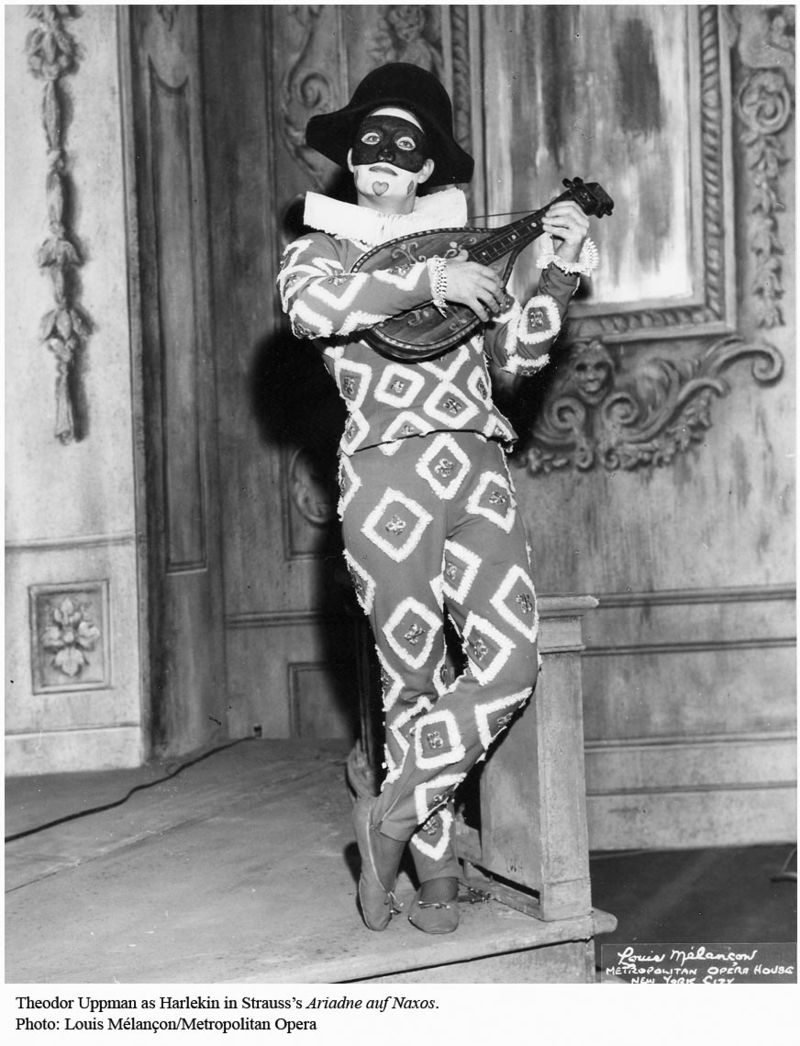
    Harlekin................Theodor Uppman
    Scaramuccio.............Andrea Velis
    Truffaldin..............Ezio Flagello
    Brighella...............Charles Anthony
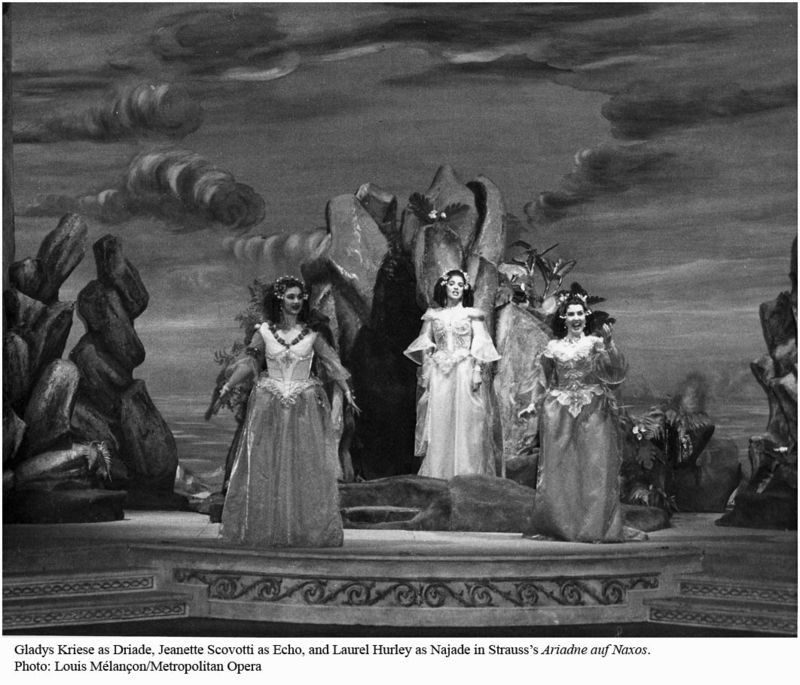
    Najade..................Laurel Hurley
    Dryade..................Gladys Kriese
    Echo....................Jeanette Scovotti
    Major-domo..............Morley Meredith
    Officer.................Robert Nagy
    Dancing Master..........Paul Franke
    Wigmaker................Roald Reitan
    Lackey..................Gerhard Pechner

    Conductor...............Karl Böhm

    The opera, with it’s almost chamber-music orchestration (only about 35 players are called for) was thought by some people to be too intimate for such a large house as The Met. But the production, revived several times over the ensuing years, continued to win new devotees to the incredible Strauss score. On March 12th, 1988 the Met production was telecast live to Europe; I was there – with Kenny and Jan – enjoying a superb cast led by Jessye Norman, Kathleen Battle, Tatiana Troyanos, and James King, with James Levine on the podium. In 1993 The Met unveiled a new and delightful production by Elijah Moshinsky with its ‘realistic’ prologue and fantasy-setting for the opera.  

    But, back to 1962: The Met’s house photographer at the time, Louis Melançon, routinely photographed each Met production as well as taking ‘portraits’ of the principal artists in costume. His photos graced Opera News for years, and I have several that were sent to me – autographed – by individual singers. Here are some of Mr. Melançon’s pictures from the Met’s premiere of ARIADNE AUF NAXOS:

    Ariadne6263.04

    Ariadne6263.24

    Ariadne6263.10

    Ariadne6263.22

    On February 2nd, 1963, Wagner’s FLIEGENDE HOLLANDER was scheduled for a Texaco/Metropolitan Opera matinee radio broadcast. Of course I was tuned in: this was my second season of Met radio broadcasts and I was thoroughly primed for my first experience of hearing HOLLANDER, with Opera News opened to the cast page and the household warned against any intrusions on my listening. Thus I was shocked when the friendly voice of Milton Cross delivered the alarming news: the opera was being changed!

    It seemed that tenor Sandor Konya, scheduled to sing Erik in HOLLANDER, was ill and so were his cover and other tenors who were in town who knew the role. It was decided to put on ARIANDE instead, since Leonie Rysanek – scheduled for Senta in the Wagner – was ready and raring to go. (ARIADNE had been scheduled for broadcast later in the season, with Lisa Della Casa the announced Ariadne; the change of opera on February 2nd thus deprived Della Casa of her chance to broadcast the role). The cast for the ‘substitution’ broadcast was the same as for the Met premiere, with the exception of Roberta Peters, replacing Gianna D’Angelo as Zerbinetta.

    Without any preparation for this ‘new’ opera, I listened and – to an extent – enjoyed ARIADNE though to be honest I was not a huge Strauss fan at that point in my operatic career. It wasn’t until 1970 that I actually saw the Met’s ARIADNE: from a front-row orchestra seat directly behind Karl Bohm’s left shoulder, I was transported by a splendid cast led by Leonie Rysanek, Reri Grist, Evelyn Lear, and James King. My love affair with ARIADNE became even more earnest a few seasons later with the New York City Opera’s beloved English/German production starring Carol Neblett/Johanna Meier, Patricia Wise, Maralin Niska, and John Alexander. But that’s a whole other story.