Tag: Lincoln Center

  • Shostakovich Reflected @ Chamber Music Society

    Images of D S

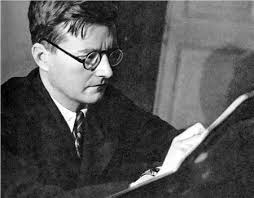
    Above: Dmitry Shostakovich

    Sunday November 23rd, 2014 – We seem currently to be in the midst of an impromptu Shostakovich Festival at the halls of Lincoln Center. Last night, the New York Philharmonic gave an epic performance of the composer’s 8th symphony under the baton of Jaap van Zweden. This afternoon, Chamber Music Society of Lincoln Center offered a very satisfying programme entitled Shostakovich Reflected, with works by Sibelius and Debussy mixed with a Shostakovch song cycle and his Trio #2. At the Metropolitan Opera, the composer’s LADY MACBETH OF MTSENSK is holding forth, conducted by James Conlon (I’ll see it on November 29th). In February, New York City Ballet will jump in with a revival of Christopher Wheeldon’s ballet, MERCURIAL MANOUVRES, set to the Shostakovich piano concerto #1. The Philharmonic meanwhile will offer two more Shostakovich symphones later in their season: the 5th (conducted by Long Yu, from January 22nd-24th, 2015) and the 10th (Alan Gilbert conducting; from April 8th-11th, 2015).

    At Alice Tully Hall today, Chamber Music Society‘s Shostakovich Reflected programme again left me searching for adjectives (superlatives, really) to describe the level of music-making by the participating artists: musicians who are rapidly becoming icons for me much as the great opera singers were back in my early days of opera-going in the 1960s and 1970s.

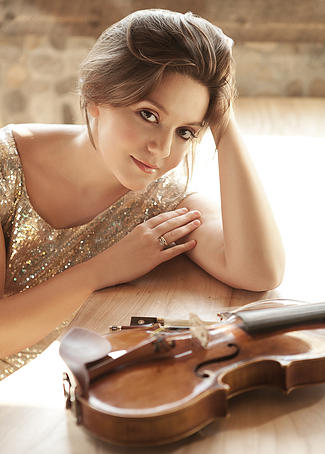
    The Sibelius Trio in G minor opened the programme today; this brief, single-movement work has a rather dark-hued, wintry feel. The music evokes a sense of longing but also of resignation. It’s unknown why Sibelius never enlarged upon this work beyond the opening movement, though he apparently made sketches, they were never developed. Yura Lee (violin), Mark Holloway (viola), and Jakob Koranyi gave a deeply-felt performance, establishing the mood so convincingly that one wanted it to go on. 

    Soprano Dina Kuznetsova then appeared for Shostakovich’s Seven Romances on Poems of Alexander Blok, with Gilbert Kalish at the Steinway, Yura Lee, and Mr. Koranyi. The soprano’s voice at first seemed overwhelming in the hall, but soon the proper balance was found and she and the musicians worked in a fine state of rapport, the vocal line now well-controlled with some very expressive dynamics. Mr. Kalish played with his customary mixture of finesse and passion, and both Ms. Lee and Mr. Koranyi displayed their intrinsic mastery of their instruments in songs where the accompanying voices take a prominent place. The audience reacted with great enthusiasm to this set, calling the artists back three times. 

    It’s always nice to find links to the ballet on programmes of symphonic or chamber music; this afternoon my friend Monica Wellington and I were especially pleased to hear Claude Debussy’s Six épigraphes antiques for Piano, Four Hands, which we both love in its danced incarnation at New York City Ballet: ANTIQUE EPIGRAPHS, a Jerome Robbins masterpiece with an all-female cast. Gilbert Kalish and Soyean Kate Lee shared keyboard, with much hand-crossing. Their refined playing evoked Nature and the rites and rituals of a long-lost tribe. 

    The concert concluded with a thrilling performance of Shostakovich’s Trio No. 2 in E minor, composed fifty years after the opening Sibelius trio. This work opens with solo cello playing in the highest register; here Mr. Koranyi displayed incredible control. Violin and piano (the two Ms. Lees) join in a fugue; the underlying feeling is one of pensive melancholy, the playing from all three artists nothing less than ravishing. New themes rise up, and the music flows with much interchange of the three voices.

    The brisk and rather jagged scherzo that follows seems alternately joyous and frantic: a lively dancelike theme cascades along, played with marvelous virtuosity by our trio tonight. The piano ripples thru scale passages or emphatic rhythmic motifs; the violin and cello alternately pluck and sing.

    Yura Lee’s poignant introduction of the third movement’s lamenting theme set the tone for this Largo, with its heart of darkness. The voices melded in music which seemed to summon up the despairing tread of a funeral procession, the misty veil shot thru with glimpses of burnished light. 

    The finale sweeps aside this heavy sense of grief, yet proceeds under a threat of returning gloom. The pianist sets the music marching, and there’s more dance-rhythms as well; wit and humor are not forbidden, but are delivered with irony. The song-like theme of the first movement is recalled, setting up a continuum of memory even as the work plunges forward.

    I can’t say enough in praise of the three musicians who wrought this superb performance. And the  audience clearly shared my sense of deep appreciation: at the end, everyone stood up and cheered as the players were summoned back for repeated bows.

    The Program:

    The Artists:


  • Dvořák/Schubert/Chausson @ CMS

    Ani-kavafian.jpg.pagespeed.ce.EDRXV6ZGFP

    Above: violinist Ani Kavafian, celebrating an important anniversary at CMS this season

    Sunday November 16th, 2014 – A concert both musically and emotionally rewarding at Alice Tully Hall today as Chamber Music Society of Lincoln Center presented works by three composers. In her welcoming speech, the Society’s co-Artistic Director Wu Han announced that the scheduled violist, Lawrence Power, would be unable to appear due to illness; in his stead, Matthew Lipman – slated to join CMS 2 next season – stepped in, making an immediate and very favourable impression in the concert’s opening work.

    The old letter in my book“, the first of four songs from Antonin Dvořák’s Cypresses which commenced the programme, gives the melody to the viola, and Mr. Lipman’s playing showed both winningly mellow tone and warmth of expression. In the company of seasoned chamber artists, he seemed entirely at home. The prominent violin passages in “Death reigns in many a human breast” and “You ask why my songs”  were played suavely by Ani Kavafian, celebrating her 35th season with Chamber Music Society. In “When your sweet glances on me fall“, Areta Zhulla (violin 2) and Gary Hoffman (cello) added their luxuriant voices to those of Ms. Kavafian and Mr. Lipman in a resonant meshing of timbres.

    172982_750

    Mr. Lipman (above) returned with Mlles. Zhulla and Kavafian, cellist Nicholas Canellakis, and double-bassist David Grossman for a poetic rendering of Dvořák’s Nocturne in B-major. Here Ms. Zhulla spun out a silken thread of lullabye whilst Mr. Grossman’s double-bass gently indicated the music’s heartbeat. In a rich blend of inner voices, Ms. Kavafian and Mssrs. Lipman and Canellakis sustained the atmosphere of reverie with their dreamy lyricism.

    F3f9ab_fad926d58fd0409da7bbd12fbd6428ab.jpg_srz_p_325_454_75_22_0.50_1.20_0.00_jpg_srz

    Above: Areta Zhulla

    While Schubert’s ‘Trout‘ quintet was undoubtedly a major draw for music-lovers today, it was a soul-stirring performance of Ernest Chausson’s Trio in G-minor that most truly moved me. Chausson’s music with its deep-lilac perfume always gets under my skin, and this trio is particularly affecting in its melodic allure and its build-up to rhapsodic climaxes.

    Th

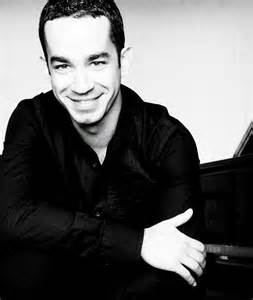
    Keyboard magician Inon Barnatan (above) cast a spell over the hall right from the start, with the misterioso opening of the trio elegantly intoned. As the work progresses, Ms. Zhulla and Mr. Canellakis sustained the feeling of rapture, their impassioned playing expanding the impression of yearning and melancholy in the third movement. Together they crafted an intensely rich sound, giving the illusion of a larger ensemble. Their heartfelt playing, and Mr. Barnatan’s evocatively nuanced piano line, really drew me in.

    8917fb601b89466fecca47f46bfa9edc.wix_mp_1024

    Above: Nicholas Canellakis

    As the Chausson surges forward in the waltz-like final movement, romantic tides rise up and we feel an expectation that things may end on an upbeat note; yet instead the composer takes a plunging chromatic descent into the darkish realm of the trio’s somber opening. The audience, having been held in the thrall of the three superb musicians, erupted in a gale of applause, recalling the players for an extra bow.

    For the programme’s finale, the Schubert “Trout“, Ms. Kavafian took the lead; Mr. Barnatan really went to town here, showing sparkling virtuosity. Matthew Lipman, Gary Hoffman, and David Grossman defined the music’s inspiring textures with a genial sense of community. The Theme and Variations section, based on that enduringly popular Schubert song “Die forelle” was especially gratifying, and the sold-out house seemed thoroughly engaged by this famiiar and ever-welcome masterpiece.

    The Repertory:

    The Artists:

  • Fauré & Ysaÿe at Chamber Music Society

    AnneMarie-McDermott-Jan-2013-468x310

    Above: pianist Anne-Marie McDermott

    Sunday October 26th, 2014 – Works by the Belgian violinist/composer Eugène Ysaÿe and his better-known French contemporary Gabriel Fauré were on the bill at Alice Tully Hall as Chamber Music Society of Lincoln Center presented this dusk-hour concert on a cool Autumn day. My friend Monica Wellington and I are both very much admirers of the Fauré works used by George Balanchine in his poetic ballet EMERALDS, but neither of us were much familiar with the music of Ysaÿe.

    The opening work: why is it called the Dolly Suite? Excellent question, and one I’d never thought to delve into until now, when I’m hearing it played live for the first time. ‘Dolly’ was the affectionate nickname of Helene Bardac, the young daughter of Fauré’s long-time mistress, Emma Bardac. Fauré composed the brief works that comprise the suite between 1893 and 1896, to mark birthdays and other events in Helene’s life.

    The suite’s movements are:

    Berceuse (a lullabye), honoring Helene’s first birthday (Allegretto moderato).
    Mi-a-ou, which gently mocks Helene’s attempts to pronounce the name of her elder brother Raoul, who later became a pupil of Fauré’s.
    Le Jardin de Dolly (Andantino); this was composed as a present for New Year’s Day, 1895. It contains a quotation from Fauré’s first violin sonata, composed 20 years earlier.
    Kitty-valse: this is not about a cat, but rather about the Bardacs’ pet dog, named Ketty.
    Tendresse, an andante, was written in 1896 and presages the composer’s beloved Nocturnes.
    Le pas espagnol (Allegro) denotes a lively Spanish dance tune which brings the suite to its close.

    Cms_01

    The suite is set for piano four-hands, and as I watched Wu Han (above) and Anne-Marie McDermott together at the keyboard, I couldn’t help but think of them as the Dolly Sisters. In her opening remarks, Wu Han spoke of the intimate nature of chamber music and the fact that there’s nothing quite so intimate as playing piano four-hands. She and Ms. McDermott seemed to be having a grand time with this music. Their immaculate playing illuminated the six contrasted movements, which veer from boisterous to delicate, sometimes in the twinkling of an eye. The audience were as charmed by the work as by the players.

    Index

    Yura Lee (above) is a favorite with CMS audiences; she seems most often to be heard here as a violist, but tonight she had a lovely opportunity to bring forth her violin for a subtle and ravishing performance of Ysaÿe’s Rêve d’enfant (a CMS premiere) in which she played with clear lyricism and great control. Ms. McDermott at the Steinway underscored her colleague’s transportive musicianship with playing of calming refinement.

    Dautricourt

    In a rare performance of Ysaÿe’s Sonata in A minor for Two Violins (tonight marked the work’s CMS premiere), a duet sometimes deemed unplayable, Yura Lee and Nicholas Dautricourt (above) remained undaunted by the composer’s overwhelming technical demands, and they formed a spirited team, spurring one another on in a friendly atmosphere of “Anything you can play, I can play sweeter…softer…faster…” Mr. Dautricourt appeared for this piece in his shirtsleeves, tieless and untucked: clearly he meant business. The two virtuosos sailed on and on through the intricacies of this long duet, the audience with them every step of the way and saluting them sincerely at the end for having triumphed against improbable odds.

    Carr cellist

    After the interval, cellist Colin Carr (above) indeed charmed Monica and me with his gorgeous playing of Fauré’s Sicilienne; originally set for cello and piano, as we heard it performed tonight, this melodious gem was later re-worked by the composer into his score of incidental music for a production of Maeterlinck’s Pelléas et Mélisande; and from that incarnation, Balanchine plucked it to be part of his elegant ballet EMERALDS. Mr. Carr, with Wu Han’s polished support, brought his warm tone and a particularly nice, merlot-flavoured lower register to this evocative performance. As a contrast, cellist and pianist gave us another Fauré miniature: Papillon (‘Butterfly’) in which the cellist’s fingers flutter up and down the strings, twice pausing in more sustained passages.

    In Fauré’s Quartet No. 1 in C minor for Piano, Violin, Viola, and Cello, Op. 15 – the concluding work tonight – Ms. McDermott summoned up the rhapsodic qualites of the opening movement, then turned vividly playful in the scherzo which follows. Ms. Lee  – her viola really singing – along with Mssrs. Dautricourt and Carr treated us to some genuinely poetic playing, especially in the adagio where the three voices passed the melodies between themselves with playing of a satiny eloquence. Indeed, the level of playing throughout the evening left me yet again in awe of the Society’s unique roster of artists.

    The Program:

    Fauré Dolly Suite for Piano, Four Hands, Op. 56 (1894-96)

    Ysaÿe Rêve d’enfant for Violin and Piano, Op. 14 (1895-1900)

    Ysaÿe Sonata in A minor for Two Violins (1915)

    Fauré Sicilienne for Cello and Piano, Op. 78 (1898) 

    Fauré Papillon for Cello and Piano, Op. 77 (before 1885)

    Fauré Quartet No. 1 in C minor for Piano, Violin, Viola, and Cello, Op. 15 (1876-79)

    The Participating Artists


  • Boston Ballet @ Lincoln Center

    10492224_10152189404857607_7335500118768821092_n

    Friday June 27th, 2014 – Boston Ballet have been celebrating their 50th season with performances at Lincoln Center this week. Tonight’s programme looked so tantalizing on paper, and it turned out to be a magnificent evening overall: Vaslav Nijinsky’s Afternoon of a Faun, George Balanchine’s Symphony in Three Movements, Jorma Elo’s Plan to B and Jiří Kylián’s Bella Figura were all superbly danced by the Boston troupe.

    When visiting companies bring Balanchine to New York, I sometimes wonder if it’s a good idea. Can’t you bring us something we don’t see all the time? But understandably, other companies are proud of their Balanchine and want to show off their abilities. Boston Ballet did a great job with The Master’s Symphony in Three Movements, even bringing their own orchestra to play the score. And Boston Ballet has strong Balanchine ties: he became Artistic Advisor to the Company in 1963, gifting them with more than seventeen of his ballets as a gesture of support.

    Curtain up, and I immediately found Shelby Elsbree in the diagonal. The ballet surges forward, with delightful performances by Misa Kuranaga and Jeffrey Curio – the high-bouncing couple – and Rie Ichikawa and Bradley Schlagheck. In the ballet’s central pas de deux, Lia Curio and Lasha Khozashvili excelled. The audience, fortified by a contigent of Bostonians, gave liberal and much-deserved applause to the dancers.

    Boston Ballet had brought their production of Vaslav Nijinsky’s Afternoon of a Faun to Fall for Dance in 2009 and I was mesmerized by it. Seeing the Leon Bakst backdrop and costumes again this evening provided a tangible link to the history of ballet and to that scandalous night over a century ago when Faun set Paris on its collective ear. Tonight, Altan Dugaraa embodied the exotic beauty of the Faun, his mystique and his longings, and Erica Cornejo was the Nymph, miming with stylized perfection. So grateful to have had another opportunity to see this production.

    In 2006, I experienced Jorma Elo’s work for the first time at the New York City Ballet’s premiere of Slice to Sharp. Slice received the longest ovation of any new work I’ve encountered at the ballet over the years: endless curtain calls and a state of euphoria among the crowd. Boston Ballet‘s performance of Mr. Elo’s Plan to B had something of the same a dynamic pungency about it. Illuminated by a large glowing screen stage right, six dancers reveled in fantastical choreographic patterns, flinging themselves into off-kilter leaps and flying across the stage, arms whirling like windmills in a tornado. Dusty Button, Whitney Jensen, Bo Busby, Jeffrey Cirio, John Law, and Sabi Varga danced thrillingly and were deservedly cheered for their jaw-dropping virtuosity.

    Alas, I am afraid Jiří Kylián’s Bella Figura was not really to my liking. Returning from the intermission, we find the dancers already onstage…warming up? Or is it a choreographed passage to start the ballet? Either way, it’s pretentious. Purgatorial and several minutes too long, the Bella Figura seemed to be more about the staging than anything else: black curtains endlessly re-arranged, a complex lighting scheme, flaming braziers bringing a taste of Hell to the stage, dancers coming and going almost randomly. The dancing was of course remarkable, and there are some very attractive passages, most especially when the topless dancers in long red skirts dance in unison. But it seemed to go on and on.

  • Chamber Music Society/Season Finale

    Gilbert-kalish-8f09f8a16f90e3f2

    Above: pianist Gilbert Kalish

    Sunday May 18th, 2014 – With this concert of works by Mendelssohn and Brahms, the current season of Chamber Music Society of Lincoln Center at Alice Tully Hall came to a close. The Society’s programs – and the roster of incredible musicians they are able to draw from – have made CMS a key element in my musical life. It’s almost like going to church, but even more meaningful.

    Gilbert Kalish is such a pure musician. Nothing clutters up his delivery; he sits down and plays, opening a direct conduit between composer and listener. Kalish’s virtuosity is so assured and the emotive qualities of his playing so genuine that the music comes vividly and memorably to life. He opened today’s concert with a selection from Mendelssohn’s Lieder ohne Worte (‘Songs Without Words’); composed between 1829 and 1845, these melodious miniatures were published in eight volumes. Mr. Kalish’s sampler of four of the songs covered the 15-year compositional span and were performed with astute dynamic contrasts and a lovely lightness of touch.

    Waiting for the stage to be set for the string players, my friend Adi and I discussed which of the program’s two composers we preferred, and whether we’d rather take the music of Mendelssohn or that of Brahms to the proverbial desert island. I chose Mendelssohn – the man who wrote my very favorite chamber works (his piano trios); and a few minutes later, as the playing of the adagio from the Quintet #2 moved me to tears, I knew I was right. (Adi sided with Brahms…)

    The Mendelssohn Quintet #2, composed in 1845 – rather near the end of Mendelssohn’s too-brief lifetime – shows the composer’s continuing attachment to the Classicism of Mozart or Haydn while coloristically venturing deeper and deeper into the Romantic territory. It is perhaps his occupying this very bridge between two great eras in musical history that makes Mendelssohn so intensely appealing.

    The cellist Paul Watkins gave the music a velvety weight, and Arnaud Sussman took the viola 1 line with some lovely nuances. Violinist Philip Setzer and violist Richard O’Neill provided the inner voices – Mendelssohn keeps all the players singing throughout. For all the joy and clarity of the outer movements, it’s the adagio that gives this work its very special appeal. Here, violinist Shmuel Ashkenasi provided truly ravishing ascending phrases, soaring over the harmonies with poignant beauty of tone. This was the cause of my weeping today.

    After intermission, Mr. Kalish was again at the Steinway for two Brahms Intermezzi – pensive, bordering on melancholic – which bracketed his splendidly agile playing of the Capriccio in G-minor (Opus 116) where his dexterity took us on a whilrwind ride, letting us catch our breath in the melodic central passage. Again, his connection to the music and the deep sincerity of his playing were much appreciated.

    For the Brahms G-major Quintet (Opus 111), Mr. Setzer took the concertmaster post and all five of the musicians invested this music with glowing tone and intrinsic technical mastery. When Brahms submitted this quintet to his publisher in 1890, the score was accompanied by a message in which the composer suggested that this would be his final work. Fortunately he went on composing, producing several masterworks in the ensuing seven years until his death.

    48849_750

    Above: violist Richard O’Neill

    The Brahms G-major Quintet features a prominent role for viola 1, and today Richard O’Neill’s passionate playing was as inspiring to behold as to hear: gorgeous tone, impeccable technique. Reading up on Mr. O’Neill’s background, I came across this quote: “To violist Richard Yongjae O’Neill, music is like a religion in which Mozart and Beethoven are gods.” No wonder I feel such a connecton to his playing: we’re worshipers at the same altar.

    This evening’s participating artists:

  • Paul Taylor Dance Company/Lincoln Center 2014 #3

    ImageProxy.mvcptdc

    Wednesday March 26, 2014 – With America going to pot, Paul Taylor’s A FIELD OF GRASS was a particularly timely opening work on tonight’s programme as the venerable choreographer’s troupe of outstanding dancers neared the end of their three-week season at Lincoln Center. To the gently joyous and sometimes ironic songs of Harry Nilsson, the dancers evoked the joys of getting high.

    Robert Kleinendorst’s opening solo has an innocent air, a toke or two getting him there as he savors a summer afternoon. He’s joined by others from the commune, everyone relaxed and ever-so-slightly paranoid. There’s a blissful, light-stepping duet for Robert and the sensational Michelle Fleet, and Aileen Roehl is simply groovy in a featured role. Eran Bugge, Christina Lynch Markham, Sean Mahoney and Francisco Graciano bend, sway and celebrate under the influence; all that’s missing is the obligatory trip to the grocery store.

    In a violent mood swing, the second work tonight was Taylor’s 2005 ballet BANQUET OF VULTURES set to Morton Feldman’s eerie Oboe and Orchestra. A quote from 19th-cenutry Scottish poet John Davidson’s ‘War Poem‘ heralds the encompassing darkness of this work:  “And blood in torrents pour In vain–Always in vain, For war breeds war again!”

    The curtain opens on a shadowy stage, with an ensemble of camouflage-clad dancers writhing in candlelight. The dancers’ moves suggest the hopeless stupor of those long held in tortured captivity; awakened to another day of terrorized despair, they begin to rush about in furtive panic, seeking routes of escape.

    Michael Trusnovec, a malevolent power-figure in a dark suit and red tie, emerges from the gloom; with a reptilian slither in his walk and an emphatic stamping of his heels, this sadistic jailer strikes fear in the huddled captives. Seizing upon his prey, Jamie Rae Walker, Michael systematically breaks her down, with a brutal act of rape before he stabs her and drags her body away to be discarded.

    The narrative is destined to be endlessly repeated: a new master of war, Robert Kleinendorst, now appears and dances a spastic solo, flinging himself to the floor in paroxyms of rage before he approaches the prisoners, instilling them with visions of a fresh hell. 

    The communicative powers of Ms. Walker and Mssers. Trusnovec and Kleinendorst were at full sail in this powerful work which evokes the now largely-forgotten bastions of cruelty – Guantanamo and Abu Ghraib – and the unfettered vanity of George W Bush and his war-mongering administration.

    I first experienced CLOVEN KINGDOM at Jacob’s Pillow not long after its creation; Paul Taylor’s works were my first exposure to modern dance and CLOVEN KINGDOM struck me an an especial favorite and it remains so to this day, after many viewings. 

    Meshing music by Arcangelo Corelli, Henry Cowell and Malloy Miller, Paul Taylor develops this visually stunning ballet against a sound collage that combines the elegant formality of the Baroque with sensuous back-beats and jungular vibrations. Treading along the fault lines between the civilized and the savage, the quartet of men in tuxedos – Michael Trusnovec, Michael Apuzzo, Michael Novak and George Smallwood – move with a kind of predatory elegance. The women wear sweeping gowns in attractive hues and later some of them add mirrored heardresses, casting jewel-like refractions of light about the stage and into the theatre. Urgently lyrical swirls, stylized gestures, and witty pairings decorate the evolving choreography for the female ensemble: Michelle Fleet, Eran Bugge, Laura Halzack, Jamie Rae Walker, Aileen Roehl, Heather McGinley, Christina Lynch Markham and Kristi Tornga. In one of those inimitable Taylor touches, Ms. Roehl – in lime green – periodically crosses the stage in a leaping diagonal: a woman with a mission…though we have no idea what impels her quest. Brilliant!

    As this was my last Taylor performance of the current season, I want to express my sincere appreciation to the marvelous Taylor dancers – with roses for the newcomers Ms. Markham and Ms. Tornga for their excellent work – and a note of thanks to the Company’s Lisa Labrado, who is always so helpful. And then, of course, there’s the Great Man himself.

  • Schubert’s Octet @ CMS

    Schubert

    Above: Franz Schubert

    Sunday February 23, 2014 – A sold-out house at Alice Tully Hall as Chamber Music Society of Lincoln Center continued their series The Incredible Decade, featuring works composed between 1820 and 1830, with octets by Schubert and Mendelssohn.

    The evening didn’t quite turn out as I’d hoped; I’ve been fighting off a cold and I thought I had medicated myself sufficiently to get thru the concert. But about half-way thru the Schubert all the symptoms suddenly activated and – since I am always kvetching about people who come to performances when they are coughing – I thought the polite thing would be to leave at intermission. This choice was seconded by the presence of a fidgety woman next to me who kept poking me in the ribs with her elbow. I hated to miss the Mendelssohn – one of my favorite works – but in the end I think I made the right choice because by the time I got home I was really sick.

    At any rate, the performance of the Schubert octet in F-major was certainly worth my effort to attend; as is their wont, Chamber Music Society assembled a group of players of the highest calibre and their work – both as individuals and in ensemble – was dazzling. The vociferous ovation at the end was fully merited, the musicians called out twice as the audience’s cheering waves of applause swept over them.

    Schubert’s octet in F major, D. 803, was an ambitious project for the young composer. Sometimes viewed as a preparatory ‘outline’ for what would eventually become the Symphony No. 9 in C major, The Great, the octet in itself is a rewarding and innovative work. Performance timing of one hour makes this one of the longer chamber works in the active repertory; its six movements literally brim over with melodic and harmonic riches. The mood runs from sunshine to shadow and the work conveys Schubert’s musical and emotional ebb and flow; it’s a piece that calls for both vrtuosity and spiritual intention, and our stellar band of players tonight gave a performance that was nothing short of spectacular.

    D288FC0D-DBDE-8E54-239713E258DAC4D4

    I was particularly excited to encounter one of my favorite musicians, Alexander Fiterstein (above), whose prodigious talents as a clarinetist were very much an illuminating factor in this evening’s performance. In the Menuetto, Alexander and violinist Erin Keefe engaged in a courtly dialogue, and earlier in the Adagio it is the clarinet which first ‘sings’ the lovely melody. Ms. O’Keefe’s silken timbre was a joy to hear throughout, and her fellow string players – Sean Lee (violin), David Aaron Carpenter (viola), Jakob Koranyi (cello) and the Society’s formidable double-bass player Kurt Muroki – blended stylishly while the wind trio – along with Mr. Fiterstein – had Bram Van Sambeek (bassoon) and the matchless velvet of Radovan Vlatkovic’s horn playing. Having played the horn in high school, every time I hear Mr. Vlatkovic I develop a case of ‘timbre envy’. How does he do it? My timbre was always too trumpet-like. Special kudos to Mr. Koranyi as well: his ‘variation’ in the Andante was one of the outstanding passages of the evening.

    In her pre-curtain speech, co-Artistic Director of CMS Wu Han gave us the exciting news that subscription/ticket sales were already well ahead of projection for the 2014-2015 season.  Bravo CMS!

  • Classical Flowering @ Chamber Music Society

    Spohr

    Above: the composer Louis Spohr

    Sunday January 26th, 2014 – The recent snowstorm and its resulting impact on the MTA made me miss the Orion String Quartet’s program of Haydn and Mozart at Chamber Music Society of Lincoln Center on January 21st – a program that drew such a rush on the box office that it was repeated the following evening at the Rose Studio. Tonight, still in an Arctic deep-freeze, I made it to Alice Tully Hall for Classical Flowering, a performance which brought together ten superb players in the following program:

    The three works, all written within a twenty-year span, made for a genuinely pleasing experience in the peaceful ambiance of Alice Tully Hall: a refuge not only from the Winter weather but also from increasingly dark and upsetting world events. 

    Schubert’s Trio in B-flat major is an incomplete composition; only the first movement (and some thirty-nine bars of a second, slower one) has come down to us. Perhaps the 19-year-old composer intended to return to the work at some point but – with his active musical imagination – countless other projects took up his time. So we are left with this very appealing single movement, a beautiful prelude to the two larger works on tonight’s program. Elmar Oliveira, Cynthia Phelps and Nicholas Canellakis played superbly and the piece was over almost before it began. But Ms. Phelps and Mr. Canellakis were with us all evening – playing in all three offerings tonight – and Mr. Oliveira returned for the closing Beethoven.

    Louis Spohr, the least-well-known of today’s three composers, received a commission in 1813 from  Johann Tost, a wealthy merchant and amateur musician, for a chamber work featuring both winds and strings. Spohr thus penned his Grand Nonetto, one of the few of his compositions to remain in active repertory over the ensuing two centuries.

    The Nonetto‘s opening Allegro draws upon a lyrical main theme first heard as a four-note motif at the work’s very beginning. The second movement is an Allegro Scherzo comprising two trios: the first with the violin prominent in a dance-rhythm called the landler, and the other featuring the wind voices. This is followed by an Adagio with song-like themes played alternately by strings and winds; then the Nonetto reaches its finale in a sonata-form movement with tuneful episodes calling forth the solo voices from the ensemble.

    A remarkable ensemble of musicians took the Tully Hall stage for the Spohr: the strings arranged on our left and the woodwinds on our right. And in the center, Radovan Vlatkovic with his horn; for it is the horn that gives this work its special, burnished glow. Mr. Vlatkovic’s mellow playing was a delight here, and then later – in the Beethoven – he surpassed himself. Marvelous inter-action among the string players: the excellent violinist Arnaud Sussman taking the lead with Cynthia Phelps, Nicholas Canellakis and Kurt Muroki giving clarity to the inner voices; across the way, the regal flautist Tara Helen O’Connor  piped beautifully in her melodic flights. Romie De Guise-Langlois displayed impressive breath-control in the flowing clarinet passages; Stephen Taylor (oboe) and Peter Kolkay (bassoon) played with fluent expression.

    Beethoven’s Septet in E-flat Major, written in 1799, was the oldest work on the program today. In six movements, this work was one of Beethoven’s most popular during his lifetime, though he is said to have wished it had been burned. Luckily, he didn’t get his wish and the Septet comes down to us today as an outstanding musical delight.

    The six-movement structure has the flavour of a classic divertimento. The third movement, the most popular section of the work, is an adaptation of the minuet from the composer’s Piano Sonata in G major; the fourth movement is a series of variations in which each player has the opportunity to shine. The Septet‘s final movement features a violin cadenza, delivered today with silken virtuosity by Elmar Olveira.

    The audience – a full house held in rapt attentiveness throughout the program – gave the collective of magical music-makers a rousing ovation at the end of the concert, calling the players out for an extra bow. The Beethoven was outstanding in every regard and special kudos to cellist Nicholas Canellakis for his finely-wrought solo passage in the fifth movement and to Mr. Vlatkovic’s wonderfully plush horn-playing, especially in the last three movements. Ms. De Guise-Langlois and Mr. Kolkay were the polished woodwind voices, and along with Messrs. Oliveira and Canellakis, Cynthia Phelps and Kurt Muroki made a string quartet of the highest calibre. A brilliant performance overall.

    The evening’s participating artists:

  • The Virtuoso Clarinetist @ CMS

    David_shifrin

    Above: clarinet virtuoso David Shifrin

    Tuesday November 19th, 2013 – A delightful programme of music celebrating the clarinet was featured at Chamber Music Society of Lincoln Center. The Society gathered a distinctive ensemble of artists tonight, among them one of my favorite singers, mezzo-soprano Sasha Cooke. This week I have the pleasure of experiencing Sasha’s artistry twice, for she follows up tonight’s chamber evening with performances of Britten’s Spring Symphony with the New York Philharmonic. 

    The Society’s Wu Han greeted us with irrepressible, energetic charm; she explained that she had left the evening’s programming up to Mr. Shifrin and then turned the stage over to the musicians. A packed house seemed eager to hear everything that was offered: again, CMS is the place to be for serious music-lovers.

    The evening commenced with an unusual Mozart adagio for two clarinets and three basset horns (K. 411) which the composer purportedly arranged as a sort of entree for the members of the Masonic lodge which he had joined in 1784. The piece is brief, with organ-like sonorities.   

    Sasha_Cooke_-_profile_-_credit_Rikki_Cooke

    Above: Sasha Cooke, photo by Rikki Cooke 

    In the splendid aria “Parto, parto…” from Mozart’s penultimate opera, LA CLEMENZA DI TITO, Sasha Cooke’s timbre seems to have taken on an added richness since I last heard her. The singer’s expressive qualities were, as ever, to the fore, and the power and beauty of her interpretation made me long to hear her at The Met again where lesser artists hold forth in roles that would suit Ms. Cooke to perfection. Be that as it may, her singing of the aria tonight, graced by Mr. Shifrin’s polished roulades, was a thoroughly engrossing musico-dramatic experience.  The Opus One Piano Quartet’s first-rate playing of this chamber arrangement was an ideal compliment to the singer and clarinetist. 

    Leaping forward from the 18th century to the 21st, Sasha Cooke displayed her versatility in the New York premiere performance of Lowell Liebermann‘s Four Seasons. In setting poems by Edna St. Vincent Millay, the composer seems to me to have crafted a contemporary masterpiece: his highly evocative, coloristic writing summons visions of the changing seasons with spine-tingling textures. There are several remarkable passages – the transition from Spring to Summer was especially marvelous – and the composer set The Death of Autumn twice, with the singer’s poetic response to the text varying in mood between the two. A chilly misterioso motif depicts swirls of snowflakes at the singer intones the beautiful ‘What lips my lips have kissed’ and the work closes with the poignant recollection of lost love: ‘But you were something more than young and sweet and fair – and the long year remenbers you’.

    Sasha Cooke, with her gift for communicating not just words but emotions, gave a sublime performance of this fascinating new work; Mr. Shifrin and the musicians of Opus One – Anne-Marie McDermott, Ida Kavafian, Steven Tenenbom and Peter Wiley – produced a glowing soundscape in which the voice was heard in all its affecting radiance.

    Following the intermission, Stravinsky’s Berceuses du chat were performed by Ms. Cooke and three clarinetists: Mr. Shifrin, Romie De Guise-Langlois, and Ashley William Smith. These wryly charming  lullabies were sung with soulful ‘Russian’ tone by the delightful Sasha.

    The evening’s second New York premiere, Christopher TheofanidisQuasi una fantasia is dedicated to Mr. Shifrin and was performed by him and fellow-clarinetist Chad Burrow, with the Opus One Quartet. Facing one another, the two clarinets engage in a musical conversation and sometimes blend in duet; the ensemble provide commentary and pulsing rhythmic motifs. 

    Sasha Cooke’s lovely rendering of four contrasting Mendelssohn lieder – accompanied by Ms. McDermott – was followed by the composer’s melodious Concertpiece No. #1 which was lovingly played by Mr. Shifrin with Mlles. De Guise-Langlois (on Basset horn) and McDermott at the Steinway.

    A rarity, Ponchielli’s Il Convegno (The Meeting), which featured Mr. Shifrin and Miss De Guise-Langlois in a gentle virtuoso dialogue backed by the ensemble, ended the evening. All was well – and beautifully played, of course – though I did feel that the Mendelssohn and Ponchielli were too similar in mood to be played back-to-back. I think interjecting the Stravinsky songs after the Mendelssohn Concertpiece might have set the two ensemble pieces in higher relief. 

    The Program:

    • Mozart Adagio in B-flat major for Two Clarinets and Three Basset Horns, K. 411 (1782)
    • Mozart “Parto! Ma tu ben mio” from La clemenza di Tito, K. 621 for Mezzo-Soprano, Clarinet, and Piano Quartet (1791)
    • Liebermann Four Seasons for Mezzo-Soprano, Clarinet, and Piano Quartet (2013) (New York Premiere)
    • Stravinsky Berceuses du chat (Cat’s Cradle Songs) for Voice and Three Clarinets (1915)
    • Theofanidis Quasi Una Fantasia for Two Clarinets and String Quartet (2013) (New York Premiere)
    • Mendelssohn Concertpiece No. 1 in F minor for Clarinet, Basset Horn, and Piano, Op. 113 (1832)
    • Mendelssohn Selected Songs for Mezzo-Soprano and Piano
    • Ponchielli Il Convegno (The Meeting), Divertimento for Two Clarinets and Strings (1868)

    The Artists:

  • Great Piano Quartets @ Chamber Music Society

    Gilbertkalish_large

    Above: pianist Gilbert Kalish of the Chamber Music Society of Lincoln Center

    Tuesday October 22nd, 2013 – Piano quartets from three centuries were on the bill today at this Chamber Music Society of Lincoln Center performance. As I walked down the corridor to enter the auditorium at Alice Tully Hall, I experienced the odd sensation of being in church; these CMS concerts are not only completely satisfying musically, but they are so spiritually uplifting in their ability to carry us out of the everyday world to something more pure and elevated. 

    I had an incredible seat, second row center, looking up at the musicians at close range. The lines of communication – between player and player, and between musicians and audience – were so direct and intimate; I don’t exaggerate when I say it was a transportive experience.

    O weiss

    Above: pianist Orion Weiss

    Mozart first: the ill-fated genius composed two piano quartets, a relatively rare genre during the Viennese
    Classical period. The E-flat major quartet K. 493 is the second of these, and dates from 1786. It is thought to be the piece that Mozart himself played at Count Joseph Thun’s palace when the composer journeyed to Prague in 1787 to witness the overwhelming success there of his opera LE NOZZE DI FIGARO. This quartet is considered among the peaks of Mozart’s chamber music, and it certainly seemed so today in a performance of remarkable musical clarity and emotional immediacy.

    Orion Weiss was at the Steinway, with Nicolas Dautricourt (violin), Paul Neubauer (viola) and Keith Robinson (cello) center-stage. Their playing was impeccable, and I so deeply enjoyed watching the communication between them: a silent language of the eyes and a tilt of the head. Mr. Neubauer, as expressive of face as in his musicianship, seemed the conduit linking the four players emotionally. The music flowed freely as melody and embellishment passed from one player to another. An atmosphere of quiet intensity filled the hall, the audience breathing in the sustaining beauty of Mozart’s perfection.

    A complete change of mood as we were transported forward to 1931 and the intoxicating rhythms and alluring turns of phrase of the Spanish composer Joaquin Turina’s A-minor quartet, opus 67. Here the players were out to seduce the ear, led by Yura Lee (violin) with Messrs. Neubauer, Robinson and Weiss.

    Turina composed this piano quartet in 1931; its flavour of
    Spanish folk music, with gypsy and Andalusian nuances, is characteristic of the composer’s work, which was influenced by his predecessors Manuel de Falla and Isaac Albeniz. Veering effortlessly from the fiery rhythms to the more sustained song-like motifs, Ms. Lee and her colleagues reveled in sensuous glow of the music; Mr. Weiss fulfilled the demanding piano writing with élan, and again I greatly enjoyed the the silent sense of conspiracy among the players as they wound their way thru the subtle turns of the music.

    Yura Lee switched gracefully from violin to viola for the evening’s concluding work, the Brahms Quartet #2, Opus 26. For this long (50 minutes) and demanding work, keyboard master Gilbert Kalish was at the Steinway, Nicolas Dautricourt returned with his violin, and the superb Mr. Robinson polished off his evening perfectly – the only player involved in all three works tonight. 

    Johannes Brahms himself played the piano part at this work’s premiere in 1863; Robert Schumann had already hailed Brahms as Beethoven’s heir apparent, and the piano quartet was one of the works that propelled the composer into his position as one of the immortal Three Bs – Bach, Beethoven and Brahms – in the pantheon of classical music.

    Tonight this masterpiece unfolded in all its glory. In a touching tribute in the playbill, Mr. Dautricourt spoke of being mentored by Mr. Kalish at Ravinia in 2002 when the Frenchman had first arrived in the United States. It must have been a great experience for them to perform together this evening.

    Mr. Dautricourt’s playing is so passionate and expressive; I found myself drawn to this tall and charismatic musician, who is apparently equally at home in both jazz and the classics. Mr. Kalish’s playing was resonant and sublime, with Ms. Lee and Mr. Robinson yet again as pleasing to watch as to hear. The cumulative effect of their performance drew a sustained applause from the attentive and dedicated audience of music-lovers.

    The anticipation I felt going into the concert was amply rewarded: I had expected the best that music can offer, but – intangibly – it was even better than that.

    The participating artists tonight were: