Tag: Lisa Batiashvili

  • Batiashvili/Mäkelä/Royal Concertgebouw

    Batiashvili

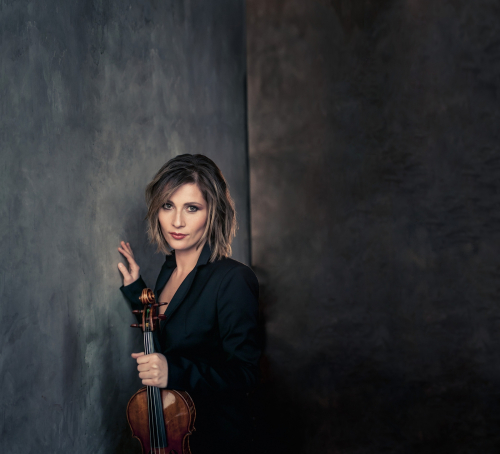
    Above: Lisa Batiashvili, photo by Sammy Hart/DG

    ~ Author: Oberon

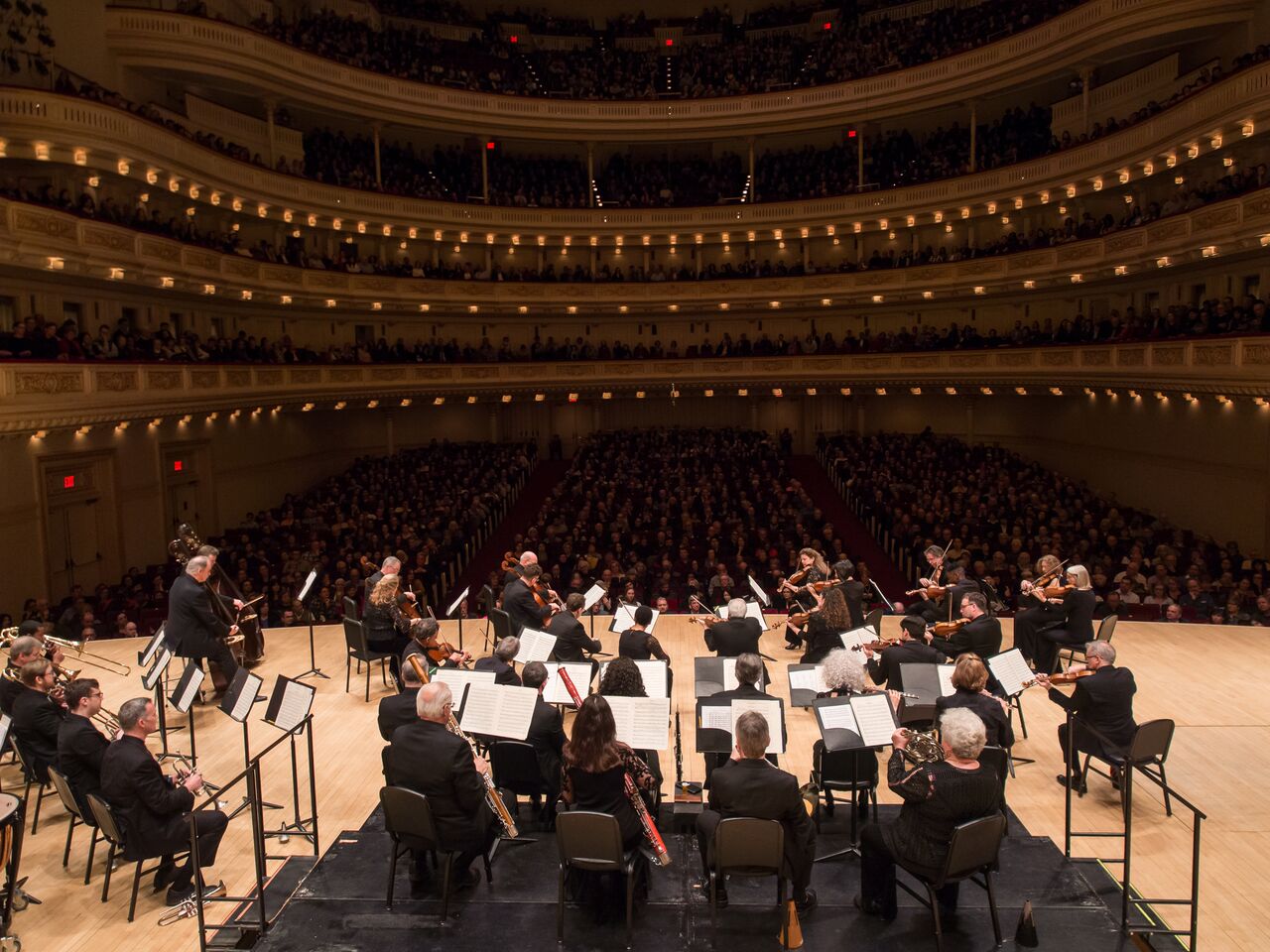
    Friday November 22nd, 2024 – Tonight at Carnegie Hall, the Royal Concertgebouw Orchestra opened their program with the US premiere of Body Cosmic by the orchestra’s composer-in-residence, Ellen Reid. One of my all-time favorite musicians, Lisa Batiashvili, then offered Prokofiev’s Violin Concerto No. 2. Following the interval, the Concertgebouw’s Chief Conductor Designate Klaus Mäkelä led a seemingly endless performance of Rachmaninoff’s 2nd Symphony.

    Annoyances put us in a bad mood as we waited for the concert to begin: the Hall was freezing cold, and the start time ran late. Then came the silly tradition of the musicians making an entrance, obliging the audience to applaud as they leisurely took their places. Most people don’t get applause just for showing up at their job. After the music started, a squirmy (but silent) little girl next to us had a squeaky seat that made a metallic grinding noise every time she moved, whilst the young man behind us kept kicking the backs of our seats (he must have been man-spreading to cover so much territory). At last the house lights dimmed, and the conductor took the podium.

    The US premiere of Ms. Reid’s Body Cosmic was indeed what – back in the days of smoke and wine – we’d have called kozmic. The piece has a magical start, with rising passages lifting us out of the ordinary world into an airy, buzzy higher place. Is that a vibraphone I hear?

    A key player in the work is the Concertgebouw’s harpist, though I cannot tell you which of the orchestra’s two principals was playing since my view of her was blocked by her harp. Meshing with the flutes, the harp evokes a drifting feeling. The concertmaster – or ‘leader’ as he is listed in the Playbill – Vesko Eshkenazi, has much to do in this 15 minute piece, and his sound has a luminosity that delights the ear. Likewise, the trumpet soloist is really impressive, though again their are two possibilities listed in the roster.

    The music becomes increasingly rich in texture; it’s beautiful in an other-worldly sense. Muted trombones sigh, and then things get a bit jumbled. The violins, on a sustained high tone, clear the air. The harp again makes heavenly sounds, as distant chimes are heard. Flutes and high violins have a counter-poise in the deep basses (the Concertgebouw’s basses are particularly impressive). The music comes to a full stop.

    A violin phrase sets the second movement on its way; did someone whistle? The flutes trill and shimmer, with the concertmaster playing agitato; the basses and celli plumb the depths. The music turns fluttery, and then brass fanfares sound. A continuous beat signals a sonic build-up; with large-scale brass passages, things turn epic, only to fade as the harp sounds and the flutes resume their trilling. The world seems to sway, the trumpeter trills. A march-like beat springs up and then speeds up, evoking a sense of urgency. Following a sudden stop, a massive chord sounds: thunderous drums seem to announce a massive finish, but Body Cosmic ends with a solitary note from the violin. 

    I can’t begin to tell you how absorbing and ear-pleasing this music was: so much going on, and all of it perfectly crafted and fantastically played. The composer, who was awarded the 2019 Pulitzer Prize in Music for her opera, p r i s m, looked positively dishy in her unique blue and white frock – which featured a leggy mini-skirt and a charming train – when she was called onto the stage for a bow. She was greeted by both the audience and the players themselves with fervent applause. Ben Weaver, who is with me – and who is often resistant to “new music” – admitted that he’d enjoyed it. 

    Ms. Batiashvili then took the stage, having stepped out of the pages of Vogue in her stunning black gown: the very picture of elegance. Back in the days when Alan Gilbert was in charge of the NY Phil, Lisa appeared there often; she and the Maestro had a very special rapport, and I recalled how much I always loved to watch their interaction…almost like partners in a dance. Ms. Batiashvili sounds as gorgeous as she looks; her timbre has a particular fragrance, something no other violinist of my experience can quite capture.

    The Prokofiev concerto opens with the soloist playing alone: a hushed lament. The ensemble joins, taking up the theme. As the music becomes more animated, the violin sails thru fast figurations over the beating accompaniment of the basses. The music slows, and a fresh mood is then established, rather jaunty, with the soloist busily employed with reams of notes or with lyrical motifs, whilst unison basses and celli add a darker colour. Fanfares sound, and with Ms. Batiashvili playing at high-speed, everything breezes along…and then the music stalls. The low strings get things back on track, carrying the movement to a quirky finish.

    The Andante assai is a gracious slow dance; it has a dotty start as the familiar theme sounds over plucking strings. Ms. Batiashvili was mesmerizing here, her control and phrasing so enticing: both her presence and her playing tell of her innate grace and loveliness. This theme then repeats itself, now with the feel of a swaying rubato, and here Lisa is just plain magical. A sort of da capo finds the orchestra taking up the theme and the violin playing rhythm.

    In Prokofiev’s final Allegro ben marcato, Ms. Batiashvili dazzled us with with her virtuosity. Introducing fresh colours to the music, the composer adds castanets, the triangle, and the snare drum to his sonic delights. In a fascinating passage, Lisa’s slithering scales are underscored by the bass drum and double bass before we are swept along into the finale.

    Having put us under her spell for a half-hour, Ms. Batiashvili responded to our heartfelt applause with a Bach encore (I’ll have the details of the piece soon, hopefully…and some photos, too!) and then she was called back for a final bow, the musicians joining the audience in homage to this sublime artist.

    Update: Lisa’s encore was J. S. Bach’s Chorale Prelude on “Ich ruf’ zu dir, Herr Jesu Christ” (arranged for Violin and Strings by Anders Hillborg).

    Following a drawn-out interval, the Rachmaninoff 2nd made its deep start with the strings and horns sounding darkly gorgeous. I was taking notes, thoroughly engaged in the music. But after a while, things began to wear thin. The playing was simply grand – the solo voices among the orchestra all marvelous – and so is the music…so why am I losing my focus? By the time the big, ultra-familiar cinematic theme of the Adagio commenced, I was getting restless. It all seemed like too much of a good thing. The final movement was a succession of ‘finales’ which turn out to be culs de sac, forcing the players back to the main road, seeking an exit.

    After nearly an hour, the symphony ended to an enormous ovation and everyone in the Hall immediately leapt to their feet. My sidekick Ben Weaver and I hastened out into the rain. Ben was actually angry about the way the Rachmaninoff was done; he blamed the conductor. Then he told me that the composer had realized the work was too long and had later sanctioned cuts; tonight we’d heard the original, which is what made the music – which has a richness of themes and of orchestration that would normally thrill me (and it did, for the first quarter-hour) – feel like overkill to me. Often a composer’s second thoughts are more congenial to the ear than his original concept.

    ~ Oberon
  • Lisa Batiashvili|ORPHEUS @ Carnegie Hall

    P1010052_preview

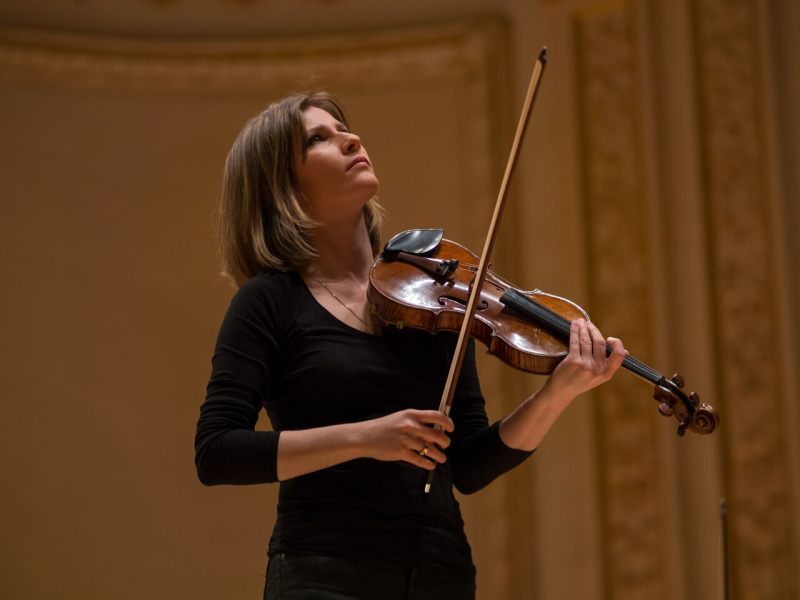
    Above: violinist Lisa Batiashvili, rehearsing for this evening’s concert with ORPHEUS; photo by Matt Dine

    ~ Author: Oberon

    Saturday March 24th, 2018 – My friend Dmitry and I are big fans of Lisa Batiashvili, so we were excited by this opportunity to hear her play the Prokofiev second concerto with ORPHEUS at Carnegie Hall. The program successfully blended works by Schubert and Prokofiev, and the comely violinist basked in a rock-star ovation after her dazzling performance.

    In 1823, Franz Schubert composed incidental music for Helmina von Chézy’s play, Rosamunde. The play was a failure, but Schubert’s music has come down to us across nearly two centuries. ORPHEUS opened their concert tonight with the play’s Entr’acte No. 1, commencing with a big, resonant sound that gave the illusion of a full symphony orchestra. The music has an air of theatrical drama, and there’s some lovely writing for clarinet. 

    Paul Chihara’s persuasive arrangement of Prokofiev’s Schubert Waltzes Suite, created specially for ORPHEUS, was highly enjoyable, and attractively played. Solo passages for oboe, flute, clarinet, and trumpet stood out. Mr. Chihara was present, and took a bow from the audience.

    P1010100_preview

    Above: ORPHEUS onstage at Carnegie Hall, a Matt Dine photo

    The two existing movements of Franz Schubert’s Symphony No. 8 in B Minor, D. 759 (Unfinished) were given plush treatment by the ORPHEUS forces, and again the clarinet, oboe, and flute soloists seized on their opportunities to delight us with melodious gems. The ensemble sound overall was vividly textured, with notable sonic warmth from the cellos, and the frequent repeats of the familiar theme of the Allegro moderato were so cordially played. A cellphone interrupted the Andante – twice! – spoiling the atmosphere; and no sooner had that distraction faded, than some poor bloke had a terrible coughing fit. It took all my powers of concentration to endure.

    After the interval, Ms. Batiashvili strolled onto the Carnegie Hall stage along with the ORPHEUS musicians – eschewing a star’s entrance – and proceeded to enthrall us with her commanding and emotionally vivid performance of the second Prokofiev violin concerto, Op. 63.

    P3240077_preview

    Above: Lisa Batasthvili playing the Prokofiev 2nd this evening; photo by Matt Dine.

    From her opening solo passage, Ms. Batiashvili’s playing seemed wonderfully at home, both in the embracing acoustic of the venerable hall and in the decidedly à la Russe qualities of the music. Her luminous tone in the sustained melodic passages and the clarity and deftness of her coloratura flourishes were captivating. A spidery motif over plucked accompaniment was subtly delivered, and – after a lamenting theme from the cellos and a march-like intrusion – she produced lively swirls of notes over a descending orchestral figure. As the violinist returned to the sweet, poignant melody heard earlier, we were on a Batiashvili high when the mood was broken by a moaning baby somewhere in the upper tiers. At moments like this, I seriously think about giving up concert-going.

    But Ms. Batiashvili drew us back into her world with her simply gorgeous playing in the Andante assai; the theme has a nostalgic glow and it sings over a plucked accompaniment. Sailing higher and higher, with spine-tingling glamour of tone, the violinist provided for us a transfusion of tranquility in a world going mad. The ensemble then take up the melodic passage as the violin plays pizzicati.

    The final movement, Allegro, ben marcato, brings us elements of the wit that Prokofiev can so magically integrate into his music: yet another reason he’s one of my top favorite composers. The castanets here always make me smile. Throughout this dance-like movement, it was as much fun watching the pretty violinist as listening to her. As this concerto reaches its lively finish, I always wish it had been longer.

    Ms. Batiashvili, looking lovely as ever in her wine-coloured gown, won an enraptured ovation from the crowd. She treated us to a delightful encore: the March from Prokofiev’s LOVE OR THREE ORANGES.

    P3240344_preview

    Above, mutual admiration: Lisa Batiashvili and the players of ORPHEUS. Photo by Matt Dine.

    ~ Oberon

  • Batiashvili|Tchaikovsky|NY Philharmonic

    Batiashvili - gilbert

    Saturday September 24th, 2016 – Lisa Batiashvili‘s appearances with The New York Philharmonic are always red-letter events; the mutual admiration society that the luminous violinist has formed with Maestro Alan Gilbert invariably results in something very special, and tonight their entente cordiale produced a magnificent rendering of the Tchaikovsky violin concerto.

    When I arrived at Geffen Hall, the atmosphere was already abuzz: “Sold Out” signs were just being posted, and a long line of music-lovers hoping for returns was forming. A packed house always creates its own sense of excitement, and when the ever-elegant Ms. Batiashvili strode onto the stage in a stunning black gown with a bejeweled bodice, the welcome was wonderfully warm. Forty minutes later, the violinist was basking in an epic full-house ovation.

    It was another female violinist, Maud Powell, who helped popularize the Tchaikovsky concerto – a concerto at first thought by some to be unplayable. Ms. Powell played the New York premiere of the piece in 1889 with the New York Symphony (which merged with the Philharmonic in 1928); tonight, Lisa Batiashvili carried the banner to new heights.

    In the concerto’s opening movement, Ms. Batiashvili combined passionate lyricism with subtle turns of phrase; her coloratura was fleet and fluent, her shaping of phrases so innately appealing. When Alan Gilbert’s full orchestra entered for the big tutti passage, visions of the grandeur of the Romanov court were evoked. Ms. Batiashvili’s cadenza sounded a bit modern (“…to old-fashioned ears…”, as Mrs. Manson Mingott would say) and her playing of it most impressive: superb control of dynamics and a stunningly sustained double trill which led to a poignant restoration of melody. After treating us to some sizzling fireworks, the violinist sailed graciously into an affecting theme before ascending to some very delicate high-register passages and thence to the movement’s final flourishes.

    Playing with a melancholy pianissimo, Ms. Batiashvili created a very poetic atmosphere of sadness as the Canzonetta/Andante began. Her tone became incredibly soft, with a lovely sheen to it, while the audience held their collective breath to savour every moment of it.

    There’s a direct path into the concerto’s finale, which commences with an intense invitation to the dance, followed by a playful second theme. Relishing these shifts of mood, Ms. Batiashvili sounded gorgeous in a deep-lyric interlude and brilliant in some decorative filigree that followed. On to the final sprint, where the fiery glow of the violinist’s passionate playing swept all before her, igniting an ovation and delighted cries of “Brava!” as the entire audience rose to acknowledge Ms. Batiashvili’s truly thrilling performance.

    Lisa was called out for a solo bow – huge din of cheers and thunderous applause – then returned again with Maestro Gilbert, who signaled the wind soloists (who had made such distinctive impressions in the final movement) to rise. The mutual affection of violinist and conductor was movingly evidenced as they embraced and walked off together. But still the ovation would not subside, and the radiant soloist re-appeared for another solo bow, with her onstage colleagues joining the tribute and the audience getting gleefully boisterous. 

    During the course of the concerto, the marvelous rapport between Ms. Batiashvili and Maestro Gilbert was as endearing to the eye as their playing to the ear: as the music wove its spell, they seemed engaged in a pas de deux which swayed on the ebb and flow of Tchaikovsky’s balletic score. Bravi!!

    Enjoy a bit of Lisa’s playing here.

  • Great Performers: Lisa Batiashvili/Paul Lewis

    Lisa Batiashvili

    Monday March 30th, 2015 – Violinist Lisa Batiashvili (above) joined pianist Paul Lewis for this recital at Alice Tully Hall, the second event of our Great Performers at Lincoln Center subscription series.  Sonatas by Schubert and Beethoven book-ended the programme, with some delicious treats in between.

    Ms. Batiashvili, who is artist-in-residence for the current New York Philharmonic season, is a slender, elegant beauty gowned in rose-pink. From the opening measures of the Schubert ‘Duo’ in A-major, she and Mr. Lewis formed an ideal alliance: both players are masters of subtlety, the violinist with her shining clarity of tone, the pianist capable of great delicacy as well as a sense of gentle urgency. Throughout the sonata’s opening Allegro moderato, their mutual musicality yielded an uncommonly lovely experience, drawing the large audience into Schubert’s world.

    In the exuberant charm of the Scherzo which follows, the two players mixed virtuosity with fleeting passages of ‘sung’ melody; then came the Andantino, with its poignant theme and gracious motif of trills where the artists lingered in music’s expressive delights. The final Allegro vivace blends declamation and lilt, carrying us along with its waltzing buoyancy.

    As a sort of mega-encore, Ms. Batiashvili and Mr. Lewis offered a vibrant performance of Schubert’s Rondo in B minor (“Rondo brillant”) which opens regally and proceeds to a blend of jaunty upward leaps, inviting melodies, and coloratura flights of fancy.

    An-Pianist-20Paul-20Lewis-20130214220256259727-300x0

    Paul Lewis (above, in a Pia Johnson photo)

    Following the interval, each artist took a solo turn. Mr. Lewis’s rendering of the Busoni arrangement of Bach’s Nun komm, der Heiden Heiland was profoundly beautiful in its grace and simplicity. Ms. Batiashvili played Telemann’s Fantaisie No. 4 in D major, its classic three-movement (fast-slow-fast) structure compressed into a five-minute time span, a miniature solo-concerto which was handsomely played.

    The Beethoven sonata No. 10, which closed the evening, begins gently with shimmering trills; a simple two-note motif later in the first movement has a hypnotic quality, then back to a trill-filled conclusion before we move on to the achingly gorgeous, sustained melodies of the Adagio espressivo: here Ms. Batiashvili and Mr. Lewis were at their most ravishing. There’s no pause as the Adagio yields immediately to the brief, playful Scherzo with both players spinning the music onward. The fourth movement, Poco allegretto, seems calm at first but there’s underlying tension building: you can sense an impending flood of energy and surely enough it bursts forth. Both players were on a high here, yet cunningly the composer draws back into a lulling, rather sentimental passage. What then seems like a race to the finish gets momentarily sidetracked again – Beethoven is playing with us – before the last sprint.

    Superb music-making in a most congenial space: we left Ms. Batiashvili and Mr. Lewis basking in the warmth of the audience’s cheers and applause. 

    The Program: 

    Schubert: Violin Sonata in A major

    Schubert: Rondo in B minor (“Rondo brillant”)

    Bach (arr. Busoni): Nun komm, der Heiden Heiland, for piano

    Telemann: Fantaisie No. 4 in D major, for solo violin

    Beethoven: Violin Sonata No. 10 in G major

  • CMS: Brahms the Master

    Shifrin_david04RGB

    Above: clarinetist David Shifrin

    Tuesday October 21st, 2014 – The music of Johannes Brahms is well-represented at the great classical music venues of New York City this season. At the Philharmonic, Lisa Batiashvili just finished a series of concerts where she gave a resplendant reading of the composer’s violin concerto. Upcoming Brahms events on my calendar include Yefim Bronfman playing the piano concerto #2 with Riccardo Muti and the Chicago Symphony at Carnegie Hall (January 31st, 2015); a performance of the GERMAN REQUIEM at Carnegie with Daniele Gatti leading the Vienna Philharmonic (March 1st, 2015); an All-Brahms evening at Chamber Music Society on April 24th, 2015; and Jonathan Biss playing the piano concerto #1 with the New York Phiharmonic (May 21st – 23rd, 2015).

    Tonight at Alice Tully Hall, the artists of Chamber Music Society of Lincoln Center carried the Brahms banner high in an evening devoted to some of the composer’s most endearing, intimate works, all of which were composed during the final decade of his life. 

    My ability to concentrate was somewhat taxed this evening by small but pesky audience distractions, and an unfortunate late seating after the first movement of the opening work really broke the mood. But eventually the excellent music-making prevailed.

    Timothy Eddy launched the Trio in A minor for Clarinet, Cello and Piano, Op. 114, with the warmth and richness of his tone immediately evoking the sensations of tenderness and regret that will colour the entire evening. David Shifrin, in his 26th year of performing with the Society, called forth the plum-coloured resonance of his clarinet, and Shai Wosner – a pianist new to me – played with elegance and impressive dynamic control. The blending of the three instruments in the adagio was particularly heartfelt.

    Mr. Wosner returned for the Sonata in D minor for Violin and Piano, Op. 108, with violinist Erin Keefe who looked lovely in a midnight-hued pleated chiffon gown. The two musicians immediately established a fine rapport and together they poured forth the melodic themes in an unending stream of poignant lyricism. Ms. Keefe, in the sonata’s gently romantic adagio, moved compellingly from the delicacies of the initial passages to the more passionate expressions as the music flows forward. In the sentimental intermezzo that follows, both players ideally sustained the mood, carrying us into the finale where the two musicians spurred one another on with playing that managed to be both eloquent and lively.

    Shai_wosner

    After the interval, pianist Shai Wosner (above) took the stage alone for two brief solo keyboard works: the Intermezzo in E-flat major, Op. 117, No. 1, and the Rhapsody in E-flat major, Op. 119, No. 4. The Intermezzo’s melody is drawn from a lullabye associated with Lady Anne Bothwell, a young 16th century Scotswoman who was classically seduced and abandoned, singing to her infant son. Mr. Wosner’s refined playing here held the hall in a rapt silence before giving way to the grand flow of the Rhapsody. The two pieces, so contrasted yet linked by a common key, made for an intimate interlude before the concert’s closing work: the Quintet in B-minor for Clarinet, two Violins, Viola and Cello, Op. 115.

    Alexander Sitkovetsky (violin 1) and Mark Holloway (viola) joined Ms. Keefe, and Mssrs. Wosner and Shifrin for this richly melodic musical feast, the voices trading themes in this quintet with its somewhat unusual structure: it closes not with a vivid presto but with a set of variations – Mr. Shifrin’s clarinet in high relief – which end in an unexpectedly thoughtful state. Earlier, it was in the quintet’s adagio that the five players created some of the most luminous resonances of the entire evening. I wanted it to go on and on.

    Tonight’s Repertory:

    Participating Artists: