
Lisette Oropesa and Lawrence Brownlee in a duet from Bellini’s I PURITANI, from a performance in March 2025 at l’Opéra Bastille in Paris.
Watch and listen here:
Lisette Oropesa and Lawrence Brownlee in a duet from Bellini’s I PURITANI, from a performance in March 2025 at l’Opéra Bastille in Paris.
Watch and listen here:

Lisette Oropesa sings Elvira in Bellini’s I PURITANI in a concert performance given by the Teatro San Carlo, Naples, in July 2022.
Watch and listen here.
Cast:
Arturo Talbot – Xabier Anduaga; Elvira – Lisette Oropesa; Sir Riccardo Forth – Davide Luciano; Sir Giorgio – Gianluca Buratto; Enrichetta – Chiara Tirotta; Lord Gualtiero Walton – Nicolò Donini; Sir Bruno Robertson – Saverio Fiore
Conductor: Giacomo Sagripanti
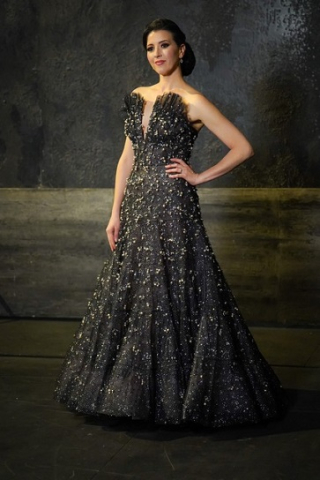
When the COVID-19 pandemic forced the Teatro alla Scala to abandon their planned opening night performance of a new production of LUCIA DI LAMMERMOOR with Lisette Oropesa in the title-role, the theatre instead honored their traditional opening date – December 7th, the Feast of Saint Ambrose – with a televised gala featuring a number of prominent singers performing arias pre-filmed on the Scala stage, without an audience.
Lisette, wearing an Armani gown, sang Lucia’s Act I aria. Watch and listen here.
The Cuban-American soprano is currently in Barcelona for performances of Verdi’s LA TRAVIATA.

On April 24, 2020, Lisette Oropesa was one of several Met Opera stars to perform on a special webcast concert wherein everyone sang from their homes. Lisette sang an aria from Meyerbeer’s ROBERT LE DIABLE, live from her hometown: Baton Rouge, Louisiana. Michael Borowitz is the pianist.
Watch and listen here.
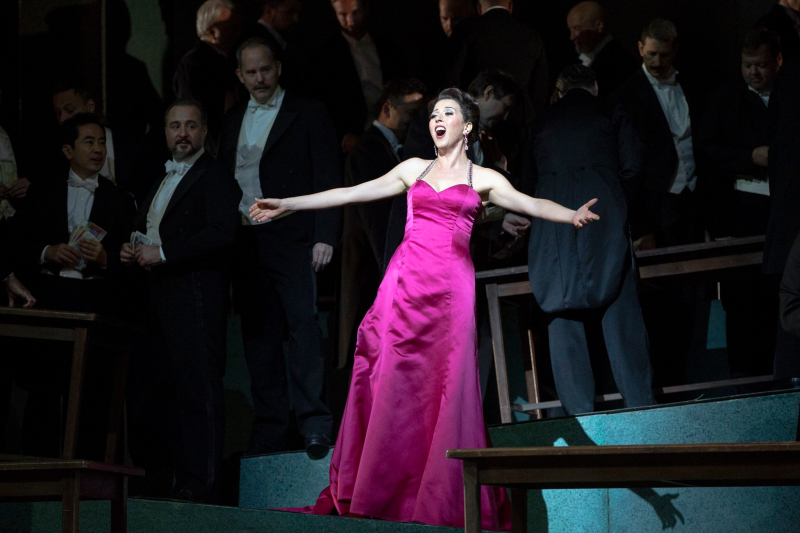
Above: Lisette Oropesa as Manon in The Met’s production; a Marty Sohl/Met Opera photo
Saturday matinee September 28th, 2019 – After a rather scrappy dress rehearsal on Friday September 20th, the Metropolitan Opera’s revival of their tedious Laurent Pelly production of Massenet’s MANON opened this past Tuesday. For today’s matinee, a group of friends who are admirers of Lisette Oropesa met up in the Family Circle boxes to see and hear the Cuban-American soprano in her latest new role.
Vocally, there are basically two types of Manons: the lyric-coloraturas and the full-fledged (and even slightly…beyond…) lyrics. The role was created by Marie Heilbronn, whose repertory included the coloratura roles of Marie (FILLE DU REGIMENT), Ophélie (HAMLET), Gounod’s Juliette, and Catherine in Meyerbeer’s ETOILE DU NORD. Massenet’s preferred Manon was Sibyl Sanderson, who created the high-flying title-role in his opera ESCLARMONDE. The light-voiced Brazilian soprano Bidu Sayão became a beloved Manon at The Met starting in 1937, and the tradition of coloratura-oriented Manons continued with Beverly Sills (perhaps her greatest role), Patricia Brooks, and Reri Grist.
Sopranos with larger, richer voices have also taken on the role: Lucrezia Bori, Geraldine Farrar, Claudia Muzio (!), Victoria de los Angeles, Eleanor Steber, Anna Moffo, Virginia Zeani, Raina Kabaivanska, Jeannette Pilou, Catherine Malfitano, Carol Vaness, Renee Fleming, and Anna Netrebko. Some of these sopranos had to make adjustments in Manon’s coloratura set-pieces, and in dealing with (or omitting) the score’s high-Ds. And at times, the opera has seemed to take on a verismo tinge in these interpretations, as listening to their various recordings will show.
Lisette Oropesa’s Manon is in the lyric-coloratura vein, and it’s so enchanting to hear her intriguingly perfumed timbre in this music. This is a voice that draws us into the music, covering the wide range with that distinctive sound, rejoicing in the fiorature of the Cours la Reine arias, pinpointing those top-Ds, and seducing both the tenor and the audience with the serpentine vocal line of “N’est-ce plus ma main”: that passage which Beverly Sills knew was the key to the whole character.
To accomplish her success in the music of Manon, Lisette had to overcome a hideous production and an interpretation of the score by an out-of-touch conductor. As the opera progressed, we moved scenically from a dreary grey courtyard – surrounded by perched toy-town houses and cuckoo-clock windows that periodically opened and closed – to an ugly wheeled-out ‘garret’ for the lovers wherein the ‘petite table‘ seemed like an afterthought.
The ridiculous ramps and metal dog-run fencing of the Cours la Reine deprived the setting of its glamour and left the bevy of ballerinas that Guillot had brought to cheer Manon up little space to execute some rather pointless choreography (the girls deserved better!) With the gaslights, Manon clad in a enormous feathered hat, boa, and ruffled gown, and the top-hatted men courting her in-sync, the scene recalled bad productions of HELLO DOLLY.
Seeking out des Grieux at Saint Sulpice, Manon arrives in what looks like a long white slip. There’s a lot of stage business to this seduction, as compared to the Sills Manon who just stood there, enticing her lover with vocal allure until – at the right moment – she let her cape fall to reveal the diva’s legendary décolletage, to which her tenor immediately succumbed. In the Pelly production, a convenient bed (for the altar boys?) is where Lisette and Michael Fabiano end up in a bodice-ripping finale. It’s the tenor’s bodice that gets ripped.
The gambling den in a drab basement room with more ramps, and with card tables wheeled busily on and off; the tension of the game between des Grieux and Guillot is minimized. The scene’s redeeming feature is the vision of Lisette in a stunning magenta gown.
The opera’s final scene is misty and appropriately foreboding. Manon is beaten by the guards who are escorting her to the ship for deportation. She seems to die from this beating rather than from some infection she picked up in prison.
Manon is one of the least appealing characters in all opera: selfish, willful, faithless, conniving. And those are her good qualities. But somehow, Lisette managed to be one of the very few Manons to make us feel sorry for her as the life ebbs out of her.
Maurizio Benini on the podium seemed to have no feeling for the distinctive atmosphere of the score, redolent of a time and place that the production has simply glossed over; the large orchestra frequently unleashed Puccinian waves of passion. But the musicians did what they could, bringing forth the desired poetry: of particular appeal was the clarinet solo in the prelude, played with captivating tenderness and nuance by Inn-Hyuck Cho. Mr. Cho also stayed in the pit thru much of the intermission, practicing various themes, much to my delight.
The pairing of Lisette Oropesa and Michael Fabiano as the doomed lovers was not felicitous. They are a vocal mismatch, and though they went thru the motions of romance and seduction, it was only in a theatrical sense that they made it work. The tenor, who would seem better suited to the Puccini rather than the Massenet des Grieux, lacked the heady vocal elegance that Alfredo Kraus, Vinson Cole, and Enrico di Giuseppe have brought to this music. Mr. Fabiano managed his Dream aria nicely enough, seemingly employing falsetto, but a flattish start to “Ah, fuyez, douce image” led to what felt like a struggle thru this demanding aria.
Two excellent baritones enhanced the afternoon: Artur Ruciński as Lescaut and Brett Polegato as de Brétigny. Mr. Ruciński, who sang Enrico to Lisette’s Lucia at the Teatro Real in 2018, Madrid, and who is a very impressive Onegin in a DVD of the Tchaikovsky opera from Valencia, has sung Sharpless and Germont at The Met. He transforms Lescaut into a leading role, making his arias – which can in lesser hands devolve into character pieces – real vocal gems thru the beauty and colour of his timbre, whilst also creating a lively (and – eventually – moving) character. His curtain calls drew enthusiastic and well-deserved bravos.
I first heard Canadian baritone Brett Polegato’s voice on a tape from the Cardiff Competition in 1995. He made a very fine impression, which was subsequently amplified by his wonderful 2001 recording (with Christine Goerke, conducted by Robert Spano) of Vaughan Williams’ A Sea Symphony for Telarc. Hailed upon its release as “…a Sea Symphony for the new century…”, this recording won a Grammy.
It wasn’t until 2012 that I got to hear Mr. Polegato live: he sang Walton’s Belshazzar’s Feast with the Atlanta Symphony at Carnegie Hall. I sat in the front row and enjoyed his performance immensely, and I questioned at the time why he was not at The Met. And now here he is in his debut performances at The House, the voice very much at home in the big hall. As de Brétigny today, the baritone made the most of every line, especially in the garret scene quartet, and proved a wonderful support (literally) to Lisette’s Manon at the Cours la Reine. Had Manon only stuck with this well-to-do and dapper gentleman, she might have lived long…and prospered.
Basso Kwangchul Youn brought warm, house-filling sound to the Comte de Grieux’s aria, in which he urges his son to forget about the priesthood and find a nice girl to marry, one worthy of himself and of the family. The Comte, his visit to Saint Sulpice having proved in vain, departs with the wistful farewell to his son – “Adieu … reste à prier!” – which was touchingly spoken by Mr. Youn.
Carlo Bosi, a sensational Nick in FANCIULLA DEL WEST when it was last done at The Met, was equally high-profile this afternoon as Guillot, the man who destroys Manon and, consequently, des Grieux.
In another example of how to make a smallish role resonate, Paul Corona as the Innkeeper was outstanding. He took a bow at the dress rehearsal, and I wish he had done so this afternoon so I could have given him a “bravo!“.

As a tease, the Met has installed Bidu Sayão’s Cours la Reine costume (above) in a glass display case on the Dress Circle level. This cloth-of-gold creation, incredibly detailed, served as a reminder of what MANON is all about. I hope one day that Lisette will have a production of this opera worthy of both herself and of the opera’s long traditions, with charming costumes, with a swing for Manon to sit on in the garden at Amiens for “Voyons, Manon“…and with de Brétigny bringing her an emerald necklace to dazzle her right after the kidnapping of her beloved chevalier.
~ Oberon

Lisette Oropesa (above) made her debut at The Royal Opera House, Covent Garden, on October 30th, 2017 in a controversial production of Donizetti’s LUCIA DI LAMMERMOOR.
Directed by Katie Jenkins, the production was largely savaged by critics and operagoers alike when it premiered in 2016 (“…’too leaden even for the hecklers…” said The Telegraph). But Lisette and her fellow cast members seem to have rescued it in this revival, with the help of some judicious toning-down by the director.
The reviews are coming in, and they are raves. Here’s a sample:
“The cast is outstanding, especially the Lucia of Cuban-American soprano Lisette Oropesa. A consummate actor with a fresh, pearly sound and exquisite top notes, Oropesa creates a flesh-and-blood character out of Donizetti’s sketchy heroine. Her mad scene is beautifully judged, full of nuance and changes of pace – deeply disturbing rather than tragic – and her tender relationship with Alisa (superbly acted by Rachel Lloyd) is the most honest in this ghastly story.” ~ The Stage

To date, this concert performance of LES HUGUENOTS presented at Carnegie Hall in 1969 is the only Meyerbeer opera I have experienced live. Listening to Lisette Oropesa’s recent performance of the aria “Robert, toi que j’aime” from ROBERT LE DIABLE put me in mind of that Carnegie HUGUENOTS which marked one of many high points in the era of Beverly Sills Mania.
Die-hard Meyerbeer admirers continually clamor for more productions of his operas, yet to me they always seems like musically sprawling works wherein a few stimulating arias or ensembles are to be found amidst much that is merely workaday. Here is New York City, Meyerbeer fared quite well during the first 50 or so years at the Old Met, where productions of ROBERT LE DIABLE, LE PROPHETE, L’AFRICAINE and especially LES HUGUENOTS (the fabled ‘nights of the seven stars’) were given fairly regularly; but by the mid-1930s they all seem to have faded away. A production of PROPHETE – starring Marilyn Horne, Renata Scotto, and James McCracken – was given at the New Met in 1977 and repeated in 1979 before vanishing.
Over the years, I have made numerous attempts to connect with these antique operas: a recording of ROBERTO IL DIAVOLO from the Maggio Musicale 1968 with Scotto and Boris Christoff held by attention for a while, as did a video from San Francisco of L’AFRICAINE with Placido Domingo and the sultry-voiced Shirley Verrett. I bought the commercial recording of LE PROPHETE but never made it past the first LP before turning it over to the library.
Sutherland had her HUGUENOTS at La Scala (with Corelli and Simionato driving audiences to distraction), and ROBERT LE DIABLE has been revived for Samuel Ramey and, more recently, for Bryan Hymel.
But, getting back to that 1969 HUGUENOTS at Carnegie Hall, my opera diary (volume 1) reveals that Licia Albanese, Régine Crespin, Bidu Sayão, and Dame Alicia Markova were among the audience.
The evening essentially was a Sills triumph. She wore a queenly white and gold gown and sang all of Marguerite de Valois’ fanciful coloratura brilliantly, tossing off strikingly clear notes in alt and driving her fans to distraction. Here is a sample of Sills in this music:
Beverly Sills – O beau Pays ~ LES HUGUENOTS
There was also excellent singing from Justino Diaz as Marcel (who intones the old Lutheran hymn ‘A Mighty Fortress is Our God‘), and fine work from Thomas Jamerson (de Nevers) and Joshua Hecht (St Bris). As the desperate lovers, Angeles Gulin (Valentine) and Tony Poncet (Raoul) were less impressive. Despite some attractive passages, Gulin’s “almost painfully huge” voice was beset by pitch problems. Poncet, who had had an estimable career singing demanding roles from the French and Italian repertoire starting in 1957, had been in vocal decline. This performance was viewed as something of a comeback, but it was not very successful.
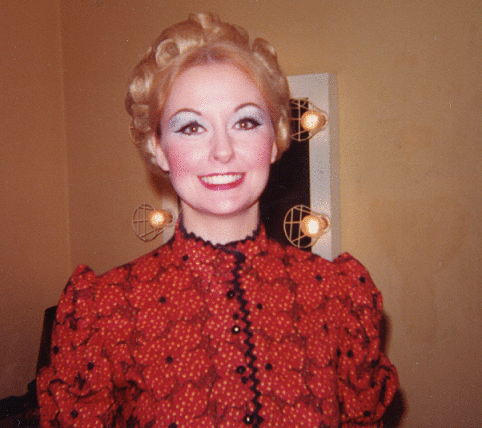
The queen’s page Urbain was beautifully sung by mezzo-soprano Kay Creed (above, after singing Angelina in LA CENERENTOLA at NYC Opera). At the time, I had a huge crush on Ms. Creed, who in 1960 had been named Miss Oklahoma. I saw her many times at NYC Opera: as Suzuki, and as Maddalena, Siebel, Mlle. Clairon in CAPRICCIO, Cherubino, Annina in ROSENKAVALIER, and as Nancy in a delightfully-cast performance of ALBERT HERRING.
 Oberon's Glade