Tag: LUCIA DI LAMMERMOOR

  • Helena Dix in Bellini’s NORMA @ The Met

    Dix norma

    Above: Helena Dix, costumed as Norma, in her Met dressing room; I borrowed this image from the soprano’s Facebook page

    Author: Oberon

    Saturday March 25th, 2023 matinee – The three great peaks of the bel canto repertoire are – for me – Donizetti’s LUCIA DI LAMMERMOOR, Rossini’s SEMIRAMIDE, and Bellini’s NORMA. This afternoon I was at The Met to see the season’s final performance of the Bellini. The casting of Sonya Yoncheva in the title-role turned out to be pretty controversial, and the soprano took to social media to complain that people were comparing her Norma to recordings and remembered performances from decades ago.

    I guess she is unaware that this has always been a favorite pastime of serious opera-lovers…something that I learned early on in my opera-going career. Examples: during the enormous ovation after the Mad Scene of Beverly Sllls’ first New York Lucia, Maria Grimaldi waltzed up behind me and growled in my ear: “Not as good as Lily Pons!”. And while I was yelling “brava” at the Met for Birgit Nilsson’s 1971 Isolde triumph, the fellow next to me, who was applauding feebly, said: “I guess you are too young to have heard Flagstad!” 

    Anyway, the problem became moot when Ms. Yoncheva (who was wonderful as Giordano’s Fedora earlier this season) took ill and withdrew from the final three NORMAs, one by one. Angela Meade was called in for the first Yoncheva cancellation, and the cover – Helena Dix – stepped in for the second. Everyone was waiting to see if Yoncheva would come back with a vengeance for today’s final NORMA, which was being broadcast.

    In truth, I was hoping for a cast change, and that Ms. Dix would be singing today. I’d started following the plucky Aussie soprano on Facebook a few weeks ago when I began to see her postings about what it’s like to cover a major role at The Met. She had covered Norma here in 2017, and had also covered Alice Ford in FALSTAFF in 2019, going on at one performance for her Met debut.

    This year, as it happened, she ended up singing quite a few of the NORMA rehearsals. But Ms. Yoncheva sang the prima, and the next two performances. When she became ill, Peter Gelb applied his frequent tactic: he located a “star” to step in rather than relying on the cover. Thus, Ms. Meade returned to a production in which she has previously appeared.

    This morning, as I was getting ready to leave for the noontime matinee, an e-mail from a soprano/friend of mine popped up: “Helena Dix is singing Norma today!” This elevated my mood considerably.

    The house was nearly full as Maurizio Benini took his place on the podium. Benini has frustrated me in the past with his eccentric tempi in operas like LUCIA DI LAMMERMOOR, MARIA STUARDA, and MANON. As the afternoon progressed, he upheld his reputation as a routinier. 

    Christian van Horn as Oroveso was simply superb in the opera’s opening scene, and he remained so throughout the afternoon: a potent vocal force and an imposing stage figure. His “Ah, del Tebro” later in the evening was gorgeously sung, and his shock at Norma’s revelation of her motherhood was a lightning bolt. Together with Ms. Dix and Mr. Spyres, Mr. van Horn made the opera’s poignantly dramatic finale, “Deh! Non volerli vittime…” heart-rendingly moving.

    Meanwhile, back in Act I, as the Druids withdraw from the forest clearing, the Romans appear: Michael Spyres as Pollione and Yongzhao Yu as Flavio. The latter showed a fine voice and was an alert actor, whilst Mr. Spyres – a marvelous Met Idomeneo earlier this season – was sounding more baritonal today. The Spyres voice has great immediacy and, despite a hoarse high-C in “Meco all’ altar di Venere” his singing and dramatic engagement (all afternoon, really) was a potent experience. The tenor was having a rousing go at the cabaletta “Me protegge, me difende“, reaching the final phrase with a penultimate A-flat which he then elevated to the more customary B-flat, at which moment Benini decided to amp up the orchestra, ruining the effect.

    When Ekaterina Gubanova was announced as Adalgisa, I admit I had misgivings; her Act II Brangaene at Geffen Hall at 2019 showed some unease in the music’s upper reaches, and Adalgisa is quite demanding in that regard. But Ms. Gubanova seemed today to have solved (for the most part) that problem. She was wonderfully expressive in her opening monologue, and she matched Mr. Spyres in passion and tonal appeal in their long duet where Adalgisa finally succumbs to Pollione’s pleadings.

    The opera’s sixth character, Norma’s confidante Clothilde, was the excellent Brittany Olivia Logan, who we need to hear in larger roles.

    Ms. Dix appeared onstage as the chorus hailed the coming of their high priestess. The soprano carefully mounted the pointless platform from which she must sing opera’s most demanding entrance aria, the immortal “Casta diva”. The Dix voice is not large, but it’s well-projected. Her opening address was authoritatively declaimed, ending with a shimmering softness at “Il sacro vischio io mieto…

    Benini set a slow pace for the “Casta diva…” which Ms. Dix sang as a spellbound invocation. As her soft tones flowed thru the vocal line, a hush fell over the house; in the second verse, a tiny embellishment on the phrase “Che regnar tu fai nel ciel” sent a frisson thru me…a delightful feeling that would be experienced several times as the opera progressed. For this is Ms. Dix’s signature vocal attribute: these delicate pianissimi that are woven into phrases at just the right moment, putting an individual stamp on the music. I came to anticipate them, and she never let me down.

    But we were jarred out of reverie when Benini set up a tempo for the cabaletta, “Ah! bello a me ritorna” that only a Sills or a Bartoli could have coped with. Ms. Dix went at it gamely, but to little avail.

    Things settled in after that, and the soprano’s confidence increased – though through no help from the conductor. Mlles. Dix and Gubanova formed a sisterly duetting society, and Mr. Spyres’ bristling anger at finding that his secret love had unwittingly betrayed him stirred up a fiery finish to the first act, polished off with a Dix top-D. 

    Ms. Dix’s contemplating the murder of her children was effectively done, and then Ms. Gubanova appeared and the two women got to the heart of the matter with a finely-matched “Mira O Norma” filled with lovely, expressive singing from both. Benini then luckily set a perfect tempo for “Sì, fino all’ore estreme” wherein the singers indulged in a bit of rubato, harmonized the scale passages to fine effect, and Adalgisa took her leave in a fit of optimism, unaware that they will never see each other again.

    The final scene of NORMA is a masterpiece all on its own: Norma’s hopes are dashed, but when she has Pollione in her power, she cannot kill him. Ms. Dix and Mr. Spyres excelled in a super-charged “In mia man alfin tu sei” but despite his defiance, she still cannot bring herself to slit his throat. About to reveal Adalgisa’s crime of breaking her sacred vows, Norma is overcome with guilt and names herself instead. Ms. Dix spins out more delicate suspended tones at “Io son la rea!“, and, later, at “O padre!” as she prepares to beg her father to spare her children. The tragedy moves towards its end with the devastating “Deh! Non volerli vittime” and a last haunting piano plea from Ms. Dix: “Ah! Padre, abbi di lor pietà!“.  Norma and Pollione go to their deaths, scorned and spat upon by the Druids.

    I went to the stage door to greet Mr. van Horn, and to meet Ms. Dix, who is a delightful person. A sizeable crowd had gathered; people, intrigued by her “cover” story, wanted to meet her. She gave me a special autograph before joining the young boys who had portrayed her sons, Axel and Magnus Newville, to pose for photos.

    Norma - helena  jpg

    You can get an idea of what makes Helena Dix an intriguing singer in this brief clip from the Verdi REQUIEM.

    ~ Oberon

  • @ My Met Score Desk for LUCIA DI LAMMERMOOR

    Bloody_dagger_

    Saturday May 21, 2022 matinee – Having no interest in seeing the Met’s Rust-Belt setting of LUCIA DI LAMMERMOOR, I took a score desk for this afternoon’s performance. In the Playbill, there’s a long essay by the director of the production. I didn’t bother to read it. This succinct program note from Tito Capobianco’s production for Beverly Sills at New York City Opera in 1969 tells us all we to need to know:

    Lucia jpg
    I recently asked a longtime singer/friend of mine why singers who should know better agree to appear in these bizarre and unsuitable productions, and he said: “If you want to work in opera nowadays, this is what opera has become. Take it or leave it. If you start turning down productions that do not respect the composer or librettist, you will soon stop being asked.”

    So I sat with my score before me this afternoon, creating my own production in the theater of the mind. There were a lot of empty seats, more than usual for a matinee. And people laughed aloud at times: there is nothing very funny about LUCIA, really, but perhaps the libretto’s reference to Edgardo’s announced journey to the “friendly shores of France”, or Enrico telling Normanno to ride out “on the road to Scotland’s royal city” to greet Arturo, seemed out of place in the Rust Belt. It must always be a pesky thing to these cutting-edge directors to have to deal with references in librettos that deter them in their quest to make opera relevant to modern audiences.

    Maestro Riccardo Frizza conducted the opera as if it were early Verdi. He sometimes let the orchestra cover the singers. The harp solo that opens the opera’s second scene was sublimely played by Mariko Anraku, but she had to contend with stage noises caused by the moving set, and then – as the solo neared its end – a cellphone went off. 

    The vocal stars of the afternoon were Polish baritone Artur Ruciński – who scored a great personal success as Enrico – and Christian van Horn, stepping in for an ailing Matthew Rose and singing magnificently as Raimondo.

    In the opera’s opening scene, Mr. Ruciński’s voice showed its customary warmth and power; his extraordinary breath control allowed him to sail thru long phrases effortlessly, and he sustained the final note of his cabaletta throughout the musical postlude. In the duet where Enrico forcibly brings Lucia around to his was of thinking about her impending marriage, Ruciński sounded splendid, with an exciting mini-cadenza at “…insano amor!” And, as at the 2019 Richard Tucker Gala, he brought the baritone line in the sextet very much to the fore.

    Mr. van Horn made every word and note of Raimondo’s role count; his voice spans the music’s range comfortably, and has both strength and nuance. In the duet where the chaplain (do they have chaplains in the Rust Belt?) persuades Lucia to yield to her brother’s demand that she marry Arturo, Mr. van Horn’s sense of line had a wonderful rightness, and once he had secured Lucia’s agreement, he expressed the character’s joy and relief with some powerfully righteous vocalism. Another great moment in the van Horn Raimondo came as he stepped between the adversaries to prevent bloodshed at the wedding ceremony: 

    “Respect in me
    the awful majesty of God!
    In His name I command you
    to lay down your anger and your swords.
    Peace, peace!…
    He abhors
    murder, and it is written:
    He who harms another by the sword,
    shall perish by the sword.”

    This is one of the opera’s great moments, and Mr. van Horn sang it thrillingly.

    To hear this basso sing Raimondo’s announcement of the murder of Arturo almost persuaded me to stay to the end of the opera. If I say that Mr. van Horn was as thoroughly impressive and satisfying in this role as Robert Hale had been in the City Opera’s Sills production, that is very high praise.

    Had our Edgardo and Lucia attained the level as Mssrs. Ruciński and van Horn this afternoon, this would have been one of the great LUCIAs of my experience. But Javier Camarena’s voice, while clear and pleasing, seemed a size too small for this music in the big House. For the most part, the conductor did not push the tenor to extremes, but a bit more ring and vigor were wanting. Passing moments of flatting and throatiness could be forgiven at this, the final performance of the run. The popular tenor seemed to struggle at times in the Love Duet, which was spoilt anyway by the persistent cough of someone in the audience. But he did go for the high E-flat, despite the fact that he and Nadine Sierra sounded somewhat screamy at this tense moment.

    Ms. Sierra ‘s tone at first seemed to have a steady beat; this became less prominent as the afternoon wore on, though moments of slightly sharp singing came and went. It is a generic sound, and she does not put a personal stamp on the music as such memorable Lucias as Sutherland, Scotto, Sills, Gruberova, Devia, and Oropesa have done, but, for all that, she had some very exciting moments. For one thing, her top D-flat and D were spot on today, making for exciting ends to her Act I cabaletta, the sextet, and the Act II finale. However, I do not think the Sierra Lucia will be remembered for years to come as the ladies listed above have been and will continue to be. 

    As Normanno, tenor Alok Kumar was covered by the orchestra in the opening scene, but he was incisive later on. Deborah Nansteel fared very well as Alisa, and she handled the ‘high A’ moments in the Act II finale, which elude many mezzos, nicely. Eric Ferring sang the brief but demanding role of Arturo handsomely. 

    ~ Oberon

  • Wolfscrag Scene ~ Araiza & Schexnayder

    Araiza (3)

    The Wolfscrag Scene from Donizetti’s LUCIA DI LAMMERMOOR sung by tenor Francisco Araiza (above) and baritone Brian Schexnayder from a 1988 performance.

    Watch and listen here.

  • Wolfscrag Scene ~ Araiza & Schexnayder

    Araiza (3)

    The Wolfscrag Scene from Donizetti’s LUCIA DI LAMMERMOOR sung by tenor Francisco Araiza (above) and baritone Brian Schexnayder from a 1988 performance.

    Watch and listen here.

  • Lisette Oropesa @ La Scala ~ 2020

    Lisette scala gala 2020

    When the COVID-19 pandemic forced the Teatro alla Scala to abandon their planned opening night performance of a new production of LUCIA DI LAMMERMOOR with Lisette Oropesa in the title-role, the theatre instead honored their traditional opening date – December 7th, the Feast of Saint Ambrose – with a televised gala featuring a number of prominent singers performing arias pre-filmed on the Scala stage, without an audience.

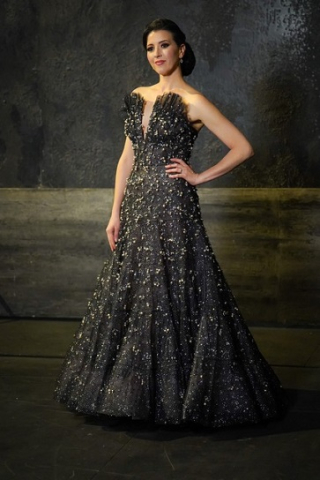
    Lisette, wearing an Armani gown, sang Lucia’s Act I aria. Watch and listen here.

    The Cuban-American soprano is currently in Barcelona for performances of Verdi’s LA TRAVIATA.

  • Lisette in London

    Main_36362

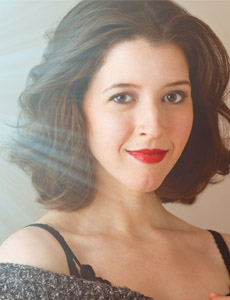
    Lisette Oropesa (above) made her debut at The Royal Opera House, Covent Garden, on October 30th, 2017 in a controversial production of Donizetti’s LUCIA DI LAMMERMOOR.

    Directed by Katie Jenkins, the production was largely savaged by critics and operagoers alike when it premiered in 2016 (“…’too leaden even for the hecklers…” said The Telegraph). But Lisette and her fellow cast members seem to have rescued it in this revival, with the help of some judicious toning-down by the director.

    The reviews are coming in, and they are raves. Here’s a sample:

    “The cast is outstanding, especially the Lucia of Cuban-American soprano Lisette Oropesa. A consummate actor with a fresh, pearly sound and exquisite top notes, Oropesa creates a flesh-and-blood character out of Donizetti’s sketchy heroine. Her mad scene is beautifully judged, full of nuance and changes of pace – deeply disturbing rather than tragic – and her tender relationship with Alisa (superbly acted by Rachel Lloyd) is the most honest in this ghastly story.” ~ The Stage

  • Renata Scotto’s “Ah! non giunge”

    Scotto

    At the end of October 1972, Renata Scotto was alternating performances of Amina in SONNAMBULA and the title-role of LUCIA DI LAMMERMOOR at The Met. I came down from Syracuse NY to see her as Amina on a Thursday night and her Lucia two nights later. Her tenor co-stars were Nicolai Gedda (Elvino) and Alfredo Kraus (Edgardo). The diva scored back-to-back triumphs.

    SONNAMBULA ends with Amina’s joyous cabaletta “Ah! non giunge”. Scotto, having held a rapt audience in the palm of her hand throughout the opera, now came down past the prompter’s box to the very edge of the stage and sang directly to us. As the second verse progressed, the house lights were slowly raised to full brightness; and so, in the end, singer and audience were “…uniti in una speme.

    Scotto sings ‘Ah non giunge!’ – SONNAMBULA – Met 10~28~72(1)


  • Carlo Bergonzi Has Passed Away

    Carlo-Bergonzi--644x362

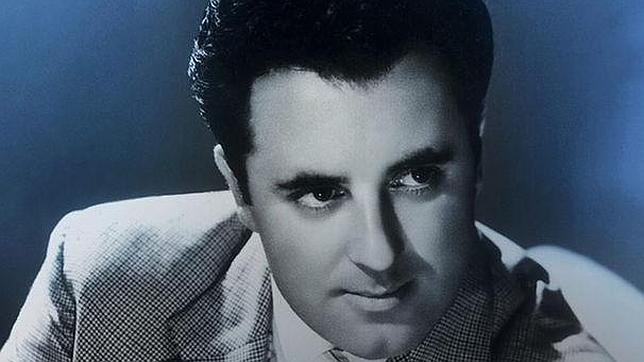
    My all-time favorite tenor and one of the last surviving titans of the ‘last golden age’ of opera has passed away: Carlo Bergonzi.

    Bergonzi sang over 320 performances at The Met, debuting in AIDA in 1956 opposite the also-debuting Antonietta Stella. He sang his final Met performance in 1988 in LUCIA DI LAMMERMOOR. Over the years, Bergonzi – who started his operatic career as a baritone – gradually lost the ease and surety of his upper register, but stylistically he remained a paragon throughout his long career.

    When I started listening to opera at the age of 11, I had no idea of how long a singing career could last or how a voice would age. The first singers I fell in love with – Milanov, Tebaldi, Jan Peerce, Robert Merrill, Giorgio Tozzi : it seemed to me they were eternal, that they had always been singing and would always continue to sing, and that they would always sound exactly the same as they did on the first recordings I acquired. Imagine my despair when I discovered early on that two of my first idols, Jussi Bjorling and Leonard Warren, were already dead! 

    I last saw Bergonzi onstage in 1988 as Rodolfo in LUISA MILLER, one of his last Met performances. People were raving about the staying power of this 64-year-old primo tenore but to me the voice was sadly pallid. The style, however, was wonderfully intact: the generosity of line, the feeling for the language, the skillful mastery of dynamics. Despite his admirable ability to cope with the music technically, I was disheartened and left midway thru the evening. Twelve years later, I was living in New York City when Bergonzi announced he would sing Verdi’s Otello in a concert performance at Carnegie Hall. My friends, knowing of my great love for the tenor, assumed I would be there but I feared it would be an unhappy evening…and it was: beset by vocal problems, he was forced to withdraw after Act II.

    No, I would rather remember the great years, though in fact he was already well along in his career when I first heard him live in a concert performance of Catalani’s LA WALLY at Carnegie Hall in 1968. Appearing opposite Renata Tebaldi, Bergonzi managed to steal the show: he brought down the house after Hagenbach’s Act IV aria.

    At The Met I heard his superb Radames, once with Lucine Amara and once with Martina Arroyo. It was with Arroyo that he triumphed as Verdi’s ERNANI in a stellar performance that also featured Sherrill Milnes and Ruggero Raimondi. He was a generous-toned and poetic Andrea Chenier in a performance where Renata Tebaldi struggled vocally, only to cast off all reserve in the final duet where she and Bergonzi thrilled us with their passionate outpouring of sound. And the tenor managed to convey the youthful vigor and tenderness of Alfredo Germont opposite the moving Violetta of Jeannette Pilou.

    Listening to a matinee broadcast of TOSCA in 1975, I was dismayed to hear Bergonzi struggling with the top notes and fighting a losing battle, though he sang on to the end. He took a year and a half off (at least from the Met) returning in November 1976 as Radames opposite Rita Hunter. After a somewhat cautious but still impressively handled “Celeste Aida” Bergonzi went on to give a spectacular performance with some of the most generous singing I ever heard.

    And such generosity won him great acclaim in 1979 when he returned to a signature role, Riccardo in BALLO IN MASCHERA. His phenomenally sustained top notes, sometimes attained thru sheer will-power, and his matchless phrasing drew enormous ovations on both evenings that I attended: one performance with Teresa Zylis-Gara and another with Carol Neblett. In 1982 Bergonzi was still on impressive form in FORZA DEL DESTINO, and in 1985 he scored a grand success in a concert performance of Verdi’s GIOVANNA D’ARCO opposite Margaret Price and Sherrill Milnes. In every one of these performances, whatever slight misgivings one might have, his ever-persuasive style carried the day.

    But there was a final small chapter in my Bergonzi story: eight years after the MILLER that I walked out on, he appeared at James Levine’s 25th Met Anniversary gala, singing the aria from LUISA MILLER and the trio from I LOMBARDI. Massive demonstrations of love rained down on him and people raved about his longevity but for me, despite admiring his courage, he was a shadow of his glorious self. 

    But, I have lots of recordings (both commercial and live) to keep my favorite tenor’s voice ever in my ear. His early Decca aria recital has never – in my opinion – been matched by any other tenor’s, though some have come very close. Both his commercial BALLO recordings are superb. His Duke in RIGOLETTO (opposite Scotto and Fisher-Dieskau) is a fine document of Verdi tenor singing. In TROVATORE, PAGLIACCI, BOHEME and DON CARLO, he is The King. I deeply love his BUTTERFLY with Tebaldi, his TOSCA with a voice-in-peril Callas (she still has some magical moments though); and his lovely TRAVIATA with Montserrat Caballe. And I am particularly fond of Bergonzi’s splendid performance as Edgardo in the RCA LUCIA with Anna Moffo.   

    Carlo Bergonzi sings Tosti’s ‘Ideale’ here.

    Hail and farewell, Maestro. If there’s a heaven, you can teach the angels how to sing.