Tag: Maestro Leon Botstein

  • ASO Presents Strauss’s DAPHNE

    Daphne

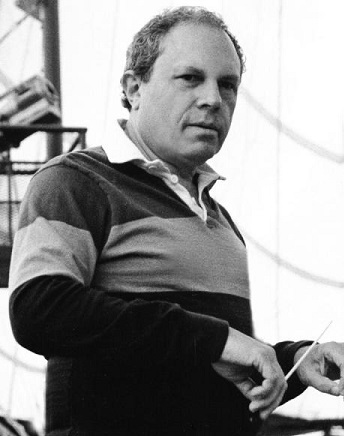
    Thursday March 23rd, 2023 – The American Symphony Orchestra performing Richard Strauss’s rarely-heard DAPHNE in concert form at Carnegie Hall, with Maestro Leon Botstein on the podium. The Bard Festival Chorale, under the direction of James Bagwell, had a big part to play in the proceedings.

    The one-act opera, written in 1936-1937, comes late in Strauss’s composing career, when ELEKTRA, SALOME, ROSENKAVALIER, DIE FRAU OHNE SCHATTEN and ARIADNE AUF NAXOS were already established in the world’s opera houses. 

    The story of DAPHNE in a nutshell: Shepherds anticipate the feast of Dionysus, with Daphne’s parents, Peneios and Gaea, presiding over the preparations. Daphne, in love with nature, shuns the ways of men. Her childhood playmate, the shepherd Leukippos, tries to embrace her lovingly, but she repels him and renounces the coming festivities. She refuses to don the clothing her mother has lovingly prepared for her, and runs away. Playfully, the women persuade Leukippos to wear the clothes instead. Apollo arrives, in a peasant’s disguise, and is immediately drawn to Daphne, who rebuffs him. The feast begins, and the disguised Leukippos offers Daphne a cup of wine, arousing the jealousy of Apollo. The heavens respond to the god’s anger with rumbles of thunder, which cause the sheep to run away; the shepherds chase after the flock, leaving Apollo, Daphne, and Leukippos alone. Leukippos reveals his true identity, and challenges Apollo to reveal his. Instead, Apollo shoots Leukippos dead with his bow. Apollo begs Daphne’s forgiveness, saying he will grant her wish to join the natural world and will then love her in the form of a laurel tree. Her transformation begins, and her disembodied voice is heard among the rustling leaves.

    About tonight: The evening got off to a rather stodgy start as a large phalanx of choristers slowly filled the stage space to sing An den Baum Daphne, an a cappella choral epilogue to the opera which Strauss composed in 1943. This seemed like a nice idea on paper, but the music overall is not terribly interesting,  consisting of numerous repeats of a five-note theme familiar to me from DIE FRAU OHNE SCHATTEN. It seemed to go on and on, and while there were many appealing individual voices among the chorus, they did not always blend well. There were some pitch issues along the way, and a feeling that the piece was a bit under-rehearsed.

    Then came an intermission, which completely killed the Straussian atmosphere that had been established, with people chatting blithely and wandering up and down the aisles. At last the opera itself commenced, but it took time for the crowd to re-settle.

    DAPHNE is a gorgeous opera: a veritable feast of melody…there is never a dull moment musically. The vocal writing is extremely demanding; a very fine cast had been assembled, but their work was often undermined by over-loud playing from the orchestra. At the climaxes, voices were being forced in order to stay afloat, This has been happening at The Met a lot this season too, where conductors seem to think loud = exciting. Yes, there is a superficial thrill to it, but in the end it doesn’t do anyone any good.

    That being the case, the singers could only be admired for holding steadfast and getting thru these taxing moments…especially when an orchestra is onstage behind you rather than in the pit.

    The opera got off to an excellent start with baritone Kenneth Overton’s handsome singing as the 1st Shepherd. The voice is fresh and warm, and he cuts a fine figure to boot. Later in the opera, a trio of choristers come forward to portray his fellow shepherds: Jack Cottrell, Paul Holmes, and Blake Austin Brooks.

    In the title-role, so ravishingly sung on the esteemed EMI recording by the great Mozartean Lucia Popp, Jana McIntyre displayed a clear, soaring lyrical sound that deftly encompassed the role’s wide range. It is a girlish timbre, perfect for expressing youthful vulnerability and impetuosity, but Ms. McIntyre also summoned considerable power when needed. In one especially lovely passage, her voice entwined with an obbligato from the ASO’s concertmaster, Cyrus Beroukhim. There were a few spots when the orchestra pressured the soprano, but she held her own and emerged unfazed. Daphne is a “big sing” and without a persuasive interpreter, the opera is not worth reviving. Ms. McIntyre not only sang beautifully, but she looked fetching in her pale lime-green frock, and she used her expressive hands with the grace of a ballerina to shape the music and send it out to us.

    As two maids, Marlen Nahhas and Ashley Dixon were much more than supporting players: both have luscious voices, sounding very much at home in the Carnegie Hall space. In solo phrases, they were each truly appealing to hear, and then they duetted to charming effect. Their scene was not mere filler, but a musical treat all on its own. 

    Strauss hated tenors: that is what people say when listening to an otherwise fine tenor struggle with the demands of Bacchus or the Emperor in FRAU OHNE SCHATTEN,  Tonight, both the leading tenors – rivals in the story – fared well, despite the assaults of the orchestra at certain inconvenient moments. Kyle Van Schoonhoven as Apollo (sometimes deemed Strauss’s cruelest tenor role) had the scope of the role, and the testing top notes were successfully attained. A more thoughtful conductor could have made the singer’s job easier but Mr. Van Schoonhoven was always impressive. And, in the more lyrical stretches, he displayed a very appealing timbre…and a sense of poetry. 

    As Daphne’s admiring swain, Leukippos, Aaron Blake made a striking impression. Slender of frame, and intense of presence, the tenor’s lyrical sound contains a vein of metal (aligned to crisp diction) that he can call upon to cut thru when needed. By turns playful and cocky, the character was portrayed to perfection, and the tenor unleashed a laser-beam  sustained note as fate closed in on him.

    Magnificent singing came from contralto Ronnita Miller (Gaea) and basso Stefan Egerstrom (Peneios), as Daphne’s parents. Ms. Miller, whose 1st Norn at The Met simply dazzled me a few seasons back, sings like a goddess with earthy chest tones of unusual richness. Stunning in her every note and word, the contralto looked like a fashion icon gowned all in black, and she shed her blessèd maternal light over the proceedings, even when sitting silently while others sang. Stefan Egerstrom, where have have you been al my life? What a powerful, resonant voice this man commands. He delivered his music with great authority: each note was rounded and true, and everything compellingly phrased. And yet, for all the strength of their voices, even Ms. Miller and Mr. Egerstrom were not immune to the effects of the encroaching orchestra.

    Daphne Matthew Dine 1

    Above, onstage at Carnegie Hall (from left): Stefan Egerstrom, Ronnita Miller, Aaron Blake, Kyle Van Schoonhoven, Jana McIntyre, Leon Botstein (back to camera), and Ashley Dixon. Photo by Matthew Dine.

    ~ Oberon
  • The ASO: Sounds of the American Century

    DSC09652

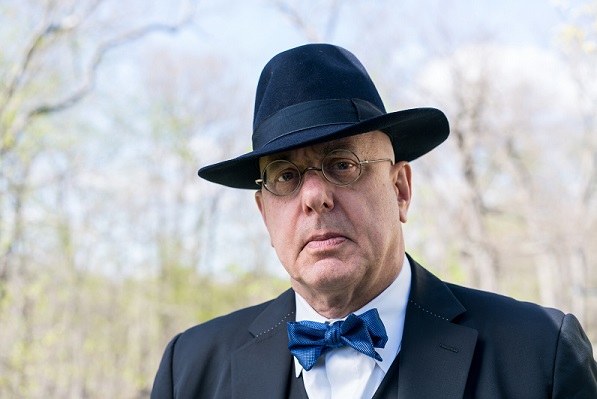
    Above: Maestro Leon Botstein, in a Matt Dine portrait

    ~ Author: Brad S. Ross

    Friday, January 25th, 2019 – It was another fine program Friday night at Carnegie Hall’s Isaac Stern Auditorium as the music director Leon Botstein led The American Symphony Orchestra in an all-American program of under-performed greats aptly titled “Sounds of the American Century.”  And that it most certainly was.

    Mann

    The evening began with Fantasy for Orchestra, a tone poem by the late violinist and educator Robert Mann (above).  Mann, who died last year at the ripe old age of 97, was a long-time staple of the New York classical music scene, in front of and behind the scenes, and was first violinist of the Juilliard String Quartet for over fifty years.  In addition to performance and education, Mann also dabbled in composition to pleasantly effective results.  His Fantasy for Orchestra was originally commissioned by the New York Philharmonic and first performed by that ensemble under the direction of Dimitri Mitropoulos at Carnegie Hall itself in 1957.

    The piece opened on the violas sustaining a single note.  Other members of the orchestra soon joined and a collage of atonal sonorities began to emerge.  This menace continued to build until a percussive roll launched the work into more energized and frenzied territory.  Mann’s Fantasy played almost programmatically, as if scoring the unseeing drama of some unsettling film or ballet.  A haunting violin solo emerged, performed by the concertmaster Cyrus Beroukhim, as harp ostinati and melancholic low brass chords created an almost dream-like atmosphere.  After a near-silent decrescendo, the drama then built up to a sequence of full-orchestra blasts that rang the piece to a volatile conclusion.  This was a decidedly above-average mid-century tone poem, played with force by the American Symphony Orchestra, and one that should warrant more-frequent airings.

    Vivian-Fine

    Next, receiving its long-overdue New York premiere, was Concertante for Piano and Orchestra by Vivian Fine (above).  Fine, who was one of a handful pioneering female composers in the early 20th century, is perhaps best known for her many chamber works, including the atonally adventurous Capriccio for Oboe and String Trio.  The Concertante for Piano and Orchestra, composed in 1944, was the first of her orchestral repertoire.

    After Mann’s Fantasy for Orchestra, Fine’s Concertante was almost strikingly tonal, as if ripped from the pages of some lost Romantic-era score composed sixty years prior.  Comprising two movements, it opened on a stately and delicate Andante con moto and closed on a convivial and spirited Allegro risoluto.

    Charliealbright

    Pianist Charlie Albright (above) made solid sport of the piece’s numerous solo passages and improvised an impressively intricate and lively cadenza that charged the work to its end.  His admirable commitment to the piece brought much life to what otherwise struck me as a very dainty and anachronistic work, one I don’t expect to hear programmed again anytime soon.

    A minor ovation brought Albright back to the piano bench for an encore of a work that, as a friend of his apparently put it, “takes balls to perform.”  He then ripped into a breezy rendition of 1957’s “Great Balls of Fire” that cheekily concluded the first half of the concert.


    J Druckman

    After intermission came a performance of Prism, a three-movement orchestral set by written in 1980 the great and often unsung composer Jacob Druckman (above).  Inspired in part by Luciano Berio’s 1968 Sinfonia, Druckman crafted Prism by blending the musical styles of historic composers with his own decidedly modern voice.  Fittingly, each movement references the music of a Baroque or Classical-era composer for which it is titled.

    The first movement “After Marc-Antoine Charpentier” began on otherworldly textures consisting of percussion, woodwind clusters, pizzicato hits, and haunting tremolo in the strings.  Quotations of Charpentier soon emerged, complete with a synthesized harpsichord, but carrying with it the wild distortions and eerie timbres of the 20th century.  The second movement, “After Francesco Cavalli”, carried on in similar fashion, blending the sonorities of these disjointed eras.  A clarinet solo accompanied by atonal statements throughout the orchestra brought some much-appreciated color and allowed the piece to stand more fully on its own legs, rather than succumb to pastiche.  Violent punctuations opened the third movement, “After Luigi Cherubini,” which was occasionally discursive to a fault.  Nevertheless, this built to an impressively bombastic finale that rekindled any waning interest.

    Compositions that blend the styles of different musical eras like Prism or Berio’s Sinfonia (or Steven Stucky’s Dreamwaltzes or John C. Adams’s Absolute Jest, for that matter) tend to walk a fine line between tasteful reference and cheeky gimmickry.  While the merits of such genre-bending continue to be up for debate, I must confess enjoying Prism best when lived in its own era.

    P01l7krp

    The final piece of the evening was the Third Symphony by one of America’s greatest composers, William Schuman (above).  A contemporary of Robert Mann, Schuman was also a staple of New York’s classical music scene, albeit with a much wider influence.  Throughout the course of his life, he served as the president of the Juilliard School, president of Lincoln Center, and in 1943 became the first-ever recipient of the Pulitzer Prize for Music.  Among his impressive catalog of compositions are numerous ballets and concertante, two operas, dozens of chamber and orchestral works, and a whopping ten symphonies.  The Third Symphony, composed in 1941, is perhaps his most famous.

    Clocking in at about thirty minutes, the symphony is cast in two parts played with short pause—Part I comprising a Passacaglia and Fugue and Part II concluding on a Chorale and Toccata.  It begins on a slow and somber viola line that is gradually joined by the remainder of the strings and, finally, the rest of orchestra.  This tragic crescendo continues until a great fortissimo brass statement launches the work into new, dramatic frontiers.  Its form relaxed, but never rambling, the rest of the work is colored with mysterious string runs, noble brass statements, haunting solo passages, and occasionally violent musical statements.  Its final Toccata, opening on droning bass and military snare, eventually leads to vigorous string runs and bombastic low brass that slowly build it to a brilliant full-orchestral finale.

    Alternately lively and melancholic, stately and haunting, beautiful and ferocious, the symphony marks a high point of American orchestral writing.  It is one our nation’s finest symphonies and should be played as often as any of the best works of Aaron Copland or Leonard Bernstein.  Alas, it tends to languish, as do so many other great American orchestral works, on the dusty shelves of music libraries as the works of Beethoven, Brahms, and Mozart are performed ad infinitum.  It’s a scandal that American orchestras don’t find more time in their seasons to honor the music of their native soil, one that I’m happy to see Leon Botstein and company attempting to combat.

    While I wasn’t always thrilled with this interpretation of the piece, which occasionally leaned on the sluggish side, this still ultimately made for triumphant conclusion to a grand evening of American classical music at Carnegie Hall.  The mission of the American Symphony Orchestra, now in its 57th season, is one of the most admirable kind.  New Yorkers could do far worse than to hear this orchestra unearth great works of art from our nation’s past.

    ~ Brad S Ross