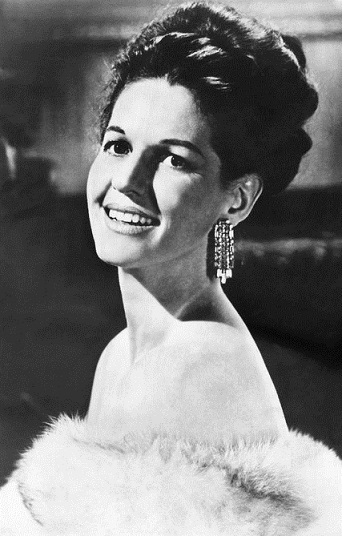
Tag: Maralin Niska

  • Singers: Maralin Niska

    (This article about the great singing-actress first appeared on Oberon’s Grove in 2008; it included many more photos, but for this revival, I’ve chosen a few special favorites.)

    maralin fave

    Back in 1968, I was at a performance of CAV/PAG at NYCO and the soprano singing Nedda caught my fancy, not just because she was slender and sexy and moved with a natural command of the stage, but also that at one point she stamped out a cigarette with her bare foot. I could not think of many divas who would do that.

    I could write a book about Maralin Niska; her performances are among the most potent memories I have of that heady time in the 1960s-1980s when so many great singers played nightly at both of New York’s opera houses.

    Her voice was unconventional; an enigma, really. I would not call it beautiful though she could convince you that it was utterly gorgeous in certain phrases. Her technique was based very much on a chest resonance which gave her unusual power; while the timbre of her voice was dark, the thrust of it was very bright. When I think of other great singing-actresses I have seen – Rysanek, Silja, Behrens – Niska stands firmly in their company and she was the most versatile of them all. She was a striking woman; I remember her being referred to as the Rita Hayworth of opera.

    In 1969, while the Met was closed due to a strike, Maralin was alternating Mozart’s Countess Almaviva with the role of Yaroslavna at NYCO. Two more dissimilar roles would be hard to imagine but she was utterly at home in both. Her Countess had an almost tragic dimension as she suffered the indignations her husband heaped on her; she used her perfectly supported piano technique to great effect in Mozart’s music. As Yaroslava, left by Prince Igor to run the unruly kingdom while he is off fighting Khan Kontchak, Niska sang a hauntingly hushed lament for his absence. But when the rebels set fire to the palace, Maralin, surrounded by the thundering chorus of boyars, let fly with an unscripted high-D which was as thrilling as any note I’ve ever heard in an opera house.

    As Marguerite in FAUST, Niska was anything but a shrinking violet. Faust was the key to her sexual awakening and when he bade her adieu in the Garden Scene, Niska broke into sobs of frustrated passion. Her overwhelming power in the final trio, and her devastating rejection of Faust at the end literally ring in my ears even today.

    The vocal and dramatic strokes Niska used in her canvas remain vividly alive for me all these years later. In BUTTERFLY, kneeling with Suzuki and Trouble with backs to the audience as the Humming Chorus is intoned and evening falls, Niska slowly looked over her shoulder to the audience with an expression of quiet fear: Butterfly’s unshakable faith would not pass the test. In TRAVIATA, having been asked by Germont pere to give up his son, Niska sustained the opening of “O, dite alla giovine” with a remarkable hushed tone and drew no breath before continuing. With that phrase, Violetta’s fragile world comes undone. No other soprano has done it quite the same way. But I went backstage afterwards and said, “Maralin! That NOTE!” “Which note?” “The note before “Dite alla giovine!” “Um…yes?”  “You held it so long and so quietly and then went into the phrase without breathing!” “I did?”

    She sang Tosca, her contempt for Scarpia expressed with icy power. After she had murdered him, she knelt by his corpse and sang “E morto…or gli perdono!’ and with a swift stroke buried the blade of the knife into the stage about an inch from the baritone’s head. Then she sang Mimi, and I thought she’d be way too cold for that. But she told an interviewer: “I put on the costume and I became Mimi.” Using portamenti and her miraculous piano, Niska did indeed become the pathetic seamstress.

    Niska was also singing at the Met by now, in VESPRI and TOSCA among other operas. She was wonderful and wove her own magic into the existing stagings.
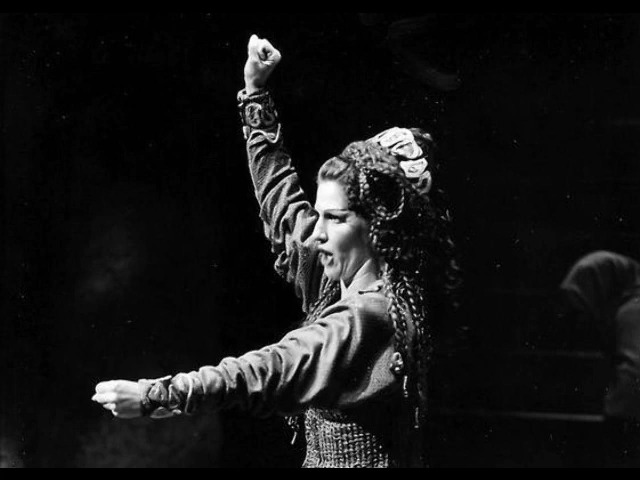
    niska medea

    Above: Maralin as Medea

    NYCO mounted Cherubini’s MEDEA for her. This complex role, sometimes sung as a verismo shrew, was more classically structured by Niska who seemed to realize that vocally Medea is more akin to Donna Anna than anything else. Moreover, she convinced me that Medea was “right” and that her horrific murders of Glauce and of her children were perfectly natural. I never saw Callas in opera, but it would be hard to imagine she was any more potent a Medea than Niska.

    At NYCO she continued in her Mimi mode with a beautifully expressive Manon Lescaut.  Then she took on Salome, having just the ideal combination of silver & blood in the voice. I was dazed by the mesmerizing, obsessive power of both her singing and her portrayal. The art deco sets were superb, and Niska ended her dance in a shimmering body stocking. In the end, as the soldiers crushed her, Maralin let out a chesty groan and writhed for a moment before death took her.

    Then came one of her most delightful and unexpected triumphs: the Composer in ARIADNE AUF NAXOS. This is my favorite opera and I just loved NYCO’s production which seemed to capture the two colliding worlds to perfection. Maralin sang the idealistic Composer, who is finally forced to deal with the realities of life in the theatre, with a flood of dark, soaring tone and vivid dynamic control. The Composer disappears at the end of the Prologue, but in this production, Niska entered the pit and “conducted” the opening of the opera; then Julius Rudel, already seated next to the podium, took over after several measures.

    TJ and I had moved to Hartford and were stunned one night when we went to see TRAVIATA at the Bushnell to find that Maria Chiara had cancelled and Maralin was replacing her. “Let’s go leave her a note!” suggested TJ. Rushing to the stage door, we came upon Maralin pounding on the “wrong” door, trying to get into the theatre where she’d never performed before. She was thrilled to see us, not least because we were able to show her the right door.

    FANCIULLA DEL WEST was another perfect Niska creation; she seemed just to “become” this unpretentious, good-hearted Wild West woman…not above cheating at cards to win her man.

    TURANDOT was a role we never got to see her do; apparently NYCO asked Maralin to learn it for the LA tour, promising her performances in NYC afterwards. The promise was broken. But I have a tape of the LA performance and it’s pretty impressive.

    Maralin sang the unlikely role of Rosalinda in FLEDERMAUS and, at Carnegie Hall, the Latvian national opera BANUTA in which her steely top notes and powerful chest voice were thrillingly on display.

    maralin em

    Above: Maralin as Emilia Marty

    Niska’s greatest triumph, though, was in the Frank Corsaro production of Janacek’s MAKROPOULOS AFFAIR. This fascinating story of a 342-year-old woman who has spanned the decades under various names (always using the initials E.M.) thanks to her alchemist father’s potion for eternal life has been fashioned by Janacek into a vivid drama which centers on Elina’s need to find the lost prescription: she needs a dose to extend her life another 300 years. Ruthlessly manipulative, she manages by seduction to attain the formula only to decide in the end that she is weary of life. Corsaro told the story of the opera onstage while overhead, films of episodes from EM’s past are shown on multiple screens. Maralin appears in the films in various period costumes, using and abusing her sexual fascination to get what she wants from her various lovers. Onstage there is a nude scene where EM removes her dressing gown to show Baron Prus the scars inflicted by one of her sadistic lovers; few divas besides Niska have the body to appear nude onstage. It seemed entirely natural. In the end, Elina offers the magic formula to the young Christa who burns it; spontaneously all the screens burst into flame and out of the darkness, EM’s enigmatic chauffeur comes to bear her away into the smoke. The ovations Maralin received for these performances rivalled any I have encountered in the theatre.

    I saw her onstage for the last time as Elisabetta in MARIA STUARDA; she was still singing with amazing force but NYCO had decided they didn’t need her – even though the latest revival of the Janacek had been even more powerful than the original run. But she threw herself into the Donizetti, brazenly sailing in and out of registers and treating Maria (Ashley Putnam) with palpable disdain. After signing Maria’s death warrant, Elizabetta turns on the hapless Leicester and orders him to be witness to Maria’s execution. Launching her final stretta with almost gleeful vengeance, Niska propelled the scene to its climax and struck a brazen high E-flat which rang into the house (and onto my tape recorder!)

    She moved to Santa Fe and we kept in touch. Then one year my Christmas card came back marked “No such number”. I wrote again: same thing. I feared we had lost contact.

    I thought about her all the time; and the power of thought worked. Shortly after I moved to NYC, I was working one morning and down the aisle Maralin came walking. She was in town with her husband Bill Mullen for a NYCO “family reunion”. We had the most amazing conversation and established why my letters hadn’t reached her. Three years later she was in town again and came in expressly to say hello.

    Now I’m re-reading what I’ve written. How feeble it sounds; I don’t think l’ve begun to express the impact of her performances. My diaries have much more detail, but even they seem very pallid. It’s the impressions she made on my mind or my…soul…that can’t be defined. The diaries, the old tapes, the photos, the programmes, notes she sent me. No one could grasp from any of this what Maralin Niska really meant to me. But I wanted to try to express it anyway.

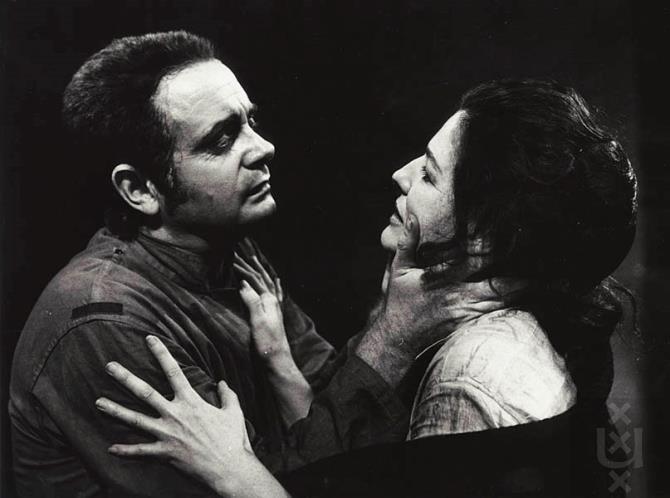
    niska
    niska derksen wozzeck

    Above: with baritone Jan Derksen in WOZZECK, one of Maralin’s European triumphs
    niska button
  • Maralin Niska/Barry Morell ~ TOSCA duet

    Niska

    Maralin Niska (above) and Barry Morell sing the Act I duet from Puccini’s TOSCA from a performance given at Pittsburgh in 1976.

    Listen here

  • @ The Met’s Opening Night ~ MEDEA

    Met medea

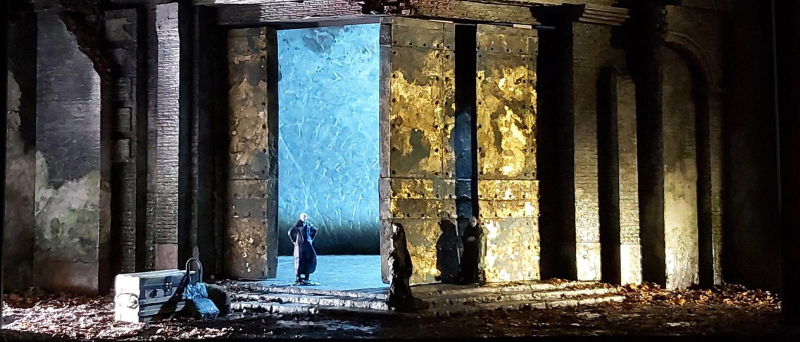
    Tuesday September 27th, 2022 – The Metropolitan Opera opened their 2022-2023 season this evening with the Met premiere of Cherubini’s MEDEA. Originally performed in French – the opera’s world premiere took place on March 13th, 1797, at the Théâtre Feydeau in Paris – MEDEA in its Italian version became one of Maria Callas’s greatest triumphs.

    This was my fourth time experiencing MEDEA in the theatre. In 1974, the New York City Opera staged the work for their premiere singing-actress, Maralin Niska, who was magnificent in the role. Incredibly, in 1982, the Company offered another new production of the work – somewhat more timeless in feeling – with Grace Bumbry very effective in the title-role. In 1987, the opera was given in Bridgeport, Connecticut, in a traditional setting; Gilda Cruz-Romo sang Medea. Gilda, a longtime favorite of mine, was not ideally suited to the role but she still had plenty of voice a her disposal; it was the last time I ever saw her onstage. 

    Met Opening Night tickets being prohibitively expensive, I took a score desk for this performance; I plan to go a second time to have a view of the sets and costumes. This evening was a huge personal triumph for Sondra Radvanovsky; singing to a sold out house – a real rarity at The Met in this day and age – she won a thunderous ovation of the kind singers like Tebaldi, Nilsson, Rysanek, and Dame Gwyneth Jones used to garner. Sondra deserved every decibel, for she threw herself into the difficult and demanding role with total commitment.

    The evening opened with the national anthem. I have always love singing it, but when we came to the words “…o’er the land of the free…” and was suddenly overcome with grief. We seem to be rushing headlong to our doom as a great democracy; I am hoping I won’t live long enough to experience the bitter end.

    MEDEA itself is maddeningly uneven: thrilling passages – mainly for the title-character – alternate with routine music; conductor Carlo Rizzi led a performance that was more dutiful than inspired. It was in the individual singers that the evening made its musical impact; chorus and orchestra played a vital role in keeping the opera afloat when the main characters were otherwise occupied.

    Matthew Polenzani’s Giasone is quite different from that of such earlier stalwarts in this music as Jon Vickers and James McCracken: more lyrical and thus more vulnerable. Polenzani sang beautifully, and his voice carried perfectly in the big hall. His expressive range veered from poetic (with his bride) to defiant (dealing with his ex-), to ultimate despair as he watched his entire world go up in flames. 

    Janai Brugger’s Glauce made much of what is a rather ungrateful role; Glauce has a very demanding aria early in the opera and thereafter is eclipsed both musically and dramatically by her rival, Medea. Ms. Brugger’s voice sails easily into the hall, and she combined full-toned lyricism with technical assurance.

    Michele Pertusi has had a long and distinguished career, and tonight, as Creon, he was most impressive. The voice is steady and sure, and it fills the house. It’s always wonderful to hear a native Italian making the most of the words. Pertusi’s Creon was outstanding, establishing real authority.

    I had previously experienced Ekaterina Gubanova as a powerful Cassandra in a concert performance of LES TROYENS, and as Brangaene in a concert version of Act II of TRISTAN UND ISOLDE where she sounded a bit taxed in her upper range. Tonight, as Medea’s faithful companion, Neris, Ms. Gubanova was superb. Her poignant aria, with its haunting bassoon accompaniment, was the musical centerpiece of the evening. The singer seemed to hold the house under a spell as she sang of her devotion to her mistress, winning warm applause at the aria’s end, and an enthusiastic round of bravas at her bows.

    Mille bravi! to Met principal bassoonist Evan Epifanio for his gorgeously mellow playing in Neris’s aria; he and Ms. Gubanova ideally complimented one another. 

    Witnessing the Radvanovsky triumph was vastly pleasing to me, as I have been a great admirer of the diva since her days as a Met Young Artist. In her many performances that I’ve experienced, she has always seemed to have a unique gift for making opera seem important. Sondra’s dynamic range is her greatest gift: the incredible focus and power of her highest notes can be followed moments later by a shimmeringly “alive” pianissimo. And she has an enthralling stage presence: a fearless actress, she seems to become the woman she is portraying. All this made her Medea a holy terror.

    Medea makes a sneaky entrance, and soon she is alone with her former lover/husband, to whom she pours out her emotions in the great aria “Dei tuoi figli la madre…“; here, the Radvanovsky voice ranges from extraordinary tenderness to blind fury. I might have wished for a more chesty expression at “Nemici senza cor!” (Sondra really opened the chest range in Act II!) but the soprano knew what she was about. Polenzani gave a powerful response, eliciting a blistering, sustained top note from the furious sorceress. They quarreled on, to brilliant effect.

    Act II commences without a break (thank god they didn’t bring up the houselights to quarter!) and Sondra, who had had a couple of throaty notes in Act I, was now blazing away on all cylinders, the voice fresh as can be, and the increasing use of chest voice adding to the thrills. Medea’s pleadings to Creon to be given one more day in Corinth cover a wide range of cajoling and deceit…Sondra and Mr. Pertusi were electrifying here. And when she won, Sondra celebrated her success: Medea now has time to work her destructive spells.

    Following Neris’s gorgeous aria, sounds of the wedding ceremony are heard, with the chorus invoking the gods to bless Glauce and Giasone. Medea counters this with diabolical mutterings of her own, cursing the crowd with a starkly chested “Rabia infernal!“. Then, suddenly, she sails up to a vibrant final phrase. I admit I was kind of hoping Sondra would “take the fifth” here, as Callas sometimes did, but that notion was lost in the barrage of applause.

    Act III is only about 30 minutes long, and is preceded by an over-long prelude. Sondra again stuns us with her powerful “Numi, venite a me!” and then gives us her finest, most magical singing of the evening with “Del fiero duol!” capped by en enormous high note. Polenzani, maddened by grief, assails her: “Our sons! What was their crime that they deserved to die?”…to which she answers, “They were your children!”

    I stood up from my desk to watch the finale: flames are licking at the walls of the temple; the corpses of the two boys are lying on the floor upstage. Medea delivers her final line to Giasone: Al sacro fiume io vo! Colà t’aspetta l’ombra mia!” (“I go to the sacred river…there, my shade will await you!”) and moves slowly to her dead sons. She settles herself between them, taking their bodies in her arms as the entire temple is engulfed in flames.

    There’s a video of tonight’s finale – and the curtain calls – that is a wonderful souvenir of the evening. However, having been recorded on a cellphone, it gives no idea of the sheer volume and depth of the sound of a full-house standing ovation at The Met. To Sondra, it must have felt like being hit by an avalanche of affection. Watch here.

    ~ Oberon

  • M.N. as E.M.

    6a00d8341c4e3853ef00e5550e0ebc8834

    Soprano Maralin Niska in the final scene of Leoš Janáček’s The Makropoulos Affair. The role of Emilia Marty, in Frank Corsaro’s multi-media production for New York City Opera, was one of the great triumphs of the Niska career.

    Maralin Niska as Emilia Marty – finale of The Makropoulos Affair – NYCO 9~5~71

  • Maralin as Marguerite

    M niska

    Maralin Niska (above), the American soprano who passed away on July 9th, 2016, was one of a handful of singers whose performances could induce me to travel – first from Syracuse, NY, to see her in several roles at New York City Opera, and later from Hartford, CT – where TJ and I had settled in the mid-1970s – to Lincoln Center, where she was singing at both the State Theatre and The Met.

    Once, she even came to Hartford to sing Violetta, replacing another soprano on short notice. We were so excited when we arrived at The Bushnell and saw the announcement of the cast change; we rushed to the stage door to leave her a message, and en route we found her, just thirty minutes before curtain time, banging desperately on what she thought was the stage door. She was so happy to see us, not least because we were able to lead her to the proper entrance.

    Violetta, Mimi, Tosca, Butterfly, Nedda, Countess Almaviva…these were some of the roles from the standard repertoire in which Niska thrilled me. Her triumphs in such great dramatic vehicles as Cherubini’s Medea, Strauss’s Salome, and Janacek’s Emilia Marty were the stuff of operatic legend. In roles as diverse as Yaroslavna in PRINCE IGOR, the Composer in ARIADNE AUF NAXOS, Rosalinda in FLEDERMAUS, and Elisabetta I in MARIA STUARDA, she achieved miracles of characterization and of voice.

    Yet for all that, is was – curiously enough – as Marguerite in FAUST that Maralin gave a (somewhat unexpectedly) sensational performance that has lingered so clearly in my mind over the ensuing years. In the unforgettable Frank Corsaro production – in which the devil wins – Maralin left the notion of Marguerite as a shrinking violet in the dust. Faust’s love for the girl signaled not only her romantic but also her sexual awakening.

    In the Garden Scene, on the brink of having her, Faust backs off, causing Maralin/Marguerite to burst into frantic sobs of frustration; when he reappears after Marguerite’s ecstatic invocation, there’s no going back. 

    As the opera draws to its end, Faust comes to rescue Marguerite from prison, where she awaits execution for murdering her child. The demented girl imagines they are back in the garden; she ignores Faust’s pleas to come away. When Mephistopheles appears to urge theme to hurry, Marguerite sees him for what he is and turns to fervent prayer. Faust tries one last time to persuade her to flee, but she turns on him, crying: “Pourquoi ces mains rouge de sang? Va! … tu me fais horreur!”  (“Why are your hands red with blood? Go!…you fill me with horror!”) No soprano has done that last line quite like Maralin.

    Heavenly voices declare Marguerite’s salvation; she begins to climb a steep staircase, but at the top of it, double doors fly open, and instead of an angelic host she is greeted by a towering executioner, masked and carrying an monstrous axe. Faust rushes up the steps to try to save her, but the doors are slammed shut in his face. Mephistopheles steps out of the shadows, calling Faust’s name quietly, and waving the contract with which Faust had sold away his soul to the devil in Act I.

    I’ve been able to preserve some excerpts from one of Maralin’s performances in this role at NYC Opera; the date was March 15, 1970, and her colleagues were Nicholas di Virgilio (Faust) and Norman Treigle (Mephistopheles). The original tapes are in a fragile state – I was lucky they played well enough to save them to MP3. The sound quality leaves much to be desired, but hearing these scenes brings back wonderful memories for me:

    Niska – FAUST aria – NYCO 3

    FAUST – Garden Scene exc – Niska – di Virgilio – Treigle – NYCO 3

    Maralin Niska & Norman Treigle – scene from FAUST – NYCO 3~15~70

    FAUST – finale – Niska – di Virgilio – Treigle – NYCO 3

    Photographer Beth Bergman has created a beautiful memorial in photos to Maralin Niska on her website: visit the page here.