Tag: Marco Borggreve

  • Stile Antico @ The Miller Theatre

    Stile-Antico

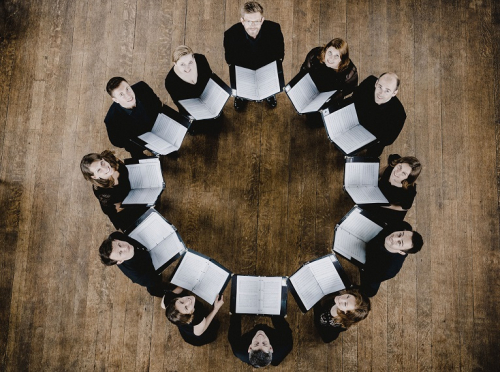
    Above: the singers of Stile Antico, photographed by Marco Borggreve

    Saturday February 19th, 2022 – Stile Antico, the London-based Early Music vocal ensemble, gave a wonderful program this evening at Columbia University’s Miller Theater. The music – and the ensemble’s hauntingly beautiful singing of it – was a balm to the spirit in these uncertain times. 

    In this program, entitled Toward the Dawn, Stile Antico brings us works – both sacred and secular – that sing of the hours between dusk and dawn: nocturnal music of mystery and of assurance that carries us through the watches of the night.

    The twelve singers of Stile Antico stood in a semi-circle on the bare stage, all clad in black, rearranging themselves for each work. The program was devised in three sections: Evening, Nightfall, and Dawn. After the first piece of the evening – John Wilbye’s Draw on sweet night – there was a lovely silence, and then people started applauding. Although the singers seemed prepared for this intrusion – they took a bow – for me it broke the atmosphere. Thereafter, each piece was applauded and bows were taken.

    The opening Wilbye set the mood for everything that follows: dreamlike, and tinged alternately with hope and uncertainty. in Thomas Tallis’s Te lucis ante terminum, we hear a prayer for God to watch over us throughout the night. John Ward’s Come, sable night is extraordinarily beautiful, both in words and music.  From William Byrd, we heard Vigilante, a dramatic work that urges true believers to remain faithful…and aware.

    The Nightfall section of the program commenced with Orlande de Lassus’ Toutes les nuitz, which tells of the restlessness of sleeping alone. This rang true with me as I thought back on the very few nights in the past twenty years that my beloved has not been there to have and to hold. Both in music and words, and in Stile Antico‘s singing of it, this song was a highlight of the program.

    Next came the most familiar work of the evening: Gregorio Allegri’s Miserere. I first  heard this heavenly music in a movie theatre, while watching the iconic gay film, Maurice. Jonathan Hanley was the tenor soloist, and the high-spinning soprano line was beautifully woven into the sonic tapestry. An interesting program note told of the transformation of this work over the years, so that it probably is quite unlike what Allegri originally wrote. Nevertheless, its enduring enchantment is easy to understand, especially when it is as poetically sung as it was tonight.

    John Sheppard’s In manus tuas also calls for a soloist: bass James Arthur’s tone had a poetic sonority. The words, from Psalm 31:6, are wonderfully simple: “Into your hands I commend my spirit; you will redeem me, Lord, God of truth”.

    The only contemporary work on the program, Nico Muhly’s Gentle sleep, composed in 2015 to a text by Shakespeare, did not seem at all out-of-place. The bending harmonics in fact gave a pleasing contrast to the rest of the works on the program. Muhly’s score has an intriguing and somewhat anxious feeling.

    Now the dawn is heralded by Thomas Tallis’s O nata lux de lumine, which hails Christ as the “Light of the World”; this is followed by Claudio Monteverdi’s Ecco mormorar l’onde, a poem describing the morning breeze out of the Orient, stirring the ocean’s waves and bringing the world to wakefulness.

    The evening concluded with Ave Dei Patris Filia by John Taverner: a longish work of varying moods that extols the Virgin Mary. While a blend of timbres is essential in a choral ensemble like Stile Antico, I did find myself frequently listening to individual voices as the program unfolded; the altos, in particular, impressed me in the concluding Taverner.

    The concert ended with a joy-filled Amen, whereupon the singers were given a hearty and very well-deserved ovation. I’d had high expectations for this program, and they were surpassed: extraordinary music-making…bravi Stile Antico!

    The hall seemed full, and for the most part silence reigned during the music. Invariably, though, if there is one thoughtless person in an audience, that person is destined to sit next to me. This individual arrived as the lights were going down, with a suitcase, and all bundled up; he/she clambered over me, took forever to settle in, and then spent the evening flipping noisily thru the dreaded texts booklet. Yet another case of the triumph of indifference.

    Oberon

  • Shostakovich/Tchaikovsky @ The NY Phil

    Dmitri_Slobodeniouk_Photo_Credit_Marco_Borggreve-1024x683

    Above: conductor Dima Slobodeniouk, photo by Marco Borggreve

    Thursday November 18th, 2021 – It was wonderful to re-connect with The New York Philharmonic this evening when they offered a program of music by Shostakovich and Tchaikovsky at Alice Tully Hall. As the hall slowly filled to capacity, I loved seeing so many of my favorite musicians again, taking their places onstage after the long months of isolation. Sheryl Staples was the concert-master tonight, and a sense of anticipation seemed to fill the Hall.

    I was not sure how these big works would fare in the rather intimate space of Tully Hall, where we’re accustomed to hearing chamber music. But in fact, the sonic effect of the large ensemble was wonderful to experience: rich and deep; and when solo moments came along for the principals, the clarity was vivid. The risers for the winds and percussion were abandoned in this space. Most of the string players remained masked throughout the evening.

    As the date of the concert drew near, an announcement was made that the scheduled conductor, Semyon Bychkov, would be replaced by Dima Slobodeniouk, who is making his Philharmonic debut with these performances.

    Shostakovich wrote his first violin concerto 1947-48, but the composer hid it away until 1955, when it had its premiere performance by with the Leningrad Philharmonic, with David Oistrakh as soloist. It is to Oistrakh that Shostakovich dedicated the concerto.

    It had not been safe for Shostakovich to bring forth this piece until Josef Stalin had been dead for two years. The 1946 Zhdanov Doctrine had warned that the post-war divide between US imperialism and the democratic Soviet Union had produced a conflict in Soviet culture: a conflict between good and best. Shostakovich knew that “best” meant: ‘…adhering to cultural standards specified by the government.’ And he also knew that this concerto would not have been deemed “acceptable”. He had already been previously condemned by Stalin, and he knew enough not to tempt fate.

    Gomyo

    Violinist Karen Gomyo (above) opened the evening, playing the Shostakovich 1st violin concerto in her debut NY Philharmonic performances. And what a triumph she had in this exceptionally demanding piece! Ms. Gomyo is a native of Tokyo; she studied at the Juilliard School with Dorothy DeLay. She looked gorgeous tonight in her midnight-blue frock, upon which tiny silver sequins sparkled like diamonds.

    The concerto’s opening movement is entitled Nocturne. The deep strings underscore a low, doleful melody for the solo violin; as the music moves into a higher range, a sense of longing takes over.  The winds, and then the violins, accompany the soloist’s ascent. Harp notes sound, the basses growl, and the winds create darkish textures, with a particularly rich solo passage for bass clarinet. Now the soloist rises to a shimmering, sustained high note.

    The second movement, Scherzo, bounces out in agitato mode, the soloist deftly handling her tricky passages over the sound of plucking strings. Rhythms are brisk and uneven, taken at high speed, and the xylophone, horns, and clarinet add to the colorful palette of sound. The music breaks into a dance as the scherzo runs on to a big finish.

    The third movement, Andante, is a passacaglia; after a deep, dramatic start, the music becomes dirge-like, with the basses and low winds maintaining an almost ominous feeling. The solo violin sings a poignant lament; the horn has a solo passage, plushy played, and then the plodding basses are joined by their celli brothers. The violin embarks on a gigantic cadenza, which ranges from the depths to the heights and calls for exceptional technical mastery; Ms. Gomyo’s staggering virtuosity kept the audience spellbound during this incredible solo.

    The finale, a Burlesque marked allegro con brio, is introduced by the drums, with the xylophone again kicking in. How sweet to hear Anthony McGill’s clarinet singing forth! Ms. Gomyo makes a brilliant entrance.  Orchestra and soloist have frequent interactions, with the Passacaglia theme popping up out of nowhere, now animated in a presto setting. The finale dances along its bravura way to a dazzling conclusion.

    Ms. Gomyo was as riveting to watch as to hear: throughout her performance, her intensity and deep commitment could be read on her face. The audience responded to her thrilling performance with a vociferous standing ovation, the Philharmonic players joining in enthusiastically: a wonderful, celebratory atmosphere in the Hall.   

    After the interval, Tchaikovsky’s first symphony, known as “Winter Dreams” was sumptuously played by the orchestra, conducted with passion and great attention to detail by Maestro Slobodeniouk.

    While I have always thought of Tchaikovsky as one of my favorite composers, for me the first symphony is not one of his finest works. I’d only heard it played live once before, by this same orchestra; at that time I found it pleasant enough. But maybe that is all it is: pleasant.

    The first movement really felt over-long this evening; basically it seemed to be heading nowhere. Likewise, the fourth movement takes forever to get going, with various detours and a slow revving of the engines before the Allegro maestoso finally bursts forth  The highlights of this performance were the passages that Tchaikovsky assigned to the principals: Robert Langevin (flute), Liang Wang (oboe), Anthony McGill (clarinet), and Judith LeClair (bassoon). Liang Wang’s solo in the second movement, which becomes entwined with the sound of the Langevin flute, was a little slice of heaven.  Section by section, too, the orchestra simply sounded great: the viola and cello themes in the Adagio really glowed, and the richness of the cellos and basses in the final movement was truly savourable.

    Yet, despite superb playing, tonight the Tchaikovsky 1st joined the Beethoven Pastoral on my list of symphonies to avoid in future. I think Tchaikovsky did Winter better in THE NUTCRACKER.

    ~ Oberon

  • From Mendelssohn @ Chamber Music Society

    Barnatan-8-gallery

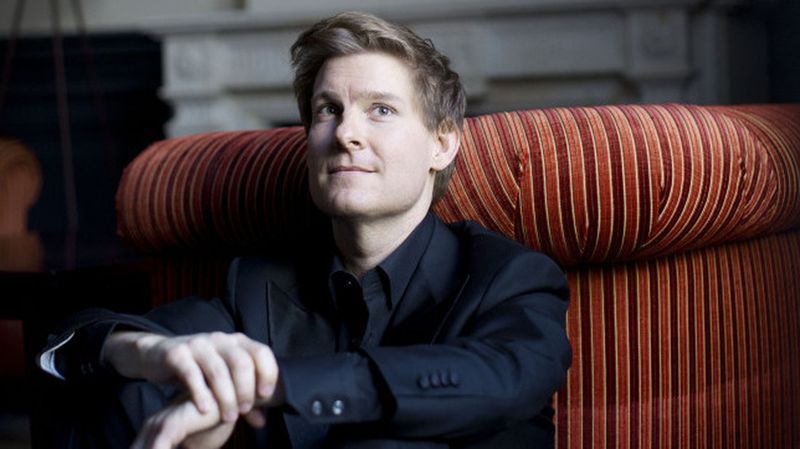
    Above: pianist Inon Barnatan, photographed by Marco Borggreve

    ~ Author: Oberon

    Sunday April 28th, 2019 – Music by Felix Mendelssohn, and by three composers he inspired, was on offer by Chamber Music Society of Lincoln Center at Alice Tully Hall this evening. The Society drew together an international ensemble of extraordinary musicians for a program of mostly familiar works, with a Schumann gem – a piece I’d never heard, nor even heard of – thrown into the mix for good measure. 

    5ae1bc9352939

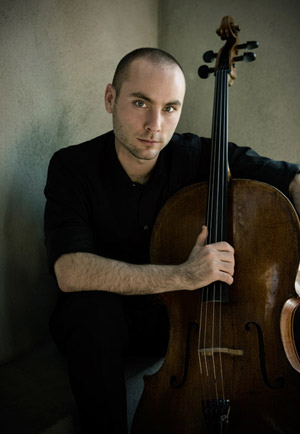
    The Swedish cellist Jakob Koranyi (above in a Lisa-Marie Mazzucco photo) and Israeli pianist Inon Barnatan opened the concert with Mendelssohn’s Lied ohne Worte in D-major, Op. 109. The musicians proved to be an ideal pairing: they both play from the heart. This is a song sung by the cello, with a bittersweet melody, and an interlude that is passionate and then animated, before leading back to theme. The cellist ranges from a ravishingly sustained and tapered high note to – soon after – a plunge to the depths; the music ends with a rising phrase. A packed house called the two gentlemen back for a bow. The evening was off to a wonderful start.

    Robert Schumann’s Märchenerzählungen (‘Fairy Tales‘) for Clarinet, Viola, and Piano, Op. 132, was one of the composer’s last completed works. It was written in 1853, just five months before his attempted suicide and his subsequent confinement in a mental institution, where he died in 1856 at the age of 46. 

    Romie_Formal_2

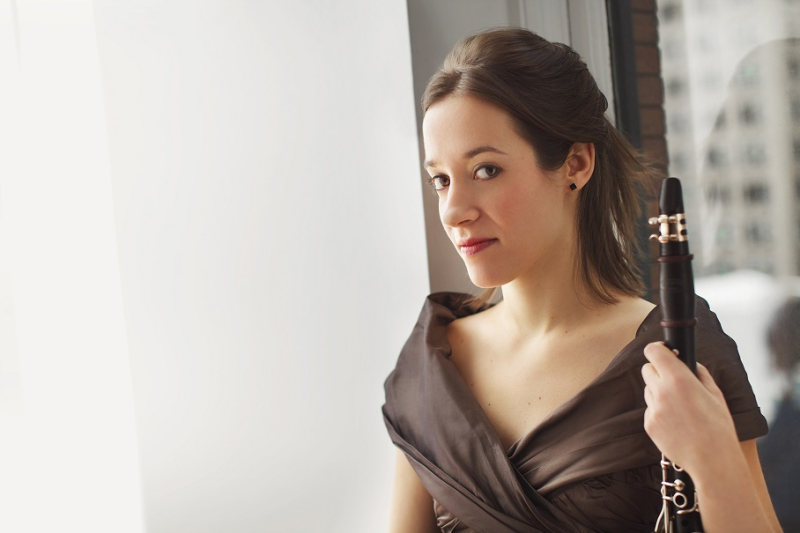
    Märchenerzählungen brought forth the excellent Canadian clarinetist Romie DeGuise-Langlois (above); living as we do in a time when a number of superb clarinetists have thriving careers, it’s always a special pleasure for me to hear Romie, with her colorful tone and abundant technique. She was joined by violist Paul Neubauer and Mr. Barnatan for the four miniatures that comprise Märchenerzählungen

    The entwining of the mezzo-soprano-ranged voices of clarinet and viola was intriguing to hear: in the first movement, the music veers from playful to songful with lightness of mood, and Romie’s dynamic range – and her very pretty trill – were beautifully evident.

    An almost march-like pace commences the second movement, with blithely harmonized duetting from the clarinet and viola. An ensuing darkish mood felt a bit tongue-in-cheek: was Schumann toying with us?

    Mssrs. Neubauer and Barnatan open the third movement with sublime softness, joined soon by the clarinet. A wistfully exquisite blend of the three instruments – with immaculate turns of phrase – became achingly beautiful in its freely flowing lyricism. The movement’s sustained ending was very touching.

    In the final movement, clarinet and viola converse, then are heard as a duo. A charming interlude, with lightly etched motifs from Mr. Barnatan at the Steinway, shifts onward to a gallant finish. The only fault I could find with this Schumann work was that it’s too short: I wanted to hear more from Ms. DeGuise-Langlois.

    Paul-neubauer-by-tristan-cook

    Paul Neubauer (above, in a Tristan Cook photo) returned immediately with Mr. Barnatan for a lustrous performance of Johannes Brahms’ Sonata in E-flat major for Viola and Piano, Op. 120, No. 2, composed in 1894. The opening Allegro amabile brings us a sweet and subtle song, followed by a passionate passage from the pianist. Things then settle into a rather pensive state, both players delighting us with their dynamic palette and their feeling for the ebb and flow of the themes. A Romantic atmosphere, with the music soft and lovely, carries us thru a change of mood.

    In the second movement, Appassionato, the urgent passion of the opening statement subsides, but an underlying restlessness lingers. A hymn-like theme for solo piano lets us savour Mr. Barnatan’s artistry; joining in, Mr. Neubauer’s viola carries the melody to the instrument’s depths. In a sudden upswing, the music turns waltzy…and then finds a cool, darkish ending.

    The sonata’s final movement has a simple theme; the music is slow, with an air of Bach about it. A charming dance variation crops up, playful in its quirky swiftness, which is eventually becalmed. The work ends with a multi-faceted coda. Mssrs. Neubauer and Barnatan were rightly hailed for their warm-hearted performance. 

    Following the interval, Mr. Barnatan had the stage to himself for “Juin – Barcarolle” from Tchaikovsky’s Les saisons for Piano, Op. 37b.  This is echt-Tchaikovsky, with Mr. Barnatan relishing each note of the theme, which is thoughtful, and almost somber. Following a brief animation, descending notes bring us back to the melody. The music takes on a sort of shimmer, and then goes deep before rising to a soft, fading finish.

    Cho-Liang Lin

    Above: violinist Cho-Liang Lin, photo by K C Alfred

    The evening ended with a glorious performance of the Mendelssohn Trio No. 2 in C-minor for Piano, Violin, and Cello, Op. 66, in which Mssrs. Koranyi and Barnatan were joined by master violinist Cho-Liang Lin. The two Mendelssohn piano trios were the first chamber works to seize my attention, back at a time when I listened almost exclusively to opera.

    The passion – and the abundant lyric detail – of the music was served to perfection by Mssrs. Lin, Koranyi, and Barnatan. Their performance had a polish and glow that somehow made the music sound even more gorgeous to me than it ever has. It would be hard to imagine anything more moving – and thrilling – to me on a personal level than experiencing this music (which essentially opened up a new world for me when I heard it by chance on the radio…oh!, so many years ago) played with such lustre and vitality as it was tonight. A sublime, poignant experience; all my emotions were in play.

    It meant so much to me to be hearing this performance, as offered by the Chamber Music Society where – in the past few years, thanks to their generous welcome – I have had the opportunity to explore the vast chamber music repertoire, played by the great artists of our time. I became quite emotional as the trio of musicians produced one glorious passage after another tonight. And, in fact, the entire audience seemed to have fallen under a spell of enchantment. 

    The bows were not even off the strings when the applause commenced, the audience expressing their fervent delight with the performance – and their admiration for the musicians – in a spontaneous, full-house standing ovation. The players took a second bow as shouts of ‘bravo!‘ rang thru the hall. 

     ~ Oberon

  • Mitsuko Uchida @ Carnegie Hall

    4929_6093_Uchida-Mitsuko_Decca_Marco

    Above: Mitsuko Uchida, photographed by Marco Borggreve

    ~ Author: Oberon

    Monday February 26th, 2018 – Mitsuko Uchida in an all-Schubert recital at Carnegie Hall. I had only heard Ms. Uchida performing live once before, on Bastille Day, 1989, at Tanglewood; that evening, she played the Ravel G-major concerto, with Seiji Ozawa conducting. In 2009, some twenty years after that Tanglewood encounter, Mitsuko Uchida was named Dame Commander of the British Empire by Queen Elizabeth II.

    This evening, Dame Mitsuko walked onto the Carnegie Hall stage to an affectionate round of applause. Clad in a black trouser outfit with a golden sash and gold shoes, she bowed formally to the crowd, put on her eyeglasses, and sat down at the Steinway. For the next two hours, the pianist filled the hall – and our hearts – with her renderings of three Schubert sonatas. Her playing was by turns dramatic and poetic, and there was a wonderful feeling that her interpretations were very much at home in the venerable space: we were literally enveloped in the music.

    Mitsuko Uchida is a true artist. She isn’t here to dazzle us with theatrics or with her own personality, but to bring us great music in all its clarity and richness.

    The ongoing discussion in the realm of classical music as to whether Schubert’s piano sonatas belong in the same echelon as Beethoven’s was continued in tonight’s Playbill and in remarks overheard in intermission  conversations around us. My feeling, based on limited experiences to date, is that Beethoven’s sonatas more often reach a spiritual depth which Schubert’s – for all their beauty and fine structuring – never quite attain.

    The evening opened with the C-minor sonata, D. 958. Ms. Uchida immediately commanded the hall with the sonata’s crisp, dramatic start. As she moved forward, I initially felt she was giving too much pedal; but this notion was soon dispelled. Flurries of scales were exhilarating, and dancing themes ideally paced. The movement ends quietly.

    The Adagio brings us the first of many melodies heard throughout the evening that remind us of Schubert’s stature as a lieder composer. From its melancholy, soft start, one can imagine a voice taking up the melody; Ms. Uchida’s songful playing underscored this vocal connection throughout the concert. Some unfortunate coughing infringed on the quietest moments, but the pianist held steady and the atmosphere was preserved.

    Following a Menuetto – its unusually somber air perked up by the Allegro marking – the sonata’s dancelike final movement feels almost like a tarantella. A marvelous lightness moves forward into alternating currents of passion and playfulness. Ms. Uchida’s tossing off of several flourishing scales was particularly pleasing. 

    The A-Major sonata, D. 664, published posthumously in 1829, has variously been dated between 1819-1825. Referred to as “the little A-major” it was the shortest of the three sonatas on offer tonight, and it’s a real gem.

    This sonata’s opening Allegro moderato commences with another ‘song without words’. The pianist moves from high shimmers to dusky depths of turbulence and back again. A hesitant, sighing start to the Andante soon develops gently into minor-key passages. Ms. Uchida’s playing has a rapt, dreamlike quality and a lovely sense of mystery here; this evolves to a heavenly finish. The final Allegro commences with rippling motifs; emphatic downward scales lend drama, while waltz-like themes entice us. Throughout, the pianist’s feeling for nuance continually intrigued.
     
    Following the interval, we had the longest of the program’s three sonatas: the G-Major, D. 894 (often referred to as the Fantasie-Sonata‘), which was composed in the Autumn of 1826.

    The ultra-soft opening of this sonata found Ms. Uchida at her most compelling. As the Molto moderato e cantabile unfolds, there are high, decorative passages interspersed with big, rumbling downhill scales and waltzy motifs. Again the pianist’s scrupulous attention to detail and her control of dynamics kept the hall mesmerized. In the Andante, Ms. Uchida savoured the calm of the opening measures. Then grand passions spring up, alternating with lyrical flows from minor to major. The soft ending of this Andante was magical.

     
    Heraldry sets off the Menuetto, Allegro moderato, which later lures us with a waltz. Ms. Uchida’s caressing of the notes as the music softens was sublime. The Allegretto, full of repeats, again reminded us of how marvelous this music sounded in the hall.
     
    Greeted with an exceptionally warm standing ovation, Ms. Uchida delighted us with a miniature encore – one of Arnold Schoenberg’s “Six Little Piano Pieces” Op. 19 – which took a about a minute to play. This witty gesture was a perfect ending to a great evening of music-making.  

    ~ Oberon

  • Gerstein|Langrée @ Mostly Mozart

    KirillGerstein045

    Author: Oberon

    Wednesday August 16th, 1017 – How doubly grateful I felt when I saw that Kirill Gerstein (above, in a Marco Borggreve portrait) would be playing the Schumann Piano Concerto at tonight’s Mostly Mozart concert; grateful first of all because I greatly admire Mr. Gerstein as an artist, and grateful yet again for the opportunity to finally hear this concerto played live. It seems that it is not programmed all that often these days.

    It’s rather unusual to find an extended solo piano work included on an orchestral program, but Mr. Gerstein’s rendering of Brahms’ Variations on a Theme by Robert Schumann was a wonderful prelude to his performance of the Schumann concerto…or rather, it would have been, had not audience distractions nearly ruined it. The pianist’s lyric warmth and a beautiful modulations of dynamic were truly congenial, but he had no sooner commenced to play than a loud thudding noise spoiled the music: someone among the stage audience had dropped something – something heavy.

    Mr. Gerstein soldiered on, but as the variations continued a plague of coughing swept thru Geffen Hall. Hardly a bar of music went by without a cough, snort, clearing of throat, or other upper-respiratory distraction. After a while it became comical; I gave up thinking I could derive any real enjoyment from Gerstein’s playing, and I have to congratulate him for maintaining his focus: there’s no way he could have been unaware of these annoyances. Before the piece was over, something else had been dropped, and a cellphone went off. As the pianist took his bows, my friend Dmitry and I rolled our eyes; but we were determined that our evening would not be spoilt.

    The Mostly Mozart Festival Orchestra players then took their seats, and Mr. Gerstein returned with Maestro Louis Langrée for the Schumann concerto. I became intrigued with this with this work years ago thru the film Madame Sousatzka, and have waited literally decades to hear it played live. I once asked a pianist/friend why it is not performed more often, and he replied: “It’s too easy.” It may be ‘easy’ to play, but it pleases audiences and was tonight given a top-notch performance by Gerstein, Langrée, and Company.

    The first movement opens with a dramatic outburst from the soloist, followed by a simple, expressive melody played by the woodwinds; this theme will re-appear in various guises in the first and last movements.  The second movement is referred to as an Intermezzo, and it is perhaps here that the real reason pianists choose other concertos over Schumann to display their artistry is to be found: without a real adagio or andante, expressive possibilities might be considered limited. For all that, Mr. Gerstein found much to be savoured here, and his playing was clear and shining. The final movement is full of vitality and sweeps us along in its dancing rhythms, with enjoyable references back to the concerto’s opening movement.

    The Mostly Mozart woodwind players relished their opportunities here: Jon Manasse’s dulcet clarinet was a sheer balm to the ear, and Dwight Parry is a remarkable oboist. Their highlights, and the beautiful flow of Gerstein’s playing of the piano part – which includes a passage of shimmering light over delicate accompaniment – were simply the outstanding moments in a superb performance.

    For an encore, Mr. Gerstein chose an arrangement of the Romanze: Andante non troppo, con grazia from Clara Schumann’s piano concerto, opus 7, composed when Fräulein Wieck was only 13 years old. Robert Schumann later devised a setting of the Romanze for piano and cello, with just a touch of timpani at the end. It was this musical love letter we heard tonight, ravishingly played by Mr. Gerstein and Mostly Mozart’s principal cellist Ilya Finkelshteyn. Markus Rhoten’s gentle sounding of the timpani had the magical effect of a heartbeat: the heartbeat of Clara’s love for her Robert. The overall effect of this encore was truly touching.

    Maxresdefault

    The evening concluded with Maestro Langrée (above) conducting the Brahms 1st Symphony. The composer declared that this symphony, from sketches to finishing touches, took 21 years – from 1855 to 1876 – to complete.

    Tonight’s performance was rich-textured and lovingly paced, giving its 40-minute span a Beethovian air. The inner movements were particularly pleasing: the tender Andante sostenuto and the charming Allegretto. Throughout, the Mostly Mozart wind soloists gave ample pleasure – Jasmine Choi’s flute playing is priceless in it’s clarity and sheen. The symphony swept by, an affirmation of faith in the enduring power of great music as the world around us darkens.

    ~ Oberon

  • Gerstein/Mälkki @ The NY Philharmonic

    Gerstein-slide-2015

    Above: pianist Kirill Gerstein, photographed by Marco Borggreve

    Saturday May 21st, 2015 – Pianist Kirill Gerstein returned to The New York Philharmonic for a series of concerts featuring his playing of the Brahms Piano Concerto No. 1. Conducted by Susanna Mälkki, the other programmed works were Brahms’s Variations on a Theme by Haydn and Jonathan Harvey’s Tranquil Abiding.

    The title Variations on a Theme by Haydn has stuck, even after modern scholarship has established that the theme was actually not by Haydn; instead it may have been drawn from an old pilgrim hymn known as “Chorale Sti. Antonii.”

    Brahms’s eight variations are well-contrasted in tempo and character; the music is perfectly pleasing and was of course beautifully played by The Philharmonic tonight. There is, however, little of emotional value here; Ms. Mälkki’s rather formal, almost military style of conducting suited the music well.

    Susanna_malkki

    Above: conductor Susanna Mälkki

    The conductor seemed far more distinctive in Tranquil Abiding, composed by Jonathan Harvey in 1998. In this imaginative, transcendent work which begins almost imperceptibly, the composer evokes the act of breathing with a continuous inhale/exhale motif developed thru sustained crescendos and decrescendos. The deep reverberations of the gong have a spiritual resonance, whilst fragmented warblings from the wind players refer to the natural world. After a turbulent passage, with the winds jabbering, the music settles back into calm; the high violins soar in ethereal radiance before fading to nothingness. This mystical work held the audience enthralled, and the conductor and players seemed deeply invested in its austere beauty.

    After the interval, Kirill Gerstein, Ms. Mälkki, and the Philharmonic gave a grand performance of the Brahms Piano Concerto #1. Right from the start, the conductor’s vividly dramatic view of the work evinced itself in glorious swirls of sound. The pianist, passionate and musically authoritative, wove the keyboard themes gleamingly into the orchestral tapestry; in the last of the first movement’s cadenzas, Mr. Gerstein’s playing had a particularly resonant appeal. The calm of the Adagio found the pianist at his most poetic; the movement ends with a feeling of deep serenity. But then immediately we are plunged into the boisterous finale with its gypsy colourings, the pianist tossing off brilliant passages with flair. The Philharmonic horns were having a fine night and added much to the enjoyment of the concerto.

  • At the Miller Theatre: Baroque Vanguard

    K_bezuidenhout_wide-b5b77ed093080035c7e24bf4f5b150b17823af5a-s40

    Saturday April 27th, 2013 – The brilliant South African harpsichordist Kristian Bezuidenhout (above, in a Marco Borggreve photo) teamed up with Ensemble Signal to present an intriguing programme at Columbia University’s Miller Theatre. The event had been on my calendar for months and it lived up to expectations in every way.

    Two hundred and sixty years separate the composition dates of the evening’s opening and closing works. In this fusion of olde and new, Mr. Bezuidenhout and the Ensemble’s conductor Brad Lubman shook hands across the centuries, commencing the performance with the wildly discordant and precursive opening statement of Jean-Fery Rebel‘s “Chaos” from LES ELEMENTS. The work, which dates from 1737, has a startling freshness, even when it subsides into a more expected Baroque feeling. Despite its forward-looking beginning, this piece also seems to look back to the late Renaissance and the composer explores all the musical facets with a keen imagination.

    Two of the sons of Johann Sebastian Bach were represented next by a pair of sinfonias, the first by Carl Philipp Emanuel Bach (in D major, composed in the 1770s) and the second by Wilhelm Friedemann Bach (in D minor, dating from the 1740s). In the first, a complement of wind players join the strings and keyboard: horns, flutes, oboe and bassoon; the flutes remain to play the second sinfonia as well. The music is all delightful and superbly rendered, yet the work of the father which followed the intermission showed that the sons never quite attained the miraculous level of Johann Sebastian’s perfection.

    The harpsichord concerto in D-minor (1738) found Mr. Bezuidenhout at his most elegant in the gently rippling cadenzas, while the musicians of the Ensemble gave full-toned and scrupulously musical support. The harpsichordist’s speed and accuracy were dazzling, and he played with a passion and intensity that drove out any notion of this music as being a dry technical exercise.

    The harpsichord then vanished and six players (violins, viola, cello and double bass) ranged themselves in a semi-circle to tackle Michael Gordon’s devilsihly delightful WEATHER ONE. Dating from 1997, this work was inspired by chaotic shifts in weather patterns; the aural wind machine starts cranking up in the bass range and soon all six musicians are bowing furiously thru the swirling motifs in a staggering, shifting skyscape of rhythmic and textural elements. As the twenty-minute work finally subsided into calm, the audience erupted in cheers for Mr. Lubman and his valiant players: this score seems a great test of both concentration and physical stamina for the musicians. The composer appeared onstage, embracing each of the players in turn. I was left to imagine what sort of dancework could be made to this fantastical piece; the counts alone would be a major challenge for the dancers.

    As the Bach concerto was being played, I was recalling my childhood wish to play the harpsichord. My mother had bought me a recording entitled ‘Said The Piano to The Harpsichord‘ and I played it til it wore out. I had been playing the piano by ear starting at a very young age, but once I heard this recording I started asking for a harpsichord; my parents had no idea of where or how to get one in our god-forsaken little town, but the sound of the instrument always brings back this memory. Amazingly, I found the ancient recording on YouTube.

    The repertory of tonight’s Baroque Vanguard concert:

    Rebel: Chaos from Les Elements
    C.P.E. Bach: Sinfonia in D Major, Wq 183
    W.F. Bach: Sinfonia in D minor, F. 65
    J.S. Bach: Concerto in D minor, BWV 1052
    Michael Gordon: Weather One