Tag: Marie Mazzucco

  • CMS Summer Evenings 2023 ~ Concert 4

    Juho_Lisa-Marie Mazzucco jpg

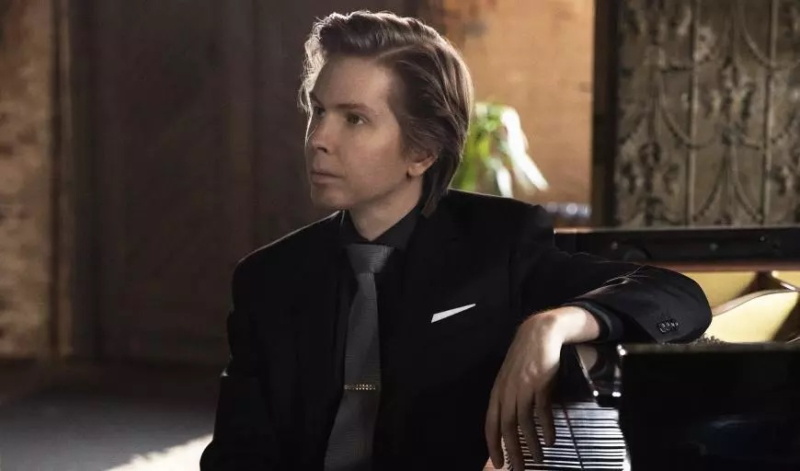
    Above: pianist Juho Pohjonen, photo by Lisa-Marie Mazzucco

    Author: Oberon

    Tuesday July 18th, 2023 – The final concert in Chamber Music Society of Lincoln Center‘s 2023 Summer Evenings series presented a quintet of distinctive artists in music of Haydn, Mozart, and Fauré. The remarkable Finnish pianist Juhi Pohjonen was at the center of this engrossing program, playing in all three works with the combination of passion and subtlety that is his trademark.

    Haydn’s Trio in E-flat major for Violin, Cello and Piano, Hob. XV:29, dating from 1797, made for an elegant start to the evening. The opening Poco allegretto commences with a sustained note from the three artists: violinist Stella Chen, cellist Sihao He, and Mr. Pohjonen. The music then progresses in a ‘theme and variations’ setting, briefly entering the minor mode. The pianist’s rippling florid passages delighted the ear, whilst violin and cello duetted lyrically.

    The pianist opens the Andante with the most delicate of pianissimi, taking up a simple melody in which the three voices blend sweetly. The ebb and flow of passion and restraint leads to a mini-cadenza from the pianist before the Allemande finale kicks off with a burst of energy.  Mr. Pohjonen spins off immaculate fiorature laced with trills, whilst Sihao He offers rapid cello scalework. After pausing for a playful piano passage, the music dances on: winding down, only to re-boot to a zesty finish.

    Mozart’s Concerto No. 12 in A -major for Piano and String Quintet, K. 414, was written in 1782 for the composer himself to perform, with a small ensemble; the string quartet setting was created later. This piece offers a perfect showcase for Mr. Pohjonen’s artistry.

    The opening Allegro features genial strings: violist Beth Guterman Chu has joined violinists Stella Chen and Danbi Um, with Sihao He’s mellow sound enriching the harmonies. Mr. Pohjonen’s marvelous tone and sparkling agility are pure magic. Ms. Guterman Chu, with a gleam in her eye, is a wonderful addition to the ensemble, whilst Sihao He’s rich-toned descending motifs are truly appealing. At last comes a fabulous Pohjonen piano cadenza, so gracefully played.

    The Andante suffered from the intrusion of two dropped objects and a jangling cellphone, but the artists kept their focus, opening with a string quartet. Mr. Pohjonen’s nuanced playing was just sublime, and I must again praise Sihao He’s plush sound. A minor-key piano passage underlined by sighing strings achieves a marvelous blend, and Mr. Pohjonen’s cadenza was offered in a hushed pianissimo, with trills etched in.

    The final Rondeau: Allegretto is lively indeed, with nimble, utterly clear piano phrases and unison string passages, which eventually develop into a fugue. Full stop…and then the pianist’s virtuosity was in full   flourish, pausing only for some enticing delicate measures along the way. Bravo Juho!

    Following a rather longish the interval, Gabriel Fauré’s Quartet in C-minor for Piano, Violin, Viola, and Cello No. 1, Op. 15, was given a luminous performance by Mr. Pohjonen, Danbi Um, Beth Guterman Chu, and Sihao He.

    The opening Allegro molto moderato momentarily has an à la Russe feeling, later becoming quietly rapturous. A piano theme is soon taken up by Danbi Um’s silken violin, then passed on to Ms. Chen and Ms. Guterman Chu. The music becomes overwhelmingly beautiful and passionate, before turning more lyrical. Mr. Pohjonen’s sorcery is again evidenced in the movement’s sustained conclusion.

    Delicate plucking opens the Scherzo, with sprightly motifs from the Steinway: all is lightness and air. Rhythms compete, the music covering a broad dynamic range with shifts of energy. After a false finish, the piano gently resumes. The unison strings then part company, taking up slithering scales. The music dances on, full of fun.

    Sihao He introduces the Adagio with an achingly gorgeous theme; the strings unite, and the pianist is at his most pensive. Danbi Um’s violin sounds radiantly, whilst the violist and cellist, playing in unison, introduce darker hues. These lower voices join Danbi in poignant harmonies. The music is lush and passionate until a sudden mood swing comes from the piano, playing pianissimo.  The the opening cello solo returns, and a feeling of time standing still gave me the chills…so haunting. Then Mr. Pohjonen offers a final benediction.

    In the final Allegro molto, we can simply sit there and savour the vibrant playing that’s on offer. Juho is beyond splendid, and bits of melody are passed about among the string players. After a brief interlude, the music seems to be summoning energy for a big finish, but instead there’s a full stop. From the silence, Danbi Um’s exquisite sound emerges, opening a pathway to a grand and sweeping finish.

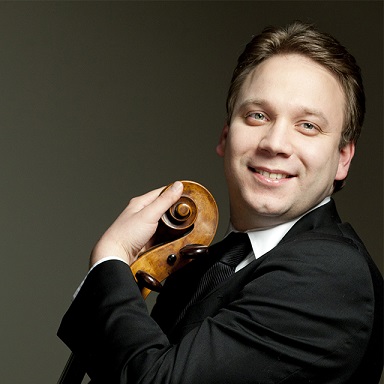
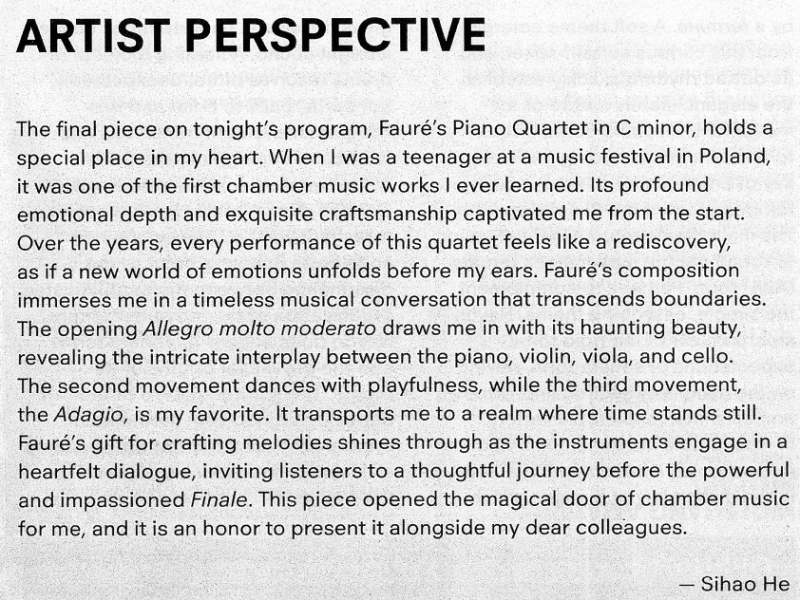
    Cellist Sihao He wrote of his experience learning the Fauré C-minor quartet as a teenager; I wanted to include his thoughts about the work here, as they align perfectly with my own:
    Faure-1 jpg

    ~ Oberon

  • Arensky & Brahms @ Chamber Music Society

    Bella2

    Above: violinist Bella Hristova, photographed by Lisa-Marie Mazzucco

    Author: Oberon

    Tuesday March 28th, 2023 – Works by Anton Arensky and Johannes Brahms were on the bill at Chamber Music Society of Lincoln Center this evening as violinist Bella Hristova, cellist Dmitri Atapine, and pianists Wu Qian and Wu Han teamed up for some magical music-making.

    The concert commenced with Arensky’s Six Children’s Pieces for Piano, Four Hands, Op. 34, composed in 1894. These charming miniatures found our two pianists side by side at the Steinway, with Wu Han presiding over the upper octaves and Wu Qian the lower.

    To give the pieces their English titles, we start with Fairy Tale which begins in the minor key, has a folkish feeling, and then becomes quite dramatic. Wu Han plays a series of decorative trills as the music ranges from hesitant to animated. Then, Wu Qian plays the familiar two-note birdcall that signals the delightful Cuckoo bird is nearby. This is a sprightly little piece with a subtle finish. The mood changes for Tears, which has the feel of a lament, with a deep bass line supporting a hymn-like melody. The ending is very quiet.

    Rippling motifs underscore the lovely Waltz, which gets quite bouncy. A passing reverie turns expansive before fading away, as if the dance was continuing in another room. Cradle Song appropriately has a slow, rocking feeling; the melody is that of a gentle lullaby. The concluding Fugue on a Russian Theme is tuneful and jovial. The music turns grand, and the two pianists have a grand time playing it.

    Dmitri-atapine

    Listening to Bella Hristova and Dmitri Atapine (above), joined by Wu Qian, play the Arensky Trio No. 1 in D -minor for Piano, Violin, and Cello, Op. 32, makes one wonder why we don’t hear more of this composer’s gorgeous music. He wrote copiously for solo piano, and numerous chamber works as well. And why cannot we hear more of his large orchestral works – which include two symphonies – or his choral pieces?  He also wrote three operas, which must be wonderful to experience.

    At any rate, we must be thankful for any opportunity to hear the music of this pupil of Tchaikovsky, especially when it as a luminously played as this evening. The introductory theme of the opening Allegro moderato, first played by Ms. Hristova and then taken up by Mr. Atapine, is hauntingly beautiful. These virtuosos bring such richness of timbre to everything they play, and this trio – a veritable font of melody – affords them so many opportunities.

    It is restless, passionate music, interrupted by a Springlike interlude in which Wu Qian spins lovely swirling passages from the Steinway. Now a sense of drama takes hold; the opening theme recurs, played – if it’s possible to imagine – even more thrillingly. There is a coda full of lyrical grace before the movement ends quietly.

    The ensuing Scherzo opens with an odd, stuttering quality. There are crisp plucking and jaunty melodies to be savoured, whilst at the keyboard Wu Qian offers cascades of notes decorated with lively trills. Now a swaying feeling takes over, and the music gets grand. After a brief hesitation, the stuttering resumes and the Scherzo comes to its whimsical finish.

    The evocative Elegia is the heart of the trio: Mr. Atapine opens with a pensive theme, then the string voices entwine as Wi Qian introduces poetic phrases from the keyboard. The music seems to evoke the memory of a lost love as the gently rocking strings sound over the quiet rapture evoked by the pianist. Ms. Hristova in her high range, the pianist pulsing quietly, and Mr. Atapine plucking ever so gently give the music an ethereal quality. Ms. Hristova takes up an autumnal melody as Mr. Atapine’s deep resonance sounds and the music fades away on a sustained chord.

    A reverential silence filled the hall, and then the agitated drama of the final Allegro non troppo sprang up. Things cool off, melodic phrases are exchanged, but then restlessness builds and the music becomes impassioned. From a sudden silence, Wu Qian’s shimmering notes are heard as the strings sing softly. The music ascends, and becomes reflective with the poignant violin and the soulful cello sounding. Then, out of the blue, a bustling rush to the finish line springs up. 

    The music of Johannes Brahms took the limelight after the interval: our two pianists returned for selections from the composer’s Hungarian Dances for Piano, Four Hands; Wu Qian was now playing the upper range and Wu Han the lower. These delightful pieces were written between 1868 and 1880, and they are chock full of rhythmic and melodic variety, spiced with a dose of paprika. The two women seemed to be having a blast playing them, much to the audience’s delight.

    Bringing the evening to its close, Wu Han, Ms. Hristova, and Mr. Atapine illuminated the Brahms Trio in C-major Op. 87, with sumptuous playing.

    In the opening Allegro, a unison theme for violin and cello develops int something big ad thrilling. When cal finally settles in, a sense of yearning is felt. The textures created by the three players are rich indeed, each displaying alluring tone that meshes into a persuasive whole. Epic grandeur develops as we relish Wu Han’s superbly polished playing, which takes the movement to a royal finish.

    Unison strings again herald the Andante con moto: a theme with five variations. The music takes on a gypsy air, reflecting Brahms’ interest in Hungarian music, which began in his youth. Here the blend achieved by our three artists was nothing short of remarkable, continually drawing me in to the music, which reaches a touching, quiet ending.

    In the brisk Scherzo, I sensed a Mendelssohnian enchantment. Lush melodies sprang up, and there’s a songful outpouring before a feeling of Puck lurking about returned at the music’s sudden stop.

    From its opening agitato, the concluding Allegro giocoso brings an abundance of delicious melodic and rhythmical treats, and the Mendelssohn mood continued to be felt. The musicians were warmly cheered as they took their bows, and I simply must mention Ms. Hristova’s bejeweled shoes, which added an extra sparkle to an already brilliant evening.

    ~ Oberon

  • CMS: Summer Evenings I

    54f4d4450aeee1.82526134

    Above: violinist Erin Keefe, photographed by Lisa-Marie Mazzucco

    Wednesday July 15th, 2015 – Chamber Music Society of Lincoln Center are presenting their inaugural Summer Series: three concerts at Alice Tully Hall. The scheduled programs feature works by the greatest composers played by some of the finest musicians of our time: a surefire recipe for success.

    Tonight’s opening concert was sold out, with music lovers outside Tully Hall pleading with anyone who might have a spare ticket. Onstage, as the house lights dimmed, the Society’s co-artistic director Wu Han welcomed us with her usual warmth and enthusiasm, ending her speech by wishing us all “…happy summer fishing…I hope you catch some trout!” – a reference to the program’s closing work, Schubert’s beloved “Trout” quintet.

    Erin Keefe and Juho Pohjonen then appeared for Mozart’s B-flat major violin sonata, K. 378. Ms. Keefe’s gown, in rich shades of tourquoise and purple, evoked Klimt: it appeared someone had thrown handfuls of gold dust onto the frock, giving it a shimmering sheen. Ms. Keefe plays as handsomely as she looks and – joined by Mr. Pohjonen, who was at the keyboard for all three works tonight – they set the evening on its way with their gracious rendering of the Mozart. 

    In the opening movement, Allegro moderato, the two players trade off cascading motifs. The heart of the sonata, the Andante sostenuto e cantabile, has a touching song-like quality which the violin introduces almost hesitatingly, the pianist seemingly completing each ‘sentence’. Later, the violin takes up a more sustained theme, the opening bars of which seem to have been drawn from the old Jesuit hymn ‘Schönster Herr Jesu’; we used to sing this tune in church under the title ‘Fairest Lord Jesus’, and hearing it again this evening gave the sonata a personal appeal.

    The concluding Rondo: Allegro had a joyous lilt and the players showed especial affinity for the sprightly, deftly driven final section. They linger momentarily as if thinking of going off on a different tangent, but instead they resume the original trajectory and there’s a charming rush to the finish line.

    Tonight’s performance of Beethoven’s piano trio in E-flat major (Op. 70, #2) kept me enthralled, both by the intrinsic beauty of the music itself and by the exquisite details brought forth by the three players: Mr. Pohjonen (piano), Paul Huang (violin) and Jakob Koranyi (cello).

    Juho Pohjonen is a poet of the keyboard; he seems both a wonderfully attentive colleague and a player whose musicality reaches us from his own personal dreamworld. Treading this line between keen awareness and a deep spirituality, this enigmatic pianist is always fascinating to encounter. Violinist Paul Huang, the youthful-looking but already superbly accomplished current holder of a prestigious Lincoln Center Career Grant, proved his capacity for keeping an audience of serious music aficionados under his spell at his Morgan Library recital earlier this year. Depth of expressiveness and poignant lustre of tone have set cellist Jakob Koranyi among the most admirable musicians of the day; his mastery of dynamic control, so often encountered in the Beethoven trio tonight, is a particular joy.

    Dressed in white dinner jackets, the three young men reveled in the slow melodic unfolding of the Poco sostenuto in the opening movement of the trio which had begun with an almost melancholy phrase from the solo cello which is taken up by the violin then the piano in turn. Beethoven’s heritage, as successor to Mozart and Haydn, illuminates the second movement; then the third seems to herald Mendelssohn with its lyricism and grace. In the Finale: Allegro, the three players produced a wealth of nuanced detail which was wonderfully fresh and luminous, and never for a moment seemed fussy or merely ornate. 

    In their revelatory performance, Messrs. Pohjonen, Huang, and Koranyi were truly inspiring; their generous playing and impressive artistry set this Beethoven firmly in the top echelon of memorable musical experiences of recent seasons.

    Schubert’s “Trout” quintet was sumptuously played by Ms. Keefe with Roberto Diaz (viola), Mr. Koranyi (cello), Timothy Cobb (double bass) and the luxuriant pianism of Mr. Pohjonen. Making their mark in the ensemble, Mr. Diaz’s caramel richness of tone and Mr. Cobb’s genial tread (and his amiable seizing of every melodic moment) meshed with Mr. Keefe’s arching lyricism, Mr. Koranyi’s striking opulence of expression, and the combination of delicacy and power in Mr. Pohjonen’s playing, to hold the audience in a state of receptive eagerness.

    The inclusion of a variations movement, where Schubert’s popular song “Die forelle” is heard in a variety of rhythms and textures, was part of the composer’s agreement with Herr Paumgartner, the wealthy amateur cellist who commissioned the quintet. Schubert then has the last word; after a false ending which – as usual – fooled the audience into premature applause, the composer tacks on an Allegro giusto which is both short and deliciously sweet.

    The Society’s remaining two Summer Series performances (July 19th and 22nd) are reportedly nearly sold out, but it’s worth a try by going on-line here, or by calling the Alice Tully box office (212-875-5788), or by going there in person. 

    The Repertory:

    The Participating Artists: