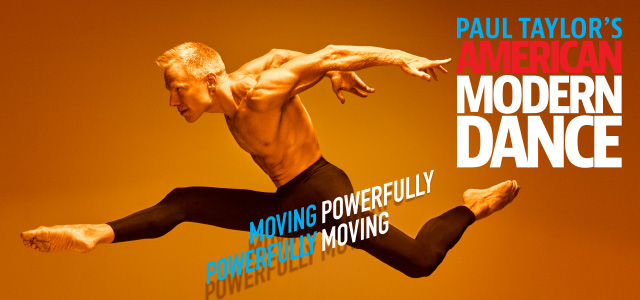
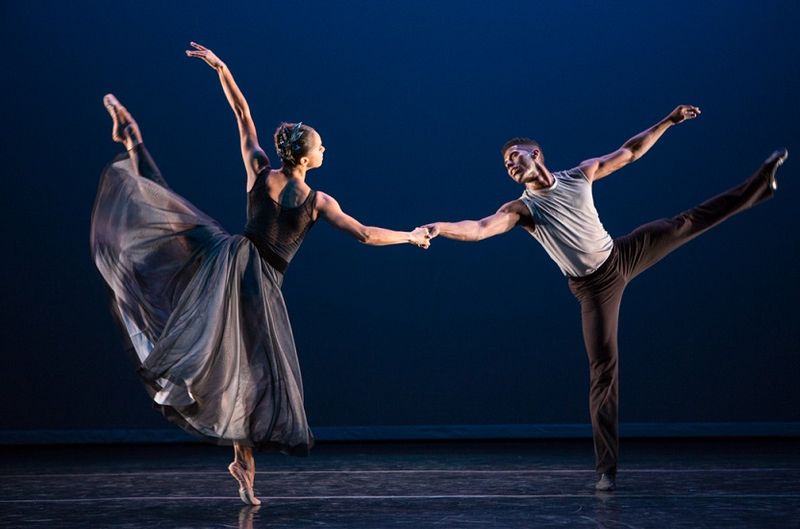
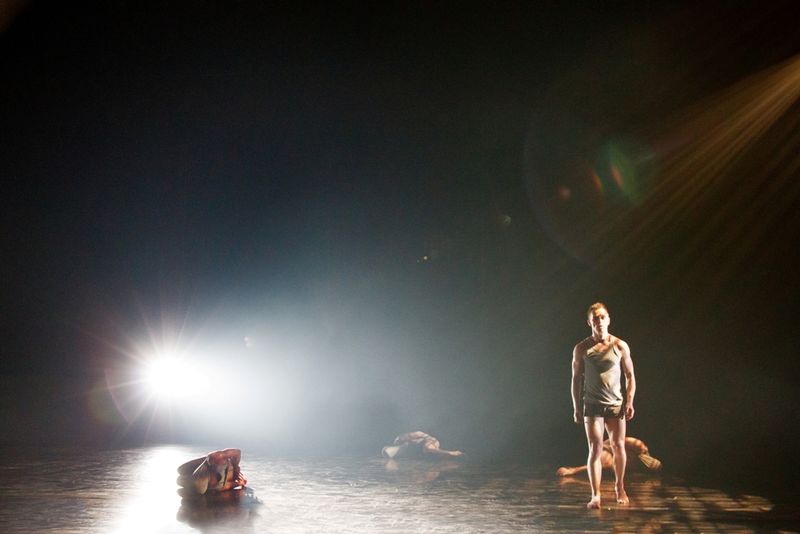
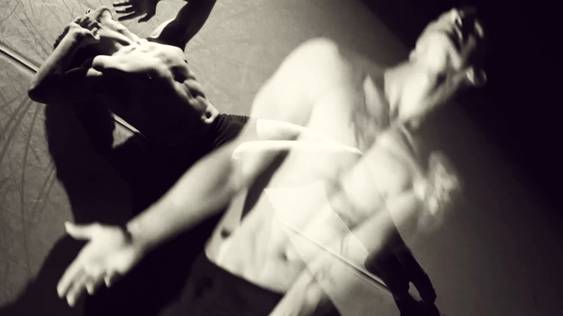
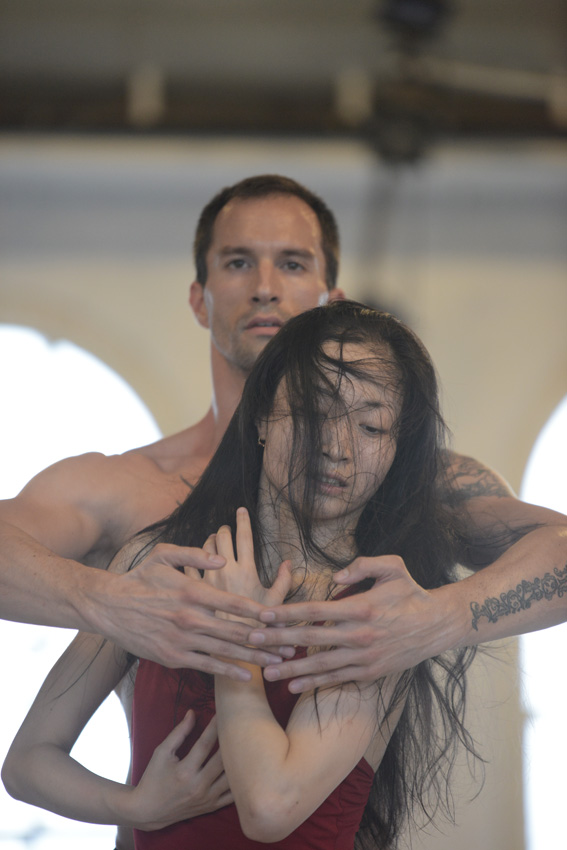
Wednesday March 23rd, 2016 – “Taylor Does Graham” was my alternate headline for this article. Martha Graham’s Diversion of Angels has triumphantly entered the repertory of Paul Taylor’s American Modern Dance Company. I’ve always loved seeing the Graham dancers in this work, and now I also love seeing the Taylors: between these two companies, some of the greatest movers and shapers of our day are to be found. In the photo at top: Michael Trusnovec.
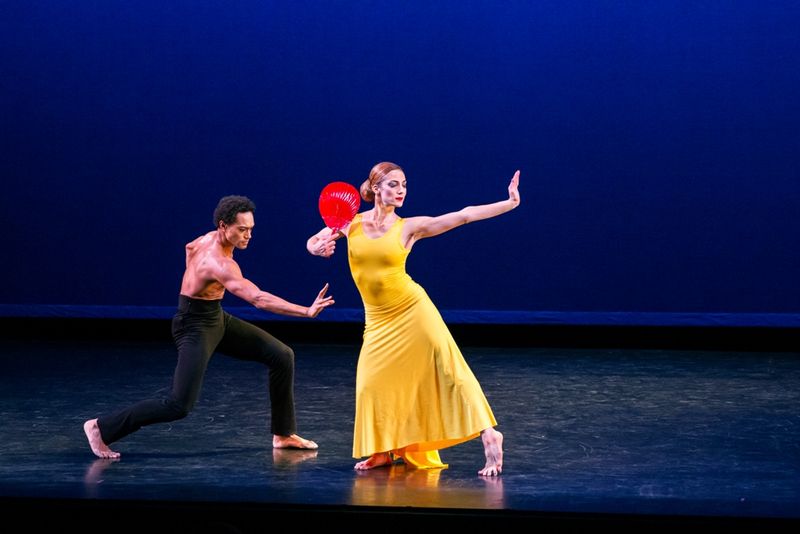
Graham paragons Blakeley White-McGuire and Tadej Brdnik set Diversion on the Taylor company. The casting of the work’s three main couples seemed spot-on, with the elegant, patrician Laura Halzack in White paired with Michael Trusnovec; restless, passionate Parisa Khobdeh (in Red) dancing with Sean Mahoney; and the sun-filled joy of Eran Bugge’s Woman in Yellow handsomely partnered by Michael Novak. A women’s quartet consisting of Michelle Fleet, Jamie Rae Walker, Heather McGinley, and Christina Lynch Markham comprised a marvelously high-end “supporting” cast, and George Smallwood’s strong performance as the odd-man-in all made for a great deal of spacious, eye-catching dance.
Several passages linger in the memory: the long frozen, stylized pose sustained by Ms. Halczak and Mr. Trusnovec early in the piece, and the lovely floated quality of Laura’s series of slow turns; Ms. Khobdeh’s agitated solo amidst the four women, her great sense of urgency as she rushes across the stage on some unknown quest, and Mr. Mahoney’s wonderful “catch” of her as she rushed to him; Ms. Bugge, who captivated me all evening, has a most congenial role; she brought Springtime freshness to her solo passages, and to her lyrically animated duet with Mr. Novak.
A sustained deep note in the Norman Dello Joio score signals the “White” pas de deux; it almost goes without saying that the Halzack/Trusnovec duo were truly inspired and inspiring here.
Paul Taylor’s Three Dubious Memories is a gem of a ballet. When I first saw it a couple of years ago, it was mainly the witty elements that persuaded me of its stage-worthiness. Tonight somehow it seemed much deeper and more of a story-telling ritual than a mere series of relationship-vignettes.
In Three Dubious Memories, an incident from the evolving story of a romantic triangle is remembered differently by each of the three people involved. The competition between two men (Robert Kleinendorst and Sean Mahoney) for the affections of Eran Bugge brings the men to blows. But then, in a volte-face, the men are seen as a cozy pair and Ms. Bugge as the interloper. We’ll never know the real story, but Mr. Taylor has left us to ponder the way in which we each remember things.
In addition to brilliant dancing and acting from the principal trio, Three Dubious Memories provides an intriguing role for James Samson: a silent narrator, a sort of master-of-ceremonies. James summons up each telling of the tale by the three protagonists; he also leads an ensemble of ‘choristers’ in stylized rituals. James did a beautiful job in this role which calls for both expressiveness and athleticism. In one memorable moment, Heather McGinley perches on James’s shoulders like a looming icon. The ballet was beautifully lit by Jennifer Tipton.
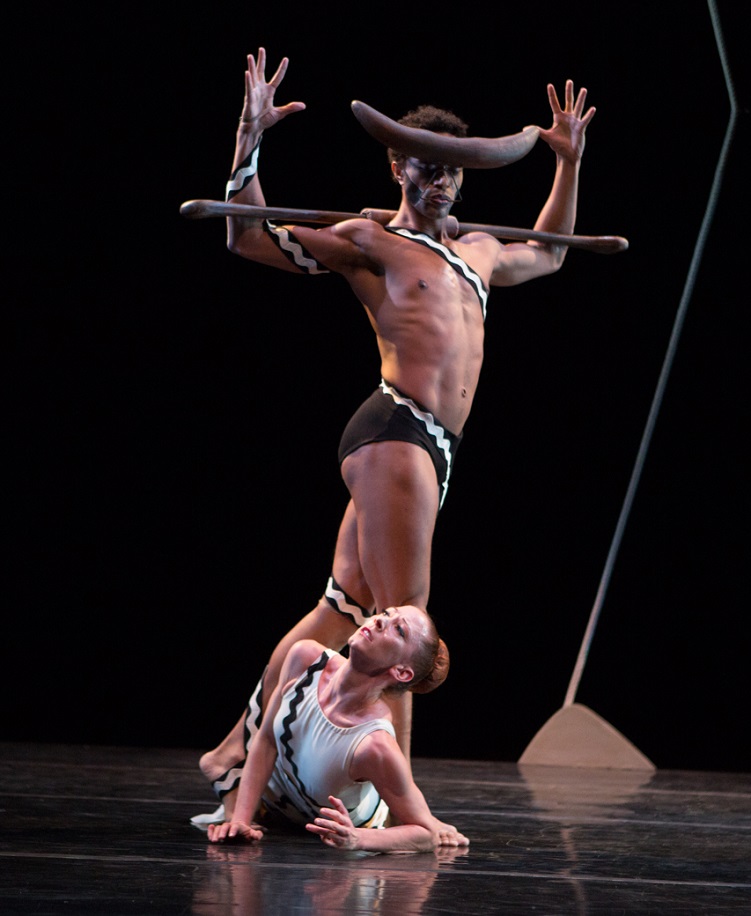
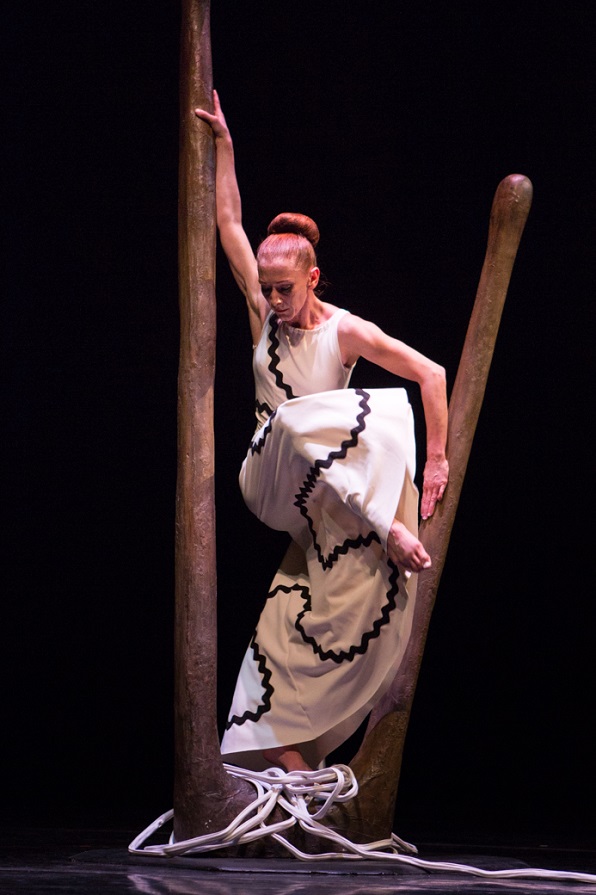
In the evening’s concluding work, Spindrift, dates from 1993 and is set to Arnold Schoenberg’s String Quartet Concerto (after Handel), played live by the Orchestra of St Luke’s. To the sound of wind and waves, Michael Trusnovec emerges from the midst of a communal group moving in stylized slowness. Michael’s character displays the shifting nature of a romantic spirit with an affinity for the natural world; he’s an outsider, cast upon a mystic shore among a rather suspicious tribe.
Certain movement motifs recall Nijinsky’s Faun, and in fact the costuming also makes us think of the Debussy ballet. The Handel/Schoenberg music seems at once old and new as Mr. Trusnovec pursues Mr. Halzack and is occasionally distracted by the quirky presence of Ms. Bugge.
In the ballet’s second movement, an adagio solo for Mr. Trusnovec is the heart of Spindrift; in subtle twists of his torso, the power and beauty of this magnificent dancer’s physique given full rein, as is his indelible artistry: so compelling to behold. The movement becomes livelier and more off-kilter for a spell, then slows and – as Mr. Trusnovec melts into a reverential kneeling back-bend, the ballet seems about to end. But there’s another movement, laced with solos and duets for all the participants.
As is all the great Taylor works, there are moments of seeming simplicity that make an unexpected impact; one such in Spindrift was a passage where four woman crossed on a diagonal, walking slowly. Other impressive passages were a duet for Ms. Bugge and Mr. Trusnovec and another one in which Michael was paired with Robert Kleinendost; Robert was on peak form all evening.
In fact, the entire Taylor company’s looking pretty extraordinary these days. I was hoping to see more of Michelle Fleet (she only danced in the opening work, with Ms. Bugge replacing her in Spindrift); Francisco Graciano and Michael Apuzzo also appeared all-too-briefly, yet – as always – they each made their mark. Madelyn Ho, the newest dancer on the roster, appeared in the ensemble in Spindrift.
I had great seats (thank you, Lisa Labrado!) and was delighted to spend the evening with my ballet-loving friend Susan, who I rarely see these days. And it’s always so nice to run into Janet Eilber, Blakeley White-McGuire, Take Ueyama and his wife Ana, and Richard Chen-See.
Onward now to more Taylor…and then, in April, Graham!











 Oberon's Glade