Tag: Martha Graham Dance Company

  • Graham @ The Joyce 2015 – Part II

    30828_433083144185_6944679_n

    Above: Blakeley White-McGuire and Tadej Brdnik; these two phenomenal dancers were making their ‘farewell’ appearances as members of the Graham company tonight.

    Sunday February 22nd, 2015 – For me it was a bittersweet evening at the Martha Graham Dance Company‘s final performance of their 2015 Joyce season following the news earlier this week that tonight would mark the ‘farewell’ Graham performances of Blakeley White-McGuire and Tadej Brdnik, two of the great Graham interpreters of our time and two people I greatly love and admire both as dancers and personalities. 

    Tadej danced in the very first performance of a Graham work that I ever saw: Appalachian Spring at Jacob’s Pillow some 20 years ago. That afternoon his Bride was the inimitable Miki Orihara. Combining the physique of a champion athlete with an appealingly boyish face, Tadej’s boundless energy and commitment have made him a Graham icon; he also has a devilish sense of humor, and I’ve seen him at the end of a long rehearsal keeping his fellow-dancers merry with one-liners and dead-pan expressions. In these final performances as a Company member, he has again shown the power and presence that have made him an emblematic Graham dancer throughout his career.

    Of Blakeley White-McGuire, one can say she has indomitable technical prowess and a rare gift for communicating emotion. But beyond that there’s an undefinable element in her dancing which only a handful of dancers in my experience have possessed: a spiritual connection with the music and the movement that makes her performances not just important, but essential. Blakeley is twice-blessed by Terpsichore, and it is we – the audience – who reap the benefits of her beauty and generosity of spirit. 

    Like Wendy Whelan, who recently retired from New York City Ballet (and who was in the audience tonight!), both Blakeley and Tadej have indicated that they aren’t retiring, but simply turning a page in the chronicle of their dancing careers.

    Blakeley and Tadej walked into the Graham studios for the first time on the same day some two decades ago. Although in the original scheme of things they were not scheduled to dance Errand Into The Maze together this season, it seems they were destined by the gods to do so.

    _MG_7823

    Their performance was thrilling, commencing with Blakeley’s opening solo (photo above by Brigid Pierce) in which she danced with a palpitating mixture of fear and resolve, delineating the character’s destiny in a vivid marriage of technique and temperament. Tadej, as the monstrous Minotaur, stalks her like a vicious predator, his incredible thigh musculature giving him grounded strength of purpose. Their pas de deux, so fraught with struggle and sexuality, shows Graham’s gift for devising miracles of leverage, counter-balance, and entwining in her partnering motifs. Blakeley and Tadej’s joint triumph was vastly cheered by the packed house, and their Graham colleagues joined them onstage for the celebration. 

    For all the excitement generated by Blakeley and Tadej, the evening was an enriching one overall, commencing with two Graham works in which two of my beloved Muses appeared: Deep Song opened the program in a vivid performance by Carrie Ellmore-Tallitsch, and Miki Orihara gave a luminous rendering of an excerpt from Primitive Mysteries, presiding over a corps of young women in blue.

    _MG_7545

    Above: Carrie Ellmore-Tallitsch in Deep Song; photo by Brigid Pierce

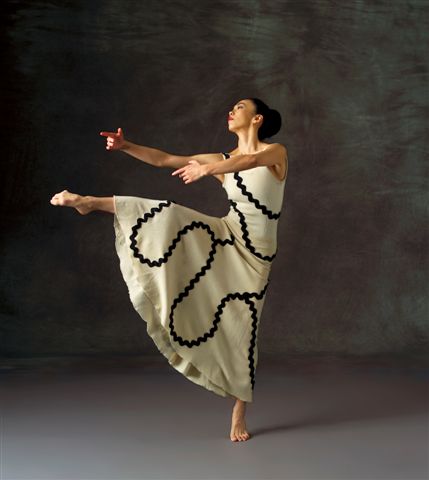
    Deep Song is a solo work by Martha Graham, set to Music by Henry Cowell. It was premiered in 1937 as one of the choreographer’s responses to the horrors of war (the Spanish civil war in this case). In a black and white gown, Carrie Ellmore-Tallitsch is first seen seated on a white bench. The choreography develops with seeming inevitability as she struggles with her  inner torment, sinking to the ground. She later lifts the bench, seeming to use it as a shield or hiding place. Finally the bench takes on a coffin-like aspect as she lowers it over herself. Carrie, a dancer I have always held in highest esteem, danced as superbly as I expected. The audience seemed to agree: she won a prolonged ovation which made me want to smile and weep at the same time.

    6a00d8341c4e3853ef01a511cbecd5970c-800wi

    Miki Orihara (rehearsal image, above) appeared like a shimmering angel all in white to perform the ‘Hymn to the Blessed Virgin’ from Graham’s 1931 ballet Primitive Mysteries. This is the Graham work I am most curious about, and tonight’s tantalizing excerpt makes me curiouser and curiouser. Escorted by a group of attendants in deep blue gowns (members and apprentices of Graham II), Miki radiates feminine mystique with her poetic gestures, moving with an almost ghostly lightness of tread. To Louis Horst’s atmospheric melody for flute and piano, the women perform antique rituals in this finely-structured dancework. The ensemble’s signature poses and port de bras make a particularly strong effect as Miki walks forward between facing rows of acolytes who sink down or raise their arms to heaven as she passes by. Miki sustains a powerful pose in demi-plié as the women circle about her. All to soon, their cortège passes onward but the resonance of their dancing lingers. Miki, always so movingly inspired and inspiring, sets a lovely example for the young dancers surrounding her: not only of how to move, but how to be.

    In the Graham Company’s on-going project of asking now-generation choreographers to create short danceworks inspired by Martha’s legendary solo Lamentation, Michelle Dorrance and Liz Gerring have now devised new pieces – Lamentation Variations – for the Graham dancers. Bulareyaung Pargalava’s Variation, a classic by now, was also on offer tonight.

    007_ChristopherJones_013

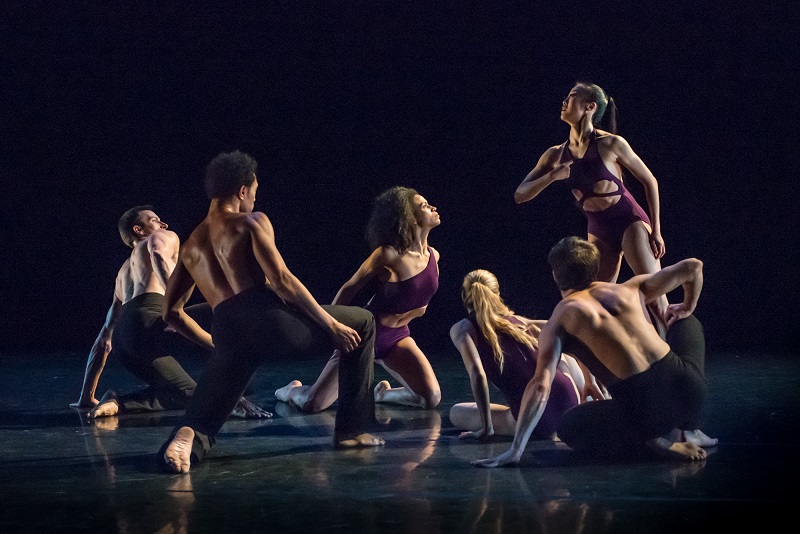
    Above: the Graham men in Michelle Dorrance’s Lamentation Variation; left to right are Abdiel Jacobsen, Ben Schultz, Lloyd Knight, Lloyd Mayor, Tadej Brdnik. Photo by Christopher Jones.

    Ms. Dorrance, a tap-dancing paragon, did not ask the Graham dancers to tap. But the music she used relied on tap rhythmics with a jazzy over-lay. The men formed a kind of central knot, while a quintet of women were seen in walkabouts…which one or two of the men sometimes strayed into. Though abstract, an underlying aspect of sadness and solitude prevailed throughout this work.
    001_MG_2624

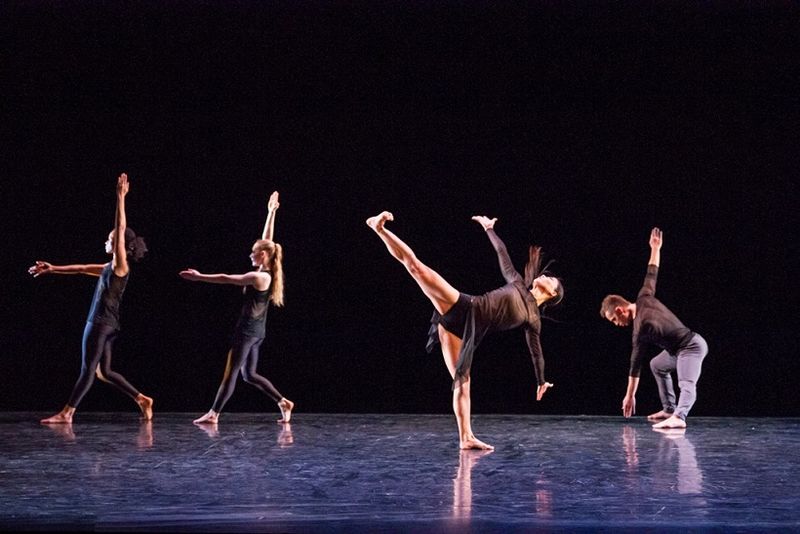
    Liz Gerring’s Lamentation Variation is a quartet – performed by Natasha M Diamond-Walker, Charlotte Landreau, Ying Xin, and the indefatigable Tadej Brdnik (photo, Brigid Pierce) – which is set to a score for electronics and piano. The movement is rather stylized, and choreographer and dancers make excellent use of the space.

    150212_M_Graham_B_Pagarlava_003

    Above: from Bulareyaung Pargalava’s Lamentation Vartiation; photo © 2015 Yi-Chun Wu.

    Pargalava’s Variation opens to the sound of Martha Graham’s voice speaking about the solo that inspired all these variations. Soon a haunting melody from Mahler’s ‘Songs of the Wayfarer’ is heard. In flesh-coloured tights, the delicate XiaoChuan Xie and her three demi-god partners – Ben Schultz, Lloyd Knight, and Lloyd Mayor – move with a sense of flowing lyricism through intricate partnerings in which Chuan alternately sinks down and is lifted on high. The dancers and the dance certainly wove a hypnotic spell tonight.
    002_MG_7971

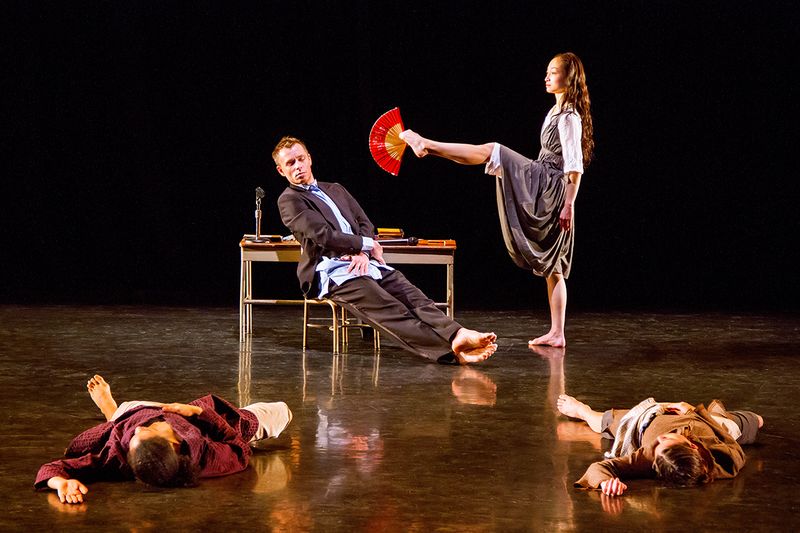
    Above: Tadej Brdnik and XiaoChuan Xie in Annie-B Parson’s The Snow Falls in the Winter; photo by Brigid Pierce.

    I saw Annie-B Parson’s The Snow Falls in the Winter a few seasons ago when OtherShore performed it. It’s simply not my cup of tea. For me one of the great joys of watching dance is: the dancers are silent. Once they begin to speak, a whole element of mystery falls away. Ms. Parson’s work is more like a play with a bit of dancing thrown in. The Graham dancers of course flung themselves into the piece with their customary zest, and Carrie Ellmore-Tallitsch and Natasha Diamond-Walker in particular proved themselves adept actresses. But while many in the audience applauded lustily and commented enthusiastically on this very ‘different’ work, I found it pretty tedious.

    006_MG_8799

    Above: from Andonis Foniadakis’ Echo, Lloyd Mayor, PeiJu Chien-Pott, and Lloyd Knight; photo by Brigid Pierce

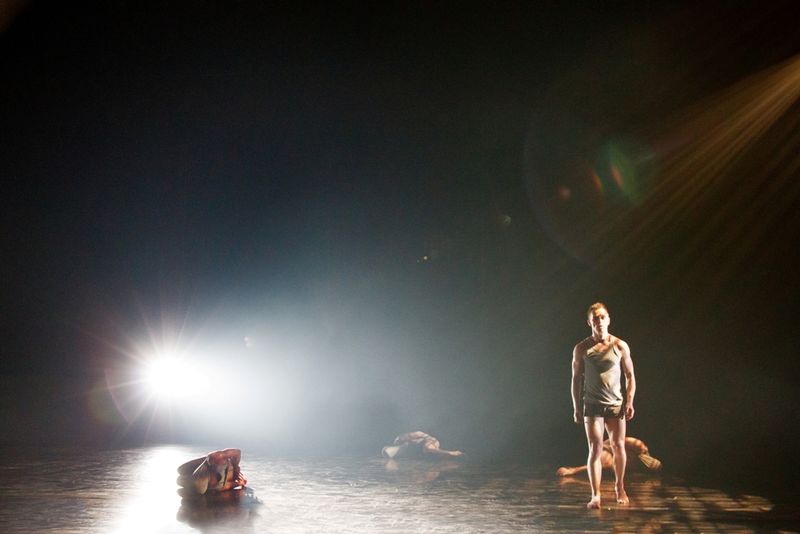
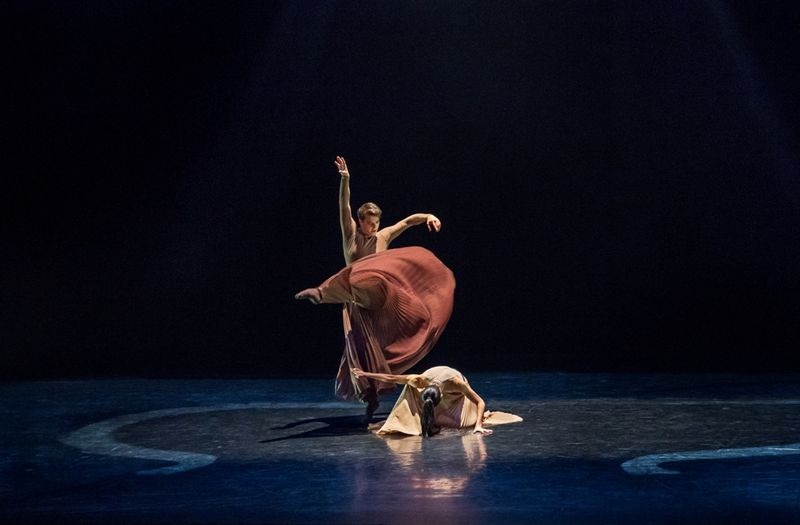
    The evening then soared to its conclusion with Andonis Foniadakis’ myth-inspired masterwork, Echo. It’s more a mood piece than a literal re-telling of the ancient tale of Narcissus and Echo, and as such it flows gorgeously upon Julien Tauride’s atmospheric score. The Graham Company’s beautiful pair of Lloyds – Mayor and Knight – create the illusion of Narcissus and his refection in deeply-enmeshed duets, their movement enhanced by their long sheer skirts (costumes by Anastasios Sofroniou) as caught in shadowy swirls by Clifton Taylor’s lighting design. PeiJu Chein-Pott is simply gorgeous as Echo, her dancing radiant and her creation of the character’s unspoken love and frustration literally becoming poetry in motion. In a supporting ensemble (as if such dancers can ever be thought of as merely ‘supporting’!) Tadej Brdnik, Ben Schultz, Abdiel Jacobsen, Natasha Diamond-Walker, XiaoChuan Xie, Charlotte Landreau, and Lauren Newman all wove into the marvelous mythic tapestry that Mr. Foniadakis has created.
    002_MG_8527

    Above: from Andonis Foniadakis’ Echo, Lloyd Mayor and PeiJu Chien-Pott; photo by Brigid Pierce

    So nice to see many dancer-friends among the crowd: Wendy Whelan, Mariya Dashkina Maddux, Jere Hunt, Justin Lynch, Jonathan Breton, and Alexandre Balmain; and of course my delightful companion of the evening, Roberto Villanueva. Special thanks to Janet Eilber, the dance world’s most gracious hostess, and to publicist Janet Stapleton for sending me the production photos with perfect timing. 
    11018652_10152754243055749_7393396627905223554_n

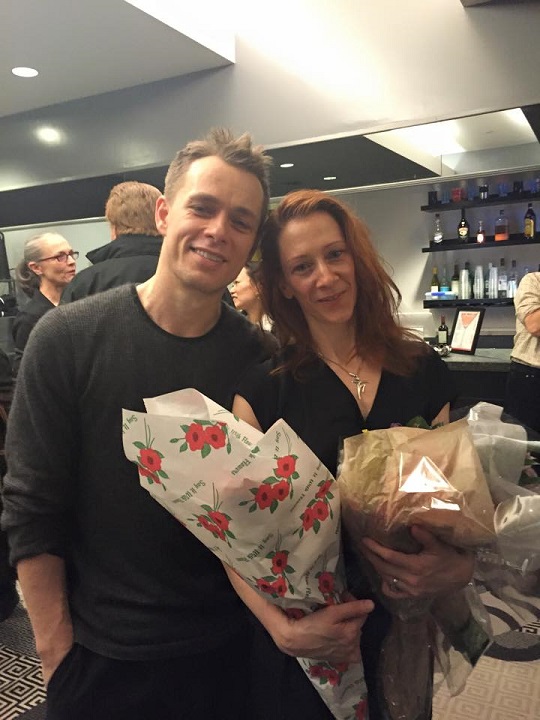
    Afterglow: Tadej Brdnik and Blakeley White-McGuire basking in the affectionate admiration of friends and fans after the performance. Photo courtesy of Karen Brounstein.

  • Gallery: Graham @ The Joyce 2015

    001_MG_6565

    Above: Blakeley White-McGuire in Martha Graham’s CHRONICLE; photo by Brigid Pierce

    Here are some images from the Martha Graham Dance Company‘s 2015 season at The Joyce. Read about the first of three programmes the Company are presenting here.

    Click on each production photo to enlarge:

    002_MG_6695 (1)

    Above: the women’s ensemble in CHRONICLE, photo by Brigid Pierce

    001_MG_4839 (1)

    Above: Abdiel Jacobsen as Adam and Carrie Ellmore-Tallitsch as Lilith in Graham’s EMBATTLED GARDEN; photo by Brigid Pierce

    003_MG_2240

    Above: Tadej Brdnik (at the right) in Nacho Duato’s RUST; photo by Brigid Pierce

    There are new additions to the Graham company’s on-going LAMENTATION VARIATIONS project this season: 

    006_Christopher.Jones_003 (2)

    Above: from Sonya Tayeh’s LAMENTATION VARIATION, an ensemble work; photo by Christopher Jones.

    002_MG_3010

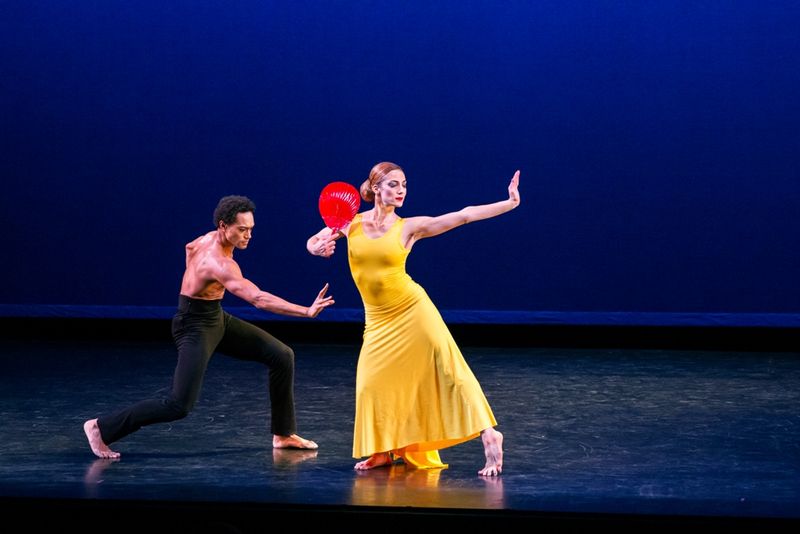
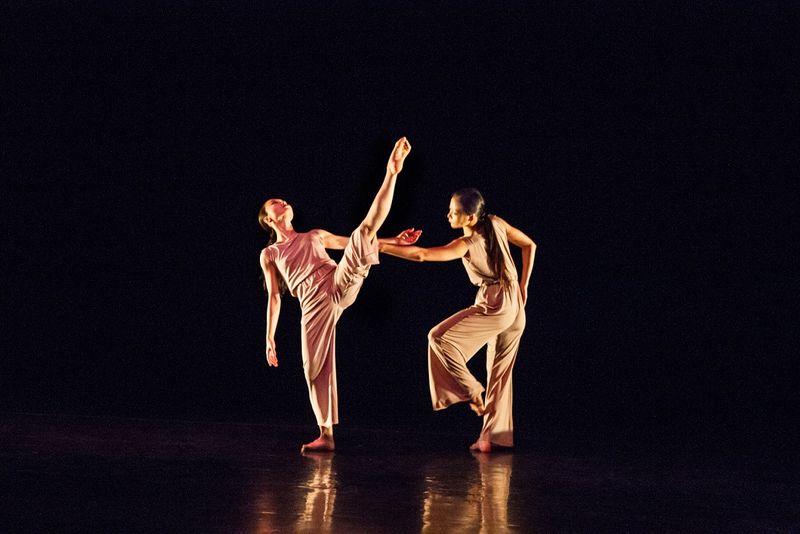
    Above: from Kyle Abraham’s LAMENTATION VARIATION, as danced by XiaoChuan Xie and Ying Xin, photographed by Brigid Pierce 

    004_MG_3037

    005_MG_3075

    Kyle’s Variation is being performed by alternating casts of two women (Ying Xin and XiaoChuanXie, above, in two more Brigid Pierce images)…

    150107_MGDC_KyleAbraham_LamenatationSeries_LLoydKnight_LloydMayor_SunyPurchase_Christopher.Jones_001

    …and two men: Lloyd Knight and Lloyd Mayor, photographed by Christopher Jones. [Note: the Lloyds are wearing shirts in this photo; in performance they danced bare-chested.]

    Peter Arnell’s marvelous photo-montage of the Graham dancers, which is being shown at every performance during the current Joyce season, may now be viewed here, at VOGUE. A couple of stills, below, will give you an idea of what this ‘moving picture’ is like:

    Image001

    Image004

    Catch these fabulous dancers thru February 22nd at The Joyce. Details here.

  • Notes on a Voyage

    Mg

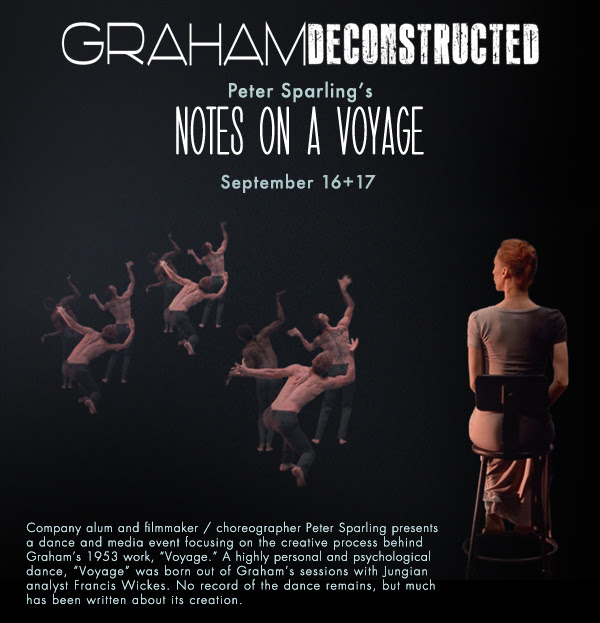
    Tuesday September 16th, 2014 – Whenever I come away from a performance (or rehearsal) of the Martha Graham Dance Company, I feel the need to invent new adjectives to describe both the works being danced and the people dancing them. Tonight, as part of the on-going GRAHAM/Deconstructed series, we saw an open rehearsal of the 1947 Graham classic, Errand Into the Maze, and a new work, Notes on a Voyage, created by former Graham dancer Peter Sparling.

    Errand Into the Maze, with its powerful score by Gian Carlo Menotti, seems startlingly fresh and meaningful each time I see it. Though billed as a ‘rehearsal’, the dancers – PeiJu Chien-Pott and Ben Schultz – gave a performance of deep commitment and generous physicality. Pei-Ju, luminous in a white shift, painted the terror and the ultimate triumph of her journey in a vividly nuanced performance. With his handsomely inked torso, Ben seemed an unconquerable force as he stalked his prey. Yet in the end, PeiJu overcomes her fear and casts him down. The packed house watched this masterpiece with intense focus and burst into an enthusiastic and richly-deserved applause for the two dancers at the end.

    6a00d8341c4e3853ef017ee9f9df65970d

    And now let me take a moment to congratulate the award-winning PeiJu Chein-Pott (above)! Read the story here.

    Photo antonia k miranda

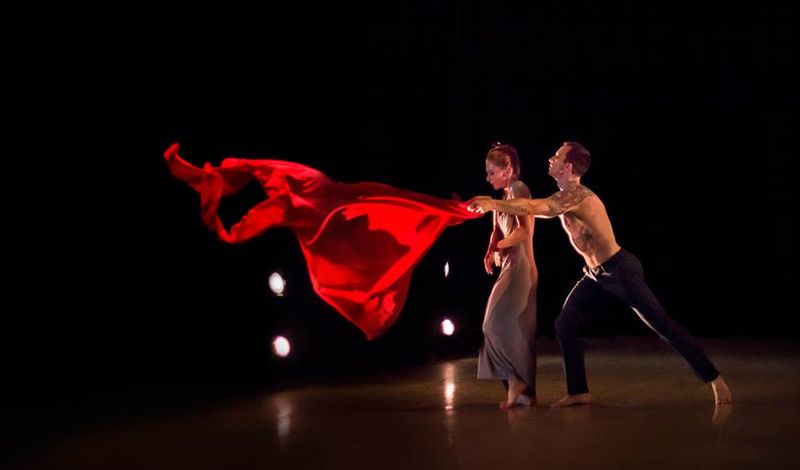
    Above: Blakeley White-McGuire and Ben Schultz in Notes On A Voyage, photo by Antonia K Miranda

    In his striking multi-media work, Notes On A Voyage, Peter Sparling has summoned up a vision of Martha Graham’s lost 1953 work, Voyage. Stuart Hodes, who was among the original cast, gave valuable insights into the creation (and ultimate disappearance) of Voyage which evolved out of Martha Graham’s sessions with Jungian analyst Francis Wickes. No filmed or notated record of the dance remains, but it has been written about and spoken of in Grahamian circles over the intervening decades.

    Mr. Hodes revealed that, after a two-year period of creation, Voyage premiered and Martha Graham was not pleased with it. She immediately began re-working it, but it never again saw the light of day outside the studio…until now, in Mr. Sparling’s thoughtful and provocative rendering.

    The original Voyage had a Noguchi setting. Martha’s notes indicate she viewed the piece as taking place in a house on the edge of a desert; yet Noguchi’s design showed a boat. This paradox was somehow resolved at the time. For the current re-imagining, the space is empty aside from an extremely high stool in one corner, and a bolt of red fabric.

    Mr. Sparling found the William Schuman piano music, and he conceived a brilliantly executed film to accompany the dance. The voice of Ellen Lauren is heard, reading excerpts – fragments, really – from Martha Graham’s journals and letters. The overall atmosphere compellingly fuses the elusive past with the vibrant presence in the personages of the four magnificent dancers: Blakeley White-McGuire, Tadej Brdnik, Lloyd Knight, and Ben Schultz.

    Descibed as ‘a woman seeing herself thru the eyes of three men’, the central character takes on – in a succession of duets – the aspects of a goddess, a warrior, and a lover. Shirtless in fitted trousers, the three men display the agility and strength that Graham always demanded of her male dancers. Dancing first with Lloyd, then Ben and finally Tadej, Blakeley filled the space with both restless energy and moments of pensive calm, sometimes skittering up to the high seat from which she could view her own world. Blakeley’s performance was a pure astonishment of personal magnetism, her alluring physicality and her compelling gift for turning movement into magic gave me one heart-racing thrill after another. What a remarkable and generous artist she is.

    A great night, then, in every regard. So lovely to find Xiaochuan Xie, Alessandra Larson, Abdiel Cedric Jacobsen, and Ian Spencer Bell among the crowd.

    ~~~~~~~~~~~~~~~~~~~~~~~~~~~~~~~~~~~~~~~~~~~~~~~~~~~~~~~~~~~~~~~~~~~~~~~~~~~~~~~~~~~~~~~~~~~

    Upcoming: On October 30th, the Martha Graham Dance Company will present Appalachian Spring Up Close and Personal – a complete performance of Appalachian Spring in costume and with the classic Noguchi set pieces. This performance marks the 70th anniversary of the work’s premiere on October 30th, 1944. This one-night-only event will also feature film and photos from the premiere, and an introduction with quotes from Graham’s correspondence with Aaron Copeland as they created this beloved American classic. Mariya Dashkina Maddux will lead the cast in Graham’s role of The Bride. She will be joined by Lloyd Mayor, Natasha Diamond-Walker, Lloyd Knight, Xiaochuan Xie, Ying Xin, Charlotte Landreau, and Lauren Newman. Ticket information will be forthcoming.

  • GrahamDeconstructed: CAVE OF THE HEART

    Light-a-fire

    Thursday January 23rd, 2014 – Tonight Martha Graham’s CAVE OF THE HEART was danced in a studio setting at the Martha Graham Dance Company‘s home space on Bethune Street. Although described as an open rehearsal – the dancers wore practice clothes and the ballet’s Noguchi set pieces had already been shipped out West for the Company’s upcoming tour performances – the work’s power and immediacy provided a vibrant theatrical experience.

    In both her opening remarks and in a Q & A at the end of the evening, the Company’s artistic director Janet Eilber gave us valuable insights into CAVE OF THE HEART. It was interesting to learn, for example, that Graham first approached Aaron Copland to write the music for this work which she was conceiving: Copland demurred. She then turned to the Mexican composer Carlos Chavez who delivered a score that  the choreographer found unsuited to her needs (she eventually set another work, DARK MEADOW, to the Chavez music…and now my curiosity is piqued indeed: I want to see it!). And so it was Samuel Barber who crafted the music that became CAVE OF THE HEART; later Barber excerpted his famed piece Medea’s Dance of Vengeance from the score. 

    Before showing us the work, Janet asked each of the participating dancers to demonstrate a key movement motif from their role; these provide keys to the individual characters. Once the ballet began, the communicative powers of the four dancers – Graham has stripped the Medea story down to the bare essentials – took things beyond the context of a rehearsal: they danced with an expressive clarity that revealed yet again the depth of Graham’s genius.

    Miki Orihara’s Medea moved from the torment of jealousy to final triumph in a performance rich in intimate detail, and Tadej Brdnik’s compelling athleticism as Jason perfectly embodied the character’s masculine vanity. At once majestic and lyrical, Carrie Ellmore-Tallitsch’s appeared as The Chorus with her elegant wingspan and the face of a goddess. Jacquelyn Elder’s princess was lovely in her bridal innocence and terrifying as Medea’s wedding gift – a poisoned crown – began to work its insidious power. Together these generous artists gave us a richly rewarding evening, so inspiring to watch at close range.

    The Martha Graham Dance Company will be at New York’s City Center in March. Details here.

  • Martha Graham: Myth & Transformation II

    Phaedra

    Above: Tadej Brdnik and Blakeley White-McGuire in Martha Graham’s PHAEDRA. Photo: Costas.

    Sunday matinee February 24th, 2013 – The Martha Graham Dance Company continue their season at The Joyce with a striking double bill: Graham’s PHAEDRA (not performed for a decade) and the Company’s premiere performances of Richard Move’s THE SHOW (Achilles Heels).

    I had had the good fortune to see a studio rehearsal of PHAEDRA in October; and more recently, I had a sneak peek at a segment of THE GAME at a private showing. Finally today I got to see these two sharply contrasted works in their full glory, and I brought my friend Joe along who was having his first experience of Graham. It was a great afternoon.

    In PHAEDRA, Robert Starer’s score propels the dancers as they move amidst the Noguchi-designed set pieces. This story of forbidden love – Phaedra becomes obsessed with her young step-son Hippolytus – caused the threat of a Congressional censure when it was first performed in 1962, so wildly did it offend the government’s guardians of morality. It seems far less shocking today, but still potent thanks to the remarkable performances of Blakeley White-McGuire as Phaedra, Maurizio Nardi as Hippolytus and Tadej Brdnik as Theseus. Ms. Blakeley-White is riveting to watch as she regsters the spectrum of Phaedra’s emotions: lust, tenderness, remorse, guilt. Blakeley’s body was made to dance Graham: from her expressive hands and gorgeous torsol contractions to her marvelously ‘wrapped’ feet, she makes her entire physique a vessel of communicative grace. Maurizio Nardi has the enviable combination of the sleek, smooth body to make him a believable youth with the artistic maturity to give the character of Hippolytus depth. Tadej Brdnik handsome face and strikingly muscled frame are grandly invested in his portrayal of Theseus; the only “problem” being that Tadej looks too young to be the father of a grown son.

    The beauteous Mariya Dashkina Maddux as Artemis holds a statue-like pose for minutes on end without moving a centimeter. She later bursts free, dancing dynamically whilst firing off her arrows. Xiaochuan Xie as Aphrodite emerged and retreated from her pink-cloud cocoon to meddle in the fates of the muddled mortals: her enchanting performance pleased the audience greatly. Equally lovely but playing a darker role, PeiJu Chen Potts danced Parsiphea’s solo superbly; of her character (Phaedra’s mother) Ovid  memorably said: “Pasiphaë took pleasure in becoming an adulteress with a bull.” The men of the Graham Company looked great in their decorative briefs; their ensemble dance was powerful and they wove thru the action in smaller roles, always drawing the eye with their physical attributes.

    THE SHOW (Achilles Heels) is Richard Move’s send-up of the story of the end of the Trojan War. The expected characters appear but not always as we might imagine them. A pre-recorded narrative (featuring the voices of Mikhail Baryshnikov and Deborah Harry) is lip-synced by the dancers. In this pan-sexual ballet, men wear stiletto heels and women speak in baritonal voices. Achilles, vain and unspeakably beautiful, is ideally personified by the boyishly cocky Lloyd Mayor. As a paragon of male perfection, he’s matched by his mythic love Patroclus in the person of Abdiel Jacobsen: their intmate post-workout duet is ideally handled by Mr. Move: it borders on the erotic but keeps us tantalized.

    Katherine Crockett as Helen of Troy makes the face (and form) that launched a thousand ships totally believable, her majestic figure and queenly extension entice us at her every move. Blakeley White-McGuire revels in the theatricality of playing a game-show hostess who just happens to be the goddess Athena. She also joins Mariya Dashkina Maddux and Natasha Diamond-Walker as a Andrews Sisters-like trio of commentators. Ms. Diamond-Walker’s topless solo as Xanthus (Achilles’ horse) was so artfully managed that her nudity transcended mere decorativeness. Tadej Brdnik appeared in different guises as the ballet unfolds, and Ben Schultz always drew our gaze with his godlike presence – and he should feel free to uncover his wonderful tattoos. 

    THE GAME weaves songs by Deborah Harry – notably “Beautiful Creature” which certainly is apt for Mr. Mayor’s Achilles – into a composed score by Arto Lindsay. Today the music seemed just a little too loud to be ideally savoured. The opening segment of moody darkish dancing (though finely executed) seems rather too long: let’s get into the narrative! And later there are places which might be pruned down to the overall advantage of the work. But the concept is novel and it really does work. For all the game-show glitz and zany juxtaposition of voices to characters, there are also wonderfully moving moments, most notably the death of Patroclus with its fluttering dove. The Graham dancers gave the piece their all.

  • Martha Graham: Myth & Transformation I

     ErrandMikiSideLegFnl

    Above: Miki Orihara in the original costume for Graham’s ERRAND INTO THE MAZE; photo by John Deane.

    Saturday evening February 22, 2013 – The Martha Graham Dance Company are at The Joyce thru March 3rd with three programmes centering on themes of myth and transformation, as well as a special gala. Details of the performances and ticket information here.

    Tonight’s bill consisted of three Graham masterworks, each with an iconic principal female role – and each of those roles performed by one of the Graham goddesses of the 21st century: Blakeley White-McGuire as Medea in CAVE OF THE HEART, Miki Orihara as Ariadne in ERRAND, and Katherine Crockett as Jocasta in NIGHT JOURNEY. The musical scores are by three of the 20th century’s leading composers: Samuel Barber, Gian Carlo Menotti, and William Schuman.

    In Martha Graham’s CAVE OF THE HEART, the choreographer distills the story of Medea, her betrayal by Jason, and her subsequent destruction of Jason’s young bride into a powerfully compact dancework. As Medea, Blakeley White-McGuire, a brilliant red-haired sorceress, gave a compelling performance – whether moving about the space with restless passion or laying in utter stillness waiting to play out her revenge, Blakeley is a riveting presence. Her marvelously spastic solo as the piece moves towards its inevitable denouement was something to behold. Tadej Brdnik’s boyish handsomeness underscored Jason’s ambitious heartlessness, and his striking musculature propelled him boldly thru the athletics of the choreography and the demands of the partnering. Xiaochuan Xie was a vision of loveliness as the Princess, her dancing spacious and light-filled, blissfully unaware of her impending doom. Powerful presence and physical suppleness marked the performance of Natasha Diamond-Walker as the Chorus, majestic in her black and red striped gown.

    The collaboration between Martha Graham and sculptor/designer Isamu Noguchi created the look we associate with these Graham ballets. In both CAVE OF THE HEART and NIGHT JOURNEY, Noguchi’s set pieces evoke a feeling of familiarity – of being in a space we have been in before. But the damage to the Company’s sets and costumes caused by Storm Sandy left the decor for ERRAND INTO THE MAZE beyond repair. The sets will be re-created in time, but for the current season an alternative solution for presenting this important Graham work was needed. Choreographer Luca Veggetti, working with Miki Orihara, devised a stripped-down version of the piece, now referred to as ERRAND. Martha Graham’s original choreography remains intact, but the work is presented on a bare stage, reaching to the exposed brick wall at the rear of the space. Miki, as the heroine, wears a long plain white skirt with a ‘nude’ leotard white Ben Schultz as the Minotaur wears only his tattoos and white briefs. The effect is absolutely stunning.

    Graham’s choreography feels utterfly fresh, and Miki’s vulnerable qualities have never seemed so touching as here, menaced by the ominous man-bull of Ben’s splendid physique. The illusions of near-nudity gave the piece a timeless, mythic quality. Miki was ravishing, the poetic expressiveness of her body illuminating the smallest nuances of gesture and movement. Ben stalked about the set like a gladiator awaiting his chances in the arena; even standing still, he posed a threat. At the end, having conquered the monstrous symbol of her fear, Miki’s stance of quiet victory and her feeling of wonderment were poignantly expressed.

    During the intermission I caught bits of several conversations among the crowd; people seemed to be saying that this new look at ERRAND had lifted the piece out of a somewhat dated context they’d experienced in CAVE OF THE HEART. Much as I admire Noguchi’s work – and if you haven’t been to the Noguchi museum in Queens you owe it to yourself – and the Graham-designed costumes, I have to say that Mr. Veggetti’s take on ERRAND is a revelation. I’ve often wondered how Balanchine’s ORPHEUS, for which Noguchi designed both sets and costumes, would look as an unadorned black-and-white ballet. In presenting this ERRAND, the Graham Company took a chance – and in my view it paid off handsomely.

    In its full Noguchi-Graham decor, NIGHT JOURNEY is theatrically satisfying, yet I did find myself thinking it would hold up very well in a bare-stage-and-leotard configuration. The choreography, especially for the female ensemble (led by the beauteous and triumphant Mariya Dashkina Maddux) is striking in any event. And it did cross my mind how forceful the athletic movements of the blind seer Tiresias – a marvelous role for Abdiel Cedric Jacobsen – would seem if he was to be divested of his bulky garments. But, we’re getting ahead of ourselves here: NIGHT JOURNEY is perfect as it stands, and Katherine Crockett is beyond perfect in the role of the devastated Jocasta who strangles herself on discovering she has been married to her own son, the man who killed her first husband. (“The killer of the King is a King.”) Ms. Crockett, a luminous gift to the world of dance, is thrilling to behold – as much for her beauty and intensity as for her exalting extension and the evocative flow of her arms and hands. Ben Schultz polished off his demanding, two-ballet evening with a majestically tragic portrayal of the ill-fated Oedipus, the dancer’s godlike physique taking on an assailable aspect as his world collapsed.

    And how does the Graham repertory strike a young person today who has never experienced any of it, except for tidbits on YouTube? My twenty-something dancer-friend Alejandro was quite taken with the evening, with a special affinity for ERRAND. I’ll be seeing the other two programmes of the current season, each with a “Graham virgin” as my companion. It will be interesting to see what they think.