Tag: Matt Dine

  • Flautist Anthony Trionfo @ The Morgan Library

    Trionfo

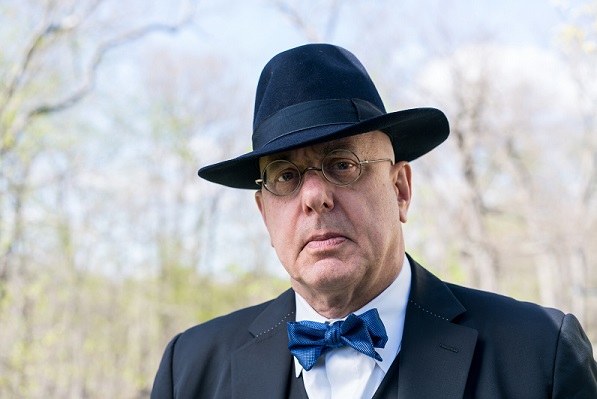
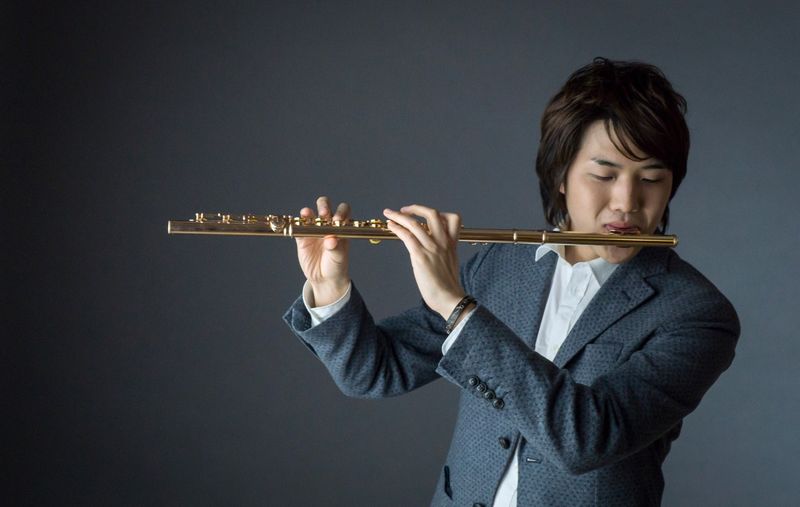
    Thursday April 14th, 2022 – Young Concert Artists presenting flautist Anthony Trionfo (above, in a Matt Dine portrait) in a noontime recital at The Morgan Library. Mr. Trionfo was joined by Emmanuel Ceysson (harp), Hsin-Yun Huang (viola), and Albert Cano Smit (piano) in a program of music by Debussy, Prokofiev, and YCA Composer Katherine Balch.

    I first heard Mr. Trionfo in recital at Merkin Hall in 2018 and was dazzled by his extraordinary talent. This afternoon, he chose works especially dear to him and then invited colleagues he especially enjoys working with to join him. The result was a very personal and pleasing hour of music-making of the highest order. 

    Cano_Smit_Albert4_credit_Chris_Lee

    Above: pianist Albert Cano Smit, photo by Chris Lee

    Sergei Prokofiev’s Sonata in D-major, Opus 94, opened the concert; Mr. Trionfo’s collaborator here was the tall, handsome Dutch/Spanish pianist Albert Cano Smit.  

    The sonata has a lyrical Moderato start, which soon peps up. A familiar melody is heard, and then there’s a sort of fanfare-like passage. Fanciful fluting follows, high and swift. Calming with more sustained themes, the familiar melody returns, moving on to a soft ending. The charming Scherzo has an exuberant quality, which both players relished. A peaceful interlude gives way to a feast of coloratura from Mr. Trionfo. The Andante has a dreamy quality, and an air of mystery. The concluding Allegro con brio opens with a rhythmic dance, and there are cascades of notes from the flautist. At the piano, Mr. Smit keeps things zipping along, and then has a strikingly dramatic interlude. A pensive melody for the flute leads on to the sonata’s flashy finish. The Trionfo/Smit duo reinforced the high esteem in which I hold Prokofiev’s music with their brilliant playing.
     

    Hsin-yun-huang

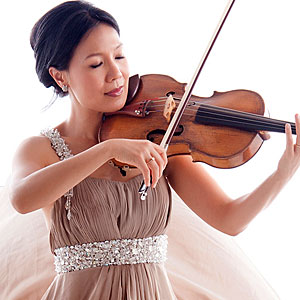
    For Ms Balch’s miniature, Musica Spoila, violist Hsin-Yun Huang (above) joined Mssrs. Trionfo and Smit. In announcing the work, Mr. Trionfo spoke of the intense concentration needed by the three players for this quirky, fifteen-minute score; he said the composer wanted the music to sound like a “crisp, light machine”, and the trio achieved just that quality.

    The music putters and sputters, with the viola scraping and plucking. Each player produces various sound effects: Mr. Trionfo makes eerie breathing noises on the piccolo, and the piano is sometimes tapped or plucked from within. It’s all very subtly done, and perfectly timed. The piece was over in the twinkling of an eye.

    I had heard Hsin-Yun Huang earlier this season playing Arnold Schoenberg’s Verklärte Nacht with Chamber Music Society of Lincoln Center; I was very glad of this opportunity to hear her again today.

    Emmanuel

    Above: harpist Emmanuel Ceysson

    Claude Debussy’s Sonata for flute, violin, and harp brought forth harpist Emmanuel Ceysson, who gained a large following of fans during his five seasons with The MET Opera Orchestra. Currently, he is principal harpist with the Los Angeles Symphony. He’s a great-looking guy whose love of music is palpable; watching Mr. Ceysson is as pleasing as listening to him.

    From the gentle start of the sonata’s opening Pastorale, the intriguing blend of the sweet-toned flute, the poignant viola, and the the caressive harp gives us a feeling of peace. In the lower range, Hsin-Yun Huang’s viola has a lovely duskiness. After a passage of gentle animation, the movement ends with a dreamy hush.  The central Interlude soon takes on the feeling of a gentle romp in a Spring meadow; to magical glissandi from Mssr. Ceysson’s golden harp, the sound of the flute and viola entwine in blithe melodies which become quite lively. The vibrant harp sets off the concluding Allegro con brio, giving an agitato feeling. The flute and viola exchange simple passages. The pace quickens, and the blended textures of the three instruments become denser, delighting the ear.

    The trio were enthusiastically applauded for their brilliant playing and, returning for a bow, they called on Mr. Smit to join them onstage.

    The music today was twice interrupted by the loud ringing of cellphones. As always, these intrusions came at just the wrong moments; I felt sorry for the players, who carried on despite the distraction.

    ~ Oberon

  • Zlatomir Fung @ XVI Tchaikovsky Competition

    Zlatomir+Fung+1_Photo+by+MattDine+dmf

    Zlatomir Fung (above, in a Matt Dine photo) has won First Prize in the cello division at the 2019 Tchaikovsky Competition. Established in 1958, and held every four years in Moscow and St. Petersburg, the Competition has – over time – added categories of cello and voice to the initial competitions for pianists and violinists.

    Earlier this year, I had the great pleasure of attending Mr. Fung’s New York recital debut under the auspices of Young Concert Artists.  It was an outstanding evening of music-making, and it did not surprise me in the least to learn today that the young cellist has seized the top prize at the Tchaikovsky: he’s simply phenomenal.

    Mr. Fung and pianist Tengku Irfan played Gabriel Fauré’s Après un rêve as an encore at their Merkin Hall YCA recital in February of this year. Listen to it here.

    ~ Oberon

  • Young Concert Artists: Zlatomir Fung

    Fung_Zlatomir5CreditMattDine-1140x642

    Above: cellist Zlatomir Fung, in a Matt Dine photo

    ~ Author: Oberon

    Tuesday February 19th, 2019 – Young Concert Artists presenting cellist Zlatiomir Fung in his New York debut recital at Merkin Hall. Tengku Irfan was the pianist for this wide-ranging, thrillingly-played program.

    “Young” was the operative word tonight. And both of these musicians disprove the old adage that ‘youth is wasted on the young’; they have spent their teen years developing their talent, and building impressive performance résumés. Now they are ready for anything.

    Mr. Fung, a native of Oregon, reveals a charming personality in this Q & A from the Violin Channel. Of Bulgarian and Chinese heritage, the earnest 19-year-old cellist was greeted by enthusiastic cheers from the packed house when he walked onstage at Merkin Hall tonight. In the course of his opening work – four of the Eleven Capricci for Solo Cello by Joseph Dall’Abaco – Zlatomir Fung established himself as both a poet and virtuoso of the highest order.

    These Dall’Abaco works are a very pleasant alternatives to the Bach cello suites with which cellists so often open their recital programs. Mr. Fung displayed clean, warmly resonant tone, a gift for dynamic finesse, and a depth of feeling that seemed remarkable in one so young. In the first Capriccio, trills and grace notes were deftly etched into the musical line. To end his set of four, Mr. Fung chose the 11th, which includes passages of demented agitato, played with great fervor. As applause engulfed the cellist, he took a spot among my top five players of the instrument…or maybe even…my top three? 

    Pianist Tengku Irfan – slender of frame and looking far younger than his score of years – then joined Mr. Fung for a revelatory performance of Enest Bloch’s Baal Shem. This music was new to me; the passion and tenderness with which the two artists played it made a direct connection to my soul.

    Ernest Bloch, a native of Switzerland, was a young violinist on tour in the USA when, falling short of money, he got stranded in New York City and decided to stay here. Moved by a Hasidic Jewish service he attended in 1919, Bloch wrote the Baal Shem, subtitled “Three Pictures of Hasidic Life.

    During the opening Vidui, I was so mesmerized by the playing of Mssrs. Fung and Tengku that I couldn’t write even the briefest note about the music; all I can say is that it moved me deeply – both the music itself and the playing of it. The piano introduction to the ensuing Nigun – masterfully played by Irfan Tengku – leads to music-making of searing intensity from both players. A series of descending trills for the cello took my breath away. In a complete mood swing, the concluding Simchas Torah has a very optimistic feel: an almost romantic-style passage leads to dancing and ultimately to passion. With a tumult of cheers and applause, the audience saluted the two musicians after this spell-binding performance. 

    In a remarkable display of what a cello can do, Mr. Fung gave a triumphant performance of Luciano Berio’s Sequenza. From his opening tapping, patting, and slapping of his cello, Mr. Fung creates all manner of sound effects – shivering, squeaking, barking, scratching, gliding – as the piece proceeds. Mixed in are brief touches of whispered pianissississimo, including an ultra-quiet ending. This bravura showcase knocked the audience for a loop; Mr. Fung took a bow amid a din of enthusiasm.

    Following the interval, the pianist and cellist gave the premiere performance of Prelude by Katherine Balch, the current YCA Composer-in-Residence. This was my second hearing of music by Ms. Balch, and again it struck me as finely-crafted music from a composer who has perhaps not yet found her own distinctive voice.

    From a turbulent start, we go on a magical mystery tour and – via some strong accents – to noisy music that works both players into a frenzy. The gimmick of having the pianist reach inside the piano to produce isolated sounds has been done before – I never get the point of it – but a mad cello cadenza gives the piece a spark. An amusing sour taste sets in as some intentionally ambivalent pitches crop up. Drifting onward, Prelude leads without pause into the evening’s final work: the Brahms Cello Sonata in E-minor, Opus 38.

    TengkuIrfanpianolad001_1533856206

    Above: pianist Tengku Irfan, photo by Owee Ah Chun

    In the Brahms, the partnership of cellist and pianist showed yet again how finely matched these two musicians are. It’s a bit of an odd sonata, in that there’s really not a ‘slow’ movement per se. But the opening Allegro non troppo (actually very ‘non troppo’) makes up for it: it has a darkish glow with a poignant, wistful melodic line. The pianist here was a marvel, and Mr. Fung summoned incredible depth of tone from his cello. The second movement is a Menuetto that sometimes teasingly has the air of a waltz; the musicians play at times in unison. Mr. Tengku had the Steinway in full flourish for the concluding Allegro, and Mr. Fung sealed his New York debut triumph with spectacular playing.

    As an encore, these two young artists offered a luminous rendering of Gabriel Fauré’s “Après un rêve“. The sheer enthralling beauty of their playing held the audience in a state of breathless awe.

    ~ Oberon

  • The ASO: Sounds of the American Century

    DSC09652

    Above: Maestro Leon Botstein, in a Matt Dine portrait

    ~ Author: Brad S. Ross

    Friday, January 25th, 2019 – It was another fine program Friday night at Carnegie Hall’s Isaac Stern Auditorium as the music director Leon Botstein led The American Symphony Orchestra in an all-American program of under-performed greats aptly titled “Sounds of the American Century.”  And that it most certainly was.

    Mann

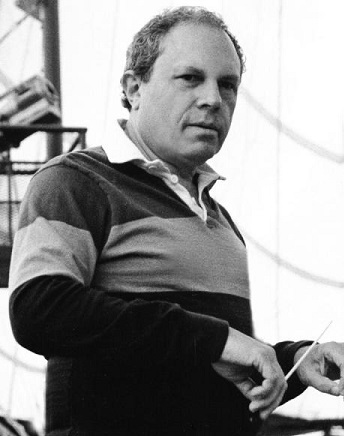
    The evening began with Fantasy for Orchestra, a tone poem by the late violinist and educator Robert Mann (above).  Mann, who died last year at the ripe old age of 97, was a long-time staple of the New York classical music scene, in front of and behind the scenes, and was first violinist of the Juilliard String Quartet for over fifty years.  In addition to performance and education, Mann also dabbled in composition to pleasantly effective results.  His Fantasy for Orchestra was originally commissioned by the New York Philharmonic and first performed by that ensemble under the direction of Dimitri Mitropoulos at Carnegie Hall itself in 1957.

    The piece opened on the violas sustaining a single note.  Other members of the orchestra soon joined and a collage of atonal sonorities began to emerge.  This menace continued to build until a percussive roll launched the work into more energized and frenzied territory.  Mann’s Fantasy played almost programmatically, as if scoring the unseeing drama of some unsettling film or ballet.  A haunting violin solo emerged, performed by the concertmaster Cyrus Beroukhim, as harp ostinati and melancholic low brass chords created an almost dream-like atmosphere.  After a near-silent decrescendo, the drama then built up to a sequence of full-orchestra blasts that rang the piece to a volatile conclusion.  This was a decidedly above-average mid-century tone poem, played with force by the American Symphony Orchestra, and one that should warrant more-frequent airings.

    Vivian-Fine

    Next, receiving its long-overdue New York premiere, was Concertante for Piano and Orchestra by Vivian Fine (above).  Fine, who was one of a handful pioneering female composers in the early 20th century, is perhaps best known for her many chamber works, including the atonally adventurous Capriccio for Oboe and String Trio.  The Concertante for Piano and Orchestra, composed in 1944, was the first of her orchestral repertoire.

    After Mann’s Fantasy for Orchestra, Fine’s Concertante was almost strikingly tonal, as if ripped from the pages of some lost Romantic-era score composed sixty years prior.  Comprising two movements, it opened on a stately and delicate Andante con moto and closed on a convivial and spirited Allegro risoluto.

    Charliealbright

    Pianist Charlie Albright (above) made solid sport of the piece’s numerous solo passages and improvised an impressively intricate and lively cadenza that charged the work to its end.  His admirable commitment to the piece brought much life to what otherwise struck me as a very dainty and anachronistic work, one I don’t expect to hear programmed again anytime soon.

    A minor ovation brought Albright back to the piano bench for an encore of a work that, as a friend of his apparently put it, “takes balls to perform.”  He then ripped into a breezy rendition of 1957’s “Great Balls of Fire” that cheekily concluded the first half of the concert.


    J Druckman

    After intermission came a performance of Prism, a three-movement orchestral set by written in 1980 the great and often unsung composer Jacob Druckman (above).  Inspired in part by Luciano Berio’s 1968 Sinfonia, Druckman crafted Prism by blending the musical styles of historic composers with his own decidedly modern voice.  Fittingly, each movement references the music of a Baroque or Classical-era composer for which it is titled.

    The first movement “After Marc-Antoine Charpentier” began on otherworldly textures consisting of percussion, woodwind clusters, pizzicato hits, and haunting tremolo in the strings.  Quotations of Charpentier soon emerged, complete with a synthesized harpsichord, but carrying with it the wild distortions and eerie timbres of the 20th century.  The second movement, “After Francesco Cavalli”, carried on in similar fashion, blending the sonorities of these disjointed eras.  A clarinet solo accompanied by atonal statements throughout the orchestra brought some much-appreciated color and allowed the piece to stand more fully on its own legs, rather than succumb to pastiche.  Violent punctuations opened the third movement, “After Luigi Cherubini,” which was occasionally discursive to a fault.  Nevertheless, this built to an impressively bombastic finale that rekindled any waning interest.

    Compositions that blend the styles of different musical eras like Prism or Berio’s Sinfonia (or Steven Stucky’s Dreamwaltzes or John C. Adams’s Absolute Jest, for that matter) tend to walk a fine line between tasteful reference and cheeky gimmickry.  While the merits of such genre-bending continue to be up for debate, I must confess enjoying Prism best when lived in its own era.

    P01l7krp

    The final piece of the evening was the Third Symphony by one of America’s greatest composers, William Schuman (above).  A contemporary of Robert Mann, Schuman was also a staple of New York’s classical music scene, albeit with a much wider influence.  Throughout the course of his life, he served as the president of the Juilliard School, president of Lincoln Center, and in 1943 became the first-ever recipient of the Pulitzer Prize for Music.  Among his impressive catalog of compositions are numerous ballets and concertante, two operas, dozens of chamber and orchestral works, and a whopping ten symphonies.  The Third Symphony, composed in 1941, is perhaps his most famous.

    Clocking in at about thirty minutes, the symphony is cast in two parts played with short pause—Part I comprising a Passacaglia and Fugue and Part II concluding on a Chorale and Toccata.  It begins on a slow and somber viola line that is gradually joined by the remainder of the strings and, finally, the rest of orchestra.  This tragic crescendo continues until a great fortissimo brass statement launches the work into new, dramatic frontiers.  Its form relaxed, but never rambling, the rest of the work is colored with mysterious string runs, noble brass statements, haunting solo passages, and occasionally violent musical statements.  Its final Toccata, opening on droning bass and military snare, eventually leads to vigorous string runs and bombastic low brass that slowly build it to a brilliant full-orchestral finale.

    Alternately lively and melancholic, stately and haunting, beautiful and ferocious, the symphony marks a high point of American orchestral writing.  It is one our nation’s finest symphonies and should be played as often as any of the best works of Aaron Copland or Leonard Bernstein.  Alas, it tends to languish, as do so many other great American orchestral works, on the dusty shelves of music libraries as the works of Beethoven, Brahms, and Mozart are performed ad infinitum.  It’s a scandal that American orchestras don’t find more time in their seasons to honor the music of their native soil, one that I’m happy to see Leon Botstein and company attempting to combat.

    While I wasn’t always thrilled with this interpretation of the piece, which occasionally leaned on the sluggish side, this still ultimately made for triumphant conclusion to a grand evening of American classical music at Carnegie Hall.  The mission of the American Symphony Orchestra, now in its 57th season, is one of the most admirable kind.  New Yorkers could do far worse than to hear this orchestra unearth great works of art from our nation’s past.

    ~ Brad S Ross

  • YCA Presents Flautist Anthony Trionfo

    Anthonyhiresmattdine3

    Above: Anthony Trionfo, photographed by Matt Dine

    ~Author: Oberon

    Wednesday March 28th, 2018 – Young Concert Artists presenting flautist Anthony Trionfo at Merkin Hall. Mr. Trionfo is a musician of prodigious talent and scintillating personality; along with the excellent pianist Albert Cano Smit and a quartet of string players, he offered a wide-ranging, adventurous program combining the familiar, the rare, and the new.

    Gabriel Fauré‘s Fantasy in E minor, Op. 79, opened the evening. Mr. Trionfo’s shining tone and his feel for the sensuous undercurrents of the opening Andantino gave way, in the Allegro, to florid passages of crystalline coloratura. Mr. Cano Smit was the ideal partner here, his playing impeccably tailored, his seriousness of intent and commitment most welcome in such a young artist. 

    Returning alone to the stage, Mr. Trionfo gave a superbly confident performance of J.S. Bach’s Partita in A minor, BWV 1013. In this suite of dances, the flautist showed great subtlety and a multi-hued timbre that kept the music ever-alive. The Courante had a feel of birdsong, the Sarabande a forlorn air of touching simplicity. In the concluding Bourrée anglaise, the playing was light-filled and lovely.

    The New York premiere of drip/spin by Katherine Balch, the 2017 YCA Composer-in-Residence, was prefaced by Mr. Trionfo’s remarks about the ‘dew-drop necklace’ – silk threads and mucus droplets – with which the glow-worm attracts and entraps its prey. The perpetual motion of the piano part seems to envision the spinning toils of the glow-worm, whilst the sighs and blips from the flute depict the unsuspecting victim. Some of the piano keys have been ‘prepared’, adding a ghostly quality. The flute lingers on high, until an energy drain occurs. Then the piano begins a rolling motif; in its death throes, the preyed-upon flute goes wild, with harsh accents that finally sputter out.

    Al21165

    For the Chant de Linos by André Jolivet, a string quartet comprised of Mélanie Genin (harp), Aleksey Semenenko (violin), Ida Kavafian (viola) and Sang-Eun Lee (cello) joined Mr. Trionfo onstage. André Jolivet (1905-1974) composed this work on commission from the Paris Conservatoire in 1944 as a compulsory test piece for competitors in the Solo de Concours; the prize was won that year by Jean-Pierre Rampal. The work is a threnody (or lament to the dead) inspired by the story of Linos, son of Apollo. Linos taught Orpheus to play the lyre, and he was later killed by Heracles for criticizing him too much. André Jolivet was a composer inspired by the legends from antiquity; he wrote many chamber music works, eleven concertos, as well as orchestral and vocal music.

    The rich yet transparent textures of the strings are quite contemporary in sound yet they evoke a distant, mythic past. A dreamy passage for flute and harp draws us in; the music can veer from lyrical to explosive in the twinkling of an eye. A subtle flute solo leads to a darkish dance played by all. Things get a bit woozy before turning to lament; following a cadenza, the music dances onward with the flute trilling and piping. What a great idea to program this ensemble piece tonight: a wonderful opportunity to hear this music, and so beautifully played.  

    Albert cano smit

    Above: pianist Albert Cano Smit

    A fascinating performance of Lowell Liebermann’s Sonata for flute and piano, Op. 23, followed the interval. The opening Lento con rubato soon wraps us in the strange beauty of its misterioso atmosphere. Delicate sounds from the piano’s upper register are followed by a big outburst which subsides into ghostliness. Single notes struck by the pianist underscore a sinuous flute motif; then the flute sound turns big and piercing. Rippling piano figurations summon the flautist back to song, a gentle flow becoming a percolation. The haunting melody returns in all is mystery, and Mr. Trionfo’s flute makes a final ascent to a remarkably sustained note that tapers away.

    In the ensuing Presto energico, there is much bouncy, lively coloratura from the flute which Mr. Trionfo conveyed brilliantly, with lots of body English; meanwhile the piano writing is animated…almost wild. The music sails forward, with virtuosic playing from Mr. Cano Smit whilst Mr. Trionfo spins high flourishes with his flute. This work drew a very warm audience response, with the composer taking a bow to waves of enthusiasm.

    Ian Clark’s Zoom Tube again gave Mr. Trionfo the opportunity to demonstrate some of the various sound effects his flute could produce…like the Balch, but more extroverted and pop-oriented. He sometimes seemed to be producing two different sounds at the same time, ‘speaking’ or blowing air, playfully jazzing things up, even emitting a whooping scream at one point.

    Mr. Trionfo’s arrangement of the traditional Carnival of Venice provided an immensely enjoyable showcase for his virtuosity. After a captivating trill, the flautist embarked on a series of variations on the familiar tune: the blues, bel canto, jazz, a Latin lilt, ‘Casta diva‘, and on and on. Mr. Cano Smit was the perfect accomplice in this imaginative tour de force as the two players kept the audience thoroughly engaged with their technical dazzle and well-contrasted personalities.

    As an encore, Mr. Trionfo offered Debussy’s Syrinx, ending on a sustained, gossamer pianissimo.

    ~ Oberon

  • Lisa Batiashvili|ORPHEUS @ Carnegie Hall

    P1010052_preview

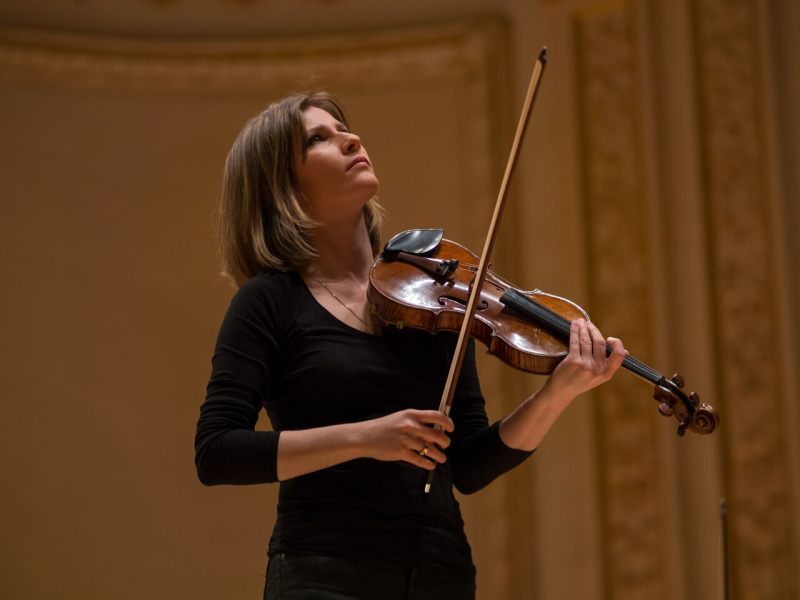
    Above: violinist Lisa Batiashvili, rehearsing for this evening’s concert with ORPHEUS; photo by Matt Dine

    ~ Author: Oberon

    Saturday March 24th, 2018 – My friend Dmitry and I are big fans of Lisa Batiashvili, so we were excited by this opportunity to hear her play the Prokofiev second concerto with ORPHEUS at Carnegie Hall. The program successfully blended works by Schubert and Prokofiev, and the comely violinist basked in a rock-star ovation after her dazzling performance.

    In 1823, Franz Schubert composed incidental music for Helmina von Chézy’s play, Rosamunde. The play was a failure, but Schubert’s music has come down to us across nearly two centuries. ORPHEUS opened their concert tonight with the play’s Entr’acte No. 1, commencing with a big, resonant sound that gave the illusion of a full symphony orchestra. The music has an air of theatrical drama, and there’s some lovely writing for clarinet. 

    Paul Chihara’s persuasive arrangement of Prokofiev’s Schubert Waltzes Suite, created specially for ORPHEUS, was highly enjoyable, and attractively played. Solo passages for oboe, flute, clarinet, and trumpet stood out. Mr. Chihara was present, and took a bow from the audience.

    P1010100_preview

    Above: ORPHEUS onstage at Carnegie Hall, a Matt Dine photo

    The two existing movements of Franz Schubert’s Symphony No. 8 in B Minor, D. 759 (Unfinished) were given plush treatment by the ORPHEUS forces, and again the clarinet, oboe, and flute soloists seized on their opportunities to delight us with melodious gems. The ensemble sound overall was vividly textured, with notable sonic warmth from the cellos, and the frequent repeats of the familiar theme of the Allegro moderato were so cordially played. A cellphone interrupted the Andante – twice! – spoiling the atmosphere; and no sooner had that distraction faded, than some poor bloke had a terrible coughing fit. It took all my powers of concentration to endure.

    After the interval, Ms. Batiashvili strolled onto the Carnegie Hall stage along with the ORPHEUS musicians – eschewing a star’s entrance – and proceeded to enthrall us with her commanding and emotionally vivid performance of the second Prokofiev violin concerto, Op. 63.

    P3240077_preview

    Above: Lisa Batasthvili playing the Prokofiev 2nd this evening; photo by Matt Dine.

    From her opening solo passage, Ms. Batiashvili’s playing seemed wonderfully at home, both in the embracing acoustic of the venerable hall and in the decidedly à la Russe qualities of the music. Her luminous tone in the sustained melodic passages and the clarity and deftness of her coloratura flourishes were captivating. A spidery motif over plucked accompaniment was subtly delivered, and – after a lamenting theme from the cellos and a march-like intrusion – she produced lively swirls of notes over a descending orchestral figure. As the violinist returned to the sweet, poignant melody heard earlier, we were on a Batiashvili high when the mood was broken by a moaning baby somewhere in the upper tiers. At moments like this, I seriously think about giving up concert-going.

    But Ms. Batiashvili drew us back into her world with her simply gorgeous playing in the Andante assai; the theme has a nostalgic glow and it sings over a plucked accompaniment. Sailing higher and higher, with spine-tingling glamour of tone, the violinist provided for us a transfusion of tranquility in a world going mad. The ensemble then take up the melodic passage as the violin plays pizzicati.

    The final movement, Allegro, ben marcato, brings us elements of the wit that Prokofiev can so magically integrate into his music: yet another reason he’s one of my top favorite composers. The castanets here always make me smile. Throughout this dance-like movement, it was as much fun watching the pretty violinist as listening to her. As this concerto reaches its lively finish, I always wish it had been longer.

    Ms. Batiashvili, looking lovely as ever in her wine-coloured gown, won an enraptured ovation from the crowd. She treated us to a delightful encore: the March from Prokofiev’s LOVE OR THREE ORANGES.

    P3240344_preview

    Above, mutual admiration: Lisa Batiashvili and the players of ORPHEUS. Photo by Matt Dine.

    ~ Oberon

  • Young Concert Artists: Seiya Ueno/Wendy Chen

    Ueno

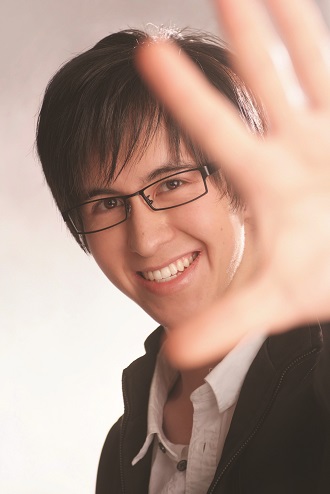
    Tuesday October 20th, 2015 – The Japanese flautist Seiya Ueno (above, in a Matt Dine photo) with guest artist Wendy Chen at the keyboard for the opening event of the Young Concert Artists season. Tonight at Zankel Hall, these two exceptional artists presented a programme that spanned the centuries from Bach to Boulez.

    Susan Wadsworth, the founder and director of Young Concert Artists, greeted us at this inaugural concert of her 55th season concert series; what this woman has done for music and for young musicians deserves our deepest gratitude.

    The artists then appeared, Mr. Ueno elegant in tail-coat tuxedo, and Ms. Chen simply luminous in a soft sea-green frock. They commenced at once on the Bach Sonata in B minor, BWV 1030, and immediately established a lyrical rapport both with one another and with the audience. Mr. Ueno’s playing is stylish and deft, and his assured technique makes him capable of anything, including some captivating soft attacks. Watching Ms. Chen’s extraordinarily graceful hands move up and down the keyboard became a prime visual aspect of the evening. 

    Sinking into the dreamy world of Debussy’s Prélude à l’aprés-midi d’un faune, the two artists painted in sensuous Monet hues. Mr. Ueno’s soft attacks and hushed taperings of line were ideally seconded from Ms. Chen’s piano, evoking images from the ballet which caused such a scandal at its premiere.

    Wendy_chen_01_category

    Above: pianist Wendy Chen

    The duo scored a huge success with Pierre Boulez’s Sonatine, a work filled with challenges for both players. Mr. Ueno is called upon to create rasping, burbling effects; the music whirrs and shrills and pauses on long trills; Ms. Chen meanwhile is weaving her own spell from the Steinway, maintaining an attentive connection to the sounds of the flute. Their superb playing of this complex and demanding work drew enthusiastic bravos from the crowd.

    Much as I love the operas of Richard Strauss, his Sonata in E-flat major, Op. 18 for flute and piano was actually new to me. Ms. Chen’s somber opening phrases soon give way to a burst of energy and the duo are off in an infectious allegro. The score is chock full of lovely themes, many of them whispering of ROSENKAVALIER and ARIADNE AUF NAXOS. Mr. Ueno seized on these melodies and lavished them with plush, full-toned ‘singing’, and in the final movement he warbled deliciously as Ms. Chen maintained the varying rhythmic patterns with élan.

    There have been many fantasies created on themes from Bizet’s opera CARMEN; tonight Mr. Ueno brought forth François Borne’s Carmen Fantasie whichde rigueurincludes such chestnuts as the ‘fate’ motif, the Habanera, the Toreador Song and the Chanson Boheme but also seeks out less obvious passages from the opera, such as Micaela’s tune from her Act I duet with Don Jose, and the latter’s pleading “Ne me quittez pas” which was deliciously embroidered upon by the flautist. As the fantasy progresses, the demands for bravura embellishments increase: cascading scales at break-neck speed and whirlwind flourishes of notes were delivered with remarkable clarity and vivacity by Mr. Ueno, with Ms. Chen yet again a flawless partner.

    Responding to the audience’s warm applause, Mr. Ueno appeared alone and in a charming, rather halting speech thanked us for sharing the evening with him and ended with the heartfelt declaration: “I love music..and I love you!” He then offered a ravishing Debussy encore, Syrinx.

    I realized as the evening drew to its close that this was – incredibly – my first-ever flute recital So, even in our senior years, there are still new experiences to be enjoyed in classical music!