Tag: Merkin Hall

  • Violinist Lun Li @ The Morgan Library

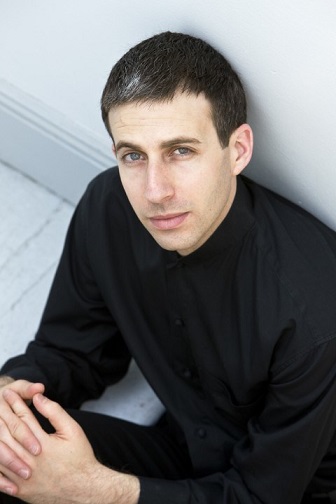
    Lun Li

    ~ Author: Oberon

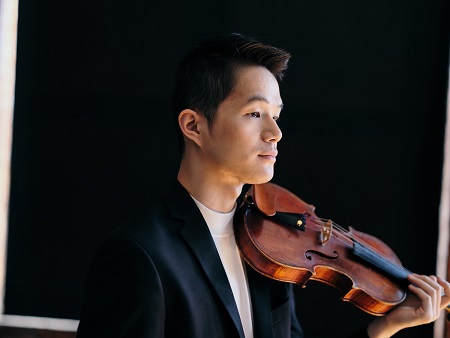
    Wednesday April 24th, 2024 matinee – This was my third time hearing the Chinese violinist Lun Li. My first encounter was at Merkin Hall when he gave his NY debut as a Young Concert Artist. Soon after, he played the Prokofiev second violin concerto – most impressively – with the Riverside Symphony at Alice Tully Hall.

    This afternoon, Lun Li offered a distinctive program at The Morgan Library, and he played thrillingly from start to finish. I very much liked his idea of having the house lights completely darkened throughout the concert; the only drawback to this was: it was impossible to take anything more than the most rudimentary notes. In the long run, though, notes became superfluous because this was some of the greatest violin playing I have ever heard. After a while, I stopped trying to write anything down and just let the music transfix me.

    Lun Li’s presentation was simple: clad all in black, he stood in a pool of light on the stage, casting a quadruple shadow. The darkness in hall seemed to make the audience more attentive and more focused on the music; there was a resolute stillness in the air, making the charismatic violinist’s extraordinary playing even more compelling.

    The program was devised in three segments followed by a sort of built-in encore. Each segment consisted of a short ‘prelude’, followed by a longer work.

    Music by Henry Eccles – his brief Prelude in A-minor – opened the concert, followed immediately by Nicola Matteis’ Alia Fantasia. The two pieces were written about fifteen years apart and are similar in feeling. Lun Li’s playing was elegant, and technically immaculate.

    Continuing in a Baroque mode, music by Giovanni Bononcini, came next: his Prelude in D-minor led on to the celebrated Chaconne from Partita No. 2 in D-minor, BWV 1004, by Johann Sebastian Bach. This long work offers endless opportunities for brilliant playing, and Lun Li gave as astounding, passionate performance, holding the audience under a spell with his virtuosity. The ensuing ovation was inevitable after such a glorious rendition.

    Following Philip Glass’s Book of Longing, which has a Baroque flavor, but with a tinge of timelessness, Lun Li gave a monumental performance of Béla Bartók’s Sonata for Solo Violin. The sonata was composed in 1944 on a commission from the American violinist Yehudi Menuhin; it was one of the composer’s last works. This solo sonata is in three – or maybe four – movements: Tempo di ciaccona, Fuga, Melodia, and Adagio – the last two being inseparable.

    The sonata places extraordinary demands on the violinist as the music veers from searing, to luminous, to poignant. The sheer number of notes is uncanny, and they were all sewn together in an intense, unforgettable musical experience by our remarkable soloist. If the reaction to the Bach seemed massive, the ovation after the Bartók was simply off the charts.

    Lun Li polished off his program with Tessa Lark’s Jig and Pop, a lively piece with a mile-a-minute swirls of notes. The violinist was called back for numerous bows.

    The near-total darkness in hall today certainly worked in this particular instance, but if it becomes a trend – it’s been that way for years at The Joyce – people like me will be out of a job.

    ~ Oberon

  • Sasha Cooke/Kirill Kuzmin ~ how do I find you

    Sashacooke

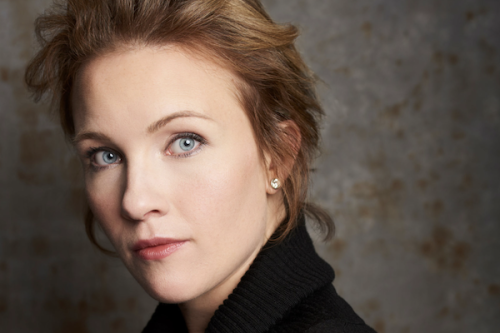
    Above: Sasha Cooke in a Stephanie Girard portrait

    Author: Oberon

    Thursday May 25th, 2023 – Mezzo-soprano Sasha Cooke presenting a program of songs she commissioned from some of the most distinctive composers of our time in a concert at Merkin Hall. This ambitious project was conceived by Ms. Cooke in 2020, at the height of the devastation of COVID-19, and many of the songs reflect a wide range of experiences tied to the pandemic, from the virus’s global effects to intimate, domestic stories of isolation and loneliness. Pianist Kirill Kuzmin was Sasha’s perfect musical partner for the evening. 

    In approaching the composers and lyricists for this project, Sasha had put no limits on subject matter. Of course, the pandemic was on everyone’s mind, but other important topics were brought forward: California wildfires, school shootings, current US politics, and the internment of Asian immigrants on Angel Island in the 19th and 20th centuries.

    The artists took the stage to a sustained round of applause. Sasha looked radiant in a shimmering gown, and within a few moments we were basking in the glow of her wide-ranging voice and her thoughtful way with words. 

    Caroline Shaw wrote both the music and the words for the evening’s title song, how do i find you. In this lyrical, melodious piece, everything that is dear to me about Sasha’s voice came into play: the warmth of her timbre, the cushioned, unforced low notes and rapturous highs, and the sheer seamlessness of it all. And she is sounding more gorgeous and expressive than ever.

    A five-note descending scale is a recurring motif in Ms. Shaw’s song, tailored so perfectly to the words. The music gets quite grand, and then briefly declamatory, before a final passage of sustained tones.  

    Listen (music by Kamala Sankaram, words by Mark Campbell) features some lovely writing for the piano, and explores a wide tonal range for the voice. There comes a great outpouring, and then a mix of pastel colors at the end. The poet’s words are simple yet infinitely moving: “Listen, as you would to the words of a dying friend…”

    Risk Not One (music by Matt Boehler, words by Todd Boss) Sasha jumps right in, and a rhythm develops; The words are urgent: “Go for broke!” Sasha’s voice is big and rich here, and Kirill at the piano has lots of lively notes to play. Glorious singing, with a big finish.

    Self-Portrait with Dishevelled Hair (music by Missy Mazzoli, words by Royce Vavrek) Inspired by Rembrant’s painting of the same name, and by the idea that a self-portrait captures a moment in time, the music veers from pensive to animated to moving. “I will paint you a self-portrait of me…so that you and I, separated by centuries, might lock into each other’s gaze.”

    Spider (music by John Glover, words by Kelley Rourke) was one of my favorite songs on the program, though – to be honest – all the songs were favorites. The piano begins to ripple as the spider builds her web, and the music is thoughtful. Sasha’s voicing of the words is so clear…and then she begins to hum, like a lullaby.

    MasksUsedToBeFun (music by Frances Pollock, words by Emily Roller) was the most political song of the evening. It’s a light-hearted take on serious matters. From a bright start, the words are sometimes sung and sometimes spoken. Full of irony – and finger snapping – the piece rushes along, eventually taking singer and pianist to the brink of madness. The final lines are a hymn to our beloved democracy, followed by a touching piano postlude.

    (During a Q & A after the performance, a woman in the audience asked why “we” (left wingers) don’t reach out to “them” (the right wingers). The answer is simple: “they” are inflexible, cannot be reasoned with, nor think of anything other than imposing their beliefs on everyone else, and getting their own way – by hook or by crook. That’s why “we” end up “talking to ourselves”, as the woman so blithely put it.)

    Everything Will Be Okay (music by Christopher Cerrone, words by John K. Samson) was another favorite of mine; it tells of the recovery of a lost ‘treasure’. The song grows from a low start via simple voice and piano lines to a more dramatic passage before finding a tranquil ending, as peace of mind is restored. 

    After the Fires (music by Lembit Beecher, words by Liza Balkan) is a poetic narrative recalling the California fires of 2020, wherein the writer tells of returning home after the devastation. “There’s a feeling of memories having been erased along with the place.” The music covers a wide dynamic range, and the role of the piano is key. The song becomes very reflective, and finishes with a sense of quiet resignation. I loved watching Sasha sing this piece.

    (A Bad Case of) Kids (music by Andrew Marshall, lyrics by Todd Boss) is a drunken song, and Sasha’s take on it made me think of Flicka von Stade’s hilarious PERICHOLE aria. A poor bloke is stuck at home with the kids all day, day after day.  He pleads: “Find me a bed on the topmost floor, far from the cries of the maternity ward!” Sasha and Kirill had a blast with this song, which is quite operatic at times. The music rolls along, like something out of a music hall revue: a vivid finale to the concert’s first half. 

    The Work of Angels (music by Huang Ruo, words by David Henry Hwang), which tells of Angel Island and the Chinese Exclusion Act of 1882, where Asian immigrants were held, some for months…or even years. Of course this made me think of my beloved Wei, and the ongoing threats to Asians in this country. The singing is intimate, contrasting with some grand passages for the piano. The sound of the words becomes hesitant, as if afraid to speak of the things that happened to these people. It was some of the most poignant music we heard tonight, and it ends with a wordless vocalise.

    Altitude (music by Timo Andres, words by Lola Ridge), an enigmatic and strangely captivating song, in which Sasha almost compulsively repeats words whilst Kirill plays dotty accents. Then Sasha concludes this unique song in a gorgeous high phrase. 

    Still Waiting (music by Joel Thompson, words by Gene Scheer) is the harrowing tale of a mother in this age of school shootings. Reassuring at first, humming to herself, the woman misses a text from her daughter telling of a shooter in the school, followed by a second text: “”I’m OK, We’re evacuating. I love you.” This brings a huge outpouring of voice. In the final unaccompanied passage, Sasha almost lost control. I imagine this song is very difficult for a mother to sing, but it needs to be heard.

    In the Q & A at the program’s end, Sasha spoke of her difficulty in deciding what should follow Still Waiting. She chose That Night (music by Hilary Purrington, words by Mark Campbell), a long and rambling paean to the vitality and chaos of New York City life. It was a lot of fun to watch Sasha toss off the words; despite all the extroversion, the song has a thoughtful finish.

    Inward Things is Nico Muhly’s setting of a text by the 17th century English poet and theologian, Thomas Traherne. Muhly fashioned the piece so compellingly, and Sasha brought opulent tone and an engaging dynamic palette to bear on this beauteous music. The song’s end was especially sublime.

    Dear Colleagues (music by Rene Orth, words by Colleen Murphy) details the abundant problems masses of people faced during the pandemic while trying to work from home where kids, pets, and daily domestic stuff keep interrupting. The song is a working mother’s melodrama, which Sasha sang and acted with flair, whilst Kirill relished the choice piano interjections. The song has a hilarious ending.

    The Hazelnut Tree (words and music by Gabriel Kahane) tells of emerging from the confines of the indoors, of newspapers and television screens, into the natural world where we can find the true beauty of life. Mr. Kahane gives the words a fine melodic flow, which Sasha voiced so persuasively.

    Where Once We Sang (music by Jimmy López Bellido, words by Mark Campbell) marked the end of the evening. From the title, we knew what it would be about: lost time, lost opportunity…the pandemic months depriving musicians, dancers, and performing artists of their reason for living. Some were taken from us, others gave up. And by the time it was deemed safe again, the lost days were irretrievable.

    From the song’s unaccompanied start, Sasha conveyed everything those of us for whom music is our lifeblood felt and feared throughout those dark days. The song grows in fervor, which is then becalmed, and a sense of hope and quiet rapture settles over us.

    What I will always remember about this evening is the great pleasure of having been in that space with that voice.

    ~ Oberon

  • YCA Presents Violinist Lun Li ~ Debut Recital

    Lun li

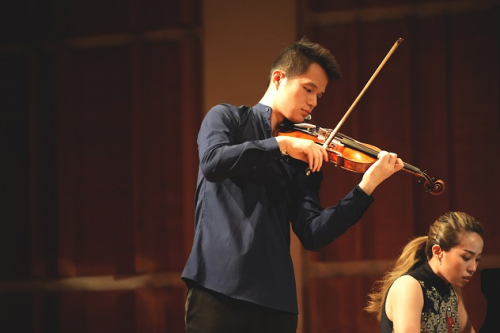
    Wednesday April 26th, 2023 – Young Concert Artists presenting the New York debut recital of violinist Lun Li (above) tonight at Merkin Hall. Pianist Janice Carissa shared the stage with the young violinist in a wide-ranging program which Lun Li described in a program note:

    My debut program explores the interplay between fantasy and reality through the works of Bartók, Messiaen, Schumann and others. I have chosen a set of repertoire that explores this blurred dimension, and more importantly, allows the listener to form sonic connections without needing extensive knowledge and context. I invite you to form your own personal narratives with this program.”

    In the program’s brief opening work, “Don Quixote” from 18 Miniatures by Giya Kancheli, both players showed themselves to be passionate and highly accomplished musicians. The music has a boisterous start, which develops into a strutting dance. Thereafter, extroverted phrases alternate with delicate, witty ones.

    Lun Li then spoke briefly, and asked that we withhold applause during the remainder of the program’s first half. He and Ms. Carissa then commenced on a marvelous performance of Francis Poulenc’s Violin Sonata.

    Poulenc originally wrote this sonata in 1942/1943, for the young French violinist Ginette Neveu, who perished in a plane crash in 1949 at the age of thirty. Thereafter, the composer revised the sonata, making several changes in the last movement. The work recalls the composer’s memories of the great Spanish poet Federico García Lorca (1899-1936); suspected of homosexuality, García Lorca was executed by the Fascists soon after the outbreak the of the civil war.

    The sonata’s opening Allegro con fuoco makes a frantic start before easing into a tango-like mood, which speeds up before halting for a long pause. A tender melody develops with great passion; alternating moods carry us to a fantastic finish.

    Poulenc headlined his second movement, an Intermezzo, with a quotation from García Lorca: “The guitar makes dreams weep,” alluding to the poet’s own guitar arrangements of Spanish songs. The music begins with a lulling piano motif accompanied by plucked violin notes. A subtle melody becomes rapturous, the piano lapses into a dreamlike state. Off-kilter harmonies sound before an upward violin glissando brings a quizzical end.

    The third movement’s title, Presto tragico, foreshadows the death of the poet: fast and urgent passages mesh with dancelike swirls of notes, climaxing with a violent chord. A searing violin theme jolts us, then the music subsides to a tragic, mournful conclusion.

    Honoring Lun Li’s request for “no applause” was difficult after such a thrilling performance, but the mood held and he commenced the high, soft agitato of Salvatore Sciarrino’s Per Mattia, a brief work that flowed seamlessly into the ensuing Schoenberg. 

    Janice carissa.

    Above: pianist Janice Carissa

    Arnold Schoenberg’s Phantasy, Op. 47, began life as a solo violin piece, to which the composer later added a separate piano accompaniment. Lun Li and Ms. Carissa here displayed the wonderful sense of teamwork that underlined their playing all evening. The pianist, whose gown was a work of art in and of itself, is wonderfully subtle, and she deftly handled the rhythmic shifts in which this music abounds. Together, the players veered from the ethereal to the drunken, dancing along thru stuttering, jagged passages which morphed, incredibly, into Fritz Kreisler’s Miniature Viennese March. This was a brilliant ending to the concert’s first half: jaunty, and impeccably played.

    Music of Olivier Messiaen, his Fantaisie, opened the evening’s second half; the composer is perhaps best remembered for his magnificent, poignant Quartet for the End of Time. The Fantaisie opens with Ms. Carissa delivering an emphatic statement from the piano. Dance-like passages are heard, and then Lun Li’s violin soars over gorgeous rippling figurations from the pianist. The music sails along, alternating rapid passages with thoughtful ones: mood swings that are relished by the players. From a high-velocity, tumultuous buildup, the music becomes cinematic. Animated/agitated music gives way to another high-flying, silken violin theme. The climax is reached, with the composer offering a swift, dazzling finish. 

    Robert Schumann’s quirky Bird as Prophet, arranged by Leopold Auer, comes next. Ascending violin phrases have a touch of irony, and then a lyrical song springs up, with a shimmering trill. The music features some wistful hesitations.

    4

    Lun Li and Ms. Carissa polished off the evening with a compelling performance of Béla Bartók‘s Violin Sonata No.2, Sz. 76. Lun Li aptly described this music as being “from a different planet”, and from its big, strange start it is indeed kozmic, weird, and wonderful. Passion and pensiveness send alternating currents thru the hall, sagging violin motifs develop into an epic expressiveness. As things simmered down, Lun Li remained unfazed by the ill-timed sound of a cellphone: he delivered a plucking ‘cadenza’ from which a dance emerged: cascades of notes from the violin over a pounding rhythm from the keyboard. Fabulous playing…they sounded like a whole orchestra! 

    Bartók offers a fantastical sonic variety in this piece in terms of tempi and dynamics: a piano solo of epic power gives way to a spidery violin motif. Lun Li becomes a veritable speed demon, playing fast and furious, and taking things to new heights. The music calms, and slows; the violin sighs, then starts plucking, and the music dances onward.

    2

    The audience hailed the musicians with a fervent ovation at the sonata’s end, and Lun Li graciously thanked us for having accompanied him on this musical journey. He then launched a performance of Schubert’s  Erlkönig that was an astounding demonstration not only of his virtuosity but of his unbounded passion and his heartfelt dedication to music.

    I look forward eagerly to hearing Lun Li again…and soon: on Friday May 5th, he will play the Prokofiev 2nd with the Riverside Symphony at Alice Tully Hall. Tickets and info here

    Performance photos courtesy of Young Concert Artists.

    ~ Oberon.

  • Grace Park/Joseph Liccardo @ Merkin Hall

    Park-grace

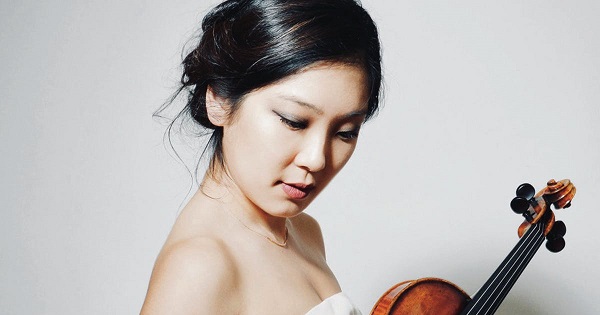
    Tuesday April 26th, 2022 matinee – Violinist Grace Park (above) with pianist Joseph Liccardo in a matinee recital at Merkin Hall. Ms. Park, a elegant beauty, looked chic in flowing white trousers and a fitted white halter-top; she strode onto the stage with the dapper Mr. Liccardo, and they opened their program brilliantly with the Scherzo from Johannes Brahms’ FAE Sonata; this movement was composed as part of a welcoming musical gift created to honor the great violinist Joseph Joachim’s arrival at Düsseldorf. The title FAE Sonata refers to Joachim’s motto: “Frei, aber einsam” (‘Free, but lonely’).

    The Brahms Scherzo made for a perfect introductory piece: it goes thru many changes of mood, from flashy, to sentimental, to passionate. Although there were moments when the piano seemed too loud, Ms. Park and Mr. Liccardo were perfectly in sync, and they brought us delicious subtleties along the way.

    With the blend of voice and piano now perfectly aligned, music of Clara Schumann came next. Written in 1853, these brief works were among the last pieces that Clara ever wrote. After Robert’s death in 1856, she composed almost nothing more herself, instead keeping Robert’s music alive through her touring, and the editing of his works.

    With the blend of voice and piano now perfectly aligned, these Clara Schumann gems glowed. The opening Andante molto had the feeling of an exquisite dream, with the players displaying beautiful phrasing and a keen sense for dynamic variety. A sadness arises with the second Romance, Allegretto Mit zatern vortage, though things turn lighter in time; throughout, the alternating currents of mood were deftly illuminated by the players. The final Romance, Leiderschuaftlich, is the most enchanting, with its flow of violin melody over rolling arpeggios from the keyboard. Ms. Park’s tone was at its sweetest here, with finely-etched trills and staccati, whilst Mr. Liccardo’s playing flourished.

    A change in program brought us Leoš Janáček’s Violin Sonata rather that the originally-announced Mozart KV 454. Composed in 1914, when the world was poised on the edge of war.

    From its passionate con moto start, the first movement is quite dramatic. The violin and piano seem to converse as they pass thru various musical moods: ironic, suspenseful, to a longing lyricism, and a calm finish, The ensuing Ballada brings forth shimmering figurations from the piano and a sustained, poetic theme from the violin. I loved watching Ms. Park’s expressions as the music seemed to draw forth her deepest feelings. Mr. Liccardo’s glistening passages met with Ms. Park’s ascending line for a radiant high ending.

    The following movement, a sort of scherzo – opens with the piano trilling and the violinist slashing the strings; a folk-like dancing song rises up. The sonata moves on, thru staccati and trills that give a restless feeling, to a searing passage from the violin. Near the end, the piano seems dreamy and the violin rather anxious.

    Composer Chris Rogerson introduced his Lullabye, No Bad Dreams, composed in 2009. Drawing upon his childhood fears of bedtime, he wrote a work that tells of a calming ritual his parents devised as they tucked him in for the night. The lullabye has Mr. Liccardo’s piano in the high range whilst Ms. Park’s line is sustained. Suddenly the music turns brisk – not ready for sleep yet – and develops an unusual grandness that speaks of passion and longing. Following a slow fade, there is a fitful agitation – which the composer indicates might be the result of having eaten too many sweets during the day. Sleep comes at last, with Ms. Park sustaining a long, high note. Musicians and composer were well-applauded for this musical memento of childhood; it certainly brought forth memories for me.

    Joseph_Liccardi_500

    Above: pianist Joseph Liccardo

    From J S Bach, we heard the Sonata for Violin and Harpsichord in E-major. This was most impressively played, commencing with a lovely, sustained Adagio, followed by the light and graceful Allegro, which features much animation from the piano. The heart of the sonata – and of the afternoon – came with the achingly beautiful Adagio ma non tanto; as played by Ms. Park and Mr. Liccardo, it felt like a bit of Heaven on Earth…something we so desperately need in these bleak times. In the concluding Allegro, our two musicians regaled us with their dazzling virtuosity, eliciting prolonged applause

    To conclude the program, we heard Schubert’s Rondo Brilliante in B-minor, which opens with contrasting passages that build to the emergence of the Rondo proper. This technically demanding piece was marvelously played by Ms. Park and Mr. Liccardo, but it also seemed endless; the same themes are repeated again and again, with several indications that the end was near only to have the music take another detour. After a while, I found my mind wandering. But eventually the Schubert came to an end, and the musicians were enthusiastically – and deservedly – cheered.

    ~ Oberon

  • Philharmonic Ensembes~Ewazen/Stravinsky/Dvořák

    Ewazen

    Above: composer Eric Ewazen

    Author: Oberon

    Sunday March 27th, 2022 matinee – I always enjoy the Philharmonic Ensembles series at Merkin Hall, and I was very glad to be there this afternoon for an excellent program. The players of the New York Philharmonic love playing chamber music together when time allows, and this afternoon’s lineup of artists was really impressive.

    Composer Eric Ewazen greeted us prior to the program’s opening work: his Ballade, Pastorale, and Dance for the unusual combination of flute, horn, and piano. The last time I heard an Ewazen score was in 2018, when the composer’s violin concerto was used by the great choreographer Paul Taylor for his last major work: Concertiana. Today, introducing his Ballade, Pastorale and Dance, Mr. Ewazen touched on his Ukrainian heritage, and then the performance began.

    William_wolfram

    For the Ewazen trio, the tall and distinguished pianist William Wolfram (above) was joined by the Philharmonic’s stellar flautist Mindy Kaufman, and the orchestra’s current Acting Associate Principal Horn, the radiant Leelanee Sterrett.

    The opening Ballade begins with a darkish motif from the piano, soon joined by the mellow depth of the horn and the gleaming upper range of the flute. The blend of these three voices was really delectable, making me wish other composers would write for this particular combination. From a long flute trill and spiraling piano figurations, the music turns animated, and then calms for a really gorgeous andante. Then another burst of vigor, and another contrasting slower passage before a brisk final statement.

    Rippling sounds from Mr. Wolfram keyboard introduced a lovely Pastorale theme from Ms. Sterrett’s horn, which is then harmonized by Ms. Kaufman’s flute. Here, the contrast between burnished richness of the horn with the silvery sweetness of the flute truly delighted the ear. Lovely phrases follow, one after another, and then Ms. Sterrett’s horn sings a lyrical theme over the warbling flute and the piano’s arpeggios. A feeling of hope seems to rise within us as the Ballade reaches its solemn end.

    With sparkling sounds from Ms. Kaufman’s flute, and with Mr. Wolfram’s piano sounding in the upper octaves, we are ready to Dance. Ms. Sterrett’s summoning horn draws us in to this lively and tuneful music, which gets quite grand as the work comes to its close.  Such a unique treat this music is! Other choreographers might do well to follow Paul Taylor’s lead and have a listen to Mr. Ewazen’s music.

    More music I’d never heard before – Igor Stravinsky’s Octet for Winds – came next. For this, a brilliant ensemble drawn from the ranks of the Philharmonic’s wind sections were gathered: Robert Langevin, flute; Pascual Martínez Forteza, clarinet; bassoonists Judith LeClair and Kim Laskowski; trumpeters Christopher Martin and Thomas Smith, with Colin Williams on trombone and George Curran on bass-trombone. Mr. Langevin, in his introductory remarks, told us a story about a dream Stravinsky had had in which this particular set of instruments were playing together, and he wrote this octet to try to capture what he’d heard in his dream.

    The Octet is in three movements, though there was no discernible break between the second and third. A trumpet note introduces the Sinfonia, followed by a blending of woodwind voices. The full ensemble engage in music that is wittily paced and harmonized. A brassy march springs up, with trumpet calls and chuckling bassoons. The Sinfornia comes to a sudden halt.

    The Theme and Variations, which runs directly into the Finale, starts out with plodding brass and unison woodwinds; they then switch roles. Scurrying bassoons herald a military brass band passing by, and everyone falls in. Suddenly, I hear a waltz, with Mssrs. Langevin and Martínez Forteza taking the lead. Brilliant rhythms briefly take over, then there’s a slow bassoon passage, taken up by the clarinet and the brass. The music becomes chorale-like, before the flute and clarinet have a dialogue. The bassoons, sounding jolly, are joined by the clarinet; shifting rhythms carry us to the Octet‘s finish.     

    The afternoon’s program ended with a magnificent performance of Antonín Dvořák’s beloved Piano Quintet in A-major, Op. 81, one of his most familiar and oft-played works. The musicians here were violinists Kuan Cheng Lu and Su Hyun Park, violist Rebecca Young, and cellist Ru-Pei Yeh, with Mr. Wolfram returning to the piano. Ms. Young introduced the piece, and then took up her viola to regale us in the numerous opportunities Dvořák provides for the instrument. Kuan Cheng Lu played the many magical violin melodies with Olde World sweetness, warmth, and emotion; and the composer has also been generous to the second violinist: Su Hyun Park, playing beautifully this afternoon. And the cello is prominent throughout, with Ru-Pei Yeh providing cordial tone and rhythmic finesse. At the piano, Mr. Wolfram sustained the excellent impression he made in the Ewazen, making me wish to hear him in a solo recital.

    The applause throughout the afternoon was rather subdued; the audience consisted largely of senior citizens (anyone older than me is a senior citizen!) and perhaps they lack the stamina to clap for a long time. I honed my applauding skills during the 20-minute ovations that often ensued during the last Golden Age at the opera, which ended years ago. These days, applause lasting more than five minutes is extremely rare. Well, we live in different times now: everyone’s constantly in a rush – to get to the theatre, and then to get home. As my commadre used to say, “No time for love.” 

    ~ Oberon

  • YCA Presents Martin James Bartlett

    Bartlett_martin_james

    Above: British pianist Martin James Bartlett

    Author: Oberon

    Thursday February 24th, 2022 – Young Concert Artists presenting pianist Martin James Bartlett in recital at Merkin Hall.

    Opening his refreshing and unique program with two Bach transcriptions, Mr. Bartlett immediately established himself as an engaging artist with his performance of the Busoni arrangement of Ich ruf du dir, Jesu Christ, BWV 639, wherein an air of mystery was created and the sustained to spellbinding effect. This was followed by Dame Myra Hess’s arrangement of Jesu, Joy of Man’s Desiring in which the lyrical flow of the music was enhanced by Mr. Bartlett’s mastery of dynamics.

    The lively animation of Rameau’s Suite in A-Minor, RCT 5/VII. Gavotte et six doubles, was played as a gallant invitation to the dance, with virtuosic spirit in the changing dance rhythms, and a grand finish. 

    Haydn’s Sonata No. 31 in A-flat Major; HOB. XVI:46 began life as a divertimento. Mr. Bartlett’s marvelous agility and sense of fun made the opening Allegro moderato a delight. The Adagio, commencing with a left-handed opening passage, is quite gentle, with some elegant little trills etched in. In the concluding Presto, Mr. Bartlett dazzled us with his virtuosity, whilst introducing sly subtleties along the way. By this point, the engaging young pianist had the audience in the palm of his hand.

    Following the interval, Franz Liszt’s solo piano arrangement of the Liebestod from Wagner’s TRISTAN UND ISOLDE was a wonderful treat, starved as I am for live performances of the music of the Master of Bayreuth. Mr. Bartlett played with great passion, and also great tenderness; again, his dynamic range put a personal mark on this sublime music.

    Contemporary British composer Julian Anderson wrote She Hears to honor the memory of Imogen Holst. Ms. Holst was the daughter of Gustav Holst, and was a composer herself as well as an educator and writer; she was known for her uncanny gift for hearing music on a transcendental level. The Anderson work, and Mr. Bartlett’s playing of it, had a fascinating sense of introspection that seemed to captivate the audience.

    Three Rachmaninoff gems came next. The first two were transcriptions by Earl Wild: both the melodious flow of Where Beauty Dwells and the rhapsodic qualities of the Vocalise, Op. 34, No.14, displayed Mr. Bartlett’s true affinity for the music of the Russian composer. The third Rachmaninoff work, Polka de W.R. was jaunty, and spiced with wry hesitations: music that played to the young pianist’s sense of humor…and his brilliant technique.

    My ballet-loving companion and I were so pleased to hear Ravel’s La Valse as the concert’s closing work, our thoughts drifting back to the many performances of Balanchine’s haunting ballet of the same title that we have witnessed. From its rumbling start, and thru the moods of mystery and drama in which Ravel’s score abounds, we were drawn deeper and deeper into the music. By the final madness, Mr. Bartlett seemed possessed, his fingers sweeping the keyboard with fiery passion to summon the vision of dancing on the edge of a volcano.

    The audience had clearly taken this personable and vastly talented young pianist to their hearts, and he responded to our avid applause with a silken rendition of Gershwin’s Embraceable You.

    ~ Oberon

  • Timo Andres @ Merkin Hall

    Andres jpg

    Thursday December 16th, 2021 – Pianist/composer Timo Andres (above) in recital at Merkin Hall. This evening’s program, part of The Kaufman Music Center’s Piano Dialogues series, grew out of the musical friendship of Mr. Andres with his fellow composers, Sarah Goldfeather and Eric Shanfield. Honoring the continuing influence of Robert Schumann’s piano music, Mr. Andres performed the composer’s Waldszenen.  Ms. Goldfeather’s new work for Mr. Andres, and Mr. Shanfield’s aptly titled new work, Timo Variations, based on a theme which Mr. Andres composed for Eric in 2019, completed the program.

    Sarah Goldfeather

    I simply loved the new work by Sarah Goldfeather, entitled Fern Canyon, which opened the evening in its world premiere performance. Ms. Goldfeather could not have asked for a finer interpreter of her new work than Mr. Andres, a tall, bookish-looking fellow with beautiful hands.

    Fern Canyon is at first whimsical and repetitive at the start, keeping in the piano’s mid-range. Little flourishes turn up, and then the music gets more lyrical. Mr. Andres then lingers in the high range, with delicate figurations tickling the ear. Suddenly, the music turns grand, and Rachmaninoff springs immediately to mind. But the piece ends magically, with Mr. Andres keeping his foot on the pedal to sustain the sound of the final note, which hung beautifully on the air. Fern Canyon would make a wonderful dancework, in my view.

    Without taking a break, Mr. Andres then commenced Schumann’s Waldszenen, Opus 82. These nine short solo piano pieces were inspired by the German woodlands. In the Teutonic imagination, forests are ancient, restful, and – sometimes – eerily haunted places. Schumann’s nine miniatures conjure up such visions of the woods.

    Composed in 1849, this series of intimate scenes from Nature begins with Eintritt, the entry into a cool and shaded grove filled with forest murmurs. A simple, folkish tune emerges as the forest-stroller’s eye wanders about.

    Horn calls and the sounds of rifle-fire herald the human invasion of Nature’s sanctuary; in Jäger auf der Lauer, huntsmen who have been stalking their prey break into wild pursuit. The music conveys the thrills of the chase.

    The two ‘flower’ pieces that follow are very different in feeling: the simplicity of Einsame Blumen (Lonely Flowers) leads to the shadowy, flowing Verrufene Stelle (Haunted Places) which describes a dark red flower that draws its colour from Earth saturated with human blood.

    Things brighten with Freundliche Landschaft (Friendly Landscape) while the coziness of sitting before the fire with a pint are evoked in the almost hymn-like Herberge (The Inn).

    The best-known of the Waldszenen is Vogel als Prophet (Bird as Prophet), which captures a sonic image of forest birds, flitting from tree to tree. A central, more poetic passage praises the mystical powers of the forest’s avian dwellers.

    Then the music sings of hunters again: in Jagdlied (Hunting Song) the woodland sportsmen look forward to feasting on their catch of the day. The final Abschied (Farewell) was so affectingly played, but the jarring sound of a cellphone came at the worst possible moment.

    Throughout this Schumann cycle, Mr. Andres’s playing moved from the poetic to the passionate with a lovely mastery of dynamics, and an unfailingly distinctive style. 

    E shanfield

    Eric Shanfield‘s Timo Variations brought the program to an end. The theme was Mr. Andres’ own creation, brief and uncomplicated; thereafter the pianist embarked on a 9-variation journey, with a closing Aria.  Theme I, Scheletrica (“emaciated, meager”) features sharp accents. A reference to the Waldszenen comes next, in a brisk and brusk reply to Schumann’s Vogel als Prophet. Then, bell-like sounds give way to rippling effects in the 3rd variation. 

    Variation 4 is marked Espressivo (‘ritmico ma no meccanico’) – “rhythmic but not mechanical”  – wherein Mr. Andres followed those instructions to the letter. Variation 5 begins with a pulsing feeling, later flowing freely. Continuum (Variation 6) maintains a steadiness, then gives over to a fluttering feeling in Variation 7, which ends up expansively. In the 8th Variation, entitled Kreisleriana, flourishes are played over sustained notes before the music turns quite majestic. The ‘delicate and precise’ music of the 9th Variation is really fun to hear. 

    Each of these variations is rather longer than one might expect, but they are very inventive and pleasing to hear. Mr. Andres reveled in each of the variations Mr. Shanfield crafted for him. The Timo Variations end with a final Aria which is marked “Elegante“, a word that truly describes Mr. Andres’s playing.   

    I usually don’t stay for post-performance talks, but this evening I was in no rush to get home, so we stayed to hear what Mssrs. Andres and Shanfield and Ms. Goldfeather had to say. Being well-acquainted with one another, the three hardly needed a moderator. They chatted blithely, and some interesting things popped up along the way: Ms. Goldfeather noted the influence of Rachmaninoff on Fern Canyon, and also revealed that she does not own a piano. Mr. Shanfield said that he owns a piano, but admits to being “a terrible pianist”. 

    ~ Oberon

  • Philharmonic Ensembles ~ Season Finale

    NEWS-862x575

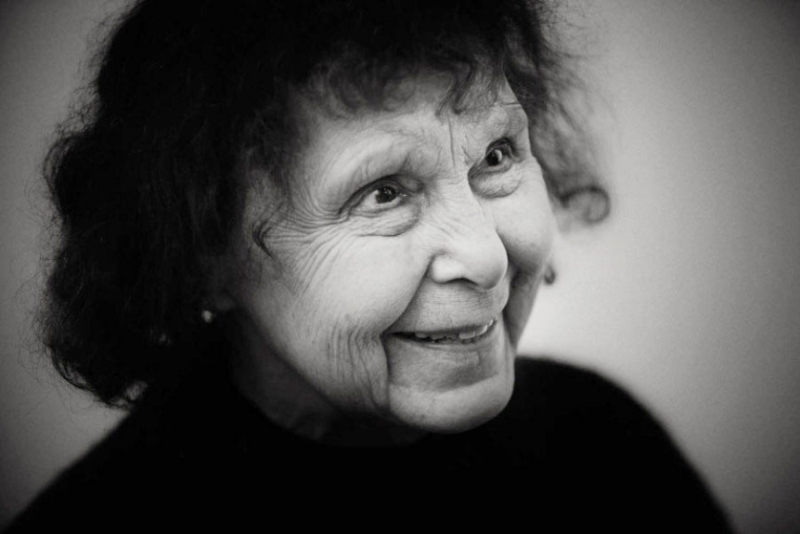
    Above: composer Sofia Gubaidulina

    ~ Author: Oberon

    Sunday May 26th, 2019 matinee – This afternoon’s Merkin Hall concert by musicians from The New York Philharmonic marked the season finale of the Philharmonic Ensembles series. These programs invariably mix new or off-the-beaten-path works with classics from the chamber music repertoire.

    Both in the choice of repertory and in the superb playing of the musicians, today’s concert was one of the finest I’ve ever experienced. The audience seemed enraptured; wonderfully silent and attentive, they created an atmosphere which doubtless inspired the players to outdo themselves. No coughing, no cellphones, no one dropped anything; there were a number of small children in the audience, but none of them made a peep. What an opportunity for blissful immersion in the music!

    An infrequently-performed work by Franz Schubert, Notturno, opened the concert. I greatly enjoyed hearing pianist Hélène Jeanney again, having previously heard her playing Zwilich and Debussy at these concerts. For today’s Schubert, she was joined by Na Sun (violin) and Qiang Tu (cello).

    Found among some of Schubert’s papers after his death, the Notturno is a work of timeless beauty and contemplation, commencing with harmonizing strings which pass through lovely modulations in which the piano sets a pace that feels like a slow waltz. Mlle. Jeanney then takes the lyrical lead with a gracious piano melody as the strings are plucked. In a role reversal, the pianist then assumes the role of a harpist, with gentle accents supporting the melodious strings.

    In a contrasting section, we move into a minor phase; there is a rising intensity and the music becomes quite passionate, with swirling cascades of notes from the keyboard. A sense of longing rises from the violin and cello, underscored by the restless piano. Na Sun and Qiang Tu then beautifully resume the original theme, the harmonies seeming even more poignant now. Following a rather sudden crescendo, the music rises to a calm finish. How poetic the atmosphere our three players conjured: simply sublime.

    The music of Sofia Gubaidulina always intrigues me, and today her Piano Quintet proved fascinating. This quintet is one of her earliest works, written in 1957 while she was still a student at the Moscow Conservatory. Several influences are in play in this quintet: Shostakovich, for sure, but maybe – even more – Prokofiev. And, strangely enough, there are also tinges of the French composers of the Impressionist school along the way. But Gubaidulina manages to weave these threads together convincingly. The quintet  sounds really original.

    Pianist Eric Huebner joined the Philharmonic’s Qianqian Li and Joo Young Oh (violins), Peter Kenote (viola), and Nathan Vickery (cello) for music-making of the highest order.  The composer gives the 2nd violinist a great deal to do in the quintet, and Joo Young Oh (his hair now blonde, and wearing a spiffy golden-tone jacket) played it all superbly.

    The opening Allegro has a rhythmic, fun start, with the music driven by Eric Huebner’s lively playing at the Steinway. Throughout, Mr. Huebner constantly reminds us of why it’s called a “piano quintet”: he’s a wonderful pianist. The music, accented, brings forth string harmonies as the piano comments. The second violin has his first chance to shine; his theme is then taken up by first violinist Quinquin Li. A long piano solo has an almost furtive quality, and then things become insistent and sonically dense. Nathan Vickery’s cello sings over pulsing motifs from the piano. The melody is passed about, then the strings assume a high, shimmering blend before the Allegro’s amusing ending.

    Peter Kenote’s viola takes the lead in the Andante marciale, which soon gets a swagger on. Laying back a bit, there’s a violin passage and the music turns fragmented. The march then picks up again, reminiscent of the its famous counterpart in Prokofiev’s L’Amour des Trois Oranges. The violin plays on high as the music strides away into the distance.

    Yearning strings and the quiet piano mark the start of the Larghetto sensibile, with the violin in a sad song that the cello joins; the piano however seems to hint at a jest. As the viola and 2nd violin blend, there’s a trace of exoticism. Syncopation rises up, becoming insistent until the viola leads us back to some searing harmonies. Mr. Kenote’s viola sounds alone, and Mr. Oh takes his violin on high in a solo passage. Harmonies shift, and Mr. Huebner at the Steinway has a final solo opportunity.

    To a bustling piano rhythm, Mr. Kenote leads off the concluding Presto. The music romps along, with momentary calmings along the way. Mr. Huebner continues to shine in the demanding piano music. After simmering down again, the cello begins to pulse and the cello and viola start buzzing in an ascent to the heights where the quintet finds its finish.

    25E4BB63-9DE4-4BCD-80B9-6AAFB6C0846F

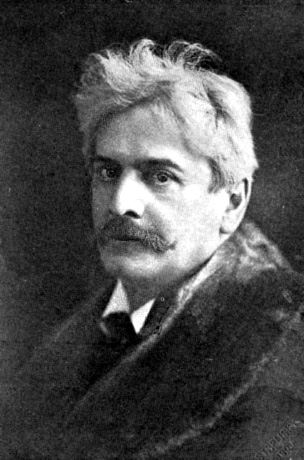
    Above: cellist and composer David Popper

    An unusual work by David Popper, Requiem, was originally composed for three cellos and orchestra; it was later transcribed for three double-basses and piano, which is how it was presented today (apparently there is also an arrangement for three trombones!).

    It’s a terrifically original work, and the three bass players – Blake Hinson, Satoshi Okamoto, and Rion Wentworth – were clearly savouring this opportunity show off what the double-bass can do, whilst pianist Steven Beck played an integral role in this gem of a piece. The doleful depths of the three basses, both in harmonies and in solo passages, continually evoked shivers as the resonances seem to invade the very soul. Passages for solo piano gave contrast; at one point, a trace of the Ave Maria was heard. The basses meanwhile made me think of the profound beauty of the opening of the “Hymn to the Sun” from Mascagni’s Iris.  

    I enjoyed the Popper rarity immensely: kudos to the bassists for bringing it to us in all its richness.

    To close the performance, Piano Trio #2 by Dmitri Shostakovich was given a sterling rendition by Yulia Ziskel (violin), Mr. Vickery (cello), and Jonathan Feldman (piano).

    This was by far the most familiar work on the program, so I put away my note pad and let the music dazzle and move me in this performance by three exceptional artists. Ms. Ziskel is a violinist who always maintains an alluring gleam on her tone; her playing could be at once ethereal and heart-wrenching. Following her poignant solo in the Largo, Mr. Vickery’s cello joined her in music that is achingly beautiful and deeply moving. Their playing reached the heights of expressiveness.

    The dazzling dance of the concluding Allegretto was so thrilling to experience today. Here Mr. Feldman’s brilliance and irresistible vitality were a pure joy, whilst Ms. Ziskel and Mr. Vickery continued to astonish. The quintet ends as the dance gives way to a reprise of the chorale of the Largo, providing a reassuring comfort which we so desperately need in these troubled times.

    As the Shostakovich progressed today, the world around me seemed to vanish; both the music the musicians reached me on a level that is rarely attained. For such moments in life, how can we express our gratitude?

    ~ Oberon

  • Bella Hristova @ Merkin Hall

    Hristova

    Above: violinist Bella Hristova

    ~ Author: Oberon

    Tuesday March 26, 2019 – A thoroughly impressive and enjoyable evening at Merkin Hall, as Young Concert Artists presented violinist Bella Hristova in a recital that mixed the familiar with the rare. A striking Bulgarian-born beauty, Ms. Hristova had a perfect colleague in pianist Anna Polonsky; together, the two women evoked a shouting, standing ovation at the end of their program. 

    Glamorously gowned in black, Ms. Hristova seemed to have stepped off the fashion runway and onto the Merkin stage. The abundant richness of her tone – which maintains its allure throughout the dynamic range and even at speed-of-light tempos – is matched to a mastery of technique and a depth of emotion that makes her a paragon among violinists of the day. 

    Mlles. Hristova and Polonsky opened their imaginative program with Olivier Messiaen’s Theme and Variations, a work which deserves wider exposure. Composed in 1932 – nearly a decade before the composer’s monumental Quartet for the End of Time – the opening Thème has a dreamlike quality, with a sustained violin line and a marvelous role for the piano. The ensuing five variations bring a buildup of speed, tension, and drama which climax with the fourth – marked Vif et passionné – before calm descends in the final Tres modéré, with its sustained ending. At the Steinway, Ms. Polonsky brought a wonderful forward impetus as the first four variations progressed, whilst Ms. Hristova dispatched the swift passages and some lively trills with élan. The Vif et passionné movement found the violinist playing on high over accents from the keyboard: the music reaches a grand passion indeed. The return to a more peaceful mood was finely evoked by the two musicians. Insistent applause drew them back for a bow, the pianist’s red shoes an added delight to the evening’s visual aspects.

    In a violin ‘test piece’ sans pareil, Ms. Hristova dazzled the crowd with Ellen Taafe Zwilich’s Fantasy for solo violin. And a test piece it literally is, having been written by Ms. Zwilich as a compulsory work for the Indianapolis Violin Competition. From a passionate start, Ms. Hristova soars on high; later the music percolates, and there’s a touch of the blues. Stretches of coloratura were effortlessly dispatched, some of them extremely fast…and delicate. The music rises to a shining softness, then morphs into an agitato that develops into a rocking sway. Simmering down, Ms. Hristova plays high and sublime before the Fantasy‘s brilliant ending. The audience went wild for this exciting piece, again summoning Ms. Hristova back to bask in a wave of affection. I was hoping that the composer might be among us, so we could express our admiration. 

    There followed a thrilling rendering of the beloved Partita no. 2 in D-minor, BWV 1004, by J S Bach. Ms. Hristova was not only in total command of every aspect of this music, she brought a distinctive glow to it that made it seem ever fresh and vital. The thoughtful melody of the Allemande showed her radiant tone, pristine articulation, lovely phrasing and dynamics. What more could we ask? In the lively dance of the Courante, Ms. Hristova’s flowing musicality carried us along. The melancholy Sarabande was beautifully played, with exquisite touches, and in the Gigue, the reams of fiorature – played very fast – had true clarity, further enhanced by dynamic nuance. An astonishing display of virtuosity…a real treat!

    In the famous Chaconne which concludes the Partita, Ms. Hristova’s passionate playing – and her inspired control as she shaped her vision of this masterpiece – made me wish it could go on and on. The audience, having been held under her spell throughout, gave the violinist a fervent ovation, so eminently deserved.

    Annapiano

    Above: pianist Anna Polonsky

    Arnold Schönberg’s Phantasy for violin and piano, Op. 47, is a remarkable piece which I’d never heard before. After a jagged start, quiet settles briefly over a misterioso passage for the piano; this peace is broken by slashes from Ms. Hristova’s violin, and her isolated notes, plucked from the air. Music of near violence alternates with moments of gentle, somewhat eerie lyricism.

    With Ms. Polonsky playing twinkling notes in the upper end of the keybord, Ms. Hristova joins on the heights. After a whimsical passage, there’s sudden drama, followed by some sneaky music which then turns quite perky. Again, the lyric and the spiky take turns, becoming intense. A pulsating violin note creates a buzz. The Phantasy ends suddenly. 

    Olde World richness of musicality and grace marked evening’s final offering: Johannes Brahms’ Sonata no. 3 in D-minor, Op. 108. Of this familiar piece, I need only say that both violinist and pianist played with overwhelming tenderness and compelling beauty of sound. The hall felt like a haven for those of us seeking solace in a darkening world; for such moments of hope and contentment – however fleeting – I feel a deep gratitude.

    As the two artists beamingly acknowledged the wildly enthusiastic applause of the standing audience, there was no question that an encore was in demand. With sublimely poised lyricism, the players offered a Bach Largo that felt like a benediction, eliciting murmurs of admiration as the music came to an end.

    ~ Oberon

  • Philharmonic Ensembles: Bach/Debussy/Fauré

    Kuanchengluwn

    Above: violinist Kuan Cheng Lu of The New York Philharmonic

    ~ Author: Oberon

    Sunday February 17th, 2019 – Artists of The New York Philharmonic performing works by Bach, Debussy, and Fauré at Merkin Hall. This was originally going to be an all-French program, but somewhere along the way, Arthur Honegger’s Sonatine for Violin and Cello – which I was very curious to hear – turned into Bach’s Trio Sonata in C-major, BWV 529.

    The switch soon became irrelevant, as the Bach was vividly performed by Kuan Cheng Lu (violin), Robert Rhinehart (viola), and David J. Grossman (bass). The opening Allegro was dynamically played, with some sustained bass notes giving the music an anchor. To the rather forlorn Largo, Kuan Cheng Lu brought lovely subtleties of phrase; this movement – without a formal ending – leads immediately into the lively concluding Allegro.

    M_srcset.php

    Claude Debussy’s Piano Trio followed, with guest artist Hélène Jeanney (above) at the Steinway; violinist Kuan Cheng Lu (the only artist to appear twice this afternoon) and cellist Qiang Tu joined her for this work, which was composed during the Summer of 1880 in Fiesole, Italy, when Debussy was 18 years old. At the time, he was the musical traveling companion and maître de musique of Nadezhda von Meck, Tchaikovsky’s generous patroness. Most of the autograph material for this trio was thought to have been lost, and was only discovered a century later, in 1982, among the papers of Debussy’s pupil Maurice Dumesnil.

    If we were to hear this music without knowing who wrote it, we’d never guess it’s by Debussy; the young composer had yet to find his own voice. This trio is entertaining salon music, which might be mistaken for Bizet or Delibes. For all that, just hearing it gives a lot of pleasure – especially when played as beautifully as it was today.

    Ms. Jeanney’s playing gives the music a Springtime freshness; the opening Andantino con molto allegro will later turn moody, even passionate. But overall, loveliness prevails. A song-like melody from Mr. Tu’s cello is taken up in turn by Mr. Lu’s violin: both these artists display smooth, savourable tone. Things turn rhapsodic, and the pianist’s expressive playing carries us along.

    The ensuing Scherzo opens with pizzicati from the strings and the piano playing a dancing tune that evoked fanciful marionettes with its wit and sense of irony. Charm is abundant here. Then on to the Andante espressivo, where the cellist again inaugurates a theme that is passed on to the violin. Ms. Jeanney’s playing is so delightful here, full of grace and colour. The blend of the three players becomes quite intense as the music builds, only to recede into another violin passage. The movement ends in a blissful state.

    The final Appassionato commences in a minor-key, agitated state. Things calm to a passage of melodious strings and rippling piano. An interlude of cello pizzicati followed by a jaunty passage lead on to fair finish; the musicians were robustly applauded by the packed house.

    Press-6878

    Following the interval, Gabriel Fauré’s Piano Quartet in G-minor brought forth another excellent pianist: Banjamin Hochman (above). He was joined by Quan Ge (violin), Dorian Rence (viola), and Ru-Pei Yeh (cello).
     
    The first movement, Allegro molto moderato, has a sense of urgency. It begins passionately, almost grandly; a unison melody for the strings is offset by the turbulent piano. Ms. Rence’s autumn-hued viola takes up a sustained melody that is passed on to Ms. Ge’s violin; the piano continues to provide restless undercurrents. Ru-Pei Yeh’s beauteous cello sound blends with Ms. Rence’s viola, then Ms. Ge’s violin sings a silken theme over the shimmering piano. The music turns rapturous. 
     
    The Scherzo features animated passages for the piano; the strings are plucked before moving on to a unison passage. The pianist alternates strong accents with flowing scales. For the Adagio non troppo, Fauré found inspiration in his memory of hearing distant church bells during his childhood. The music has the feel of a luxuriant daydream, the viola playing a pensive melody. The blending of the four instruments here was deeply affecting. 
     
    The closing Allegro molto again finds the piano in a rather agitated state as the strings play a deep, swaying theme. Various flickers of melody gleam and swirl about from player to player, the viola and cello in a darkish mood.
     
    At the end, the audience saluted the players with well-deserved cheers. We met Ms. Jeanney briefly, and are keen now to hear her in recital.
     
    ~ Oberon