Tag: Merkin Hall

  • The Search for a Symphony @ Merkin Hall

    Brahms

    Above: Johannes Brahms

    ~ Author: Oberon

    Tuesday June 19th, 2018 – The last concert the St Luke’s Chamber Ensemble‘s series, Facets of Brahms, at Merkin Hall brought us Andy Stein’s octet-arrangement of the Beethoven Symphony No. 2 in D Major, Op. 36, and Alan Boustead’s nonet-reconstruction of Johannes Brahms’s Serenade No. 1 in D Major, Op. 11, which – in its orchestrated form – might have been designated as the composer’s first symphony.

    Brahms seems to have been hesitant to attempt composing a symphony in large part because he could hear “the footsteps of a giant” – Beethoven – walking behind him. Brahms’s anxiety meant that it wasn’t until 1876 that his 1st symphony premiered, some 14 years after he’d made preliminary sketches.

    This evening, the St. Luke’s Chamber Ensemble opened with Beethoven 2nd Symphony in an octet realization conceived by Andy Stein. Two violins, one viola, a cello, a bass, and clarinet, bassoon, and horn made up the ensemble. Their full, rich playing did not give a feeling of a ‘reduction’ in any sense of the word. Instead, it was a very pleasing, absorbing experience; and Mr. Klein was called to the stage for a bow, warmly greeted by the crowd.  

    The 2nd opens with a slow introduction which in a flash turns into a lively Allegro; this is ‘glad music’, rich in melodies. In the Larghetto, Beethoven churns out cordial, lyrical themes. The music summons up thoughts of Springtime, flowering meadows, and blue skies. The Scherzo shows the composer’s sense of humour, which to me seems even more evident in the witty opening of the final Allegro molto, which seems to have a touch of sarcasm.

    248630_web_Jon-Manasse

    Above: Jon Manasse

    In tonight’s ensemble, Jon Manasse’s clarinet playing made a superb impression: I have heard him play often in recent seasons and he makes the music so alive, with his fragrant tone and attention to dynamic detail. His subtle playing in the final movement gave me a smile.  Of equal note was the sound of Marc Goldberg’s mellow bassoon. Violinist Krista Bennion Feeney, so fine in last week’s concert, impressed again, as did bassist John Feeney.

    The Brahms 1st Serenade is in six movements. The composer noted it as a ‘Sinfonie-Serenade‘, later enlarging it for full orchestra at the urging of Clara Schumann. Alan Boustead gives the music back to its chamber roots in his excellent rendering.

    Jesse Mills was the principal violinist in this work tonight, with Ms. Bennion Feeney, violist David Cerutti, cellist Daire FitzGerald along with Mr. Feeney’s bass filling out the string contingent. Joseph Anderer provided warm-toned horn-playing, and clarinetist Dean LeBlanc joined Mr. Manasse. Elizabeth Mann’s flute sang forth with serene, appealing tone.

    The first three movements of this Serenade each felt a bit long tonight, as if the composer wanted to keep presenting his admittedly lovely themes to us again and again. By the fourth movement, a double Menuetto featuring the winds, Brahms was showing more economy. Ms. Fitzgerald and Mr. Anderer made the most of the ‘hunting call’ motif of the Scherzo, whilst Ms. Mann’s playing in the Rondo~Allegro was very pretty indeed. And throughout, Mr. Manasse continued to display the artistry that makes him such a valuable player on the Gotham scene. 

    ~ Oberon

  • Philharmonic Ensembles|Reinecke Rules!

    Reinecke-770x470

    Above: composer Carl Reinecke (1824 – 1910)

    ~ Author: Oberon

    Sunday May 27th, 2018 – The last in this season’s Philharmonic Ensembles series at Merkin Hall. These concerts, in which artists from the New York Philharmonic perform masterpieces, rarities, and contemporary works from the chamber music repertory, are always highly enjoyable. Today’s expertly-devised program introduced me to the delightful music of Carl Reinecke, and works by Vivaldi, Penderecki, and Brahms were also superbly played.

    Harpsichordist Paolo Bordignon introduced the opening work, Vivaldi’s Trio Sonata, Op.1, No. 3, in which he was joined by Duoming Ba (violin), Peter Kenote (viola) and Satoshi Okamoto (bass). Hearing this music on a gloomy day, following a distressing week, was a perfect palliative. In this four-movement work (the third being very brief), both the playing and the communication between the musicians drew us immediately into the elegant and lively world of Vivaldi, far from the madding crowds and disconcerting headlines of daily life.

    I was particularly intrigued by the beautiful instrument Mr. Okamoto was playing with such agility and charm. You can see it, and hear him playing, in this brief film.

    In a striking contrast, we next had Krzysztof Penderecki’s Duo concertante for violin and double bass, which was composed in 2010 on a commission from violinist Anne-Sophie Mutter. It was played this afternoon by Kuan Cheng Lu, violin, and Rion Wentworth, bass. The composer devised the piece as a sort of conversation between the two instruments; Ms. Mutter described it as two voices “evading each other”: while one soloist is developing a musical theme, the other falls nearly silent.

    With their expert timing, and a clear sense of enjoyment in what they were doing, the two musicians gave a performance full of vitality, precision, and wit. Among the words I jotted down along the way: agitation, brooding, mini-scherzo, jazzy bass, plodding, shimmering, almost a march, soft and high, ultra-sustained bass note, pensive violin, a dance, tapping and stamping at the end. The audience were clearly much taken with this piece, and the playing of it: loud, enthusiastic applause followed.

    The afternoon provided an opportunity to make the acquaintance of a composer new to me, Carl Reinecke. How his music has eluded me until now is inexplicable. He was a prolific composer of operas, symphonies, concertos, and chamber music, as well as a highly regarded conductor, pianist, and pedagogue. Franz Liszt hired Reinecke as piano teacher for his daughter, Cosima, who later married Richard Wagner. In 1904, at the age of 80, Reinecke made recordings of seven works playing on a piano roll; thus he was the earliest-born pianist to have his playing preserved in any format.

    Reinecke’s Trio for oboe, horn, and piano was composed in 1886. The Philharmonic’s principal oboist Liang Wang was joined by Howard Wall, horn, with Zhen Chen at the piano for today’s performance of this work, steeped in the Romantic spirit. This is music that’s terrifically appealing. 

    The piece also moved me on a personal level, for my sister played oboe and I the horn back in our youthful years in the little town. The sounds of these two instruments today, played with such tonal richness and impeccable musicality by Mssrs. Wang and Wall today, pleased me deeply.

    The composer’s cordial theme for the opening Allegro moderato must have greatly pleased the composer, for he repeats it over and over. Gorgeously played by Mr. Wang, the melody has an exotic feel. The horn joins and the music expands. A romance-tinged piano solo brings Mr. Zhen into the mix, his playing colourful and alert. A great horn theme, abundantly toneful in Mr. Wall’s ‘singing’ of it, leads to a grand passage. The voices entwine, and after a martial bit, melodies flow on with increased drama. A da capo develops a sense of urgency, which eventually subsides.

    The Scherzo, Molto vivace has charm of its own; it’s witty and bubbly, and gets a five-start rating as scherzi go. The players relished every turn of phrase, with the pianist having a lot to do. This scherzo has a sudden end; you could almost hear the audience smiling.  

    The melodic warmth of the cavatina-like Adagio brought forth a rich horn theme upon which Mr. Wall lavished the kind of tonal plushness that turned a frustrated horn player like me green with envy. And he has such prodigious reserves of breath at his command. When Mr. Wang joined, a fabulous tone-fest filled the hall. More sonic glamour from Mr. Wall in a glorious mix with the piano followed; sumptuous harmonies abounded as the movement came to its conclusion.  

    In the opening passages of the Rondo finale, Mr. Zhen had just the right feeling for what sounds like a forerunner of the piano rag. The music, full of mirth and magic, gave all three players abundant opportunity to shine, singly and as a collective. The audience response was heartfelt, as the music and playing merited. This was one of the great musical treats of the season which is now nearing its end.

    Sustaining the Romantic aura of the Reinecke, the concert concluded with the Piano Trio No. 1 of Johannes Brahms, played by Hannah Choi, violin, Patrick Jee, cello, and Steven Beck, piano. Mr. Jee spoke with great affection of this music, which clearly means so much to him. When the performance ended, he seemed in a highly emotional state – a state reflected in his rich, resonant playing. 

    The work begins pensively. After a brief piano introduction comes the marvelous cello solo theme of which Mr. Jee had spoken. His playing of it reflected what the music means to him: sheer beauty. Ms. Choi and Mr. Back prolonged the atmosphere which the cellist had established, savouring the themes and reveling in the the blendings of their voices. This long first movement, with its achingly lovely melodies and modulations, gave a great deal of pleasure.

    The Scherzo made me think of hunters on the chase; it becomes exuberant before being overtaken by an almost pastoral theme which becomes quite grand before a da capo takes us back to the hunt.

    The Adagio is like a meditative dream from which we don’t want to awaken. Woven in are luminous solo passages for each of the three instruments whilst in blended passages their tonal appeal was most affecting.

    The final Allegro is waltzy and minorish, a perfect opportunity to cease note-taking and just enjoy watching Ms. Choi and Mssrs. Jee and Beck playing their way thru this melodious music. How can we thank such artists? Only by standing and cheering.

    Emerging from the hall, the wind had kicked up – brisk and refreshing. The afterglow of this concert is strong and lasting.

    ~ Oberon

  • YCA Presents Samuel Hasselhorn

    SamuelHasselhorn

    Wednesday February 15th, 2017 – Baritone Samuel Hasselhorn (above) presented by Young Concert Artists in recital at Merkin Hall. With Renate Rohlfing at the Steinway, the evening was a definitive success for both the tall singer and his lovely, expressive pianist. The imaginative program, which included both the familiar and the rare, was both beautifully sung and emotionally engaging.

    In my 50+ years of recital-going, baritones have invariably giving me lasting memories: Wolfgang Holzmair, Dmitri Hvorstovsky, the two Thomases (Allen and Hampson), Bo Skovhus, Matthias Goerne, Sanford Sylvan, Kurt Ollmann, Christopheren Nomura, Randall Scarlata, Keith Phares, John Michael Moore, David Won, Shenyang, Thomas Cannon – their voices echo in the mind and heart. Mr. Hasselhorn now joins that distinguished list.

    In their opening Schumann set, Mr. Hasselhorn and Ms. Rohlfing explored a wide range of moods: from the urgency of Tragödie I and the pensive resignation of Tragödie II, they progressed to the vivid narrative of Belsazar (Mr. Hasselhorn operatically powerful, with Ms. Rohlfing excelling), and the rather unusual Mein wagen rollet langsam. The effect of the defeat of Napoleon on two of his faithful foot-soldiers was marvelously depicted in song by Mr. Hasselhorn in Die beiden Grenadiere, with its sounding of the Marseillaise. Passionate desire fills Lehn’ deine Wang, and the contrasts of poetic and turbulent love were superbly expressed by baritone and pianist in Du bist wie eine Blume and Es leuchtet meine liebe, the latter ending with Ms. Rohlfing’s finely-played postlude.

    In charmingly accented and very clear English, Mr. Hasselhorn delighted us with Britten’s ironic Oliver Cromwell and The foggy, foggy dew. The singer’s exceptional control was manifested in his poignant rendering of O waly, waly with Ms. Rohlfing giving tender support. A long comic Britten narrative, The Crocodile, ended the evening’s first half.

    Addressing the audience before commencing the evening’s second half, Mr. Hasselhorn spoke of the woes of our planet today, thrown into further chaos by recent events. The plight of refugees worldwide, and the threats posed by war and terrorism to a hopeful humanity prompted the baritone to devise a set of works especially meaningful to him on a personal level; these he now offered to us with singing of real sincerity and depth of feeling.

    The juxtaposition of Hugo Wolf’s madly dramatic Die Feuerreiter (‘The Fireman’) and Franz Schubert’s haunting Litanei auf das Allerseelen (‘Litany for All-Saints’) was a masterstroke of programming beyond anything I’ve ever experienced in a recital. The fierceness and wild desperation of the Wolf was memorably contrasted with the sublime prayer for peace penned by Schubert. Mr. Hasselhorn and Ms. Rohlfing were simply thrilling: the pianist in a virtuoso rendering of the Wolf whilst the singer’s urgency in the narrative reached a feverish level. By contrast, the Schubert was heart-rending in its lyricism and spirituality. By taking only a brief pause between these two, our two artists cast a veritable spell over the house.

    Renate-Rohlfing

    Above: pianist Renate Rohlfing

    Three Poulenc songs, reflections on the Nazi occupation of Paris, showed the Hasselhorn/Rohlfing partnership at its most persuasive. The pre-dawn removal of (fictional) freedom-fighter André Platard in La disparu, a prayer to the Virgin in Priez pour pays (the pianist truly sublime here), and the return from the front of an exhausted sergeant in Le retour de sergent made a triptych – painted in the inimitable Poulenc style – which perfectly encapsulates a specific time and place. 

    The singer and pianist then sent chills thru me with the devastating emotional power of their performance of Schubert’s Erlkönig. Mr. Hasselhorn summoned up the three contrasting characters of the narrative with subtle rather than overly-theatrical variants of tone-colour – simply splendid singing! – and Ms. Rohlfing gave the piano’s role, with its contrast of relentlessness, desperation, and cruel seduction, full rein. A luminously intense performance.

    In the brief Wanderers Nachtlied II, poetry seeped gently into the air from Ms. Rohlfing’s keyboard, to be handsomely taken up by Mr. Hasselhorn like a benediction. Lingering on the heights of expressiveness, singer and pianist brought me to tears with the poignant song of Der blinde kind (‘The Blind Boy’), a youth who refuses to wallow in self-pity over his affliction. Mr. Hasselhorn’s gestures, stance, and expressive features portrayed the boy’s physical and emotional state movingly, evoking understanding rather than pity: such a touching song, superbly rendered.

    Schubert’s last song, Die taubenpost (‘The carrier-pigeon’), seems like a simple avowal of young love as the poet sends his trusty pigeon bearing messages to his beloved. The pigeon’s name Sehnsucht – that magical word for ‘longing’ – and he is the messenger of fidelity. For those of us who love from afar, the song takes on a sweet depth of meaning. True to all that has gone before, Mr. Hasselhorn and Ms. Rohlfing were perfect here. Their encore, the blessed An die musik (‘To Music’), served as a summarizing of this exceptional evening of song.

    I shall hope to hear Mr. Hasselhorn here in New York City again soon; how I should love to hear his voice in Schumann’s Dichterliebe! It also seems to me that there are many operatic roles in which he could shine at The Met. For this evening, I again express gratitude to Susan Wadsworth and Young Concert Artists for bringing us another in their series of exemplary recitals.

  • NY Philharmonic Ensembles: International Feast

    Liang

    Above: The New York Philharmonic’s principal oboist Liang Wang

    Sunday November 20th, 2016 – Music by French, Russian, German, and English composers was on offer this afternoon as a stellar ensemble of players from The New York Philharmonic took the stage at Merkin Hall. The group included some of the orchestra’s principals; the playing was divine, and all four works on the program were new to me.

    The matinee opened with the String Trio of Jean Françaix, composed in 1933. Françaix was a child prodigy, writing his first music at age 6 and being published at age 10. His String Trio exemplifies the Neo-classical style which was enjoying favor at the time he wrote it; it consists of four movements, two of which are played with the strings muted. The excellent players – Shanshan Yao (violin), Peter Kenote (viola), and Qiang Tu (cello) – were clearly having a good time with this music, and their enjoyment was transmitted to the audience, who seemed quite taken with the piece.

    The opening Allegretto vivo is a witty conversation among the three players; it has a gentle sway and a touch of jazz. With the musical lines in a state of perpetual motion, there is a sense of delicate charm in play. The following Scherzo – un-muted – is a sprightly dance played with a breezy ‘je ne sais quoi‘ quality. Plucking motifs and changes of pace eventually lead to a congenial if quirky waltz. The mutes are on for the Andante, which commences with wistful harmonies. Ms. Yao leads off with a sweet/sad song, taken up by Qiang Tu’s savorable cello and then by Mr. Kenote’s warm-toned viola: so lovely to hear each voice in succession. In a return to C-major, with the mutes set aside again, the lively start of the finale has an effervescent feeling (Mr. Kenote, in his opening remarks, spoke of a cancan). Things slow down a bit, with the violin playing over a plucked accompaniment. The pace then reaches sizzling speed, subsiding to lethargy before re-bounding to briskness and an actual march before vanishing on a surprisingly soft pizzicato. Such a fun piece! 

    Living in Paris in 1924, Sergei Prokofiev accepted a commission to compose a ballet for a touring  troupe; the director asked for a short work for five instruments with a simple plot revolving around life with the circus. Prokofiev produced a quintet for the players the director had on hand: oboe, clarinet, violin, viola, and double bass. The ballet’s title was Trapeze. Since assembling this particular complement of instruments isn’t always easy, the work is not often performed; hearing it today made me wonder what the choreography would have been like.

    Drawing from the Philharmonic roster, the instrumentation was handily (and expertly) filled out by a lively group of players, led by Anna Rabinova (violin), with Vivek Kamath (viola), Blake Hinson (bass – he also introduced the work) and wind virtuosos Sherry Sylar (oboe) and Pascual Martinez Forteza (clarinet).

    The music definitely has a ‘circus’ atmosphere. A feeling of urban bustle with a slightly Mid-Eastern tinge pervades the opening movement, with oboe and clarinet vying phrase for phrase; the viola and then the violin join the fun, and the bass induces a lumbering motif. The music stalls, and turns pensive before bursting into a fast, flashy dance with violin screeching at us. The striding bass returns us to the opening oboe theme.

    In the second movement, the bass growls at us and there’s an off-kilter feeling. The clarinet moves from burbling sounds to straightforward song; discord resolves into a major chord. The third movement, with a steady pacing, finds the clarinet and oboe trading sound-bytes; a swirling turbulence ensues.

    In the fourth movement, an Adagio, the oboe sounds a bit ominous; the clarinet trills, the violin shivers, the bass creeps about. A violin melody melds into a dense tutti, with the oboe prominent. The plucking bass introduces the light-hearted fifth movement, with ironic gestures from the clarinet and oboe. The strings pluck and slash before Mr. Forteza’s clarinet polishes things off in fine style.

    The final Andantino is whimsically dirge-like; there are clarinet cascades and the oboe gets insistent; the tread of the bass signals a minuet reprise. Suddenly alarms sound, and the piece rumbles raucously to a sudden end.

    Several pages of Beethoven’s Quintet in E-flat major (originally penned in 1793) had gone missing by the time Leopold Zellner took up the task of ‘resuscitating’ it in 1862. Zellner relied strictly on the material evidence he found in Beethoven’s drafts in preparing a performing edition.

    This work utilizes another off-beat assemblage of instruments: three horns, oboe, and bassoon. The horns – Richard Deane, R Allen Spanjer, and Howard Wall – enter in turn; their music veers from jaunty to Autumnal mellowness. As the work progressed, it became evident that the oboe was taking the most prominent position in terms of melodic opportunity: Liang Wang, the Philharmonic’s principal oboist, demonstrated both his striking virtuosity and his coloristic phrasing throughout the piece. Kim Laskowski’s bassoon seemed mostly limited to echo effects and to joining the horns; I kept hoping for a paragraph from her, but only a few phrases peeked thru the full-bodied sound of the horns.

    A horn chorale initiates the Adagio maestoso, with the oboe again very much to the fore – and so attractively played by Mr. Wang. The concluding Minuetto begins brightly and brings us some really rich horn blends. Mr. Wang’s playing was exceptional, and it was a real pleasure to watch and hear him play his extended role here this afternoon, after so often enjoying his solo moments in the big repertory at Geffen Hall.

    The Philharmonic’s principal horn, Philip Myers, introduced the concluding work – Ralph Vaughan Williams’ D-major Quintet – with a genuinely amusing speech in which he lamented the relative scarcity of chamber works featuring the horn and spoke of how he seized on the opportunity to play the Vaughan Williams today…which he did, to perfection.

    Ralph Vaughan Williams’ Quintet in D-major had been withdrawn from circulation by the composer. He instructed his first wife not to publish it, but his second wife went ahead and did so, and thus we have this unusual work to enjoy today, more than a century after its premiere.

    A deluxe quintet of Philharmonic artists gathered to perform the piece: alongside the resplendent sound of Mr. Myers’ horn, principal Anthony McGill’s clarinet playing was simply dazzling; violinist Lisa Kim (violin) and cellist Eileen Moon (my artistic crush) seized on the string passages to fine effect, whilst John Novacek underscored the ensemble beautifully from the keyboard, and relished his solo moments with some very cordial playing.

    The four-movement quintet opens with an Allegro moderato initiated by clarinet and piano. A rolling theme for the ensemble sets up a round-robin of voices: piano, violin, clarinet, a horn summons, and cello speak up in turn. Things turn big and emphatic, and Phil Myers’ lush playing here was really grand, with Mr. Novacek ideally supportive. Cello, violin, and clarinet have another say before a shimmering motif from Mr. Novacek and a sustained phrase from Mr. Myers bring the movement to a close.

    The second movement takes the form of an intermezzo; it has the feel of a Viennese waltz. Ms. Moon’s cello blends with the piano; later, Myers and McGill play in unison as the music sails on, with the piano taking up the waltz while Ms. Kim plays elegantly, incorporating a brief cadenza.

    The velvety sound of the Myers horn sets up the Andantino, with Mr. Novacek’s evocative playing and another lovely passage from Ms. Kim leading into a melodic outpouring from all the voices. Fanfare-like motifs sound forth, and then a rich blending of timbres to savor. The horn plays over a rolling cello figure, and the music turns quite grand. Clarinet and violin descend, and the horn and piano glow gorgeously in a nostalgic theme.

    The final Allegro molto induces toe-tapping from note one. Big horn-playing reigns, the clarinet and violin lead a merry dance, and a McGill cadenza with a perky trill delights us before the quintet reaches its boisterous end.

    The Repertory:

    FRANÇAIX – String Trio
    PROKOFIEV – Quintet in G minor for Oboe, Clarinet, Violin, Viola, and Double Bass
    BEETHOVEN – Quintet in E-flat major for Oboe, Three Horns, and Bassoon
    VAUGHAN WILLIAMS – Quintet in D major for Clarinet, Horn, Violin, Cello, and Piano

    The Participating Artists:

    Richard Deane, horn

    Pascual Martínez Forteza, clarinet

    Blake Hinson, bass

    Vivek Kamath, viola

    Peter Kenote, viola

    Lisa Kim, violin

    Kim Laskowski, bassoon

    Anthony McGill, clarinet

    Eileen Moon, cello

    Philip Myers, horn

    John Novacek, piano

    Anna Rabinova, violin

    R. Allen Spanjer, horn

    Sherry Sylar, oboe

    Qiang Tu, cello

    Howard Wall, horn

    Liang Wang, oboe

    Shanshan Yao, violin

  • Recital: Violinist In Mo Yang

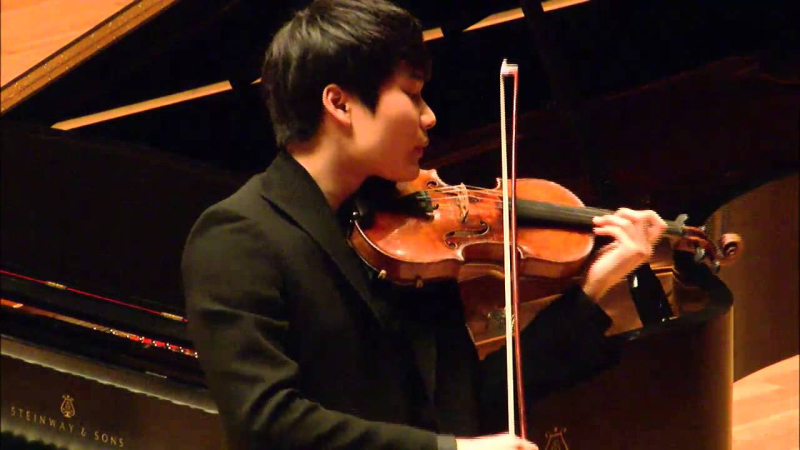
    Maxresdefaulta

    Above: violinist In Mo Yang

    Tuesday September 27th, 2016 – In Mo Yang, a young violinist of Korean heritage, in recital with pianist Renana Gutman at Merkin Hall.

    It’s only rarely that I do something really spontaneous; my schedule is always so full (and commitments made so far in advance) that there are seldom any opportunities to do things that haven’t been planned weeks in advance. But as I was researching something on the Merkin Hall website, I noticed a violin recital listed for this afternoon. The repertory looked very inviting and there were still a few tickets available, so I headed downtown. It was an impressive and thoroughly enjoyable concert in every regard.

    In Mo Yang is the First Prize Winner of the Concert Artists Guild Competition. In 2015, he also earned First Prize at the 54th International Violin Competition “Premio Paganini” in Genoa, Italy, marking the first time since 2006 that the Paganini Competition jury has awarded the top prize.

    In Mo Yong, in addition to a very impressive technique, has the gift of playing from the heart. After only a few measures of the opening Bach, I knew I was in the presence of a musician of the finest calibre; by the end of the recital, his name was hovering in my highest echelon of favorite musicians.

    The forlorn beauty of the opening theme of the Adagio of Bach’s solo Violin Sonata No.1 in G minor immediately revealed the key elements of In Mo Yong’s playing: radiant and sweetly resonant tone, a mastery of dynamic finesse, innate expressiveness, and seamless phrasing. In the second movement, a minor-key dance, the violinist produced cascades of notes with admirable clarity. A sense of grace tinged with sadness marked his playing of the Siciliana, and in the final Presto, he reeled off reams of coloratura, perfectly defined and beautifully articulated, creating a magical atmosphere.

    Pianist Renana Gutman then joined In Mo Yang for the violin sonata of Leoš Janáček. Ms. Gutman’s poised musicality and her attentiveness to details of phrasing were a great boon for the young violinist.

    As In Mo Yang noted in his remarks, the flow of lyricism in this Janáček work is constantly interrupted by injections of turbulence or wit. There was a wondrous immediacy to the playing of the two musicians, drawing us in to the many felicities of this quite extraordinary piece. The opening Con moto found the violinist’s passion well met by the pianist’s sense of rapture, right from the outset. In the Ballada that follows, the shimmering piano sets off the singing violin. Sustained beauty of tone as the music’s passion soars, then sinks into a delicate reverie. In Mo Yang ended this movement on an exquisitely sustained, evaporating high note.

    In the Allegretto, the music is agitated and pensive by turns; these the mood swings were well-captured by our two players. The concluding Adagio begins hesitantly; then an enchanting melody looms up, only to stall and then re-start. A vibrant theme over glimmering piano leads to alternating passages of agitation and calm before the piece reaches its hushed ending. Splendid playing from In Mo Yang and Ms. Gutman: a really impressive performance.

    Karol Szymanowski’s setting of three ‘Paganini’ caprices followed the interval. The first, in D-major, features a high, sweet melody which gives way to an energetic passage before returning to its initial mood. In Mo Yang’s lingering final note was a moment of pure poetry. The second caprice, in A-major, begins in a state of musical density. The violin ascends to a high, aching theme which increases in passion; here In Mo Yang’s mastery of control in the stratospheric register was so evocative. The most familiar of the three caprices, the A-minor, is loaded at first with brisk, swirling motifs. Its sparkle and ironic wit suddenly go deep and mysterious, then things get playful, and then dreamy. This traversal of moods was finely differentiated by the two musicians. After some dazzlingly ping-y plucking from the violin, there’s a false ending; In Mo Yang then ascends again to the high, hazy glow of his upper range before charging on with Ms. Gutman to the grand finale.

    All of the qualities that make Felix Mendelssohn one of my favorite composers were evidenced in his violin sonata in F major, written and premiered in 1838. It was not published in the composer’s lifetime, but was ‘rescued’ in 1953 by Yehudi Menuhin, who accordingly tinkered with it before having it published.

    After a gallant piano introduction opens the Allegro vivace, a pulsing motif develops as the piano and violin alternately switch from melody to rhythm. Charming variants of major and minor keys – and a lovely sense of Mendelssohnian flow – gave me a lot of listening pleasure.

    Ms. Gutman sounds a low song which the violin takes up as the central Adagio casts its spell. Such expressive playing here; and then the music sails forward. And yet again, the heart-rending quality of In Mo Yang’s upper-range playing was a marvel.

    Joyous flights of fancy abound in the concluding Assai vivace, the players shifting effortlessly between liveliness and subtlety. With stunning dexterity, In Mo Yang reveled in high-velocity playing here that filled me with smiling admiration. 

    Sheer gorgeousness to end the afternoon: a Karl Schumann romance was offered as an encore: exceptional playing with a high emotional value.

  • Philharmonic Ensembles: In A Fishbowl

    Martinu
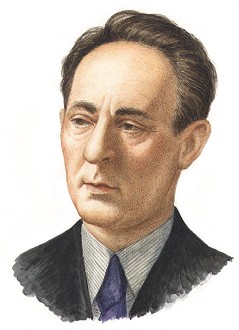
    Above: composer Bohuslav Martinů

    Sunday January 17th, 2016 matinee – Yet another highly enjoyable concert in the Philharmonic Ensembles series at Merkin Hall: artists from The New York Philharmonic performing chamber music in an intimate setting.

    These days, more than ever, I am looking to music to lift my spirits and help alleviate the symptoms of weltschmerz that threaten to overwhelm me. Feeling particularly low this morning, part of me wanted simply to stay home; but I headed down to Merkin and just a few moments into the opening Martinů, the dark pall began to lift. By the end of the concert, I felt fortified and ready to face another week. 

    MARTINŮ  –  Duo No. 1 for Violin and Cello, H.157
    Joo Young Oh, violin; Alexei Yupanqui Gonzales, cello

    The afternoon’s opening work was composed by Bohuslav Martinů in 1927 while he was living in Paris, studying with composer Albert Roussel. It’s a delightful two-movement piece – the first soulful, the second a lively dance. Superbly performed by violinist Joo Young Oh and cellist Alexei Yupanqui Gonzales, the slow movement impelled my rejuvenation process after just a few bars with its heartfelt melodies and lovely meshing of the two voices. In the second movement, a long cello solo was really a joy to hear; I thought the violin might have an equal opportunity, but instead the piece danced on to its ending. The two players had a fine rapport, the violinist reaching over to shift the cellist’s score as the cello ‘cadenza’ was launched. 

    John SICHEL  –  Fishbowl Diaries No. 3
    Vladimir Tsypin, violin; Blake Hinson, bass; John A. Sichel, narrator

    In something of a departure, John Sichel’s Fishbowl Diaries #3 featured a spoken narrative, delivered by the composer himself. The three short vignettes were accompanied by the Philharmonic’s Vladimir Tsypin, violin, and  Blake Hinson, bass. The first tale, entitled Heather From Card Member Services, was truly droll and had the audience laughing aloud. Juliet of The Rats, a story of thwarted infatuation in a laboratory setting, had Shakesperian allusions. The third and final setting, Dolphin Man: Mwa-ha-ha-ha-ha, struck close to home: it tells of that moment in childhood when those of us who are ‘different’ realize that people are laughing at us, either gently or cruelly. Mine happened when I was nine or ten years old, and it put a damper on my self-confidence that has stayed with me to this day. It’s kind of amazing that Mr. Sichel has hit this nail so perfectly on the head.

    DVOŘÁK  –  Piano Trio in E minor, Op. 90, Dumky
    Anna Rabinova, violin; Patrick Jee, cello; Wei-Yi Yang, piano 

    Totally engrossing, uplifting, and thought-provoking was the experience of hearing today’s playing of the Dvořák Dumky trio. “Dumka” literally means “thought”, and the word also refers to a type of Slavic folk-song that veers in mood from mournful to euphoric. Each of the six dumka that Dvořák has strung together for us in this imaginative and marvelous work is a feast in and of itself: poignant melodies abound, only to swirl unexpectedly into vigorous dance passages. 

    The music calls for both deeply emotional colours and exuberant virtuosity. Anna Rabinova’s passionately expressive playing of the violin line found a complimentary spirit in the rich piano textures of Wei-Yi Yang, whilst heart-stoppingly gorgeous tone from cellist Patrick Jee gave the music its soulful core. The three musicians moved me deeply in this fantastic performance. Bravi, bravi, bravi
         
    BEETHOVEN  –  Quintet for Piano and Winds
    Sherry Sylar, oboe; Pascual Martínez Forteza, clarinet; Kim Laskowski, bassoon; R. Allen Spanjer, horn; Yi-Fang Huang, piano

    Still more delights followed the interval with a performance of the Beethoven Quintet for Piano and Winds. Here, Yi-Fang Huang was the lyrically deft pianist, and the wind voices gave us an especially mellow blend in the Andante cantabile. R. Allen Spanger, who I met and enjoyed chatting with often while I was working at Tower (he’s an avid opera fan) produced that autumnally luminous sound that I always strove for in my horn-playing years but never achieved. The three reed players were congenially matched: Sherry Sylar (oboe), Pascual Martinez Fortenza (clarinet), and Kim Laskowski (bassoon) traded melodies and mingled their timbres in a performance rich in sonic rewards.

    We emerged from the hall into a gentle snowfall. The music had worked its magic. My sincere gratitude to all the participating artists.  

  • YCA Young Composers Concert @ Merkin Hall

    ComposersConcertslideSW_edited_output..fw_1

    Tuesday February 17th, 2015 – Young Concert Artists presenting an evening of chamber music by young composers at Merkin Hall. I invited my choreographer-friend Claudia Schreier to join me, as she is always in quest of music to set dances to.

    It was a cordial and wonderfully satisfying evening of music, the four composers showing an expansive range of styles and influences, and a fine mastery of writing for the chosen instruments. The level of playing was high and mighty, and how lovely to re-encounter Ursula Oppens, who throughout her career has been a champion of new music.

    3f573b6e43ae27169d0dd8cde6c2d7f6

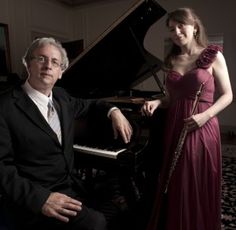
    Things got off to a shining start with BENJAMIN C.S. BOYLE‘s Sonata-Cantilena (NY premiere) performed by pianist Charles Abramovic and flautist Mimi Stillman (above). This four-movement work opens with a Debussyian shimmer; it wends its way thru melodious passages – sometimes doleful and sometimes evoking the warblings of exotic birds – with some sprightly, witty cascades of impetuous coloratura added to the mix. Ms. Stillman, in a fetching pale-violet frock, played beautifully and Mr. Abramovic was a congenially artful partner. 

    Ursula oppens pianist

    Ms. Oppens (above) was then joined by violinist Paul Huang and clarinetist Narek Arutyunian for DAVID HERTZBERG‘s Orgie Céleste (Premiere), a fantastical evocation of heavenly delights. Complex and ear-tingling in its textures, much of the music has an ethereal quality as the piano and violin linger in their high registers; meanwhile the clarinet murmurs a two-note motif endlessly, like a subtly pulsing heartbeat. Mr. Huang showed extraordinary technical control as he met all the composer’s demands with alacrity, including some ironic glissandi. The intermingling of the three voices kept everything in a constant state of freshness, Ms. Oppens was wonderfully vivid in her silvery filigree and Mr. Arutyunian seizing melodic opportunities his mellow, expressive tone. The audience responded enthusiastically to both the music and the musicians.

    The only one of tonight’s composers previously familiar to me was KENJI BUNCH, who I had met several years ago while I was working at Tower Records. Since then I have heard quite a bit of his music, but I had not had the pleasure of hearing him play live. He’s a superb violist, with a marvelous mastery of the instrument, making it sing for him is two very contrasted works.

    Bunch (Kenji)--Monica Ohuchi(sm)

    Above: Kenji Bunch and pianist Monica Ohuchi

    In I Dream in Evergreen, Kenji revealed the viola’s depth of lyricism in a poignant reflection on the sundering aspects of death, when mortal friendships end and are transformed into memory. Ms. Ohuchi’s gently shimmering opening theme is soon joined by the viola intoning its poetic recollection of past affection and regret. Together the two musicians provided a reflective interlude, impeccably played.    

    Kenji’s Étude No. 4 (from a set of twelve études he composed for his wife, Ms. Ohuchi, under the title Monica’s Notebook) is a brief and brilliant piece. Lasting all of 90 seconds, it sends the pianist’s hands rippling up and down the keyboard in a delightful display of dexterity. Ms. Ohuchi nailed it, and she was rightly given sustained applause which wouldn’t quit til she returned for a solo bow (personally, I was hoping for an encore of the piece!)

    In Étouffée for solo viola, Kenji’s panoramic exploration of the viola’s possibilities was truly impressive and enjoyable; his playing is mesmerizing – there’s no other word for it. Inspired by a favorite dish from the Cajun culture, the work opens with a hazy, out-of-focus quality as if the viola was drunk on Southern Comfort. This evolves into a big country dance-tune, captivating in its combination of rhythmic drive and sexy rubato. Bravo, Kenji! His entire set was really impressive.

    OpusOne

    Having musicians of the caliber of the Opus One quartet (above) play the New York premiere of your work must have given composer CHRIS ROGERSON a thrill. His Summer Night Music for Piano Quartet is full of musical marvels and how superbly it was played tonight by the Opus One artists: Ida Kavafian, violinist; Steven Tenenbom, violist; Peter Wiley, cellist; and Anne-Marie McDermott, pianist.

    In four movements, Summer Night Music opens with a sense of quietude at Twilight. First the cello, then viola, and then the violin introduce themselves in gentle motifs. Ms. McDermott reaches inside the body of the Steinway to pluck the piano’s strings as the cello murmurs plaintively and the violin plays high and pensive. In Fireflies, the piano spins forth with fluttering restlessness and sparkling little interjections. There’s a dense passage from all four players until, until – with a high fade-away from violin and piano – the memory of a Summer night slips away.

    The third movement, Evening Prayers, sounds like a gentle lullabye; the violin lingers on high and the viola and cello blend thru the music in simpatico phrases. The concluding Sleep Music commences with a gently vibrant quality, soft and high; a mellowness of cello and viola evoke deepening night. There is a broad melody for unison strings – and a passionate piano theme – before the music finally vanishes into thin air on Ms. Kavafian’s violin strings.

    10885560_575110625952729_3334037620464024949_n

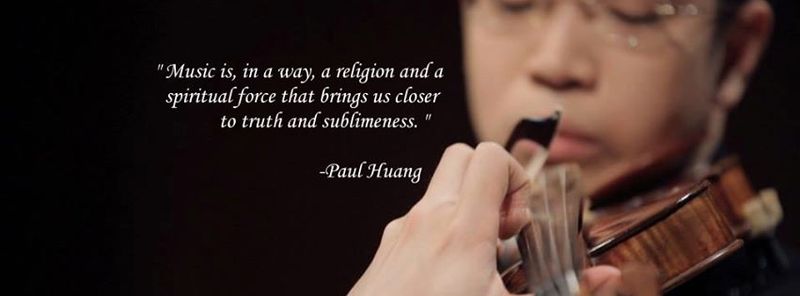
    In researching some of the participating artists, I came upon the above quote from the young violinist Paul Huang. He has expressed something here that I have always felt.

  • NY Philharmonic Ensembles: Concert @ Merkin Hall

    Penderecki

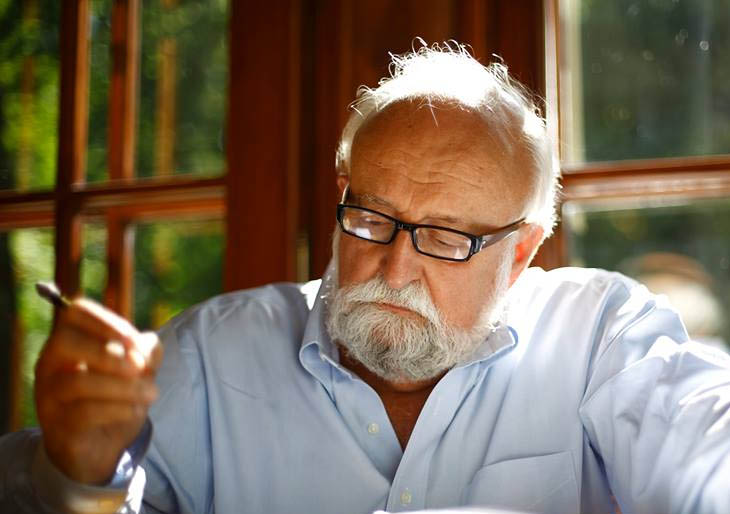
    Above: the composer Krzysztof Penderecki

    Sunday February 15th, 2015 matinee – This series of chamber music concerts by musicians from The New York Philharmonic looked so appealing when I saw the initial announcement. Due to my crowded calendar, this was my first opportunity to attend one of the concerts this season, and I’m most grateful to Lanore Carr of the Philharmonic for arranging it for me. Aside from the very interesting repertoire, the concert gave us an opportunity to ‘meet’ many of the Philharmonic’s artists in a more intimate setting. 

    Merkin Hall is a fine venue for chamber music – with a very clear acoustic – and the audience, who braved frigid temperatures to attend, were held in a sustained state of attentive delight by both the music and the playing.

    The outstanding contemporary Polish composer Krzysztof Penderecki’s String Trio was premiered in 1990 at Krakow. Today, cellist Nathan Vickery introduced the piece, citing the fact that Penderecki set out early in his career to write music that would antagonize his listeners, but that, over time, his approach mellowed.

    The String Trio is a vivid and very pleasing miniature – about 12 minutes long – and was played to perfection by Mr. Vickery with Quan Ge (violin) and Dawn Hannay (viola). After a slashing, jagged introductory phrase, the viola, then the cello, and then the violin make opening statements. The work takes on a conversational feel, as the instruments seem to murmur or chatter to one another with buzzing intimacy. The second movement is dance-like. All three players excelled in both tonal appeal and rhythmic surety. It was a bracing, lively performance, with intriguing touches of wit subtly expressed..

    Jean Sibelius’s String Quartet in D minor, Voces intimae, Op. 56 was the only familiar work on the programme. This is music rich in expressions of melancholy and tenderness – even the more animated passages have a rather forlorn undercurrent – and in introducing it, violist Irene Breslaw quoted Sibelius as saying it was “…music that brings a smile to your lips at the time of death.”

    The musicians – Anna Rabinova and Hyunju Lee (violins), Ms. Breslaw, and cellist Qiang Tu (superb depth of tone!) – vied with one another in poignancy of expression and beauty of line. Combined, their voices mingled in heartfelt harmonies, most especially in the quartet’s autumnal Adagio where their evocations of longing and regret spoke so deeply to me. In the scurrying finale, the players’ technical deftness was truly impressive.

    The chance to hear music by Vittorio Giannini was an important factor in wanting to attend this concert. This now-nearly-forgotten composer was so prolific, writing operas, symphonies, sacred works, chamber music, and songs. His sister, Dusolina Giannini, was an operatic soprano who sang two dozen performances at The Met from 1938-1941. Vittorio Giannini was well-regarded in his lifetime – he taught at Juilliard, The Manhattan School of Music, and the Curtis Institute, and he founded the North Carolina School of the Arts – and his music won favor with audiences. Yet he and his music seem to have lapsed into obscurity following his premature death in 1966 at age 63.

    Today we heard Vittorio Giannini’s Piano Quintet, and a gorgeous work it is! Melodically rich in the spirit of Puccini and Rachmaninoff, this quintet presents a rhapsodic blend of piano and strings in which theme follows theme in a steady flow of passionate lyricism. Giannini is so adept in his art that the music is able to speak directly to the heart without ever becoming cloying. Violinist Yulia Ziskel, commenting on the composer and his forgotten works, spoke of the ‘silver screen’ quality of certain passages of the quintet, and how right she was. But the music does more than just bathe the senses in a sea of opulent melodies, for the composer also shows a keen talent for rhythmic nuance. 

    Guest artist Keun A Lee – who I had heard previously playing for an Alek Shrader recital – was simply a luminous central force for the quintet. Her playing is elegant and generous, and she is also a delight to watch. Ms. Ziskel was joined by Shanshan Yao (violin), Rémi Pelletier (viola) and Mr. Vickery (cello). They played with warm resonance, most especially in the second movement where the cello takes the melodic lead (with the piano) which is then picked up by the viola. This adagio featured some of the evening’s most passionate playing. The third movement gets dance-y, developing a swaying effect at one point before swirling onwards to the fast and furious finale.

    Chamber music must be so rewarding to play; and imagine how delightful it must have been for these musicians to discover the Giannini anew. The caliber of playing was stellar, and this was a really engaging programme.

  • WARSAW SERENADE @ Merkin Hall

    Dina-_Kuznetsova

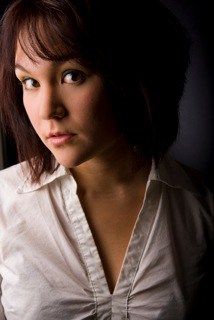
    Above: soprano Dina Kuznetsova

    Tuesday February 18, 2014 – An evening of Polish songs, presented by New York Festival of Song at Merkin Hall, offered an opportunity to hear music I’d never heard before. Michael Barrett and Steven Blier were at the Steinways as tenor Joseph Kaiser opened the evening with “Nakaz niech ozywcze slonko” from Stanislaw Moniuszko’s Verbum Nobile; to a march-like rhythm, Mr. Kaiser poured forth his rich-lyric tone with some strikingly sustained high notes. Soprano Dina Kuznetsova made her first appearance of the evening singing Edward Pallasz’s “Kiszewska” (a ‘lament of the mother of mankind’); intimate and mysterious at first, this song takes on a quality of deep sadness for which the singer employed a smouldering vibrato.

    Four songs by Grazyna Bacewicz represented a wide spectrum of vocal and expressive colours: Ms. Kuznetsova in three of the songs ranged from reflective to chattery, at one point doing some agitated humming as she expressed the numbing horror of having a severe headache. Mr. Kaiser’s rendering of “Oto jest noc”, a song to the moon, was powerfully delivered with some passages of vocalise and a big climactic phrase.

    JosephKaiser-682x1024

    Above: tenor Joseph Kaiser

    Each singer represented a song by Mieczyslaw Karlowicz: the tenor in the touchingly melodic “Mów do mnie jeszcze” (‘Keep speaking to me…’) with its rising passion so marvelously captured by the singer; and then the soprano in the composer’s very first published song “Zasmuconej” (‘To a grieving maiden…’) with its simple, poetic melody showing Ms. Kuznetsova’s communicative gifts with distinction.

    Mieczyslaw Weinberg’s Seven Yiddish Songs were composed in 1943 to texts by the great Yiddish writer, I. L. Peretz. Weinberg, whose life was lived under the dark clouds of anti-Semitism (his entire family destroyed in a concentration camp with the composer having fled to Russia in 1939), is only now experiencing a renaissance with his 1968 opera THE PASSENGER having been recently performed at Bregenz and Houston and due to be seen in New York City this Summer. This evening’s performance of the Seven Yiddish Songs, Opus 13, was my first live encounter with Weinberg’s music.

    The cycle commences with a child-like “la-la-la-la” duet and proceeds with solos for each singer; another duet takes the form of a playful dialogue. Things take a darker turn as Mr. Kaiser sings of an orphaned boy writing a letter to his dead mama; in the closing song “Schluss” the piano punctuates Ms. Kuznetsova’s musings. Both singers excelled in these expressive miniatures.

    Two more Moniuszko songs: a flowingly melodic ‘Evening Song’ with an Italianate feel from the tenor, and a ripplingly-accompanied, minor-key ‘Spinning Song’ delivered with charm by Ms. Kuznetsova.

    Mr. Blier spoke of Karol Szymanowski’s homosexuality and how it coloured much of the composer’s work. In four songs, the two singers alternated – first the soprano in a quiet, sensuous mood and then Mr. Kaiser singing with increasing passion in a Sicilian-flavored ‘”Zuleikha” (sung in German). Ms. Kuznetsova employs her coloristic gifts in one of the Songs of the Infatuated Muezzin, a cycle inspired by Szymanowski’s visit to North Africa. In ‘Neigh, my horse’ from The Kurpian Songs Mr. Kaiser tells of a rider, en route to his beloved, being distracted by another beauty he meets on the journey; the tenor’s voice rose ringingly to a clarion climax which faded as he sent his riderless horse on to reassure his waiting sweetheart.

    The evening ended with an operatically-styled ‘Piper’s Song’ by Ignacy Jan Paderewski where the two voices blended very attractively as the duet moved to its shimmering conclusion.

    Despite a bit too much talking – and an un-cooperative microphone – and some distracting comings and goings, the evening was an enjoyable encounter with rarely-heard music and the pleasing experience of hearing Ms. Kuznetsova and Mr. Kaiser lift their voices in expresive song.