Tag: Met Auditions

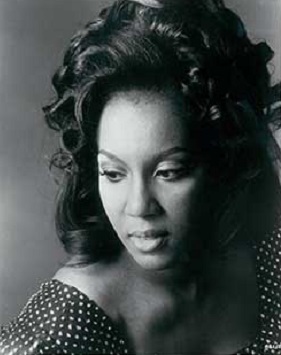
  • Gwendolyn Killebrew Has Passed Away

    Killebrew

    Wednesday December 29th, 2021 – Mezzo-soprano Gwendolyn Killebrew passed away on December 24th, 2021, at the age of 80.

    Strikingly beautiful, and with a voice to match, Gwendolyn Killebrew studied at the Juilliard School and was a Met Auditions winner in 1966.

    In 1967, Ms. Killebrew made her Met debut as Waltraute in the Karajan WALKURE. She sang a series of Carmens at The Met in 1979. In 1971, she had also joined New York City Opera, where she sang Ulrica in BALLO IN MASCHERA (debut) and Genevieve in PELLEAS ET MELISANDE. I had the good fortune to see her in both these roles.

    Joining the Deutsche Oper am Rhein, Düsseldorf, in 1976, Ms. Killebrew sang a wide repertoire there including Azucena, Amneris. Fricka, Jocasta, Baba the Turk, Orfeo, and the Monteverdi contralto roles. At the 1978 Bayreuth Festival, she made a striking impression as Waltraute in Patrice Chéreau’s wildly controversial staging of the “centennial” RING Cycle. Listen to her in Waltraute’s doom-ladened narrative from GOTTERDAMMERUNG, from the 1980 international telecast of the Cycle:

    Gwendolyn Killebrew as Waltraute ~ Götterdämmerung – Boulez cond – Bayreuth 1980

    Ms. Killebrew’s appeared at Santa Fe, Cologne, Paris, Stuttgart, Copenhagen, and Geneva, and at the great music festivals of Salzburg, Ravinia, Tanglewood, and Aspen. She worked with such illustrious conductors as Wolfgang Sawallisch, Leonard Bernstein, Seiji Ozawa, James Levine, Pierre Boulez, Herbert von Karajan, Sir George Solti, Zubin Mehta, Fabio Luisi, and  James Conlon.

    Upon retiring from the stage, Ms. Killebrew taught and coached at her studio at Düsseldorf.

    Enjoy this brief delight of a trio from Handel’s TAMERLANO sung by Ms. Killebrew, Alexander Young, and Carole Bogard, and a marvelous At II of TRISTAN UND ISOLDE here, wherein Ms. Killebrew and Jessye Norman each revel in their vocal richness.

    More from Ms. Killebrew:

    Gwendolyn Killebrew – Bella gara che faranno ~ Handel’s TAMERLANO

    Gwendolyn Killebrew – Dammi pace ~ Handel’s TAMERLANO

    Gwendolyn Killebrew – Prendi! É Un Ricordo..Son La Vecchia Madelon ~ ANDREA CHENIER

    ~ Oberon
  • An Act of AIDA

    Screen-Shot-2016-02-27-at-4.31.29-PM

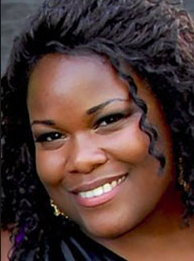
    Above: Latonia Moore

    Tuesday November 22nd, 2016 – It’s an odd feeling to be dreading a night at the opera because of the hyper-extended intermissions. But so many performances at The Met in recent seasons have suffered from a draining of dramatic and musical impetus as intermissions stretch beyond the 30-minute mark that it really is a concern of mine.

    However, I did want to hear at least some of Latonia Moore’s Aida tonight. Latonia was a finalist in the Met Auditions in 2000, the same year my late friend Makiko Narumi participated. I met Latonia a couple of times at patrons events, loved her voice, and her personality. Up to tonight, she had sung a single Aida and a single Butterfly at The Met, whilst having an extensive career elsewhere.

    I knew going in that I would not be able to endure two intermissions; my plan was to leave after the Triumphal Scene. Aside from Ms. Moore, the cast was nearly identical to the one I heard earlier this month.

    Marco Armiliato and the Met musicians again gave a very atmospheric rendering of the prelude.  Marco Berti as Radames was not having a good evening. At the earlier performance, he had been quite impressive in terms of sheer lung-power and some very nice softer singing in the Tomb Scene. Tonight’s “Celeste Aida” was choppily phrased and beset by pitch problems. There was only a trickle of applause after this famous aria. Ekaterina Gubanova, despite some attractive passages (“Vieni, o diletta… appressati” in particular) again seemed slightly under-powered.

    With Latonia Moore’s entrance, things perked up. Her voice is warm, with a sensuous tinge to it, and it  carries well in the big house. She sang with passion and good sense of line, leaning on but not over-working the chest voice. Her “Ritorna vincitor” was vivid both in terms of sound and dramatic inflection, and she sang quite gorgeously in her plaintive “Numi pieta…” Ms. Moore won a hearty round of applause and bravas from the sizeable audience. My only slight concern was that the very highest notes showed a trace of discomfort; the high-B in the trio was not sustained the full count, nor did she linger on the upper notes of the aria. But overall, she gave some extremely satisfying singing.

    I pulled out my copy of Gore Vidal’s KALKI and read for about 15 minutes; and then I thought: “Why am I reading a novel at the opera? Shouldn’t the unfolding of a great score like AIDA sustain me thru the evening? Why is this intermission going to last another 20 minutes?” I packed up and left.

  • Leo Goeke

    Leo-Goeke

    During the 1970s, the American lyric tenor Leo Goeke (above) was a popular artist at both the New York City Opera and The Met. A finalist in the 1967 Met Auditions, Goeke sang more than 200 performances at The Met and on tour, including such roles as Tamino, Count Almaviva, and the Italian Singer in ROSENKAVALIER. He sang (beautifully) the Voice of the Young Sailor in the Met’s 1971 August Everding production of TRISTAN UND ISOLDE, and in 1973 he was Hylas in the Metropolitan Opera premiere of Berlioz LES TROYENS.

    Several of Leo Goeke’s numerous European successes are available on DVD: from England’s Glyndebourne Festival where he sang three Mozart roles and – in 1975 – Stravinsky’s Tom Rakewell in an interpretation that was hailed as ideal; and his performance as Gandhi in Achim Freyer’s Stuttgart Opera production of Glass’s SATYAGRAHA.

    Goeke passed away in 2012.

    Leo Goeke – Il mio tesoro – DON GIOVANNI – NYCO 10~29~72