Tag: Met Opera

  • American Symphony Orchestra Presents ‘Hollow Victory’

    Weinberg

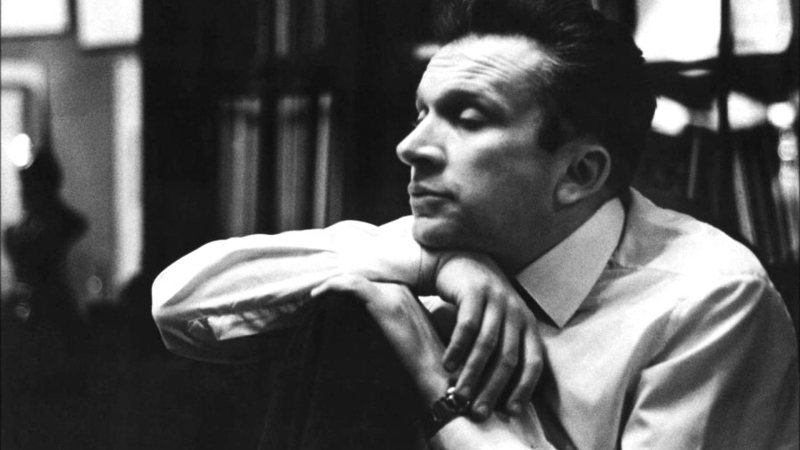
    Above: composer Mieczysław Weinberg

    ~ Author: Ben Weaver 

    Sunday February 29th, 2018 – Leon Botstein and his American Symphony Orchestra always present interesting programming of rarely-performed works. On January 28th, the theme was “Jews in Soviet Russia after the World War” and was perhaps one of their finest concerts. Presented were three works by two composers: first half was dedicated to Mieczysław Weinberg and second half to Vieniamin Fleishman. Both men were close friends with Dmitri Shostakovich, whose influence can be heard in their works.

    Mieczysław Weinberg is perhaps the better-known of the two. Born in 1919 in Warsaw, Poland into an artistic family (his father was a conductor and composer of the Yiddish theater and his Ukrainian-born mother was an actress.) During the war his parents and younger sister were interned in the Lodz ghetto and died in the Trawnicki concentration camp. After the war, in the Soviet Union where he settled, Weinberg was arrested by the KGB in 1953. Shostakovich’s personal appeal to Lavrenti Beria – and Stalin’s death soon thereafter – saved Weinberg’s life. Weinberg’s vast musical output includes 22 symphonies, 17 string quartets, 9 violin sonatas, 7 operas, 40 film and animation scores (including for the Palm d’Or-winning film “The Cranes are Flying.”)

    Leon Botstein began the concert with Weinberg’s “Rhapsody on Moldavian Themes,” composed in 1949. An ancient state – forced to be one of the Soviet Union’s republics between 1940 and 1991 – Moldavia’s culture is closely related to Romania’s and it’s folk melodies sometimes will bring to mind folk melodies Brahms and Dvořák used in their famous collection of dances. Weinberg’s Rhapsody begins with a drive from the low strings and then an oboe introduces the first mournful theme. The Rhapsody moves easily between the mournful and infectious dance tunes, alternating soaring full string section and solos for individual instruments. There is a definite Klezmer dance tune near the end, which brings the work to an exciting close.

    Weinberg’s substantial Symphony No. 5, composed in 1962, without a doubt takes inspiration from Shostakovich’s Symphony No. 4, which though it was premiered in 1961 was composed 25 years earlier, and Weinberg and Shostakovich used to play a two piano arrangement of it for friends long before the premiere. The work opens with a slow “siren,” two repeated notes, from the violins. This motif returns over and over throughout the symphony like a wail of doom, sometimes picked up by other instruments. There are sudden interruptions from the timpani, bringing to mind Mahler’s 6th Symphony. There are beautiful and beautifully-played solos for various instruments, most notably the flute (Yevgeny Faniuk is listed as principal flautist) and horn (Zohar Schondorf)). The Symphony ends with a hushed march, growling trombones and a mysterious celesta.

    Veniamin Fleischman was born in 1913 and entered the Leningrad Conservatory in 1939. His teacher, Shostakovich, called Fleishman his favorite student. While a student, on Shostakovich’s suggestion, Fleishman began composing the opera “Rothschild’s Violin,” from a short story by Chekhov. (Fleishman wrote his own libretto.) When the Nazis invaded the USSR in the summer of 1941 Fleishman enlisted in the Red Army and was killed on September 14 near Leningrad. Shostakovich went to great lengths to retrieve Fleishman’s manuscript of the opera. He completed and orchestrated the work in 1943-44, and later went to great lengths to have it performed, though without much success. Its sympathetic portrayal of Jewish people no doubt did not fit comfortably with the Soviet regime. There was one concert performance in Moscow in 1960 and a staged performance did not take place until 1968. Shostakovich wrote in his memoirs: “It’s a marvelous opera – sensitive and sad. There are no cheap effects in it; it is wise and very Chekhovian. I’m sorry that theatres pass over Fleishman’s opera. It’s certainly not the fault of the music, as far as I can see.” 

    The main character, a Christian coffin maker Yakov Ivanov, undergoes a spiritual crises and something of an awakening. After Yakov’s wife Marfa informs him that she is dying, they both reminisce about their dead child, and Yakov realizes he will have to build his own wife’s coffin. “Life is all loss, only death is gain,” he says. Though Yakov quarrels with Rothschild, the young flautist in the local Jewish orchestra, at the end he leaves Rothschild his most prized possession: the violin, which Rothschild begins to play as the opera ends.

    Rothschild’s Violin” is a magnificent opera. Fleishman, editing Chekov’s story, brilliantly removed all secondary characters and stories, keeping only the story of the coffin-maker. We know nothing even about the young Jew to whom Yakov leaves his violin; nor about Yakov’s wife Marfa, who is dying. This is a story of one man, there are no loungers or pauses in the narrative. It moves quickly through monologues and dialogues, only pausing for Yakov’s final apotheosis where he comes to understand his life and losses. Though the characters, especially Marfa, feel sorry for themselves, there is no sentimentality or cheap dramatic effects. The simplicity of it is what gives the work so much power.
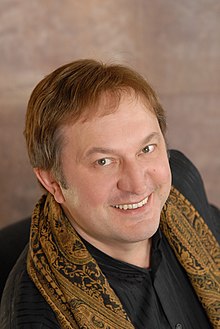
    220px-Mikhail_Svetlov_bass.jpg_300_(2)

    The quartet of singers assembled for the opera was perfect. Bass Mikhail Svetlov (above) was a deeply moving and beautifully sung Yakov. The only native Russian speaker in the cast, he projected the text and all its nuances in a way few can. His is a big, rich voice, with an easy top.

    Index

    Mezzo-soprano Jennifer Roderer (above) was a plum-voiced Marfa; managing to be both a nagging self-pitying wife and a woman who, perhaps on her deathbed, has obviously suffered so much. What kept flying through my head as she was singing is that Ms. Roderer’s large, beautiful and booming mezzo would make a fantastic Fricka; it is a role she sings and we can only hope she is able to sing it at the Metropolitan Opera (which is supposed to bring back its Ring cycle soon.)
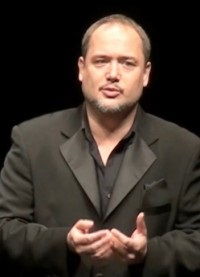
    M heller

    Tenor Marc Heller (above), singing the role of the leader of the Jewish orchestra, would make a pretty good Siegfried. The huge, ringing voice flew easily over the orchestra and Maestro Botstein’s rather unforgiving volume.

    AaronBlake200

    Lyric tenor Aaron Blake (above) was a lovely and nervous young Rothschild. There is actually very little for Rothschild to sing, so Mr. Blake made up for it with pantomime acting, particularly at the end after Yakov has gifted him his fiddle (kindly loaned for the proceedings by a violinist on stage), and an extended orchestral postlude (including lovely solo violin playing by concertmaster Gabrielle Fink) summarizes not only Yakov’s sacrifice, but Rothschild’s future. Intentionally or not, there was something quite poetic and moving in the fact that a member of the orchestra gave up her violin and was not able to play the extended orchestral passage in the end, mirroring Yakov’s own losses.

    It is also worth nothing that the final orchestral passage goes from being lightly scored and transparent to having a very close resemblance to the searing final moments of Shostakovich’s 5th Symphony.

    Rothschild’s Violin” is a great opera; it deserves to be staged.

    ~ Ben Weaver

  • Gatti/Royal Concertgebouw: Wagner & Bruckner

    Daniele Gatti

    Above: conductor Daniele Gatti

    Author: Oberon

    Wednesday January 17th, 2018 – This long-awaited Carnegie Hall concert by the Royal Concertgebouw under the baton of Daniele Gatti paired two of my favorite composers – Wagner and Bruckner – and my expectations for the performance were very high indeed. Wagner-starved as my friend Dmitry and I have been in recent seasons, hearing the Prelude to Act III and Good Friday Spell from PARSIFAL was alone reason to anticipate this concert for months in advance. That Bruckner’s 9th Symphony would complete the program gave reason to feel this was destined to be a thrilling evening. Both works were played magnificently by this great orchestra, and Maestro Gatti again upheld our esteem for him as one of the greatest conductors of our time.

    But in practice – as opposed to in theory – I felt, as the evening progressed, that putting these two masterpieces on the same program didn’t work out nearly as well as I’d expected. About midway thru the Bruckner, I felt my interest waning. In attempting to reason it out, I came to this conclusion: Wagner is a great composer, and Bruckner is a very good one. This certainly does not mean that Bruckner’s music isn’t wonderful, and meaningful. But there’s a depth of feeling in Wagner’s writing that – for me – eludes Bruckner.   

    Wagner’s two ‘Grail’ operas – one about the father (PARSIFAL) and the other about the son (LOHENGRIN) – both contain music of other-worldly beauty. The composer wrote: “It is reserved for Art to save the spirit of religion.” [“Religion and Art” (1880)]. In these two operas, Wagner’s music expresses the inexpressible in ways that make non-believers like myself wonder if we’ve got it right…or not.

    Maestro Gatti’s gift for evoking mythic times and places (his Metropolitan Opera AIDAs in 2009 were fascinating in this regard) meant that the music from PARSIFAL performed tonight was truly transportive. As with his Met performances of the Wagner opera in 2013, Gatti’s pacing seemed ideal. The gorgeously integrated sound of the Concertgebouw, with its velvety-resonant basses, leads us to Monsalvat, where – with Parsifal’s return – the long Winter gives way to Spring. For a blessèd time, we are far from the dismal present, watching the flowers bloom is that legendary realm, as Kundry weeps. Poetry without words.  

    Bruckner’s unfinished 9th symphony impressed me deeply when I first heard it performed live in 2014, and I expected the same reaction tonight. For much of the first movement, I was thoroughly engaged and experiencing the tingles of appreciation that Bruckner’s music usually produces. I confess that I like the ‘purple’ parts of Bruckner’s music best, and perhaps my eventual zone-out began with the Scherzo.

    In the Adagio, I grew restless; the repetitions became tiresome. A few people got up and left, and others had fallen asleep. I continued to attempt to re-engage with the superb playing and Maestro Gatti’s interpretation, but honestly I could not wait for the symphony to end; and I made a mental note to skip an upcoming performance of it.

    The irony of tonight’s situation struck me as I was pondering the experience on the train going home. How is it that Wagner, a non-believer, is able to put us in touch with the divine whereas the pious Bruckner, a devout Catholic who dedicated the 9th symphony “To God”, seems only to be knocking on heaven’s door?

    Now, more than ever, I look forward to the upcoming PARSIFAL performances at The Met.

    ~ Oberon

  • Gatti/Royal Concertgebouw: Wagner & Bruckner

    Daniele Gatti

    Above: conductor Daniele Gatti

    Author: Oberon

    Wednesday January 17th, 2018 – This long-awaited Carnegie Hall concert by the Royal Concertgebouw under the baton of Daniele Gatti paired two of my favorite composers – Wagner and Bruckner – and my expectations for the performance were very high indeed. Wagner-starved as my friend Dmitry and I have been in recent seasons, hearing the Prelude to Act III and Good Friday Spell from PARSIFAL was alone reason to anticipate this concert for months in advance. That Bruckner’s 9th Symphony would complete the program gave reason to feel this was destined to be a thrilling evening. Both works were played magnificently by this great orchestra, and Maestro Gatti again upheld our esteem for him as one of the greatest conductors of our time.

    But in practice – as opposed to in theory – I felt, as the evening progressed, that putting these two masterpieces on the same program didn’t work out nearly as well as I’d expected. About midway thru the Bruckner, I felt my interest waning. In attempting to reason it out, I came to this conclusion: Wagner is a great composer, and Bruckner is a very good one. This certainly does not mean that Bruckner’s music isn’t wonderful, and meaningful. But there’s a depth of feeling in Wagner’s writing that – for me – eludes Bruckner.   

    Wagner’s two ‘Grail’ operas – one about the father (PARSIFAL) and the other about the son (LOHENGRIN) – both contain music of other-worldly beauty. The composer wrote: “It is reserved for Art to save the spirit of religion.” [“Religion and Art” (1880)]. In these two operas, Wagner’s music expresses the inexpressible in ways that make non-believers like myself wonder if we’ve got it right…or not.

    Maestro Gatti’s gift for evoking mythic times and places (his Metropolitan Opera AIDAs in 2009 were fascinating in this regard) meant that the music from PARSIFAL performed tonight was truly transportive. As with his Met performances of the Wagner opera in 2013, Gatti’s pacing seemed ideal. The gorgeously integrated sound of the Concertgebouw, with its velvety-resonant basses, leads us to Monsalvat, where – with Parsifal’s return – the long Winter gives way to Spring. For a blessèd time, we are far from the dismal present, watching the flowers bloom is that legendary realm, as Kundry weeps. Poetry without words.  

    Bruckner’s unfinished 9th symphony impressed me deeply when I first heard it performed live in 2014, and I expected the same reaction tonight. For much of the first movement, I was thoroughly engaged and experiencing the tingles of appreciation that Bruckner’s music usually produces. I confess that I like the ‘purple’ parts of Bruckner’s music best, and perhaps my eventual zone-out began with the Scherzo.

    In the Adagio, I grew restless; the repetitions became tiresome. A few people got up and left, and others had fallen asleep. I continued to attempt to re-engage with the superb playing and Maestro Gatti’s interpretation, but honestly I could not wait for the symphony to end; and I made a mental note to skip an upcoming performance of it.

    The irony of tonight’s situation struck me as I was pondering the experience on the train going home. How is it that Wagner, a non-believer, is able to put us in touch with the divine whereas the pious Bruckner, a devout Catholic who dedicated the 9th symphony “To God”, seems only to be knocking on heaven’s door?

    Now, more than ever, I look forward to the upcoming PARSIFAL performances at The Met.

    ~ Oberon

  • Bronfman’s Bartok @ The NY Philharmonic

    Bronfman

    Above: pianist Yefim Bronfman

    ~ Author: Oberon

    Wednesday December 27th, 2017 – My friend Dmitry and I are fans of Yefim Bronfman, so this evening’s concert by The New York Philharmonic was a perfect classical-music finale for the year 2017.

    The evening opened with the overture to Smetana’s opera THE BARTERED BRIDE. I first heard this overture played live when James Levine chose it to open the Metropolitan Opera’s 100th anniversary gala in 1983. The gala (in two parts – matinee and evening) was telecast worldwide, but I was fortunate to have been in the House for the afternoon program. Let’s just say, they don’t make opera galas like that any more.

    It was great fun to hear the jolly, rambunctious Smetana overture again tonight under Bramwell Tovey’s baton; the Maestro set an exhilarating, ultra-fast pace for this music, and the Philharmonic artists took up his challenge: they played brilliantly and seemed truly to be having fun into the bargain. The music passes thru many modulations along the way, and solo moments sparkle forth – notably from Sherry Sylar’s oboe – as we are danced along in a lively manner. Really, an ideal concert-opener.

    Mr. Bronfman then appeared for the Bartok 2nd piano concerto. Following an ascending flourish from the Steinway, the first movement commences with rather wild brass fanfares. The piano sounds restless, set against winds; the turbulence builds only to subside, and Mr. Brofman’s playing turns subtle. Following another brass and piano build-up, there’s a full stop. Thereafter the music seems more melodious, though droll and ironic. The brass get quite noisy before the pianist silences them with a cadenza that flows up and down the keyboard. After a passage for flutes and piano, the soloist plays a double rising motif.

    Pensive strings introduce the the Adagio which develops into a marvelous duet for piano and timpani. Here Mr. Bronfman and timpanist Marcus Rhoten created an incredible atmosphere: moody and a bit ominous. Suddenly things perk up without warning and we are in a scherzo-like realm with an agitato feeling and with the pianist finding unusual delicacies. Mr. Bronfman then commences a remarkable pianissimo trill that goes on and on over misterioso strings.

    For the concerto’s finale, Bartók gets almost jazzy – in a slightly darkish way – and we hear from the trumpets; a feeling of a kind of war dance evolves. Another piano/percussion duet crops up – this time it’s Steinway vs bass drum – before the music turns unexpectedly dreamy. But the dream is short-lived as the trumpets re-awaken and the concerto ends brightly. Mr. Bronfman was well in his element throughout, his playing agile and multi-hued, with fine dynamic contrasts. The orchestra did their soloist proud.

    By way of perfect contrast to his grand-scale playing of the Bartók, Mr. Bronfman chose for an encore Chopin’s Étude in E Major, Op.10, No.3. The opening melody of this work, thought to have been Chopin’s favorite among the études, was later the source of a vocal song arranged by the soprano Félia Litvinne and recorded famously by Litvinne’s pupil, the tragic Germaine Lubin. This evening, Mr. Bronfman’s poetic rendering of the full étude cast a thoughtful spell over the hall. This magical experience, like so many others in recent years, was sadly spoilt in its most poignant passage by the ringing of a cellphone. Yet Mr. Bronfman continued, unperturbed, and left me a beautiful memory to cherish.

    94-ef6ab60c90ba3fb6a7911b7999dd5f4e

    Above: Bramwell Tovey

    Following the interval, an exciting performance of Mussorgsky’s Pictures at an Exposition (in the Ravel orchestration) again found the orchestra on peak form. Opening with a brass chorale Promenade, which recurs with variations during the first seven movements, the suite conjures up visions of the works of Viktor Hartmann. Upon Hartmann’s death in 1874 at the young age of 39, an exhibition of his work was mounted at St. Petersburg. Mussorgsky visited the exhibit and was inspired by what he saw to write a set of miniatures for piano. In 1922, Maurice Ravel orchestrated the pieces.

    A huge orchestra is in play, including five percussionists, two harps, and celesta. The ponderous Gnome, the child-like and playful Tuileries, the plodding Ox-Cart, the mini-scherzo of the Ballet of Unhatched Chicks, the bustling Marketplace at Limoges, the Roman Catacombs (deep brass), and the fanciful Hut of Baba-Yaga are all evoked in coloristic settings which the Philharmonic players delivered with evident affection.

    The movement which most impressed me was Il Vecchio Castello (The Old Castle) in which flutes, oboe, and bassoon were joined by the mellow, distinctive voice of the alto saxophone. This music was so evocative that I got lost in it. 

    The suite ends on a grand note with The Great Gate of Kiev. Sumptuously played, it brought a year full of music to an imperial finish.

    ~ Oberon

  • Bronfman’s Bartok @ The NY Philharmonic

    Bronfman

    Above: pianist Yefim Bronfman

    ~ Author: Oberon

    Wednesday December 27th, 2017 – My friend Dmitry and I are fans of Yefim Bronfman, so this evening’s concert by The New York Philharmonic was a perfect classical-music finale for the year 2017.

    The evening opened with the overture to Smetana’s opera THE BARTERED BRIDE. I first heard this overture played live when James Levine chose it to open the Metropolitan Opera’s 100th anniversary gala in 1983. The gala (in two parts – matinee and evening) was telecast worldwide, but I was fortunate to have been in the House for the afternoon program. Let’s just say, they don’t make opera galas like that any more.

    It was great fun to hear the jolly, rambunctious Smetana overture again tonight under Bramwell Tovey’s baton; the Maestro set an exhilarating, ultra-fast pace for this music, and the Philharmonic artists took up his challenge: they played brilliantly and seemed truly to be having fun into the bargain. The music passes thru many modulations along the way, and solo moments sparkle forth – notably from Sherry Sylar’s oboe – as we are danced along in a lively manner. Really, an ideal concert-opener.

    Mr. Bronfman then appeared for the Bartok 2nd piano concerto. Following an ascending flourish from the Steinway, the first movement commences with rather wild brass fanfares. The piano sounds restless, set against winds; the turbulence builds only to subside, and Mr. Brofman’s playing turns subtle. Following another brass and piano build-up, there’s a full stop. Thereafter the music seems more melodious, though droll and ironic. The brass get quite noisy before the pianist silences them with a cadenza that flows up and down the keyboard. After a passage for flutes and piano, the soloist plays a double rising motif.

    Pensive strings introduce the the Adagio which develops into a marvelous duet for piano and timpani. Here Mr. Bronfman and timpanist Marcus Rhoten created an incredible atmosphere: moody and a bit ominous. Suddenly things perk up without warning and we are in a scherzo-like realm with an agitato feeling and with the pianist finding unusual delicacies. Mr. Bronfman then commences a remarkable pianissimo trill that goes on and on over misterioso strings.

    For the concerto’s finale, Bartók gets almost jazzy – in a slightly darkish way – and we hear from the trumpets; a feeling of a kind of war dance evolves. Another piano/percussion duet crops up – this time it’s Steinway vs bass drum – before the music turns unexpectedly dreamy. But the dream is short-lived as the trumpets re-awaken and the concerto ends brightly. Mr. Bronfman was well in his element throughout, his playing agile and multi-hued, with fine dynamic contrasts. The orchestra did their soloist proud.

    By way of perfect contrast to his grand-scale playing of the Bartók, Mr. Bronfman chose for an encore Chopin’s Étude in E Major, Op.10, No.3. The opening melody of this work, thought to have been Chopin’s favorite among the études, was later the source of a vocal song arranged by the soprano Félia Litvinne and recorded famously by Litvinne’s pupil, the tragic Germaine Lubin. This evening, Mr. Bronfman’s poetic rendering of the full étude cast a thoughtful spell over the hall. This magical experience, like so many others in recent years, was sadly spoilt in its most poignant passage by the ringing of a cellphone. Yet Mr. Bronfman continued, unperturbed, and left me a beautiful memory to cherish.

    94-ef6ab60c90ba3fb6a7911b7999dd5f4e

    Above: Bramwell Tovey

    Following the interval, an exciting performance of Mussorgsky’s Pictures at an Exposition (in the Ravel orchestration) again found the orchestra on peak form. Opening with a brass chorale Promenade, which recurs with variations during the first seven movements, the suite conjures up visions of the works of Viktor Hartmann. Upon Hartmann’s death in 1874 at the young age of 39, an exhibition of his work was mounted at St. Petersburg. Mussorgsky visited the exhibit and was inspired by what he saw to write a set of miniatures for piano. In 1922, Maurice Ravel orchestrated the pieces.

    A huge orchestra is in play, including five percussionists, two harps, and celesta. The ponderous Gnome, the child-like and playful Tuileries, the plodding Ox-Cart, the mini-scherzo of the Ballet of Unhatched Chicks, the bustling Marketplace at Limoges, the Roman Catacombs (deep brass), and the fanciful Hut of Baba-Yaga are all evoked in coloristic settings which the Philharmonic players delivered with evident affection.

    The movement which most impressed me was Il Vecchio Castello (The Old Castle) in which flutes, oboe, and bassoon were joined by the mellow, distinctive voice of the alto saxophone. This music was so evocative that I got lost in it. 

    The suite ends on a grand note with The Great Gate of Kiev. Sumptuously played, it brought a year full of music to an imperial finish.

    ~ Oberon

  • TURANDOT @ The Met

    Turandot0607.07

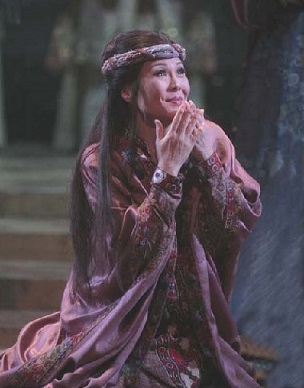
    Above: Hei-Kyung Hong as Liu in a Beatriz Schiller/Met Opera photo

    ~ Author: Oberon

    Thursday November 16th, 2017 – I invited my friend Claudia Schreier to this evening’s performance of TURANDOT at The Met; I wanted her to experience one of last truly grand opera productions in the Met’s repertory. The presence in the cast of Hei-Kyung Hong as Liu was a major factor in choosing this particular evening.

    As at every performance of TURANDOT I’ve attended in the past 30 years, the house was packed. And, as at every Hei-Kyung Hong performance I have attended at The Met, the soprano’s presence in the cast drew large numbers of Asian opera fans. It turned out to be – yet again – Ms. Hong’s night. 

    The evening got off to a sluggish start: Carlo Rizzi’s pacing of the Mandarin’s opening address was slower than the MTA and caused baritone Jeongcheol Cha to dig deep for sufficient breath to sustain the phrases of his proclamation. Later, Rizzi thoughtlessly allowed too much orchestral volume at times, undermining expressive opportunities for his singers.

    23658727_10156216374773690_1557430116954388631_n

    The towering figure of Bulgarian basso Giorgi Kirof as Timur (above, taking a curtain call) came onto the scene; in his Met debut, Mr. Kirof’s looming stature gave Ms. Hong’s petite figure as Liu an almost childlike aspect. The basso – a stalwart of the Sofia National Opera – gave a vocally moving performance, reaching emotional heights in the heartbreak of “Liù…Liù…sorgi! È l’ora chiara d’ogni risveglio!” which literally choked me up.

    Alexey Lavrov was a terrific Ping, with a big, warm sound; his “Ho una casa nell’Honan…” was superbly sung. As his sidekicks Pang and Pong, Tony Stevenson and Eduardo Valdes gave characterful singing. I actually love the scene of the three ministers, which Puccini orchestrated so precisely. As the Emperor Altoum, Ronald Naldi’s voice ‘spoke’ clearly – all the way from Amsterdam Avenue.

    Aleksandrs Antonenko had a fine evening as Calaf. He measures out the voice thoughtfully in Act I, saving up for the arduous singing ahead. But his “Non piangere, Liu” was finely judged, revealing veins of beauty in his powerhouse voice. Throughout the Riddle Scene, the tenor scored with dramatically-lit singing, and joined Oksana Dyka’s Turandot on a firm and sustained high-C at the end of “In questa reggia“. Mr. Antonenko also took – and held – a strong high-C at “No, no, Principessa altera! ti voglio ardente d’amor!

    Mr. Antonenko’s “Nessun dorma” was persuasively sung, reveling in the music’s inherent lyricism; he pulled off the climactic phrase impressively and managed to both acknowledge and forestall a wave of ‘bravos!’ by holding up his hand, letting the opera flow forward. The tenor’s singing in the final duet was first-rate, with some lovely expressions of tenderness as Turandot succumbed to him.

    Oksana Dyka’s voice is slender of tone yet strong of projection. The top range doesn’t blossom but the notes are there; it took a few phrases for the sound to shake loose. As she moved downstage in the course of “In questa reggia” the voice began to speak into the house with increasing effect. Her Riddle Scene was filled with characterful expression: fire and ice. Following her collapse and her desperate plea to her father, the scene turned dramatically absorbing.

    Ms. Dyka, her hair down and nearly prone with despair, is literally overcome with wonderment when Calaf/Antonenko offers her a way out of the bargain. She simply stares at him, realizing that this is a different kind of man than she’s accustomed to dealing with. Then he gently helps her to her feet. The chemistry between the two singers here was genuine; I’ve never seen that moment done quite that way.

    Ms. Dyka’s voice seemed freer in Act III, and she was sustaining the phrases more and reveling in the upper range notes, holding them to generate increased excitement. Her “Del primo pianto” was movingly sung, opening up her humanity which has been bound in ice for so long. In the final moments of the opera, the soprano’s “Padre augusto…Conosco il nome dello straniero! Il suo nome è…Amor!” had a silvery gleam and a prolonged top-B.

    Hei-Kyung Hong’s Liu has captivated audiences time and again in her long Met career. As someone who has seen and heard so many splendid sopranos essay the role of Liu – people like Moffo, Freni and Caballe – I feel Hei-Kyung’s stands at the pinnacle both for her physical perfection and her deeply moving singing.

    If her Wikipedia page is accurate, Hei-Kyung is now 58 years old. Her voice has retained its freshness thanks to her wisdom in choosing repertoire. Tonight both the beauty of her sound and the instinctive rightness of her phrasing gave the music a deeply feminine quality; she also has a feeling for the Italianate style that escapes many non-Italian-born singers. Both her arias were as finely sung as I’ve ever heard them, and her death scene was truly heart-rending. She received a vociferous ovation, very much deserved.  

    All evening, the Met Orchestra made marvelous music, with particular magic from the violin of concertmaster David Chan who made so many of his phrases shine. Likewise, the chorus were at their most fervent and full-voiced.

    Turandot0910.06 sohl

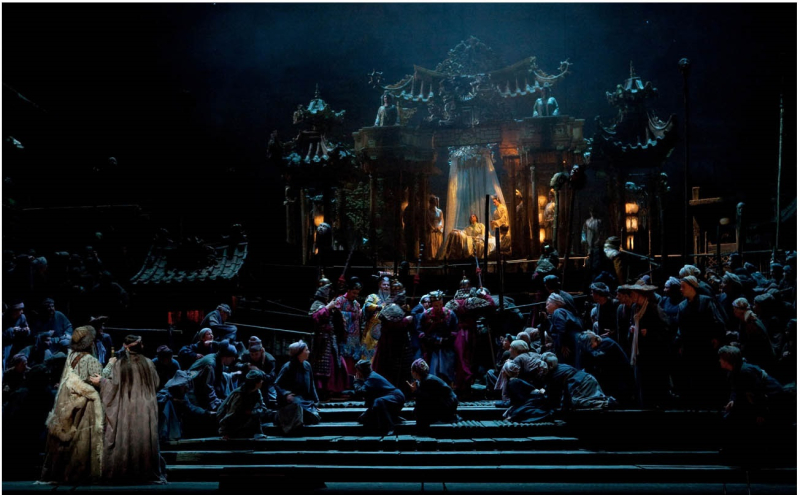
    Above: Act I production photo by Marty Sohl/Met Opera

    Some of the original staging has been altered and to me this weakens the overall effect of the opera. And the crowd scenes seem less crowded than in the past. The 45-minute intermission after the 35-minute first act would have been unbearable had I not had the one-and-only Claudia Schreier to keep me company.

    Catch the curtain calls here, with the charming episode of the “missed bouquet”.

    ~ Oberon

  • Destinations: A Dancer’s Journey

    _MG_3049

    Above: Francesco Pireddu

    In 2011, the Sardinian dancer Francesco Pireddu appeared with Roberto Villanueva’s BalaSole Dance Company here in New York City. Francesco’s solo, Silence, was a highlight of the show. A few weeks ago, I heard from Francesco; together we arranged for him to write an article for my blog. And here it is:

    ~~~~~~~~~~~~~~~~~~~~~~~~~~~~~~~~~~~~~~~~~~~~~~~~~~~~~~~~~~~~~~~~~~~~~~~~~~~~~~~~~~~~~~~~~~~~

    Destinations: A Dancer’s Journey ~ Guest Author: Francesco Pireddu

    Hi. My name is Francesco Pireddu. And, like each one of us, I have a story.

    When I look at my childhood I see a small, very small village in the middle of the mountains, in the beautiful Italian island called Sardinia. My parents, myself, three brothers and one sister. A big Italian family surrounded by gorgeous nature, visited by particularly cold winters and delighted with bright and hot summers. There was not much to do, apart from going to school, doing the homework and help my mother out in the house. Discipline, simplicity and rigor were the key notes of my family’s life. I was profoundly drawn to everything that wasn’t there: dance, performance, self-expression in the deepest form. I needed to explore. And, as soon as I finished high school, I left.

    > First destination: Rome. I was excited, determined and scared. Dance and acting: that’s all I wanted to do, and I ran to register at the most prestigious acting school. I was told that, first things first, there was a “three-monologues-audition” to prepare. Three monologues? Did I have to perform three monologues in front of a bunch of people? No, thanks. I was too shy. Very self-conscious. The day after, I registered at one of the most famous dance schools and I felt so much better. Ballet, modern and improvisation classes: I was in my element. The movement was a beautiful journey. My body language was exposed and explored.

    > Second destination: Tuscany. Without a formal audition I was chosen to perform with Micha Van Hoecke, the renowned Belgian director. He was preparing RIGOLETTO, one of the greatest Italian operas by Giuseppe Verdi. Later, I joined Lindsay Kemp’s ensemble and toured the country with LE MASCHERE, a joyful and engaging operetta by Mascagni based on La Commedia dell’Arte. I was happy and proud of being part of such huge productions, and working with Lindsay Kemp, the great choreographer and director who worked closely with artists such as David Bowie and Kate Bush, is definitely one of the best experiences of my career.

    In Tuscany I also kept working on my craft and I intensely studied ballet with Marina Van Hoecke, a gifted and demanding teacher who trained Maurice Bejart’s male dancers for more than a decade. Her gentle and tough personality, her immense knowledge and captivating spirit defined profoundly my journey and improved my foundation.

    > Third destination: London. One day, Marina, out of the blue, said to me: “I don’t want you in my class anymore. Go somewhere else”. I was devastated. Speechless. I could not understand. I didn’t do anything wrong and I was a devoted student. Why was she pushing me away? It took me many years to understand that the people who really love you and believe in you are the ones who let you go or make you go. Since then, rejection hurts me minimally. I like to believe that that lesson was part of the training.

    In London I performed at the Royal Opera House, Covent Garden, in productions such as BORIS GODUNOV and LA FORZA DEL DESTINO, and I studied ballet with teachers such as Roland Price, Romayne Grigorova, Joan Hewson and Raymond Chai.

    > Fourth destination: New York. On my first day in the Big Apple I walked from 42nd street to 75th and Broadway and I ended up at Steps Dance Studio. I still remember the energy, the vibrancy that only a dance studio emanates. I was watching a ballet class and eating a massive walnut muffin. A tall and gentle lady was next to me. She was staring at me and started to ask me simple questions such as: what’s your name? Where are you from? Are you a dancer…..? And a conversation was born. She asked me to audition for her company and, a week later, I found myself in Hartford, Connecticut, rehearsing the Albano NUTRACKER. We performed in different cities and at Mohegan Sun arena.

    6a00d8341c4e3853ef015434168d1f970c-800wi

    I am still in New York City and so many beautiful things have happened: I performed at New York Live Arts with Balasole Dance Company (photo above, by Kokyat); at Dixon Place I co-created a solo with the director Albert Andrew Garcia for his new show “Tryptych”, and I was cast as a dancer and actor in the off-Broadway musical “The Raja’s Son and Princess Labam”. Last season I was in AIDA at the  Metropolitan Opera and I am currently in their production of TURANDOT. Along the way I was cast in numerous commercials such as: Chase Bank Holiday, JA Bank, Mountain Dew, Bud Light beer and Pima cotton sheets. I made my screen debut in the movie “Top Broker” and I just finished shooting the first season of the series “Play Love”.

    7566C6AF-85FA-4FB2-BD6C-99D1257F4CFB

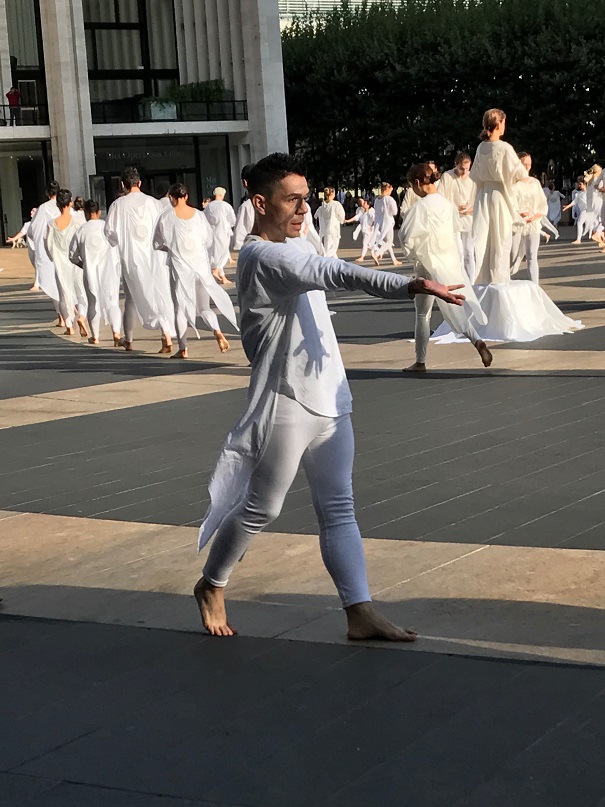
    Above: Francesco performing in Table of Silence

    Last September I joined the Buglisi Dance Company at the Lincoln Plaza in Table of Silence: with a beautiful and emotional dance tribute we remembered and honored the victims of 9/11 and the event was seen livestream all over the world. I was honored to be part of such a remarkable event.

    Oh, and in New York City I closed the circle: I trained full-time for two years at HB Studio, the prestigious acting school.

    IMG_5690

    I treasure my experiences. From a village of 600 people, zero money and infinite obstacles, my journey surprises me every day. Next destination: the next rejection(s)! Only then and there do miracles happen.”

    ~ Guest Author: Francesco Pireddu

  • Jon Crain

    J crain

    Tenor Jon Crain sang with the New York City Opera and at The Met, where his roles included Don Jose, Narraboth in SALOME, and Matteo in ARABELLA. He also participated in a studio recording of CAROUSEL with Roberta Peters, Alfred Drake, Claramae Turner, and Norman Treigle, and in an abridged English-language recording of TALES OF HOFFMANN issued by The Metropolitan Opera. Crain appeared on radio programs devoted to opera and song. 

    Following his retirement, the tenor joined the music faculty at West Virginia University. He passed away in 2003.

    Jon Crain ~ Ariadne auf Naxos – excerpt in English ~ 1958

  • John Stewart

    John Stewart

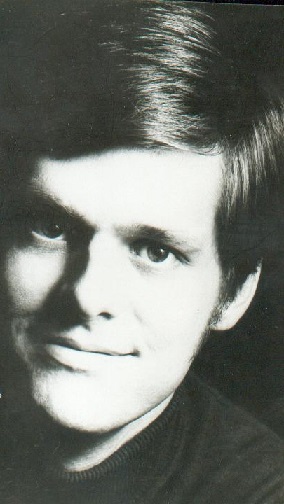
    The American tenor John Stewart made his professional debut at Santa Fe in 1964. Over the ensuing years, he returned often to Santa Fe in a wide-ranging repertory. He made his New York City Opera debut in 1968 and sang many roles there, including Albert Herring, Tamino, and Nanki-Poo. At the Metropolitan Opera, he appeared as Don Ottavio and as Alfred in FLEDERMAUS.

    It was at the New York City Opera that I had the pleasure of hearing John Stewart as Pinkerton, Alfredo in TRAVIATA, Sali in A VILLAGE ROMEO AND JULIET, and Mozart’s Tito.

    In 1972, he sang Mathan in Handel’s ATHALIA with the Handel Society at Carnegie Hall. The cast further featured Elinor Ross, Maureen Forrester, and Ara Berberian. Mr. Stewart’s singing of the aria “Gentle airs, melodious strains” that evening remains a cherished memory of mine.

    In 1974, John Stewart joined the Frankfurt Opera where he sang until his retirement in 1990. He currently teaches voice in New York City.

    John Stewart – ROI D’YS aria – Lexington KY 1970

  • Julia Claussen

    Julia_Claussen

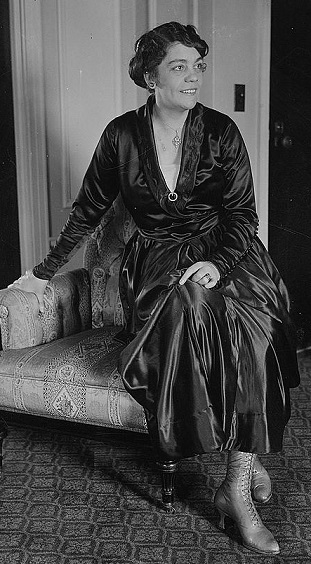
    Swedish mezzo-soprano Julia Claussen studied at the Royal Academies of Stockholm and Berlin, made her operatic debut in Stockholm in 1903, and sang at Paris, London, and Chicago.

    From her debut there as Dalila in 1917 until 1932, Julia Claussen was a mainstay at the Metropolitan Opera in New York City. She sang Azucena, Amneris, Ortrud, Fricka, Brangaene, Kundry, Venus, Marina in BORIS GODUNOV, Laura in LA GIOCONDA, and other roles for a total of nearly 175 performances at the Old House and on tour. She frequently participated in the opera and song concerts that were regular features of Met seasons at that time. 

    An interview with Julia Claussen here. She died at Stockholm in 1949.

    Julia Claussen – Schmerzen from Wagner’s Wesendonck Lieder