Tag: Met Opera

  • The Turandots

    Turandot

    During the coming season at the Metropolitan Opera, I’ll be hearing four different sopranos in the role of Turandot. Of these, three will be new to me in the role: Christine Goerke, Jennifer Wilson, and Nina Stemme. The fourth will be Lise Lindstrom, who made a very fine vocal impression as Turandot here during the 2009-2010 season and who has the added appeal of being wonderfully suited to the role in terms of physique and stage savvy.

    For opera lovers of my generation, the silver-trumpet voice of the great Swedish soprano Birgit Nilsson is unforgettably linked to the music of Turandot; I had the good fortune of seeing Nilsson’s Turandot five times – each performance with a different soprano portraying Liu: Teresa Stratas, Anna Moffo, Mirella Freni, Montserrat Caballe, and Gabriella Tucci. Once you experienced the Nilsson sound in this role in the theatre, you felt you’d never find her equal. 

    And yet, Nilsson was not my first Turandot: it was instead Mary Curtis-Verna who made a very strong impression on this young opera-lover in a performance at the Old Met with Jess Thomas (Calaf) and Lucine Amara (Liu) also in the cast. Curtis-Verna had the Italian style down pat, and she had no problems whatsoever leaping over the many vocal hurdles Puccini set in her path; her final high B-flat had a theatre-filling glow.

    Nilsson (who we referred to as “The Big B” or “The Great White Goddess”) was at her vocal apex in 1966 when she sang a series of Turandots starting in the first week of the first season at the New Met. It’s impossible to describe the exhilarating build-up of anticipation as we waited for her to commence: “In questa reggia”. No recording of Nilsson in this opera, whether studio-made or live, has quite captured the frisson of her brilliant attack and the sheer thrust of the voice being deployed into the big space. Her partnership with Franco Corelli in this opera is legendary; and I was also there on a single night when the stars aligned and we had a Birgit Nilsson-James King-Montserrat Caballe TURANDOT which ended with one of the longest ovations I every experienced. 

    Nilsson sang her last Met Turandot in 1970. When the opera returned to the Met repertory in 1974, Nilsson’s good friend, the Norwegian soprano Ingrid Bjoner was one of three sopranos cast in the title-role. Bjoner for me was the ‘next best thing’ to Nilsson, and to my mind it seemed that Bjoner’s characterization was more detailed and thoughtful than Birgit’s.

    Since Bjoner, I have seen more than two dozen sopranos in the fearsome role of the Chinese princess, at The Met, New York City Opera, and Opera Company of Boston (where we saw Eva Marton take on the role for the first time with great success). Linda Kelm at New York City Opera and Dame Gwyneth Jones at The Met stand out in my memory as particularly thrilling, though I must admit in all honesty I never heard anyone give a less-than-respectable performance in the role – which is saying something, really, given the rigors of the composer’s demands and with the spirit of Nilsson hovering over the popolo di Pekino.

    I have my notions as to how this season’s Turandots will fare, based on their recent performances; I look forward to being proved right…or wrong.

  • Leo Goeke

    Leo-Goeke

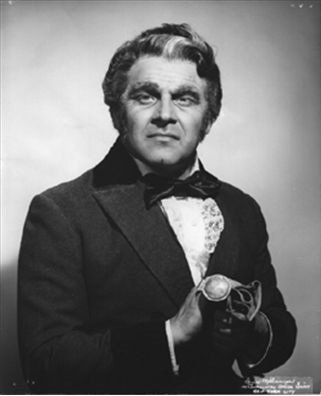
    During the 1970s, the American lyric tenor Leo Goeke (above) was a popular artist at both the New York City Opera and The Met. A finalist in the 1967 Met Auditions, Goeke sang more than 200 performances at The Met and on tour, including such roles as Tamino, Count Almaviva, and the Italian Singer in ROSENKAVALIER. He sang (beautifully) the Voice of the Young Sailor in the Met’s 1971 August Everding production of TRISTAN UND ISOLDE, and in 1973 he was Hylas in the Metropolitan Opera premiere of Berlioz LES TROYENS.

    Several of Leo Goeke’s numerous European successes are available on DVD: from England’s Glyndebourne Festival where he sang three Mozart roles and – in 1975 – Stravinsky’s Tom Rakewell in an interpretation that was hailed as ideal; and his performance as Gandhi in Achim Freyer’s Stuttgart Opera production of Glass’s SATYAGRAHA.

    Goeke passed away in 2012.

    Leo Goeke – Il mio tesoro – DON GIOVANNI – NYCO 10~29~72

  • Mario Sereni Has Passed Away

    MI0002863986

    Above: Mario Sereni as Giorgio Germont in Verdi’s LA TRAVIATA

    Mario Sereni, the Italian baritone who sang over 550 performances with The Metropolitan Opera between 1957 and 1984, has reportedly died at the age of 87.

    Sereni had a warm, rich sound with an easy top, and an instinctive feel for phrasing off the words of his native language. I first saw him at the Old Met as Belcore in L’ELISIR D’AMORE (with Freni, Gedda, and Corena, no less!); once the new House opened and I was going to the opera frequently, Sereni was a singer I saw often. He was popular with the fans, and always very cordial when we greeted him after a performance.

    Although he sang many of the great Verdi roles – Germont in TRAVIATA being particularly well-suited to his voice, and he also appeared as Amonasro, Count di Luna, Posa, Ford in FALSTAFF and Don Carlo in LA FORZA DEL DESTINO – it was in the more verismo-oriented operas that Sereni made his best impression, at least for me. His Tonio in PAGLIACCI was outstanding, and he was often cast in the sympathetic roles of Sharpless (MADAMA BUTTERFLY) and Marcello (LA BOHEME). One performance that I recall with special affection was his Carlo Gerard in ANDREA CHENIER, where he appeared opposite Raina Kabaivanska in her only Met performance as Maddalena. In the French repertoire, Sereni sang Valentin in FAUST and Escamillo in CARMEN; he even made a foray into Wagner, as the Herald in LOHENGRIN. Among other Sereni roles were Rossini’s Figaro, Donizetti’s Malatesta (DON PASQUALE) and Enrico (LUCIA), and Lescaut in the Puccini opera. Near the end of his Met career, he sang several performances of Schaunard in BOHEME, and that was the role of his final Met performance in 1984.

    Mario Sereni appears on several complete opera recordings; my personal favorite is (again) his Carlo Gerard in CHENIER on EMI, opposite Antonietta Stella and Franco Corelli. Also on EMI, he sings with Victoria de los Angeles on her classic recordings of BUTTERFLY and TRAVIATA. And he is in fine fettle on the RCA recording of LUCIA DI LAMMERMOOR, with Anna Moffo and Carlo Bergonzi. Here is the Wolfscrag Scene from that recording, in which Bergonzi and Sereni make such a vivid impression, both vocally and dramatically.

  • Kerstin Meyer

    Meyer_abcd100

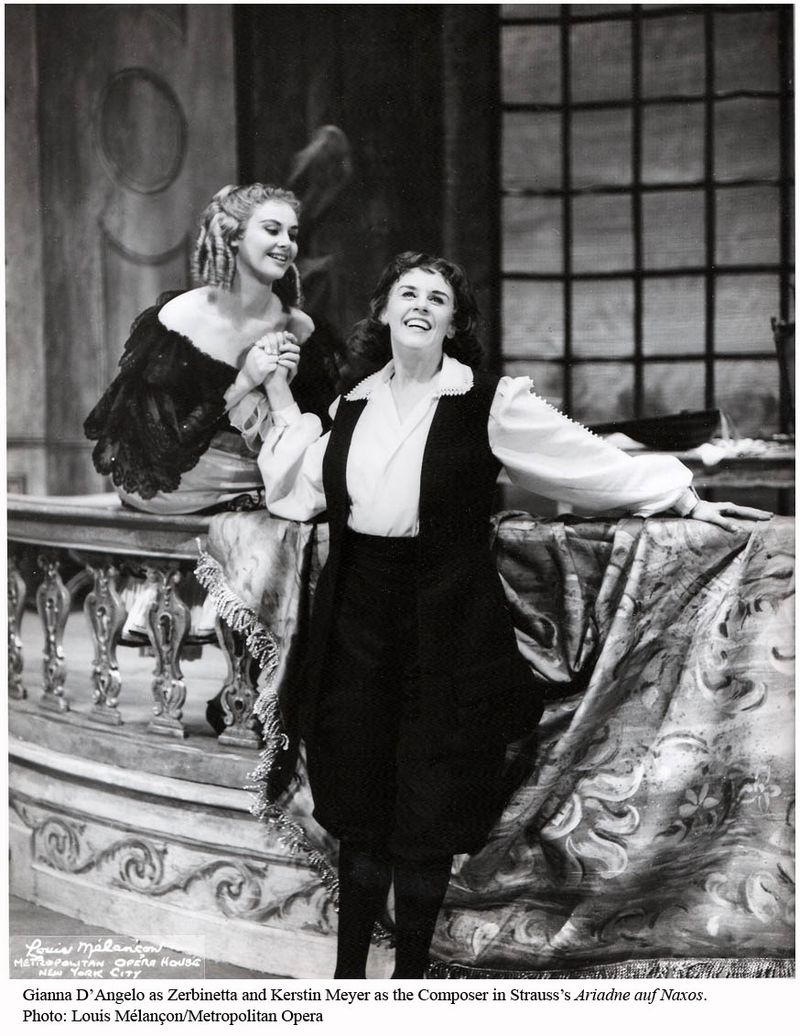
    Kerstin Meyer sings Konchakovna’s cavatina from Borodin’s PRINCE IGOR. Meyer sang the role of the Composer in the Metropolitan Opera premiere of Strauss’s ARIADNE AUF NAXOS in 1962, having previously appeared there as Carmen and Gluck’s Orfeo. 

    Ariadne6263.04

  • Season Finale: Score Desk for BALLO IN MASCHERA

    -hvorostovsky-radvanovsky

    Above: Dmitry Hvorostovsky and Sondra Radvanovsky

    Tuesday April 28th, 2015 – For my final Met performance of the current season, Verdi’s BALLO IN MASCHERA with probably the strongest overall cast of any opera produced at the Met this season. I felt no need to see the Met’s mixed-bag, neither-here-nor-there production again, so I was back at my score desk. Of the twenty-plus performances I attended at the Met this season, most were experienced from score desks; there is less and less of a need to actually see what it happening onstage, so why spend the money on a ‘room with a view’? And besides, I hardly ever stay to the end of anything thanks to the slow agony of the Gelb-length intermissions. Tonight, though, my two amusing friends Adi and Craig helped make the long breaks somewhat more tolerable.

    Tonight’s audience was one of the largest I’ve seen at the opera all season. The Met’s always been a ‘singers house’; the box office is voice-driven and has been since the days of de Reszke and Caruso. There was Flagstad, and Birgit and Franco; and there was Pav, and now there’s Netrebko and Kaufmann. People come for the singing because that’s what opera is all about.

    The evening began with an announcement that James Levine would be replaced on the podium by John Keenan. This may have been a rather last-minute decision since Levine’s special wheelchair platform was in place. Keenan is a very fine Wagner conductor, but in the Italian repertoire Joseph Colaneri would be my choice if Levine is ailing. Much of Act I tonight had an unkempt quality; the singers seemed to want different tempi than Keenan was offering them, and they tended to speed ahead, leaving the orchestra to catch up.

    Piotr Beczala – superb in IOLANTA earlier in the season – sounded a bit tired in Act I. His opening aria was not smooth and the climactic top A-sharp was tight and veered above pitch. He began to settle in vocally at Ulrica’s, though the (written) low notes in “Di tu se fedele” were clumsily handled – no one would have cared if he’d sung them up an octave. By the time he reached the great love duet, Beczala was sounding much more like his usual self, and his “Non sai tu che se l’anima mia” was particularly fine. Spurred on by his resplendent soprano, the Polish tenor invested the rest of the duet with vibrant, passionate singing.

    As Ulrica, Dolora Zajick was exciting: the voice has its familiar amplitude and earthy chest notes intact and she also sang some beautiful piani, observing Verdi’s markings. It’s not her fault that the production idiotically calls for amplification of her deep call for “Silenzio!” at the end of her aria. Dolora’s chest tones don’t need artificial enhancement.

    Heidi Stober was a serviceable Oscar; her highest notes could take on a brassy edge and overall she lacked vocal charm. Memories of Reri Grist, Roberta Peters, Judith Blegen, Lyubov Petrova, and Kathleen Kim kept getting in my ear, perhaps unfairly.

    Dmitry Hvorostovsky as Count Anckarström was in splendid voice from note one, and his opening aria “Alla vita che t’arride” was beautifully phrased with a suave legato, the cadenza rising up to a majestically sustained high note. In the scene at the gallows (or rather – as this production places it – “in an abandoned warehouse…”) the baritone was vividly involved, first as a loyal friend urging his king to flee and later as the shamed, betrayed husband.

    Sondra Radvanovsky, who in 2013 gave us a truly impressive Norma at The Met, was – like the baritone – on top form. With a voice utterly distinctive and unlike any other, and with the seemingly innate ability to find the emotional core of any role she takes on, Radvanovsky has a quality of vocal glamour that makes her undoubtedly the most exciting soprano before the public today. What makes her all the more captivating is that, if a random note has a passing huskiness or isn’t quite sounding as she wants it to, she’s able to make pinpoint adjustments and forge ahead. This makes her singing interesting and keeps us on high alert, wondering what she’ll do next. Thus she generates a kind of anticipatory excitement that is rare these days.

    Launching Amelia’s “Consentimi o signore’ in the Act I trio, Sondra shows off the Verdian line of which she alone today seems true mistress. When we next meet her, she is out on her terrified search for the magical herb. Unfurling the grand recitative “Ecco l’orrido campo…” with instinctive dramatic accents, she draws us into Amelia’s plight. The great aria that follows is a marvel of expressiveness (though I do wish she would eliminate the little simpering whimpers during the orchestral bridge…a pointless touch of verismo); and then terror seizes her and she goes momentarily mad before calming herself with the great prayerful ascent to the high-C. The ensuing cadenza was both highly emotional and superbly voiced.

    In the love duet, with Beczala now vocally aflame, Sondra gave some of her most incredibly nuanced, sustained singing at “Ma tu, nobile…”- astounding control –  before the two singers sailed on to the impetuous release of the duet’s celebratory finale and ended on a joint high-C.

    Amelia’s husband unexpectedly appears to warn the king that his enemies are lurking; after Gustavo has fled (has Sondra ever contemplated taking a high-D at the end of the trio here? I’ve heard it done…), soprano and baritone kept the excitement level at fever pitch during the scene with the conspirators: page after page of Verdian drama marvelously voiced, ending with a rich high B-flat from the soprano as she is hauled off to be punished.

    I hate the break in continuity here: ideally we would follow the couple home and the intensity level would suffer no letdown; instead we have another over-long intermission.

    But the mood was quickly re-established when the curtain next rose: Hvorostovsky thundering and growling while Radvanovsky pleads for mercy. Now the evening reached a peak of vocal splendour as the soprano sang her wrenchingly poignant plea “Morro, ma prima in grazia…” Displaying a fascinating command of vocal colour and of dynamics that ranged from ravishing piani to gleaming forte, the soprano was in her greatest glory here, with a spectacular cadenza launched from a sublime piano C-flat before plunging into the heartfelt depths and resolving in a ravishingly sustained note of despair.

    Hvorostovsky then seized the stage. In one of Verdi’s most thrilling soliloquies, the character moves from fury to heartbreak. After the snarling anger of “Eri tu”, Dima came to the heart of the matter: using his peerless legato and vast palette of dynamic shadings, he made “O dolcezze perdute, o memorie…”  so affecting in its tragic lyricism before moving to a state of resignation and finishing on a gorgeously sustained final note. In the scene of the drawing of lots, Hvorostovsky capped his triumph with an exultant “Il mio nome! O giustizia del fato!” – “My name! O the justice of fate: revenge shall be mine!” His revenge will bring only remorse. 

    We left after this scene, taking with us the fresh memory of these two great singers – Radvanovsky and Hvorostovsky – having shown us why opera remains a vital force in our lives.  

    Metropolitan Opera House
    April 28, 2015

    UN BALLO IN MASCHERA
    Giuseppe Verdi

    Amelia.............................Sondra Radvanovsky
    Riccardo (Gustavo III).............Piotr Beczala
    Renato (Count Anckarström).........Dmitri Hvorostovsky
    Ulrica (Madame Ulrica Arvidsson)...Dolora Zajick
    Oscar..............................Heidi Stober
    Samuel (Count Ribbing).............Keith Miller
    Tom (Count Horn)...................David Crawford
    Silvano (Cristiano)................Trevor Scheunemann
    Judge..............................Mark Schowalter
    Servant............................Scott Scully

    Conductor..........................John Keenan

  • Score Desk for DONNA DEL LAGO

    Loch_Katrine

    Above: Loch Katrine, Scotland – the setting of LA DONNA DEL LAGO

    Saturday February 28th, 2015 matinee – This performance of Rossini’s LA DONNA DEL LAGO was a late addition to my opera plans for the season. The Rossini repertory no longer interests me much, but I thought it might be good to experience one of his operas again in-house, and I’ve always liked Juan Diego Florez, so…why not?

    Back in 1982, I heard Rossini’s LA DONNA DEL LAGO in a concert performance at Carnegie Hall; the principal roles were taken by Frederica von Stade, Marilyn Horne, Rockwell Blake, and Dano Raffanti. It was quite a night. Then in 2007, the New York City Opera staged it with a cast that included fine performances by mezzo-soprano Laura Vlasak Nolen, and tenors Barry Banks and Robert McPherson.

    After taking some cuts in the prelude, conductor Michele Mariotti rushed the opening chorus with some resulting disunity. Someone tried to start entrance applause for Joyce DiDonato, but it didn’t catch on; it might have been the same person who tried to get some applause going after her opening aria, but he ended up with three solo hand-claps.

    It seemed to me today that Elena (the opera’s eponymous heroine and triple love-interest) suits Ms. DiDonato much better than Donizetti’s Maria Stuarda did. She did some genuinely lovely singing – with persuasive coloratura – along the way; a slight flutter in her timbre at low-to-mid volume sometimes intrudes on complete enjoyment of her singing. But overall this is a fine role for her. 

    Juan Diego Florez sang with his usual fluency and expressiveness, tossing off added high notes and blending beautifully with Ms. DiDonato. Fleeting traces of sharpness in the tenor’s singing didn’t detract from the overall handsomeness of his vocalism, I should have stayed to hear the luminous aria “O fiamma soave” in Act II, but I didn’t.

    I can recall the favorable impression Daniela Barcellona made singing Maddalena in RIGOLETTO at a special all-Verdi concert performance which The Met offered on September 22, 2001, as a benefit for the families of 9/11 first responders. She subsequently sang Bellini’s Adalgisa twice at The Met (also in 2001), and has since had an extensive career in Europe. Her return to The Met as Rossini’s Malcolm Groeme was a main factor in my decision to go to today’s matinee, but alas her voice now shows a widening vibrato – and a quick look at her bio shows the telltale reasons: Amneris and Santuzza are not roles one would think of for her type of voice, and once ventured it is not easy to switch back to bel canto. She had some beautiful low notes today, and managed the coloratura quite well. But sustained notes revealed an unsteady quality.

    John Osborn (Rodrigo di Dhu) pricked up our ears and perked up the performance with his powerful forays to the top register and the overall conviction of his singing. It is not the most ingratiating tenor sound you will hear, but he knows what to do with it in this demanding music, Oren Gradus, though not a bel canto specialist, did what he could with the role of Duglas D’Angus.

    Musically, the opera moves in fits and starts. A ravishing melody or brilliant passages of fiorature will be followed by rum-ti-tum filler. Rossini’s idea of introducing a solo harp into the Act I finale stirs our interest, but the vocal melody that follows in pedestrian. This is followed by a jog-trot stretta to end the act.

    It it hadn’t been for the looming Gelb intermission, I would most likely have stayed on to hear that Florez cavatina in Act II. The house was reasonably full and very attentive, but I did notice several fellow-defectors after the first act.

    Metropolitan Opera House
    February 28, 2015 Matinee

    LA DONNA DEL LAGO
    Gioachino Rossini

    Elena...................Joyce DiDonato
    Giacomo V/Uberto........Juan Diego Flórez
    Malcolm Groeme..........Daniela Barcellona
    Rodrigo Di Dhu..........John Osborn
    Duglas..................Oren Gradus
    Albina..................Olga Makarina
    Serano..................Eduardo Valdes
    Bertram.................Gregory Schmidt

    Conductor...............Michele Mariotti

  • ASO: Max von Schillings’ MONA LISA

    Mona_Lisa

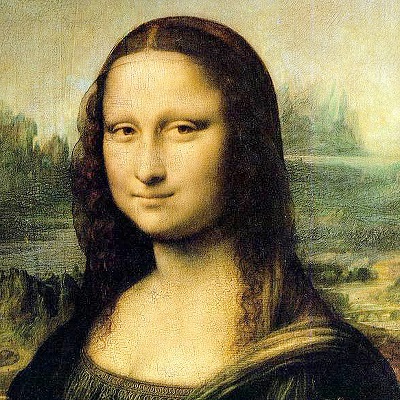
    Friday February 20th, 2015 – An opportunity to hear a forgotten opera, Max von Schillings’ MONA LISA, came about thanks to conductor Leon Botstein and the American Symphony Orchestra. Bringing us operatic rarities is one of Maestro Botstein’s specialties, and tonight MONA LISA proved a wonderful discovery.

    The opera was vastly popular in its day; in the fifteen years following its 1915 premiere, it was performed more than 1,200 times, including in St. Petersburg and at New York’s Metropolitan Opera. The composer’s embrace of Nazism has since cast him as an unsavory individual and, upon his death in 1933, he and his music were essentially forgotten.

    von Schillings was considered a neo-Wagnerian, but in MONA LISA we experience a link with Italian verismo; both in its Renaissance setting and its musical style, I was most often put in mind of Zandonai’s FRANCESCA DA RIMINI. The influence of Strauss and Zemlinsky may also be felt. von Schillings successfully blends a variety of stylistic elements into music that evokes the Age of da Vinci from a Germanic viewpoint. 

    The story is a Mona Lisa fantasy and revolves around her jealous husband, Francesco del Giocondo, and her former lover, Giovanni de Salviati who arrives at the del Giocondo palazzo on an errand from the pope: to purchase a rare pearl. Mona Lisa and Giovanni had once been lovers, and the flame is re-kindled.

    The pearl is kept in a small, air-tight chamber. After arranging the purchase, Giovanni covertly persuades Mona Lisa that they should run away together when he comes to collect the pearl. Her husband notices the mysterious smile on his wife’s face – a smile she has never shone on him in their years of marriage –  and suspects Giovanni as a rival. To avoid being caught, Giovanni hides in the pearl-chamber, which Francesco then locks. Mona Lisa knows that Giovanni will suffocate, but she keeps her cool and the next morning she tells her husband says she will wear the pearl. When Francesco enters the chamber to fetch the jewel for her, she slams the door shut behind him and locks it.

    The opera is set during carnival season which gives rise to some passages of courtly entertainment. And, subtly, the libretto refers to Madama Borgia as being Mona Lisa’s friend. Thus the notion of dispatching an unwanted husband would come naturally to Mona Lisa.

    The score abounds with melody and the opera is impressively orchestrated, bringing in harp, celeste, mandolin and organ…even castanets are heard at one point. The ASO‘s concertmaster Erica Kiesewetter seized several opportunities to bring forth beautiful solo violin passages.

    The opera was well-cast with singers intent on characterizing their music. In the title-role, soprano Petra Maria Schnitzer, despite a less-than-comfortable upper register, blended lyricism with passionate declamation. As Francesco, the charismatic Michael Anthony McGee, delighted in the vocal art of insinuation, his genial vocal veneer covering a soul of brooding jealousy and duplicity. In a performance of intense power and commitment, tenor Paul McNamara scored a great success as he met the Wagnerian demands of the role of Giovanni; his vocalism made a strong impact in the Hall.

    A quintet of courtiers, led by tenor Robert Chafin as Arrigo Oldofredi, provided ongoing commentary in Act I, with bursts of song woven into the tapestry. John Easterlin, Justin Hopkins, Christopher Burchett, and Michael Scarcelle kept their scenes lively with characterful singing and good dramatic interaction. An appealing trio of young women gave a vocal counter-balance to the men’s ensemble: Lucy Fitz Gibbon and Katherine Maysek sang attractively, and Ilana Davidson had a lovely vocal vignette, portraying Venus in a carnival pageant. The Bard Festival Chorale had rather less to do than one might have wished, but they did it well indeed.

    THE CAST

    Foreigner/Francesco del Giocondo: Michael Anthony McGee, bass-baritone
    Woman/Mona Fiordalisa: Petra Maria Schnitzer, soprano
    Lay Brother/Giovanni de Salviati: Paul McNamara, tenor
    Pietro Tumoni: Justin Hopkins, bass-baritone
    Arrigo Oldofredi: Robert Chafin, tenor
    Alessio Beneventi: John Easterlin, tenor
    Sandro da Luzzano: Christopher Burchett, baritone
    Masolino Pedruzzi: Michael Scarcelle, bass-baritone
    Mona Ginevra: Ilana Davidson, soprano
    Dianora: Lucy Fitz Gibbon, soprano
    Piccarda: Katherine Maysek, mezzo-soprano

    Bard Festival Chorale (James Bagwell, director)

    Conductor: Leon Botstein

  • ASO: Max von Schillings’ MONA LISA

    Mona_Lisa

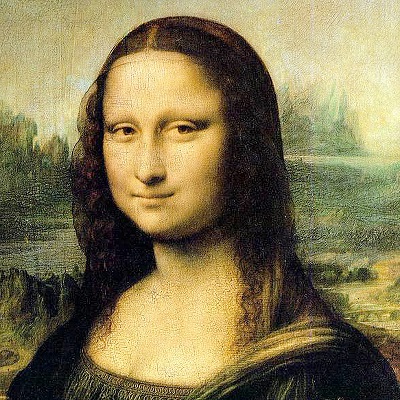
    Friday February 20th, 2015 – An opportunity to hear a forgotten opera, Max von Schillings’ MONA LISA, came about thanks to conductor Leon Botstein and the American Symphony Orchestra. Bringing us operatic rarities is one of Maestro Botstein’s specialties, and tonight MONA LISA proved a wonderful discovery.

    The opera was vastly popular in its day; in the fifteen years following its 1915 premiere, it was performed more than 1,200 times, including in St. Petersburg and at New York’s Metropolitan Opera. The composer’s embrace of Nazism has since cast him as an unsavory individual and, upon his death in 1933, he and his music were essentially forgotten.

    von Schillings was considered a neo-Wagnerian, but in MONA LISA we experience a link with Italian verismo; both in its Renaissance setting and its musical style, I was most often put in mind of Zandonai’s FRANCESCA DA RIMINI. The influence of Strauss and Zemlinsky may also be felt. von Schillings successfully blends a variety of stylistic elements into music that evokes the Age of da Vinci from a Germanic viewpoint. 

    The story is a Mona Lisa fantasy and revolves around her jealous husband, Francesco del Giocondo, and her former lover, Giovanni de Salviati who arrives at the del Giocondo palazzo on an errand from the pope: to purchase a rare pearl. Mona Lisa and Giovanni had once been lovers, and the flame is re-kindled.

    The pearl is kept in a small, air-tight chamber. After arranging the purchase, Giovanni covertly persuades Mona Lisa that they should run away together when he comes to collect the pearl. Her husband notices the mysterious smile on his wife’s face – a smile she has never shone on him in their years of marriage –  and suspects Giovanni as a rival. To avoid being caught, Giovanni hides in the pearl-chamber, which Francesco then locks. Mona Lisa knows that Giovanni will suffocate, but she keeps her cool and the next morning she tells her husband says she will wear the pearl. When Francesco enters the chamber to fetch the jewel for her, she slams the door shut behind him and locks it.

    The opera is set during carnival season which gives rise to some passages of courtly entertainment. And, subtly, the libretto refers to Madama Borgia as being Mona Lisa’s friend. Thus the notion of dispatching an unwanted husband would come naturally to Mona Lisa.

    The score abounds with melody and the opera is impressively orchestrated, bringing in harp, celeste, mandolin and organ…even castanets are heard at one point. The ASO‘s concertmaster Erica Kiesewetter seized several opportunities to bring forth beautiful solo violin passages.

    The opera was well-cast with singers intent on characterizing their music. In the title-role, soprano Petra Maria Schnitzer, despite a less-than-comfortable upper register, blended lyricism with passionate declamation. As Francesco, the charismatic Michael Anthony McGee, delighted in the vocal art of insinuation, his genial vocal veneer covering a soul of brooding jealousy and duplicity. In a performance of intense power and commitment, tenor Paul McNamara scored a great success as he met the Wagnerian demands of the role of Giovanni; his vocalism made a strong impact in the Hall.

    A quintet of courtiers, led by tenor Robert Chafin as Arrigo Oldofredi, provided ongoing commentary in Act I, with bursts of song woven into the tapestry. John Easterlin, Justin Hopkins, Christopher Burchett, and Michael Scarcelle kept their scenes lively with characterful singing and good dramatic interaction. An appealing trio of young women gave a vocal counter-balance to the men’s ensemble: Lucy Fitz Gibbon and Katherine Maysek sang attractively, and Ilana Davidson had a lovely vocal vignette, portraying Venus in a carnival pageant. The Bard Festival Chorale had rather less to do than one might have wished, but they did it well indeed.

    THE CAST

    Foreigner/Francesco del Giocondo: Michael Anthony McGee, bass-baritone
    Woman/Mona Fiordalisa: Petra Maria Schnitzer, soprano
    Lay Brother/Giovanni de Salviati: Paul McNamara, tenor
    Pietro Tumoni: Justin Hopkins, bass-baritone
    Arrigo Oldofredi: Robert Chafin, tenor
    Alessio Beneventi: John Easterlin, tenor
    Sandro da Luzzano: Christopher Burchett, baritone
    Masolino Pedruzzi: Michael Scarcelle, bass-baritone
    Mona Ginevra: Ilana Davidson, soprano
    Dianora: Lucy Fitz Gibbon, soprano
    Piccarda: Katherine Maysek, mezzo-soprano

    Bard Festival Chorale (James Bagwell, director)

    Conductor: Leon Botstein

  • IOLANTA/BLUEBEARD’S CASTLE @ The Met

    7-133410_gallery

    Above: Boris Kudlicka’s set design for The Met’s production of Bartok’s BLUEBEARD’S CASTLE

    Wednesday February 18th, 2015 – This pairing of ‘short’ operas by Tchaikovsky and Bartok at The Met didn’t really work. IOLANTA is an awkward work: too short to stand alone but too long to be successfully coupled with another opera. BLUEBEARD, so intense musically and rather static dramatically, is best paired with something like Schoenberg’s ERWARTUNG or Stravinsky’s OEDIPUS REX. Aside from the musical mismatch, the evening was further spoilt by an endless intermission.

    Tchaikovsky’s IOLANTA is full of nice melodies and is perfectly palatable but at no point do we feel connected to the story or the characters as we do with ONEGIN or PIQUE-DAME. The production is gloomy, with a central ‘box’ (Iolanta’s bedroom) which periodically (and rather annoyingly) rotates. The stage direction was random and incoherent, the minor characters popping in and out, and then a big choral finale populated by men in waiters’ aprons. Nothing made much sense, really.

    Musically, IOLANTA was given a not-very-inspired reading by Pavel Smelkov. It took Anna Netrebko a while to warm up; her singing became more persuasive as the evening wore on. She was attractive to watch and did what she could dramatically with a limited character and a dreary production. Mzia Nioradze was a sturdily-sung Marta. Among the male roles, Matt Boehler stood out vocally as Bertrand. Neither Vladimir Chmelo (Ibn-Hakia) nor Alexei Tanovitski (King Rene) seemed to be Met-caliber singers, and Maxim Aniskin’s Duke Robert was pleasant enough vocally though of smallish scale in the big House.

    IOLANTA was in fact only saved by a superb performance as Vaudemont by Piotr Beczala. From the moment of his first entrance, the tenor’s generous and appealing sound and his commanding stage presence lifted the clouds of tedious mediocrity that had settled over the scene. As his most Gedda-like vocally, Beczala seemed to enflame Ms. Netrebko and their big duet had a fine sense of triumph.

    The House, which was quite full for the Tchaikovsky, thinned out a bit at intermission. Those who stayed for the Bartok were treated to an impressive musical performance thwarted to an extent by busy, awkward staging. Mr. Smelkov seemed more in his element here than in the Tchaikovsky; the orchestra played Bartok’s gorgeous score for all it’s worth, and that’s saying a lot.

    After the eerie, ominous spoken prologue, we enter Bluebeard’s dark domain. Where we should see seven doors, we instead see an automatic garage door closing. Then begins the long conversation between Bluebeard and Judith which will end with her bound in permanent captivity with his other wives.

    The staging did the two singers – Michaela Martens and Mikhail Petrenko – no favors; periodically they appeared – for no apparent reason – in an isolated ‘cupboard’ high up at extreme stage left while the central space was filled with the filmed image of a gaping elevator shaft (see photo at the top of this article). The opening of each each ‘door’ was staged as a series of odd vignettes. Nothing made much sense. The final scene was ugly and failed to project the sense of mystery that should hover over Judith’s fate.

    Both Ms. Martens and Mr. Petrenko were on fine vocal form, and both brought unusual warmth and unexpected lyricism to much of their music. They sang powerfully, the mezzo showing a large and expressive middle register and resonant lower notes, with the basso having both power and tonal beauty at his command.

    At several points along the way, their singing seemed somewhat compromised by the staging; and never more so than in Judith’s famous high-C. At this moment, the director placed the singer far upstage – almost on Amsterdam Avenue – and so although Ms. Martens nailed the note, she was too far back to crest the orchestra. I suspect it was staged this way as a covering device for the vocal unreliability of the production’s earlier Judith, Nadja Michael. 

    But overall, Ms. Martens and Mr. Petrenko each made a distinctive vocal showing; and it was they, the Met orchestra, and Piotr Beczala’s Vaudemont earlier in the performance that gave the evening its lustre and saved it from sinking into the murky depths. Attempts to show some kind of link between the two operas by means of certain stage effects proved unconvincing. The Bartok, especially, deserves so much better.  

    Metropolitan Opera House
    February 18, 2015

    IOLANTA
    P I Tchaikovsky

    Iolanta....................Anna Netrebko
    Vaudémont..................Piotr Beczala
    Robert.....................Maxim Aniskin
    King René..................Alexei Tanovitski
    Bertrand...................Matt Boehler
    Alméric....................Keith Jameson
    Ibn-Hakia..................Vladimir Chmelo
    Marta......................Mzia Nioradze
    Brigitte...................Katherine Whyte
    Laura......................Cassandra Zoé Velasco

    BLUEBEARD'S CASTLE
    Béla Bartók

    Judith.....................Michaela Martens
    Bluebeard..................Mikhail Petrenko

    Conductor..................Pavel Smelkov

  • LA BOHEME @ The Met

    Jean_Francois_BORRAS_2

    Monday Jaunary 19th, 2015 – When my friend Lisette was appearing in WERTHER at The Met in 2014, she spoke well of the tenor Jean-François Borras (above) who was covering the title-role and who ended up singing one performance. Now he is back for three performances as Rodolfo in LA BOHEME and I decided to try it, especially after some soprano-shuffling brought Marina Rebeka into the line-up as Musetta.

    Overall it was a good BOHEME, though somewhat compromised by the conducting of Riccardo Frizza who had fine ideas about tempo and some nice detailing but tended to give too much volume at the climaxes: this might have worked had the principals been Tebaldi and Tucker, but not for the current pair of lovers. Mr. Borras wisely tried to resist pushing his voice; Kristine Opolais, the Mimi, was having other problems so riding the orchestra was the least of her worries. It was Ms. Rebeka who ended up giving the evening’s most stimulating performance, along wth baritone Mariusz Kwiecien, an outstanding Marcello.

    Following her well-received Met RONDINEs, Ms. Opolais became something of the darling of The Met, especially when – last season – she sang back-to-back performances of Butterfly and Mimi. I heard one of the Butterflies which was marred by some sharpness of pitch. A glance at her bio reveals that she has already sung roles like Tosca, Manon Lescaut, Shostakovich’s Lady Macbeth, Jenufa, even Aida, all of which seem to me ill-suited to what is essentially a lyric voice. Tonight much of her singing was tremulous and pallid, and the tendency to go sharp spoiled several potentially attractive passages. One hears that The Met plans new productions of MANON LESCAUT, RUSALKA, and TOSCA for her (there are even whispers of a new THAIS); unless she can somehow repair her over-spent voice, I can’t see how she’ll get thru these demanding roles in the Big House. Anyway, she seems now to have been usurped as the talk-of-the-town soprano by Sonya Yoncheva…one wonders what new productions she has been promised. Meanwhile it’s sad to hear Ms. Opolais – who might be (have been?) a lovely Pamina, Liu, and Micaela – having pushed herself into inappropriate repertory at the cost of vocal stability.

    Mr. Borras gave such an appealing performance that the conductor’s lack of consideration was particularly unfortunate. The tenor’s warm timbre falls most pleasingly on the ear, and he had so many felicitious phrases to give us, and some lovely word-colourings. After the orchestra encroached on the climax of “Che gelida manina” – which the tenor managed nonetheless – I enjoyed the way he handled Rodolfo’s little melodic gems at Cafe Momus, and his persuasive vocalism in Act III was a balm to the ear, especially the lingering bitter-sweetness of his hushed “…stagione dei fiori…”

    Latvian-soprano-Marina-Rebeka

    Ms. Rebeka (above) was the most marvelous Musetta I have encountered since Carol Neblett’s sensational debut at New York City Opera in 1969. Her voice gleaming and generous, Ms. Rebeka seized the stage in no uncertain terms, really making something out of the super-familiar Waltz which she climaxed with a smile-inducing diminuendo on the top-B. She went on to thrill the ear in the ensuing ensemble, and she was excellent in Act III.

    Mr. Kwiecien gave a first-rate performance as Marcello. In this music, he can spend his voice generously without having to be concerned with sustaining a full title-character evening, something he’s never had quite the vocal and theatrical presence for, despite his undoubted appeal. Tonight, it was ample-toned, warm singing from note one, and an extroverted, somewhat ‘mad-artist’ view of the character handsomely presented. Would that he’d had a Mimi to match him in the Act III duet. But he and Borras were both superb in their scene, in which they almost came to fisticuffs before Rodolfo finally admitted the truth about Mimi’s illness and his hopeless state of poverty. Kwiecien then melted into the caring ‘best friend’ that makes Marcello a standout portrait in these scènes de la vie de bohème.

    Alessio Arduini (Schaunard) and David Soar (Colline) gave attractive vocal performances despite the conductor’s trampling on some of their lines; they were charming during a mini-food-fight at Cafe Momus.

    Some of the staging at the Barrière d’Enfer didn’t enhance the narrative: Mimi reveals her eavesdropping presence not by an attack of coughing – such a moving device – but by stumbling down the staircase and collapsing melodramatcally at the door to the inn. Later, too many by-standers surround Marcello and Musetta as they argue, and the ever-so-moving reconciliation of Mimi and Rodolfo is marred by Musetta grabbing a passser-by and kissing him lavishly: this gets a wave of unwanted laughter during one of the opera’s most poignant moments.

    The first intermission was debilitating; these extended breaks always drain the life out of the evening, and the better the performance the more annoying they are. And seat-poaching is so unattractive, especially when it causes a disruption if there’s an unexpected seating break – as tonight between the garrett and Momus.

    But BOHEME still casts its spell, as it has for me ever since I first heard it on a Texaco broadcast 53 years ago to the day, with Lucine Amara and Barry Morell as the lovers. The Beecham recording remains my touchstone document of this heart-rending score. Tonight’s audience, quite substantial by current standards, embraced the classic Met production warmly.

    Metropolitan Opera House
    January 19th, 2015

    LA BOHÈME
    Giacomo Puccini

    Mimì....................Kristine Opolais
    Rodolfo.................Jean-François Borras
    Musetta.................Marina Rebeka
    Marcello................Mariusz Kwiecien
    Schaunard...............Alessio Arduini
    Colline.................David Soar
    Benoit..................John Del Carlo
    Alcindoro...............John Del Carlo
    Parpignol...............Daniel Clark Smith
    Sergeant................Jason Hendrix
    Officer.................Joseph Turi

    Conductor...............Riccardo Frizza