Tag: Met Opera

  • Score Desk for TRAVIATA

    Rebeka

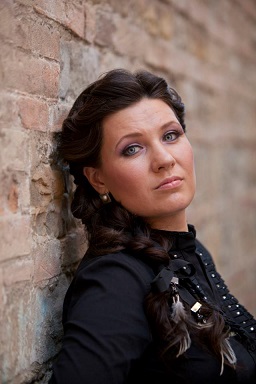
    Above: soprano Marina Rebeka

    Saturday December 27th, 2014 matinee – The Met’s lame production of La Traviata – yet another attempt to make opera ‘relevant’ – isn’t worth seeing, but I thought this particular cast might be worth hearing, so I bought a score desk for today’s matinee. In the event, Marina Rebeka (Violetta) and Quinn Kelsey (Germont) made for a particularly exciting afternoon: their singing of the great Act II duet – the heart of the opera – was indeed memorable. And both of them were in fact excellent throughout. It’s good to experience this kind of singing in a standard-rep work at The Met, for there’s no guarantee of it in this day and age. 

    On the podium, Marco Armiliato seemed more intent than usual on molding a convincing rendering of the score: sometimes he is too hasty, too loud, too provincial. But today he showed great attention to details of tempo and dynamic, and allowed his singers plenty of leeway to linger on favorite notes and pamper beloved phrases. The orchestra played very well.

    Aside from Maria Zifchak (Annina) and James Courtney (Dr. Grenvil), the singers in the smaller roles were more serviceable than memorable.

    In a role which has been sung in living memory at The Met by such luminaries as Richard Tucker, Alfredo Kraus, Carlo Bergonzi, Nicolai Gedda, Neil Shicoff, Placido Domingo, and Jonas Kaufmann, Stephen Costello – today’s Alfredo – seemed like a case of sending a boy to do a man’s job. A feeling of uncertain pitch pervaded quite a bit of Costello’s singing, and despite a lovely passage here and there, he seemed unsure as the music ventured higher, and his breath-line sometimes didn’t sustain. His offstage serenade in Act I was flat, and he struggled with the cabaletta “O mio rimorso”, sounding tentative and uneasy. It’s sad to hear a young and promising voice in this state; it might be a good idea for him to take a break and address the problems that seem to have cropped up in his singing.

    But Marina Rebeka and Quinn Kelsey swept Verdi’s immortal score to triumph with their outstanding vocalism all afternoon. Ms. Rebeka, who has proven vastly pleasing in Rossini’s Moïse et Pharaon at Carnegie Hall and in Don Giovanni at The Met, moved into the upper echelons of the many Violettas I have encountered in-house – more than 60 of them to date – in my many years of opera-going. Her voice has a pearly sheen; she displays impressive dynamic control, appealing turns of phrase, vibrant top notes, agile coloratura; and it’s a voice with a personality behind it. Her singing of the Act I scena was some of the most aurally stimulating I have heard in recent seasons, with plenty of verve in “Sempre libera” and a nicely placed E-flat to polish it off.

    In Act II, the soprano met her vocal equal in Quinn Kelsey, who had sung an excellent Marcello in Boheme earlier this season. This vocal duo of Met-sized voices brought to this scene the kind of tonal allure, dramatic nuance, passion, and sheer vocal glamour that made the theatre seem to pulsate with emotion. Trading phrases, each seemed to produce one magical effect after another: the sopranos pppp “Di due figli?”, the baritone’s twinge of heartache at “Deh, non mutate in triboli…” and later his deeply felt “…tai detti a un genitor!” led us to Ms. Rebeka’s superbly delicate “Dite alla giovine…”: the absolute turning point of the opera. Throughout this duet, the two singers gave the kind of involved, emotionally engaging singing that seems often to be missing in performances today. I scrawled the word “Wow!” in my Playbill. 

    Q Kelsey

    Mr. Kelsey (above) returned for a big-toned, finely-modulated and tender “Di Provenza”, winning a burst of sincere applause from the crowd (who were rather stingy with aria-applause today but went nuts at the end of the opera). I kind of wish they’d left off the baritone’s cabaletta – which Kelsey sang very well but which seems musically trite to me and de-rails the impetus of the drama.

    In the scene at Flora’s, Mr. Costello sounded flattish and seemed to lack reserves of power for the denunciation scene, but Mr. Kelsey upbraided his son with some grand singing to which Costello’s response was perhaps his best moment of the evening. Ms. Rebeka sailed over the ensemble with gleaming tone, having sung the opera’s most moving passage – “Alfredo, Alfredo…di questo core…” (where she prays that God will spare her beloved from remorse for his callous behavior) – beautifully.

    Moving directly from the country-house to Flora’s party scene to the final scene in succession, without pause, makes for a very long sing for the soprano, but Ms. Rebeka took it all in stride and did some of her most ravishing singing in “Addio del passato” where she worked some piano magic along the way and for once made the second verse seem necessary. Despite Mr. Costello being again off-pitch in “Parigi, o cara” the soprano managed to carry it off, moving on to a pensive “Ma se tornando…” as the reality that Alfredo’s love cannot save her sinks in; she bursts out thrillingly in “Gran dio, morir si giovine”, though the tenor’s response is effortful…and later in an ensemble passage he seems quite taxed by a couple of B-double-flats.

    Her chance for happiness has come too late; but with a big build-up of hope, Violetta speaks of her pain having vanished. Rising to a stunning top-A on “O gioia!”, Ms. Rebeka draws the opera to a heart-rending close.

    Big ovations for the soprano and baritone at their curtain calls; the House was still resounding with cheers as I left. If my upcoming two performances of Aïda come close to the level of today’s Traviata, I’ll be more than pleased. 

    Metropolitan Opera House
    December 27, 2014 matinee

    LA TRAVIATA
    Giuseppe Verdi

    Violetta.....................Marina Rebeka
    Alfredo......................Stephen Costello
    Germont......................Quinn Kelsey
    Flora........................Maya Lahyani
    Gastone......................Eduardo Valdes
    Baron Douphol................Jason Stearns
    Marquis D'Obigny.............Kyle Pfortmiller
    Dr. Grenvil..................James Courtney
    Annina.......................Maria Zifchak
    Giuseppe.....................Juhwan Lee
    Messenger....................Joseph Turi
    Guest........................Athol Farmer
    Gentleman....................Paul Corona

    Conductor....................Marco Armiliato

  • Joy To The World: BRANDENBURGS @ CMS

    2000px-Johann_Sebastian_Bach_signature.svg_

    Tuesday December 16th, 2014 – New York City Ballet have Balanchine’s NUTCRACKER; The Philharmonic offers the MESSIAH; and The Met’s giving holiday performances of HANSEL & GRETEL. But it’s Chamber Music Society of Lincoln Center who give us an extra-special gift every year in the run up to Christmas Eve: the complete Brandenburg concertos of Johann Sebastian Bach.

    Last year the Society scheduled two performances of this programme, both of which were sold out. This year they have added a third performance, which is the one Dmitry and I attended tonight. And on Thursday they’ll take the Brandenburgs on the road, to the Harris Theater in Chicago.

    A large crowd this evenng, with additional rows of seating near the stage. A pair of fidgety neighbors were a bit of a distraction, but at least they were silent. The concertos, played in a different order each year, unfolded magically; each has its own complement of players and the Society assembled a roster of excellent musicians who traded off ‘seatings’ from one concerto to the next. So nice to see principal artists from The New York Philharmonic (Robert Langevin, flute, and Timothy Cobb, double-bass) and The Metropolitan Opera (Julia Pilant, horn) joining CMS from their neighboring home theatres. Mr. Cobb and John Gibbons (immaculate playing at the harpsichord) performed in all six concertos. The programme looks long on paper, but actually the evening flew by with a savourable mixture of virtuosity and expressive poetry.

    The performance opened with the #1 concerto in F-major, which sounds so Handelian to me. This is the concerto with two horns and a trio of oboes. Ms. Pilant and Julie Landsman sounded the brightly-harmonized horn calls with assurance, whilst Stephen Taylor, Randall Ellis, and James Austin Smith piped up delightfully with their oboes, joined by Marc Goldberg on bassoon. Oboe, violin, bassoon and bass sound the poignant adagio, then the high horns ring out briskly in the allegro. You think it’s over, but there’s a surprise fourth movement – it veers from minuet to polonaise – in which separate choirs of winds and strings summon up the rhythms of the dance.

    In concerto #6 (B-flat major) which follows, a trio of cellos (Pauk Watkins, Eileen Moon, Timothy Eddy) bring a particular resonance to the score. The adagio – one of Bach’s most movingly melodious inventions – opens with the solo viola (Lily Francis) who passes the theme to violinist Lawrence Dutton. This is a passage that one wants to go on and on. But the closing allegro sweeps us inexorably forward.

    Violinist Benjamin Beilman took the lead in the 4th concerto (in G-major); the satiny sheen of his sustained tones and his very deft management of the coloratura passages were indeed impressive, and he is an animated, deeply involved musician. The duo flautists Sooyun Kim and Robert Langevin warbled with silvery sweetness in the fleet phrases of the outer movements and blendied serenely in the central andante.  Ben Beilman’s striking virtuosity and his elegant lyricism marked a high point in an evening loaded with superb playing.

    After the interval, in the 5th concerto (D-major), John Gibbons’ harpsichord artistry was to the fore, giving great pleasure in a long, complex and brilliantly etched ‘mega-cadenza’ at close of the first movement. The central affetuoso movement brings the sterling flute of Mr. Langevin and the poised violin phrasing of Sean Lee, mingling their ‘voices’  with the keyboard textures Mr. Gibbons so impressively evoked. Yet again, we feel Bach’s genius being transmitted to us in all its poignant clarity. The mood and pace then bounce back emphatically with a brisk final allegro.

    The 3rd concerto, in G-major, is unique in that the expected central slow movement is replaced by a mere couple of chords before going immediately into allegro overdrive. Thus the entire piece simply rushes forward in a whirlwind of animated playing. The all-strings setting (plus harpsichord, of course) features a large ensemble and much rhythmic and melodic variety whilst always sailing onward.

    The evening’s final work, the 2nd concerto (in F-major), arrived far to soon. In flourishing flights to the upper range, David Washburn’s Baroque trumpet gave the arcangel Gabriel a run for his money. Equally scintllating to the ear was Sooyun Kim’s limpid flute playing: both in agility and in sustained, luminous tone, she made a wonderful impression. In the andante, a particularly fine blend of timbres from Ms. Kim, Stephen Taylor (oboe), Lawrence Dutton (violin) and Paul Watkins (cello) made me again want to linger; but the trumpeter’s silvery calls in the final allegro assai swept us on to the evening’s celebratory conclusion.

    The young violinist Sean Lee, playing the concertos with CMS for the first time, wrote movingly of the experience in a Playbill note: “I cannot think of a more joyous, warm, celebratory set of pieces to revel to, as if gathering around a fire during these winter months.” Amen to that!   

    The participating artists:

  • Janis Martin Has Passed Away

    6a00d8341c4e3853ef01bb079c2285970d

    Above: Claudio Abbado and soprano Janis Martin prior to a performance of Schoenberg’s ERWARTUNG at La Scala, 1980

    Following yesterday’s news of the death of Irene Dalis, more sad tidings in the opera world today with the passing of Janis Martin, the American mezzo-turned-soprano, a singer who loomed large in my opera-going career. A Met Auditions winner in 1962 (she sang Dalila’s “Mon coeur s’ouvre a ta voix” at the Winners’ Concert), Martin sang nearly 150 performances at the Metropolitan Opera, commencing in 1962 as Flora Bervoix in TRAVIATA. As a young opera-lover, I heard her many times on the Texaco broadcasts. She eventually progressed to “medium-sized” roles: Siebel, Nicklausse, Lola in CAVALLERIA RUSTICANA. Martin left The Met in 1965 and built a career abroad, moving into soprano territory. She returned to The Met and from 1974 thru 1977; during these seasons, she was my first in-house Kundry, Marie in WOZZECK, and Sieglinde. Another hiatus, and then she was back at Lincoln Center from 1988-1992, singing the Witch in HANSEL & GRETEL, the Dyer’s Wife in FRAU OHNE SCHATTEN, Senta, the Foreign Princess in RUSALKA, and two performances of TOSCA.

    In the past couple of months, I’ve taken a renewed interest in Janis Martin’s singing, after first hearing her as Gutrune in a recording of a tremendous GOTTERDAMMERUNG from Bayreuth 1975. This prompted me to pursue her further, acquiring her Senta in a 1972 Vienna HOLLANDER. Waiting in my pile of “to-listen-to” CDs is her WALKURE Fricka, from Bayreuth 1968. I also searched out my old cassettes of her Met broadcast as the Dyer’s Wife (she sings tirelessly, and with great vocal thrust and considerable beauty of tone) and I purchased her commercial recording of ERWARTUNG with Pierre Boulez conducting, which is very impressive.

    Janis Martin sings two songs from Hindemith’s Drei Gesänge op.9 here. The songs are “Meine Nächte sind heiser zerschrien” (text by Ernst Wilhelm Lotz), and “Weltende” (text by Else Lasker-Schüler).

  • LADY MACBETH OF MTSENSK @ The Met

    Lady-macbeth-of-mtsensk-district-movie-poster-1989-1020340180

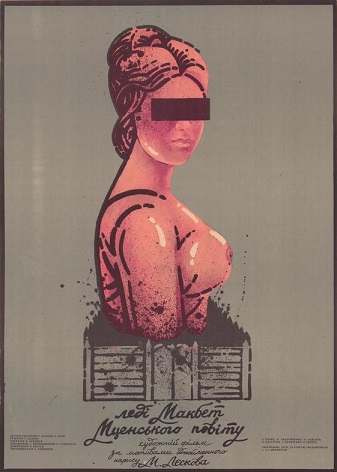
    Saturday November 29th, 2014 matinee –  My friend Dmitry and I both really like Shostakovich’s LADY MACBETH OF MTSENSK; I remember being bowled over by Catherine Malfitano’s portrayal of Katerina Ismailova back in 2000. The chance to see this season’s revival caused us to weigh the pros and cons: basically we were not sure of what to expect from Eva-Maria Westbroek – who plays Katerina this season – having not been especially thrilled with what we’d seen her do to date: a solid but un-illuminating Sieglinde and a seriously miscast Francesca da Rimini. But in the end Shostakovich won out, and we were rewarded with one of the greatest Met experiences in the past decade.

    As Katerina this afternoon, Ms. Westbroek sounded rather wobbly and edgy at first, but as the performance progressed the voice became steadier (though never truly steady) and her control of it was increasingly impressive. It’s a generous voice, and in addition to some rich spinto outpourings she was able to hone the voice down to a whisper at times. As an actress, she surely threw herself unsparingly into the role, winning a roar from the crowd as she took her curtain calls.

    Brandon Jovanovich was the passionate, randy, and ultimately heartless Sergei. His voice is Met-sized, warm and vigorous. Tall and handsome of physique, he tackled the physical requirements of the production with gusto, including being hoisted aloft whilst humping the cook (Holli Harrison is a spirited yet hapless portrayal). Mr. Jovanovich sings the Verdi REQUIEM with the New York Philharmonic in January: something to look forward to even more eagerly after his big success today.

    As the cuckolded Zinovy, tenor Raymomd Very gave a strong vocal performance; dramatically he seemed to be thoroughly under his father’s thumb and unable to comprehend the needs and desires of his slowly-smouldering wife.

    In LADY MACBETH Shostakovich provides a number of finely-crafted roles which today were seized upon by a wonderful coterie of singing actors/actresses. In particular, we had a veritable parade of bassos who plumbed the vocal depths so beloved in Russian music whilst constructing their characters with juicy, scene-grabbing theatrics. In a pair of towering characterizations, Anatoli Kotscherga as Boris and Vladimir Ognovenko (the Police Sergeant) gave object lessons in the art of operatic performing. Mr. Kortsherga was the oily, lazy, hypocritical father figure to a T; his singing had delightful tinges of liquor and sleaze, his tone ample and with a dark vibrance. Mr. Ognovenko, who for over two decades has given us great portrayals at The Met, was in thunderous voice and threw himself into the staging with great gusto. His was a major triumph today. More basso brilliance from Mikhail Kolelishvili (the ample-voiced, dancing priest), Dmitry Belosselskiy (with his deep lamenting sound in the final ‘hymn’ of the doomed prisoners); and Ricardo Lugo (making his mark as a Prison Guard).

    Back in August 1982 I saw a breathtaking Beni Montresor-designed production of Cavalli’s L’ORMINDO given by Chamber Opera Theatre of New York. The two male leads were tenor Ronald Naldi and (then-) baritone Allan Glassman. Both went on to appear in many Met productions. Mr. Glassman made the transition to tenor and has sung both character and leading roles at The Met, including Herod in SALOME and Bégearss in GHOSTS OF VERSAILLES. Today he was cast as the Shabby Peasant, the man who discovers the dead body of Zinovy, setting up the arrest of Katerina and Sergei. Mr. Glassman’s singing was stentorian and superbly characterized, his stage portrayal at once manic and furtive. His scene was a highlight of the afternoon.

    Oksana Volkova, an outstanding Olga in ONEGIN last season, was rich-toned as Sonyetka – how gross that she and Katerina drowned in a vat of dumped human waste! – and Kelly Cae Hogan’s clear, pointed soprano rang out nicely in her few phrases as a Convict. Tyler Duncan (Millhand) and John McVeigh (Teacher) stood out among the supporting cast.

    Safe_image.php

    The hero of the afternoon was conductor James Conlon (above). With both the Met orchestra and chorus on absolute peak form, Conlon shaped the spectacular Shostakovch score with extraordinary commitment, summoning forth the vast colour-range of the music and evoking stellar playing in the featured instrumental solo passages that crop up quite frequently. Conlon gave his singers ideal support, and it was his musical vision that made the performance the thrilling event that it was. After the final chord, the Maestro remained in the pit, shaking hands with many of the players.  

    The Graham Vick production is one of The Met’s finest, making very inventive use of the stage area (especially the trap doors!) and with countless touches to lure the eye: the disco ball in particular casts brilliant shards of light into the auditorium. Elements of the Orthodox faith are incorporated (the over-the-top grieving widows clambering up a towering pile of garbage to plant crosses whilst flagellating themselves or beating their breasts); then there are the comic-opera police force, the roistering peasants, the shirtess hunks who work for Boris. It’s a vulgar, boozy, ironic and  – in the end – moving production. This afternoon’s large audience seemed mesmerized throughout, and there were very few defections at intermission. The ovation at the end was hearty (though more was really deserved) and the orchestra players remained in the pit to be hailed lustily along with James Conlon during the bows. After the final curtain fell, there were loud sounds of celebration from the stage as the cast, chorus, and crew shared in the mutual admiration of their work at the end of a successful run.

    Note: The performance started about 15 minutes late due to some lighting malfunction in the pit.

    Metropolitan Opera House
    November 29, 2014 (matinee)

    LADY MACBETH OF MTSENSK
    Dmitri Shostakovich

    Katerina Ismailova......Eva-Maria Westbroek
    Sergei..................Brandon Jovanovich
    Zinovy..................Raymond Very
    Boris...................Anatoli Kotscherga
    Aksinya.................Holli Harrison
    Millhand................Tyler Duncan
    Coachman................Dustin Lucas
    Peasant.................Allan Glassman
    Steward.................Rod Nelman
    Porter..................Brandon Cedel
    First Foreman...........Kurt Phinney
    Second Foreman..........Daniel Clark Smith
    Third Foreman...........David Lowe
    Priest..................Mikhail Kolelishvili
    Chief of Police.........Vladimir Ognovenko
    Policeman...............Earle Patriarco
    Teacher.................John McVeigh
    Old Convict.............Dmitry Belosselskiy
    Sentry..................Ricardo Lugo
    Sonyetka................Oksana Volkova
    Convict.................Kelly Cae Hogan
    Prison Officer..........Paul Corona

    Conductor...............James Conlon

  • At Home With Wagner VII

    Picwagner2

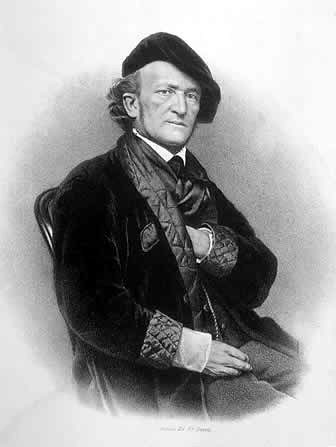
    As Summer began to transition into Autumn, I found myself with less time for my favorite solitary pastime: listening to recordings of live performances of the operas of Richard Wagner. But I spent a long time with a 1975 Bayreuth GOTTERDAMMERUNG, re-playing certain scenes repeatedly. It’s one of the most exciting performances of that opera I’ve ever heard.

    Horst stein

    The overall majesty of this GOTTERDAMMERUNG owes a great deal to the masterful conducting of Horst Stein (above). Under his remarkable leadership, the performance drew me in from the opening chord. Not only is the great span of the work honored in all its epic magnificence, but time and again Maestro Stein illuminated what I thought were familiar passages with fresh nuances of colour or dynamic.

    Hoeffgen-portrait70

    As the First Norn, Marga Höffgen’s voice wells up from the mysterious glow of the prelude. Höffgen (pictured above) is authoritative and she sent a shiver up my spine with the line “Die nacht weicht…” (“The night wanes…”) sung with such a prophetically gloomy resonance. Wendy Fine as the Third Norn has a strong sense of urgency in her singing, and Anna Reynolds as the Second Norn is simply superb: in voice, diction and expression she brings a thrilling dimension to this music. 

    Horst Stein’s spacious reading of the Dawn Music has a triumphant ring, heralding the only truly happy scene in the entire opera. Catarina Ligendza and Jean Cox as Brunnhilde and Siegfried are splendidly matched, she showing a full-bodied sense of lyricism whilst the tenor’s strong, sustained singing will be a boon to the entire performance. Stein builds the rapture of their duet exctingly, a big vocal outpouring worthy of the passions they express…passions soon doomed to betray them.
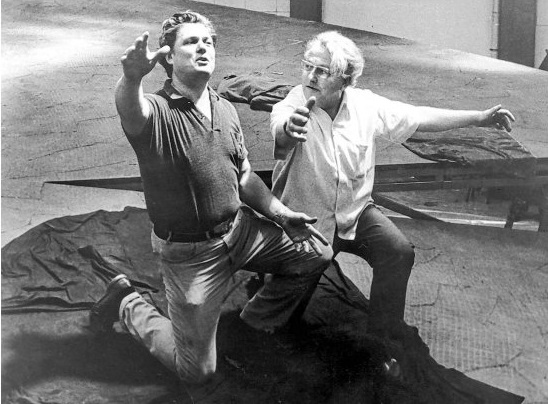
    Cox-wolfgangwagner

    Above: Jean Cox rehearsing at Bayreuth with Wolfgang Wagner

    A wonderful rocking feeling pervades Stein’s reading of the Rhne Journey; we feel like we’re in Siegfried’s boat, along for the joyride. The threesome we meet at the Gibichung Hall are as strong a trio as one could hope for: power and pride of voice from Franz Mazura (Gunther), rich lyricism from Janis Martin (Gutrune), and the start of a masterful performance of Hagen from Karl Ridderbusch.
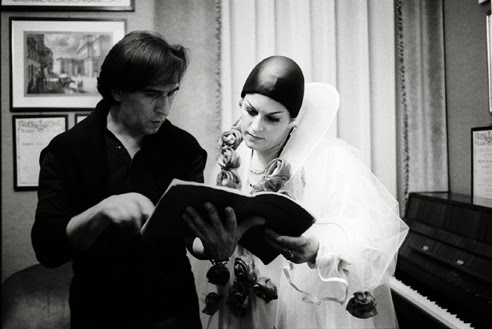
    Claudio Abbado Janis Martin Erwartung 1980

    Ms. Martin (above, with Claudio Abbado) started out singing smallish roles at The Met, eventually having a major career as a Wagnerian soprano. She was my first Sieglinde, Kundry, and Marie in WOZZECK, and she really makes her mark here as Gutrune. She, Mazura, and Ridderbusch share a strong sense of verbal detailing, keeping the dramatic situation in sizzling high-profile; Cox and Mazura are very powerful in the Blood Brotherhood scene; they sail off to the Valkyrie Rock, leaving Ridderbusch to deliver a simply magnificent rendering of Hagen’s Watch, thrillingly abetted by Maestro Stein.
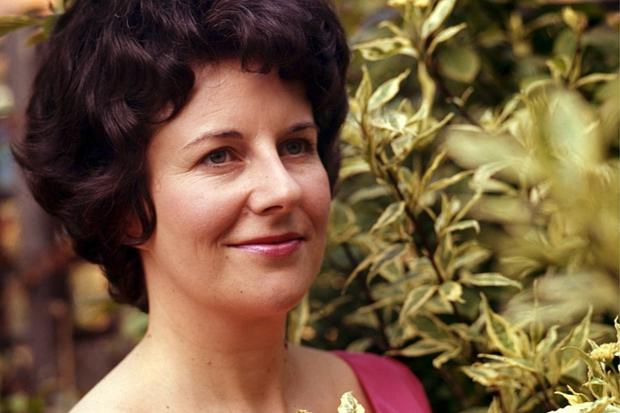
    Anna reynolds

    Above: Anna Reynolds

    The scene is now set for some truly remarkable singing in the confrontation between Brunnhilde and her sister Waltraute, played by Anna Reynolds. Ms. Reynolds is a great favorite of mine; she was my first RHEINGOLD Fricka (conducted by Herbert von Karajan at a Metropolitan Opera matinee…his only Met broadcast), and a few seasons later I had the good fortune to also experience her WALKURE Fricka. All of the things I love about Reynolds’ singing are in ample evidence in this GOTTERDAMMERUNG: her timbre is truly beautiful, her registers even; she is dynamically alert and verbally keen, a very subtle colourist with a sense of majestic authority, later overcome by despair as Brunnhilde refuses to part woth the Ring. The argument between Reynolds and Ligendza is masterfully developed by Maestro Stein, Ligendza standing her ground with firm-voiced dignity. Reynolds concludes the scene on a splendid top A-natural and rushes away.

    As the flames surrounding her abode leap up. Ligendza brings great lyric joy to her anticipated reunion with Siegfried; her despair at his betrayal and her realization of his deceit are finely delineated by Stein and his orchestra; the conflict and Siegfried’s brutal seizing of the Ring are excitingly realized by the singers and conductor.

    Neidlinger-Gustav-02[Saul-881]

    Above: Gustav Neidlinger, a fabulous Alberich

    Maestro Stein commences the second act with a throbbingly sinister prelude which leads to the appearance of Alberich (Gustav Neidlinger), manifesting himself in a dream to his son Hagen. This is one of my favorite scenes in the RING Cycle, and Neidlinger and Ridderbusch give it a tremendous impact, their singing and verbal nuances meshing to great expressive effect. Neidlinger (famed for his portrayal Alberich on the classic Georg Solti commercial RING) so vividly captures the restless insistence of the dwarf, desperate of regain the ring and depending on Hagen to achieve it. Throughout the scene, the two singers receive superb support from Stein.

    Janis Martin makes the absolute most of every line Wagner gives to Gutrune, and then Karl Ridderbusch unleashes a tremendous “Hoi ho!”, grandly summoning his vassals to celebrate the arrival of Gunther’s bride. The chorus’s excitement seems genuine as they sing “Gross gluck und Heil!”; of course, the festive throng soon fall into epic puzzlement as the downcast Brunnhilde appears, escorted by Gunther. Mazura’s potent singing and rugged sense of nobility will make his downfall all the more tragic. The chorus, amazed by Brunnhilde’s stupor, whisper “Was ist ehr?” (“What ails her?”); the answer comes soon enough.

    Catarina Ligendza shows very slight traces of vocal fatigue in this strenuous act, but scarecly enough to be a demerit to the overall impact of her portrayal. Even when somewhat taxed, she plunges bravely onward. The swearing of the oaths – potently underscored by Stein – finds the soprano a bit stressed here and there, and Mr. Cox fudges the brief high-C. But none of this really detracts from the overall thrill of the performance. As Siegfried and Gutrune leave to prepare for the ceremony, Ligendza is back on fine form in expressing Brunnhilde’s uncomprehending woe and then her unbridled fury. Mazura limns Gunther’s shame with disturbing intensity and when Brunnhilde heaps insults in him, he is filled with self-loathing. Ligendza, Mazura, and Ridderbusch then join in the final trio which bristles with dramatic fire, fanned marvelously by Maestro Stein and the orchestra.

    The excellence continues with Act III: Horst Stein’s scene-painting is colourful and detailed, and I love his trio of Rhinemaidens: they blend very well, and you can hear each voice distinctly in the harmonies. Elisabeth Volkmann (Woglinde) sings so prettily, and Inger Paustian (Wellgunde) makes a fine impression as she spies the ring on Siegfried’s finger.
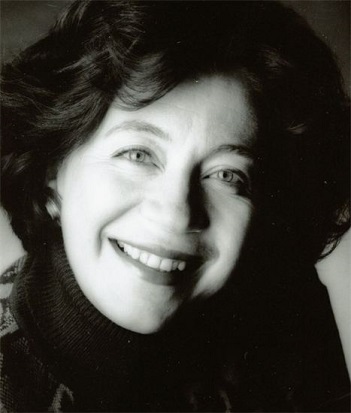
    Sylvia anderson

    I’m particularly happy to have this souvenir of Sylvia Anderson (above), a singer I heard at New York City Opera in the 1970s as Octavian and as Giovanna Seymour in ANNA BOLENA. As Flosshilde, she gives a lovely mellow depth to the Rhinemaidens’ trios; it’s really nice hearing her voice again.

    Unlike some Siegfrieds, Jean Cox has plenty of voice left to spend going into Act III. He really sings: no barking or hoarseness. Calling out to the hunting party from which he has wandered, Cox produces a walloping long high-C, a note most Siegfriends can’t even hit at this point in a long evening; it’s not beautiful, but it’s such a heroic touch.  

    In the ensuing scene, building up to the murder of Siegfried, Ridderbush is simply superb and Mazura remarkably vivid in lines that some baritones throw away. Siegfried’s narrative has a real lilt to it, and Cox is first-rate: yest abother distinctive passage from this imperturbable performer. The orchestral playing continues to shine, movingly supporting the tenor as he regains his senses after Hagen’s spear-thrust has laid him low. This leads to a grand and glorious rendering of the Funeral March by Stein and his tireless players.

    Back at the Gibichung Hall, Janis Martin is again very impressive as she awaits the return of the men. The ensuing scene, with her horror at Siegfried’s demise, Hagen’s crude cruelty, and Gunther’s shame and remorse, is filled with tremendous tension: brilliant work from Martin, Mazura and Ridderbusch, ideally underscored by the valiant Maestro.   
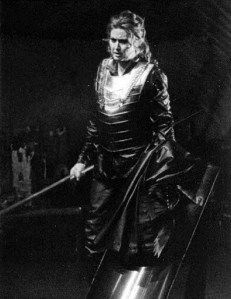
    Ligendza

    And now it’s left to Catarina Ligendza (above) to bring this mighty performance to a close with the Immolation Scene. She summons up impressive reserves for this big sing, and although traces of strain are detectable here and there, the overall sweep of the music and the fine support she gets from Stein send her sailing forward. In the great benedictive phrase “Ruhe…ruhe du Gott!” Ligendza is splendid. She then greets Grane with a fabulous top B-flat and finishes very strongly indeed. Maestro Stein brings his masterful interpretation of this epic work to a close with stunning aural vistas of fire, flood, and redemption.

    ~~~~~~~~~~~~~~~~~~~~~~~~~~~~~~~~~~~~~~~~~~~~~~~~~~~~~~~~~~~~~~~~~~~~~~~~~~~~~~~~~~~~~~~~~~~

    11162-2front_large

    A performance of DER FLIEGENDE HOLLANDER from Vienna 1972 piqued my curiosity, mainly because of the presence of Cornell MacNeil in the title-role. MacNeil first sang the Dutchman in a series of performamces at the Met in 1968, conducted by Berislav Klobucar. His Sentas were Leonie Rysanek, Regine Crespin, and Ludmila Dvorakova. At the time my opera-going friends and I hoped that this would mark the first of many forays into the German repertoire for the voiceful baritone: we imagined him as Kurwenal, Telramund, Wolfram, Amfortas, Hans Sachs, the Wotans, Barak, Orestes, and Jochanaan. But aside from performances as the Dutchman in Seattle in 1972 and then in Vienna in the same year, MacNeil never again sang a German role to my knowledge.

    MacNeil’s a most impressive Dutchman on this Vienna issue; if his monolog lacks the palpable sense of mystery and poetic longing that the greatest interpreters bring to this music, his power is ample and his sense of vocal commitment unerring. He is well-matched in Act I by the Daland of Manfred Schenk who sings strongly; the two men’s long duet here always strikes me as Wagner at his most Verdian; their singing of it is grand yet human. Adolf Dallapozza is a clear-voiced Steersman and the chorus respond heartily to conductor Otmar Suitner’s rollicking tempo for their casting-off chorus which ends the act.

    Suitner sets Act II deftly in motion with the whirring of the spinning wheels; the choral voices seem girlish.
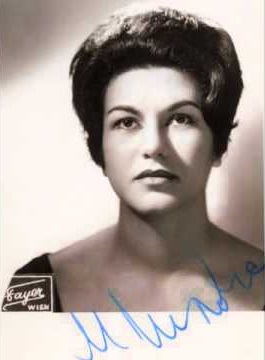
    Lilowa

    In a marvelous bit of casting, Margarita Lilowa (above) is a full-voiced, warm-toned Mary. She brings vocal appeal to a role that is often assigned to ‘character’ singers or aging Wagneriennes.

    JANIS-MARTIN

    Janis Martin (above), an American mezzo-turned-soprano, loomed large in my opera-going career. A Met Auditions winner in 1962 (she sang Dalila’s “Mon coeur s’ouvre a ta voix” at the Winners’ Concert), Martin sang nearly 150 performances at the Metropolitan Opera, commencing in 1962 as Flora Bervoix in TRAVIATA. As a young opera-lover, I heard her many times on the Texaco broadcasts. She eventually moved on to “medium-sized” roles: Siebel, Nicklausse, Lola in CAVALLERIA RUSTICANA. She left The Met in 1965 and built a career abroad, moving into soprano territory. She returned to The Met and from 1974 thru 1977; in thse seasons, she was my first in-house Kundry, Marie in WOZZECK, and Sieglinde. Another hiatus, and then she was back at Lincoln Center from 1988-1992, singing the Witch in HANSEL & GRETEL, the Dyer’s Wife in FRAU OHNE SCHATTEN, Senta, the Foreign Princess in RUSALKA, and two performances of TOSCA. An interesiting footnote from her second Met TOSCA:

    Because of an injury sustained at her previous performance of Tosca on 10/20/93, Janis Martin did not leap from the battlement at the end of the opera but committed suicide by stabbing herself with the knife she had retained after killing Scarpia in Act II."  

    Janis Martin sang a single WALKURE Brunnhilde at the Met in 1997, her final performance there. Elsewhere during her career she sang Ariadne, Isolde, and Ortrud.

    On this Vienna HOLLANDER, Ms. Martin is thoroughly impressive. She is able to produce a clear, soft lyricism in the more refective passages of Senta’s Ballad and then cut loose with authoritative intensity at the climax.

    Like Janis Martin, tenor William Cochran first came to notice as a Met Auditions winner in 1968. At the Winners’ Concert he and co-winner Jessye Norman sang the “Wintersturme” and “Du bist der lenz” from Act I of WALKURE. After singing several performances of Vogelgesang in MEISTERSINGER at The Met in 1968, Cochran went off to build his career and reputation, returning in 1984-1985 for two performances of Bacchus in ARIADNE AUF NAXOS (including a broadcast). You can hear him here in the final scene of Act I of WALKURE with Eileen Farrell. On this Vienna HOLLANDER he’s Erik, the most bel canto of the major Wagnerian tenor roles. He sings clearly and has a feel for the Italianate flow of this two arias. 

    The scene where Erik describes his nightmare to Senta and she becomes increasingly intense in her reactions – since his nightmare signals her dream come true – is finely played by Cochran and Ms. Martin. And suddenly the object of her obsession appears before her. Mr. Schenk sings his jovial, folkish aria very well – he has no idea where all this is leading. And then Ms. Martin and Mr. MacNeil embark on their  great duet, a very taxing piece for both in terms of breath-support, a tessitura that lies high, and the need for expressiveness throughout. MacNeil has a couple off-pitch moments and the soprano is just a trifle tense (but still sucessful) on her highest notes. With Mr. Schenk they drive the trio forward, Ms. Marrtin setting the pace with her high-strung pledge of eternal devotion. There’s no break now leading into the final scene of the opera.

    The boisterous chorus and booted dance-steps of Daland’s crew and their call to the Dutchman’s crew to join them are met with eerie silence at first; later when the ghostly sailors begin their hellish chant, the opposing forces mingle violently. Mr. Cochran’s sturdy singing of Erik’s plea cannot dissuade Senta and after hearing Mr. MacNeil’s farewell – laced with heartbreak – and his revelation of his true identity, Ms. Martin sails clearly thru Senta’s high-lying pledge of eternal faithfulness. Maestro Suitner curiously omits the redemption theme from the opera’s closing moments.

    ~~~~~~~~~~~~~~~~~~~~~~~~~~~~~~~~~~~~~~~~~~~~~~~~~~~~~~~~~~~~~~~~~~~~~~~~~~~~~~~~~~~~~~~~~~~

    11189-1back_large

    Sheer curiosity prompted me to order this disc of excerpts from DIE WALKURE. From the details provided, this peformance seems to have been a broadcast from the Royal Albert Hall of a concert version of the opera, with the orchestra of the Royal Opera House under the baton of Sir Georg Solti. The excerpts are rather oddly chosen: an excellent rendering of Siegmund’s Sword monolog from Act I finds tenor Ernst Kozub at his considerable best. The appetite is whetted for a continuation of the scene, but instead we jump to the final few minutes of Act I, with Claire Watson an urgent Sieglinde and Mr. Kozub ever-impressive.

    Then suddenly we are in Act III, with Ms. Watson being first consoled and then inflamed by the sturdy Brunnhilde of Anita Välkki. Especially fine here are the mezzos and altos among the Valkyries as they warn Brunnhilde that her plan to aid Sieglinde’s escape may falter: Maureen Guy, Monica Sinclair, and Elizabeth Bainbridge are simply super.
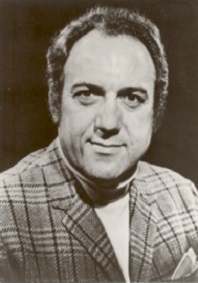
    13359305

    The main reason to acquire this disc was to hear Forbes Robinson (above), a Covent Garden stalwart and noted Handelian, as Wotan. Back in the 1960s and 70s when I subscribed to the British magazine OPERA, Robinson’s name was everywhere. I was very curious to hear what sort of Wotan he might have been, and the answer – based on this sampling – is: marvelous! His voice is ample, rich, and warm, and he comes storming on in Act III to chastise his beloved daughter. Once the Valkyries have departed, Miss Välkki and Mr. Robinson give a truly moving performance of the opera’s great final scene, abetted with grandeur by Maestro Solti. If the soprano strays from pitch once or twice, her lovely take on Brunnhilde’s mixture of vulnerability and plucky courage is very finely expressed. The basso’s is surely one of the steadiest and most vocally pleasing Wotans I’ve ever heard, making me wish that the second act, with the god’s great monolog, had also been preserved. Robinson’s performance here amounts to a revelation, actually.

    ~~~~~~~~~~~~~~~~~~~~~~~~~~~~~~~~~~~~~~~~~~~~~~~~~~~~~~~~~~~~~~~~~~~~~~~~~~~~~~~~~~~~~~~~~~~ 
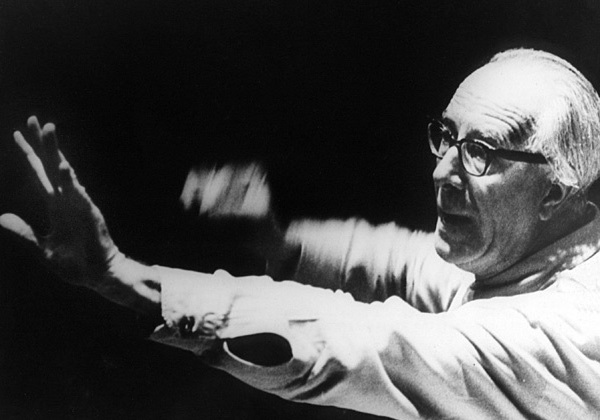
    Aktuelles_Eugen_Jochum

    Above: conductor Eugen Jochum

    And now that Autumn is slipping into Winter, I set out to select a complete live performance of TRISTAN UND ISOLDE from the several on offer at Opera Depot. I wanted to delve deeper into this opera, which over the years has somehow managed to elude my thorough devotion; my plan was to choose a recording that would hopefully inspire me, and study the score while listening.

    After much weighing of pros and cons (it actually took me a couple weeks to make a final choice) I narrowed the list down to three recordings; then the Depot offered one of their 50%-off sales and I made my purchase: the performance is from the Bayreuth Festival 1953, conducted by Eugen Jochum. Within moments of putting the on the first disc, I knew I’d made a perfect choice. It’s a first-class performance in every regard, and the sound quality is very fine indeed.

    Maestro Jochum is the great underlying force of this performance. From the opening measures of the prelude, with their pregnant pauses, Jochum steers a monumental course thru this score. The first voice we hear is that of a young sailor, singing from high in the rigging. The tenor is Eugene Tobin, who recently passed away. He does a beautiful job with this plaintive song: a song with a sting in its tail that rouses Isolde from her state of depressed lethargy. And we are off!
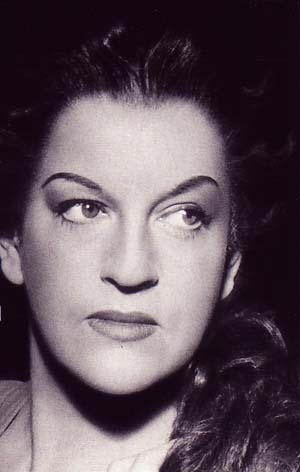
    Astrid_varnay

    Astrid Varnay (above) is for me a very uneven singer. Aside from her recording of ELEKTRA on the Koch label, I don’t have any of her commercial recordings; but I have started to appreciate her more on these Opera Depot releases. I mulled over whether she was the Isolde I wanted to have, and indeed for the first few moments when she starts to sing, I thought that the ‘matronly’ quality I sometimes hear in her singing would be a detriment. But soon she is warmed up and she goes on to give a thrilling performance in every regard. Her lower and mid-range are on exceptional form, and the top notes trumpet out. Her dynamic control is impressive as is her shading of the text.

    Malaniuk

    Ira Malaniuk (above) makes a superb impression as Brangaene, musically and textually detailed and urgently expressive. Her singing throughout Act I is compelling, and she brings a caressive softness to some passages, drawing us in. 

    Vinay-tristan

    Ramon Vinay (above) is both powerfully masculine and poetic as Tristan. As his faithful friend Kurwenal, Gustav Neidlinger barks a bit as he chides Brangaene; later he will reveal his depth of musicality and a gruff tenderness of tragic stature.

    We’ve now met the main characters for Act I: Malaniuk returns from her unsuccessful errand to Tristan, and Varnay, at first subtle and then passionate, prepares to unfold her Narrative. Here the soprano is marvelous, the text vividly coloured and the singing rich and secure. Especially gorgeous is her rendering of “Er sah mir in die Augen…” as she describes the troubling glance of the wounded Tantris. Then onwards to a spear-like top B and a blazing, overwhelming curse. 

    Malaniuk responds with excelling lyricism and a nice, steady top G: the interchanges between her and Varnay tingle with both vocal inspiration and verbal acuity as they discuss the various potions: here Malaniuk’s singing senses the mystery and peril. It’s all thoroughly absorbing.

    Varnay is imperious, grandiose as she bids Kurwenal obey his future queen and send Tristan to her at once. She then gives her orders to Brangaene, describing the potions with great intensity; their conversation again bristles with foreboding, and Varnay’s low-A at “Todestrank!” is another marvel. Maestro Jochum now draws forth the ominous build-up to the encounter between Isolde and Tristan. 

    This scene, which begins with a formal exchange, is perfectly underscored by Jochum’s orchestra: the buildup of tension and passion is spine-tingling, and how cunningly Varnay expresses her reasons for not having killed Tristan. As the drinking of the potion looms – with a loud interjection from the sailors – Varnay’s vocal sorcery and Vinay’s moving sense of nobility are captivating. They drink; their doom is sealed: a flood of tenderness followed by the desperate confusion of the ship’s landing and the lovers torn asunder.

    As the acronical second act opens, Malaniuk’s continued perfection and Varnay’s successful lightening of the voice as they discuss Melot keep tension high. Then Brangaene/Malaniuk seeks desperately to dissuade her mistress from extinguishing the torch.  Jochum’s thrilling impulsiveness as the lovers finally meet – with Varnay striking some big top-Cs – slowly settles down, and the conductor and his players steep the interlude in a misty perfume. In the love duet, the singers become poets; their urgency waxes and wanes, tenderness and rapture build and then evaporate. Malaniuk’s voice floats her warning over Jochum’s dreamy orchestra. A heroic outpouring from Varnay and Vinay…and then fate intervenes.

    Weber-Ludwig-02

    Ludwig Weber (above) with his huge, inky voice – full of heartbreak – is very impressive as King Marke, with a flood of painful tenderness as his narrative ends. As Tristan invites Isolde to join him in the realm of darkness, Jochum and Vinay blend is a redolent expressiveness. Then Tristan surrenders himself to Melot’s blade and in a flash, the tragedy is fulfilled.

    In his doom-ladened rendering of the opening chords of Act III, Jochum again strikes at the soul. The cor anglais solo is gorgeously played. Gerhard Stolze – well-known for his Loge and Herod – shows off his lyrical aspect as the Shepherd. Gustav Neidlinger’s Kurwenal assumes epic vocal proportions here, deeply moving and drenched with humanity. And Neidlinger’s great joy as Tristan awakens is truly touching.

    As madness creeps in and overtakes Tristan, Ramon Vinay veers with aching intensity from wild abandoned to fevered calm. Following a stentorian outburst, Tristan collapses; yet again Neidlinger moves us in expressing his fear that his master has died. Vinay intones a gentle “Wie, se selig”. Then the rising ecstacy as Tristan senses the approach of Isolde’s ship. The shepherd pipes up! Incredible optimism and joy: Kurwenal urges Tristan to live. But in vain: with a single rough-tender “Isolde!”, Tristan expires.

    The first hints of the Liebestod are heard in the orchestra. As the steersman, a young Theo Adam (later to become an excellent Wotan and Hans Sachs), warns of the approach of another ship. Jochum now marvelously underscores Kurwenal/Neidlnger’s magnificent death. Ludwig Weber and Ira Malaniuk have their final expressions, all awash with futile despair. And then Jochum and Varnay unite for an overwhelming Liebestod.

    These recordings are available from Opera Depot.
  • Shostakovich Reflected @ Chamber Music Society

    Images of D S

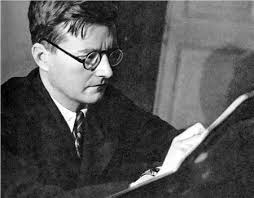
    Above: Dmitry Shostakovich

    Sunday November 23rd, 2014 – We seem currently to be in the midst of an impromptu Shostakovich Festival at the halls of Lincoln Center. Last night, the New York Philharmonic gave an epic performance of the composer’s 8th symphony under the baton of Jaap van Zweden. This afternoon, Chamber Music Society of Lincoln Center offered a very satisfying programme entitled Shostakovich Reflected, with works by Sibelius and Debussy mixed with a Shostakovch song cycle and his Trio #2. At the Metropolitan Opera, the composer’s LADY MACBETH OF MTSENSK is holding forth, conducted by James Conlon (I’ll see it on November 29th). In February, New York City Ballet will jump in with a revival of Christopher Wheeldon’s ballet, MERCURIAL MANOUVRES, set to the Shostakovich piano concerto #1. The Philharmonic meanwhile will offer two more Shostakovich symphones later in their season: the 5th (conducted by Long Yu, from January 22nd-24th, 2015) and the 10th (Alan Gilbert conducting; from April 8th-11th, 2015).

    At Alice Tully Hall today, Chamber Music Society‘s Shostakovich Reflected programme again left me searching for adjectives (superlatives, really) to describe the level of music-making by the participating artists: musicians who are rapidly becoming icons for me much as the great opera singers were back in my early days of opera-going in the 1960s and 1970s.

    The Sibelius Trio in G minor opened the programme today; this brief, single-movement work has a rather dark-hued, wintry feel. The music evokes a sense of longing but also of resignation. It’s unknown why Sibelius never enlarged upon this work beyond the opening movement, though he apparently made sketches, they were never developed. Yura Lee (violin), Mark Holloway (viola), and Jakob Koranyi gave a deeply-felt performance, establishing the mood so convincingly that one wanted it to go on. 

    Soprano Dina Kuznetsova then appeared for Shostakovich’s Seven Romances on Poems of Alexander Blok, with Gilbert Kalish at the Steinway, Yura Lee, and Mr. Koranyi. The soprano’s voice at first seemed overwhelming in the hall, but soon the proper balance was found and she and the musicians worked in a fine state of rapport, the vocal line now well-controlled with some very expressive dynamics. Mr. Kalish played with his customary mixture of finesse and passion, and both Ms. Lee and Mr. Koranyi displayed their intrinsic mastery of their instruments in songs where the accompanying voices take a prominent place. The audience reacted with great enthusiasm to this set, calling the artists back three times. 

    It’s always nice to find links to the ballet on programmes of symphonic or chamber music; this afternoon my friend Monica Wellington and I were especially pleased to hear Claude Debussy’s Six épigraphes antiques for Piano, Four Hands, which we both love in its danced incarnation at New York City Ballet: ANTIQUE EPIGRAPHS, a Jerome Robbins masterpiece with an all-female cast. Gilbert Kalish and Soyean Kate Lee shared keyboard, with much hand-crossing. Their refined playing evoked Nature and the rites and rituals of a long-lost tribe. 

    The concert concluded with a thrilling performance of Shostakovich’s Trio No. 2 in E minor, composed fifty years after the opening Sibelius trio. This work opens with solo cello playing in the highest register; here Mr. Koranyi displayed incredible control. Violin and piano (the two Ms. Lees) join in a fugue; the underlying feeling is one of pensive melancholy, the playing from all three artists nothing less than ravishing. New themes rise up, and the music flows with much interchange of the three voices.

    The brisk and rather jagged scherzo that follows seems alternately joyous and frantic: a lively dancelike theme cascades along, played with marvelous virtuosity by our trio tonight. The piano ripples thru scale passages or emphatic rhythmic motifs; the violin and cello alternately pluck and sing.

    Yura Lee’s poignant introduction of the third movement’s lamenting theme set the tone for this Largo, with its heart of darkness. The voices melded in music which seemed to summon up the despairing tread of a funeral procession, the misty veil shot thru with glimpses of burnished light. 

    The finale sweeps aside this heavy sense of grief, yet proceeds under a threat of returning gloom. The pianist sets the music marching, and there’s more dance-rhythms as well; wit and humor are not forbidden, but are delivered with irony. The song-like theme of the first movement is recalled, setting up a continuum of memory even as the work plunges forward.

    I can’t say enough in praise of the three musicians who wrought this superb performance. And the  audience clearly shared my sense of deep appreciation: at the end, everyone stood up and cheered as the players were summoned back for repeated bows.

    The Program:

    The Artists:


  • Score Desk for LA BOHEME

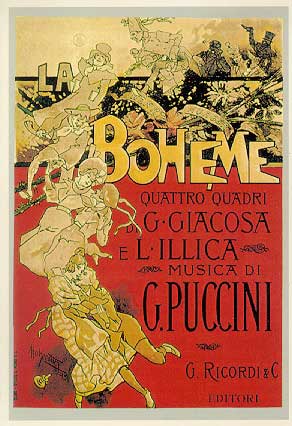
    Boheme

    Tuesday September 23rd, 2014 – After a touch-and-go Summer of contract negotiations where – at one point – it seemed inevitable that there would be a lock-out at the Metropolitan Opera, the shut-down was miraculously averted and The Met opened last night with a new production of LE NOZZE DI FIGARO. The casting of the three major female roles in the Mozart opera didn’t appeal to me, so I skipped it and started my season on the second night.

    The house seemed fuller than on most evenings last season, perhaps an indication that New York City opera-goers prefer traditional productions. And yes, curtain-rise on Franco Zeffirelli’s Cafe Momus still evokes a big round of applause.

    Admittedly tonight’s cast, on paper, didn’t have much allure. The Met seem to be putting all their eggs in one basket this first week: the singers aligned for MACBETH (Netrebko, Lucic, Calleja, Pape) are about the closest you can come to an all-star cast in this day and age. Friends asked me why I bothered with this BOHEME and as the curtain fell on the Cafe Momus scene I in fact asked myself why I was there. 

    Bryan Hymel in the role of Rodolfo was the main attraction for me tonight; his impressive performances in LES TROYENS and MADAMA BUTTERFLY drew me back to hear him in this, his second Puccini role at The Met. He did not seem at his best tonight though there were many appealing moments in his singing of the role. He was not much helped by conductor Riccardo Frizza who tended to unleash too much orchestral volume at key moments. Hymel’s account of the famous aria “Che gelida manina” was nice, and he sustained the high-C to fine effect despite the conductor’s overdrive of volume. At the end of the big Cafe Momus ensemble, the two sopranos were perched none-too-sweetly on their high-B when Hymel chimed in on the same note and gave the climax the necessary zest.

    Neither of the women were very pleasing to the ear. Ekaterina Scherbachenko (Mimi) lacked a persuasive feeling for the Italian style and didn’t bring a lot of nuance or colour to Mimi’s Act I narrative. When she ventured to the upper register, an uncomfortable feeling set in. Oddly, she did not attempt the written high-C at the end of the love duet; instead she sang an E-natural whilst Mr. Hymel sustained a high-C. This put me in mind of the 1968 Met broadcast of BUTTERFLY where Teresa Stratas ducked the final high-C of Act I, leaving her tenor Barry Morell to finish on his own.

    Myrto Papatanasiu revealed a dime-a-dozen overly-vibrant lyric soprano as Musetta, snatching at her interjectory phrases until she got to the Waltz which was reasonably well-sung despite rather shallow tone. I don’t suppose we’ll ever again experience a Musetta the likes of Carol Neblett or Johanna Meier: big voices and big personalities. 

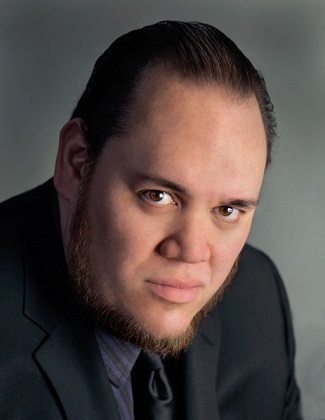
    NextWaveKelseylg812

    The evening’s most impressive singing came from baritone Quinn Kelsey (above, in a Ken Howard headshot) as Marcello. This is a Met-sized voice for sure and I got a vast amount of pleasure listening to him nail Marcello’s music, phrase after phrase. I would have liked to have heard him in the third and fourth acts where the character has so much great music to sing, but the overall lack of magic in the evening sent me home after Momus. I hope The Met will give Quinn Kelsey more opportunities.

    Of the remaining members of the cast, no one managed to make a special impression. The children’s chorus deserve a note of praise.

    There’s nothing wrong with taking curtain calls after each act provided the audience is displaying sufficient enthusiasm to summon the singers out before the gold curtain. After both of the first two acts tonight, the applause had completely stopped but the bow lights came on and the singers came out, forcing people to clap for them out of a sense of obligation. I understand that the bows are ‘scripted’ into the performance but someone needs to determine whether there is any applause happening before sending the singers out.

    Metropolitan Opera House
    September 23, 2014

    LA BOHÈME
    Giacomo Puccini

    Mimì....................Ekaterina Scherbachenko
    Rodolfo.................Bryan Hymel
    Musetta.................Myrtò Papatananasiu [Debut]
    Marcello................Quinn Kelsey
    Schaunard...............Alexey Lavrov
    Colline.................David Soar
    Benoit..................Donald Maxwell
    Alcindoro...............Donald Maxwell
    Parpignol...............Daniel Clark Smith
    Sergeant................Jason Hendrix
    Officer.................Joseph Turi

    Conductor...............Riccardo Frizza

  • My First RING Cycle: WALKURE

    Jones-Gwyneth-04

    Above: Dame Gwyneth Jones

    A week-long RING Cycle invariably involves RHEINGOLD on Monday night followed immediately by WALKURE on Tuesday. This places heavy demands on the gentleman singing Wotan; he has a lot of singing to do on Monday and even more (much more) on Tuesday. Fricka also appears in both operas, but her role in RHEINGOLD – though major – is not especially demanding, and in WALKURE she has only one scene: quite a strenuous one vocally, but once it’s over she is finished for the night. Fortunately the Wotan in my first Cycle, Hans Sotin, managed the back-to-back operas superbly. And Helga Dernesch’s Fricka was a thrilling interpretation.

    WALKURE brings four new characters to the drama: Brunnhilde, Sieglinde, Siegmund and Hunding. With Dame Gwyneth Jones’s first appearance as Brunnhilde in Act II, this RING Cycle – already off to such an impressive start – soared into the stratosphere.

    Here’s my diary entry from the second night of the Cycle:

    WALKURE – excellent despite some audience distractions. Levine and the orchestra do wonders with this score. The cast was really fabulous, though I had mixed feelings about the Siegmund of Robert Schunk. He looked well, sang and phrased in a musicianly manner; he had the right feel for the role and – for the most part – more than enough volume. He tended, however, to sing just a shade flat much of the time. Too bad…he tried hard and he did have his moments.

    Everyone else was on peak form. Matti Salminen gave a tremendous Hunding, rolling out the tone with tremendous force and simply smacking of evil…really menacing sound and thoroughly convincing as an actor: his long, deadly stare at Siegmund after man-handling his wife was such a provocation (Siegmund, weaponless at this point, is in no posotion to respond). Salminen continues my great line of Hundings – Rundgren, Haugland, Moll, Macurdy – and he’s such a fascinating artist.

    Gessendorf_Portrait

    We have a wonderful new Wagnerian soprano in Mechthild Gessendorf (above) who, if this performance is any indication of her abilities, is a fine addition to the operatic gallery. Her bright, almost girlish tone has a clear middle range with top notes that can be clean-attacked or slightly scooped-up to: they are exciting!  Oddly, she reminds me a bit of Mara Zampieri though I can’t put my finger on why! She gave a glorious Sieglinde, full of feminine warmth and real emotional commitment; I look forward to her Kaiserin and Senta.

    Helga Dernesch’s Fricka proved spellbinding, sung with great authority and vocal power; the slight peril in the upper range was overcome by force and she simply did a magnificent job. The drama of her plea was put across with an awesome balance of of security and desperation: really engrossing. And she looked gorgeous…a splendid assumption of the role.

    Hans Sotin’s Wotan was given with great vocal command and heartrending dramatic sureness. He was in excellent voice, giving a truly impressive monolog and ending Act II with a furious “Geh!” to Hunding who crashed to the ground at the god’s irate command. Singing gloriously, Sotin came thru with much moving and beautfully modulated vocalism in the third act, and he triumphantly sustained the top notes of his final phrase to majestc effect…bravississimo!!!!

    It was a great pleasure to see Dame Gwyneth Jones on the Met stage again: still unsure of how she would sound, she nevertheless is an arresting physical presence. But as soon as she began to sing, it was clear we were in for a thrilling Brunnhilde: her great personal and vocal radiance set its stamp on the entire evening. She is a very different Brunnhilde from Behrens, more feminine and less complicated. She offered a spectacular battle cry, sustaining the clear-attack high-C and thereafter she simply went at it vocally all evening, with powerful and moving singing in the ‘Todesverkundigung where she well portrayed Brunnhilde’s increasing embarrassment at the deceitful way Wotan has treated Siegmund. Jones’s third act was wonderful in every regard, with a movingly intoned “War es so schmählich” and increasing desperation as she begs Wotan to spare her degradation. Her final plea – to surround her slumbering place with magic fire – literally tore at the heart. The sheer size of Dame Gwyneth’s voice is such a treat at The Met, and her occassional wooziness and a couple of oddly pronounced words (“Siegfried” in her Act III address to Sieglinde somehow became “Augfried”) were just trifles compared to the great flood of warm, emotional power she generates. Simply great!! And she looks marvelous…great legs! So, a really remarkable evening with huge ovations for all and a particular hurricane of applause for Dame Gwyneth. A grand night!!!”

    Metropolitan Opera House
    May 2, 1989

    DIE WALKÜRE
    Wagner

    Brünnhilde..............Gwyneth Jones
    Siegmund................Robert Schunk
    Sieglinde...............Mechthild Gessendorf
    Wotan...................Hans Sotin
    Fricka..................Helga Dernesch
    Hunding.................Matti Salminen
    Gerhilde................Pyramid Sellers
    Grimgerde...............Wendy Hillhouse
    Helmwige................Marita Napier
    Ortlinde................Adriana La Ganke
    Rossweisse..............Judith Christin
    Schwertleite............Sondra Kelly
    Siegrune................Diane Kesling
    Waltraute...............Joyce Castle

    Conductor...............James Levine

  • My First RING Cycle: RHEINGOLD

    Rheingold0304.08

    Above: A scene from DAS RHEINGOLD, in the Met’s classic Otto Schenk production; photo by Ken Howard

    A quarter-century has passed since I first experienced a complete performance of Wagner’s RING DES NIBELUNGEN as the composer intended it to be seen: over the course of a single week. In fact, though I had seen all the RING operas previously and would see them many times again since, this 1989 Cycle has been the only time to date that I attended a “RING Week”.

    I was living in Hartford, Connecticut at that point in time, frequently spending long weekends in NYC to attend opera and ballet performances. My friend Paul Reid and I had decided to attended a Met RING Cycle at the end of the 1988-1989 season. There would be a Saturday matinee Cycle plus two week-long Cycles; we were determined to do a RING Week. So when the casting came out, we quickly decided on the ‘second cast’: we had seen the Hildegard Behrens/James Morris combination in previous performances of the individual operas and they were slated for the first weekly Cycle (as well as the Saturday matinee broadcast Cycle). The second weekly Cycle boasted not only a different Brunnhilde (Eva Marton) and Wotan (Hans Sotin) but ‘new’ and different casting of several prominent roles: William Johns (Siegfried), Franz Mazura (Alberich), Helga Dernesch (Fricka/Waltraute), Mechthild Gessendorf (Sieglinde), and Gweneth Bean (Erda). James Levine of course was conducting every Cycle.

    We ordered our tickets, and then a cast change was announced: Eva Marton had withdrawn and would be replaced by Deborah Polaski. This gave us pause, since at the time neither of us were admirers of Ms. Polaski. We fretted a bit, but it was too late to switch to another Cycle (they had all sold out very quickly). Then came another announcement: Ms. Polaski had withdrawn and the Brunnhilde would now be Dame Gwyneth Jones. We were not thrilled with this announcement either, since Dame Gwyneth had at that time something of a reputation for wobbling vocally. It wasn’t until she appeared onstage for Act II of WALKURE that our concerns were allayed: she was magnificent in every regard.

    In the days leading up to our Cycle, anticipation built and built. Concerns about leaving my young lover Kenny on his own for a week were swept aside as the idea of seeing the RING in toto was about to become reality. Paul and I had booked (separate) rooms at the Colonial House on West 22nd. I had stayed there several times in recent seasons: a very comfortable and affordable gay guest house. I was leading a promiscuous life then (despite being in a relationship) and the wonderful thing about the Colonial House was: it was hook-up heaven. There was no need to go to a bar or club: there were always men who were ready, willing and able staying at the House. The roof deck, which offered nude sun-bathing, was especially conducive to socializing.

    May 1st finally arrived; Paul and I checked in at the Colonial and geared up for our big operatic adventure.

    Here’s what I wrote about the RHEINGOLD in my diary:

    “I am finally seeing the complete RING Cycle in the course of a single week which fulfills a long-held operatic desire. The opening RHEINGOLD was a wonderful evening and set forth high expectations for the evenings to come. Levine’s skillful conducting and the excellent playing of the Met orchestra were a major factor in this magnificent Wagnerian evening. The production is visually engrossing, especially the opening scene in the murky depths of the Rhine. Casting was strong all down the line, with a very fine trio of Rhinemaidens (Diane Kesling stood out, and Kaaren Erickson and Meredith Parsons were both very good…though I did feel they gave a bit too much vibrato at times).

    Franz_Mazura

    Franz Mazura (above) as Alberich arrived on the scene and seized our imagination with his huge, thrustingly creepy voice, full of darkest intent. He was a fabulous Alberich, tireless in his vocal and dramatic commitment. Could this bizarre creature be more powerfully portrayed? Mazura’s generous artistry assured his huge success in the role: he made the character seem so real.

    Sotin_hans200x304

    Above: the Lord of This RING: Hans Sotin. He was in top form for a really impressive Wotan, immediately showing his vocal authority in his opening conversation with Fricka. His voice – large and steady and even from top notes down to the depths – created a real sense of majesty. [Sotin, as it turns out, sang his final Met Wotans in these performances].

    Dernesch_Isolde1Sa72PG

    Helga Dernesch (above): her fascinating voice and truly intense emotional involvement brought Fricka to life – incredibly powerful, with her deep lower voice and somewhat insecure top which curiously adds to her appeal.

    Her siblings were Gary Bachlund as Froh, revealing an embryonic heldentenor of some warmth; James Courtney as a sturdy Donner; and Mari-Anne Häggander, who made a great deal out of Freia’s brief role with her vulnerable appearance and full, clear lyric soprano.

    The giants were especially good: John Macurdy’s voice (Fasolt) sounded huge, and Matti Salminen (Fafner) let his oily tones roll out with great dramatic force – super!  Horst Hiestermann was a vivid Mime, but I found Graham Clark’s Loge did a bit too much prancing physically; and I guess I prefer more heldentenorish sound in the role, though Clark surely did sing musically and with clarity and good carrying power. Gweneth Bean’s large, rich voice created a really glorious impression as Erda – she just poured the tone out!

    At the end, a very enthusiastic reception for everyone – especially Bean, Dernesch, and Levine. Very exciting inaugural night of my RING! There were many moments when chills passed thru me: a sensation that is not often experienced at the opera these days. Mazura in particular thrilled me in this way with his theft of the gold and again as he placed his curse on the Ring. So exciting!”

    Metropolitan Opera House
    May 1, 1989

    DAS RHEINGOLD

    Wotan...................Hans Sotin
    Fricka..................Helga Dernesch
    Alberich................Franz Mazura
    Loge....................Graham Clark
    Erda....................Gweneth Bean
    Fasolt..................John Macurdy
    Fafner..................Matti Salminen
    Freia...................Mari-Anne Häggander
    Froh....................Gary Bachlund
    Donner..................James Courtney
    Mime....................Horst Hiestermann
    Woglinde................Kaaren Erickson
    Wellgunde...............Diane Kesling
    Flosshilde..............Meredith Parsons

    Conductor...............James Levine

  • Score Desk for ARABELLA

    Glass_of_water_350

    Thursday April 24th, 2014 – Of Richard Strauss’s three well-known romantic-style masterpieces, ARABELLA is probably the most difficult to love. ROSENKAVALIER has its marvelous progession of waltzes to lilt the listener along, and CAPRICCIO boasts its gorgeous Moonlight Music and the Countess Madeleine’s radiant final scene. In ARABELLA the memorable music seems to come in fits and starts, and although the final scene is really appealing, it doesn’t quite match the sweep of either of the other two operas’ closing passages. 

    In ROSENKAVALIER there’s the double-feature of love (the May-September affair of Octavian and the Marschallin followed by the thrill of new, impetuous love discovered by Octavian and Sophie); in CAPRICCIO, the Countess’s choice between her two lovers is symbolic of the operatic dilemma of ‘which is of greater import in an opera: the words or the music?’  For Arabella and Mandryka, it’s love at first sight and it comes along just when the Waldner family most needs it to happen. The misunderstanding between the newly-pledged couple is quickly resolved and they can go forward without impediment. It’s a neat little plot but somehow it fails to touch the heart the way ROSENKAVALIER does; and ARABELLA‘s musical denouement doesn’t quite thrill us like CAPRICCIO‘s does.

    Despite these thoughts about ARABELLA‘s appeal, I was keen to experience the opera live again and it was a good performance overall, thanks largely to Philippe Auguin’s excellence on the podium. The orchestra of course played remarkably well and – unlike the three most recent conductors whose Met performances I have attended (Mssers. Armiliato, Noseda and Mariotti), Auguin knows how to scale the score’s dynamics so his singers are always audible and never seem pressured to over-sing.

    Though perhaps lacking the last bit of vocal glamour that makes for a truly memorable Arabella (Della Casa, Te Kanawa and Fleming each had it…and how!), Erin Wall sang the title-role quite beautifully: the voice is clear with a nice sheen to it. Her performance was slightly compromised in Act I by having to sing the opera’s most beloved passage – the duet for Arabella and Zdenka – with Juliane Banse who is simply not up to the role of Zdenka/Zdenko at this point in her career. But in her narrative to end the first act, Wall was really lovely and expressive, and she was equally impressive in Act II where the passionate duet for the just-met Arabella and Mandryka was the evening’s vocal high point. Later, as Arabella bids farewell to each of her suitors in turn, Wall made the most of each phrase. 

    Michael Volle, who I first heard on a tape from his appearance at Cardiff Singer of the World in 1993, has arrived at The Met. His voice is Met-sized and unimpeded throughout the range, and it’s got a nice, rather gritty edge to it when needed. His Mandryka was impressive, and hopefully he’ll be back in other repertory.

    Ms. Banse, who we heard earlier this season in the Mahler 4th at Carnegie Hall, has lovely instincts but she now sounds too mature and quavery for such a youthful assignment as Zdenka. Her vibrato rather spoiled the Act I duet with Arabella tonight and overall she just seemed mis-cast. Banse made some very fine recordings earlier in her career; this belated Met debut seemed a miscalculation by both the singer and the House. When the originally-scheduled Genia Kühmeier withdrew from this revival, The Met could have seized the opportunity to give the role to one of their blooming lyric-coloraturas – maybe Lisette Oropesa, Erin Morley, or Ashley Emerson: any of them would have been more vocally apt than Ms. Banse. They didn’t know the role? Callas learned Elvira in PURITANI in seven days, whilst singing Brunnhilde in WALKURE in the same time-frame. Surely any of these young Met girls – helped by The Met’s musical staff – could have whipped up a delectable Zdenka in even less time. Oh well, water over the dam…or under the bridge.

    The rest of the cast did well, notably Garrett Sorenson (Matteo) and Brian Jagde (Elemer); Martin Winkler was a loud Waldner. Audrey Luna successfully negotiated the high-flying roulades of the Fiakermilli, winning the audience’s acclaim. I was recalling my favorite Fiakermilli, Rita Shane, who sang it at La Scala in 1970, conducted by Wolfgang Sawallisch. I received a copy of it on reel-to-reel and incredibly, Ms. Shane had been permitted to interpolate a final high-D to end ARABELLA‘s second act (Fiakermilli’s coloratura normally just dwindles to nought). That’s the kind of thing you don’t hear every day.

    Although there were many empty seats this evening at The Met, ARABELLA – not usually a major box office draw – was better-attended than some recent performances. It was already 10:00 PM when the second intermission started and I had to weigh the idea of staying to the end or of getting home by midnight. Though I would like to have heard Ms. Wall in the opera’s final scene, the idea of another extended and droopy intermission turned me off. As I was leaving, it seemed several other audience members had the same idea.

    Metropolitan Opera House
    April 24, 2014

    ARABELLA
    Richard Strauss

    Arabella................Erin Wall
    Mandryka................Michael Volle
    Zdenka..................Juliane Banse
    Matteo..................Garrett Sorenson
    Adelaide................Catherine Wyn-Rogers
    Count Waldner...........Martin Winkler
    Fortuneteller...........Victoria Livengood
    Count Elemer............Brian Jagde
    Count Dominik.......... Alexey Lavrov
    Count Lamoral...........Keith Miller
    Fiakermilli.............Audrey Luna
    Welko...................Mark Persing
    Djura...................Jeffrey Mosher
    Jankel..................Timothy Breese Miller
    Waiter..................Mark Schowalter
    Card Player.............Scott Dispensa
    Card Player.............Seth Malkin
    Card Player.............Earle Patriarco

    Conductor...............Philippe Auguin