Tag: Met Opera

  • James Levine’s Return to The Met

    J LEVINE

    Tuesday September 24th, 2013 – James Levine’s return to the podium of the Metropolitan Opera House was the main reason I attended the season’s prima of Mozart’s COSI FAN TUTTE. The maestro last conducted at The Met on May 14, 2011 (WALKURE) and in months that followed numerous rumors circulated as to his health troubles and his posisble return to conducting. One usually reliable source indicated it was unlikely we’d ever see him in The Met pit again.

    But then the the outlook began to brighten: Levine was spotted riding his motorized wheelchair thru Central Park. And then came the best news: on May 19th, 2013, Levine led The Met Orchestra in a concert at Carnegie Hall. Tonight he was back in The House where I first heard him conduct at his debut (and exciting but uneven TOSCA in June 1971) and where I have experienced dozens of his performances over the ensuing decades.

    About a week prior to tonight’s performance, I heard that COSI was not selling well at the box office. When I relayed this information to a friend, she said: “Well, COSI is not a popular opera.” But I beg to differ: I think it’s always been well-attended in the past; but the current cast – aside from Matthew Polenzani – is not filled with particularly luminous names. In the past when singers like Steber, Stich-Randall, Leontyne Price, Dame Kiri, Carol Vaness, or Renee Fleming headed the cast, audiences were substantial and enthusiastic.

    Although this evening’s performance was a red-letter date in the recent history of The Met (thanks to Levine’s presence), as a performance of COSI FAN TUTTE it was not particularly memorable. In general, the men in the cast tended to outshine the women.

    An announcement was made as the houselights dimmed: Matthew Polenzani was suffering from a cold, but would sing anyway and asked our indulgence. There were only passing signs of indisposition in Matthew’s singing, and his technique and artistry carried him thru the great aria “Un’aura amorosa” with success: it was the vocal highlight of the evening. Rodion Pogossov was a characterful Guglielmo and Maurizio Muraro a fine Don Alfonso in the Italian buffo tradition.

    Susanna Phillips kicked off her big Met season (she is to be Rosalinda in the new FLEDERMAUS and Musetta in BOHEME in the coming months) singing the notoriously difficult role of Fiordiligi with a warm timbre and an even range, meeting the technical challenges of “Come scoglio” successfully. Without effort, she dominated the duets with her smaller-voiced sister, sung by Isabel Leonard. Danielle de Niese was Despina: her voice does not really fall pleasantly on the ear, but her vocal characterization was flavorful.

    The House – full in the upper tier but spottier lower down – gave Levine a big ovation when he materialized in the pit, though as Dmitry pointed out, if he’d been conducting for a ‘Wagner audience’, the reception would have been like a tsunami. Levine’s handling of the score and the playing of his musicians was everything one expected and desired. It’s wonderful to have him back, though curiously the two men next to me – who seemed like seasoned opera-goers – kept referring to him as “James Le-VEEN”.

    I would have liked to have heard Phillips and Polenzani in their Act II arias and their big duet, but faced with a Gelb-intermission and the less stimulating singing of the other cast members, we headed out, missing the chance to join in what I am sure was a big celebration for the Maestro at the end.

    Conductor: James Levine

    Fiordiligi: Susanna Phillips

    Dorabella: Isabel Leonard

    Despina: Danielle de Niese

    Ferrando: Matthew Polenzani

    Gugliemo: Rodion Pogossov

    Don Alfonso: Maurizio Muraro

  • Hampson/The Jupiter Quartet @ Alice Tully Hall

     Hugo Wolf

    Above: the composer Hugo Wolf

    Sunday April 28, 2013 – The Chamber Music Society of Lincoln Center presented a programme of works spanning three centuries; the Jupiter String Quartet and the celebrated baritone Thomas Hampson collaborated in a new work by Mark Adamo (NY Premiere), and the Quartet played Wolf, Schubert and Webern before rounding out the evening with Wolf songs sung by Mr. Hampson.

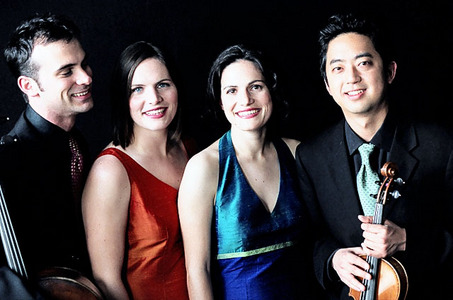
    Large_Jupiter quartet6

    The Jupiter String Quartet opened the programme with Franz Schubert’s quartet in E-flat major, written when the composer was 16 years old. The players immediately displayed the warm, Autumn-gold sound that they would sustain throughout the concert. The melodies of this youthful work of the composer were wafted into the hall with generous lyricism; in the adagio especially, violinist Nelson Lee’s persuasive turns of phrase had a bel canto polish.

    Anton Webern’s Langsamer Satz (‘Slow Movement’) was composed in 1905 but never publicly performed in the composer’s lifetime. Dating from the period before he embraced his twelve-tone destiny, this brief quartet was written when Webern was 22 and exploring a relationship with his cousin Wilhelmine, who he eventually married. The music is in full-blown Romantic style; its heart-on-sleeve emotional quality tinged with a trace of melancholy was lovingly captured by the Jupiter players. 

    Hampson_acosta_5

    Thomas Hampson, photo by Dario Acosta

    I’ve been following Thomas Hampson’s career since I first heard him at the annual Winners Concert of the Metropolitan Opera National Auditions in 1981. He seems to be the only singer from among that year’s winners to have developed and sustained a major international career. Among his many roles at The Met since then, several have ranked high among my memorable operatic experiences, most especially his Count Almaviva, Billy Budd (a spectacular performance all round, in 1992), Onegin, Posa, Werther, Wolfram in TANNHAUSER, and Amfortas in PARSIFAL. In recent seasons, he has explored the heavier Verdi roles; I was very impressed with his Iago just a couple of months ago.

    Today in Mark Adamo’s ARISTOTLE, Hampson’s voice seemed remarkably fresh and showed nary a trace of the passage of time. It was completely and marvelously satisfying vocalism from a singer who has passed the thirty-year mark of his career. Blessed from the start of his singing career with an immediately identifiable timbre, the baritone today sang with warmth, a broad dynamic palette, impressive sustaining of phrase and keen verbal clarity (no need for us to refer to the printed texts). This was singing of the first magnitude.

    Mark Adamo’s ARISTOTLE can already be ranked as a 21st century vocal masterpiece. Set to a poem by Billy Collins, the work is about the passage of time and the stages of life. It resonates on a personal level, especially for those of us moving into the later decades of our span. Mark Adamo’s writing and the playing of the Jupiter Quartet provided Mr. Hampson with a marvelous vehicle in which the singer’s artistry is fully presented. 

    The poet’s text is imaginative, funny, poignant; opening candidly with “This is the beginning…almost anything can happen…” each of the works three ‘movements’ describes the experiences – from epic to mundane – that colour our lives as time passes. “This is your first night with her, your first night without her” is a touching wrinkle in the first section. 

    “This is the middle…nothing is simple anymore…” sets forth this memorable line: “Disappointment unshoulders his knapsack here and pitches his ragged tent.” And finally at the last: “And this is the end, the car running out of road, the river losing its name in an ocean…” Singer and players joined to create a memorable musical experience, the baritone’s incredible sustaining of the work’s final lines truly magical. The composer, seemingly overwhelmed by emotion, was called up to the stage and joined the musicians in receiving a sustained applause.

    The second half of the evening was given over to works of Hugo Wolf, commencing with his brief and melodic Italian Serenade, played by the Quartet. Thomas Hampson then offered a set of the composer’s songs. With the exception of Anakreon’s Grab – which was the concluding work on today’s printed programme – I have never really been drawn to Wolf’s lieder, despite many attempts over time to make a connection. The first two songs today were rather jolly, and then the singer and musicians moved into deeper and darker territory, which proved very pleasing indeed. And yet it was still the calm beauty of Anacreon’s Grave that moved me the most. As an encore, Wolf’s “Der Rattenfänger”, based on the tale of the Pied Piper, was given a vivid theatrical treatment by singer and players. 

    The works on today’s programme:

    Schubert: Quartet in E-flat major for Strings, D. 87, Op. 125, No. 1 (1813)

    Webern: Langsamer Satz for String Quartet

    Adamo: Aristotle for Baritone and String Quartet (2012, CMS Co-Commission, New York Premiere)

    Wolf: Italian Serenade for String Quartet (1887)

    Wolf: Selected Lieder for Baritone and String Quartet

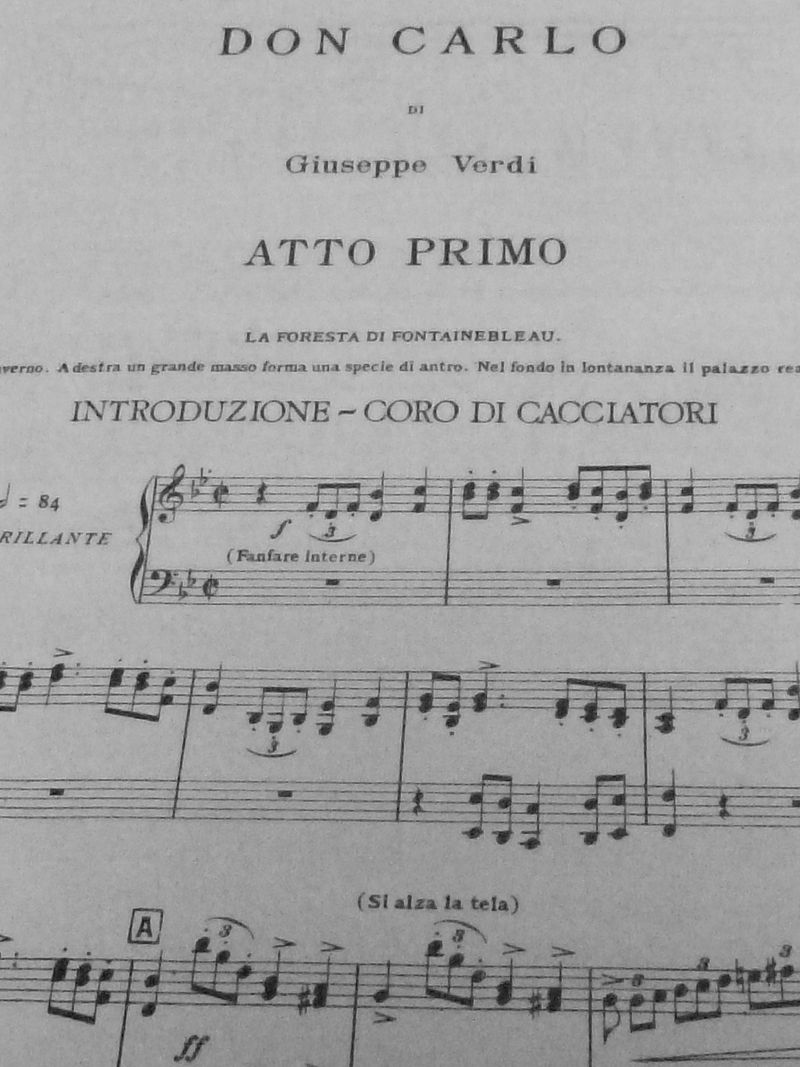
  • Score Desk for DON CARLO

    L1070620

    Monday February 25th, 2013 – A powerful line-up of male principal singers drew me to this performance of Verdi’s DON CARLO at The Met. The women in the cast seemed less interesting by far; having seen the production before – and feeling no need to see it again – I took a score desk and settled in.

    DON CARLO was for years my favorite opera, but then the German repertory began to edge out the Italian in my heart and soul. Now ARIADNE AUF NAXOS, ELEKTRA and DIE WALKURE are in a sort of three-way tie for the top spot. But I still love DON CARLO and always go when it is performed. I’m not crazy about the Fontainebleau scene, and I never watch the Auto da Fe since the sight of people burning other people alive for the greater glory of some fiendish imagined god (or rather, to maintain the power of the men who created him and sustained the myth thru blood and force over the centuries) is revolting.

    Negative reviews of Loren Maazel’s conducting and of Barbara Frittoli’s singing as Elisabetta had me thinking in advance that this might be a partial CARLO for me. Added to the prospect of two Gelb-intermissions, and the fact that I was already feeling tired when I got there, it seemed that a very long evening was loooming ahead. But I found myself drawn in by the opera itself, and I always enjoy the experience of being in the House with the score in front of me. I stayed to the end and on the whole felt it was a very good evening, particularly thanks to the superb performances of Dmitry Hvorostovsky and Ferruccio Furlanetto as Posa and Philip II respectively.

    To be sure, some of Maestro Maazel’s pacing was slow. To me his conducting registered a measured sense of grandeur and dignity, and of events unfolding with a sort of epic inevitability. Often considered Verdi’s most purple opera – the colour of royalty evoked in sound – I felt Maazel’s concept worked well: there were lively passages along the way, and his Auto da Fe scene was amply majestic and well-structured. For the most part he kept his singers at the forefront; in a few places they needed all their reserves of breath to sustain the line thru the slow tempi. But, following the score, I thought the conductor had things well in hand.

    Maazel experienced some boos at his solo bow; I wonder if it was pre-meditated since it seemed to be coming from one area of the Family Circle. Recently while my friend Dmitry and I were having a pre-PARSIFAL supper, I could overhear a woman in the next booth telling her companion that she was planning to boo conductor Daniele Gatti. If she did, it got lost in the cheers. Maazel’s conducting was quirky but worked well to my ears; the only potentially boo-able performance was that of Ms. Frittoli but the audience tolerated her with polite applause.

    I find the Fontainebleau scene a needless introduction to the evening. Verdi sanctioned its elimination for performances in Italy following the premiere in Paris where five-act operas were de rigeur. Some people say, “Oh, it gives the opera context!” Undoubtedly. But we lived without it for years, savoring the gloriouly dark horn theme which opens the four-act version and immeditely sets us in the mood for this opera about royalty and religion. Tonight, with Ms. Frittoli sounding very wary, the scene seemed even more expendable than ever. It makes for such a long night, even under the best of circumstances.

    The soprano’s perilous performance serves as a reminder that a vocal career is short enough without quickening its demise by singing roles that are too heavy. Ms. Frittoli will be remembered in New York City for her exquisite singing as Desdemona in 1999; she was also a particularly fine Mimi, and as recently as 2005 she managed an impressive Fiordiligi by manipulating the dynamics to control the effects of a widening vibrato. But singing things like the Verdi REQUIEM and Donna Anna have taken their toll on her lyric instrument. Tonight the vibrato was painfully evident even at the piano level. She managed to avert disasters, though a high B-flat in the quartet was scary and she could not sustain the floated B-natural in the final duet, on “…il sospirato ben”, one of the role’s most affecting moments. Overall it was sad to experience this voice in its current state. The news that she’ll be singing Tosca later this year in Europe does not bode well.

    These performances of Elisabetta were originallly slated for Sondra Radvanovsky; when Sondra moved to BALLO instead, the Met turned to Ms. Frittoli. They should have cast about for a more appropriate alternative. When I think of the wonderful Elisabettas I have experienced – Caballe, Kabaivanska, Freni, and  Radvanovsky as well as Marina Mescheriakova’s flawless Met debut in the role – Ms. Frittoli’s pales into a haze.

    Anna Smirnova’s voice does not always fall pleasantly on the ear, being rather metallic. But she is a skilled singer who managed the filagree of the Veil Song very well and pulled out all the stops for an exciting “O don fatale” with brazenly sustained high notes. 

    Don Carlo is a bit heavy for Ramon Vargas but this very likeable tenor sang quite beautifully through most of the evening. His voice is clear and plaintive, his singing stylish and persuasive. Only near the end of the opera did a few signs of tiredness manifest themselves. His delicious singing of “Qual voce a me del ciel scende a parlar d’amore?” in the love duet was a high point of the evening.

    Eric Halvarson’s Inquisitor was powerully sung and stood up convincingy against the overwhelming Philip II of Ferruccio Furlanetto. The two bassos had a field day, trading thunderbolts in their great confrontation. Basso Miklos Sebestyen was a very impressive Friar (the Ghost of Charles V), drawing a round of applause fo his sustained low F-sharp in the St. Juste scene of Act I. Jennifer Holloway was a very fine Tebaldo but Lori Guilbeau, who has a pretty sound, seemed not to be well-coordinated with the pit as she sang her offstage lines as the Celestial Voice.

    The towering magnificence of Dmitry Hvorostovsky‘s Posa and Ferruccio Furlanetto‘s Philip II put the performance on a level with the greatest Verdi experiences of my opera-going years. Dima’s singing was velvety and suave, his breath-control mind-boggling, his singing affecting, elegant and passionate by turns. His high notes were finely managed and marvelously sustained.

    Mr. Furlanetto’s glorious singing is a throwback to the days when great Italian voices in every category rang thru the opera houses of the world.  Now nearing his fortieth year of delivering generous, glorious vocalism, the basso’s dark and brooding tones fill The Met with a special sonic thrill. His singing, so rich and deeply-felt, can thunder forth at one moment and then draw us in with hushed, anguished introspection the next. From first note to last, Furlanetto’s Philip II was simply stunning. His hauntingly tender musing on the phrase “No…she never loved me…her heart was never mine…” just before the epic climax of his great monolog moved me to tears.

    There were huge eruptions of applause and cheers after both the baritone and the basso finished their big arias; but applause nowadays tends to dwindle rather quickly and the days of show-stopping aria ovations are largely a thing of the past. 

    There were lots of empty seats which surprised me: with this starry assembly of male singers and the season’s biggest name from the conducting roster involved, I expected a fuller house.

    Dima2

    Dmitri Hvorostovsky

    Furlanetto

    Ferruccio Furlanetto

    Metropolitan Opera House
    February 25, 2013

    DON CARLO
    Giuseppe Verdi

    Don Carlo...............Ramón Vargas
    Elizabeth of Valois.....Barbara Frittoli
    Rodrigo.................Dmitri Hvorostovsky
    Princess Eboli..........Anna Smirnova
    Philip II...............Ferruccio Furlanetto
    Grand Inquisitor........Eric Halfvarson
    Priest Inquisitor.......Maxime de Toledo
    Celestial Voice.........Lori Guilbeau
    Friar...................Miklós Sebestyén
    Tebaldo................ Jennifer Holloway
    Count of Lerma..........Eduardo Valdes
    Countess of Aremberg....Anna Dyas
    Flemish Deputy..........Alexey Lavrov
    Flemish Deputy..........Paul Corona
    Flemish Deputy..........Eric Jordan
    Flemish Deputy..........Evan Hughes
    Flemish Deputy..........Joshua Benaim
    Flemish Deputy......... David Crawford

    Conductor...............Lorin Maazel

  • NYCB Tchaikovsky Festival 2013 #6

    422

    Saturday evening January 26, 2013 – This evening’s performance at New York City Ballet was filled with wonderful dancing (and playing from the pit) and went a long way to compensate for the previous evening’s late-seating debacle.

    The programme was the same as the night before, but what a difference! Tonight we were able to fullly enjoy the delicate mysteries of BAISER DE LA FEE, led by Andrews Sill. I have a special fondness for this ballet since it was the first work I ever saw at NYCB lo! these many decades ago. My ‘premiere’ cast featured Patricia McBride and Helgi Tomasson and it is pleasing to report that Megan Fairchild and Andrew Veyette made just as fine an effect in the ballet as ther illustrious predecessors. Megan and Andrew caught the quality of rhapsodic youthfulness right from the start, abetted by the very nice dancing of the corps ensemble. Andrew’s solo had a dreamy feeling, but it’s one of those restless dreams (we’ve all had them) where you are seeking something that seems to elude you; his dancing was so expressive, making me want to see him as Jerome Robbins’ Dreamer in OPUS 19. Megan’s solo, set to the birdlike song of the flutes, was fetchingly spun off by the ballerina. The couple then brought a lovely feeling of quiet ecstacy to the magical backing-away which brings this Balanchine jewel to a close. Erica Pereira and Mary Elizabeth Sell led the corps to charming effect.

    Tiler Peck and Joaquin de Luz then went to town, pulling out all the stops for an exciting Tchaikovsky Pas de Deux in which Tiler scintillated with her magical pirouettes whilst also capturing the warm lyricism of the adagio. Joaquin fills the stage and the theatre with his generous dancing and genial smile; if there’s a dancer with a bigger heart than Joaquin de Luz I haven’t met him. The two dancers swept thru the bravura fireworks of the coda to the audience’s delight, and if the fish dives took on a risky quality tonight, that’s part of the fun. They swept off as the curtain fell, igniting a full-house ovation which made them smile all the more as they stepped out to take their bows.

    Now being in a really good mood, I even decided to give BAL DE COUTURE another try and strangely enough I liked a lot of it tonight, or maybe I should say that I saw where it might – with a few alterations – become something to enjoy. The music’s wonderful for one thing, but my first change would be getting rid of the women’s bizarre, fanciful costumes. And since the costumes are the whole point of the piece my other ‘fixes’ wouldn’t matter. It’s nice to see all that star-power onstage even though – as a friend pointed out – turning principals into a corps tends to make them anonymous.  Despite its drawbacks, I found I could sit thru it, and could again – if the need ever arises. 

    In the concluding DIAMONDS, Maria Kowroski and Tyler Angle were elegant, and they seemed to filter the melodies of the score directly into their dancing. Maria’s magical way of sculpting her long limbs into the regal poses of the adagio was finely echoed in Tyler’s handsome and ardent partnering. There’s a lovely simpatico quality between these two dancers and it was shining brightly tonight. The demi-solistes and corps filled the stage with Mr. B’s grand patterns in the finale; the audience loved it.     

    Andrews Sill conducted the first two ballets tonight, then passed the baton to Daniel Capps for the rest of the evening. The NYCB musicians played the entire programme very appealingly and they well-deserved the audience’s warm cheers as they took a spot-lit collective bow at the end. The players were recently chided in the press for playing too many wrong notes. Yes, musicians – even the finest ones – do sometimes hit wrong notes, especially the wind players. Anyone who has ever played a musical instrument knows that the best intentions and plenty of rehearsal can still be undone by fatigue or plain old bad luck. It’s nothing to write home about since it tends to happen randomly, even among the excellent players of at the NY Phil or the Metropolitan Opera (where the orchestra is considered one of the best ‘pit bands’ in the world). For myself, having played piano, guitar and French horn, I always have a sympathetic ear and am grateful when things go as well as they do on a given night. The NYCB musicians work hard and it’s nice when the audience acknowledges their nightly contributions to the success of the ballet.

    Heading home on the A train, I met the three people who’d been sitting behind
    me at the performance. Students at Columbia, they drew out a season brochure and began asking me questions about what they should see next. “Who was that woman with the long legs in the last ballet?” the girl asked. “She was awesome!” I could only agree. 

    DIVERTIMENTO FROM ‘LE BAISER DE LA FÉE’: M. Fairchild, Veyette, Pereira, Sell

    TCHAIKOVSKY PAS DE DEUX: T. Peck, De Luz

    BAL DE COUTURE: Lowery, Reichlen, Krohn, Scheller, Hyltin, A. Stafford, T. Peck, M. Fairchild, Bouder, Taylor, J. Angle, la Cour, Danchig-Waring), Veyette, R. Fairchild, Ramasar, Finlay, De Luz, Carmena, Marcovici

    DIAMONDS from JEWELS: Kowroski, T. Angle

  • Score Desk for LES TROYENS

    Cassandre

    Cassandra:

    “Malheureux roi! dans l’éternelle nuit,
    C’en est donc fait, tu vas descendre!
    Tu ne m’écoutes pas,
    tu ne veux rien comprendre,
    Malheureux peuple,
    à l’horreur qui me suit!”

    Saturday December 29, 2012 – The dilemma of whether or not to attend a performance of Berlioz’s LES TROYENS at the Met concerned me for a few days. This epic masterwork is one of the greatest operas ever written, unique in its structure (it is actually almost like two distinct operas; each could stand on its own), and it is a veritable goldmine of musical marvels. On a personal note, the opera plays a stellar role in my autobiography, since it was after a magnificent 1973 matinee performance of the Berlioz work that I had my long-awaited first homosexual experience. Normally it would be on my highest-priority list of operas to see in any Met season where it’s presented. But the combination of a production that has never really satisfied me visually, a conductor who has seldom – if ever – moved me, and the disastrous casting of two of the opera’s principal roles, I at first wrote it off completely.

    But then the thought that I might never again have an opportunity to hear LES TROYENS in-house decided me in favor of going; not needing to see the production, I bought a score desk and waited for the day with a mixture of excitement and dread. A few days before the performance, one of the singers whose participation was troubling me – Marcelo Giordani – was announced as ‘withdrawing’ from the remainder of the run after a reportedly awful night at the prima folllowed by vocal struggles in the ensuing performances. His announced replacement, Bryan Hymel, has been making a name for himself of late in some of opera’s most demanding roles.

    Elizabeth-bishop

    I arrived at the theatre to find another last-minute cast change: Elizabeth Bishop (above) was to sing Dido instead of Susan Graham. This was my second experience of hearing Ms. Bishop in a performance originally scheduled for Graham, and though I’d been looking forward to Graham’s Dido, Bishop was perfectly fine. So I settled in with my lovely old scores (one for each ”opera’), wishing for a different maestro and different Cassandra, but very much anticipating both the music and the singing of the other cast members. 

    The opera opened impressively with the lively chorus depicting the joy of the Trojan people who have discovered that the Greeks, who have besieged their city for a decade, have suddenly and inexplicably departed. Sadly, the afternoon then took a real slump as Deborah Voigt began Cassandra’s great opening monolog. Voigt’s voice has declined even further than from my last encounter with her in the theatre, and her singing of this iconic role was pallid; the voice is almost unrecognizable as the soprano who once thrilled me with her Ariadne and Elsa. Unsteady and small of scale, her singing seemed apologetic for the most part, with only very few notes that bore any relation to what she once sounded like. Her final high-B in the duet with Chorebus was desperate and unpleasant, and she simply lacked the expressive dramatic thrust for the great scene in which Cassandra tries to prevent the populace from bringing the giant horse within the city walls. And she was ineffectual in the opera’s great final scene. The role calls for forceful declamation and sweeping emotional conviction: a larger-than-life feel. That Voigt could not come within hailing distance of such great interpreters of the role as Shirley Verrett and Jessye Norman was indeed sad. Her shortcomings prevented the first half of the afternoon from making its usual vivid impression. 

    In 1994 Dwayne Croft replaced Thomas Hampson as Chorebus on a Saturday matinee broadcast of TROYENS; he sang superby that day and seemed in fine voice this afternoon until suddenly, near the end of the big duet with Cassandra, his voice seemed to go hoarse. Bryan Hymel made an impressive entry as Aeneas, his singing both beautiful and urgent. In the great scene where Aeneas is warned by the Ghost of Hector of Troy’s impending doom, Hymel and David Crawford were both excellent.

    In the haunting scene where the widowed Andromache brings her young son before the court, her injection of a stifled shriek was perhaps unnecessary in what is written as a silent role. But here Ms. Voigt as Cassandra did have one of her fine moments as she quietly intoned her warning to Andromache: “Save your tears, widow of Hector! Disasters yet to come will make you weep long and bitterly”.

    Though lacking a commanding Cassandra to lead them, the scene of the mass suicide of the Trojan women managed to make a very strong impression. Thus far, as the first part of TROYENS came to a close, Fabio Luisi’s conducting had been ‘factual’, each musical “i” dotted and “t” crossed (as per the score) but lacking in mystery and mythic grandeur. His pacing was on the quick side, which is fine.

    Moving to Carthage, Luisi and his players seemed to find a more congenial glow in the music. I must commend the conductor for making the ballet music (which could just as well have been cut) fully palatable; and from Iopas’ serenade thru the grand septet and on to the end of the sublime love duet, Luisi gave what was for me his finest music-making to date at the Met. 

    Elizabeth Bishop’s voice is not creamy and opulent but she’s a fine singer and not only did she save the day, she did so with distinction. Establishing herself in the opening public scene, it was in the more intimate settings that follow where Bishop made her finest mark: the ravishing duet with her sister Anna and then – impressing in both tonal allure and poetic nuances – from “Tout conspire a vaincre mes remords” straight thru to end end of the “Nuit d’ivresse”. In the anger of the fiery quayside duet, and in her later expressions of regret, and of futile fury, Bishop brought some touches of verismo passion which worked well for her. In the stately, resigned “Adieu fiere cite” she was at her most poignant, then rousing herself yet again vocally to bring the opera to a close with her visionary “Rome!…Rome!…immortelle!” As the afternoon progressed, Bishop dispelled the disappointment of not hearing Ms. Graham, and the audience greeted her affectionately at her curtain calls.

    Bryan-hymel-1340266185-article-0

    Above: Bryan Hymel. Mr. Hymel’s Aeneas was marvelous and his type of voice – a liquid and juicy ‘big-lyric’ with a blooming top – is very well-suited to the music. Wagnerian tenors like Jon Vickers, Gary Lakes and Ben Heppner have often been heard in this role (Vickers managed to make it very much his own), and Placido Domingo handled it impressively despite its being too high for him. But for me the best rendering of this arduous music in living memory has come from Nicolai Gedda on an abridged RAI concert recording. In vocal size and stylistic grace, Hymel comes close to the Gedda ideal. A trace of sharpness crept in here and there, but from his tender farewell to his son Ascagne right thru to his final “Italie!” as Aeneas’ ships cast off for to their destiny, Hymel sang beautifully and had the audience in the palm of his hand.

    He and Ms. Bishop found the magical blend that makes the love duet one of opera’s most memorable, and in his great scena “Inutile regrets” with its remorseful “Quand viendra l’istante” and the high-lying concluding ‘cabaletta’, Hymel was glorious. His singing was full-toned and expressive, encompassing some lovely piano effects, and so moving with his heartfelt “A toi mon ame!”; the audience reacted with excited cheers as the tenor swept to the sensational climax of this great scene, then drew our further admiration as he led his soldiers aboard ship to take leave of Carthage. 

    Cc54e53b-0776-4d1e-9433-8376d0be5f01

    There are two more tenor roles in LES TROYENS A CARTHAGE and both were ideally sung today. In Iopas’ wondrously evocative (and very exposed) “O blonde Ceres” Eric Cutler (above) gave the afternoon’s most fascinating vocalism, with lovely line and ravishingly heady piano effects, and a spine-tingling ascent to a gloriously lyrical high-C. Bravo!!! 

    PAUL_APPLEBY_93R3775-4WEB

    Above: Paul Appleby. In the homesick song of the young sailor Hylas, Mr. Appleby’s beautifully plaintive timbre and the haunting colours he wove into the words made this another high point of the day.

    Home

    Above: Karen Cargill. I had very much enjoyed Ms. Cargill’s Waltraute last season and was glad of a chance to hear her again as Anna. There’s a touch of Marilyn Horne in Cargill’s voice and she sang her two big duets (one with Dido, the second with Narbal) most appealingly.

    Kwangchul Youn’s voice is warm and sizeable; his tone seems to have taken on a steady beat now though he handled it quite well. His Narbal was pleasing, and he was also cast as Mercury, his voice bringing an ominous feel as he intones “Italie! Italie!” after the great love duet, reminding Aeneas of his duty and sealing Dido’s fate.

    Richard Benstein was a strong-toned and authoritative Panthus and I very much liked hearing old-stagers Julien Robbins (Priam) and James Courtney (2nd Soldier) again. Julie Boulianne was a fine Ascagne, Theodora Hanslowe was Hecuba, and Paul Corona shared the soldiers’ scene with Mr. Courtney.

    I so enjoyed experiencing this masterwork in-house again; it may not have been a perfect performance, but it certainly made for a very satisfying afternoon. So nice to see my friend Susan there, and – being n a good mood – I even chatted with some people around me: totally out of character. Very much looking forward to my next ‘score desk’ operas: DON CARLO and TRAVIATA (who needs to look at a clock and a sofa?), and then all the RING operas in the Spring. It’s the place to be!

    Metropolitan Opera House
    December 29, 2012 Matinee

    LES TROYENS
    Berlioz

    Part I: La prise de Troie

    Cassandra...............Deborah Voigt
    Coroebus................Dwayne Croft
    Aeneas..................Bryan Hymel
    Ascanius................Julie Boulianne
    Priam...................Julien Robbins
    Hecuba..................Theodora Hanslowe
    Helenus.................Eduardo Valdes
    Andromache..............Jacqueline Antaramian
    Astyanax................Connell C. Rapavy
    Panthus.................Richard Bernstein
    Hector's Ghost..........David Crawford

    Part II: Les Troyens à Carthage

    Dido....................Elizabeth Bishop
    Anna....................Karen Cargill
    Narbal..................Kwangchul Youn
    Iopas...................Eric Cutler
    Ascanius................Julie Boulianne
    Panthus.................Richard Bernstein
    Aeneas..................Bryan Hymel
    Mercury.................Kwangchul Youn
    Hylas...................Paul Appleby
    Trojan Soldier..........Paul Corona
    Trojan Soldier..........James Courtney
    Priam's Ghost...........Julien Robbins
    Coroebus's Ghost........Dwayne Croft
    Cassandra's Ghost.......Deborah Voigt
    Hector's Ghost..........David Crawford

    Laocoön.................Alex Springer
    Royal Hunt Couple.......Julia Burrer, Andrew Robinson
    Dido's Court Duet.......Christine McMillan, Eric Otto

    Conductor: Fabio Luisi

  • At Home With Wagner

     Richard_wagner2

    Thanks to my friend Dmitry, I’ve added some exciting Wagner performances to my CD collection over the past few weeks: parts of two historic RING Cycles, a 1976 Met broadcast of LOHENGRIN conducted by James Levine (I was there!), and a surprisingly thrilling Act I of WALKURE from Hamburg 2008, conducted by Simone Young.

    Keilberth

    Chronologically the earliest of these acquisitions – the WALKURE, third Act of SIEGFRIED, and GOTTERDAMMERUNG – come (in surprisingly good sound) from the 1953 Bayreuth Festival. These are conducted by Josef Keilberth (above) who shared the RING podium duties with Clemens Krauss at the ’53 festival. The Krauss Cycle has been isssued commercially and is considered legendary; Keilberth’s 1955 Cycle is also available (from Testament) but this ’53 Keilberth seems a real rarity, at least here in the USA (I’ve seen import copies selling for $300+, while Dmitry and I found it at Opera Depot for considerably less).

    Dmitry gave me the GOTTERDAMMERUNG first and it’s a tremendous performance; this prompted me to ask for more and I’m really pleased with what I’m hearing. Keilberth is grand but never ponderous; his Twilight of the Gods unfurls like a magnificent sonic banner. The maestro has a powerhouse cast to work with.

    Martha-Modl

    I’ve never ‘gotten’ Martha Modl (above) until very recently, but she’s teriffic here as Brunnhilde. Her voice production reminds me somewhat of Irene Dalis’s. Modl’s flaming intensity and the colour and vitality of her singing are something to hear. Wolfgang Windgassen meets the huge demands of Siegfried with tireless power and is a good match for the soprano in terms of vocal generosity. A splendid Hagen from the Josef Greindl bristles with black-hearted malevolence, and in the most thrilling rendering of the role of Gunther that I’ve ever experienced, Hermann Uhde is overwhelming. With her rather odd tmbre, Natalie Hinsch-Grondahl nevertheless makes a mark as Gutrune. Ira Malaniuk’s superb singing as Waltraute makes me wish her long scene was even longer, and the mezzo is also a distinguished Second Norn in the prologue where she is joined by Maria von Ilosvay and then-soprano Regina Resnik.
    6186

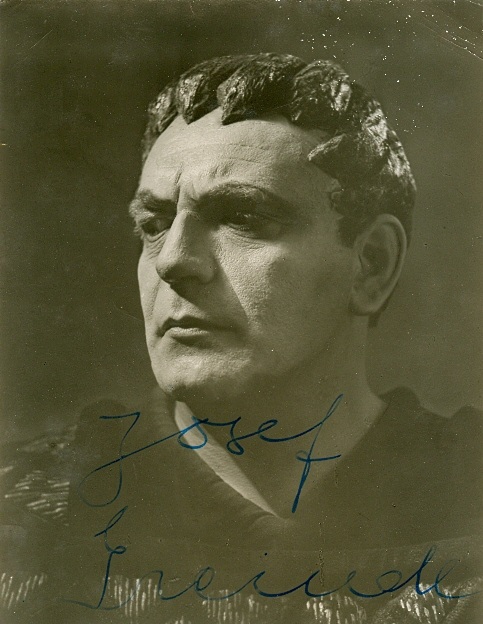
    Back-tracking, I then took up the WALKURE from the same 1953 Keilberth RING and was again impressed by the immediacy of the sound. Herr Greindl (above) is again in cavernous voice, this time as Hunding. Regina Resnik and Ramon Vinay are the strong-voiced Walsung twins, though neither attain the heights that others have in this passionate music. The tenor’s baritonal sound  is sturdy but not particularly poetic and at one point the prompter gets involved, feeding him lines word for word. Miss Resnik gets lost at one point and her highest notes show a very slight sense of discomfort; her decision to switch to mezzo was a brilliant move and sustained her career for many years. In spite of these minor misgivings, Resnik and Vinay keep the temperature of the drama high, and Keilberth steers us thru the first act with true surety of hand.

    Hotter

    Hans Hotter (above) opens the second act grandly, and this performance shows why his Wotan was considered a revelation. Both in terms of godlike vocal heft and wonderfully nuanced shaping of the text, Hotter’s monolog is a masterpiece. Martha Modl flashes thru a spirited Ho-Jo-To-Ho though surprisingly later in the act, after the annunciation of death, she seems to tire a bit as she assures Siegmund she’ll protect him in the coming battle. Ira Malaniuk is a particularly fine Fricka; she doesn’t wheedle or whine but deals from the strength of her rightness. She is vocally so pleasing to experience, the registers even and the timbre filled with feminine dignity. Resnik and Vinay are effective here as the desperate lovers, seeking escape…waching over his sleeping sister-bride, Vinay finds the tenderness of the character. Resnik lets out a blood-curdling scream when Hunding strikes Siegmund dead. Hotter’s contemptuously whispered dismissal of Hunding followed by his towering rage as he sets out to punish Brunnhilde end the act with a veritable bang.

    In the Ride of the Valkyries, the sopranos swoop upward at will, not always in unison. Resnik handles the great scene of Sieglinde’s blessing of Brunnhilde quite exctingly; Hotter storms in and rages at his daughters who finally flee in terror. And then, starting with Brunnhilde’s ‘War es so schmalich’ the performance becomes something else altogether.

    Modl finds the magic that made her GOTTERDAMMERUNG so spell-binding, and Hotter is simply magnificent. The sound quality is pretty remarkable and the two singers give a performance that ranks wth my greatest experiences in 50+ years of listening to opera. Modl begins Brunnhilde’s self-defense with colours of deep despair, slowly gaining self-confidence. When she courageously tells her father that Sieglinde now keeps the sword Nothung, Hotter thunderoulsy reminds her “The sword that I shattered!!” Hotter outlines the punishment Brunnhilde will face; her pleading with him not to humiliate her is in vain. But Modl’s last desperate and gloriously sung passage finally wins the day; Hotter opens the floodgates and hs entire final scene is both vocally thrilling and wrenchingly expressive of a father’s longing and grief. Adjectives become superfluous on hearing this kind of vocalism.

    The third act of SIEGFRIED from this cycle is very exciting, commencing with Hotter’s majestic summons of Erda. As the act proceeds, it seems the great bass-baritone’s voice was recorded in a rather odd, somewhat echo-chamber acoustic. It doesn’t deter from his performance in the least, but it’s not quite as pleasing to listen to as the WALKURE. Maria von Ilosvay is a firm-toned and not overly weighty Erda; like her colleague Ira Malaniuk, Ilosvay seems largely to have been forgotten these days, which is a shame, It’s a wonderful voice. Windgassen arrives for his confrontation with his grandfather in fine vocal fettle; the two long-standing colleagues play up the dark humour of their banter at first, but after Siegfried puts Wotan in his place by breaking the spear, the once-powerful god slinks away in shame. Windgassen manages to hold his own against the fresh-voiced Modl, awakening as Brunnhilde and singing with remarkable intensity: despite her successful but less-than-blooming forays to the high-Cs, Modl’s voice is both maternal and seductive, with an unsettlling sexual sorcery in her timbre that makes it utterly distinctive.

    Overall this Keilberth cycle is fascinating in so many ways and seems to have caught the singers mostly at their peaks. I suppose I’ll want to eventually have the RHEINGOLD also. 

    ~~~~~~~~~~~~~~~~~~~~~~~~~~~~~~~~~~~~~~~~~~~~~~~~~~~~~~~~~~~~~~~~~~~~~~~~~~~~~~~~~~~~~~~~~~~
    Solti-conducting3

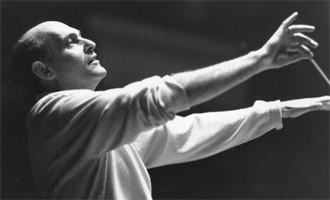
    From London’s Royal Opera House comes a RING Cycle conducted by Sir Georg Solti (above), from which the WALKURE (in very good sound) makes a strong impression, notably in the radiant singing of Dame Gwyneth Jones as Sieglinde. Apart from Ernst Kozub as Siegmund, the principals are all from the Royal Opera “home team”. Mr. Kozub is bright-voiced and steady, and Dame Gwyneth – just coming into fame – is already showing signs of the great Wagnerienne she was to become. Michael Langdon’s powerful Hunding anchors the first act, excitingly led by Solti.

    Amy Shuard is a bit uneven as Brunnhilde though overall she makes a positive impression; a bit of flatness here and there – most notable in the early pages of the Todesverkundigung – is offset by her bright Battle Cry and her moving singing of the opera’s final scene. Josephine Veasey starts off as a rather ladylike Fricka, but she soon works herself into a fine fettle of self-righteous indignation and casts off vivid dramatic sparks, her vocalism fervent and secure.   
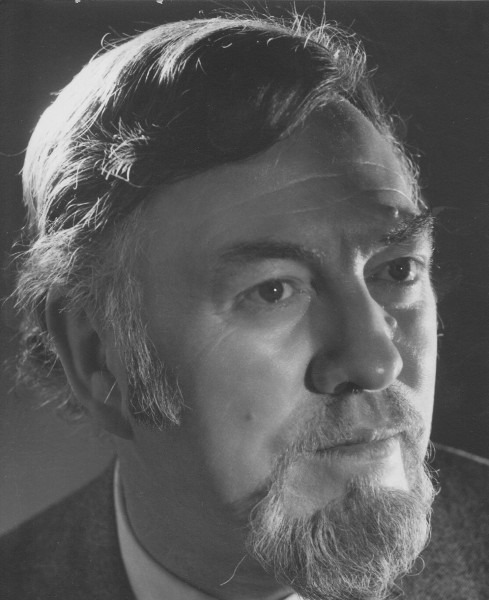
    347

    It is especially gratifying to hear David Ward (above) as Wotan. I still vividly recall hearing him as The Dutchman on a Met broadcast in 1965 opposite Leonie Rysanek. I love his Wotan here for its humanity. Ward is more a lyrical than a thunderous singer, and his bass-oriented sound give him a solid springboard thru the music. His monolog is intense and personal, with a miraculous reflective piano on “Das ende!” while his choked whisper of “Geh!” as he dispenses with Hunding at the close of Act II is breath-taking. Ms. Shuard is at her best as she joins Mr. Ward for the opera’s final scene: their exchanges have an intimate feel, dynamically subtle and with deep undercurrents of heartache. Pleading to be spared dishonor, Ms. Shuard’s feminine urgency spurs the bass-baritone on to a wonderful outpouring in “Leb wohl, du kunhes, herrliches Kind!”. Later, Mr. Ward’s great tenderness as he quietly kisses Brunnhilde’s godhood away is so moving. Sir Georg, on the podium, cuts a majestic path thru this glorious score.

    ~~~~~~~~~~~~~~~~~~~~~~~~~~~~~~~~~~~~~~~~~~~~~~~~~~~~~~~~~~~~~~~~~~~~~~~~~~~~~~~~~~~~~~~~~~~

    The 1976 series of LOHENGRINs at The Met marked Maestro Levine’s first experiences of conducting this opera in the House; he moulds the great arcs of music, from the ethereal to the thunderous, with grandeur; and his violins underline the great confrontation between Elsa and Ortrud with furiously driven playing.
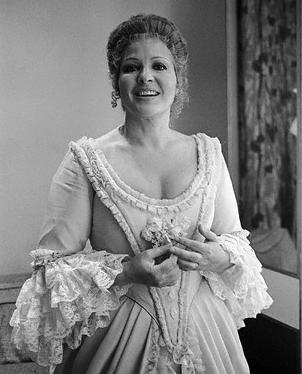
    Pl

    Pilar Lorengar (above) was a rapt, visionary Elsa, and her silvery and utterly feminine sound projected clearly into the great hall, cresting the ensembles radiantly. Rene Kollo in his debut role as Lohengrin (he sang only one other role at The Met: Bacchus in ARIADNE AUF NAXOS) sounded splendid in the House (yes, I was there!) though the recording shows some chinks in the vocal armor which the unforgiving mikes pick up. Still, it’s an impressive rendering of the music, especially his poetic ‘In fernam land’. Mignon Dunn sings with thrilling passion as Ortrud, meeting all the demands of what is essentially a dramatc soprano role. In the house, Mignon was made a tremendous impact with her acting, especially her raging discomfort at having to carry Elsa’s train during the bridal procession. Unable to contain her bitter fury, she breaks free and lashes out at her virginal rival in a confrontation that brought the performance to the boiling point. Donald McIntyre’s powerful Telramund and Allan Monk’s sturdy Herald make strong impressions, and Bonaldo Giaiotti (a great favorite of mine, presently celebrating his 80th birthday) is a splendid-sounding King Henry.

    Metropolitan Opera House
    December 4, 1976 Matinee Broadcast

    LOHENGRIN
    Wagner

    Lohengrin...............Rene Kollo
    Elsa....................Pilar Lorengar
    Ortrud..................Mignon Dunn
    Telramund...............Donald McIntyre
    King Heinrich...........Bonaldo Giaiotti
    Herald..................Allan Monk
    Gottfried...............Rex James
    Noble...................Robert Goodloe
    Noble...................Andrea Velis
    Noble...................Philip Booth
    Noble...................Charles Anthony

    Conductor...............James Levine

    ~~~~~~~~~~~~~~~~~~~~~~~~~~~~~~~~~~~~~~~~~~~~~~~~~~~~~~~~~~~~~~~~~~~~~~~~~~~~~~~~~~~~~~~~~~~
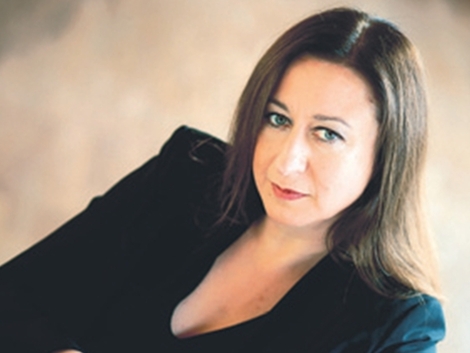
    Young

    The single act of the Hamburg WALKURE literally knocked me for a loop on first hearing; I’d never given Simone Young (above) much thought as a conductor, but from now on I’ll need to. She makes this thrice-familiar music sound incredibly fresh and alive. Her trio of singers, while perhaps unlikely to go into the history books alongside such names as Lehmann, Melchior, Rysanek or Vickers, are superbly tuned into both the music and the words. Following Young’s lead, they seem to give a feeling of music that is newly-discovered. Yvonne Naef’s Fricka and Waltraute at The Met in 2009 RING Cycles (the last performances of he “Levine” RING) were especially memorable in my view. There was some talk of her possibly taking on the Brunnhildes at one point, but she was probably wise to resist (exciting as the prospect would have been). Here she is a vivid Sieglinde, her middle voice and parlando so persuasive – the role lies right in her comfort range – and her top rings out excitingly. The sound of Stuart Skelton’s voice may not be intrinsically beautiful, but he is a strong and verbally alert singer, bringing some imaginative colours to his music. His cries of “Walse! Walse!” are steady and sustained, and he shows a sense ofSiegmund’s poetic side, long-buried in the hardships the Volsung has faced in his life. Mikhail Petrenko is a more lyrical Hunding than we usually hear; he sings well and fits finely into Young’s vision of the act. There are many felicitous passages in the conductor’s scheme of things, with a particular ‘lift’ of the tempo after Sieglinde concludes “Der manner sippe” that really took my breath away.

    After a lapse of ten days, I played this WALKURE Act I again just to be sure it was as good as I thought it was. It’s even better on second hearing, with some really fine playing from the individual instrumentalists. The singers and conductor make this very familiar music feel startlingly vivid. What more could we ask?

  • CLEMENZA DI TITO @ The Met

    Clemenza.0405.01

    Tuesday November 20, 2012 – The Metropolitan Opera’s current revival of their classic Jean-Pierre Ponnelle production of Mozart’s LA CLEMENZA DI TITO is a joy both to the ear and the eye. Marty Sohl’s production photo (above) illustrates the fantasy mixture of ancient Roman and baroque stylistic elements that give the sets and costumes their timeless visual appeal.

    Tonight, Harry Bicket led a sterling performance, with excellent continuo playing from Bradley Brookshire (harpsichord) and David Heiss (cello) as well as spectacular woodwind solos in two of the opera’s iconic arias: Andrew McGill (clarinet, in “Parto, parto”) and James Ognibene (basset horn, in “Non piu di fiori”). Mr. Bicket’s vivid pacing and his sense of the music’s flow put the singers in high relief; there were three outstanding vocal performances and overall it was one of the most satisfying evenings at The Met in recent seasons.

    Kate lindsey

    To think that I almost skipped this revival! But a chance to hear Kate Lindsey as Annio was not to be missed, and the beauteous young mezzo (above) gave an immaculate performance, her lithe figure and ease of movement onstage enhancing her interpretation at every turn. Like many of her predecessors in this fach, Kate spends a lot of her onstage time in trousers (she’ll debut at Glyndebourne as the Composer in ARIADNE AUF NAXOS in the coming year). Her singing tonight was pristine, with a particularly ravishing piano passage in “Tu fosti tradito” that would melt the coldest heart.  

    Gf

    With his noble and expressive face, Giuseppe Filianoti (above) made a splendid impression as Tito. His singing was clear and mellifluous, the words poetically delivered. The tenor finely delineated the emperor’s dilemma in dealing with his betrayal by his friend Sesto: should friendship trump justice? When I last heard Mr. Filianoti in the house, he was dealing with health issues, so it was really very pleasing to hear him on such beautiful vocal form tonight.

    Garanca

    Somehow I’ve managed not to encounter a live performance by the Latvian mezzo-soprano Elina Garanca (bove) up til now. I first heard her voice on a recording my friend Mollie sent me from the 2001 Cardiff Competition. Garanca has since developed into a world-class artist and after hearing her as Sesto tonight, she’s on my A-list of singers. Both in terms of vocal appeal and technical accomplishment, this was a stunning performance: Garanca’s voice is all of a piece, and she moves it thru the registers seamlessly. After a profoundly expressive rendering of the openng passages of the great aria “Parto, parto” Ms. Garanca sailed through the whirlwind coloratura flourishes of the aria’s later pages with nimble assurance. Later, as she knelt to invoke the strength to carry out her assassination of Tito, she summoned an amazing degree of projection, the voice sailing into the hall with startling force. In her second spectacular aria “Deh per questo istante solo”, the mezzo soprano coloured the voice movingly, reflecting the character’s anguish and also his stalwart refusal to implicate Vitellia in the crime. Ms. Garanca’s entire performance was a revelation.

    Barbara Frittoli, an unforgettable Desdemona at the Met in 1999, has more recently found considerable success in singing Mozart since she did her voice some damage during the first decade of the 21st century by singing music that was too heavy for her. Her canny manipulation of dynamics usually prevents her widening vibrato from becoming too prevelant. But for all her attractive qualities, Vitellia’s great aria “Non piu di fiori” simply lies too low for Ms. Frittoli to make her finest effect in the music. Vitellia in fact can be sung by a mezzo, except for that thorny top-D that Mozart threw into the act I trio, a note that eluded Ms. Frittoli tonight. Nevertheless, the soprano kept up her side of things all evening and the audience enjoyed her sometimes over-the-top dramatic portrayal.

    Lucy Crowe as Servilia is a pretty girl with luminous eyes and a pleasing lyric timbre. In his search for a wife, Tito’s first choice – Servilia – might have made him quite happy, especially with Ms. Crowe’s buxom grace and girlish smile.

    A wonderful Met evening, then, and there was every reason to stay to the end and shout’ bravi’ as the singers took their bows to sustained applause.

    Metropolitan Opera House
    November 20, 2012
    LA CLEMENZA DI TITO
    Mozart

    Tito.......................Giuseppe Filianoti
    Vitellia...................Barbara Frittoli
    Sesto......................Elina Garanca
    Servilia...................Lucy Crowe
    Annio......................Kate Lindsey
    Publio.....................Oren Gradus
    Berenice...................Toni Rubio

    Bradley Brookshire, Harpsichord Continuo
    Anthony McGill, Clarinet Soloist
    James Ognibene, Basset Horn Soloist
    David Heiss, Cello Continuo

    Conductor..................Harry Bicket

  • Rita Gorr Has Passed Away

    DSC03642

    Another colossal figure from my early days as an opera lover has passed away: the Belgian mezzo-soprano Rita Gorr died on January 22, 2012 at the age of 85. The great singer had a relatively brief but busy career at the Metropolitan Opera; from 1962 thru 1966 she sang 42 performances in New York City and on tour, including Amneris, Eboli, Dalila, Santuzza, Waltraute in GOTTERDAMMERUNG and Azucena. It was in the last-named role that I heard her live for the only time, at the Old Met:

    Metropolitan Opera House
    November 25, 1965

    IL TROVATORE {350}
    Giuseppe Verdi

    Manrico.................Bruno Prevedi
    Leonora.................Gabriella Tucci
    Count Di Luna...........Robert Merrill
    Azucena.................Rita Gorr
    Ferrando................Bonaldo Giaiotti
    Ines....................Lynn Owen
    Ruiz....................Charles Anthony
    Messenger...............Hal Roberts
    Gypsy...................Luis Forero

    Conductor...............Georges Pretre

    Her singing was powerful and intense, and all evening long she and her colleagues received vociferous applause and bravos. What a great evening for a young opera buff!

    Rita Gorr extended her career into the 21st century; her final stage performances were in 2007 as the Old Countess in Tchaikovsky’s QUEEN OF SPADES at Ghent and Antwerp.

    Only recently I acquired a copy of the Leinsdorf recording of Wagner’s LOHENGRIN and have been listening to it over the past few days. It now takes on greater significance since Ms. Gorr is the majestic Ortrud, singing in the grand manner. In the great duet for husband and wife which open Act II, William Dooley as Telramund expresses his fear that his defeat by Lohengrin in Act I was a sign from God. “Gott????!!” Gorr/Ortrud responds ironically, then lets out a daemonic laugh. Brilliant!

    Rita Gorr’s classic EMI solo disc of arias seems to be unavailable now; I owned it on LP as a young man and literally wore out the grooves. But several tracks can be found on YouTube. Here is her Liebestod from TRISTAN UND ISOLDE, sung with an Old World grandeur that seems to have vanished as opera moves away from its voice-centric uniqueness into a more generalized feeling of being mere entertainment.

  • HANSEL & GRETEL at The Met

    KLsideshot

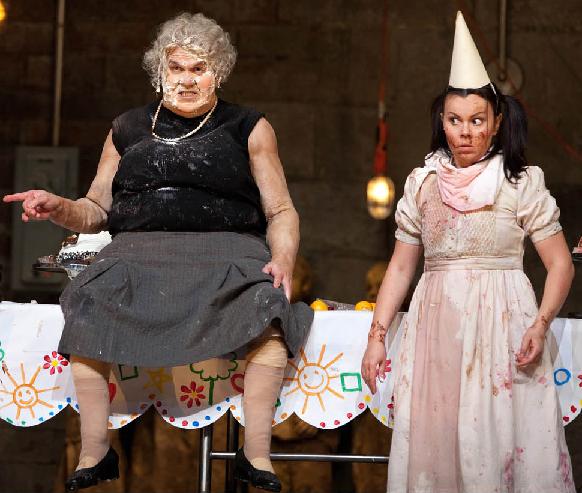
    Wednesday December 21, 2011 – The presence of a number of intriguing names in the cast (led by Kate Lindsey, above, as Hansel) drew me back to the Met’s dark and not very pleasing production of HANSEL & GRETEL which is playing during the holiday season. It’s a far cry from the Met’s older production with its fanciful gingerbread house and jolly, green-tongued witch, Rosina Daintymouth. In the current incarnation the characterizations of both the witch and the parents are based on infamous British serial killers. There’s little magic to be found visually…

    Met_Opera_Hansel_Gretel_31_medium

    …though a couple of nice images crop up here and there, like the phalanx of chefs (above) who serve a feast to the starving children. But for the most part the production is earthbound and lacking in fantasy.

    What drew us to see it again – in addition to the singers – was the music itself (Humperdinck greatly admired Wagner), as well as a conductor new to the Met podium: Robin Tacciati . He provided appealing orchestral textures all evening and his interpretation brimmed over with emotionally satisfying colours. Unfortunately, his first act seemed rushed and he often let the large orchestra overwhelm the voices.

    HanselGretel1112.06

    As the two children, Alexandra Kurzak and Kate Lindsey (above) entered fully into the demanding staging of the work which calls for lots of physicality, dancing and mime…and getting plastered from head to toe with foodstuffs from the witch’s kitchen. Kate was virtually slathered in pudding and jam, then plentifully dusted with cocoa and powdered sugar. Alexandra staggered around the set with a huge platter of melting chocolate cookies and a bowl of custard. She continues to sing while stuffing various sweets into her mouth. Sticky fingers? Who needs Mick Jagger? 

    Despite all the things they are called on to do and eat, both Alexandra and Kate managed to sing very well into the bargain. Alexandra’s voice has girlish, lyrical appeal and even though the orchestral volume forced her to push the voice in a couple of spots, her Gretel was very prettily sung, especially in her exquisite vocalizing of the famous prayer. Kate has one of the truly distinctive voices in the opera business these days and her singing is impeccably tailored, warm and clear. As hansel, she is a truly convincing boy onstage, expanding her repertory of trouser roles: her Cherubino and Nicklausse were perfect, her Siebel’s coming up, and I’m longing for her Octavian. But she shouldn’t spend her whole life in pants, she’s far too pretty: so I hope we will have her Rosina and Dorabella soon, and I’d love to see her as Berlioz’s Beatrice.

    HanselGretel1112.09

    Robert Brubaker, a teriffic Mime in SIEGFRIED at the Met a couple of seasons back, was a huge-voiced and creepy Witch. It’s so eerie to hear his voluminous character-tenor sound emanating from the frumpy old biddy in a fat-suit. Robert was superb and, like Kate and Alexandra, simply threw himself into the production’s food fantasy. Photo above: Robert Brubaker and Alexandra Kurzak.

    HanselGretel1112.02

    As the parents Peter and Gertrude, Dwayne Croft and Michaela Martens (above) excelled. They have authentic Met-size voices and took the waves of sound coming up from the pit in their stride. I’ve always loved Dwayne Croft’s voice since I first heard him as Puccini’s Marcello at Glimmerglass many moons ago. He sounded fabulous tonight. Dmitry and I are very fond of Ms. Martens and she sang with power and attractive tone as the desperate mother. If the Met management had any imagination, Michaela would be doing roles like Fricka, Venus, Brangaene and the Berlioz Cassandra here. I could even imagine her as a very fine Sieglinde.

    HanselGretel1112.07

    Ashley Emerson (above) was a delicious Dew Fairy, a petite elfin maiden with tiny Sylphide wings. Her singing was bright and light-filled, a perfect wake-up call. She carries on a tradition – both in-house and on recordings – of casting wonderful singers in the opera’s two cameo solo roles. Her evening counter-part was the Sandman of Jennifer Johnson Cano who sang very nicely indeed.

    The musical pleasures of the evening were offset by the overall drabness of the production. There were lots of empty seats throughout The Met so word must have gotten out that this is not a festive holiday treat with an underlying moral message but rather a grotesque take on a story and score which should be heart-warming but instead leaves us slightly nauseous.

    A major failure of stagecraft comes hear the end when the many children who had been under the witch’s spell are set free. The director apparently couldn’t think of any better way to handle this than to lower the curtain on an empty set and then bring it up again 30 seconds later on a stage filled with two dozen urchins. Then the uplifting melodic benediction launched by Peter as the work comes to an end failed to resonate because there was no context of religiosity anywhere else in the production.

    Act I takes place in a desolate kitchen where Hansel and Gretel seem like manic-depressives and where Gertrude is on the verge of committing suicide. The scene in the forest is instead set in a large empty hall with green-leaf wallpaper. It’s too dim, and nothing seems to be happening til the old Sandman and  – later – the chefs arrive. The witch’s kitchen is drably industrial and she is played like an over-the-top drag version of Julia Child, flingling flour and powdered chocolate all over the place. Candy, pudding and strawberry preserves are smeared on Hansel and Gretel, and Hansel is trussed up for roasting. The scene is vulgar and not funny in the least though it is broadly played. 

    The English translation is very Brit-oriented and, thanks largely to the over-enthusiastic conducting, much of it didn’t register. I’d like to see the Met dump this production and give us a more attractive, kid-friendly look at this opera. It should cast a Christmastime spell of hope and familial love; instead it only reminds us of the American knack for wasting food while children right here in Gotham don’t have enough to eat.

    Production photos: Mary Sohl/Metropolitan Opera.

    Metropolitan Opera House
    December 21, 2011
    In English

    HANSEL UND GRETEL
    Humperdinck

    Hansel..................Kate Lindsey
    Gretel..................Aleksandra Kurzak
    Gertrud.................Michaela Martens
    Peter...................Dwayne Croft
    Witch...................Robert Brubaker
    Sandman.................Jennifer Johnson Cano
    Dew Fairy...............Ashley Emerson

    Conductor...............Robin Ticciati

    The evening ended on a sweet note when I went backstage to see Kate and Ashley; I met both of them when they were in the Lindemann Young Artists Development Program at the Met and I’m very pleased to be following their successful careers. It was also nice to wish happy holidays to Michaela Martens and Dwayne Croft.

  • Met’s 1961 TROVATORE on SONY

    886979100626

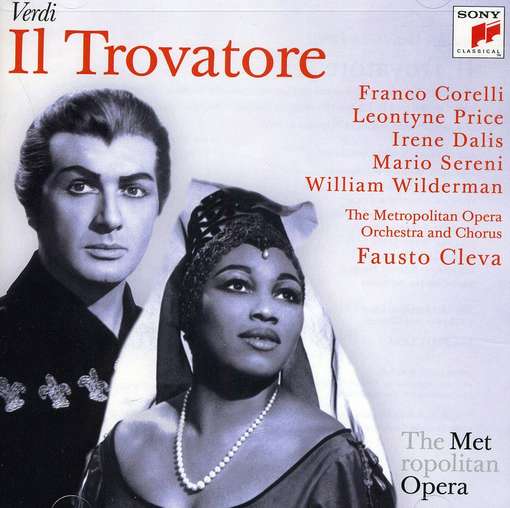
    The Metropolitan Opera on SONY series recently issued the famous February 4, 1961 TROVATORE broadcast with Leontyne Price and Franco Corelli which followed by a week their wildly acclaimed joint Met debut in the Verdi opera. The 1960-61 Met broadcast season was happening without my knowledge, otherwise I would certainly have been glued to my radio. But I did not discover the Met broadcasts until the following season when the fabled Sutherland ‘debut’ LUCIA was the first time I tuned in. From then until just a couple of years ago, I hardly ever missed a broadcast.

    I heard Price and Corelli many times at The Met – Leontyne I actually heard at the Old Met as Fiordiligi in COSI FAN TUTTE (in English) and Franco sang in the first performance I saw at the New Met (as Calaf in TURANDOT). I loved them both in those golden years though I knew Franco could be sloppy at times and Leontyne, over the years, developed some annoying idiosyncrasies. I’d never heard the 1961 TROVATORE so I set aside time to concentrate on it; I must say, it is a very erratic performance.

    Fausto Cleva, a favorite conductor of Renata Tebaldi, takes much of TROVATORE at a breathless clip. For the most part the singers manage to keep up though there’s some scrambling here and there. Aside from Leontyne Price, who strives throughout for thoughtful musicality, the principal quartet of singers tend to sing TROVATORE in verismo style rather than treating it like a god-child of the bel canto era. I suppose there’s a temptation to snarl and bluster in the opera’s dramatic utterances and in a live performance there is no recourse other than to let the singers do what they will in declaiming the text. But it becomes a bit tiresome after a while.

    Corelli is the most lachrymose Manrico I ever heard; he gives the same impression on his commercial recording of the role for EMI, though that is more artfully sung. Of course there is a lot of very powerful and exciting vocalism in his interpretation, but this is somewhat compromised by his melodramatic excesses. Upon receiving news that Leonora is to take the veil, Corelli has a little mad scene which wanders right off the musical map. But despite some slight variability of pitch at times, the utterly distinctive Corelli timbre and his sheer generosity of voice make him a Manrico on the grand scale. Interestingly, Corelli only sang this opera at the Met eleven times, retiring it from his repertory at the House in 1964. A new production in 1969 was reportedly planned for Corelli but in the event Placido Domingo was the Manrico.

    Leontyne Price on the other hand kept Leonora in her repertoire for over twenty years; the great aria “D’amor sull’ali rosee” might be considered the soprano’s theme song and she sang it superbly at the gala that closed the Old Met in 1966. The warmth and shimmering beauty of her timbre provide the vocal high points of this 1961 broadcast where she manages to maintain the Verdian line while her colleagues wander into melodramatic over-accenting of certain passages. For my money, Price was not a soprano with a first-rate forte top; she was best in the floating upper phrases of a role. Corelli drowns her out on the final D-flat of Act I, and her high-C at the climax of the Act IV duet with di Luna doesn’t have any zing to it. But overall it’s wonderful to hear the soprano in all her freshness in this music. Over the ensuing years Price developed a vocal ‘style’ that could be off-putting: growling in the lower register and introducing some bluesy mannerisms that could spoil her performances for me. You don’t hear these on her commercial recordings so much, but in the House she could be very self-indulgent. Nevertheless her singing could still thrill, right to her farewell operatic performance.

    I always loved the sound of Mario Sereni’s voice, so warm and attractive. For me he was at his best in verismo: his Marcello, Carlo Gerard and Tonio (PAGLIACCI) were all very fine; he did leave behind some wonderful studio recordings too, notably his Germont with de los Angeles and his Enrico on the RCA/Moffo LUCIA. But in this TROVATORE he seems way off form. I wonder in fact if he was actually originally scheduled for this  broadcast since Robert Merrill had sung di Luna in the Price/Corelli debut performance and sang it again in the next performance following the broadcast. Whatever the case, Sereni seems unprepared. He sings the wrong entry line in the first scene of Act III and gets lost in the recitative on his entry in Act IV. Some handsome singing along the way is offset by serious pitch problems in the great aria “Il balen”. It’s sad that this particular broadcast should be chosen as a document of Sereni’s live Met performances; I know I can never listen to it again.

    Irene Dalis was a great favorite of mine. She was a powerful stage presence and a singer who could be both passionate and subtle. Her performance is exciting but I feel of all the singers she may have been most put-off by Cleva’s fast tempi. In the Act III, Scene 1 finale Irene is pushed to the limits by the conductor’s absurdly rapid pace and it seems to me that she simply stops singing during the final bars of music. Her final scene is very impressive, though, with the quiet calm of her “Ai nostri monti” and a sustained high B-flat in her last triumphant, vindictive phrase. Ten years after this broadcast, I saw Irene’s Azucena at the Met during a June Festival performance. Despite the intervening decade of singing some of opera’s most demanding roles, she was in fact far more thrilling and vocally secure than on this 1961 broadcast.

    It’s good to have a document of William Wilderman’s performance of Ferrando; his ample and darkishly dramatic singing gets the opera off to a strong start. Teresa Stratas sings the brief role of Inez and there is no mistaking her voice. She strives to make something lovely of her phrase bidding farewell to Leonora at the convent, but Price trumps her by coming in a shade early and stepping on the younger soprano’s tapering piano.

    For all its flaws, listening to this recording reminded me of how much I love this opera. Despite its improbable plot, the vast treasury of Verdi melody makes TROVATORE essential.