Tag: Met Opera

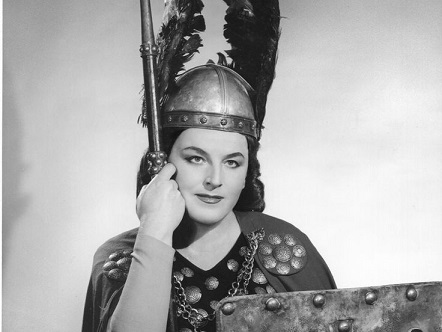
  • Martinelli Gala @ The Old Met ~ 1963

    Martinelli 2

    I had never previously heard this gala concert honoring the 50th anniversary of the Metropolitan Opera debut of the great Italian tenor Giovanni Martinelli (above). Parts of it had sometimes cropped up on reel-to-reel trade lists back in the day, but invariably in poor sound. The present recording, which just popped up on YouTube, seems to have been made via the Met’s house wire.

    Listen here.

    The date is significant because two days later, John F Kennedy was assassinated in Dallas, Texas. And a week later, I attended my first performances at the Old Met.

  • ASO ~ Gurre-Lieder @ Carnegie Hall

    Gurre 4

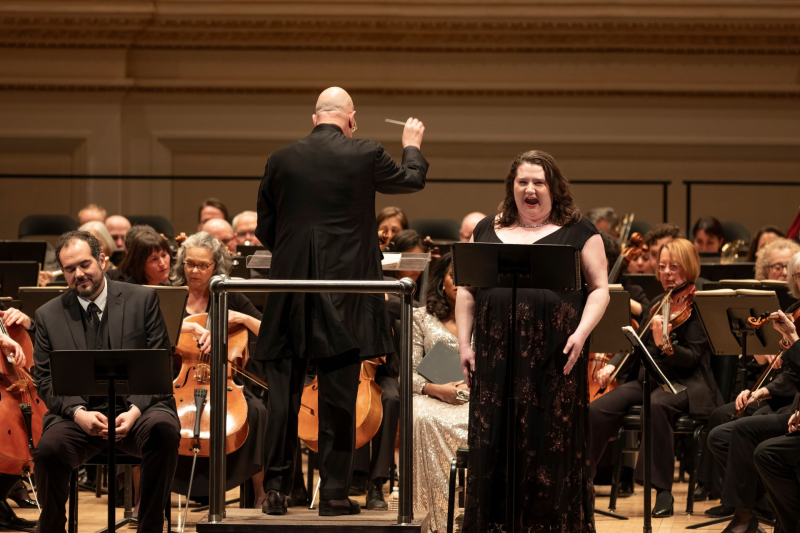
    Above: tenor Dominic Armstrong (seated), conductor Leon Botstein, and soprano Felicia Moore onstage at Carnegie Hall; photo by Matt Dine

    ~ Author: Ben Weaver

    Friday March 22nd, 2024 – Arnold Schoenberg’s gargantuan Gurre-Lieder, composed in 1900-03 (revised 1910-11), is unlike anything else in his catalog. With this lush and highly melodic work – for soloists, chorus and orchestra – he reached the ceiling of Romanticism and the only way out was to shatter it to smithereens. For Schoenberg, a mix of musical philosophy and observing the ravages of WWI signaled that music could not continue on the path laid out by his predecessors (Bach, Haydn, Mozart, Beethoven, Brahms, Wagner, etc. etc.) Schoenberg may have overreacted quite a bit, but, at a least with Gurre-Lieder, he left us with a grand finale of sorts to the excesses of 19th century music.

    Gurre-Lieder’s libretto is adapted from Jens Peter Jacobsen’s dramatic poem Gurresange, written in 1868. It tells the story of King Waldemar and his love for the beautiful Tove, who is murdered by Waldemar’s jealous wife. Enraged, Waldemar curses God and is condemned to roam every night on wild hunts with his ghostly vassals. Waldemar is redeemed with arrival of Spring, and he and Tove are reunited as they become one with nature. Performances of this work are extremely rare, no doubt because Schoenberg calls for more than 150 musicians, an extravagance few organizations can afford, and none can afford frequently.

    Part I opens with what Gabriel Adorno called “fairy land” music, a shimmering tapestry of harps, celesta, flutes, piccolo and some strings. Waldemar and Tove exchange declarations of love in extended monologues, set to ravishing Wagnerian and Straussian sounds.

    Tenor Dominic Armstrong (above) took on the – let’s face it – impossible role of Waldemar. Schoenberg wrote the part for at least three different voices; not many singers have been able to possess them all. This is a Tristan/Parsifal/Tannhäuser part, with Tamino thrown in for good measure. I honestly don’t know who can really sing all this in a live performance. Dominic Armstrong is a lyrical tenor with a strong top, but sadly the voice disappears in the lower registers. And conductor Leon Botstein was not very kind, allowing the orchestra to cover Mr. Armstrong all evening. Armstrong’s strongest moments were in the lighter passages; his best singing came late in Part 3, in his final aria “Mit Toves Stimme flüstert der Wald”, when Schoenberg’s orchestration relaxed, allowing Waldemar to finally emerge.

    Soprano Felicia Moore (above) possesses a large, blooming voice, that managed to break through the orchestral cacophony, in spite of an insensitive conductor. Her Tove was exotic and warm.

    Gurre 2

    Mezzo-soprano Krysty Swann (above, in a Matt Dine photo), as the Wood-Dove who describes the terrifying details of Tove’s murder, was exciting in her long monologue. The voice is large and steely, the vibrato a bit loose at the top, but Ms. Swann possessed an excellent sense of drama, managing to build to thrilling and hair-raising final moments of the Wood-Dove’s narrative.
    Gurre 3

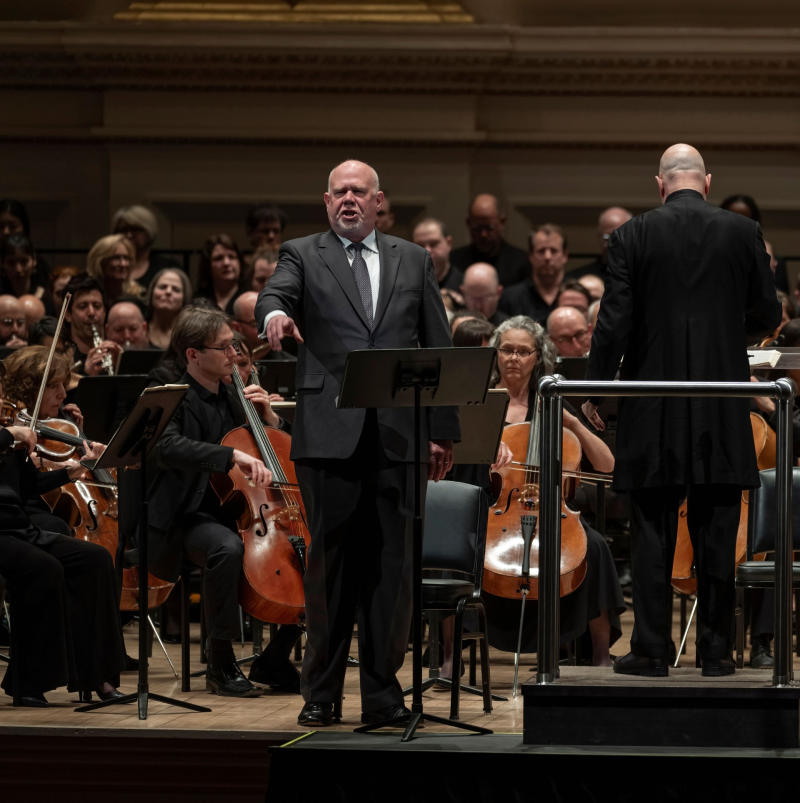
    Bass-baritone Alan Held (above, photo by Matt Dine) has been a favorite of mine for many years. Though it seemed like James Levine always kept Mr. Held back at the Metropolitan Opera, where he should have been singing Wotan among many other roles, I still vividly recall a searing Wozzeck Mr. Held sang at the Met in 2011. It was wonderful to hear him once again, his large voice easily filling Carnegie Hall as the Peasant who is terrified by Waldemar and his men’s nightly processions.

    Gurre

    Tenor Brenton Ryan (photo above by Matt Dine) was a very memorable Klaus the Jester, starting his long monologue from the house floor, then jumping on to the stage. Mr. Ryan possesses a strong, characterful tenor that made me think he might have been a better choice to sing Waldemar.

    And German bass-baritone Carsten Wittmoser was a magnificent Narrator, his crystal clear diction perfect for the sprechstimme part, which is usually given to older singers nearing retirement or even non-singer actors (Karl Maria Brandauer and Barbara Sukowa, for example.) So it was nice to hear a singer still in his prime take on this role.

    The American Symphony Orchestra was founded by Leopold Stokowski – who conducted the US Premiere of Gurre-Lieder in 1932, so it has a direct connection to this work, and they played quite beautifully, and certainly loudly. Here I must fault Leon Botstein for not being more considerate of his singers. Even the Bard Festival Chorale found itself drowned out by the orchestra, occasionally becoming just a mass of garbled sounds coming from somewhere at the back of the stage.

    Still, any live performance – flaws aside – of this supremely difficult work is was a special treat to be able to experience. How long before another performance is organized in New York City?

    ~ Ben Weaver

    Performance photos by Matt Dine, courtesy of Carnegie Hall

  • @ My Met Score Desk for CARMEN

    Aigul

    Above: Aigul Akhmetshina

    ~ Author: Oberon

    Saturday January 27th, 2024 matinee – Feeling no need to see a 6-ton tractor trailer on the stage of the Metropolitan Opera House, I took a score desk for today’s matinee of the Met’s new production of CARMEN. I wasn’t feeling my best this morning as I prepared to leave for Lincoln Center, and even considered staying home. But once the house lights dimmed, my spirits perked up, CARMEN is an opera I had not heard for a very long time, and the music seemed truly fresh to me today.

    The main draw of the day was Aigul Akhmetshina, the gorgeous Russian mezzo-soprano, in the title-role. I fell under she spell when she sang Maddalena in Verdi’s RIGOLETTO here last season, which I saw three times.

    Maestro Daniele Rustioni got the opera off to a fast start, setting a brisk tempo with the start of the prelude. Unlike some of the other conductors the Met favors these days, Rustioni is not a volume freak; the voices were – for the most part – clearly audible throughout the opera, and his tempi always felt right. I especially like his accelerations as each repeat of the theme of the Act II Danse Bohème sped up: exhilarating! The preludes to the four acts were beautifully played, particularly the touching music that introduces Act III. All the choral work was super as well, notably the lovely smoking chorus in Act I.

    The first solo voice we hear is that of Morales, sung very impressively today Benjamin Taylor; it’s a Met-sized voice of handsome timbre. Equally striking was the singing of Wei Wu as Zuniga. Both these gentlemen deserve more opportunities at The Met.

    Carmen’s friends – Frasquita (Sydney Mancasola), Mercedes (Briana Hunter), Dancairo (Michael Adams), and Remendado (Frederick Ballentine) – joined Ms. Akhmetshina for the quintet in Act II, excelling at the quick repartee. Ms. Mancasola popped off some bright top notes at the end of the Toreador Song and at “La Liberté!” to end the third act.  

    Micaela is the first principal character to appear, in the person of Angel Blue. This role suits Ms. Blue far better than Violetta did last season. She sounded warm and lyrical in the duet with Don José, etching in some appealing piano effects. And her aria in Act III – with its finely-played horn introduction – was a vocal highlight of the afternoon; Ms. Blue’s rich voice could be tapered smoothly to a sweet softness, making for a spine-tingling finish. Her final plea, with its stunning drop at “Ah, José!“, was beautifully handled.

    Maestro Rustioni provided a whiplash start to the famous Toreador Song; Kyle Ketelsen sang the familiar tune engagingly, and he was excellent in his ‘fight’ duet with José in Act III. Later – before the bullfight commences – he and Ms. Akhmetshina shared a lyrical moment. 

    Beczala 2

    Above: Piotr Beczala

    Piotr Beczała’s bio says he is 57 years old, but he certainly doesn’t sound it…nor look it, when I chatted him up at the stage door after the performance: he’s a very handsome guy, with an easy-going charm. His singing today as was most impressive, covering a wide dynamic range, from passionate, house-filling outpourings to ravishingly heady tones.  He and Angel Blue blended voices perfectly in their Act I duet, trading phrases persuasively, and finishing off with Piotr’s amazingly hush-toned “Souvenirs du pays…” 

    Chez Lillas Pasta, after Carmen upbraids José for abandoning her when the trumpets summon him back to the barracks, Mr. Beczala gave us his poetic Flower Song, so ardently voiced…and with a fascinating pianissimo climax to the final phrase. 

    When the music turns darker and the menacing edge of jealousy overtakes Don José, Mr, Beczala unleashed the power of his voice to thrilling effect. The character’s descent into madness was set forth in vocal terms, with a manic desperation in his singing of the final, deadly encounter with Carmen.

    Aigul Akmenshina established herself as one of the finest Carmens imaginable. Introducing herself with a sultry Habanera – the second verse sung with enticing subtlety – the comely mezzo displayed a warm, dusky timbre with a plushy low range and smooth forays to the top. Aigul’s Seguidilla put both the tenor and the audience under her spell with her creamy, gorgeous voice, topping it off with sustained final note. 

    Her singing of the the Chanson Bohème in the tavern scene veered from subtle to triumphant, but the fact that her later castanet song was not working on José as she’d expected unleashes her temper.  After listening patiently to José’s love plea, Carmen returns to enticement. Zuniga’s arrival causes José to capitulate, and he joins the smugglers. My feeling here is that Carmen already hates him.

    At the smugglers’ den, Aigul’s reading of the tarot cards was sung with doom-ladened low notes and a sense that time was running out for her. Her final meeting with Mr. Beczala’s José was fiery, their exchanges quickly descending to threats and taunts. In this production, José kills Carmen with a baseball bat, which I am glad I could not see; the audience gasped.

    Ms. Akhmetshina’s is a welcome voice and presence on the Met stage, and I will always look forward to her performances; I also hope to one day hear her in Chausson’s Poème de l’amour et de la mer, for which I think she has the perfect voice. 

    The few times I glimpsed the the stage setting today, it looked cheap and junky. A real eyesore.

    After the performance, I went to the stage door where I met Aigul and Piotr; they are such kind and lovely people.

    Carmen met-1jpg

    ~ Oberon

  • My 1st Time Hearing DIE WALKURE

    Nilsson

    Above: Birgit Nilsson as Brunnhilde

    The Met’s 1961 broadcast of Wagner’s DIE WALKURE marked the first time I ever heard this opera which became, over time, my favorite of the composer’s operas. A recording of the broadcast was recently posted on YouTube. Listen here.

    I remember that some scenes seemed endless to me, and that while the music was at times very exciting, it was the story that most intrigued me…especially the ending, where Brunnhilde was left sleeping in the middle of a ring of magic fire.

    We had had a substantial snowfall the night before, and I went out to the field behind our house with the sound of the feuerzauber alive in my head. I made a circle of all the empty packing boxes and other trash from my father’s drugstore and set it afire. It was then that I realized I was in the center of the circle and would have to wait until the flames died down before I could escape. At supper, my mother scolded me for bringing a smokey smell into the house. It took a few days for the odor to dissipate.

    Metropolitan Opera House ~ December 23,1961

    Cast: Brünnhilde: Birgit Nilsson; Siegmund: Jon Vickers; Sieglinde: Gladys Kuchta; Wotan: Otto Edelmannl Fricka: Irene Dalis; Hunding: Ernst Wiemann; Gerhilde: Carlotta Ordassy; Grimgerde: Mary MacKenzie; Helmwige: Heidi Krall; Ortlinde: Martina Arroyo; Rossweisse: Margaret Roggero; Schwertleite: Gladys Kriese; Siegrune: Helen Vanni; Waltraute: Mignon Dunn

    Conductor: Erich Leinsdorf

  • Eduardo Villa Has Passed Away

    Villa

    Tenor Eduardo Villa, a native of Santa Barbara, California, has passed away at the age of 70. Originally interested in musicals, he appeared in productions of Oliver!, West Side Story, and Paint Your Wagon before deciding to develop his voice further by studying at the University of Southern California, where his teachers included such luminaries as Martial Singher and Margaret Harshaw.

    Upon winning the Metropolitan Opera Auditions in 1982, alongside Hei-Kyung Hong, Sylvia McNair, and Nancy Gustafson, Villa departed for Switzerland, where sang with Basel Opera Theater between 1983 and 1987. In 1986, he made his debut at the Paris Opéra as Verdi’s Don Carlo, and from 1987 to 1991 he appeared at the Munich State Opera.

    When Villa began getting offers in the USA and Canada, he left Munich. Among his many contracts were appearances with Connecticut Opera at The Bushnell in Hartford, where I first heard his warm, passionate singing in BALLO IN MASCHERA, and later as an ardent suitor to Mary Dunleavy’s captivating Lucia di Lammermoor.

    In 1992, Eduardo sang Jacopo in a concert performance of Verdi’s I DUE FOSCARI given by Eve Queler’s Opera Orchestra of New York. It was a very exciting evening, with soprano Martile Rowland and baritone Vladimir Chernov sharing enthusiastic ovations with the tenor.

    Mr. Villa joined the Metropolitan Opera in 2002, debuting as Don Carlo and going on to make two dozen Met appearances (thru 2008) as Pinkerton, Don Jose, Calaf, Turiddu, Rodolfo in LUISA  MILLER, Cavaradossi, Enzo Grimaldi, and Ernani.

    I saw him at The Met as Radames in 2002 opposite Michelle Crider, and he was really impressive: a Met-sized voice with a nice Italianate ring to the tone. In my diary, I praised his vocal generosity, his ability to cut thru ensembles, and his sustained “Sacerdote! Io resto a te!!” at the end of the Nile Scene. 

    There is not a lot of Eduardo Villa’s singing on YouTube but there is an OTELLO duet with baritone Mark Rucker that gives a you a good idea of what kind of singer Mr. Villa was…watch and listen here.

    ~ Oberon

  • 60 Years Ago @ The Old Met

    Old met

    November 27th, 2023 – Sixty years ago this evening, I attended my first Metropolitan Opera performance: DON GIOVANNI, at the Old Met. I was in my fourth year of hardcore opera fandom, tuning in for every Met broadcast on Saturday afternoons, and building my record collection.

    I’d been to some opera performances at the Cincinnati Zoo, at Syracuse, and even in Oswego, NY, just a few miles from home. But The Met was my goal, and on this late Autumn evening, just a few days after the assassination of John F. Kennedy, I finally found myself in the now rather dilapidated Hall that Milton Cross had described so many times over the airwaves; it was like a dream come true.

    Read about my unforgettable experience here.

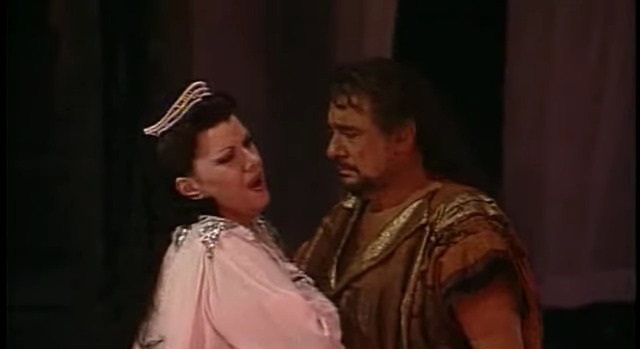
  • Dever/Domingo SAMSON ET DALILA ~ 1998

    Dever domingo

    From the Palacio de Bellas Artes in Mexico City comes a 1998 performance of Camille Saint-Saëns’ SAMSON ET DALILA starring Barbara Dever and Placido Domingo. Genaro Sulvaràn is the High Priest, and Guido Guida conducts.

    Watch and listen here.

    Between 1992 and 2014, Barbara Dever sang nearly 100 performances with the Metropolitan Opera; I saw her excellent Amneris and Ulrica there. Genaro Sulvaràn sang the role of Count de Luna at he Met in 1999 and made a vivid impression. 

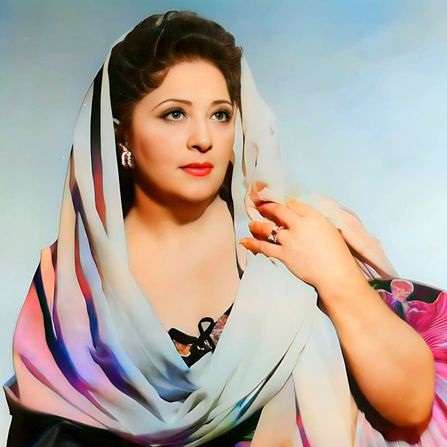
  • Milanov~Bergonzi~Sereni CHENIER – Atlanta 1960

    Zinka

    Above: Zinka Milanov

    A performance of Giordano’s ANDREA CHENIER given in 1960 by The Met on tour in Atlanta has just popped up on YouTube. Listen here.

    This was at the time when I was just falling in love with opera, though I had not yet discovered the Met Texaco broadcasts. Zinka was on the very first opera LP that my parents gave me; Bergonzi was Pinkerton on the first complete opera set I ever bought (the ‘second’ Tebaldi Cio-Cio-San); and not long after, I bought the de los Angeles TRAVIATA on which Sereni sang Germont.

    One of the things I loved most about finding this Atlanta CHENIER was that the cast includes three mezzo-sopranos who – over time – were to give me so many wonderful memories: Belén Amparán, Helen Vanni, and Mignon Dunn. And just look at the Met stalwarts cast in the supporting male roles:

    Atlanta, Georgia (Metropolitan Opera on tour)
    May 2nd, 1960

    ANDREA CHÉNIER

    Andrea Chénier..........Carlo Bergonzi
    Maddalena...............Zinka Milanov
    Carlo Gérard............Mario Sereni
    Bersi...................Helen Vanni
    Countess di Coigny......Mignon Dunn
    Abbé....................Gabor Carelli
    Fléville................George Cehanovsky
    L'Incredibile...........Alessio De Paolis
    Roucher.................Clifford Harvuot
    Mathieu.................Ezio Flagello
    Madelon.................Belén Amparan
    Dumas...................Osie Hawkins
    Fouquier Tinville.......Norman Scott
    Schmidt.................Louis Sgarro
    Major-domo..............Lloyd Strang

    Conductor...............Fausto Cleva

    So, despite the sometimes wonky sound quality, this recording is such a treasure to me. 

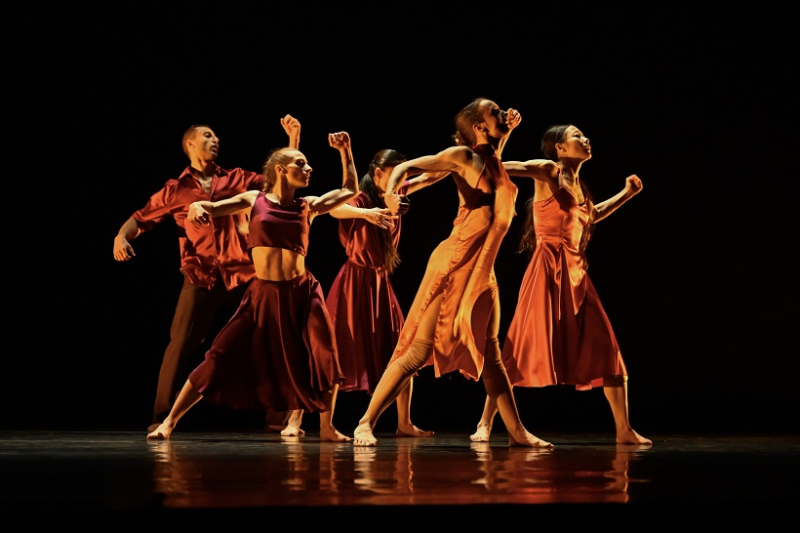
  • Graham Classics + New Works ~ 2023

    Rigney

    Above: from Annie Rigney’s new work for the Martha Graham Dance Company, GET UP, MY DAUGHTER

    Sunday April 23rd, 2023 matinee – Two Graham masterpieces and two recently-premiered works new to the Graham Company repertoire held the stage at the Joyce Theater this afternoon.

    DARK MEADOW SUITE, one of Graham’s most beautiful works (with an equally beautiful Carlos Chávez score) opened the performance. At curtain-rise, the women are posed like icons, with Anne Souder slightly removed from the others. They begin stamping their feet. A plaintive violin theme is heard, joined by the cello. The women move with classic Graham steps and gestures; Ms. Souder is simply sublime.

    Lloyd dark meadow

    Now Lloyd Knight (above) appears, striking poses in a spellbinding opening solo which develops into a stage-filling dance. Ms. Souder joins him for a duet in which an electric current seems to pass between them; their intimate partnering is at once sensual and ritualistic.

    The kneeling men hold the women in a uniquely lovely leaning, questing pose, symbolic of seeking or longing; Ms. Souder and Mr. Knight continue to reign in duet and solo phrases: unbearably tender and heartfelt.

    Aside from the principal couple, the cast for MEADOW today featured Leslie Andrea Williams, Laurel Dalley Smith, Marzia Memoli, Devin Loh, Kate Reyes, Jacob Larsen, Richard Villaverde, and new-to-Graham James Anthony.

    MGDC2023_Steven-Pisano-44

    Above: Marzia Memoli and So Young An in Annie Rigney’s GET UP, MY DAUGHTER; photo by Steven Pisano

    Ms. Rigney’s debut piece for Graham opened earlier in the week. It is a harrowing work, set to a thrilling score by Marco Rosano which incorporates Bulgarian folk music with original themes by the composer, and with stunning lighting by Yi Chung-Chen. It tells a story similar to one that I heard long ago from my high-school girlfriend.

    A quartet of young women in satiny frocks – So Young An, Anne O’Donnell, Anne Souder, and Marzia Memoli – dance together to chanted harmonies. They seem wary, full of angst and longing.

    MGDC_Get-Up-My-Daughter_MSherwood_07

    Above, in a Melissa Sherwood photo: Richard Villaverde makes a disturbingly powerful impression as the man of the house, who singles out So Young An as his partner of the moment in a dramatic duet of control, resistance, and resignation. The music is solemn, with the haunting voice of the great counter-tenor Andreas Scholl bringing a timeless feel. 

    Ying Xin joins the sisterhood, who have apparently been drugged into near stupor; while heavenly harmonies are heard, they seem to plan an escape but lack the strength to attempt it. The organ joins the musical soundscape, lending a curiously religious air. Mr. Villaverde returns; the women tremble in fear. Drums thunder forth, and the piece ends suddenly.

    MGDC2023_Steven-Pisano-47

    Above: Ying Xin, Marzia Memoli, and So Young An in GET UP, MY DAUGHTER; photo by Steve Pisano

    Why this work affected me so deeply lies in recalling my girlfriend’s experience, of which I was unaware at the time. For three years, her father routinely raped her, her two older sisters, and her younger brother. I was aware of the extreme tension she endured living in a home with a drunken father, but I never knew about the sexual side of it until a few years later, after she had escaped and moved to Washington DC. I only knew how she clung to me in our tender, juvenile – but curiously “knowing” – love-making. Her father eventually blew his brains out.

    Cortege 1

    Above: from CORTEGE 2023, with Ruchard Villaverde kneeling; photo by Steve Pisano

    Equally thought-provoking this afternoon was the second darkly powerful new work, CORTEGE 2023, set to a score by Aidan Elias and choreographed by Baye & Asa. This piece spoke of the dangerous world in which we now live: scenes of violence, torture, and isolation alternate with depictions of mourning and consolation.

    Chimes sound at curtain-rise as a diagonal of dancers are seen covered by a shroud, which is slowly pulled away as the dancing starts. The lighting (again by Yi-Chung Chen) flashingly isolates various tableaux of people under duress: prisoners, the interrogated, the isolated, the bereaved.

    MGDC_Cortege-2023_MSherwood_7944

    Lloyd Knight’s solo (above photo by Melissa Sherwood), set to sinister music, is riveting. Rhythmic variety, and ritualistic acts, carry the piece eerily forward. Anne O’Donnell’s solo is so expressive, and James Anthony has an opportunity to shine.

    MGDC2023_Steven-Pisano-32

    Above: Lorenzo Pagano and the ensemble; photo by Steve Pisano

    Violence has become a fact of life, as indicated by a cataclysmic buildup of brass in the score. An animated quartet become a hypnotic sextet: the movement is non-stop. Deep chords invoke feelings of doom; and then, as silence falls, the vast shroud is used as a cover-up. 

    The afternoon ended with a spectacular performance of Martha Graham’s take on the Medea story: CAVE OF THE HEART. The Metropolitan Opera’s 2022-2023 season opened with the Met’s first-ever performance of Cherubini’s MEDEA starring the inimitable Sondra Radvanovsky, so the story is fresh in the memory.

    MGDC_Cave-of-the-Heart_LAW_MSherwood-24

    Leslie Andrea Williams (above, in a Melissa Sherwood photo) radiated her distinctive star-power in a performance that brought the character’s double personality – abandoned lover and conniving sorceress – vividly to life. When she is not doing, she is always thinking; Leslie’s expressive face, and her eyes – ever scanning the scene for what damage she can do – are as vital to her playing of the role as her dancing. 

    MGDC_Cave-of-the-Heart_LAW_MSherwood-16

    Laurel Dalley Smith (photo above by Melissa Sherwood) gave a dazzling performance as the naive bride, basking in Jason’s attentive courting, unaware of the doom that awaits her.

    MGDC_Cave-of-the-Heart_LAW_MSherwood-44

    Lorenzo Pagano as the proud Jason, looking to be King of Corinth whilst scorning the woman who made it all possible, pays the cost of his betrayal. His earlier show of pride, taunting Medea with his worshipful wooing of the young princess, plunges him headlong into disaster. (Photo above by Melissa Sherwood).

    MGDC_Cave-of-the-Heart_LAW_MSherwood-03

    Presiding overall, and striving in vain to prevent the ultimate catastrophe, the marvelous Natasha S. Diamond-Walker – a Graham goddess if ever there was one – conveyed both the dignity and the anxiety of the all-knowing Chorus in perfect measure. (Photo above by Melissa Sherwood). 

    It surprises me that Martha Graham did not bring the children of Medea and Jason into her telling of the story. The two young boys are a key element in the Cherubini opera, wherein Medea surpasses the cruelty of murdering Jason’s betrothed by knifing the youths. She flings their bloody corpses at Jason’s feet; aghast, he asks her: “What was their crime??” to which she calmly replies: “They were your children…”

    Following the performance, I went downstairs to greet and thank the dancers, and was thrilled to see again – after waaaay too long – two of my Graham idols, Blakeley McGuire and Carrie Ellmore-Tallitsch.

    ~ Oberon

  • Bach’s Matthäus-Passion @ The NY Philharmonic

    Bach

    Author: Ben Weaver

    Saturday March 25th, 2023 – J.S. Bach’s Matthäus-Passion, composed around 1724-27 (and revised through 1742), is arguably Bach’s greatest composition. Personally, I’d place it in the top ten greatest works of Western music. The NY Philharmonic performs it infrequently; the last time was in 2008 under the baton of Kurt Masur. Running at roughly 2:45 hours, the Matthäus-Passion is a work filled with passion and drama…more drama than most church music. Anyone mocking Verdi’s Requiem as being more opera than mass perhaps should take a closer look Bach’s greatest work. Verdi was following in Bach’s mighty footsteps. I was very glad to see it on the program this year, finally! I quite literally got chills as the work started and the chorus (Musica Sacra) sang the opening words: “Kommt, ihr Töchter, helft mir klagen.” Alas, the thrills did not last; I was sadly disappointed with tonight’s performance.

    Tenor Nicholas Phan sang the very difficult part of the Evangelist, who narrates the story of Jesus’ arrest, the debate over what his fate should be, his execution, and its immediate aftermath (the Passion ends before the resurrection.) Much of the drama of the work flows through the Evangelist’s words. Mr. Phan managed the difficult music very admirably, but the part can be a trap dramatically: there are many proclamations like “And Jesus said unto him.” How does one make each one sound fresh? I don’t have a clear answer. I suppose if it was easy, anyone would be able to do it. 

    Bass-baritone Davóne Tines’ Jesus (Mr. Tines was the only person on stage wearing a costume: a white, sleeveless robe) possesses a large voice; but it’s a voice with a guttural quality, which seldom opens or blooms.

    Mezzo-soprano Tamara Mumford, a favorite at the Metropolitan Opera across the Plaza, sang nicely. “Buß und Reu” in Part I was vocally steady and clear. But in Part II, Maestro Jaap van Zweden robbed Ms. Mumford and concertmaster Frank Huang of an opportunity to give their all in “Erbarme dich”, perhaps  the Passion’s most famous aria; certainly its most emotional and devastating piece. Written for solo voice, solo violin, and orchestra, this breathtaking music has the ability to stop time. Alas, Maestro van Zweden took it at a preposterous Allegro tempo; he absolutely wrecked it by turning it into a cabaletta. If your tempo is faster than John Eliot Gardiner’s, Nikolaus Harnoncourt’s, Trevor Pinnock’s, and Gustav Leonhard’s – you may consider looking at the score again.

    Amanda forsythe

    Soprano Amanda Forsythe (above), making her Philharmonic subscription concert debut with these performances, was sublime. Her ability to float pianissimi high notes was indeed spine-tingling. The aria “Aus Liebe will mein Heiland sterben,” which also includes a flute solo by Robert Langevin, was the highlight of the evening. 

    The Philharmonic’s Principal Associate Concertmaster, Sheryl Staples, had a chance to shine in “Gebt mir meinen Jesum wieder,” with a difficult solo. Unfortunately, bass Philippe Sly, making his Philharmonic debut with these performances, had pitch difficulties which offset Ms. Staples fine playing. Tenor Paul Appleby was superb all evening, the high tessitura of the aria “Geduld” presenting no difficulties for him.

    The Choral group Musica Sacra was in excellent form all evening, from the Chorales to dramatic exchanges representing specific characters. The Brooklyn Youth Chorus sang the opening and closing choruses of Part I, but did not return for Part II. Can’t say if that was intentional or if something kept them from returning.

    I do hope the Matthäus-Passion returns to the Philharmonic again soon – under a more caring conductor.

    ~ Ben Weaver