Tag: Met Opera

  • Antonietta Stella Has Passed Away

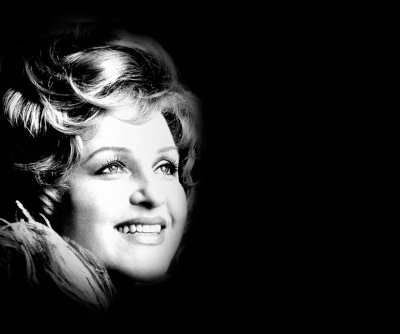
    Antonietta_Stella

    February 23rd, 2022 – I have just read of the death of the Italian soprano Antonietta Stella; she passed away on this date at the age of 92.

    In 1950, she made her operatic debut at Spoleto as Leonora in TROVATORE and soon after was singing at the opera houses of Rome, Florence, Naples, Parma, Turin, Catania, Venice, and the Arena di Verona.

    Stella trovatore

    Above: Antonietta Stella as Leonora in TROVATORE

    In 1954, Ms. Stella debuted at the Teatro alla La Scala in Milan as Desdemona in OTELLO; she continued to sing at La Scala thru 1963 in the great soprano roles of Verdi and Puccini, and as Maddalena in ANDREA CHENIER. In 1955, she made debuts at the Wiener Staatsoper, the Royal Opera House in London, the Paris Opera, La Monnaie, and the Lyric Opera of Chicago.

    She came to the Metropolitan Opera in 1956 as Aida, and went on to sing there thru 1960 as Cio-Cio-San, Violetta, Tosca, Elisabetta in DON CARLO, Leonora in TROVATORE,and Amelia in BALLO IN MASCHERA.
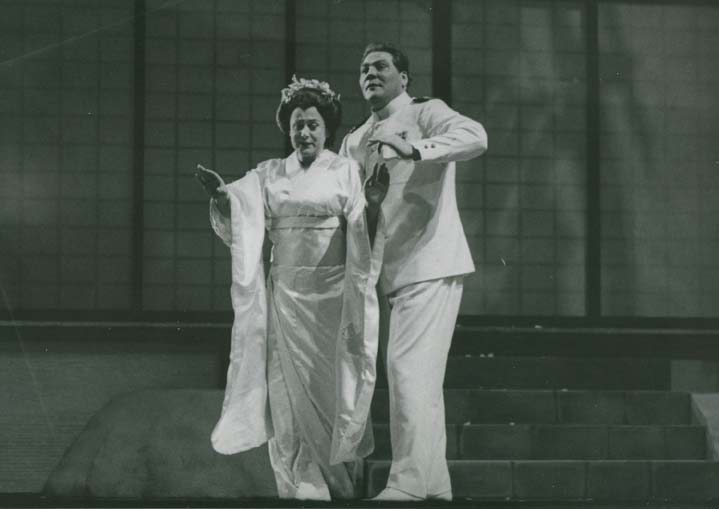
    Stella fernando butterfly

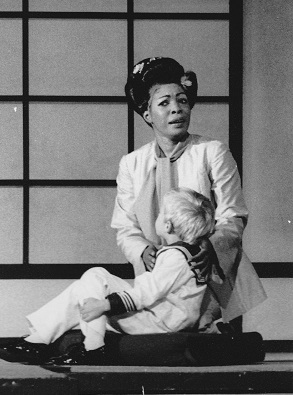
    Above: Antonietta Stella and Eugenio Fernandi in the Aoyama BUTTERFLY at The Met

    In 1958, Ms. Stella portrayed the title-character in Yoshio Aoyama’s classic production of MADAMA BUTTERFLY; the production remained in the Met repertoire thru the 1990s.

    Antonietta Stella – Un bel di – BUTTERFLY – Met bcast 1958

    Among Antonietta Stella’s commercial recordings, her DON CARLO (with Flaviano Labo, Fiorenza Cossotto, and Boris Christoff), her TROVATORE (with Cossotto and Carlo Bergonzi), and especially her ANDREA CHENIER (with Franco Corelliand Mario Sereni) are my special favorites.  She is also heard on several “pirate” recordings.

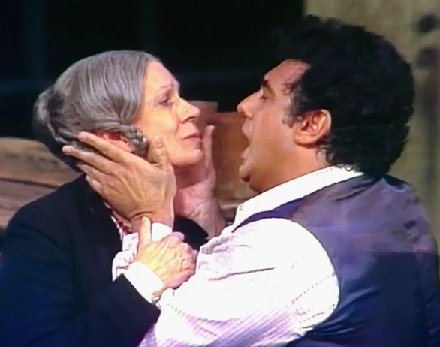
    Ms. Stella sang Minnie in the televised Japanese premiere performance of Puccini’s FANCIULLA DEL WEST (The Girl of the Golden West) given at Tokyo on November 2nd, 1963. The NHK Symphony Orchestra is conducted by Oliviero De Fabritiis.

    Watch and listen here.

    CAST:

    Minnie: Antonietta Stella
    Dick Johnson: Gastone Limarilli
    Jack Rance: Anselmo Colzani
    Nick: Mario Guggia
    Ashby/Jake Wallace: Bruno Marangoni
    Sonora: Arturo La Porta
    Wowkle: Anna Di Stasio
    Sid/Billy Jackrabbit/Jose Castro: Giorgio Onesti
    Trin: Antonio Saba
    Bello: Marco Scotti
    Harry: Augusto Pedroni
    Joe: Antonio Pirino
    Happy: Paolo Mazzotta
    Larkens: Mario Rinaudo
    Postman: Takeshi Nakamura

    And here is part of the Act II duet of Violetta and Germont from TRAVIATA with Ms. Stella and Tito Gobbi:

    Antonietta Stella & Tito Gobbi – Dite alla giovine ~ TRAVIATA

  • @ My Met Score Desk ~ BOHEME Matinee

    Agresta castronovo

    Above: Maria Agresta and Charles Castronovo in LA BOHEME; a MetOpera photo

    Saturday January 22md, 2022 matinee – This performance had its ups and downs, The conducting of Carlo Rizzi was hit-or-miss; he sometimes allowed the orchestra to swamp the singers. But I did like his speedy take on the first several minutes of the Cafe Momus scene.

    Charles Castronovo repeated his very persuasive Rodolfo from the November run. His singing is emotional without straying from the notes, and he has both power and subtlety in perfect measure. His Mimi this afternoon, Maria Agresta, sounded sadly out-of-sorts, her vibrato prominent, and her highest notes not entirely comfortable. Offsetting these reservations was her congenial phrasing and some lovely piano effects.

    Lucas_meachem

    Lucas Meachem (above) was a magnificent Marcello, making every phrase count. The voice is large and warm, and he handily dominated the ensemble ‘reprise’ of the “Musetta Waltz” theme in Act II. His duet with Ms. Agresta in Act III was impressively sung. Gabriella Reyes screeched and shrilled Musetta’s lines at first, but settled in for a nice rendering of the Waltz; I feel that she might be better cast as Mimi.

    Alexander Birch Elliott was a fine Schaunard, despite having to cope with lacklustre conducting from Mr. Rizzi. I liked Peter Kellner’s Colline very much, too, but the thought of enduring a second Gelb intermission caused me to head home without hearing his “Vecchia zimara“.

    The House was substantially full, and there was surprise applause after the Bohemians dismissed Benoit in Act I. Lots of noisy chatter from the ceiling lighting bay during Act I was distracting, and the interminable first intermission simply killed whatever dramatic impetus the opera had going.

    Metropolitan Opera House
    Janaury 22nd, 2022 matinee

    LA BOHÈME
    Giacomo Puccini

    Mimì....................Maria Agresta
    Rodolfo.................Charles Castronovo
    Musetta.................Gabriella Reyes
    Marcello................Lucas Meachem
    Schaunard...............Alexander Birch Elliot
    Colline.................Peter Kellner
    Benoit..................Donald Maxwell
    Alcindoro...............Donald Maxwell
    Parpignol...............Gregory Warren
    Sergeant................Jonathan Scott
    Officer.................Ned Hanlon

    Conductor...............Carlo Rizzi

    ~ Oberon

  • Rolando Villazón’s Papageno @ The Met

    Villazon papageno

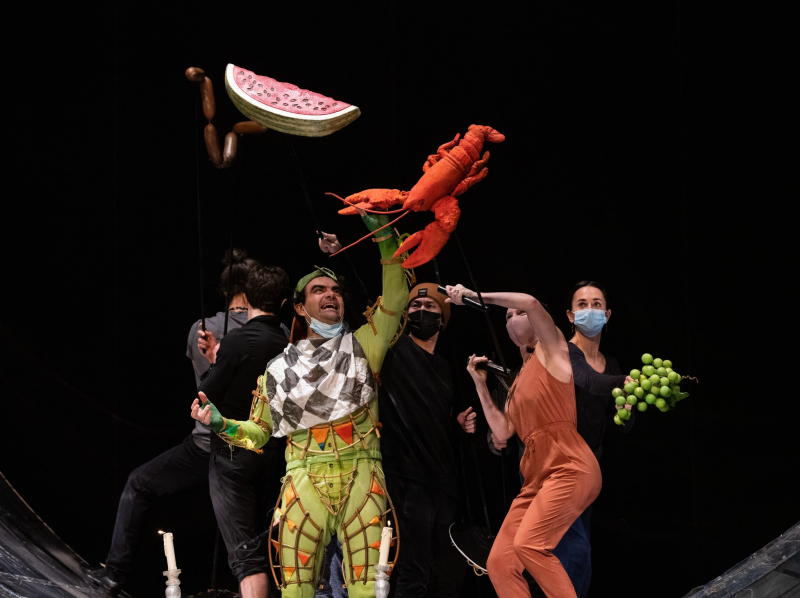
    Above: Rolando Villazón rehearsing the role of  Papageno; a Met Opera photo

    Saturday December 18th, 2021 – Though I would like to have seen The Met’s Julie Taymor MAGIC FLUTE again, financial constraints decided me to get score desks for all but a couple of Met performances this season. One of the main draws for FLUTE this time around was to hear Rolando Villazón essaying the role of Papageno. When Villazón’s career as a primo tenore faltered a few years back, he shifted into different repertory. But I believe his taking on Papageno might be a first step towards joining the ranks of baritones

    In the event, though he was HUGELY cheered at his solo bow, Villazón’s Papageno didn’t really work in vocal terms. His voice is no longer very attractive, being a bit dry and lacking in resonance. Much of the time he semi-spoke his musical lines, whilst the actual spoken passages, charmingly accented, were not always understandable. He made bird noises from time to time; his rooster crow was hilarious. It struck me that Placido Domingo in his 80s has more voice at his disposal than Villazón, who is not yet 50.

    The remainder of the cast has its pluses and minuses. Outstanding were Matthew Polenzani’s beautifully turned phrases, exquisite piano notes, and clear diction as Tamino, and the rich and rolling sound of basso of Morris Robinson, whose diction was also superb, as Sarastro. Patrick Carfizzi’s Speaker, Rodell Rosel as Monostatos, and Ashley Emerson’s Papagena were excellent, making much of their roles. Daryl Freedman’s Third Lady and Adam Lau’s Second Guard stood out. 

    Kathryn Lewek dazzled with the Queen of Night’s first aria, climaxing with a sustained high-F; later, in her Vengeance aria, Ms. Lewek’s singing was not quite as impressive as she has been in previous seasons. Hera Hyesang Park’s attractive lyric timbre acquired an edgy quality when she put too much pressure on the tone higher up. Felicia Moore has impressed me on YouTube, but today as the First Lady she sang well but not memorably, though the voice blossomed more as the afternoon went on. Sarah Larsen was fine as the 2nd Lady, Matthew Burns and Mark Schowalter spoke clearly as the Priests, and Richard Trey Smagur was a forthright 1st Guard. The Three Spirits were under-powered and pitchy; I hope when The Met gets a new ZAUBERFLOETE, the music of these Three Spirits will once again be sung by petite women, of the same ilk as Suzanne Adams, Christine Weidinger, Frederica von Stade, Helen Vanni, and Joann Grillo, all of whom were Spirits at The Met over the years.

    Jane Glover’s conducting was well-nigh perfect, and the orchestra played well; Chelsea Knox’s flute solos fell gracefully on the ear.

    An annoying child in the Family Circle whined and muttered often throughout the opera, and the sound of moving sets around behind the drop curtain during “O Isis and Osiris” spoiled that beautiful passage. But…all’s well as ends well. As the Three Spirits remind Papageno – and us: “You have a life, so live it while you can!”

    Saturday December 18th, 2021 matinee
    THE MAGIC FLUTE}
    Wolfgang Amadeus Mozart

    Pamina.......................................Hera Hyesang Park
    Tamino.......................................Matthew Polenzani
    Queen of the Night...........................Kathryn Lewek
    Sarastro.....................................Morris Robinson
    Papageno.....................................Rolando Villazón
    Papagena.....................................Ashley Emerson
    Monostatos...................................Rodell Rosel
    Speaker......................................Patrick Carfizzi
    First Lady...................................Felicia Moore
    Second Lady..................................Sarah Larsen
    Third Lady...................................Daryl Freedman
    Genie........................................Julian Knopf
    Genie........................................Julian Fertel
    Genie........................................N. Casey Schopflocher
    Priest.......................................Ashraf Sewailam Priest.......................................Mark Schowalter
    Guard........................................Richard Trey Smagur
    Guard........................................Adam Lau
    Slave........................................Stephen Paynter
    Slave........................................Kurt Phinney
    Slave........................................Craig Montgomery
    Solo Dancer.......................................Maria Phegan

    Flute Solo...................................Chelsea Knox

    Conductor....................................Jane Glover

    ~ Oberon 

  • LA BOHEME ~ A Met Matinee

    Boheme final scene

    Saturday November 20th, 2021 matinee – In 2016, Anita Hartig was a radiantly-sung Liu in TURANDOT at The Met. When her Violetta was announced in the 2018-2019 season, I was eager to hear her again, only to find that – at least at the performance I attended – she was having serious pitch problems. So this year, despite wanting to hear Charles Castronovo and Artur Ruciński in BOHEME, I hesitated to go because Ms. Hartig was the Mimi. Then I heard a clip from the prima of Mimi’s Act I narrative and the soprano sounded fabulous. So, there I was today, in a packed house, experiencing the Franco Zeffirelli BOHEME for the umpteenth time.

    The afternoon started on a sour note: while waiting for the curtain to rise, the two women sitting next to me removed their masks, started eating crackers, called people on their phones, and even called each other! Seriously! I wasn’t about to let them ruin the performance for me, so I abandoned my seat with a view and went back to my more usual score desk.

    I liked Eun Sun Kim’s conducting a lot. Her tempi felt just right, and she seemed to breathe with the singers, allowing them leeway with sustaining notes when they wished. The orchestra were in fine fettle, and I especially loved the harp passages at the opening of Act III.

    BOHEME is a love story, and today’s lovers were excellently paired. Ms. Hartig’s “Mi chiamano Mimi” was gorgeously sung and phrased, and she turned on the power for the ecstatic cresting phrase of the love duet, and again for the climax of the ensemble following Musetta’s Waltz. Ms. Hartig’s sustained high-C at the end of Act I was handsomely harmonized by Charles Castronovo, today’s Rodolfo. The tenor’s Act I aria was particularly appealing in his way with the words; his top notes do not ‘bloom’ but they have ample power. In Act III, his anguish in telling Marcello the real reason he must break with Mimi was passionately expressed. Ms. Hartig’s “Addio senza rancor” was very moving, and she gave us an exquisite pianissimo on the final “…rancor!” A few moments later, having decided to stay with Mimi until the Spring, Mr. Castronovo ravished the ear with his own lovely pianissimo on “…alla stagion dei fior!

    Artur Ruciński’s Marcello was sung with power and warmth; he led the ensemble ‘reprise’ of Musetta’s Waltz in a commanding way, and was wonderful in his Act III duet with Mimi, and then in his conversation with Rodolfo. Fererica Lombardi was a bright-toned Musetta, making the most of her Waltz. Alexander Birch Elliott was an excellent Schaunard, and I very much liked Nicholas Brownlee’s voice as Colline – so much so that I regretted leaving before his Coat Aria (the thought of sitting thru another endless Gelb-Intermission sent me packing after Act III). The Scottish baritone Donald Maxwell, long a favorite at the Royal Opera, Covent Garden, doubled in the roles of Benoit and Alcindoro.

    The Zeffirelli BOHEME has come in for some bashing of late. Some people feel it’s time for a change. But – like the Zeffirelli TURANDOT – it’s been a veritable cash cow for the Met, selling out (or selling “big”) no matter who is singing. Today’s nearly full house seemed attentive and appreciative. And of course they applauded the rise of the curtain on the Café Momus scene. Oh dear, people actually enjoying themselves at the opera! We can’t have that, now, can we?

    Metropolitan Opera House
    November 20th, 2021 matinee

    LA BOHÈME
    Giacomo Puccini

    Mimì....................Anita Hartig
    Rodolfo.................Charles Castronovo
    Musetta.................Federica Lombardi
    Marcello................Artur Rucinski
    Schaunard...............Alexander Birch Elliot
    Colline.................Nicholas Brownlee
    Benoit..................Donald Maxwell
    Alcindoro...............Donald Maxwell
    Parpignol...............Marco Antonio Jordão
    Sergeant................Tyler Simpson
    Officer.................Ross Benoliel

    Conductor...............Eun Sun Kim

    ~ Oberon

  • Christopher Williams ~ NARCISSUS @ NYLA

    Narcissus jpg

    Above: from NARCISSUS; photo by Andrew Jordan

    Saturday October 30th, 2021 matinee – At New York Live Arts this afternoon with Roberto Villanueva for a performance of Christopher Williams’ NARCISSUS. It was a purely delightful hour, wherein the music, choreography, lighting, costumes, and the beautiful cast of dancers all combined to create a dreamworld at once quirky, erotic, and poignant.

    NARCISSUS is set to Nikolai Tcherepnin’s score “Narcisse et Echo” which was composed in 1911 for Michel Fokine’s ballet of the same title, produced by Serge de Diaghilev for the Ballets Russes. In Mr. Williams re-imagining of the ballet, he takes a fresh look at the timeless tale of Nacissus, a young man very much taken with his own beauty. The enticing production features costume and set designs by Andrew Jordan and lighting by Joe Levasseur.

    In a brief prologue, in which bouche fermée voices are heard, a group of Boeotians are silhouetted against the breaking dawn. We then meet the Oreads: a brotherhood of mountain nymphs with Spock-like ears. Dancers Casey Hess, Jack Blackmon, Alexander Olivieri, Michael Parmelee, and Logan Pedon cavort, their heavenly, nearly nude bodies adorned with fantastical red penises. For all the intimacy of their partnering, they paradoxically seem chaste. The music underscores the ecstatic feeling of these youthful males, savoring their delight in nature and in each others company. Throughout this provocative scene – and indeed, throughout the entire ballet – the choreography in superbly musical.

    The music shifts with the arrival of Echo, who has both a penis and female breasts; Mac Twining plays the part handsomely. Echo is a lonely creature, and is rejected by the Oreads who hiss at him like animals. Now the Boeotians return: hetero and same sex couples of varying ages are danced by Janet Charleston, Alan Good, Ching-I Chang, Shayla-Vie Jenkins, Justin Lynch, and Jake Montanaro. They are joined by a trio of Bacchantes (Christiana Axelsen, Breckyn Drescher, and Caitlin Scranton), dressed in flame-coloured gowns, their faces painted white, their dark hair almost Medusa-like. Their dance is a highlight of the ballet. Now the music becomes tumultuous, the dancing joyous.

    The Oreads re-appear, and we are only too happy to see them again; and finally we meet Narcissus himself – in the magnetic person of New York City Ballet principal dancer Taylor Stanley. Clad in a short blue tunic, his solo depicts the character’s self-love.

    For Narcissus has fallen in love with his own reflection: a reflection danced by Cemiyon Barber in a yellow tunic. Their duet of mutual admiration is danced in-sync; meanwhile, their shadows follow them on the wall. 

    Echo returns; smitten with Narcissus, his dance is a visual lament. As the music veers from powerful to eerie, he sustains a balance as if teetering on the verge. Mr. Twining excelled here. Now Narcissus and his double return; the music gets big as they fill the space with swirling leaps and mirror-image passages. They embrace, sink to the ground, their bodies communing whilst the forlorn Echo watches them in despair. Narcisssus expires; reaching under his dead idol’s tunic, Echo brings forth a yellow narcissus as darkness falls.

    The dancers were enthusiastically applauded; though I thought solo bows for Mssrs. Stanley, Barber, and Twining were in order, they were not forthcoming. The choreographer was warmly greeted by dancers and audience alike. 

    One of the many reasons I wanted to see this production was the presence in the cast of my friend Justin Lynch. Justin has danced for Amanda Selwyn, Lydia Johnson, and Nai-Ni Chen, and in 2014 he appeared in the Metropolitan Opera’s controversial production of DEATH OF KLINGHOFFER. In 2010, he participated in Kokyat’s photoshoot at the Secret Theater. Justn’s such a handsome fellow: it was great to see him again.

    ~ Oberon

  • Teresa Zylis-Gara Has Passed Away

    Z-g

    Teresa Zylis-Gara, the Polish soprano who possessed one of the most beautiful voices of my experience, has passed away at the age of 91. From 1968 to 1984, she sang nearly 250 performances with the Metropolitan Opera at Lincoln Center and on tour; I had the good fortune to see her in several roles, and to hear her on a number of live radio broadcasts.

    Ms. Zylis-Gara studied at Łódź, and in 1954 won first prize in the Polish Young Vocalists Contest at Warsaw. This led to her operatic debut in 1956. From 1960-1970, the soprano was based in Germany where she sang at Oberhauser, Dortmund, Frankfurt, Frankfurt, Hamburg, Cologne, Munich, and Berlin. She also appeared at Vienna, Glyndebourne, Paris, London, Salzburg, and San Francisco.

    ln 1968, Ms. Zylis-Gara made her Metropolitan Opera debut as Donna Elvira; she sang there frequently over the next several seasons. I first saw her as Violetta in TRAVIATA where she made a lovely impression, though hindered by inferior cast-mates and lacklustre conducting. Thereafter, I saw her as Donna Elvira, Elisabeth in TANNHAUSER, Amelia in BALLO IN MASCHERA, Manon Lescaut, Leonora in TROVATORE, Cio-Cio-San, and as Adriana Lecouvreur. In each of these roles, her creamy voice and ultra-feminine persona made  a memorable impression.

    Z-g desdemona jpg

    Above: Teresa Zylis-Gara as Desdemona; photo by Louis Mélançon

    Among the roles in which I missed seeing her onstage but greatly enjoyed her singing of on broadcasts included Desdemona (in a new production with James McCracken in the title-role, conducted by Karl Böhm), Mozart’s Pamina and Contessa Almaviva, Marguerite in FAUST, Puccini’s Suor Angelca, Mimi, and Liu, Elsa in LOHENGRIN and – most movingly – as Tatyana in ONEGIN and as the Marschallin.

    Zg tosca

    While I was living in Hartford, Ms. Zylis-Gara came up from New York City to the Bushnell to sing Tosca. Inferior conducting almost ruined the performance, but her singing was luminous.

    Leaving The Met in 1984, the soprano settled in Monte Carlo and continued to sing on the Continent, where she took on roles like Maddalena in CHENIER, Ariadne, Sieglinde, and Chrysothemis which had not been offered to her at The Met.

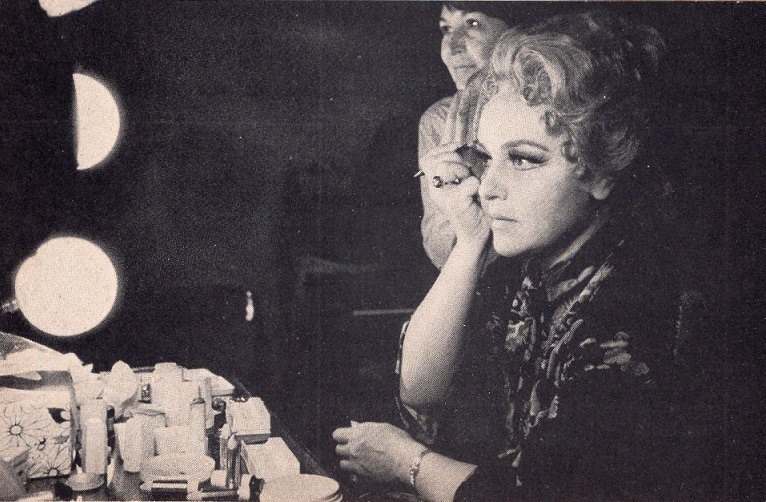
    Zg makeup

    Above: getting ready…I love this photo!

    I remember listening to Zylis-Gara’s Four Last Songs for the first time, and thinking: this is perfection. And when the music ended, there was applause; this was recorded live. For me, no other version of these beloved songs compares.

    Z-g adriana-1 jpg

    I’ve reached that inevitable point in my life when the great singers who fanned the flames of my passion for opera are passing away, one by one. Thinking of Teresa Zylis Gara, I recall with special affection seeing her in the title-role of Cilea’s ADRIANA LECOUVREUR at a matinee performance given on the Met’s 1983 tour in Boston. It was to be the last time I saw her onstage. And it was a marvelous afternoon, with the soprano and her colleagues all singing divinely: Neil Shicoff as Maurizio, Bianca Berini as the Princesse de Bouillon, and Sesto Bruscantini as Michonnet. For all the glorious sounds that filled the hall that day, nothing sent such a thrill thru me as Zylis-Gara’s gossamer pianissimo on the phrase: “La promessa terrò …”  when Adriana vows to save her rival from humiliation in the opera’s second act. It’s of such moments that the fabric of dreams are woven.

    ~ Oberon

  • Giuseppe Giacomini Has Passed Away

    Gg

    The great Italian tenor Giuseppe Giacomini has passed away at the age of 80.

    Giacomini made his operatic debut in 1966 at Vercelli as Pinkerton. and was soon singing throughout Italy. His international career commenced at Berlin in 1970, which led to engagements at Lisbon, Barcelona, Munich, and in Vienna, where he received the title Kammersänger.

    He triumphed at La Scala, in Turin, and in Rome, and made his Metropolitan Opera debut in 1976, with debuts at Paris and Covent Garden following soon after.

    Giacomini is featured on the Metropolitan Opera’s DVD of LA FORZA DEL DESTINO with Leontyne Price, and on commercial recordings as Turiddu (opposite Jessye Norman), Pollione (with Renata Scotto), Otello (with Dame Margaret Price), and he is Cavaradossi on the Muti TOSCA with Carol Vaness.

    The tenor celebrated his 60th birthday singing in TOSCA at Covent Garden, and in 2010 he toured China with the Shanghai Philharmonic Orchestra.

    I first saw Giuseppe Giacomini onstage (his US debut) at The Bushnell in Hartford, where he appeared in an exciting FANCIULLA DEL WEST opposite Radmila Bakočević in 1975. At the 1987 Richard Tucker Gala, Giacomini brought down the house twice with his singing of the final scene of ANDREA CHENIER with Eva Marton, and with his powerhouse performance as Otello in the Act II duet with Sherrill Milnes; during the applause that followed, Mr. Milnes bestowed a comradely kiss on the tenor’s cheek. Watch and listen here.

    On December 10th, 1988, Giacomini gave a thrilling performance as Canio in PAGLIACCI at a Met matinee. The tenor – along with Diana Soviero (Nedda) and Juan Pons (Tonio) – was simply on fire, his top notes blazing into the hall. During the bows, a crowd gathered at the orchestra railing – like in the old days – to scream their heads off for the singers. I was so elated to be part of it. 

    As it turned out, that PAGLIACCI was Giuseppe Giacomini’s last Met performance.

    Giuseppe Giacomini – Un tal gioco – PAGLIACCI – Met bcast 1988

    There’s lots of Giacomini to be found on YouTube; here are a few of my favorite things:

    Giuseppe Giacomini sings Calaf’s aria “Non piangere Liu” from TURANDOT from a Paris Opera production in 1981. Watch and listen here.

    The tenor sings the Improviso from ANDREA CHENIER here

    …and Calaf’s “Nessun dorma” from a 1989 Moscow concert here…with an encore!

    And here’s Giacomini as Radames…

    Giuseppe Giacomini ~ Celeste Aida ~ Chicago 1988

    …and in the final duet from ANDREA CHENIER, with Ghena Dimitrova:

    ANDREA CHENIER ~ final duet – Ghena Dimitrova & Giuseppe Giacomini

  • Junetta Jones

    J jones

    Above: soprano Junetta Jones performing with the Goldman Band in Central Park in the early 1960s.

    Born in Baltimore, Maryland in 1936, Junetta Jones studied at the Peabody Conservatory and later at the New England Conservatory and the Tanglewood Music Center.

    In 1963, Ms. Jones was a winner in the Metropolitan Opera National Auditions (Jane Marsh and Justino Diaz were also winners that year); she made her Met debut as the Celestial Voice in Verdi’s DON CARLO a few months after her Auditions win. Her other Met roles were a Genie in THE MAGIC FLUTE, the Page in RIGOLETTO, and Barbarina in NOZZE DI FIGARO. She last appeared at The Met in 1965.

    Like so many young American singers at that time, Junetta Jones then re-located to Europe where she sang at Dusseldorf, Wuppertal, Regensburg, Munster, Trier, and Lucerne. She returned to the USA from time to time, singing with the Baltimore Symphony Orchestra and with Arthur Fiedler and the Boston Pops. When she appeared in Handel’s SAMSON at Carnegie Hall in 1965, the New York Times called her singing “beguiling”.

    J j butterfly

    Above: Junetta Jones in MADAMA BUTTERFLY; date and venue not specified

    Following her retirement from performing, Ms. Jones worked for 20 years on the advisory committee for art and culture for the city of Baltimore. She passed away in 2015.

    Listen to Junetta Jones in her Met debut role, the Celestial Voice, here.

  • Jean Kraft Has Passed Away

    Emilia

    Above: Jean Kraft as Emilia in OTELLO

    Jean Kraft, a unique singing-actress of the highest calibre, has passed away at the age of 94. She made her Metropolitan Opera debut in 1970 as Flora Bervoix in TRAVIATA and went on to give nearly 800 performances with the Company at Lincoln Center and on tour.

    Slender of form, and with a face that could register the slightest nuances of emotion with uncanny clarity, Ms. Kraft excelled in every role she took on. I saw her countless times during her Met career, and she never failed to lure my eye…and ear. 

    Cav

    She was a fascinatingly stoic/vulnerable Mamma Lucia in CAVALLERIA (above with Placido Domingo), an uptight Emilia under her husband’s evil thumb in OTELLO, a regal Hecuba in the Met premiere of TROYENS, an aristocrat striving to keep her composure as the Comtesse in CHENIER, the struggling, poverty-stricken Gertrude in HANSEL & GRETEL, the gracious Madame Larina in EUGENE ONEGIN, the arthritic Mother Jeanne managing her walk to the guillotine in DIALOGUES DES CARMELITES.

    Kraft mrs sedley

    Jean Kraft was the Borough’s busybody/drug addict Mrs. Sedley in PETER GRIMES (above), Berta in BARRBIERE, Marthe in FAUST, Duchess Federica in LUISA MILLER, Marcellina in NOZZE DI FIGARO, the Duchesse in FILLE DU REGIMENT, Dryade in ARIADNE AUF NAXOS, a stalwart Rossweisse in WALKURE, Annina in ROSENKAVALIER, Suzuki in BUTTERFLY, and – a couple of times – Ulrica in BALLO IN MASCHERA. She gave her last Met performance as Madama Larina on April 5th, 1989.

    Here is a brief audio excerpt of Ms. Kraft as Mamma Lucia with Reneta Scotto as Santuzza, from the commercial recording:

    Renata Scotto & Jean Kraft – Cavalleria Rusticana ~ scene

    And it’s so wonderful to have this thrilling souvenir of Jean Kraft performing the trio from HOFFMANN with Catherine Malfitano and James Morris at the 1984 Gala of Stars, conducted by James Levine. Watch and listen here.

    Here is an incredible audio-only document of Ms. Kraft’s 1969 Town Hall debut recital, accompanied by David Garvey. Listen here.

    And here is a fascinating interview that she gave Bruce Duffie: LINK

    Rest peacefully, dear Ms. Kraft. You are unforgettable.

    ~ Oberon

  • 40 Years Ago: Fracci & Nureyev ~ GISELLE

    Fracci nureyev gisells

    ~~~~ Note: I had originally planned to post this article on the 40th anniversary of my one-and-only experience of seeing the great Carla Fracci onstage. Today, news of the ballerina’s death has come, so I am posting it now, two months shy of the actual anniversary:

    Giselle La Scala-1jpg
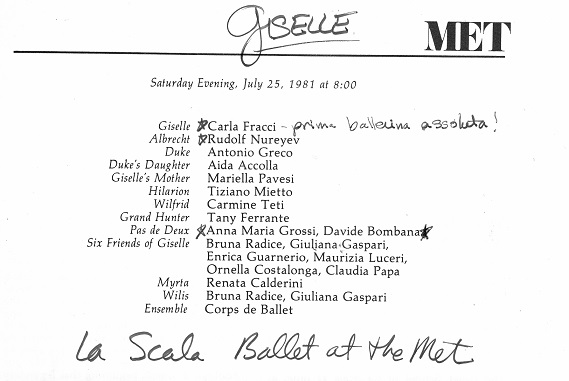
    On this date, forty years ago, one of the greatest ballet performances of my experience took place at the Metropolitan Opera House, where the La Scala Ballet presented their production of GISELLE with Carla Fracci and Rudolf Nureyev in the leading roles.

    I had spent the afternoon at The Met watching GISELLE with an alternate cast; it was a very pleasing performance. But the undeniable star-power of Fracci and Nureyev made the evening performance unforgettable. 

    This is my diary entry from that magnificent evening:

    GISELLE – 2nd performance – with the assumption on the leading roles by two great dancers, the whole production took on a new dimension. The corps seemed better than at the matinee, though again Renata Calderini was not a particularly impressive Myrthe. There was a very exciting Peasant Pas de Deux with Anna Maria Grossi and a very exciting Davide Bombana; they roused the audience to cheers.

    But it was in the superstars that the real excitement lay – and that is why they are superstars! Rudolf Nureyev’s Albrecht was marred slightly by some rather ‘modern’ acting details in Act I where he failed to maintain the aura of manners of the period. But otherwise he caught the essence of the caddish young nobleman in Act I and the grief-stricken man of Act II. He danced with thorough command despite passing traces of stiffness. He interpolates many intricate steps and then challenges himself to bring them off…and always succeeds. His Albrecht was a full portrait – and it was very exciting.

    Fracci giselle

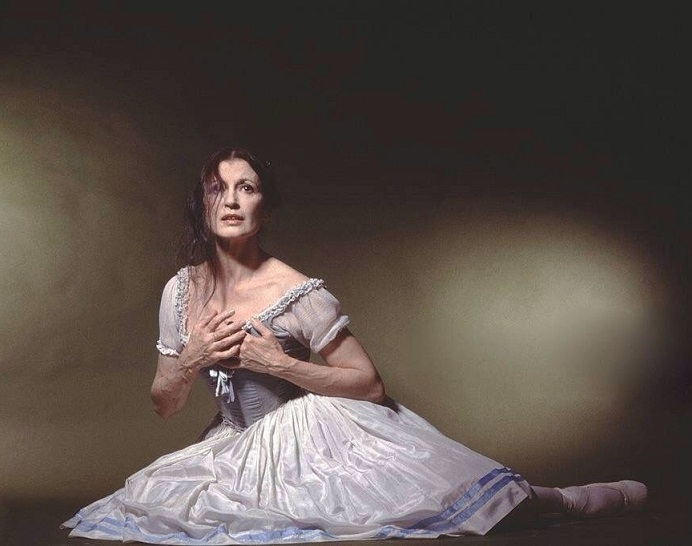
    In Carla Fracci we had the perfect Giselle. All this talk about her ‘capturing the essence of the Romantic Era’ felt absolutely true. There were times in Act II when she really did seem like the ghostly vision of another time and place. Here is a dancer so technically assured, so light yet bearing underneath great strength of character and of will. She was so charming in Act I, and her Mad Scene was brilliantly done – not overplayed but seemingly so real. Act II truly produced the feeling of seeing a phantom. Floating in her gossamer long tutu, Fracci evoked the remote mystique of the spectre. Her dancing throughout was so poised, with the steps always presented as a natural expression of the character and stemming completely from the drama. One had the feeling of really seeing Giselle herself, not of a ballerina portraying her.

    At the end there was a tremendous ovation (20 minutes) with roses being thrown and Fracci & Nureyev called out repeatedly…bravi!!!”  

    ~ Overon