Tag: Metropolitan Opera House

  • Singers: Jeannette Pilou

    (I have imported this story from Oberon’s Grove…it used to include lots of photos, but I just wanted to save what I’d written back in 2007. Here is a photo I took of her that she loved…she was so sweet as signed it for me.)

    pilou

    Around noon on October 7, 1967, I bought a big bunch of yellow chrysanthemums from a street vendor and rushed over to the stage door of the Metropolitan Opera House; the flowers were for one of my idols at the time, the Italian soprano Mirella Freni who was singing Juliette in Gounod’s ROMEO & JULIETTE that afternoon. I bounded up the steps to the Met’s stage door reception area and approached the desk. An indifferent woman was there, talking on the phone. When she finally hung up, she ignored me. “I want to leave these flowers for Miss Freni!” I said.  She looked up at me wearily and said, “Miss Freni is ill and is not singing this afternoon.”  Walking out, I held the door for a chorister who was coming in; “Want some flowers?” I said to her, handing her the mums. A few hours later I had fallen in love.

    Gay men fall in love with women all the time; of course, it isn’t ‘that kind’ of love. It’s usually an attraction to their beauty and their talent, tinged with a bit of regret that it couldn’t ever be the ‘other kind’ of love. That is exactly how I always felt about Jeannette Pilou. She made her Met debut that afternoon as Juliette and for the next few years she was a singer who intrigued me so often with the delicacy and charm of her singing, her unfailingly fresh dramatic interpretations of some of opera’s most beloved characters, and her modest sincerity and great kindness. The stages at Lincoln Center have been home to so many beauties, from Carol Neblett to Helene Alexopoulos, and Pilou was one of the most memorable of them all.

    Jeannette Pilou was born in Egypt and could trace her heritage to the Greeks, but for me she was always a French soprano. Her voice was lyrical with a metallic thread that gave it an easy projection. It was not in itself one of those beautiful instruments that immediately melt the listener; she never had a long breath line and her top register could get an edgy quality. Her appeal vocally was in the way she phrased and used a delicate pastel palette to make music you’d heard a hundred times seem new and alive. Aside from her incredible physical appeal, Pilou’s interpretations invariably brought those little gestures and expressions that you always remember. In the final act of TRAVIATA when the dying Violetta rises from her sickbed to be reunited with her beloved Alfredo, Pilou hastily looked at herself in the mirror before turning to present her ravaged face to her lover. I’ve never forgotten that moment of desperation which spoke so clearly of Violetta’s helpless regret over her fate.

    But I’ve gotten ahead of myself, because I must start with that debut Juliette which is where my love affair began. Pilou looked so fetching on her first entry at the Capulet ball, spiraling into her little introductory “Ecoutez, ecoutez!” with a voice that wafted clearly into the big house. Not long after, she won her first big applause at the Met singing Juliette’s waltz, “Je veux vivre” with easy scale-work, pointed diction and youthful vivacity; she even touched on the high-D in the cadenza which Freni had been omitting. Moments later Pilou encountered her handsome Romeo, Franco Corelli, and the chemistry was apparent from the start. Corelli was having quite a success as Romeo at the Met with his passionate vocalism, thrilling the house with a stunning diminuendo on the final B-flat of “Ah, leve-toi soleil!”. He was one of the few tenors at that time who looked good in tights, too. In their love duets, Corelli really seemed smitten with Jeannette and they sounded wonderful together. Corelli drew a thunderous ovation when he took a full-throttle top C upon Romeo’s banishment from Verona. The afternoon ended with a mammoth ovation; the curtain calls had been designed so that the title characters always bowed together and they came out several times until finally Jeannette made the beautiful gesture of withdrawing to let Franco have a solo call. The house exploded and Franco was so gracious when he brought Jeannette out again. In addition to the lovely impression her Juliette had made, Jeannette had endeared herself to the legion of Corelli fans in no uncertain terms. I met her after the performance and she was so lively and sweet, and even more beautiful up close than she had seemed to be onstage. Her speaking voice was so intimate and enchanting; I immediately added her to the list of singers whose performances would be a priority.

    Violetta in the Cecil Beaton production of TRAVIATA was my next Pilou role; she looked every bit as striking as Moffo in these costumes.  She was paired with the light-voiced tenor Luigi Alva  and they made a beautiful blend in the duets. Jeannette was so moving in the great Act II duet with Germont (Robert Merrill) where she struggled valiantly to maintain her composure as her fragile world crumbled around her. Phrase after phrase of wonderfully modulated vocalism wove a spell.  A few years later, Pilou stepped in to a broadcast of TRAVIATA replacing Montserrat Caballe; I was in the house enjoying Jeanette’s portrayal and her colleagues Carlo Bergonzi & Sherrill Milnes so much. A downward transposition in “Sempre libera” caused something of a scandal among the fans; I thought it was a rather minor transgression in view of what she was able to convey in the role.

    Micaela in CARMEN followed with Jeannette making a particularly lovely impression in the Act I duet with Nicolai Gedda. This was the infamous Jean-Louis Barrault production set inside the bullring. The cast, led by Grace Bumbry, almost managed to overcome the awkward staging; Jeannette’s big aria was lovingly phrased. Next came Zerlina in DON GIOVANNI in which she presented a very youthful, zesty portrayal of the peasant girl; singing opposite the Don of the young Puerto Rican heartthrob Justino Diaz, Jeannette reveled in the seductive expressiveness of “La ci darem la mano”.

    Jeannette & Franco Corelli created an atmosphere of extraordinary romance when they appeared together in BOHEME. This was one of Jeannette’s most moving portrayals,  using her mastery of parlando in the Act I narrative and spinning out some fragile piani in her ‘Addio senza rancor’. Franco was in prodigious voice, his singing so passionate and virile but also very tender; he was obviously smitten with his beautiful Mimi and changed the words in the love duet from “Dammi il braccio, mia piccina” to “Dammi il braccio, mia bambina.” In the moving trio where Rodolfo tells Marcello of Mimi’s hopeless ill-health, not knowing that Mimi is listening, Franco tore his heart out and the audience burst into a volley of bravos mid-act. Jeannette & Franco carried the romance of their characters into the curtain calls.

    At the dress rehearsal of NOZZE DI FIGARO in February 1972, Jeannette had one of her most attractive roles in Susanna. She gave a portrayal free of soubrette cuteness, utterly natural. Vocally she was in the captivating company of Cesare Siepi, the reigning Figaro of the day, the radiant Pilar Lorengar (Contessa) and the beloved and versatile Evelyn Lear (Cherubino). On the podium the great Karl Bohm served up perfect tempi and ideally supported his singers. The ensembles and gentle comic by-play were a joy. FIGARO soared. The photo shows Jeannette with one of New York’s best-known opera fans, Lois Kirschenbaum.

    It was amusing to walk Jeannette out from her dressing room after the rehearsal; when we came to the main reception area it was jammed with singers coming and going from coachings and I very much enjoyed observing the effect Jeannette had on all the men, including some very well-known tenors and baritones. If she was aware of the waves she was causing, it didn’t show; she greeted everyone with easy, modest charm and left them all panting in her wake.

    Later in the month, Jeannette took part in a memorable evening when FALSTAFF was revived. Sir Geraint Evans and Regina Resnik trod the boards with grand portrayals of Sir John and Dame Quickly. Renata Tebaldi was singing Alice Ford for the first time at the Met. The orchestra launched the scampering introduction to the second scene and when the curtain rose and the audience caught sight of the great Italian diva, the place erupted. The applause obliterated the music and when it died down the singers had lost their way; “Start over!” someone yelled and that is exactly what Christoph von Dohnanyi (debut) did. Jeannette was a cuddly Nannetta. In a magical moment she arrived at Herne’s Oak dressed as the Queen of the Fairies on a white Shetland pony. Her aria, “Sul fin d’un soffio” was spun out of moonlight. At the end of the romping ensemble which concludes the opera, Jeannette tackled a bright top-C. The curtain calls were so much fun and the audience truly reluctant to let the singers go. I had an aisle seat in the orchestra and sitting two rows ahead of me was Franco Corelli. I thought it was pretty nice of him to come out and support his long-time colleague Tebaldi. After the performance I spent a long time backstage with Jeannette who was in a particularly sociable mood. Everyone else had gone home, but she seemed in no hurry to leave. I said goodnight and came out to find Corelli pacing back-and-forth near the stage door with a limo waiting. Did they have a date? If so, she may have been standing him up.

    Jeannette and Nicolai Gedda were reunited in a wonderful performance of Gounod’s FAUST; the Met’s production was rather ugly (though later replaced by an even uglier one) but along with Cesare Siepi’s famed Mephistopheles, the singers carried the day.  The role really suited Jeannette to perfection: her clarity of enunciation of the French text added to the sweetness and dexterity of her singing made the long ‘Roi du Thule’ and Jewel Song sequence delightful. Later she and Gedda harmonized rapturously in the ‘Laissez-moi’ duet (the highlight of the score, in my opinion) and Jeannette sang the concluding lines of the Garden Scene (‘Il m’aime!’) with slowly mounting ecstasy. As the tides turned against Marguerite, Jeannette relied on the metallic thread in her voice to project over the orchestra in the Church Scene and in the ascending phrases of the final trio.

    It was a long time before I saw her onstage again; I spent some time in Houston and she was busy at other opera houses. In fact four years elapsed before I next saw her, again as Marguerite in FAUST, this time opposite the less-than-romantic looking but mellifluous Stuart Burrows in the title role. Jeannette’s interpretation had deepened although the production had deteriorated further with an especially awful ballet now being interpolated. She and Burrows rescued the evening.

    There was another very long hiatus before her next – and for me her most memorable – Met role as Melisande in Debussy’s masterpiece in 1983. The production was murky and grim (it has since been replaced by a far more atmospheric one) but musically it was so rewarding both in James Levine’s brooding traversal of the dense score and in the ideal interpretations of the three principal roles: Pilou as Melisande, Dale Duesing as Pelleas and the unforgettable Jose van Dam as Golaud.  As the gentle and mysterious Melisande, Jeannette ‘spoke’ her lines with a refined sense of lyricism and she was so moving in her simplicity and deeply feminine vulnerability. The overwhelming sadness of watching Melisande’s life fade away following the birth of her daughter left me feeling bereft.

    Two years later I saw Jeannette onstage for the last time, singing Nedda in PAGLIACCI. The tension in her upper register had taken its toll but she had some wonderful lyric passages, most notably in the duet with Silvio, and she mounted a fiery defense in the final moments before Nedda is brutally murdered.

    I had long since stopped visiting singers backstage but I did run into her in the Met lobby during her final season of Neddas and Micaelas and she was as lovely and gracious as ever. In the years since I first met Jeannette Pilou, the memories of her portrayals and of her easy kindness to a young and eager fan have stayed with me vividly.

    Here is Jeannette singing Juliette’s entrance and Waltz @ The Met.

  • The Met’s Newest Aida (+ A Cast Change!)

    nilsson

    ~ Author: Oberon

    Saturday March 22nd, 2025 matinee – In 1883, a Swedish soprano named Christina Nilsson sang Marguerite in FAUST for the opening of the then-new Metropolitan Opera House. Last week, another Swedish soprano named Christina Nilsson (photo above) made her Met debut as Aida. This afternoon, I went to hear my second AIDA of the current season to see how she fared in the daunting role.

    Alejandro-Roy

    Another singer new to me, tenor Alejandro Roy (above), stepped in today as Radames; he had made a short-notice Met debut in TURANDOT in 2019 opposite Christine Goerke…

    Burdenko

    …and the Amonasro, Roman Burdenko (above), had just made his Met debut a few days ago.

    Alexander Soddy was on the podium, and while he has good ideas about tempi and the alternating currents of grandeur and intimacy that run thru the score, he (like so many opera conductors today) tends to let the orchestra get the better of the singers all too frequently. Despite this, the score seemed extremely beautiful today, and I often felt moved.

    The Messenger and the Priestess – Yongzhao Yu and Ann-Kathrin Niemczyk – made the most of their moments. The two bassos were both super: Alexander Vinogradov (Ramfis) and Krzysztof Bączyk (the King) have powerful voices and they sounded assured throughout their range. So many phrases from these two gentlemen impressed me today. In the ensemble in the opening scene – and again in the Triumphal Scene – where both bassos have great moments, they created a sonic energy that was so pleasing to experience.

    Mr. Burdenko likewise made a vivid impression, his opening “Suo padre!” immediately established his dignity and fierce pride. Capable of both power and subtlety, Mr. Burdenko made every phrase come to life; a feeling of steadfastness emerged in his plea “Ma tu, Re…“. In the Nile Scene duet with Ms. Nilsson, the baritone veered from venomous (“…tu sei la schiava!“) to tenderness (“…pensa che un popolo…vinto…straziata…”) Bravo!!

    Mr. Roy’s voice exudes masculine confidence; it’s tinged with baritonal shadings at times but he also had the top notes for the music when needed. Following with my score, he seemed to heed all the dynamic markings, though he took the end of the “Celeste Aida” full voice. Joining in the trio with Ms. Nilsson and Judit Kutasi (Amneris), the three were sometimes covered by the orchestra. Again, in the Temple Scene, the sturdy voices of Mssrs. Roy and Vinogradov had to combat the orchestra’s volume..

    Having only one intermission, after the Triumphal Scene (wherein Mr. Roy blasted an epic B-flat at one point), the tenor must sing in succession the demanding Nile Scene and the dramatic confrontation with Amneris, and then bring forth lyricism for the tender final duet, “O terra addio…”). He handled this marathon quite impressively. I thought he might run out of steam near the end, but the final “…si schiude il ciel…” with Ms. Nilsson was handsomely clear and sustained. 

    Ms. Kutasi, whose Amneris was disappointing at my earlier performance this season, fared little better today, though her B-flats in the repeated phrase “…dal ciel si compira...” in the Judgement Scene were her best notes of the day. I really don’t know what is going on with her; there are exciting clips of her on YouTube, but the voice now is very erratic. The audience cheered her enthusiastically.

    I grew up on such plushy spinto Aidas as Leontyne Price, Martina Arroyo, Leona Mitchell, Gilda Cruz-Romo, and Anna Tomowa-Sintow. Ms. Nilsson today curiously put me in mind of Lucine Amara, an under-appreciated ‘big lyric’ soprano who could float lovely piani on high; Ms. Nilsson’s style is not as Italianate as Lucine’s, but their vocal heft is similar. 

    A ravishing clarinet solo introduces Aida, and the Nilsson voice has immediate appeal; she sounds young – even girlish at times. In the cantabile passages of the trio and ensemble of the opening scene, her singing is very persuasive; but Mr. Soddy lets that ensemble get too brassy…and there was an added drum rhythm I’d never noticed before.

    Ms. Nilsson got to show her stuff with “Ritorna vincitor“, her singing reflective, her phrasing having a lyrical glow; she gave the aria a lovely, poignant finish. In the boudoir scene, the soprano’s tone sometimes lacked richness, but she fared well in the Triumphal Scene, with a gleaming top-C to cap the ensemble’s first half.

    On the banks of the Nile, Ms. Nilsson shaped “O patria mia…” perfectly, though more colours could have been introduced along the way. Her sweet high-C lingered long on the air, and her sustained phrases at the aria’s finish were gorgeous. Mr. Burdenko’s raging “…tu sei la Schiava!” elicited a blistering top-A from the soprano. She later got enticingly floaty and provocative with “…la, tra le foreste vergini...” in the duet with Radames, before spinning out a magical “…fuggiam…fuggiam.....” The stretta, with Mr. Roy, was excitingly sung.

    The tenor commenced the final scene expressively, and Ms. Nilsson’s lyricism glows, lit by beaming high notes along the way; here she really reminded me of Amara. Mr. Roy sang valiantly as the opera moved towards its solemn ending, his voice well-matched to Ms. NIlsson’s. They took a joint bow, to a warm salute from the crowd. Mr. Roy had saved the day, and Ms. Nilsson had won new admirers. 

    Notably, it was the all-male ballet in the Triumphal Scene that roused the audience to the afternoon’s most enthusiastic cheers.

    ~ Oberon

  • @ My Met Score Desk for CARMEN

    Aigul

    Above: Aigul Akhmetshina

    ~ Author: Oberon

    Saturday January 27th, 2024 matinee – Feeling no need to see a 6-ton tractor trailer on the stage of the Metropolitan Opera House, I took a score desk for today’s matinee of the Met’s new production of CARMEN. I wasn’t feeling my best this morning as I prepared to leave for Lincoln Center, and even considered staying home. But once the house lights dimmed, my spirits perked up, CARMEN is an opera I had not heard for a very long time, and the music seemed truly fresh to me today.

    The main draw of the day was Aigul Akhmetshina, the gorgeous Russian mezzo-soprano, in the title-role. I fell under she spell when she sang Maddalena in Verdi’s RIGOLETTO here last season, which I saw three times.

    Maestro Daniele Rustioni got the opera off to a fast start, setting a brisk tempo with the start of the prelude. Unlike some of the other conductors the Met favors these days, Rustioni is not a volume freak; the voices were – for the most part – clearly audible throughout the opera, and his tempi always felt right. I especially like his accelerations as each repeat of the theme of the Act II Danse Bohème sped up: exhilarating! The preludes to the four acts were beautifully played, particularly the touching music that introduces Act III. All the choral work was super as well, notably the lovely smoking chorus in Act I.

    The first solo voice we hear is that of Morales, sung very impressively today Benjamin Taylor; it’s a Met-sized voice of handsome timbre. Equally striking was the singing of Wei Wu as Zuniga. Both these gentlemen deserve more opportunities at The Met.

    Carmen’s friends – Frasquita (Sydney Mancasola), Mercedes (Briana Hunter), Dancairo (Michael Adams), and Remendado (Frederick Ballentine) – joined Ms. Akhmetshina for the quintet in Act II, excelling at the quick repartee. Ms. Mancasola popped off some bright top notes at the end of the Toreador Song and at “La Liberté!” to end the third act.  

    Micaela is the first principal character to appear, in the person of Angel Blue. This role suits Ms. Blue far better than Violetta did last season. She sounded warm and lyrical in the duet with Don José, etching in some appealing piano effects. And her aria in Act III – with its finely-played horn introduction – was a vocal highlight of the afternoon; Ms. Blue’s rich voice could be tapered smoothly to a sweet softness, making for a spine-tingling finish. Her final plea, with its stunning drop at “Ah, José!“, was beautifully handled.

    Maestro Rustioni provided a whiplash start to the famous Toreador Song; Kyle Ketelsen sang the familiar tune engagingly, and he was excellent in his ‘fight’ duet with José in Act III. Later – before the bullfight commences – he and Ms. Akhmetshina shared a lyrical moment. 

    Beczala 2

    Above: Piotr Beczala

    Piotr Beczała’s bio says he is 57 years old, but he certainly doesn’t sound it…nor look it, when I chatted him up at the stage door after the performance: he’s a very handsome guy, with an easy-going charm. His singing today as was most impressive, covering a wide dynamic range, from passionate, house-filling outpourings to ravishingly heady tones.  He and Angel Blue blended voices perfectly in their Act I duet, trading phrases persuasively, and finishing off with Piotr’s amazingly hush-toned “Souvenirs du pays…” 

    Chez Lillas Pasta, after Carmen upbraids José for abandoning her when the trumpets summon him back to the barracks, Mr. Beczala gave us his poetic Flower Song, so ardently voiced…and with a fascinating pianissimo climax to the final phrase. 

    When the music turns darker and the menacing edge of jealousy overtakes Don José, Mr, Beczala unleashed the power of his voice to thrilling effect. The character’s descent into madness was set forth in vocal terms, with a manic desperation in his singing of the final, deadly encounter with Carmen.

    Aigul Akmenshina established herself as one of the finest Carmens imaginable. Introducing herself with a sultry Habanera – the second verse sung with enticing subtlety – the comely mezzo displayed a warm, dusky timbre with a plushy low range and smooth forays to the top. Aigul’s Seguidilla put both the tenor and the audience under her spell with her creamy, gorgeous voice, topping it off with sustained final note. 

    Her singing of the the Chanson Bohème in the tavern scene veered from subtle to triumphant, but the fact that her later castanet song was not working on José as she’d expected unleashes her temper.  After listening patiently to José’s love plea, Carmen returns to enticement. Zuniga’s arrival causes José to capitulate, and he joins the smugglers. My feeling here is that Carmen already hates him.

    At the smugglers’ den, Aigul’s reading of the tarot cards was sung with doom-ladened low notes and a sense that time was running out for her. Her final meeting with Mr. Beczala’s José was fiery, their exchanges quickly descending to threats and taunts. In this production, José kills Carmen with a baseball bat, which I am glad I could not see; the audience gasped.

    Ms. Akhmetshina’s is a welcome voice and presence on the Met stage, and I will always look forward to her performances; I also hope to one day hear her in Chausson’s Poème de l’amour et de la mer, for which I think she has the perfect voice. 

    The few times I glimpsed the the stage setting today, it looked cheap and junky. A real eyesore.

    After the performance, I went to the stage door where I met Aigul and Piotr; they are such kind and lovely people.

    Carmen met-1jpg

    ~ Oberon

  • My 1st Time Hearing DIE WALKURE

    Nilsson

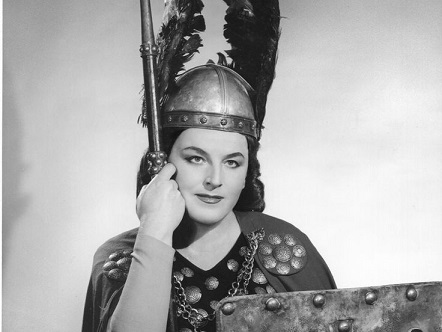
    Above: Birgit Nilsson as Brunnhilde

    The Met’s 1961 broadcast of Wagner’s DIE WALKURE marked the first time I ever heard this opera which became, over time, my favorite of the composer’s operas. A recording of the broadcast was recently posted on YouTube. Listen here.

    I remember that some scenes seemed endless to me, and that while the music was at times very exciting, it was the story that most intrigued me…especially the ending, where Brunnhilde was left sleeping in the middle of a ring of magic fire.

    We had had a substantial snowfall the night before, and I went out to the field behind our house with the sound of the feuerzauber alive in my head. I made a circle of all the empty packing boxes and other trash from my father’s drugstore and set it afire. It was then that I realized I was in the center of the circle and would have to wait until the flames died down before I could escape. At supper, my mother scolded me for bringing a smokey smell into the house. It took a few days for the odor to dissipate.

    Metropolitan Opera House ~ December 23,1961

    Cast: Brünnhilde: Birgit Nilsson; Siegmund: Jon Vickers; Sieglinde: Gladys Kuchta; Wotan: Otto Edelmannl Fricka: Irene Dalis; Hunding: Ernst Wiemann; Gerhilde: Carlotta Ordassy; Grimgerde: Mary MacKenzie; Helmwige: Heidi Krall; Ortlinde: Martina Arroyo; Rossweisse: Margaret Roggero; Schwertleite: Gladys Kriese; Siegrune: Helen Vanni; Waltraute: Mignon Dunn

    Conductor: Erich Leinsdorf

  • Rysanek’s 25th Anniversary @ The Met

    Leonie

    So many wonderful things have popped up on YouTube during the pandemic. An audio-only recording of the Leonie Rysanek 25th Anniversary Gala at the Metropolitan Opera House in 1984 provides a document of a truly exciting performance…which I attended. 

    Listen here.

    Before the performance began, I heard people seated near us asking: “Do you think she will scream?” The general consensus was that, being a concert performance, she would refrain from including her trademark screams as both Kundry and Sieglinde.

    She screamed.

  • Rysanek’s 25th Anniversary @ The Met

    Leonie

    So many wonderful things have popped up on YouTube during the pandemic. An audio-only recording of the Leonie Rysanek 25th Anniversary Gala at the Metropolitan Opera House in 1984 provides a document of a truly exciting performance…which I attended. 

    Listen here.

    Before the performance began, I heard people seated near us asking: “Do you think she will scream?” The general consensus was that, being a concert performance, she would refrain from including her trademark screams as both Kundry and Sieglinde.

    She screamed.

  • 40 Years Ago: Fracci & Nureyev ~ GISELLE

    Fracci nureyev gisells

    ~~~~ Note: I had originally planned to post this article on the 40th anniversary of my one-and-only experience of seeing the great Carla Fracci onstage. Today, news of the ballerina’s death has come, so I am posting it now, two months shy of the actual anniversary:

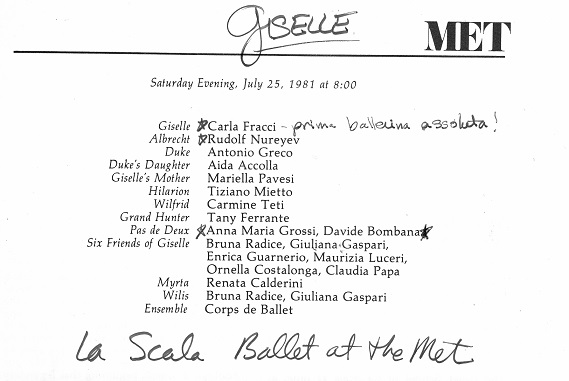
    Giselle La Scala-1jpg
    On this date, forty years ago, one of the greatest ballet performances of my experience took place at the Metropolitan Opera House, where the La Scala Ballet presented their production of GISELLE with Carla Fracci and Rudolf Nureyev in the leading roles.

    I had spent the afternoon at The Met watching GISELLE with an alternate cast; it was a very pleasing performance. But the undeniable star-power of Fracci and Nureyev made the evening performance unforgettable. 

    This is my diary entry from that magnificent evening:

    GISELLE – 2nd performance – with the assumption on the leading roles by two great dancers, the whole production took on a new dimension. The corps seemed better than at the matinee, though again Renata Calderini was not a particularly impressive Myrthe. There was a very exciting Peasant Pas de Deux with Anna Maria Grossi and a very exciting Davide Bombana; they roused the audience to cheers.

    But it was in the superstars that the real excitement lay – and that is why they are superstars! Rudolf Nureyev’s Albrecht was marred slightly by some rather ‘modern’ acting details in Act I where he failed to maintain the aura of manners of the period. But otherwise he caught the essence of the caddish young nobleman in Act I and the grief-stricken man of Act II. He danced with thorough command despite passing traces of stiffness. He interpolates many intricate steps and then challenges himself to bring them off…and always succeeds. His Albrecht was a full portrait – and it was very exciting.

    Fracci giselle

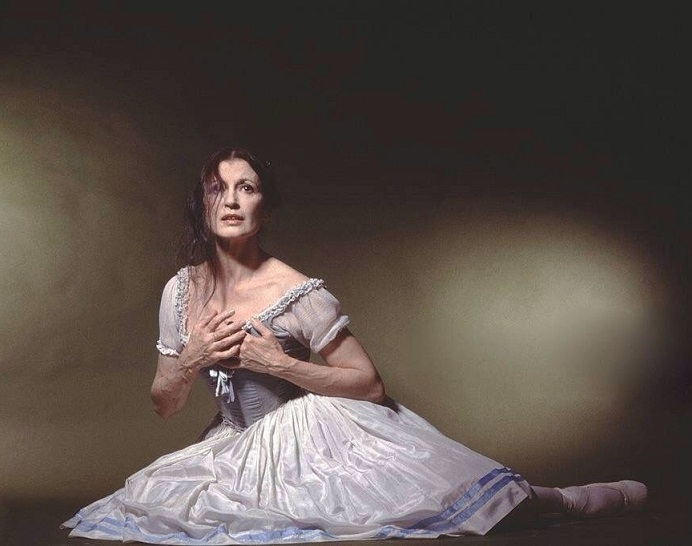
    In Carla Fracci we had the perfect Giselle. All this talk about her ‘capturing the essence of the Romantic Era’ felt absolutely true. There were times in Act II when she really did seem like the ghostly vision of another time and place. Here is a dancer so technically assured, so light yet bearing underneath great strength of character and of will. She was so charming in Act I, and her Mad Scene was brilliantly done – not overplayed but seemingly so real. Act II truly produced the feeling of seeing a phantom. Floating in her gossamer long tutu, Fracci evoked the remote mystique of the spectre. Her dancing throughout was so poised, with the steps always presented as a natural expression of the character and stemming completely from the drama. One had the feeling of really seeing Giselle herself, not of a ballerina portraying her.

    At the end there was a tremendous ovation (20 minutes) with roses being thrown and Fracci & Nureyev called out repeatedly…bravi!!!”  

    ~ Overon   

  • 40 Years Ago: Fracci & Nureyev ~ GISELLE

    Fracci nureyev gisells

    ~~~~ Note: I had originally planned to post this article on the 40th anniversary of my one-and-only experience of seeing the great Carla Fracci onstage. Today, news of the ballerina’s death has come, so I am posting it now, two months shy of the actual anniversary:

    Giselle La Scala-1jpg
    On this date, forty years ago, one of the greatest ballet performances of my experience took place at the Metropolitan Opera House, where the La Scala Ballet presented their production of GISELLE with Carla Fracci and Rudolf Nureyev in the leading roles.

    I had spent the afternoon at The Met watching GISELLE with an alternate cast; it was a very pleasing performance. But the undeniable star-power of Fracci and Nureyev made the evening performance unforgettable. 

    This is my diary entry from that magnificent evening:

    GISELLE – 2nd performance – with the assumption on the leading roles by two great dancers, the whole production took on a new dimension. The corps seemed better than at the matinee, though again Renata Calderini was not a particularly impressive Myrthe. There was a very exciting Peasant Pas de Deux with Anna Maria Grossi and a very exciting Davide Bombana; they roused the audience to cheers.

    But it was in the superstars that the real excitement lay – and that is why they are superstars! Rudolf Nureyev’s Albrecht was marred slightly by some rather ‘modern’ acting details in Act I where he failed to maintain the aura of manners of the period. But otherwise he caught the essence of the caddish young nobleman in Act I and the grief-stricken man of Act II. He danced with thorough command despite passing traces of stiffness. He interpolates many intricate steps and then challenges himself to bring them off…and always succeeds. His Albrecht was a full portrait – and it was very exciting.

    Fracci giselle

    In Carla Fracci we had the perfect Giselle. All this talk about her ‘capturing the essence of the Romantic Era’ felt absolutely true. There were times in Act II when she really did seem like the ghostly vision of another time and place. Here is a dancer so technically assured, so light yet bearing underneath great strength of character and of will. She was so charming in Act I, and her Mad Scene was brilliantly done – not overplayed but seemingly so real. Act II truly produced the feeling of seeing a phantom. Floating in her gossamer long tutu, Fracci evoked the remote mystique of the spectre. Her dancing throughout was so poised, with the steps always presented as a natural expression of the character and stemming completely from the drama. One had the feeling of really seeing Giselle herself, not of a ballerina portraying her.

    At the end there was a tremendous ovation (20 minutes) with roses being thrown and Fracci & Nureyev called out repeatedly…bravi!!!”  

    ~ Overon   

  • Licia’s Last Butterfly

    Albanese

    On Friday, November 26, 1965, I went to a performance of MADAMA BUTTERFLY at the Metropolitan Opera House. On the following day, I had an operatic double-header: a matinee of ELISIR D’AMORE and an evening performance of FAUST. That Saturday marked the last time I ever set foot in the Old Met. The venerable theatre had been marked for demolition, while a New Met was rising at Lincoln Center.

    The eight performances I saw at the Old House are very special memories for me. The singers I saw there had become gods and goddesses to me thru their singing on the Texaco Metropolitan Opera radio broadcasts; I was now experiencing ‘live‘ the rituals Milton Cross described each week over the airwaves: the house lights going down, the applause greeting the conductor, the great gold curtain being drawn back for the curtain calls. It was like a dream come true.

    Licia Albanese’s was one of the first operatic voices I became familiar with. She was one of the singers on the first 2-LP set of opera arias and duets that I owned. She sang Liu on a memorable Met broadcast of TURANDOT in 1962, opposite Nilsson and Corelli. And my parents had taken me to see her as Violetta (her 100th performance of the role) at the Cincinnati Zoo Opera in 1963.

    In all honesty, Albanese’s voice was never really among my favorites; it was more her expressive intensity of communication and her endearing persona that I found appealing. But I understood her importance as a singer in the grand tradition, and if her singing of the Violetta and Butterfly that I saw could turn dry and almost ghostly, I can still vividly recall her stage presence and her instinctive if Olde School acting.

    What I did not realize as I watched Licia Albanese taking her bows after that 1965 Butterfly was that it was the final time she ever sang the role. After playing Cio-Cio-San some eighty times on that stage, this was to be the last. Like many performances I have experienced, the evening became iconic over time when measured as part of the singer’s career.

    I met La Licia after the performance – I was one of a sizeable group of admirers who had waited for her – and she was of course elegantly gowned and coiffed, chattering away to her fans in Italian. She signed my program with a flourish: 

    Scanned Section 7-1

    It was a happy crowd of fans and friends, and no mention was made of it being “her last Butterfly”. She did sing one more complete role at The Met: Manon Lescaut; and the following Summer she sang Mimi in LA BOHEME with Barry Morell in a concert presented by The Met at the Newport Festival. 

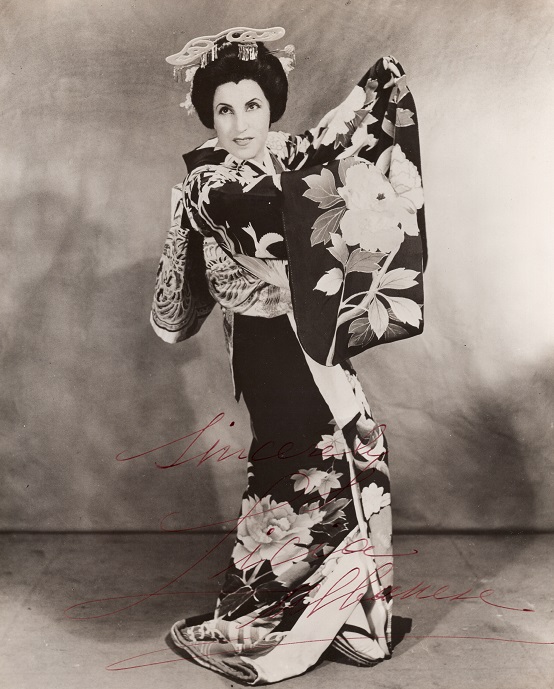
    A few days after the performance, I sent her a fan letter and received this photo in return, along with her calling card:

    Scanned Section 11-1

    Licia Albanese – Ancora un passo or via ~ MADAMA BUTTERFLY

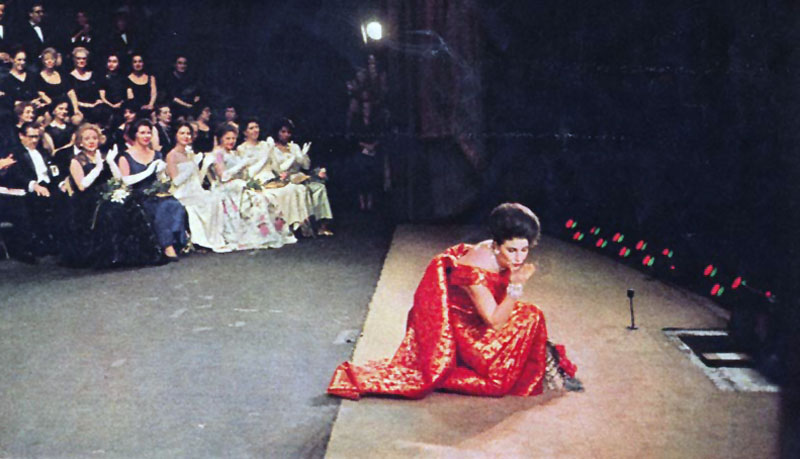
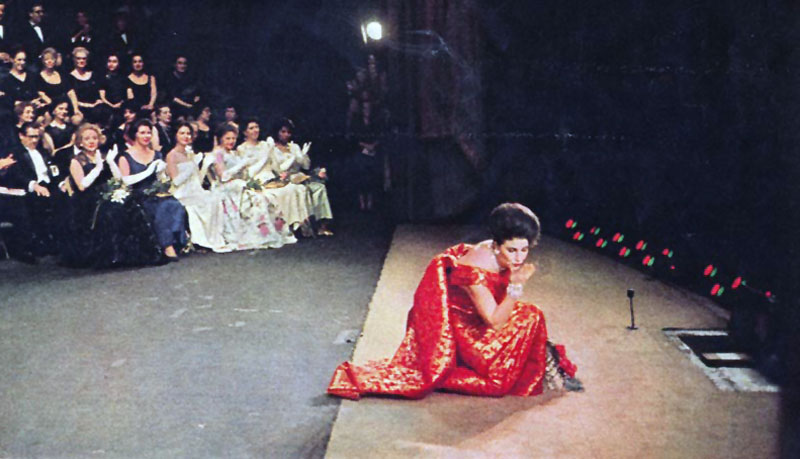
    There were two further memorable moments related to the Old Met and to MADAMA BUTTERFLY in Albanese’s extraordinary life: at the gala farewell concert that marked the closing of the Old Met on April 16th, 1966, Licia sang the aria “Un bel di” and, during the applause, she knelt to place a kiss on the stage where she had appeared so frequently since her debut in 1940:

    Old met farewell

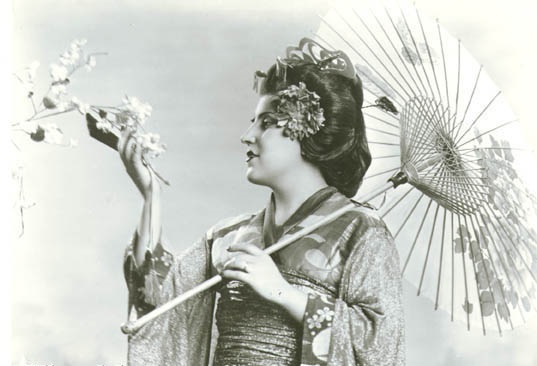
    Once the demolition of the ‘old yellow brewery’ began, Licia donned her kimono and sang “Un bel di” one last time amid the ruins.

    But my connection with the legendary diva was not over. One evening during the first season at the New Met, I saw her among the audience on the Grand Tier during intermission. She was talking with another elegantly-gown lady as I approached them hesitantly. The other woman gave me an encouraging smile, so I took Madame Albanese’s hand and awkwardly told her of having seen her Violetta and Butterfly. She thanked me quietly, but kept hold of my hand. Then she turned to her friend and said, in her charming accent: “It is so wonderful to be remembered! He’s so young, he will tell people about me many years from now.”

    Then, some thirty-five years on, I was holding down the fort in the opera room at Tower Records one dreary afternoon when Licia Albanese came in with a companion; the soprano was rather feeble by that point in time, but when I greeted her, she smiled silently. I said to her, “I saw your one hundredth Violetta at the Cincinnati Zoo Opera!” She was silent for a moment, and I thought my remark had not registered. Her friend gave me a look as if to say that Madame’s mind might not be perfectly clear.

    “The Zoo!” said the diva firmly. Then she began to roar like a lion and sing little birdcalls and make noises like chattering monkeys. Anyone who has ever attended a performance at the Cincinnati Zoo will know that these sounds were always a continuous obbligato to the opera being performed. We all laughed. And then I bade the two women goodbye, thinking to myself – as I have so often – “What a life I am living!”

    920x920

    Above: Licia Albanese at age 93; she passed away in 2014 at the age of 105. 

    ~ Oberon

  • Licia’s Last Butterfly

    Albanese

    On Friday, November 26, 1965, I went to a performance of MADAMA BUTTERFLY at the Metropolitan Opera House. On the following day, I had an operatic double-header: a matinee of ELISIR D’AMORE and an evening performance of FAUST. That Saturday marked the last time I ever set foot in the Old Met. The venerable theatre had been marked for demolition, while a New Met was rising at Lincoln Center.

    The eight performances I saw at the Old House are very special memories for me. The singers I saw there had become gods and goddesses to me thru their singing on the Texaco Metropolitan Opera radio broadcasts; I was now experiencing ‘live‘ the rituals Milton Cross described each week over the airwaves: the house lights going down, the applause greeting the conductor, the great gold curtain being drawn back for the curtain calls. It was like a dream come true.

    Licia Albanese’s was one of the first operatic voices I became familiar with. She was one of the singers on the first 2-LP set of opera arias and duets that I owned. She sang Liu on a memorable Met broadcast of TURANDOT in 1962, opposite Nilsson and Corelli. And my parents had taken me to see her as Violetta (her 100th performance of the role) at the Cincinnati Zoo Opera in 1963.

    In all honesty, Albanese’s voice was never really among my favorites; it was more her expressive intensity of communication and her endearing persona that I found appealing. But I understood her importance as a singer in the grand tradition, and if her singing of the Violetta and Butterfly that I saw could turn dry and almost ghostly, I can still vividly recall her stage presence and her instinctive if Olde School acting.

    What I did not realize as I watched Licia Albanese taking her bows after that 1965 Butterfly was that it was the final time she ever sang the role. After playing Cio-Cio-San some eighty times on that stage, this was to be the last. Like many performances I have experienced, the evening became iconic over time when measured as part of the singer’s career.

    I met La Licia after the performance – I was one of a sizeable group of admirers who had waited for her – and she was of course elegantly gowned and coiffed, chattering away to her fans in Italian. She signed my program with a flourish: 

    Scanned Section 7-1

    It was a happy crowd of fans and friends, and no mention was made of it being “her last Butterfly”. She did sing one more complete role at The Met: Manon Lescaut; and the following Summer she sang Mimi in LA BOHEME with Barry Morell in a concert presented by The Met at the Newport Festival. 

    A few days after the performance, I sent her a fan letter and received this photo in return, along with her calling card:

    Scanned Section 11-1

    Licia Albanese – Ancora un passo or via ~ MADAMA BUTTERFLY

    There were two further memorable moments related to the Old Met and to MADAMA BUTTERFLY in Albanese’s extraordinary life: at the gala farewell concert that marked the closing of the Old Met on April 16th, 1966, Licia sang the aria “Un bel di” and, during the applause, she knelt to place a kiss on the stage where she had appeared so frequently since her debut in 1940:

    Old met farewell

    Once the demolition of the ‘old yellow brewery’ began, Licia donned her kimono and sang “Un bel di” one last time amid the ruins.

    But my connection with the legendary diva was not over. One evening during the first season at the New Met, I saw her among the audience on the Grand Tier during intermission. She was talking with another elegantly-gown lady as I approached them hesitantly. The other woman gave me an encouraging smile, so I took Madame Albanese’s hand and awkwardly told her of having seen her Violetta and Butterfly. She thanked me quietly, but kept hold of my hand. Then she turned to her friend and said, in her charming accent: “It is so wonderful to be remembered! He’s so young, he will tell people about me many years from now.”

    Then, some thirty-five years on, I was holding down the fort in the opera room at Tower Records one dreary afternoon when Licia Albanese came in with a companion; the soprano was rather feeble by that point in time, but when I greeted her, she smiled silently. I said to her, “I saw your one hundredth Violetta at the Cincinnati Zoo Opera!” She was silent for a moment, and I thought my remark had not registered. Her friend gave me a look as if to say that Madame’s mind might not be perfectly clear.

    “The Zoo!” said the diva firmly. Then she began to roar like a lion and sing little birdcalls and make noises like chattering monkeys. Anyone who has ever attended a performance at the Cincinnati Zoo will know that these sounds were always a continuous obbligato to the opera being performed. We all laughed. And then I bade the two women goodbye, thinking to myself – as I have so often – “What a life I am living!”

    920x920

    Above: Licia Albanese at age 93; she passed away in 2014 at the age of 105. 

    ~ Oberon