Tag: Metropolitan Opera

  • The Opera Lenz

    MefistoA14EM

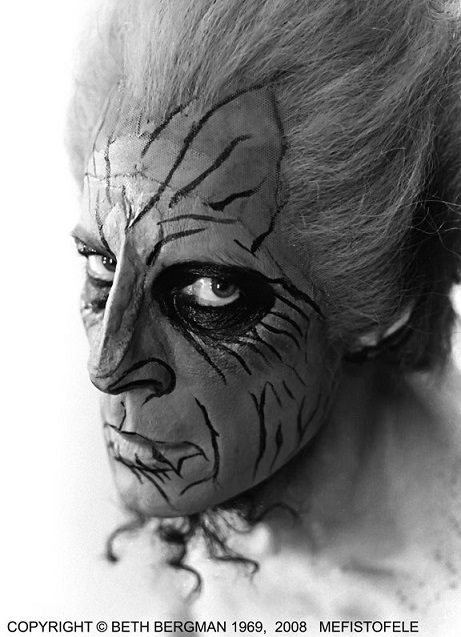
    Above: the great basso Norman Treigle as Mefistofele in the Boito opera at New York City Opera 1969; photo copyright Beth Bergman.

    I have just discovered Ms. Bergman’s blog, The Opera Lenz, which features images from her years working at New York City Opera, the Metropolitan Opera, and music venues in our City.

    The photos bring back so many memories: I even found pictures of Nadja Witkowska – the soprano who sang in the very first opera performance I ever saw (RIGOLETTO at the Cincinnati Zoo in 1962!) – when she attended a NYCO reunion in 2012. And there’s a lovely tribute to Claramae Turner (Toscanini’s Ulrica) who passed away in 2013. And so much more…both photos and recollections.

    Beth Bergman’s other site, The Beth Lenz, features many incredible images from nature.

  • Score Desk for TOSCA @ The Met

    Tosca_(1899)

    Friday December 20, 2013 – Having greatly enjoyed the Portuguese soprano Elisabete Matos in her two previous roles at The Met (Minnie in FANCIULLA DEL WEST and Abigaille in NABUCCO) I was very much looking forward to her single scheduled Met performance of the current season. But since the Bondy production of TOSCA is such an eyesore, I opted for a score desk tonight as Matos sang her second Puccini role at The Met. {Rumor has it the Bondy production will soon be seen for the last time here in New York City; however, we cannot be sure of getting something better in their place.}

    A great many empty seats in the House was not a good sign; and the audience tended to laugh freely at the MetTitles making me think there were a lot of newbies present. But Marco Armiliato, on the podium for an opera that suits him to a T, gave an extroverted, blood-and-thunder reading of the score. The first act especially was genuinely exciting in every regard.

    Two bassos with enormous voices set the tone for the performance: Richard Bernstein was a capital Angelotti and John Del Carlo a stentorian Sacristan. Marcello Giordani, that most unpredictable of tenors, served notice in “Recondita armonia” that he was really in voice tonight. The aria was generously sung, with clear and expressive phrasing, a thrillingly sustained foray to the climactic B-flat, and a fine diminuendo to a very long piano on the last note.

    Ms. Matos and her tenor then gave a vididly declaimed version of the lovers’ banter and they were really exciting in the sustained passages of the ensuing love duet. George Gagnidze’s Scarpia added more decibels to the evening, and his dramatic inflections were spot on. Ms. Matos lost points with me only on the phrase “Tu non l’avrai stasera…giuro!” where she shrilled on the final word: I like to hear this done in chest voice (or sung ‘from the crotch’ as we used to say of Tebaldi). Mr. Gagnidze and the Met chorus brought the act to a thunderous conclusion with the Te Deum.

    Then, as so often happens at The Met these days, a long intermission seemed to drain the energy from the evening; and I have never heard such banging, thudding and shouting from behind the curtain as the stagehands struck the set.

    Act II found the principals and conductor doing their utmost to restore the dramatic tension siphoned away by the long interval. Mr. Giordani produced an amazingly sustained “Vittoria!” and Mr. Gagnidze was thoroughly impressive in every regard. Ms. Matos struck off steely but not always stable high notes and made a strong dramatic impact with Tosca’s iconic lines: “Assassino! Voglio vederlo!”, “Quanto?…il prezzo?”, “Ah…piuttosto giu m’avento!” and “E morto…or gli perdono!”: these were all delivered with the intensity of a seasoned verismo diva. Her rendering of the great aria “Vissi d’arte” was persuasive in its vulnerability and the prolonged top B-flat at the climax was exciting though she could not sustain the following descending phrase of A-flat and G…and the conductor did nothing to aid her.

    Faced with another extended intermission, I left after the Act II curtain. I would like to have heard Giordani’s “E lucevan…” and the big duet and the opera’s flaming finale, but the thought of another lull diminished my enthusiasm.

    Metropolitan Opera House
    December 20, 2013

    TOSCA
    Giacomo Puccini

    Tosca...................Elisabete Matos
    Cavaradossi.............Marcello Giordani
    Scarpia.................George Gagnidze
    Sacristan...............John Del Carlo
    Spoletta................Eduardo Valdes
    Angelotti...............Richard Bernstein
    Sciarrone...............Jeffrey Wells
    Shepherd................Thatcher Pitkoff
    Jailer..................David Crawford

    Conductor...............Marco Armiliato

  • Hampson/The Jupiter Quartet @ Alice Tully Hall

     Hugo Wolf

    Above: the composer Hugo Wolf

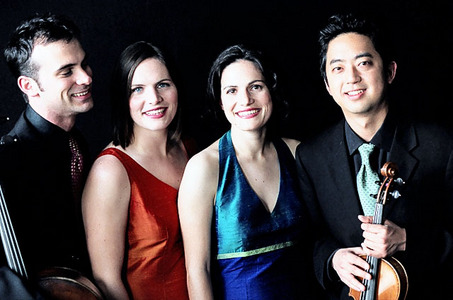
    Sunday April 28, 2013 – The Chamber Music Society of Lincoln Center presented a programme of works spanning three centuries; the Jupiter String Quartet and the celebrated baritone Thomas Hampson collaborated in a new work by Mark Adamo (NY Premiere), and the Quartet played Wolf, Schubert and Webern before rounding out the evening with Wolf songs sung by Mr. Hampson.

    Large_Jupiter quartet6

    The Jupiter String Quartet opened the programme with Franz Schubert’s quartet in E-flat major, written when the composer was 16 years old. The players immediately displayed the warm, Autumn-gold sound that they would sustain throughout the concert. The melodies of this youthful work of the composer were wafted into the hall with generous lyricism; in the adagio especially, violinist Nelson Lee’s persuasive turns of phrase had a bel canto polish.

    Anton Webern’s Langsamer Satz (‘Slow Movement’) was composed in 1905 but never publicly performed in the composer’s lifetime. Dating from the period before he embraced his twelve-tone destiny, this brief quartet was written when Webern was 22 and exploring a relationship with his cousin Wilhelmine, who he eventually married. The music is in full-blown Romantic style; its heart-on-sleeve emotional quality tinged with a trace of melancholy was lovingly captured by the Jupiter players. 

    Hampson_acosta_5

    Thomas Hampson, photo by Dario Acosta

    I’ve been following Thomas Hampson’s career since I first heard him at the annual Winners Concert of the Metropolitan Opera National Auditions in 1981. He seems to be the only singer from among that year’s winners to have developed and sustained a major international career. Among his many roles at The Met since then, several have ranked high among my memorable operatic experiences, most especially his Count Almaviva, Billy Budd (a spectacular performance all round, in 1992), Onegin, Posa, Werther, Wolfram in TANNHAUSER, and Amfortas in PARSIFAL. In recent seasons, he has explored the heavier Verdi roles; I was very impressed with his Iago just a couple of months ago.

    Today in Mark Adamo’s ARISTOTLE, Hampson’s voice seemed remarkably fresh and showed nary a trace of the passage of time. It was completely and marvelously satisfying vocalism from a singer who has passed the thirty-year mark of his career. Blessed from the start of his singing career with an immediately identifiable timbre, the baritone today sang with warmth, a broad dynamic palette, impressive sustaining of phrase and keen verbal clarity (no need for us to refer to the printed texts). This was singing of the first magnitude.

    Mark Adamo’s ARISTOTLE can already be ranked as a 21st century vocal masterpiece. Set to a poem by Billy Collins, the work is about the passage of time and the stages of life. It resonates on a personal level, especially for those of us moving into the later decades of our span. Mark Adamo’s writing and the playing of the Jupiter Quartet provided Mr. Hampson with a marvelous vehicle in which the singer’s artistry is fully presented. 

    The poet’s text is imaginative, funny, poignant; opening candidly with “This is the beginning…almost anything can happen…” each of the works three ‘movements’ describes the experiences – from epic to mundane – that colour our lives as time passes. “This is your first night with her, your first night without her” is a touching wrinkle in the first section. 

    “This is the middle…nothing is simple anymore…” sets forth this memorable line: “Disappointment unshoulders his knapsack here and pitches his ragged tent.” And finally at the last: “And this is the end, the car running out of road, the river losing its name in an ocean…” Singer and players joined to create a memorable musical experience, the baritone’s incredible sustaining of the work’s final lines truly magical. The composer, seemingly overwhelmed by emotion, was called up to the stage and joined the musicians in receiving a sustained applause.

    The second half of the evening was given over to works of Hugo Wolf, commencing with his brief and melodic Italian Serenade, played by the Quartet. Thomas Hampson then offered a set of the composer’s songs. With the exception of Anakreon’s Grab – which was the concluding work on today’s printed programme – I have never really been drawn to Wolf’s lieder, despite many attempts over time to make a connection. The first two songs today were rather jolly, and then the singer and musicians moved into deeper and darker territory, which proved very pleasing indeed. And yet it was still the calm beauty of Anacreon’s Grave that moved me the most. As an encore, Wolf’s “Der Rattenfänger”, based on the tale of the Pied Piper, was given a vivid theatrical treatment by singer and players. 

    The works on today’s programme:

    Schubert: Quartet in E-flat major for Strings, D. 87, Op. 125, No. 1 (1813)

    Webern: Langsamer Satz for String Quartet

    Adamo: Aristotle for Baritone and String Quartet (2012, CMS Co-Commission, New York Premiere)

    Wolf: Italian Serenade for String Quartet (1887)

    Wolf: Selected Lieder for Baritone and String Quartet

  • Score Desk for DON CARLO

    L1070620

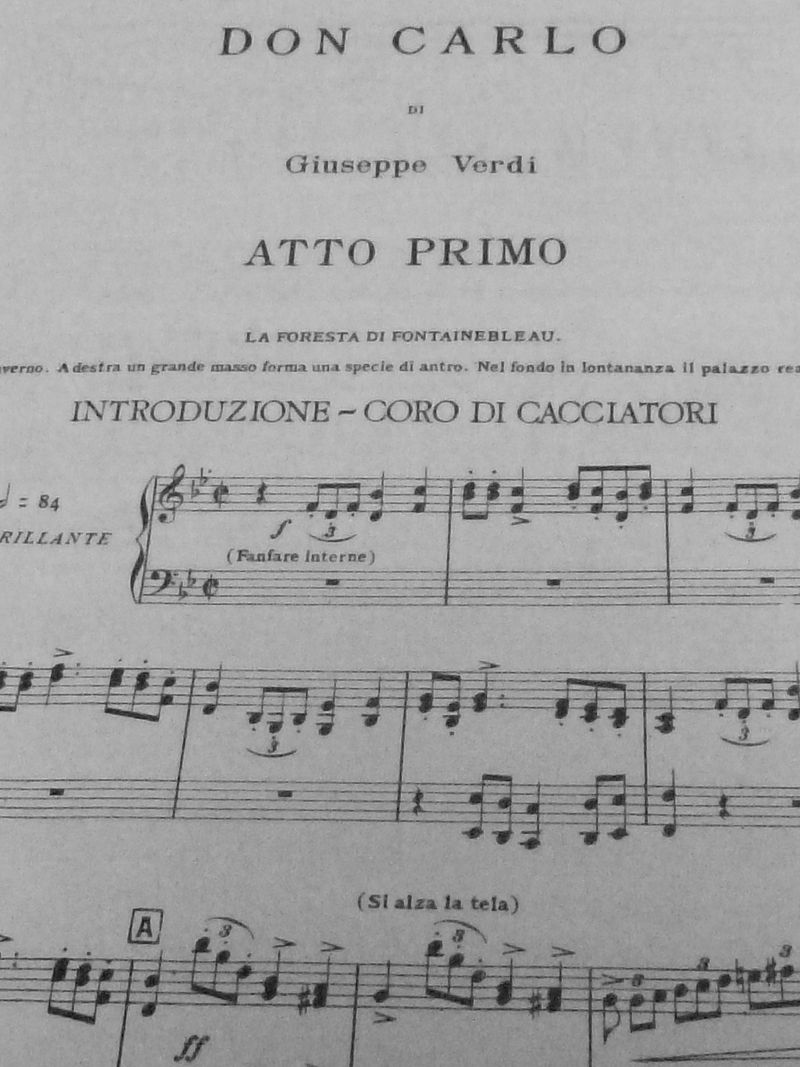
    Monday February 25th, 2013 – A powerful line-up of male principal singers drew me to this performance of Verdi’s DON CARLO at The Met. The women in the cast seemed less interesting by far; having seen the production before – and feeling no need to see it again – I took a score desk and settled in.

    DON CARLO was for years my favorite opera, but then the German repertory began to edge out the Italian in my heart and soul. Now ARIADNE AUF NAXOS, ELEKTRA and DIE WALKURE are in a sort of three-way tie for the top spot. But I still love DON CARLO and always go when it is performed. I’m not crazy about the Fontainebleau scene, and I never watch the Auto da Fe since the sight of people burning other people alive for the greater glory of some fiendish imagined god (or rather, to maintain the power of the men who created him and sustained the myth thru blood and force over the centuries) is revolting.

    Negative reviews of Loren Maazel’s conducting and of Barbara Frittoli’s singing as Elisabetta had me thinking in advance that this might be a partial CARLO for me. Added to the prospect of two Gelb-intermissions, and the fact that I was already feeling tired when I got there, it seemed that a very long evening was loooming ahead. But I found myself drawn in by the opera itself, and I always enjoy the experience of being in the House with the score in front of me. I stayed to the end and on the whole felt it was a very good evening, particularly thanks to the superb performances of Dmitry Hvorostovsky and Ferruccio Furlanetto as Posa and Philip II respectively.

    To be sure, some of Maestro Maazel’s pacing was slow. To me his conducting registered a measured sense of grandeur and dignity, and of events unfolding with a sort of epic inevitability. Often considered Verdi’s most purple opera – the colour of royalty evoked in sound – I felt Maazel’s concept worked well: there were lively passages along the way, and his Auto da Fe scene was amply majestic and well-structured. For the most part he kept his singers at the forefront; in a few places they needed all their reserves of breath to sustain the line thru the slow tempi. But, following the score, I thought the conductor had things well in hand.

    Maazel experienced some boos at his solo bow; I wonder if it was pre-meditated since it seemed to be coming from one area of the Family Circle. Recently while my friend Dmitry and I were having a pre-PARSIFAL supper, I could overhear a woman in the next booth telling her companion that she was planning to boo conductor Daniele Gatti. If she did, it got lost in the cheers. Maazel’s conducting was quirky but worked well to my ears; the only potentially boo-able performance was that of Ms. Frittoli but the audience tolerated her with polite applause.

    I find the Fontainebleau scene a needless introduction to the evening. Verdi sanctioned its elimination for performances in Italy following the premiere in Paris where five-act operas were de rigeur. Some people say, “Oh, it gives the opera context!” Undoubtedly. But we lived without it for years, savoring the gloriouly dark horn theme which opens the four-act version and immeditely sets us in the mood for this opera about royalty and religion. Tonight, with Ms. Frittoli sounding very wary, the scene seemed even more expendable than ever. It makes for such a long night, even under the best of circumstances.

    The soprano’s perilous performance serves as a reminder that a vocal career is short enough without quickening its demise by singing roles that are too heavy. Ms. Frittoli will be remembered in New York City for her exquisite singing as Desdemona in 1999; she was also a particularly fine Mimi, and as recently as 2005 she managed an impressive Fiordiligi by manipulating the dynamics to control the effects of a widening vibrato. But singing things like the Verdi REQUIEM and Donna Anna have taken their toll on her lyric instrument. Tonight the vibrato was painfully evident even at the piano level. She managed to avert disasters, though a high B-flat in the quartet was scary and she could not sustain the floated B-natural in the final duet, on “…il sospirato ben”, one of the role’s most affecting moments. Overall it was sad to experience this voice in its current state. The news that she’ll be singing Tosca later this year in Europe does not bode well.

    These performances of Elisabetta were originallly slated for Sondra Radvanovsky; when Sondra moved to BALLO instead, the Met turned to Ms. Frittoli. They should have cast about for a more appropriate alternative. When I think of the wonderful Elisabettas I have experienced – Caballe, Kabaivanska, Freni, and  Radvanovsky as well as Marina Mescheriakova’s flawless Met debut in the role – Ms. Frittoli’s pales into a haze.

    Anna Smirnova’s voice does not always fall pleasantly on the ear, being rather metallic. But she is a skilled singer who managed the filagree of the Veil Song very well and pulled out all the stops for an exciting “O don fatale” with brazenly sustained high notes. 

    Don Carlo is a bit heavy for Ramon Vargas but this very likeable tenor sang quite beautifully through most of the evening. His voice is clear and plaintive, his singing stylish and persuasive. Only near the end of the opera did a few signs of tiredness manifest themselves. His delicious singing of “Qual voce a me del ciel scende a parlar d’amore?” in the love duet was a high point of the evening.

    Eric Halvarson’s Inquisitor was powerully sung and stood up convincingy against the overwhelming Philip II of Ferruccio Furlanetto. The two bassos had a field day, trading thunderbolts in their great confrontation. Basso Miklos Sebestyen was a very impressive Friar (the Ghost of Charles V), drawing a round of applause fo his sustained low F-sharp in the St. Juste scene of Act I. Jennifer Holloway was a very fine Tebaldo but Lori Guilbeau, who has a pretty sound, seemed not to be well-coordinated with the pit as she sang her offstage lines as the Celestial Voice.

    The towering magnificence of Dmitry Hvorostovsky‘s Posa and Ferruccio Furlanetto‘s Philip II put the performance on a level with the greatest Verdi experiences of my opera-going years. Dima’s singing was velvety and suave, his breath-control mind-boggling, his singing affecting, elegant and passionate by turns. His high notes were finely managed and marvelously sustained.

    Mr. Furlanetto’s glorious singing is a throwback to the days when great Italian voices in every category rang thru the opera houses of the world.  Now nearing his fortieth year of delivering generous, glorious vocalism, the basso’s dark and brooding tones fill The Met with a special sonic thrill. His singing, so rich and deeply-felt, can thunder forth at one moment and then draw us in with hushed, anguished introspection the next. From first note to last, Furlanetto’s Philip II was simply stunning. His hauntingly tender musing on the phrase “No…she never loved me…her heart was never mine…” just before the epic climax of his great monolog moved me to tears.

    There were huge eruptions of applause and cheers after both the baritone and the basso finished their big arias; but applause nowadays tends to dwindle rather quickly and the days of show-stopping aria ovations are largely a thing of the past. 

    There were lots of empty seats which surprised me: with this starry assembly of male singers and the season’s biggest name from the conducting roster involved, I expected a fuller house.

    Dima2

    Dmitri Hvorostovsky

    Furlanetto

    Ferruccio Furlanetto

    Metropolitan Opera House
    February 25, 2013

    DON CARLO
    Giuseppe Verdi

    Don Carlo...............Ramón Vargas
    Elizabeth of Valois.....Barbara Frittoli
    Rodrigo.................Dmitri Hvorostovsky
    Princess Eboli..........Anna Smirnova
    Philip II...............Ferruccio Furlanetto
    Grand Inquisitor........Eric Halfvarson
    Priest Inquisitor.......Maxime de Toledo
    Celestial Voice.........Lori Guilbeau
    Friar...................Miklós Sebestyén
    Tebaldo................ Jennifer Holloway
    Count of Lerma..........Eduardo Valdes
    Countess of Aremberg....Anna Dyas
    Flemish Deputy..........Alexey Lavrov
    Flemish Deputy..........Paul Corona
    Flemish Deputy..........Eric Jordan
    Flemish Deputy..........Evan Hughes
    Flemish Deputy..........Joshua Benaim
    Flemish Deputy......... David Crawford

    Conductor...............Lorin Maazel
  • CLEMENZA DI TITO @ The Met

    Clemenza.0405.01

    Tuesday November 20, 2012 – The Metropolitan Opera’s current revival of their classic Jean-Pierre Ponnelle production of Mozart’s LA CLEMENZA DI TITO is a joy both to the ear and the eye. Marty Sohl’s production photo (above) illustrates the fantasy mixture of ancient Roman and baroque stylistic elements that give the sets and costumes their timeless visual appeal.

    Tonight, Harry Bicket led a sterling performance, with excellent continuo playing from Bradley Brookshire (harpsichord) and David Heiss (cello) as well as spectacular woodwind solos in two of the opera’s iconic arias: Andrew McGill (clarinet, in “Parto, parto”) and James Ognibene (basset horn, in “Non piu di fiori”). Mr. Bicket’s vivid pacing and his sense of the music’s flow put the singers in high relief; there were three outstanding vocal performances and overall it was one of the most satisfying evenings at The Met in recent seasons.

    Kate lindsey

    To think that I almost skipped this revival! But a chance to hear Kate Lindsey as Annio was not to be missed, and the beauteous young mezzo (above) gave an immaculate performance, her lithe figure and ease of movement onstage enhancing her interpretation at every turn. Like many of her predecessors in this fach, Kate spends a lot of her onstage time in trousers (she’ll debut at Glyndebourne as the Composer in ARIADNE AUF NAXOS in the coming year). Her singing tonight was pristine, with a particularly ravishing piano passage in “Tu fosti tradito” that would melt the coldest heart.  

    Gf

    With his noble and expressive face, Giuseppe Filianoti (above) made a splendid impression as Tito. His singing was clear and mellifluous, the words poetically delivered. The tenor finely delineated the emperor’s dilemma in dealing with his betrayal by his friend Sesto: should friendship trump justice? When I last heard Mr. Filianoti in the house, he was dealing with health issues, so it was really very pleasing to hear him on such beautiful vocal form tonight.

    Garanca

    Somehow I’ve managed not to encounter a live performance by the Latvian mezzo-soprano Elina Garanca (bove) up til now. I first heard her voice on a recording my friend Mollie sent me from the 2001 Cardiff Competition. Garanca has since developed into a world-class artist and after hearing her as Sesto tonight, she’s on my A-list of singers. Both in terms of vocal appeal and technical accomplishment, this was a stunning performance: Garanca’s voice is all of a piece, and she moves it thru the registers seamlessly. After a profoundly expressive rendering of the openng passages of the great aria “Parto, parto” Ms. Garanca sailed through the whirlwind coloratura flourishes of the aria’s later pages with nimble assurance. Later, as she knelt to invoke the strength to carry out her assassination of Tito, she summoned an amazing degree of projection, the voice sailing into the hall with startling force. In her second spectacular aria “Deh per questo istante solo”, the mezzo soprano coloured the voice movingly, reflecting the character’s anguish and also his stalwart refusal to implicate Vitellia in the crime. Ms. Garanca’s entire performance was a revelation.

    Barbara Frittoli, an unforgettable Desdemona at the Met in 1999, has more recently found considerable success in singing Mozart since she did her voice some damage during the first decade of the 21st century by singing music that was too heavy for her. Her canny manipulation of dynamics usually prevents her widening vibrato from becoming too prevelant. But for all her attractive qualities, Vitellia’s great aria “Non piu di fiori” simply lies too low for Ms. Frittoli to make her finest effect in the music. Vitellia in fact can be sung by a mezzo, except for that thorny top-D that Mozart threw into the act I trio, a note that eluded Ms. Frittoli tonight. Nevertheless, the soprano kept up her side of things all evening and the audience enjoyed her sometimes over-the-top dramatic portrayal.

    Lucy Crowe as Servilia is a pretty girl with luminous eyes and a pleasing lyric timbre. In his search for a wife, Tito’s first choice – Servilia – might have made him quite happy, especially with Ms. Crowe’s buxom grace and girlish smile.

    A wonderful Met evening, then, and there was every reason to stay to the end and shout’ bravi’ as the singers took their bows to sustained applause.

    Metropolitan Opera House
    November 20, 2012
    LA CLEMENZA DI TITO
    Mozart

    Tito.......................Giuseppe Filianoti
    Vitellia...................Barbara Frittoli
    Sesto......................Elina Garanca
    Servilia...................Lucy Crowe
    Annio......................Kate Lindsey
    Publio.....................Oren Gradus
    Berenice...................Toni Rubio

    Bradley Brookshire, Harpsichord Continuo
    Anthony McGill, Clarinet Soloist
    James Ognibene, Basset Horn Soloist
    David Heiss, Cello Continuo

    Conductor..................Harry Bicket

  • Met’s 1961 TROVATORE on SONY

    886979100626

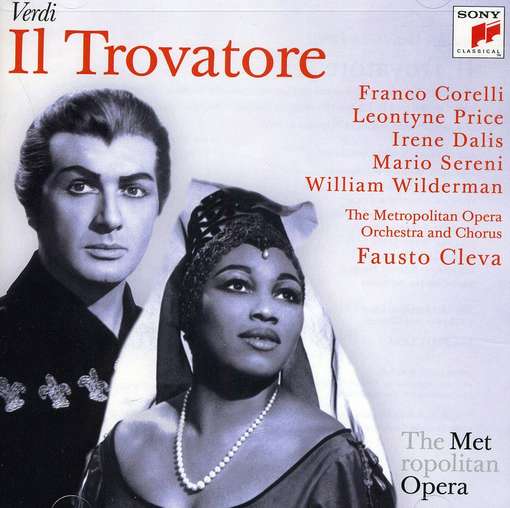
    The Metropolitan Opera on SONY series recently issued the famous February 4, 1961 TROVATORE broadcast with Leontyne Price and Franco Corelli which followed by a week their wildly acclaimed joint Met debut in the Verdi opera. The 1960-61 Met broadcast season was happening without my knowledge, otherwise I would certainly have been glued to my radio. But I did not discover the Met broadcasts until the following season when the fabled Sutherland ‘debut’ LUCIA was the first time I tuned in. From then until just a couple of years ago, I hardly ever missed a broadcast.

    I heard Price and Corelli many times at The Met – Leontyne I actually heard at the Old Met as Fiordiligi in COSI FAN TUTTE (in English) and Franco sang in the first performance I saw at the New Met (as Calaf in TURANDOT). I loved them both in those golden years though I knew Franco could be sloppy at times and Leontyne, over the years, developed some annoying idiosyncrasies. I’d never heard the 1961 TROVATORE so I set aside time to concentrate on it; I must say, it is a very erratic performance.

    Fausto Cleva, a favorite conductor of Renata Tebaldi, takes much of TROVATORE at a breathless clip. For the most part the singers manage to keep up though there’s some scrambling here and there. Aside from Leontyne Price, who strives throughout for thoughtful musicality, the principal quartet of singers tend to sing TROVATORE in verismo style rather than treating it like a god-child of the bel canto era. I suppose there’s a temptation to snarl and bluster in the opera’s dramatic utterances and in a live performance there is no recourse other than to let the singers do what they will in declaiming the text. But it becomes a bit tiresome after a while.

    Corelli is the most lachrymose Manrico I ever heard; he gives the same impression on his commercial recording of the role for EMI, though that is more artfully sung. Of course there is a lot of very powerful and exciting vocalism in his interpretation, but this is somewhat compromised by his melodramatic excesses. Upon receiving news that Leonora is to take the veil, Corelli has a little mad scene which wanders right off the musical map. But despite some slight variability of pitch at times, the utterly distinctive Corelli timbre and his sheer generosity of voice make him a Manrico on the grand scale. Interestingly, Corelli only sang this opera at the Met eleven times, retiring it from his repertory at the House in 1964. A new production in 1969 was reportedly planned for Corelli but in the event Placido Domingo was the Manrico.

    Leontyne Price on the other hand kept Leonora in her repertoire for over twenty years; the great aria “D’amor sull’ali rosee” might be considered the soprano’s theme song and she sang it superbly at the gala that closed the Old Met in 1966. The warmth and shimmering beauty of her timbre provide the vocal high points of this 1961 broadcast where she manages to maintain the Verdian line while her colleagues wander into melodramatic over-accenting of certain passages. For my money, Price was not a soprano with a first-rate forte top; she was best in the floating upper phrases of a role. Corelli drowns her out on the final D-flat of Act I, and her high-C at the climax of the Act IV duet with di Luna doesn’t have any zing to it. But overall it’s wonderful to hear the soprano in all her freshness in this music. Over the ensuing years Price developed a vocal ‘style’ that could be off-putting: growling in the lower register and introducing some bluesy mannerisms that could spoil her performances for me. You don’t hear these on her commercial recordings so much, but in the House she could be very self-indulgent. Nevertheless her singing could still thrill, right to her farewell operatic performance.

    I always loved the sound of Mario Sereni’s voice, so warm and attractive. For me he was at his best in verismo: his Marcello, Carlo Gerard and Tonio (PAGLIACCI) were all very fine; he did leave behind some wonderful studio recordings too, notably his Germont with de los Angeles and his Enrico on the RCA/Moffo LUCIA. But in this TROVATORE he seems way off form. I wonder in fact if he was actually originally scheduled for this  broadcast since Robert Merrill had sung di Luna in the Price/Corelli debut performance and sang it again in the next performance following the broadcast. Whatever the case, Sereni seems unprepared. He sings the wrong entry line in the first scene of Act III and gets lost in the recitative on his entry in Act IV. Some handsome singing along the way is offset by serious pitch problems in the great aria “Il balen”. It’s sad that this particular broadcast should be chosen as a document of Sereni’s live Met performances; I know I can never listen to it again.

    Irene Dalis was a great favorite of mine. She was a powerful stage presence and a singer who could be both passionate and subtle. Her performance is exciting but I feel of all the singers she may have been most put-off by Cleva’s fast tempi. In the Act III, Scene 1 finale Irene is pushed to the limits by the conductor’s absurdly rapid pace and it seems to me that she simply stops singing during the final bars of music. Her final scene is very impressive, though, with the quiet calm of her “Ai nostri monti” and a sustained high B-flat in her last triumphant, vindictive phrase. Ten years after this broadcast, I saw Irene’s Azucena at the Met during a June Festival performance. Despite the intervening decade of singing some of opera’s most demanding roles, she was in fact far more thrilling and vocally secure than on this 1961 broadcast.

    It’s good to have a document of William Wilderman’s performance of Ferrando; his ample and darkishly dramatic singing gets the opera off to a strong start. Teresa Stratas sings the brief role of Inez and there is no mistaking her voice. She strives to make something lovely of her phrase bidding farewell to Leonora at the convent, but Price trumps her by coming in a shade early and stepping on the younger soprano’s tapering piano.

    For all its flaws, listening to this recording reminded me of how much I love this opera. Despite its improbable plot, the vast treasury of Verdi melody makes TROVATORE essential.

  • Giorgio Tozzi Has Passed Away

    Tozzi_pic2
    I’m very sorry to learn of the death of Giorgio Tozzi, the basso whose voice was among the first that I became familiar with when I started listening to opera at a very early age.

    My parents had presented me with a prophetic birthday gift: a two-LP set of Verdi and Puccini arias culled from various RCA Victor recordings. Tozzi was the featured basso (the other singers were Milanov, Albanese, Peters, Bjoerling, Peerce, Merrill and Warren…what a collection of voices to cut one’s operatic teeth on!) and I literally wore out the tracks of his performances of arias from NABUCCO and SIMON BOCCANEGRA. Once my voice changed I would try to sing along with Tozzi in these arias, and also with his rendition of “Some Enchanted Evening” which my mother loved so.

    IMG_0002
    Giorgio Tozzi sang Don Giovanni in the very first performance I ever attended at the (Old) Met…

    IMG_0001
    …and he was my very first Hans Sachs (at the ‘new’ Met). I saw him so many times over the years: as Daland, as Philip II, as Fiesco, as Colline, Mozart’s Figaro, Ramfis and and as Count Rodolfo in LA SONNAMBULA. He sang more than 500 performances with the Metropolitan Opera (in-House and on tour) between 1955 and 1975. He created the role of the Old Doctor in Samuel Barber’s VANESSA and sings in the classic recording of that opera. Tozzi sang in the final trio from LA FORZA DEL DESTINO during the gala concert that marked the end-of-an-era closing of the Old Met in 1966.

    In 1978, a few years after he had left The Met, I saw Giorgio Tozzi onstage for the last time. He sang (an acted) grandly as Oroveso in Bellini’s NORMA in a performance at Hartford CT opposite the thrilling Cristina Deutekom as Norma.

    Giorgio Tozzi’s voice became widely known outside the world’s opera houses when he sang the music of Emil de Becque for the soundtrack of the film SOUTH PACIFIC (Rossano Brazzi portrayed de Becque on-screen). Tozzi later appeared in stage productions of the musical and on Broadway in MOST HAPPY FELLA.

    Giorgio Tozzi sings the Old Doctor’s aria from VANESSA here: “For every love there is a last farewell; for each remembered day an empty room.”

  • John Mark Owen’s Sonatae II

    Copy of 1

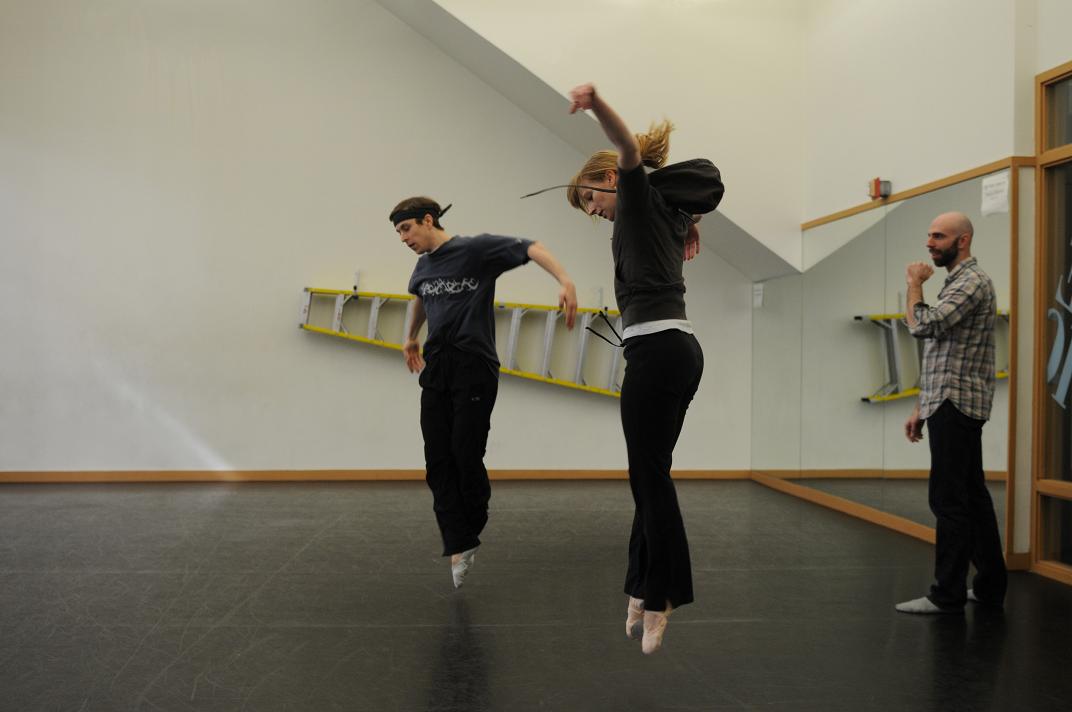
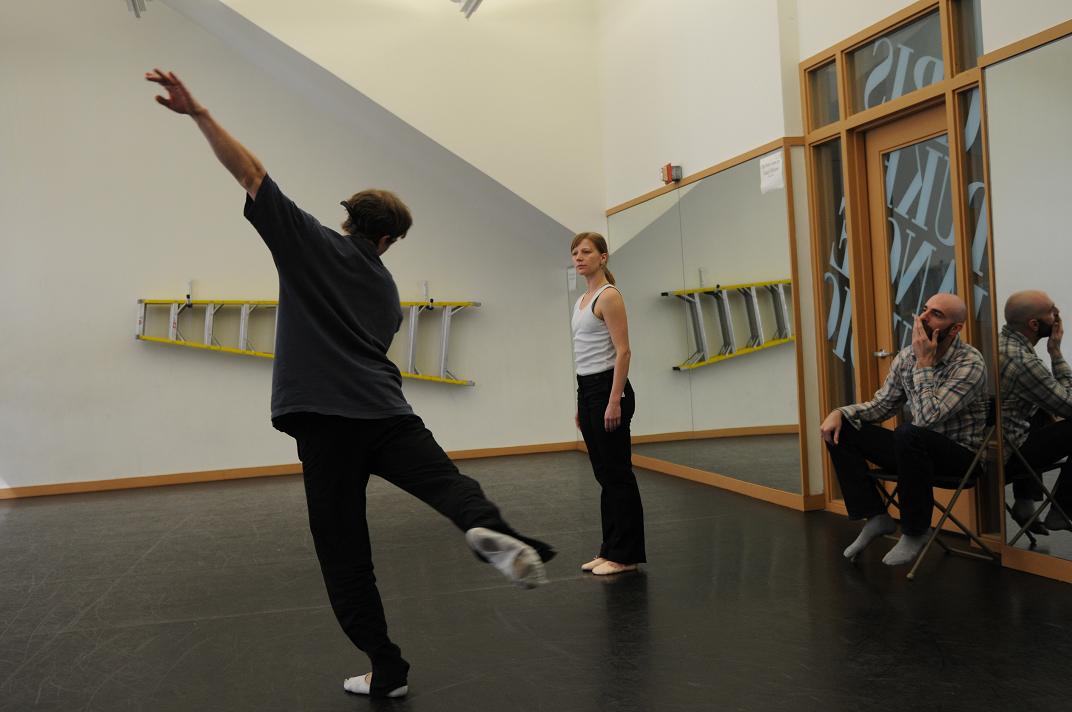
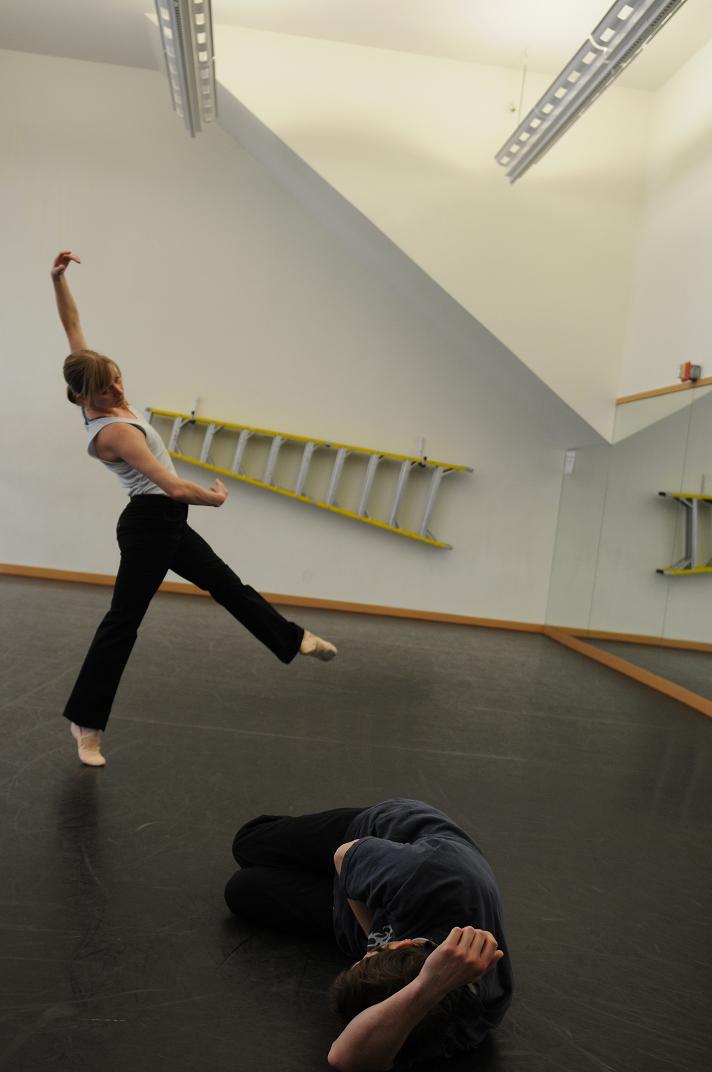
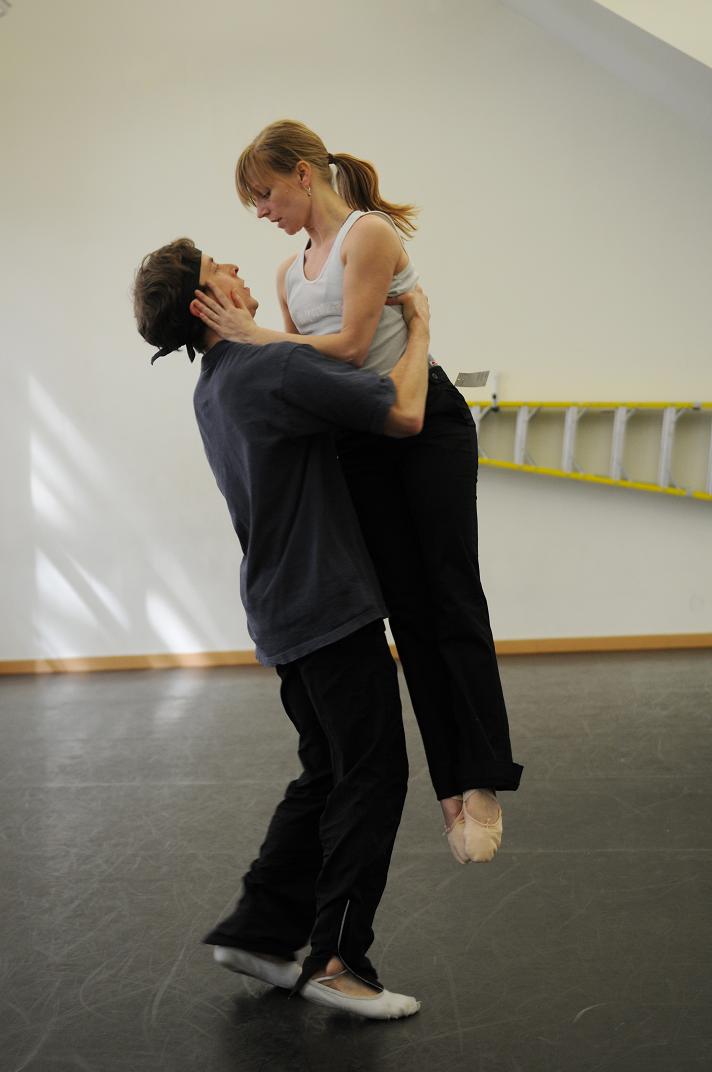
    Saturday March 26, 2011 – Choreographer John-Mark Owen invited us to watch a rehearsal of his newest work, Sonatae II, set to music of Alexander Balanescu. The duet will be shown at the 92nd Street Y on Sunday March 27th at 3:00 PM. The dancers are Jennifer Goodman and Josh Christopher, above in Kokyat’s photo.

    Copy of 2

    When Kokyat and I arrived at the studio, Jennifer and Josh were putting the finishing touches on the duet.

    Copy of 13

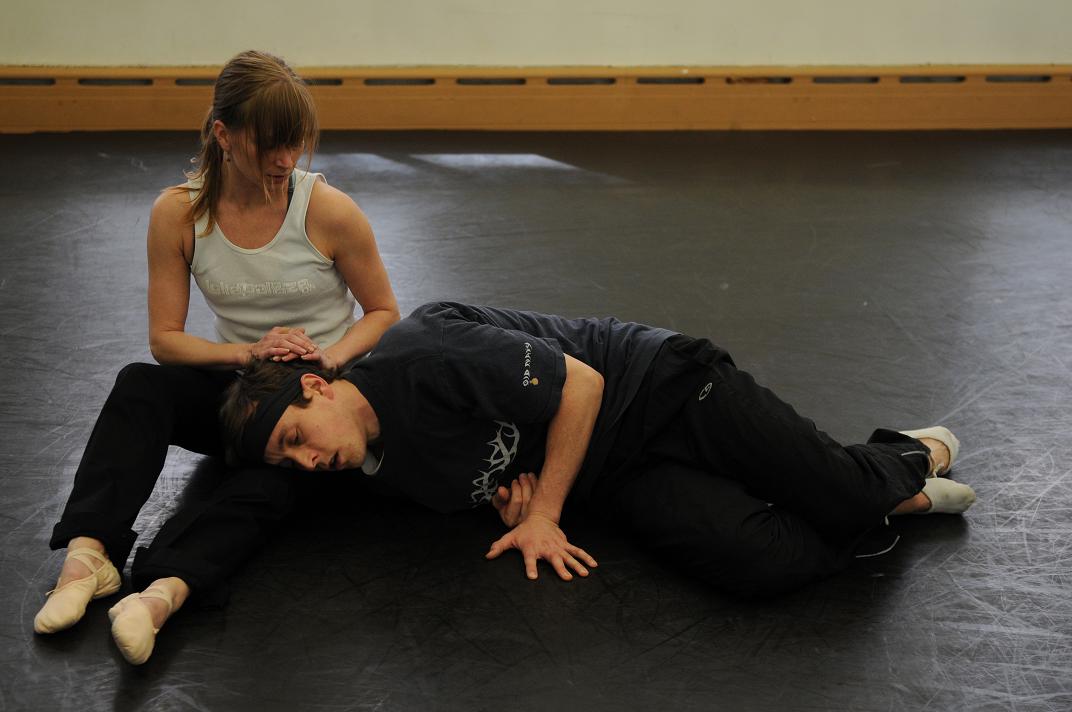
    They worked in silence with John-Mark and all the movement seemed so expressive. With a performance scheduled for the following afternoon one might have expected an atmosphere of urgency or even panic in the studio but instead there was an air of calm with the dancers taking their time to perfect the small nuances of gesture and expression that John-Mark was looking for.

    Copy of 24

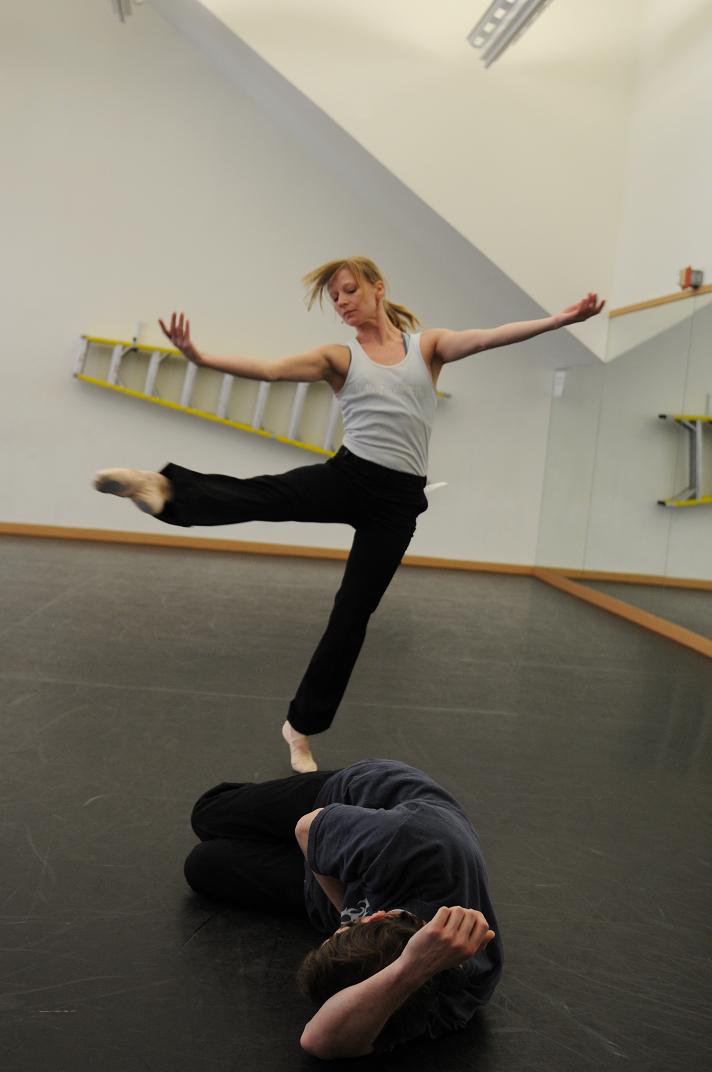
    With the studio time running out, John-Mark played the Balanescu music and what had been an attractive series of danced passages took on a deeper and more intense feeling altogether.

    Copy of 19

    The music is just so poetic, and the dancing took wing on it. 

    Copy of 17

    Copy of 26

    Copy of 20

    As soon as the run-thru finished the dancers quickly bundled up and packed off to the Y for further rehearsing. All photos: Kokyat.

    Jennifer Goodman is currently dancing a featured role in performances of Strauss’ CAPRICCIO at the Metropolitan Opera.

    On May 6th and 7th, John-Mark Owen’s Sonatae I will be performed by Jesse Marks at Manhattan Movement and Arts Center on a programme shared with the Island Moving Company of Newport, RI.