Tag: Metropolitan Opera

  • LA BOHEME ~ A Met Matinee

    Boheme final scene

    Saturday November 20th, 2021 matinee – In 2016, Anita Hartig was a radiantly-sung Liu in TURANDOT at The Met. When her Violetta was announced in the 2018-2019 season, I was eager to hear her again, only to find that – at least at the performance I attended – she was having serious pitch problems. So this year, despite wanting to hear Charles Castronovo and Artur Ruciński in BOHEME, I hesitated to go because Ms. Hartig was the Mimi. Then I heard a clip from the prima of Mimi’s Act I narrative and the soprano sounded fabulous. So, there I was today, in a packed house, experiencing the Franco Zeffirelli BOHEME for the umpteenth time.

    The afternoon started on a sour note: while waiting for the curtain to rise, the two women sitting next to me removed their masks, started eating crackers, called people on their phones, and even called each other! Seriously! I wasn’t about to let them ruin the performance for me, so I abandoned my seat with a view and went back to my more usual score desk.

    I liked Eun Sun Kim’s conducting a lot. Her tempi felt just right, and she seemed to breathe with the singers, allowing them leeway with sustaining notes when they wished. The orchestra were in fine fettle, and I especially loved the harp passages at the opening of Act III.

    BOHEME is a love story, and today’s lovers were excellently paired. Ms. Hartig’s “Mi chiamano Mimi” was gorgeously sung and phrased, and she turned on the power for the ecstatic cresting phrase of the love duet, and again for the climax of the ensemble following Musetta’s Waltz. Ms. Hartig’s sustained high-C at the end of Act I was handsomely harmonized by Charles Castronovo, today’s Rodolfo. The tenor’s Act I aria was particularly appealing in his way with the words; his top notes do not ‘bloom’ but they have ample power. In Act III, his anguish in telling Marcello the real reason he must break with Mimi was passionately expressed. Ms. Hartig’s “Addio senza rancor” was very moving, and she gave us an exquisite pianissimo on the final “…rancor!” A few moments later, having decided to stay with Mimi until the Spring, Mr. Castronovo ravished the ear with his own lovely pianissimo on “…alla stagion dei fior!

    Artur Ruciński’s Marcello was sung with power and warmth; he led the ensemble ‘reprise’ of Musetta’s Waltz in a commanding way, and was wonderful in his Act III duet with Mimi, and then in his conversation with Rodolfo. Fererica Lombardi was a bright-toned Musetta, making the most of her Waltz. Alexander Birch Elliott was an excellent Schaunard, and I very much liked Nicholas Brownlee’s voice as Colline – so much so that I regretted leaving before his Coat Aria (the thought of sitting thru another endless Gelb-Intermission sent me packing after Act III). The Scottish baritone Donald Maxwell, long a favorite at the Royal Opera, Covent Garden, doubled in the roles of Benoit and Alcindoro.

    The Zeffirelli BOHEME has come in for some bashing of late. Some people feel it’s time for a change. But – like the Zeffirelli TURANDOT – it’s been a veritable cash cow for the Met, selling out (or selling “big”) no matter who is singing. Today’s nearly full house seemed attentive and appreciative. And of course they applauded the rise of the curtain on the Café Momus scene. Oh dear, people actually enjoying themselves at the opera! We can’t have that, now, can we?

    Metropolitan Opera House
    November 20th, 2021 matinee

    LA BOHÈME
    Giacomo Puccini

    Mimì....................Anita Hartig
    Rodolfo.................Charles Castronovo
    Musetta.................Federica Lombardi
    Marcello................Artur Rucinski
    Schaunard...............Alexander Birch Elliot
    Colline.................Nicholas Brownlee
    Benoit..................Donald Maxwell
    Alcindoro...............Donald Maxwell
    Parpignol...............Marco Antonio Jordão
    Sergeant................Tyler Simpson
    Officer.................Ross Benoliel

    Conductor...............Eun Sun Kim

    ~ Oberon
  • Teresa Zylis-Gara Has Passed Away

    Z-g

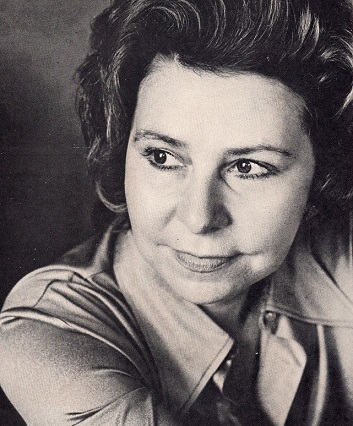
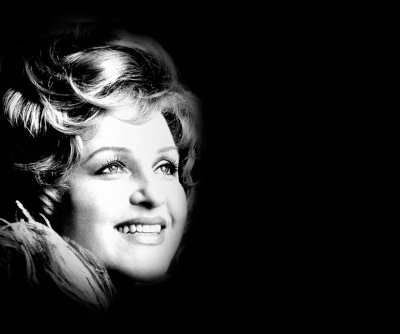
    Teresa Zylis-Gara, the Polish soprano who possessed one of the most beautiful voices of my experience, has passed away at the age of 91. From 1968 to 1984, she sang nearly 250 performances with the Metropolitan Opera at Lincoln Center and on tour; I had the good fortune to see her in several roles, and to hear her on a number of live radio broadcasts.

    Ms. Zylis-Gara studied at Łódź, and in 1954 won first prize in the Polish Young Vocalists Contest at Warsaw. This led to her operatic debut in 1956. From 1960-1970, the soprano was based in Germany where she sang at Oberhauser, Dortmund, Frankfurt, Frankfurt, Hamburg, Cologne, Munich, and Berlin. She also appeared at Vienna, Glyndebourne, Paris, London, Salzburg, and San Francisco.

    ln 1968, Ms. Zylis-Gara made her Metropolitan Opera debut as Donna Elvira; she sang there frequently over the next several seasons. I first saw her as Violetta in TRAVIATA where she made a lovely impression, though hindered by inferior cast-mates and lacklustre conducting. Thereafter, I saw her as Donna Elvira, Elisabeth in TANNHAUSER, Amelia in BALLO IN MASCHERA, Manon Lescaut, Leonora in TROVATORE, Cio-Cio-San, and as Adriana Lecouvreur. In each of these roles, her creamy voice and ultra-feminine persona made  a memorable impression.

    Z-g desdemona jpg

    Above: Teresa Zylis-Gara as Desdemona; photo by Louis Mélançon

    Among the roles in which I missed seeing her onstage but greatly enjoyed her singing of on broadcasts included Desdemona (in a new production with James McCracken in the title-role, conducted by Karl Böhm), Mozart’s Pamina and Contessa Almaviva, Marguerite in FAUST, Puccini’s Suor Angelca, Mimi, and Liu, Elsa in LOHENGRIN and – most movingly – as Tatyana in ONEGIN and as the Marschallin.

    Zg tosca

    While I was living in Hartford, Ms. Zylis-Gara came up from New York City to the Bushnell to sing Tosca. Inferior conducting almost ruined the performance, but her singing was luminous.

    Leaving The Met in 1984, the soprano settled in Monte Carlo and continued to sing on the Continent, where she took on roles like Maddalena in CHENIER, Ariadne, Sieglinde, and Chrysothemis which had not been offered to her at The Met.

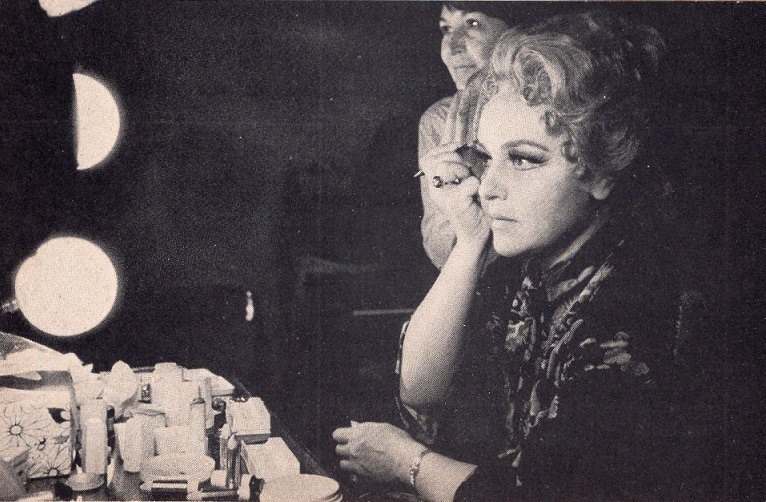
    Zg makeup

    Above: getting ready…I love this photo!

    I remember listening to Zylis-Gara’s Four Last Songs for the first time, and thinking: this is perfection. And when the music ended, there was applause; this was recorded live. For me, no other version of these beloved songs compares.

    Z-g adriana-1 jpg

    I’ve reached that inevitable point in my life when the great singers who fanned the flames of my passion for opera are passing away, one by one. Thinking of Teresa Zylis Gara, I recall with special affection seeing her in the title-role of Cilea’s ADRIANA LECOUVREUR at a matinee performance given on the Met’s 1983 tour in Boston. It was to be the last time I saw her onstage. And it was a marvelous afternoon, with the soprano and her colleagues all singing divinely: Neil Shicoff as Maurizio, Bianca Berini as the Princesse de Bouillon, and Sesto Bruscantini as Michonnet. For all the glorious sounds that filled the hall that day, nothing sent such a thrill thru me as Zylis-Gara’s gossamer pianissimo on the phrase: “La promessa terrò …”  when Adriana vows to save her rival from humiliation in the opera’s second act. It’s of such moments that the fabric of dreams are woven.

    ~ Oberon

  • Giuseppe Giacomini Has Passed Away

    Gg

    The great Italian tenor Giuseppe Giacomini has passed away at the age of 80.

    Giacomini made his operatic debut in 1966 at Vercelli as Pinkerton. and was soon singing throughout Italy. His international career commenced at Berlin in 1970, which led to engagements at Lisbon, Barcelona, Munich, and in Vienna, where he received the title Kammersänger.

    He triumphed at La Scala, in Turin, and in Rome, and made his Metropolitan Opera debut in 1976, with debuts at Paris and Covent Garden following soon after.

    Giacomini is featured on the Metropolitan Opera’s DVD of LA FORZA DEL DESTINO with Leontyne Price, and on commercial recordings as Turiddu (opposite Jessye Norman), Pollione (with Renata Scotto), Otello (with Dame Margaret Price), and he is Cavaradossi on the Muti TOSCA with Carol Vaness.

    The tenor celebrated his 60th birthday singing in TOSCA at Covent Garden, and in 2010 he toured China with the Shanghai Philharmonic Orchestra.

    I first saw Giuseppe Giacomini onstage (his US debut) at The Bushnell in Hartford, where he appeared in an exciting FANCIULLA DEL WEST opposite Radmila Bakočević in 1975. At the 1987 Richard Tucker Gala, Giacomini brought down the house twice with his singing of the final scene of ANDREA CHENIER with Eva Marton, and with his powerhouse performance as Otello in the Act II duet with Sherrill Milnes; during the applause that followed, Mr. Milnes bestowed a comradely kiss on the tenor’s cheek. Watch and listen here.

    On December 10th, 1988, Giacomini gave a thrilling performance as Canio in PAGLIACCI at a Met matinee. The tenor – along with Diana Soviero (Nedda) and Juan Pons (Tonio) – was simply on fire, his top notes blazing into the hall. During the bows, a crowd gathered at the orchestra railing – like in the old days – to scream their heads off for the singers. I was so elated to be part of it. 

    As it turned out, that PAGLIACCI was Giuseppe Giacomini’s last Met performance.

    Giuseppe Giacomini – Un tal gioco – PAGLIACCI – Met bcast 1988

    There’s lots of Giacomini to be found on YouTube; here are a few of my favorite things:

    Giuseppe Giacomini sings Calaf’s aria “Non piangere Liu” from TURANDOT from a Paris Opera production in 1981. Watch and listen here.

    The tenor sings the Improviso from ANDREA CHENIER here

    …and Calaf’s “Nessun dorma” from a 1989 Moscow concert here…with an encore!

    And here’s Giacomini as Radames…

    Giuseppe Giacomini ~ Celeste Aida ~ Chicago 1988

    …and in the final duet from ANDREA CHENIER, with Ghena Dimitrova:

    ANDREA CHENIER ~ final duet – Ghena Dimitrova & Giuseppe Giacomini

  • Jean Kraft Has Passed Away

    Emilia

    Above: Jean Kraft as Emilia in OTELLO

    Jean Kraft, a unique singing-actress of the highest calibre, has passed away at the age of 94. She made her Metropolitan Opera debut in 1970 as Flora Bervoix in TRAVIATA and went on to give nearly 800 performances with the Company at Lincoln Center and on tour.

    Slender of form, and with a face that could register the slightest nuances of emotion with uncanny clarity, Ms. Kraft excelled in every role she took on. I saw her countless times during her Met career, and she never failed to lure my eye…and ear. 

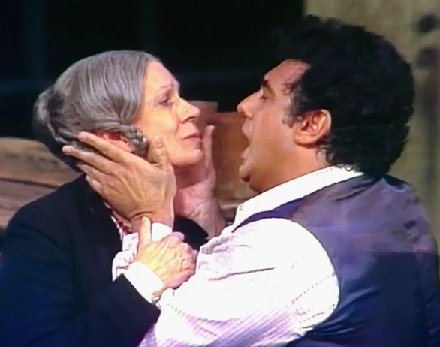
    Cav

    She was a fascinatingly stoic/vulnerable Mamma Lucia in CAVALLERIA (above with Placido Domingo), an uptight Emilia under her husband’s evil thumb in OTELLO, a regal Hecuba in the Met premiere of TROYENS, an aristocrat striving to keep her composure as the Comtesse in CHENIER, the struggling, poverty-stricken Gertrude in HANSEL & GRETEL, the gracious Madame Larina in EUGENE ONEGIN, the arthritic Mother Jeanne managing her walk to the guillotine in DIALOGUES DES CARMELITES.

    Kraft mrs sedley

    Jean Kraft was the Borough’s busybody/drug addict Mrs. Sedley in PETER GRIMES (above), Berta in BARRBIERE, Marthe in FAUST, Duchess Federica in LUISA MILLER, Marcellina in NOZZE DI FIGARO, the Duchesse in FILLE DU REGIMENT, Dryade in ARIADNE AUF NAXOS, a stalwart Rossweisse in WALKURE, Annina in ROSENKAVALIER, Suzuki in BUTTERFLY, and – a couple of times – Ulrica in BALLO IN MASCHERA. She gave her last Met performance as Madama Larina on April 5th, 1989.

    Here is a brief audio excerpt of Ms. Kraft as Mamma Lucia with Reneta Scotto as Santuzza, from the commercial recording:

    Renata Scotto & Jean Kraft – Cavalleria Rusticana ~ scene

    And it’s so wonderful to have this thrilling souvenir of Jean Kraft performing the trio from HOFFMANN with Catherine Malfitano and James Morris at the 1984 Gala of Stars, conducted by James Levine. Watch and listen here.

    Here is an incredible audio-only document of Ms. Kraft’s 1969 Town Hall debut recital, accompanied by David Garvey. Listen here.

    And here is a fascinating interview that she gave Bruce Duffie: LINK

    Rest peacefully, dear Ms. Kraft. You are unforgettable.

    ~ Oberon

  • 40 Years Ago: Fracci & Nureyev ~ GISELLE

    Fracci nureyev gisells

    ~~~~ Note: I had originally planned to post this article on the 40th anniversary of my one-and-only experience of seeing the great Carla Fracci onstage. Today, news of the ballerina’s death has come, so I am posting it now, two months shy of the actual anniversary:

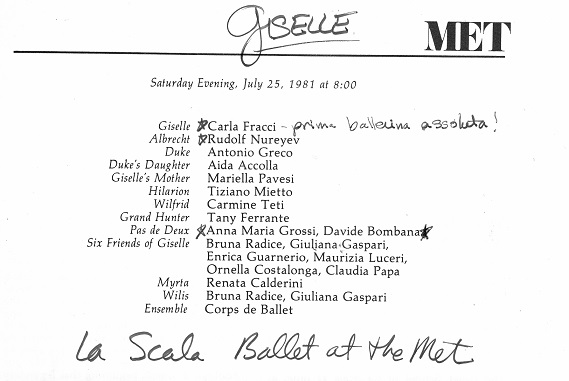
    Giselle La Scala-1jpg
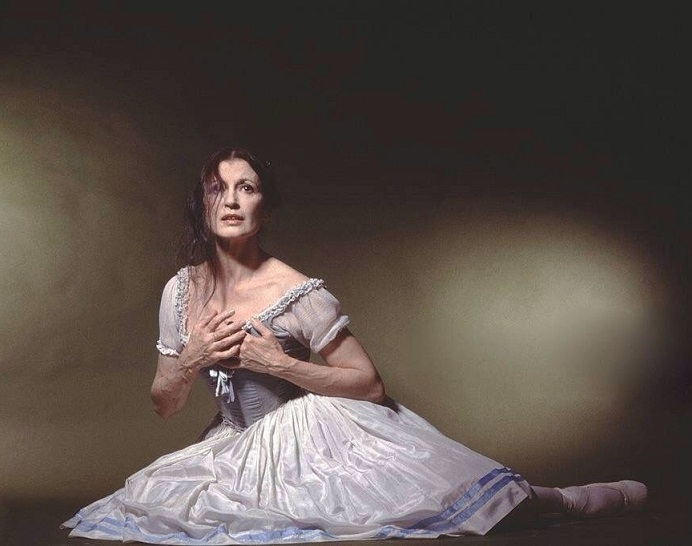
    On this date, forty years ago, one of the greatest ballet performances of my experience took place at the Metropolitan Opera House, where the La Scala Ballet presented their production of GISELLE with Carla Fracci and Rudolf Nureyev in the leading roles.

    I had spent the afternoon at The Met watching GISELLE with an alternate cast; it was a very pleasing performance. But the undeniable star-power of Fracci and Nureyev made the evening performance unforgettable. 

    This is my diary entry from that magnificent evening:

    GISELLE – 2nd performance – with the assumption on the leading roles by two great dancers, the whole production took on a new dimension. The corps seemed better than at the matinee, though again Renata Calderini was not a particularly impressive Myrthe. There was a very exciting Peasant Pas de Deux with Anna Maria Grossi and a very exciting Davide Bombana; they roused the audience to cheers.

    But it was in the superstars that the real excitement lay – and that is why they are superstars! Rudolf Nureyev’s Albrecht was marred slightly by some rather ‘modern’ acting details in Act I where he failed to maintain the aura of manners of the period. But otherwise he caught the essence of the caddish young nobleman in Act I and the grief-stricken man of Act II. He danced with thorough command despite passing traces of stiffness. He interpolates many intricate steps and then challenges himself to bring them off…and always succeeds. His Albrecht was a full portrait – and it was very exciting.

    Fracci giselle

    In Carla Fracci we had the perfect Giselle. All this talk about her ‘capturing the essence of the Romantic Era’ felt absolutely true. There were times in Act II when she really did seem like the ghostly vision of another time and place. Here is a dancer so technically assured, so light yet bearing underneath great strength of character and of will. She was so charming in Act I, and her Mad Scene was brilliantly done – not overplayed but seemingly so real. Act II truly produced the feeling of seeing a phantom. Floating in her gossamer long tutu, Fracci evoked the remote mystique of the spectre. Her dancing throughout was so poised, with the steps always presented as a natural expression of the character and stemming completely from the drama. One had the feeling of really seeing Giselle herself, not of a ballerina portraying her.

    At the end there was a tremendous ovation (20 minutes) with roses being thrown and Fracci & Nureyev called out repeatedly…bravi!!!”  

    ~ Overon   

  • 40 Years Ago: Fracci & Nureyev ~ GISELLE

    Fracci nureyev gisells

    ~~~~ Note: I had originally planned to post this article on the 40th anniversary of my one-and-only experience of seeing the great Carla Fracci onstage. Today, news of the ballerina’s death has come, so I am posting it now, two months shy of the actual anniversary:

    Giselle La Scala-1jpg
    On this date, forty years ago, one of the greatest ballet performances of my experience took place at the Metropolitan Opera House, where the La Scala Ballet presented their production of GISELLE with Carla Fracci and Rudolf Nureyev in the leading roles.

    I had spent the afternoon at The Met watching GISELLE with an alternate cast; it was a very pleasing performance. But the undeniable star-power of Fracci and Nureyev made the evening performance unforgettable. 

    This is my diary entry from that magnificent evening:

    GISELLE – 2nd performance – with the assumption on the leading roles by two great dancers, the whole production took on a new dimension. The corps seemed better than at the matinee, though again Renata Calderini was not a particularly impressive Myrthe. There was a very exciting Peasant Pas de Deux with Anna Maria Grossi and a very exciting Davide Bombana; they roused the audience to cheers.

    But it was in the superstars that the real excitement lay – and that is why they are superstars! Rudolf Nureyev’s Albrecht was marred slightly by some rather ‘modern’ acting details in Act I where he failed to maintain the aura of manners of the period. But otherwise he caught the essence of the caddish young nobleman in Act I and the grief-stricken man of Act II. He danced with thorough command despite passing traces of stiffness. He interpolates many intricate steps and then challenges himself to bring them off…and always succeeds. His Albrecht was a full portrait – and it was very exciting.

    Fracci giselle

    In Carla Fracci we had the perfect Giselle. All this talk about her ‘capturing the essence of the Romantic Era’ felt absolutely true. There were times in Act II when she really did seem like the ghostly vision of another time and place. Here is a dancer so technically assured, so light yet bearing underneath great strength of character and of will. She was so charming in Act I, and her Mad Scene was brilliantly done – not overplayed but seemingly so real. Act II truly produced the feeling of seeing a phantom. Floating in her gossamer long tutu, Fracci evoked the remote mystique of the spectre. Her dancing throughout was so poised, with the steps always presented as a natural expression of the character and stemming completely from the drama. One had the feeling of really seeing Giselle herself, not of a ballerina portraying her.

    At the end there was a tremendous ovation (20 minutes) with roses being thrown and Fracci & Nureyev called out repeatedly…bravi!!!”  

    ~ Overon   

  • Christa Ludwig Has Passed Away

    C l

    April 25th, 2021 – Throughout the sixty years that I have been obsessed with opera, I have loved and admired many wonderful singers. But when people ask me, “Who was the greatest singer you ever heard?”, I must answer: “Christa Ludwig.” Today, news has come of her death at the age of 93.

    Christa Ludwig made her Vienna State Opera debut as Cherubino in Mozart’s NOZZE DI FIGARO in 1955. She went on to give 769 performances of 42 roles in Vienna. At the Metropolitan Opera, her 1959 debut (also as Cherubino) marked the start of a 38-year association with The Met, where she sang 119 performances of 15 roles.

    Christa Ludwig was my first Octavian, and also my first Dyer’s Wife in FRAU OHNE SCHATTEN (in a stellar cast with Leonie Rysanek, Irene Dalis, James King, and Christa’s then-husband, Walter Berry, with Dr. Böhm conducting), my first Dido in TROYENS, and my first Klytemnestra. Her other Met roles were Amneris, Brangaene, Ortrud, Fricka, Kundry, Charlotte in WERTHER, and Waltraute; and she gave a single performance as Leonore in FIDELIO.

    My first experience of seeing Christa Ludwig onstage was as the Dyer’s Wife; my first FRAU was part of a thrilling weekend in February 1969 that also included my very first RHEINGOLD (with Herbert von Karajan conducting) and the now legendary Nilsson/Caballe TURANDOT. Christa’s Dyer’s Wife was a blazing creation, her voice spanning the wide range with complete command, the highest notes sailing into the Big House with stunning clarity and power.

    From a commercial recording of the great Act III duet for Barak and his wife:

    FRAU OHNE SCHATTEN ~ scene from Act III – Christa Ludwig – Walter Berry – Sieglinde Wagner – Hollreiser cond

    C l octavian

    I next saw Ms. Ludwig onstage on Valentine’s Day, 1970, as Octavian in DER ROSENKAVALIER. Karl Böhm was again on the podium, and the cast further featured Marion Lippert, Reri Grist, and Mr. Berry. The sight of Ms. Ludwig as Octavian entering the hall of the Faninal mansion, bearing the silver rose, left an indelible impression on my romantic heart. Over time, it became for me the iconic image of everything I love about opera.

    TroyensVickers-Ludwig2

    Above: Nuit d’ivresse with Jon Vickers and Christa Ludwig; a Louis Melançon photo

    On October 27th, 1973 – a red-letter day in my personal life – I saw LES TROYENS for the first time. Shirley Verrett and Louis Quilico as Cassandra and Chorebus had given glorious performances in PRISE DE TROIE. Then, as the scene shifts to Carthage, Christa Ludwig and Jon Vickers sang so poetically the quietly rapturous love duet, Nuit d’ivresse.  Inspired by their ecstasy, I spent the night with Z – and I have ever since felt that life really began for me with that encounter.

    More than a decade was to pass before I saw Christa Ludwig on the Met stage again: in 1984, she was a fascinating Klytemnestra in my first-ever ELEKTRA. Ute Vinzing, Johanna Meier, and Simon Estes were her co-stars, with Maestro Levine presiding. Ms. Ludwig’s singing, with an undercurrent of creeping madness, bore the stamp of a great lieder singer; her characterization sometimes veered endearingly to the melodramatic.

    Gotterdammerung

    Above: Ludwig and Behrens in GOTTERDAMMERUNG

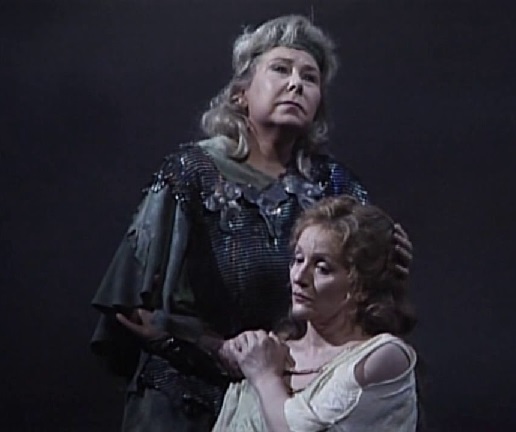
    A four-year interval then passed before I saw Christa in opera again: the 1988 opening night of the Schenk/Levine GOTTERDAMMERUNG. This was a spectacular performance in every regard: Levine and his orchestra were on peak form, and Hildegard Behrens and Matti Salminen thrilled me to the core as Brunnhilde and Hagen. Christa, as Waltraute, looked spiffy in her Valkyrie gear – with black trousers and high black boots – and she moved about, restless as a caged panther, as she told her sister of their father’s frightening state of mind. Having failed in her mission, Waltraute rushes away. The curtain calls that night were fantastic: I think Ms. Ludwig truly didn’t expect the massive wave of applause and bravas that greeted her as she stepped out for a solo bow. It was so moving to watch her accept the audience’s loving appreciation.

    I saw Christa Ludwig on the Met stage for the last time in April 1989 as Fricka in WALKURE. It was a cast of titans: Hildegard Behrens, Jessye Norman, Gary Lakes, James Morris, and Kurt Moll were Christa’s colleagues, and again Levine and the Met orchestra were beyond the beyond. The tension in the great argument between Fricka and Wotan was palpable; then Christa – having won – gathered her dignity and took her final parting shot at Brunnhilde with barely disguised contempt.

    Christa Ludwig made her farewell appearance at The Met as Fricka in a Saturday matinee broadcast of WALKURE on April 3, 1993. Here is her scene from that performance, with Dame Gwyneth Jones as Brunnhilde, James Morris as Wotan, and James Levine conducting. I was listening at home, and as Ms. Ludwig exited the stage, I had a sense that the audience wanted desperately to burst into applause. 

    Christa Ludwig as Fricka ~ Met farewell performance with G Jones +J Morris – Levine cond – 4~3~93

    While Vienna and The Met loomed large in the Ludwig career, she also appeared at La Scala, Covent Garden, Chicago Lyric Opera, and at the festivals at Bayreuth and Salzburg. In addition, she sang the great concert works of Bach and Mahler.

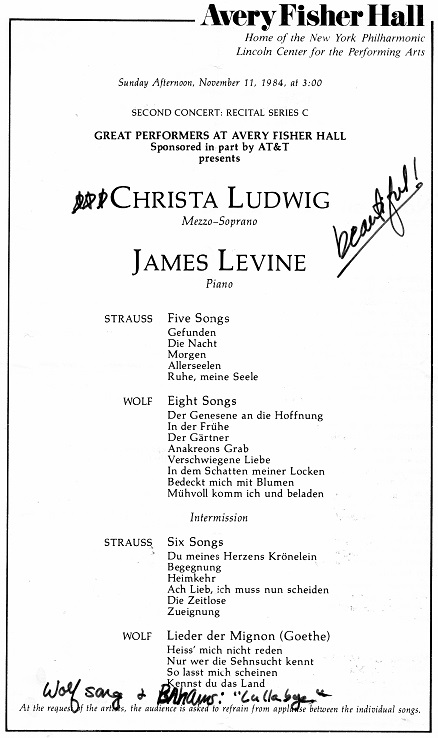
    Christa Ludwig was a beloved recitalist; in 1984, I had the great pleasure of hearing her at Avery Fisher Hall with James Levine at the piano. The program of Strauss and Wolf lieder ended with a marvelous encore: the Brahms “Wiegenlied”.

    Ludwig recital-1 jpg

    Ms. Ludwig left us with a large and lovely catalog of recordings; among my favorites are Bartok’s BLUEBEARD’S CASTLE, the Kempe LOHENGRIN, the Solti TANNHAUSER, the Böhm TRISTAN from Bayreuth with Nilsson and Windgassen, scenes from Strauss operas with Walter Berry…and her SAMSON ET DALILA with James King holds a special appeal for me. She created a stir in 1986 by recording Schubert’s Winterreise with James Levine; they had performed the great Schubert cycle together on the Met stage in 1983.

    Norma

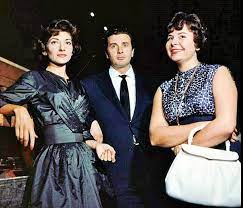
    Above: Christa in the recording studio with Maria Callas and Franco Corelli for the EMI NORMA

    Christa Ludwig sings Strauss’s “Morgen” with Charles Spencer at the piano. Watch and listen here.

    Listen to more from Christa Ludwig:

    Christa Ludwig – Es gibt ein reich – ARADNE AUF NAXOS

    Christa Ludwig – MACBETH – Act I scena – Vienna 1970

    Christa Ludwig – Liebestod ~ TRISTAN UND ISOLDE

    Christa Ludwig – Mahler ~ Ich bin der welt abhanden gekommen

    Christa Ludwig – Der Engel from Wagner’s Wesendonck Lieder

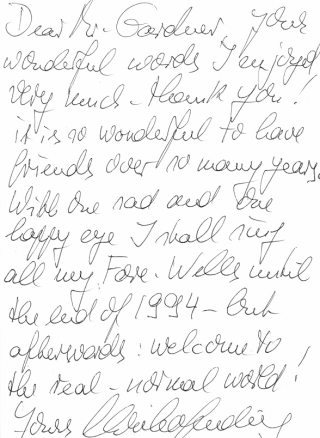
    A lovely note I received from Christa Ludwig after I wrote to her on the occasion of her Met farewell in 1993:

    C l note-1 jpg

    Christa Ludwig ~ An die Musik

    ~ Oberon

  • Alessandra Marc’s Met Debut ~ 1989

    Marc

    Alessandra Marc made her Metropolitan Opera debut on October 14th, 1989. My friend Paul and I were there. Soon after, another friend sent me a recording of parts of the performance.

    AIDA ~ duet – Alessandra Marc & Stefania Toczyska ~ Met 10-14-89

    Alessandra Marc – Met debut as Aida – excerpts – w Martinucci & Toczyska – 10~14~89

    Marc aiida-1

    Here’s my diary entry, written late on the evening of the date; despite the excitement of the Marc debut, Stefania Toczyska’s Amneris was the afternoon’s masterpiece:

    “Overall, a good performance and better-than-good much of the time. Audience most distracting (candy wrappers at their worst!). The settings are grand and it’s a Met-sized production, but very little happens dramatically – it falls to the individual singers to create theatrical sparks.

    Christian Badea favored slow tempi in general – but his support of the singers, in allowing them time to breathe and to sustain the vocal line, was admirable. The orchestra played very well, though there were times when their volume threatened to swamp even this big-voiced cast. The ballet was rather silly, though well-danced.

    While the Marc debut was the afternoon’s focal point, it was the superb Amneris of Stefania Toczyska who topped the cast. She sang with tremendous authority and passion, and she alone of the principals had a grasp of the drama. Her upper range has grown more secure over time, whilst maintaining a strong chest voice; her lovely entries in the opening passages of the Boudoir Scene were especially fine. And Toczyska is ever alert to the situation in every scene, creating a wonderfully feminine portrait of the ultimately distraught princess.

    The Judgement Scene was her crowning glory, a tremendously thrilling twenty minutes. After her beautifully sustained “Io stessa lo gettai…” the audience broke in with sustained applause. She concluded the scene with a fiery verbal assault in the priests, followed by a sustained final note before rushing off in a fury. Toczyska is a very attractive singer and her Amneris was deeply satisfying to experience. To top it off, she graciously pushed the debuting Aida, Alessandra Marc, forward during the group bow and started applauding her!

    Marc made a highly successful Met debut. Her voice has a curiously stimulating throb; at times it lacks resonance in the lower range, but the top has a lovely, almost girlish quality (such as we sometimes hear on recordings of sopranos from the early days of audio documentation): Marc’s voice blooms as it ascends. 

    Although lacking the ultimate cresting power in ensembles that some sopranos can muster, the soprano’s singing abounded in gorgeousness: starting with “Ritorna vincitor“, she won the audience with her opulent tone and marvelous turnings of phrase. The unaccompanied descending phrase in the Triumphal Scene was especially superb, and in the Nile Scene she proved herself with a splendid “O patria mia“, rising to a sustained, glowing high-C, and phrasing magically. 

    Marc did not make the most of the dramatic phrases of the duet with Amonasro, as some Aidas do, but in the seductive passages of the duet with Radames (“La tra foreste virgini…”) she sounded truly alluring. Likewise, the opera’s final duet showed the Marc voice at its distinctive best. Applause for the soprano was enthusiastic throughout the evening, and at the end the audience showered her with enthusiastic bravas

    Nicola Martinucci was a far more than capable Radames: his bronze-tinged voice has a nice metallic edge when needed, with strong tops – one or two of which were almost imperceptibly a hair’s breadth flat. Martinucci’s “Celeste Aida” went very well, with a sustained conclusion that won a vociferous response from the crowd. His voice cut thru the ensembles of the Triumphal Scene, and he found his lyric side in the Nile Scene before ending with a prolonged, ringing “Io resto a te!” Together with Toczyska, Martinucci made vocal sparks fly in the Judgement Scene, and he finished the opera strongly. Throughout, his slender, masculine figure looked great onstage, and his authentic Italian sound was more than welcome. 

    Juan Pons really sang Amonasro – no barking or hectoring. His warm sound and exemplary phrasing gave his singing a wonderfully noble sense of humanity…really impressive.

    Margaret Jane Wray sang beautifully as the Priestess, and Mark Baker strongly as the Messenger. Franco de Grandis sounded rough and effortful as the King, but even so he outshone the sadly out-of-voice Ramfis of Stephen Dupont.

    Despite the audience distractions, Paul and I were glad to have been there, and we enjoyed talking over the performance on the drive home.”

    ~ Oberon

  • Alessandra Marc’s Met Debut ~ 1989

    Marc

    Alessandra Marc made her Metropolitan Opera debut on October 14th, 1989. My friend Paul and I were there. Soon after, another friend sent me a recording of parts of the performance.

    AIDA ~ duet – Alessandra Marc & Stefania Toczyska ~ Met 10-14-89

    Alessandra Marc – Met debut as Aida – excerpts – w Martinucci & Toczyska – 10~14~89

    Marc aiida-1

    Here’s my diary entry, written late on the evening of the date; despite the excitement of the Marc debut, Stefania Toczyska’s Amneris was the afternoon’s masterpiece:

    “Overall, a good performance and better-than-good much of the time. Audience most distracting (candy wrappers at their worst!). The settings are grand and it’s a Met-sized production, but very little happens dramatically – it falls to the individual singers to create theatrical sparks.

    Christian Badea favored slow tempi in general – but his support of the singers, in allowing them time to breathe and to sustain the vocal line, was admirable. The orchestra played very well, though there were times when their volume threatened to swamp even this big-voiced cast. The ballet was rather silly, though well-danced.

    While the Marc debut was the afternoon’s focal point, it was the superb Amneris of Stefania Toczyska who topped the cast. She sang with tremendous authority and passion, and she alone of the principals had a grasp of the drama. Her upper range has grown more secure over time, whilst maintaining a strong chest voice; her lovely entries in the opening passages of the Boudoir Scene were especially fine. And Toczyska is ever alert to the situation in every scene, creating a wonderfully feminine portrait of the ultimately distraught princess.

    The Judgement Scene was her crowning glory, a tremendously thrilling twenty minutes. After her beautifully sustained “Io stessa lo gettai…” the audience broke in with sustained applause. She concluded the scene with a fiery verbal assault in the priests, followed by a sustained final note before rushing off in a fury. Toczyska is a very attractive singer and her Amneris was deeply satisfying to experience. To top it off, she graciously pushed the debuting Aida, Alessandra Marc, forward during the group bow and started applauding her!

    Marc made a highly successful Met debut. Her voice has a curiously stimulating throb; at times it lacks resonance in the lower range, but the top has a lovely, almost girlish quality (such as we sometimes hear on recordings of sopranos from the early days of audio documentation): Marc’s voice blooms as it ascends. 

    Although lacking the ultimate cresting power in ensembles that some sopranos can muster, the soprano’s singing abounded in gorgeousness: starting with “Ritorna vincitor“, she won the audience with her opulent tone and marvelous turnings of phrase. The unaccompanied descending phrase in the Triumphal Scene was especially superb, and in the Nile Scene she proved herself with a splendid “O patria mia“, rising to a sustained, glowing high-C, and phrasing magically. 

    Marc did not make the most of the dramatic phrases of the duet with Amonasro, as some Aidas do, but in the seductive passages of the duet with Radames (“La tra foreste virgini…”) she sounded truly alluring. Likewise, the opera’s final duet showed the Marc voice at its distinctive best. Applause for the soprano was enthusiastic throughout the evening, and at the end the audience showered her with enthusiastic bravas

    Nicola Martinucci was a far more than capable Radames: his bronze-tinged voice has a nice metallic edge when needed, with strong tops – one or two of which were almost imperceptibly a hair’s breadth flat. Martinucci’s “Celeste Aida” went very well, with a sustained conclusion that won a vociferous response from the crowd. His voice cut thru the ensembles of the Triumphal Scene, and he found his lyric side in the Nile Scene before ending with a prolonged, ringing “Io resto a te!” Together with Toczyska, Martinucci made vocal sparks fly in the Judgement Scene, and he finished the opera strongly. Throughout, his slender, masculine figure looked great onstage, and his authentic Italian sound was more than welcome. 

    Juan Pons really sang Amonasro – no barking or hectoring. His warm sound and exemplary phrasing gave his singing a wonderfully noble sense of humanity…really impressive.

    Margaret Jane Wray sang beautifully as the Priestess, and Mark Baker strongly as the Messenger. Franco de Grandis sounded rough and effortful as the King, but even so he outshone the sadly out-of-voice Ramfis of Stephen Dupont.

    Despite the audience distractions, Paul and I were glad to have been there, and we enjoyed talking over the performance on the drive home.”

    ~ Oberon

  • Julius Huehn

    Huehn-Julius-03

    Born at Revere, Massachusetts in 1904, bass-baritone Julius Huehn’s career centered at the Metropolitan Opera, where he sang over 225 performances with the Company in New York City and on tour. He also appeared with the opera companies of San Francisco, Chicago, and Philadelphia.

    His Met debut took place in 1935, as the Herald in LOHENGRIN. His Met roles included Wagner’s Wotan/The Wanderer, Donner, Gunther, Wolfram, Amfortas, Kothner, Kurvenal, and Telramund; Strauss’s Orestes, Jochanaan, and Faninal; Pizarro in FIDELIO, Escamillo, Sharpless, and the High Priest in SAMSON ET DALILA.

    Huehn left the Met in 1944 to serve in the Marine Corps during the final year of World War II. He returned in 1946 for a single performance as Wolfram. He subsequently taught at the Eastman School for many years, and passed away at Rochester, New York, in 1971.

    Julius Huehn as Kurvenal, with Lauritz Melchior:

    Julius Huehn & Lauritz Melchior – TRISTAN UND ISOLDE ~ scene from Act III

    Listen to Julius Huehn sing Wotan’s Farewell from WALKURE here, and the duet of Telramund and Ortrud (with Kerstin Thorborg) from the opening of Act II of LOHENGRIN here.