Tag: Metropolitan Opera

  • Ming Cho Lee Has Passed Away

    Ming cho lee

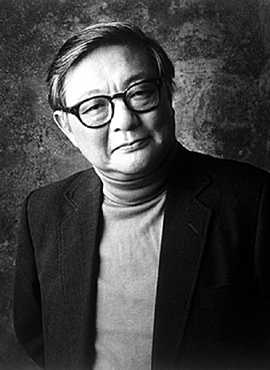
    I was very sorry to read this morning of the passing of the great scenic designer Ming Cho Lee. A native of Shanghai, he died on October 23rd, 2020, at the age of 90.

    He designed award-winning sets for dozens of operas and plays, including eight productions for the Metropolitan Opera. Among his Met credits were his classic BORIS GODUNOV (1974); the Sutherland/Pavarotti PURITANI (1976), a controversial but often striking LOHENGRIN (1976), and the 1985 KHOVANSCHINA with it’s stunning final tableau.

    Ming Cho Lee also designed thirty productions for Joseph Papp at The Public Theatre. A wonderful article about his life and work, with images of his designs, may be found here.

    During the years that I worked in the opera room at Tower Records, Ming Cho Lee was a frequent (and favorite) customer. Upon coming into the room, he would bow to me – and I to him – and then he would spend an hour or more browsing the shelves. We hardly ever spoke, but he would sometimes hold up a disc and I would shake my head, “yes” or “no”. He would stack up his selections on the counter, one by one, and when the piles got teeteringly high, he would do a sort-thru. I would then help him carry his purchases to the cashier. I always stood by until he left, so that we could bow to one another – “…until next time!” he would say quietly. I will always remember his twinkling eyes and wry smile.

    One winter day, a couple of years after Tower closed, I took the train to New Haven to meet friends for lunch. Coming out of Union Station, I saw Ming Cho Lee, all bundled up, hailing a cab (he had taught at Yale for several years). I greeted him, and after a moment he remembered me. Surprisingly, as we had always been bowing acquaintances, he extended his hand and shook mine cordially.

    Ming Cho Lee was such a calm, dignified gentleman; it was an honor and pleasure for me to have known him in this rather formal capacity.

  • White Swan ~ Makarova & Nagy

    Snapshot swan 2

    Natalia Makarova and Ivan Nagy dance the White Swan pas de deux from SWAN LAKE at the 100th anniversary celebration of the Metropolitan Opera in New York City in 1984. Ivan Nagy came out of retirement to dance with Ms. Makarova on this occasion. The dancers are accompanied on-stage by violinist Itzhak Perlman and cellist Lynn Harrell.

    Watch and listen here.

  • White Swan ~ Makarova & Nagy

    Snapshot swan 2

    Natalia Makarova and Ivan Nagy dance the White Swan pas de deux from SWAN LAKE at the 100th anniversary celebration of the Metropolitan Opera in New York City in 1984. Ivan Nagy came out of retirement to dance with Ms. Makarova on this occasion. The dancers are accompanied on-stage by violinist Itzhak Perlman and cellist Lynn Harrell.

    Watch and listen here.

  • Gabriella Tucci Has Passed Away

    Tucci

    Above: my favorite photo of Gabriella Tucci, costumed as Leonora in TROVATORE and posing at the New York World’s Fair in 1964. I cut it out of Opera News and pasted it on shirt-board; she signed it for me in 1968 after a performance of TURANDOT at The Met. It has been ‘borrowed’ by other websites, but this is the original.

    Soprano Gabriella Tucci passed away on July 11th, 2020, in Rome, the city of her birth. She was 90 years old. In recent days, I had been listening to Ms. Tucci a lot, unaware of her death. 

    Gabriella Tucci was the first soprano I called “my favorite”. She sang in some of the earliest Met broadcasts I heard from our house in the little town  – AIDA, OTELLO, FAUST, FALSTAFF, MADAMA BUTTERFLY, TRAVIATA, FORZA DEL DESTINO, and TROVATORE – and her voice, a blooming lyrical and wonderfully feminine sound, always seemed to get to the heart of the character she was portraying. 

    Ms. Tucci studied at the Accademia di Santa Cecilia and made her operatic debut at Lucca as Violetta in 1951. After winning a voice competition at Spoleto, she appeared in LA FORZA DEL DESTINO opposite Beniamino Gigli. In 1953, she sang Glauce in Cherubini’s MEDEA at the Maggio Musicale with Maria Callas in the title-role.

    Thereafter, the Tucci career then took off: she made her La Scala debut in 1959 as Mimi, and appeared at Rome, the Arena di Verona, Vienna, Berlin, Moscow, Tokyo, San Francisco, and Buenos Aires.
    82386433_10218182844816609_8898027572693041152_n

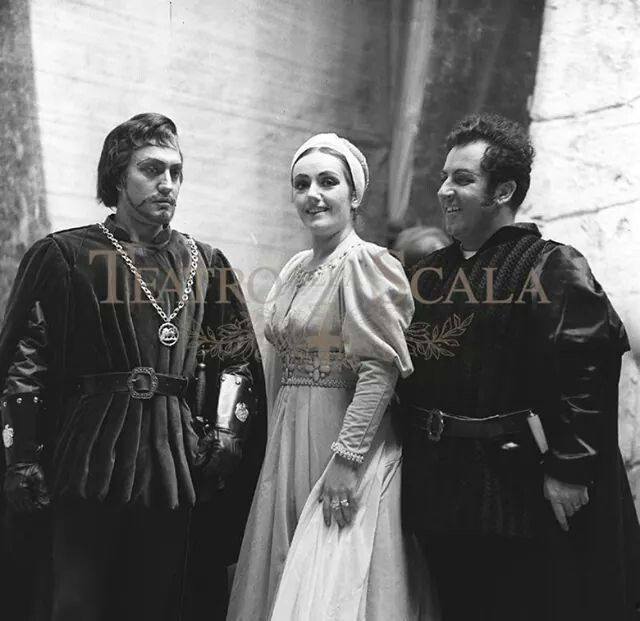
    Among Ms. Tucci’s notable evenings at La Scala was a 1964 production of TROVATORE where her co-stars were Piero Cappuccilli and Carlo Bergonzi (photo, above).
    Tucci desdemona

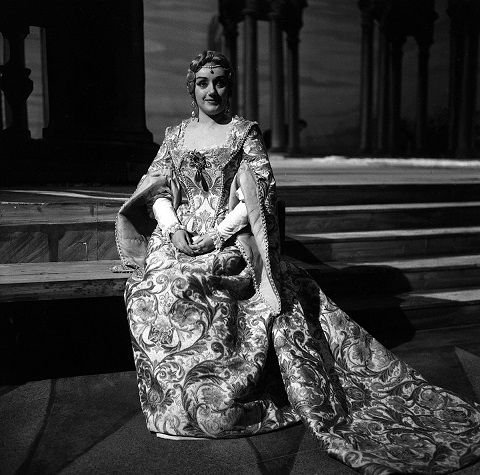
    Gabriella Tucci sang 260 performances with the Metropolitan Opera in New York City and on tour. In 1964, she was Desdemona (photo, above) in a new production of OTELLO that featured the return of James McCracken to The Met.

    Falstaff

    Also in 1964, Ms. Tucci sang Alice Ford in a new production of FALSTAFF conducted by Leonard Bernstein. In the above photo, she and colleagues Regina Resnik (Dame Quickly) and Rosaline Elias (Meg Page) attempt to hide Falstaff (Anselmo Colzani) in a laundry basket.

    She opened the Met’s 1965-1966 season in a new production of FAUST, and sang ravishingly in the love duet on a broadcast of that opera the following year. Her singing of “O silence! ô bonheur! ineffable mystère!” is pure magic:

    FAUST ~ scene – Gabriella Tucci – John Alexander – Justino Diaz – Met 1966

    On October 23rd, 1965, Ms. Tucci was heading to her dressing room after a matinee of FAUST when she was asked by Sir Rudolf Bing if she would be willing to step in for an ailing colleague in that evening’s performance of BOHEME. She did, with great success. And on April 16th, 1966, she was (officially) the last soprano to be heard at the Old Met when she sang the final trio from FAUST with Nicolai Gedda and Jerome Hines as the closing number at the gala that bade farewell to the venerable house.

    My first experience of hearing Gabriella Tucci live was at the Old Met in November of 1965; she sang – gloriously – the music of Leonora in TROVATORE, one of her most felicitous roles.

    Gabriella Tucci – D’amor sull’all rosee ~ TROVATORE

    In the late Summer of 1966, I traveled to New York City alone for the first time and joined the ticket line for the first performances at the New Met. I had been on the line for about five minutes when a woman next to me casually asked, “What singers do you like?” and I replied, “Gabriella Tucci!” She called some other friends over, and we discussed the soprano and her various roles in detail. Finally, I had found some kindred spirits after years of being a lonely opera-lover in my hometown. 

    Ms. Tucci was my first Aida and my first Elisabetta in DON CARLO. I saw her again in TROVATORE, and as  Liu and Mimi. But as the 1970s arrived, Tucci’s star had begun to fade; after years of singing roles like Aida and Amelia in BALLO that – in truth – extended her beyond her natural lyric realm, time seemed to catch up with her voice. She gave her last performance at The Met on Christmas Day, 1972, in FAUST

    Many years later, while I was working at Tower Records, a lively woman of a certain age came in; her hair was done in curls with a reddish tinge, and she wore a mini-skirt. I could not immediately place her, but her speaking voice gave me a clue: “Do you have the live performance of AIDA from Tokyo,1961?”   I handed her a copy. “Have you heard it?” she asked. “Yes, it’s very exciting…but…I am not sure it’s Mario del Monaco.” She smiled: “I am Gabriella Tucci, and I assure you it’s him!” I kissed her hand and after telling her she had always been a great favourite of mine, she smiled, and then returned to the topic of the Tokyo AIDA. “Why do you think it is not del Monaco?” I gave my reasons. She thought for a moment. “Well, who do you think it is, then?” and I replied “Gastone Limarilli.” “Hmmmm…you know your stuff. I did sing Aida with Gastone and I can understand your impressions of del Monaco’s performance…he was ill during that tour, and dropped out of the CAVALLERIA. I agree, he was not his best in the AIDA. But…he definitely sang that day!” She gave me a big hug, and swept from the room.

    Oddly, just the day before I learned of her passing, I was listening to that AIDA which includes her impressive “O patria mia“:

    Gabriella Tucci – O patria mia – AIDA – Tokyo 1961

    And then there’s the scene of the sighting of Pinkerton’s ship from Act II of MADAMA BUTTERFLY. Helen Vanni is Suzuki. Tucci elicits a burst of applause after her “…ei torna e m’ama!“. Listen to it here.

    It’s had to choose favorite Tucci items from among so many, but she and baritone Ettore Bastianini are superb in a scene from Act III of ANDREA CHENIER. Listen to them here.

    …and she sings a beautiful “Pace, pace mio dio” from FORZA DEL DESTINO:

    Gabriella Tucci – FORZA aria – Met 1965

    ~ Oberon
  • Judith Raskin

    Hqdefault

    American soprano Judith Raskin (above) began taking voice lessons while attending Smith College. She began concertizing, and in 1957 sang Sister Constance in a televised performance of Poulenc’s DIALOGUES OF THE CARMELITES. She made her New York City Opera debut as Despina in 1959, and enjoyed a personal success there in the title-role of Douglas Moore’s BALLAD OF BABY DOE

    Ms. Raskin made her Metropolitan Opera debut in 1962 as Susanna in NOZZE DI FIGARO and went on to give more than a hundred performances with the Met company over the next decade. Her roles included Marzelline, Nanetta, Sophie in ROSENKAVALIER, Zerlina, Pamina, and Micaela.

    69628137_10216986455747630_1200814637679902720_n
    I first saw Judith Raskin onstage as Pamina in the Marc Chagall production of THE MAGIC FLUTE. She made such a beautiful impression in Mozart’s sublime music. Later I saw her in her signature role as Susanna in NOZZE DI FIGARO. Her last Met performance was as Marzelline in 1972.

    Judith Raskin sang with the opera companies of Chicago and San Francisco, and appeared as Pamina at the Glyndebourne Festival, She also performed frequently in concerts, most notably with the Cleveland Orchestra under George Szell. And she once said, ““In my heart of hearts, I have always been a recitalist.”

    After retiring from the stage, Judith Raskin taught at the Manhattan School of Music. She passed away in 1984.

    Judith Raskin sings Samuel Barber’s Knoxville: Summer of 1915 here.

    ~ Oberon

  • Nadine Sierra @ The Met’s At-Home Gala

    Snapshot sierra

    Nadine Sierra sang Mimi’s narrative “Mi chiamano Mimí” from LA BOHEME for the Metropolitan Opera’s At-Home Gala on April 25th, 2020. Watch and listen here.

  • Nadine Sierra @ The Met’s At-Home Gala

    Snapshot sierra

    Nadine Sierra sang Mimi’s narrative “Mi chiamano Mimí” from LA BOHEME for the Metropolitan Opera’s At-Home Gala on April 25th, 2020. Watch and listen here.

  • Gianni Raimondi

    Unnamed

    Above: Gianni Raimondi as Rodolfo in LA BOHEME

    Tenor Gianni Raimondi was born at Bologna in 1923. He made his operatic debut in 1947 as the Duke in RIGOLETTO and was soon singing in opera houses throughout Italy. His career expanded to Nice, Marseille, Monte Carlo, Paris, London…

    4f402265ec689c12784d79be7548bf9d

    …and La Scala, where, in 1956, Mr. Raimondi made his debut in Luchino Visconti now-legendary production of LA TRAVIATA starring Maria Callas.

    Bolena - callas - raimondi

    Callas and Raimondi (above) reunited the following year as Anna and Percy in Donizetti’s ANNA BOLENA. 1957 also marked the tenor’s debut at Vienna, where he was to appear regularly for twenty seasons.

    In 1963, the Vienna State Opera’s production of LA BOHEME, under the direction of Herbert von Karajan, was filmed for posterity; Mirella Freni and Gianni Raimondi appeared as Mimi and Rodolfo. The performance is available on DVD.

    Having debuted at San Francisco (1957) and the Teatro Colon (1959), Mr. Raimondi made his Metropolitan Opera debut as Rodolfo in BOHEME in 1965, opposite Ms. Freni. 

    Freni Raimondi

    Above: Freni and Raimondi in BOHEME

    BOHEME was the only opera I saw Raimondi in at The Met. The performance was in September 1968, and his Mimi was Teresa Stratas;  they were among the most moving of all the many interpreters of these roles I have seen thru the decades. My diary says the tenor was “…terrific…great upper range…beautiful portrayal…” 

    Mr. Raimondi remained at the Met until 1969; his other roles there were Pinkerton, Donizetti’s Edgardo, Faust, the Duke of Mantua, and Mario Cavaradossi. In 1968, the tenor joined Regine Crespin and Gabriel Bacquier in a thrilling broadcast performance of TOSCA, with Zubin Mehta conducting.

    In the 1970s, Raimondi took on the spinto tenor roles in NORMA, I MASNADIERI, I VESPRI SIVILIANI, and SIMON BOCCANEGRA.

    Following his retirement from the stage, the tenor lived in his villa by the sea at Riccione. He passed away in 2008.

    Here is a collection of arias sung by Gianni Raimondi…some of these take a few seconds to start:

    Gianni Raimondi – FAUST aria

    Gianni Raimondi – GIOCONDA aria

    Gianni Raimondi – Recondita armonia ~ TOSCA

    Gianni Raimondi ~ Nessun dorma – TURANDOT

    Oberon

  • Jeannette Pilou Has Passed Away

    90918042_10218785762729180_8177493688633524224_n

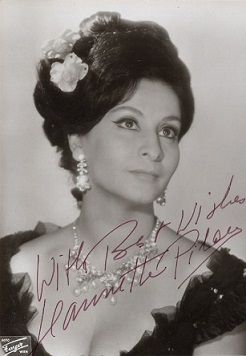
    My beloved soprano Jeannette Pilou has passed away at the age of 83. By chance, I was at her last-minute Metropolitan Opera debut as Juliette on October 7, 1967, and it was love at first sight…and first hearing.

    I have so many beautiful memories of Mlle. Pilou: not only of her expressive and wonderfully detailed portrayals of such iconic roles as Violetta, Mimi, Mélisande, and Mozart’s Susanna, but also of her great kindness to me as a young and ardent admirer.

    In 2007, I wrote a long appreciation of Jeannette Pilou which includes details of her performances as well as many pictures – for she was a great beauty.

    Her voice was a masterpiece of pastels, with a vein of stainless steel which allowed her to penetrate the orchestra in the heavier passages of FAUST and MADAMA BUTTTERFLY. She could turn the most familiar phrases in a role into something distinctly personal. Singing Mimi’s narrative in Act I of LA BOHEME, Jeannette sang: “Non vado sempre a messa, ma prego assai al Signor” (“I don’t always go to Mass, but I pray often to the Lord”), putting an emphasis on “assai” that gave the statement a charming tongue-in-cheek feeling. Over time, she developed a lovely gift for threading piani/pianissimi into a vocal line. Mlle. Pilou was a singer who could draw the listener in; this made her Mélisande a particular treasure.

    Jeannette was extremely photogenic; I have a whole folder of photos of her. If she were singing today, everyone would want a selfie with her.

    6a00d8341c4e3853ef00e54fb67d188833-800wi

    She especially loved the above photo that I took of her. After having it developed and blown up, I presented it to her to sign (you can see her exclamations marks), and she asked if I could send her a copy. I did, of course.

    Despite my shyness, I managed to have several conversations with Ms. Pilou; her speaking voice was so enchanting, and so very intimate.

    Pilou thais

    Above: Jeannette Pilou as Thaïs

    Oberon

  • Joy Davidson

    Joy Davidson

    Mezzo-soprano Joy Davidson was born at Fort Collins, Colorado. She studied voice with Elena Nikolaidi at Florida State University and made her operatic debut at Miami as Rossini’s Cenerentola in 1965.

    Ms. Davidson joined the short-lived Metropolitan Opera National Company from 1965-1967 where her roles included Britten’s Lucretia. She won the Sofia International Opera Singers Competition in 1967, and in 1969 made her debut at New York City Opera as Kontchakovna in PRINCE IGOR, a role in which I saw her three times..and met her after one of them:

    68680189_10216986478868208_5008079979083202560_o

    (Note: NYC Ballet star Edward Villella danced in the PRINCE IGOR production, and Maralin Niska had one of her best roles as Yaroslavna).

    Scanned Section 2-1

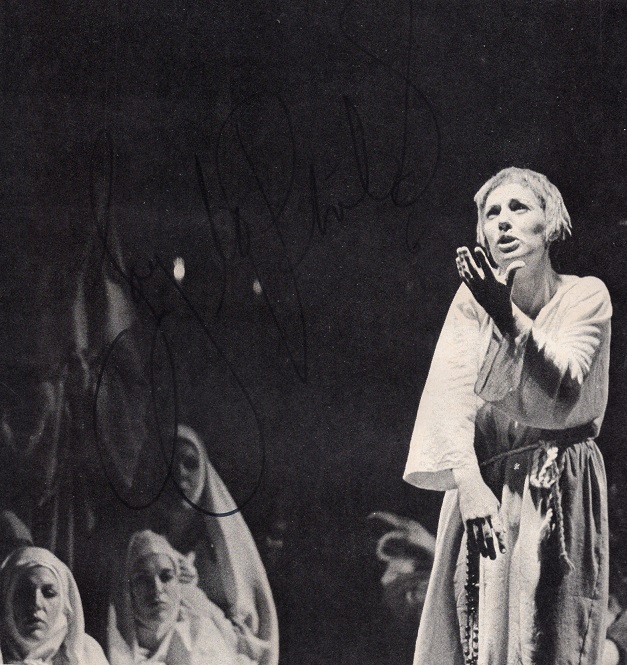
    In 1969, Joy Davidson made her Santa Fe debut as Jeanne in Penderecki’s DEVILS OF LOUDON (above photo, which she signed for me), the opera’s US premiere performances. In the same year, she made her San Francisco Opera debut as the Secretary in Menotti’s THE COUNSEL, and in 1971 she made her La Scala debut as Dalila.

    Joy ~ Carmen

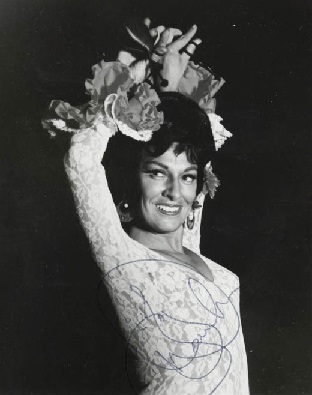
    1971 also brought Joy Davidson back to the New York City Opera to star as Carmen (above) in a new production. In the ensuing seasons, she appeared in Vienna, Munich, Dallas, Barcelona, Turin, Lyon, at the Maggio Musicale and at the Spoleto Festival. 

    Joining the Metropolitan Opera on tour in 1976, Ms. Davidson sang Adalgisa opposite Shirley Verrett’s Norma in Boston and Cleveland. These were Verrett’s first Normas, and TJ and I traveled from Hartford to Boston for the occasion. Verrett had a great triumph; Ms. Davidson was taxed by some of the high notes in Act I, but fared much better in Act II. In 1978, the Joy Davidson was again cast as Adalgisa, in performances at the Bushnell in Hartford, opposite Cristina Deutekom’s Norma, which I attended. Here, Ms. Davidson enjoyed a thorough success.

    There are very few recorded souvenirs of Joy Davidson, unfortunately. Here she is in a German-language DON CARLO from Munich, 1968:

    Joy Davidson – O don fatale – DON CARLO – in German – Munich 1968

    She sang Jane Seymour in Donizetti’s ANNA BOLENA at Santa Fe in 1970; here is Seymour’s great scene of remorse, with Donald Gramm as Henry VIII.

    A rather remarkable document, which took me a great deal of searching to locate and verify, is a complete 1977 telecast of Massenet’s WERTHER from Teatro de la Zarzuela, Madrid. The mezzo’s name is listed as “Davison”, so this item does not readily appear in searches. Though the visuals are rather dated, it is a very attractive performance, and both Ms. Davidson and Alfredo Kraus give passionate portrayals. Watch it here, it’s really quite wonderful. 

    ~ Oberon