Tag: Metropolitan Opera

  • Birgit Nilsson ~ Liebestod

    Snapshot

    In 1971, Birgit Nilsson was my first Isolde, in a new production at the Metropolitan Opera. For several years after seeing her in the role, I did not want to see the opera again. When I finally did  – in 2008 (!) – I realized what I’d been missing. TRISTAN UND ISOLDE now holds a high place in my list of favorite operatic works.

    Birgit Nilsson – Liebestod ~ TRISTAN UND ISOLDE – Knappertsbusch conducting

  • Aase Nordmo-Løvberg & Kolbjørn Høiseth

    Aase-nordmo-lvberg-6d8aba9d-d166-4244-b6c9-58dc451cbbf-resize-750

    Above: soprano Aase Nordmo-Løvberg

    Ms. Nordmo-Løvberg spent most of her career at Oslo and Stockholm. She was a highly-regarded soprano who worked with top conductors (such as Karajan and Solti). She sang at the Vienna State Opera, and gave a dozen performances at The Met in 1959-1960 singing Elsa, Eva, Sieglinde, and Beethoven’s Leonore.

    HOISETH Kolbjorn

    Above: the Norwegian tenor Kolbjørn Høiseth

    Mr. Høiseth’s career took him to London, Berlin, Stockholm, Lyon, and Bordeaux as well as numerous German houses. He specialized in Wagner and Verdi, also appearing in WOZZECK, FIDELIO, and ELEKTRA.

    In 1975, the tenor sang Froh in RHEINGOLD (in which role I saw him twice) at The Metropolitan Opera, where he also appeared as Siegmund in a single performance of WALKURE. His voice had a lyric quality, but also ample power when needed.

    Aase Nordmo Løvberg & Kolbjørn Høiseth – WALKURE – ACT I scene – Stockholm 1963

  • Paolo Washington

    A-1726033-1532529259-1673.jpeg

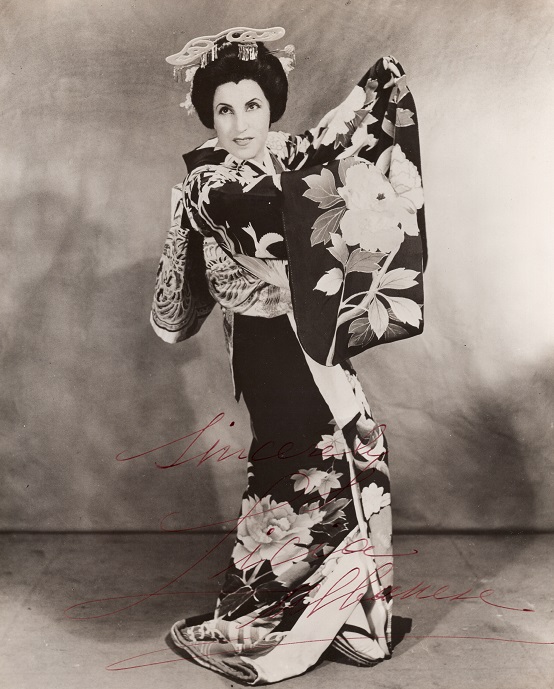
    Basso Paolo Washington (above) was a featured artist at the major opera houses of Italy, beginning with his professional debut at the Teatro Comunale, Florence, in 1958. He subsequently appeared at La Scala, Rome, and Naples, and participated in broadcasts by the RAI.

    Chicago Lyric Opera was Washington’s home base in the United States. From 1968 thru 1997, he appeared in 14 roles for a total of 101 performances with the Company He sang in operas by Donizetti and Bellini, as well as in Stravinsky’s LE ROSSIGNOL and OEDIPUS REX. He was particularly admired for his moving portrayals of Colline in LA BOHEME and Timur in TURANDOT.

    Washington was heard throughout Spain, and also at Geneva, Marseille, Nice, Toulouse, and Lisbon, and at the Salzburg and Bregenz festivals. His wide repertory extended from Handel to the 20th century works by Prokofiev and Hans Werner Henze. He appeared only twice at the Metropolitan Opera, in the title role of DON PASQUALE in 1979.

    He passed away in 2008 at the age of 75.

    Paolo Washington – Nabucco ~ Tu sul labbro

  • Blanche Thebom

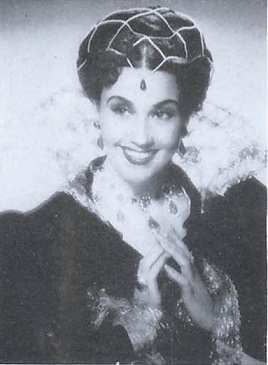
    51J27V3W9WL

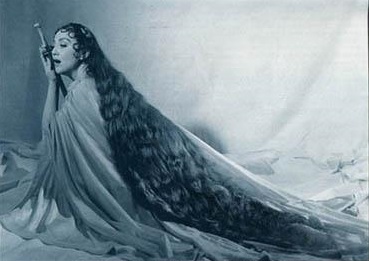
    Blanche Thebom (above), the glamorous mezzo-soprano whose career at The Met lasted over 30 years, was as well-known for her magnetic stage presence and her sensationally long hair as for her singing.

    She made her debut with the Metropolitan Opera Company in 1944 as Brangaene in TRISTAN UND ISOLDE in a performance at Philadelphia, Pennsylvania; two weeks later, she sang Fricka in DIE WALKURE at The Met. These performances drew rave reviews for Ms. Thebom, both for her singing and for her distinctive beauty and dramatic flair.

    Ms. Thebom went on to sing more that 360 performances with the Metropolitan Opera Company, in New York and on tour. She was a much-admired Carmen and Dalila, and in Verdi she made a regal impression as Amneris and Princess Eboli. She seemed capable of singing anything, from Adalgisa in NORMA to Venus in TANNHAUSER, while – in a lighter vein – she appeared as Prince Orlofsky and as Dorbella in COSI FAN TUTTE.

    Thebom Eboli

    Above: Blanche Thebom as Princess Eboli

    Blanche Thebom – O don fatale ~ DON CARLO

    Ms. Thebom appeared in the US premieres of two important works at The Met: as Baba the Turk in Stravinsky’s RAKE’S PROGRESS in 1953, and as Adelaide in Strauss’s ARABELLA in 1955. In the 1960s, she undertook what might be called “principal character” roles such as Genevieve in PELLEAS ET MELISANDE, Magdalene in MEISTERSINGER, and the Old Baroness in VANESSA. Her last role was that of the Countess in Tchaikovsky’s QUEEN OF SPADES – performed in English, at the New Met – in which she appeared opposite Teresa Stratas and Jon Vickers.

    After retiring from the Met, Blanche Thebom taught singing and also served on the Metropolitan Opera’s Board of Directors until 2008. She passed away in 2010, at the age of 94.

    AR-311309810

    In my earliest days of opera-loving, Blanche Thebom was already spoken of in our house. My father, who had seen her on TV, referred to her as ‘Blanche the Bomb’ due to her physical allure. And my grandmother told me about Thebom’s legendary hair, which had been used as a dramatic device when she sang Berlioz’s Dido at Covent Garden in 1957 (photo above).

    I finally heard Thebom’s voice on the radio in 1962:

    Metropolitan Opera House
    December 29th, 1962 Matinee/Broadcast

    PELLÉAS ET MÉLISANDE

    Pelléas.................Nicolai Gedda
    Mélisande...............Anna Moffo
    Golaud..................George London
    Arkel...................Jerome Hines
    Geneviève...............Blanche Thebom
    Yniold..................Teresa Stratas
    Physician...............Clifford Harvuot
    Shepherd................William Walker

    Conductor...............Ernest Ansermet

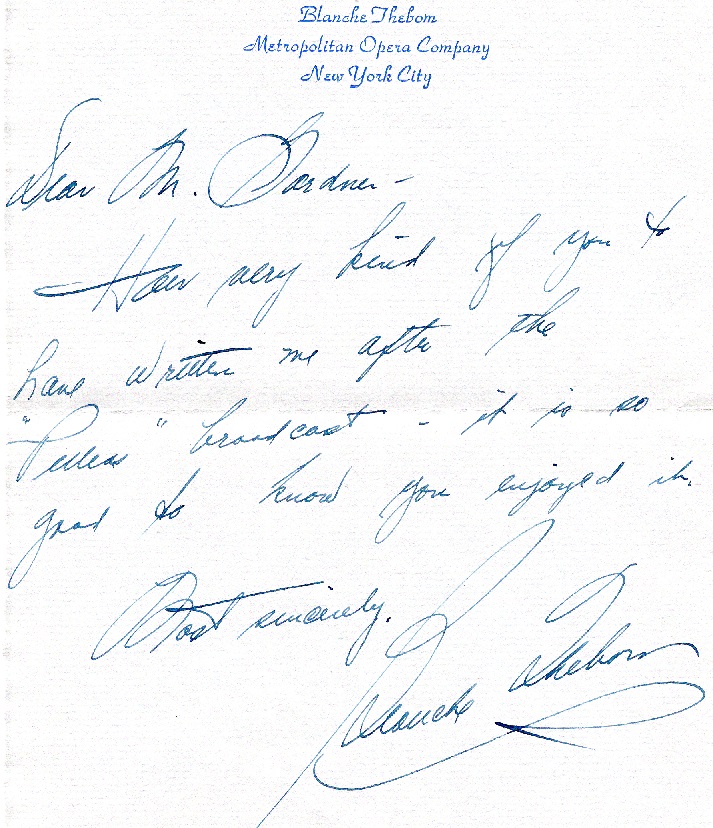
    Listening to her sing Debussy’s  Genevieve on a Texaco broadcast of PELLEAS ET MELISANDE, I was well-prepared to like her. And like her I did, so much so that I wrote her a letter; soon after, I received this elegant reply:

    Scanned Section 14-1

    More samplings of Blanche Thebom’s singing below. In RHEINGOLD, her usual role was Fricka, but I’m partial to her recording of Erda’s Warning:

    Blanche Thebom – Weiche Wotan weiche! ~ RHEINGOLD

    Blanche Thebom – Mon coeur s´ouvre a ta vois ~ SAMSON & DALILA

    Blanche Thebom – Wolf ~ Um Mitternacht

    ~ Oberon

  • Ballets Russes @ Chamber Music Society

    Photo nicolas dautricourt 74

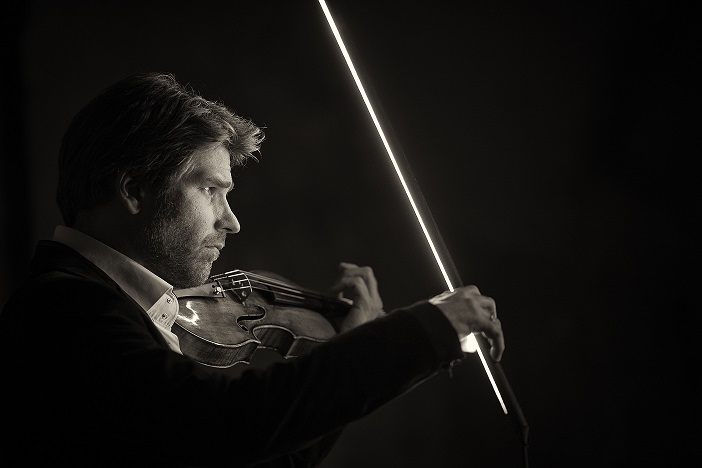
    Above: violinist Nicolas Dautricourt, photographed by Bernard Martinez

    ~ Author: Oberon

    Sunday May 19th, 2019 – For their final concert of the 2018-2019 season at Alice Tully Hall, Chamber Music Society of Lincoln Center offered a program of works by composers associated with Serge de Diaghilev’s Ballets Russes. It was a long program, full of rewards.

    Jennifer Johnson Cano, the Metropolitan Opera mezzo-soprano who in February shared a memorable program with tenor Matthew Polenzani at Zankel Hall, sang works by Manuel de Falla and Maurice Ravel, and a septet of marvelous musicians were heard – in varying configurations – in these, plus music by Debussy, Prokofiev, and Stravinsky. 

    JJC

    Ms. Cano (above, in a Matthu Placek portrait) opened the concert with Manuel de Falla’s Psyché in which she was joined by Tara Helen O’Connor (flute), Nicolas Dautricourt (violin), Yura Lee (viola), David Finckel (cello), and Bridget Kibbey (harp). Composed in 1924, as a setting of a poem by Georges Jean-Aubry, this is the awakening song of Psyché, a mortal woman whose beauty has caught the eye of Cupid, god of Love, who she will eventually marry.

    The flûte enchantée of Tara Helen O’Connor opens the work; the addition of M. Dautricourt’s ethereal violin and Ms. Kibbey’s delicate harp create an exotic atmosphere. Ms. Cano’s singing – clear, warm, and wonderfully nuanced –  was vastly pleasing; in her unaccompanied opening passage, the sheer beauty of her tone and its evenness throughout the registers marked her as a singer of exceptional natural gifts.

    Adding depth and colour to the enticing ‘orchestration’ were Ms. Lee’s viola and Mr. Finckel’s cello; overall the five instrumentalists created an impression of a larger ensemble thru the richness of their individual timbres. The music becomes urgent, and Ms. Cano’s singing golden, as flute trills and harp melismas lure the ear.  Psyché this evening was an intoxicating delight.

    For Maurice Ravel’s chamber arrangement of Shéhérazade, Ms. Cano and Ms. O’Connor returned, along with pianist Alessio Bax. It’s Mr. Bax’s delicate, silvery playing that sets the mood of the opening song, Asie. At “Je voudrais voir des assassins souriant“, passion builds: Ms. Cano brought an operatic quality to her performance at this point, rising to her steady and blooming upper range to fine effect. Asie has a little pendant at the end, full of lovely mystery. It ends on an exquisitely tapered note.

    La flûte enchantée brings forth limpid, entrancing sounds from Ms. O’Connor’s flute, and the weaving together of voice, flute, and piano is hypnotic. The concluding song, L’indifferent, begins with a calm lullabye played by Mr. Bax. Ms. Cano’s beguiling singing, sometimes bringing straight tone into play, was a marvel of expressiveness.

    Infringing on our enjoyment of the Ravel was the sound of text booklets dropping onto the floor, and a crash of something falling in the outside corridor. But Ms. Cano held to her course; this is a truly wonderful voice that I would love to hear in the music of Massenet’s Charlotte.
    Maxresdefault

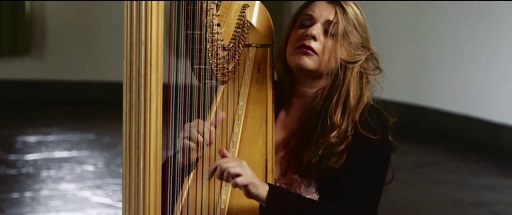
    Above: harpist Bridget Kibbey

    Mlles. O’Connor, Lee, and Kibbey then offered a sublime performance of Claude Debussy’s Sonata for Flute, Viola, and Harp, written in 1915. In an evening filled with marvelous sounds, the opening sustained flute tone of this sonata – taken up by the viola – sent chills thru me at the start of the Pastorale. The blend these three remarkable musicians produced was exceptional. A gentle animation arose – soft and merry – only to subside. Mlles. Lee and O’Connor duet, the viola deep and buzzy. Swirls of notes from the harp – and then from the flute – lingered on the air.

    The Interlude commences with a viola melody underpinned by the harp, After a sprightly interjection, viola and flute play in unison, and the harp tapers to pianissimo.The viola is plucked, the music soft and swift. A percolating motif opens the Finale, like the break of dawn on a sunny day; after a momentary slowing down, the piece ends abruptly.

    Prokofiev’s Sonata in D-major for Violin and Piano, Op. 94a, brought together Mssrs. Dautricourt and Bax for a fabulous performance that sparked a shouting, standing ovation from the crowd. Though the piece was composed in 1943 as a flute sonata, Prokofiev later obliged the great violinist David Oistrakh by creating a violin version, which premiered in 1944.

    Mr. Dautricourt launched the sonata with a high sweet/melancholy song. As the music becomes increasingly animated, an ultra-familiar theme is heard, which will crop up several times along the way. Vibrant, agitated, march-like music ensues; Mr. Bax displays magic tricks of his own, and the movement has a lovely ending.

    In the Scherzo, Mr. Dautricourt’s virtuosity is astounding. A demented, off-kilter dance commences, then slows to a high-lying interlude before resuming. The music, and the playing of it, are thrilling…and then it comes to a sudden halt.

    The audience, who all evening applauded between movements, prompted the violinist to declare “Two more!” before commencing the Andante: a sorrowful song which tends to meander a bit over time, with a hint or two of of jazz thrown in; in the end it becomes high and eerie. 

    The concluding Allegro con brio dances along, with some respite for a poignant interlude before dancing on again. Moodiness briefly takes over, and then a rush to the finish. The applause began before the music stopped: Dautricourt/Bax are a winning team.

    Alessio-600

    Lucille Chung and Alessio Bax (above, photographed by Lisa-Marie Mazzucco) joined together for the evening’s Fokine finale, saluting Diaghilev’s ground-breaking choreographer with a piano-four-hands arrangement of Igor Stravinsky’s Petrushka.

    Despite more intrusions – a loud clang from the balcony, and the sound of something (or someone) falling – Stravinsky’s brilliance prevailed. For 40-minutes, the outstanding Bax/Chung duo sustained the vibrancy of a theatrical presentation; everything felt so alive – with dazzling rhythms and infinite colours – that the entire ballet danced in the mind. For their brilliant and generous playing, the couple were rewarded with hall-filling, joyous applause. What a way to end the season!

    ~ Oberon

  • Irene Dalis as Fricka

    Walkure6465.05

    The great dramatic mezzo-soprano Irene Dalis in the scene of confrontation between Fricka and Wotan from Act II of Wagner’s DIE WALKURE:

    Irene Dalis as Fricka – WALKURE – w Birgit Nilsson & Otto Edelmann – Leinsdorf cond – Met bcast 1961

    From her 1957 debut there, Irene Dalis sang some 275 performances with the Metropolitan Opera Company – in New York City and on tour – during her twenty-year Met career. Her greatest roles were The Nurse in DIE FRAU OHNE SCHATTEN and Amneris in AIDA. In 1969, her electrifying performance of Verdi’s Egyptian princess at a concert performance at the Sheep Meadow, Central Park, drew an estimated  crowd of 50,000; Dalis’s super-charged singing in the Judgement Scene evoked a thunderous ovation.

    6a00d8341c4e3853ef00e54f20ad648833-800wi

    Following her retirement from singing, Irene Dalis founded Opera San Jose, which she ran with great success for over two decades.

    In August 2007, I wrote an appreciation of Irene Dalis, which she eventually found and read; she sent me a lovely message of thanks.

    ~ Oberon

  • Licia’s Last Butterfly

    Albanese

    On Friday, November 26, 1965, I went to a performance of MADAMA BUTTERFLY at the Metropolitan Opera House. On the following day, I had an operatic double-header: a matinee of ELISIR D’AMORE and an evening performance of FAUST. That Saturday marked the last time I ever set foot in the Old Met. The venerable theatre had been marked for demolition, while a New Met was rising at Lincoln Center.

    The eight performances I saw at the Old House are very special memories for me. The singers I saw there had become gods and goddesses to me thru their singing on the Texaco Metropolitan Opera radio broadcasts; I was now experiencing ‘live‘ the rituals Milton Cross described each week over the airwaves: the house lights going down, the applause greeting the conductor, the great gold curtain being drawn back for the curtain calls. It was like a dream come true.

    Licia Albanese’s was one of the first operatic voices I became familiar with. She was one of the singers on the first 2-LP set of opera arias and duets that I owned. She sang Liu on a memorable Met broadcast of TURANDOT in 1962, opposite Nilsson and Corelli. And my parents had taken me to see her as Violetta (her 100th performance of the role) at the Cincinnati Zoo Opera in 1963.

    In all honesty, Albanese’s voice was never really among my favorites; it was more her expressive intensity of communication and her endearing persona that I found appealing. But I understood her importance as a singer in the grand tradition, and if her singing of the Violetta and Butterfly that I saw could turn dry and almost ghostly, I can still vividly recall her stage presence and her instinctive if Olde School acting.

    What I did not realize as I watched Licia Albanese taking her bows after that 1965 Butterfly was that it was the final time she ever sang the role. After playing Cio-Cio-San some eighty times on that stage, this was to be the last. Like many performances I have experienced, the evening became iconic over time when measured as part of the singer’s career.

    I met La Licia after the performance – I was one of a sizeable group of admirers who had waited for her – and she was of course elegantly gowned and coiffed, chattering away to her fans in Italian. She signed my program with a flourish: 

    Scanned Section 7-1

    It was a happy crowd of fans and friends, and no mention was made of it being “her last Butterfly”. She did sing one more complete role at The Met: Manon Lescaut; and the following Summer she sang Mimi in LA BOHEME with Barry Morell in a concert presented by The Met at the Newport Festival. 

    A few days after the performance, I sent her a fan letter and received this photo in return, along with her calling card:

    Scanned Section 11-1

    Licia Albanese – Ancora un passo or via ~ MADAMA BUTTERFLY

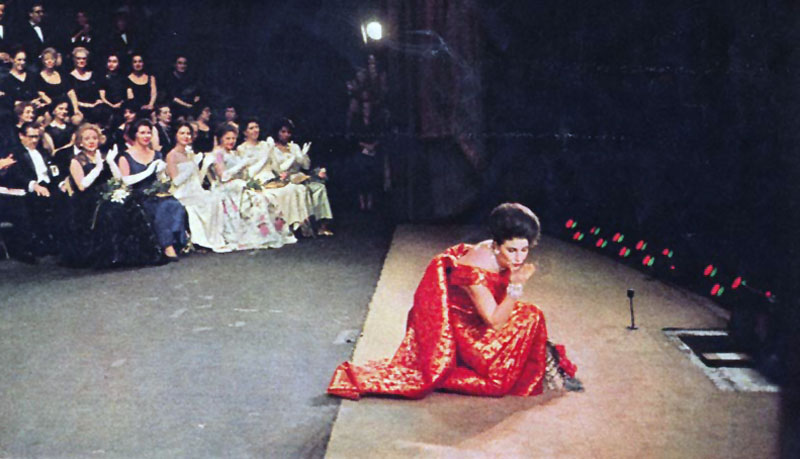
    There were two further memorable moments related to the Old Met and to MADAMA BUTTERFLY in Albanese’s extraordinary life: at the gala farewell concert that marked the closing of the Old Met on April 16th, 1966, Licia sang the aria “Un bel di” and, during the applause, she knelt to place a kiss on the stage where she had appeared so frequently since her debut in 1940:

    Old met farewell

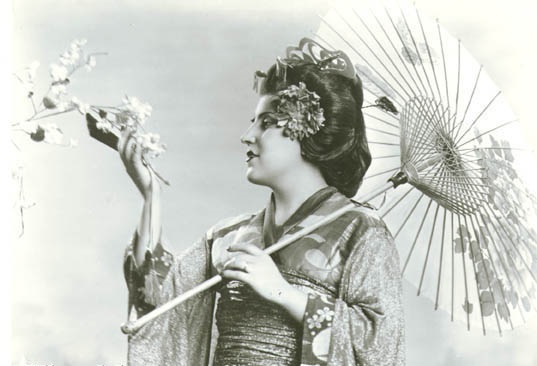
    Once the demolition of the ‘old yellow brewery’ began, Licia donned her kimono and sang “Un bel di” one last time amid the ruins.

    But my connection with the legendary diva was not over. One evening during the first season at the New Met, I saw her among the audience on the Grand Tier during intermission. She was talking with another elegantly-gown lady as I approached them hesitantly. The other woman gave me an encouraging smile, so I took Madame Albanese’s hand and awkwardly told her of having seen her Violetta and Butterfly. She thanked me quietly, but kept hold of my hand. Then she turned to her friend and said, in her charming accent: “It is so wonderful to be remembered! He’s so young, he will tell people about me many years from now.”

    Then, some thirty-five years on, I was holding down the fort in the opera room at Tower Records one dreary afternoon when Licia Albanese came in with a companion; the soprano was rather feeble by that point in time, but when I greeted her, she smiled silently. I said to her, “I saw your one hundredth Violetta at the Cincinnati Zoo Opera!” She was silent for a moment, and I thought my remark had not registered. Her friend gave me a look as if to say that Madame’s mind might not be perfectly clear.

    “The Zoo!” said the diva firmly. Then she began to roar like a lion and sing little birdcalls and make noises like chattering monkeys. Anyone who has ever attended a performance at the Cincinnati Zoo will know that these sounds were always a continuous obbligato to the opera being performed. We all laughed. And then I bade the two women goodbye, thinking to myself – as I have so often – “What a life I am living!”

    920x920

    Above: Licia Albanese at age 93; she passed away in 2014 at the age of 105. 

    ~ Oberon

  • Licia’s Last Butterfly

    Albanese

    On Friday, November 26, 1965, I went to a performance of MADAMA BUTTERFLY at the Metropolitan Opera House. On the following day, I had an operatic double-header: a matinee of ELISIR D’AMORE and an evening performance of FAUST. That Saturday marked the last time I ever set foot in the Old Met. The venerable theatre had been marked for demolition, while a New Met was rising at Lincoln Center.

    The eight performances I saw at the Old House are very special memories for me. The singers I saw there had become gods and goddesses to me thru their singing on the Texaco Metropolitan Opera radio broadcasts; I was now experiencing ‘live‘ the rituals Milton Cross described each week over the airwaves: the house lights going down, the applause greeting the conductor, the great gold curtain being drawn back for the curtain calls. It was like a dream come true.

    Licia Albanese’s was one of the first operatic voices I became familiar with. She was one of the singers on the first 2-LP set of opera arias and duets that I owned. She sang Liu on a memorable Met broadcast of TURANDOT in 1962, opposite Nilsson and Corelli. And my parents had taken me to see her as Violetta (her 100th performance of the role) at the Cincinnati Zoo Opera in 1963.

    In all honesty, Albanese’s voice was never really among my favorites; it was more her expressive intensity of communication and her endearing persona that I found appealing. But I understood her importance as a singer in the grand tradition, and if her singing of the Violetta and Butterfly that I saw could turn dry and almost ghostly, I can still vividly recall her stage presence and her instinctive if Olde School acting.

    What I did not realize as I watched Licia Albanese taking her bows after that 1965 Butterfly was that it was the final time she ever sang the role. After playing Cio-Cio-San some eighty times on that stage, this was to be the last. Like many performances I have experienced, the evening became iconic over time when measured as part of the singer’s career.

    I met La Licia after the performance – I was one of a sizeable group of admirers who had waited for her – and she was of course elegantly gowned and coiffed, chattering away to her fans in Italian. She signed my program with a flourish: 

    Scanned Section 7-1

    It was a happy crowd of fans and friends, and no mention was made of it being “her last Butterfly”. She did sing one more complete role at The Met: Manon Lescaut; and the following Summer she sang Mimi in LA BOHEME with Barry Morell in a concert presented by The Met at the Newport Festival. 

    A few days after the performance, I sent her a fan letter and received this photo in return, along with her calling card:

    Scanned Section 11-1

    Licia Albanese – Ancora un passo or via ~ MADAMA BUTTERFLY

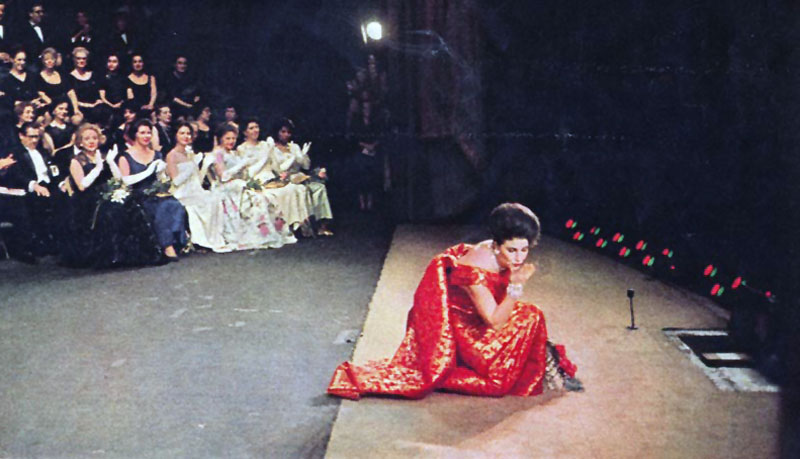
    There were two further memorable moments related to the Old Met and to MADAMA BUTTERFLY in Albanese’s extraordinary life: at the gala farewell concert that marked the closing of the Old Met on April 16th, 1966, Licia sang the aria “Un bel di” and, during the applause, she knelt to place a kiss on the stage where she had appeared so frequently since her debut in 1940:

    Old met farewell

    Once the demolition of the ‘old yellow brewery’ began, Licia donned her kimono and sang “Un bel di” one last time amid the ruins.

    But my connection with the legendary diva was not over. One evening during the first season at the New Met, I saw her among the audience on the Grand Tier during intermission. She was talking with another elegantly-gown lady as I approached them hesitantly. The other woman gave me an encouraging smile, so I took Madame Albanese’s hand and awkwardly told her of having seen her Violetta and Butterfly. She thanked me quietly, but kept hold of my hand. Then she turned to her friend and said, in her charming accent: “It is so wonderful to be remembered! He’s so young, he will tell people about me many years from now.”

    Then, some thirty-five years on, I was holding down the fort in the opera room at Tower Records one dreary afternoon when Licia Albanese came in with a companion; the soprano was rather feeble by that point in time, but when I greeted her, she smiled silently. I said to her, “I saw your one hundredth Violetta at the Cincinnati Zoo Opera!” She was silent for a moment, and I thought my remark had not registered. Her friend gave me a look as if to say that Madame’s mind might not be perfectly clear.

    “The Zoo!” said the diva firmly. Then she began to roar like a lion and sing little birdcalls and make noises like chattering monkeys. Anyone who has ever attended a performance at the Cincinnati Zoo will know that these sounds were always a continuous obbligato to the opera being performed. We all laughed. And then I bade the two women goodbye, thinking to myself – as I have so often – “What a life I am living!”

    920x920

    Above: Licia Albanese at age 93; she passed away in 2014 at the age of 105. 

    ~ Oberon

  • Met Opera All-Stars

    Thumbnail_image

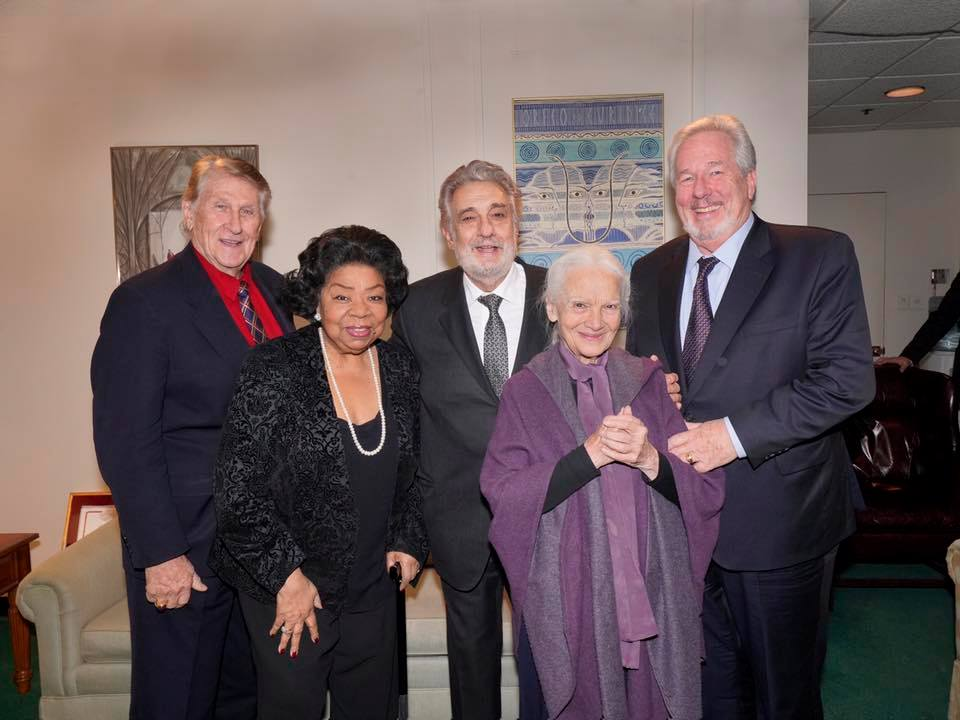
    Helping Placido Domingo celebrate the 50th anniversary of his Met debut, four great stars who sang with him often came backstage to greet the “tenoritone” after his prima of GIANNI SCHICCHI. Above: Sherrill Milnes, Martina Arroyo, Placi, Teresa Stratas, and James Morris in a Met Opera photo.

    Having already seen him several times at New York City Opera, I was at Placido Domingo’s Met debut – the night he stepped in (on very short notice) for Franco Corelli – as Maurizio in Cilea’s ADRIANA LECOUVREUR:

    6a00d8341c4e3853ef00e554b71cce8833

    My fondest memory of that evening was of Renata Tebaldi, as Adriana, turning her back on the audience so that Placi could look over her shoulder to watch conductor Fausto Cleva during his Act I aria, “La dolcissima effigie“. During the ensuing ovation, Renata kept patting Domingo’s shoulder and saying “bravo! bravo!” They went on to be good colleagues and friends:

    Renata & Placi Met June 1970

    While that ADRIANA was Domingo’s first performance from the Met stage, he had sung a single concert performance of CAV & PAG with the Company at Lewisohn Stadium in August, 1966:

    Metropolitan Opera @ Lewisohn Stadium
    August 9th, 1966
    In Concert

    CAVALLERIA RUSTICANA
    Mascagni

    Santuzza................Irene Dalis
    Turiddu.................Plácido Domingo [First appearance]
    Lola....................Joann Grillo
    Alfio...................Russell Christopher
    Mamma Lucia.............Carlotta Ordassy

    Conductor...............Kurt Adler

    Sherrill Milnes had made his Met debut during the final season at the Old Met (in the same performance of FAUST that Montserrat Caballé made hers); Martina Arroyo and Teresa Stratas had already established themselves at the Old Met by the time the Company moved to Lincoln Center. James Morris made his Met debut in 1971, and I saw him there in one of his very first performances, as Raimondo in a student matinee of LUCIA DI LAMMERMOOR.

    Now let’s hear from each singer in the “reunion” photo at the top:

    Martina Arroyo – Ritorna vincitor! – AIDA – Buenos Aires 1968

    GHOSTS OF VERSAILLES ~ final scene – Teresa Stratas & Hector Vasquez – Met bcast 1995

    James Morris – RHEINGOLD ~ Abendlich Strahlt Die Sonne – w M Lipovsek

    Sherrill Milnes joins Domingo on the final note of their OTELLO duet…such an exciting moment:

    Domingo & Milnes – OTELLO duet – Met bcast – 2~2~85

    To finish this reminiscence, here’s Domingo in a opera The Met could/should have staged for him, Meyerbeer’s L’AFRICAINE:

    Placido Domingo – O Paradis! – L’AFRICAINE

    ~ Oberon

  • Jeannine Crader

    Crader Domingo Ginastera's DON RODRIGO Fred Fehl

    Above: Jeannine Crader and Placido Domingo in Ginastera’s DON RODRIGO; photo by Fred Fehl

    Soprano Jeannine Crader was a member of the San Francisco Opera’s Merola Program in the late 1950s, and sang Magda Sorel in Menotti’s THE CONSUL with the San Francisco Opera’s Spring Program in 1969.

    Crader-beni-baldwin

    She performed with the Metropolitan Opera Studio Company (above, in COSI FAN TUTTE, with Gimi Beni and Marcia Baldwin) before joining New York City Opera where she sang in the US premiere of Alberto Ginastera’s DON RODRIGO, opposite Placido Domingo, in 1966. 

    I saw Ms. Crader only once – as Donna Elvira at New York City Opera in 1966. With the Company, she also sang Tosca, Butterfly, and Giorgetta in IL TABARRO. In 1967, she and Domingo sang in ANDREA CHENIER together at the Cincinnati Opera.

    Ms. Crader appears on Maurice Abravanel’s recording of the Mahler 8th, and there is a complete recording of DON RODRIGO available from Opera Depot. Beyond that, I can only find two Puccini souvenirs, both with Mr. Domingo:

    Jeannine Crader & Placido Domingo – E Ben Altro Il Mio Sogno ~ TABARRO – NYCO 1968

    Jeannine Crader & Placido Domingo – TOSCA scene ~ Act III – NYC Opera

    Jeannine Crader sings a William Mayer duet, “Barbara, What Have You Done?” with Dorothy Renzi (audio only) on YouTube. I like it a lot. 

    Ms. Crader taught at the University of North Texas from 1970-1997.

    ~ Oberon