Tag: Miller Theatre

  • Composer Portrait: Amy Williams

    Amy williams

    ~ Author: Oberon

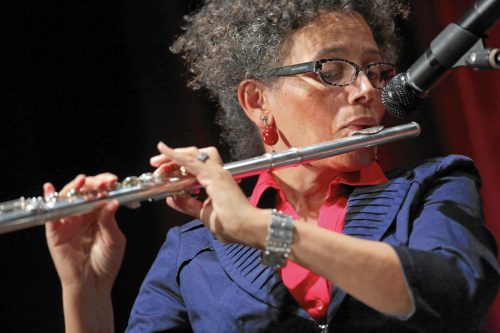
    Thursday February 22nd, 2024 – American composer Amy Williams (photo above by John Mazlish) was the guest at this evening’s Composer Portrait, a popular ‘interview and performance’ series offered by the Miller Theatre at Columbia University. Read the composer’s bio here.

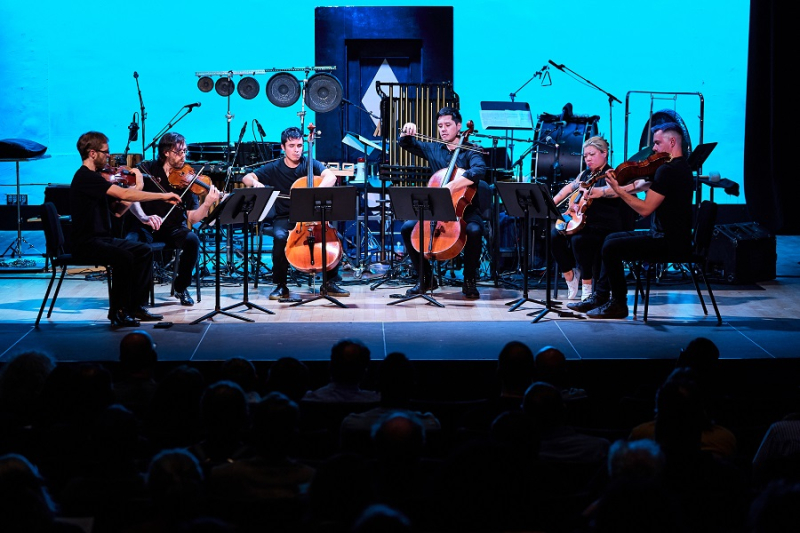
    Tonight the illustrious JACK Quartet were with us to perform Tangled Madrigal (the world premiere of a Miller Theatre commission) and other works by the composer, who, as an accomplished pianist, joined them for a trio and a quintet.

    The evening opened with Cineshape 2 for piano and string quartet, composed in 2007. This was a compelling introduction to the composer’s music. It starts off with a sizzling motif from John Pickford Richards’ viola; as the music turns somber, the viola is joined by Jay Campbell’s distinctive cello, with the composer providing pizzicati from the piano. Suddenly there’s an explosive crash, followed by a passage for skittering piano and chirping violins. Another crash, and then the music turns dreamy, becomes agitated, and stutters before a third crash. The strings descend, the music pulsing, then shivering, before it fades magically away.

    For Bells and Whistles (2022) the composer was joined by violinist Christopher Otto and Mr. Campbell. The gentlemen tap their strings whilst Ms. Williams reaches into the piano to pluck the strings. It’s quite hypnotic! The music grows louder and becomes turbulent, the piano part is very active, with swirls of notes running up and down the keyboard. A trudging motif arises, churning and relentless. An eerie postlude ensues, develops a dense quality, and then turns other-worldly.

    One of Ms. Williams’ most highly regarded works, Richter Textures (2011), was inspired by the paintings of Gerhard Richter. Listed as being in seven movements, my companion and I both detected five: some of the subtle transitions seem to have eluded us.

    From an agitato start, the music turns high and spacey, with brilliant interjectory phrases from Jay Campbell’s cello. As the cello goes low and ominous, the unison violins and viola take up a slow, descending theme, which the cello eventually joins. Then things ascend to the heights.

    Slashing bows evoke a painter’s aggressive brush strokes; these are quietened, and the cello sings low, whist the violins linger on high. Insectuous, insistent buzzings give way to ethereal, kozmic high harmonies.  The music becomes driven – and rather jazzy – before a sudden stop.

    Following the customary interview of the composer, the world premiere of Tangled Madrigal was magnificently played by the JACK Quartet. Early Music influences colour this music, which is so beautifully written…and written with these specific players in mind. From a high, squeaky start, the composer takes us on a time-warp journey back to the Renaissance. Mr. Richards’ viola is gorgeously prominent, Mr. Otto’s violin shines, Jay’s cello has a song to sing, and violinist Austin Wullmans floats in the high register. There is a cadenza from the viola, but it’s the cello that has the last word. I think I could have derived even more pleasure from this piece had not the two girls sitting in front of kept whispering and checking their phones.

    The program was a fine introduction to the composer’s work, though a certain sameness prevailed as the evening progressed. It would have been interesting to hear Ms. Williams in a solo piano work, since her playing is truly captivating. So…the Miller will have to have her back at some point. Meanwhile, having the JACK Quartet for the whole evening was its own reward.

    ~ Oberon   

  • John Zorn @ 70

    Zorn at 70 at Miller Theatre 222

    Above: composer John Zorn; Sae Hashimoto, percussion; Jay Campbell, cello; Michael Nicolas, cello; Ches Smith, percussion

    ~ Author: Shoshana Klein

    Thursday September 21st, 2023 – This was my first official concert of the 23/24 season and it was a good way to start off the year! 

    Composer John Zorn has a series of concerts marking his 70th, spanning the city and the season. He started over the summer, with concerts at Roulette, and now has a series at the Miller Theater. I heard at this concert about some other ambitious projects he’s done to mark other decades of his life, and given that, this series seems like it might be on the tamer side of things. 


    Zorn is a staple of the NYC music scene – I’ve already seen him around a few times, having only lived here for year. He’s usually in some variation of a black hoodie and camo pants, no matter the context.


    This concert, called “Music for Strings”, began with a trumpet duet that Zorn came out to introduce with his usual casual demeanor. He referenced Stravinsky as an influence in his short introduction of the piece, which was definitely noticeable in the high-ranged, rhythmically complicated duet.


    I’ll admit in general I don’t have a great handle on Zorn’s music – he has such a wide range, spanning jazz, classical, and of course his “game music”. It’s hard to get a sense of his personal style, other than sort of energetic and fast-paced, with quick and frequent changes in style and mood. 


    Zorn at 70 at Miller Theatre 265


    Above:  Christopher Otto, violin; David Fulmer, violin; Jay Campbell, cello; Michael Nicolas, cello; Yura Lee, viola; John Pickford Richards, viola. Photo by Rob Davidson


    The other three pieces on the program were written during lockdown. The first – for string quartet plus extra cello – was called Sigil Magik: A Curious and Detailed Exposition of Sigils, Signs, and Hieroglyphs Peculiar to the Occult Orders, Hermetic Brotherhoods, and Dark Mystery Schools of the Late Middle Ages. The name reminds me of a Terry Pratchett book, and in a similar way it was engaging and whimsical (and not very long). 


    The Gas Heart, a mini opera based on the play by Tristan Tzara, was the centerpiece of the show, and at least the one I found most enjoyable. Zorn said in his introduction to it that he was drawn to Tzara and the dadaists as a teenager, and that it was full of “quiet sounds that will probably make your ears bleed”. The piece had some of the energy of his game pieces: sudden and frequent switches between wildly different moods, particularly in the first act. Each performer had speaking roles and a microphone. 


    There was never a dull moment, as the piece included interesting sounds such as percussionists slurping water in bowls by their microphones, screaming (sometimes words, sometimes not), the cellists bowing above their fingering hands, an on-stage prop door that was slammed at the beginning and the end of the piece, a real saw, and at least one pair of tap dancing shoes.


    I wish I had some familiarity with the play to have some context, but even without, it was a spectacle. 


    Prolegomena to Any Future Metaphysics That Will Be Able to Present Itself as a Science was the last piece on this program. Zorn – who I still can’t quite read to know exactly how serious he is (my guess is, not very) – said: “…occasionally you create something you never thought you were capable of creating…” (this part I think was sincere) and then he went on to say that it might be the greatest string sextet ever written


    I think someone with a better ear for form may have gotten more out of this piece, but it certainly had interesting moments and started to make me feel like I was getting an understanding for Zorn’s style. A standout for me was when he brought back the technique for all the players of playing the fingerboard above the fingering hand, this time for a haunting early music chorale sound. 


    All in all, an interesting evening.


    ~ Shoshana Klein


    Performance photos by Rob Davidson, courtesy of The Miller Theatre at Columbia University.

  • Composer Portraits: Suzanne Farrin

    Farrin

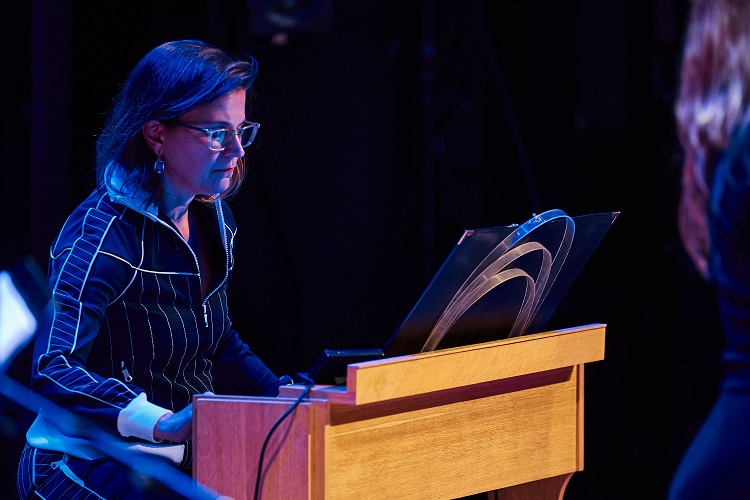
    Above: composer Suzanne Farrin at the ondes Martenot; photo by Rob Davidson

    Tuesday May 23rd, 2023 – The final program of the season in the Miller Theatre’s unique Composer Portraits series featured Suzanne Farrin, who hails from a small town on the Maine coast. It was an incredible musical experience which moved me deeply.

    Two fascinating singers – soprano Alice Teyssier and countertenor Eric Jurenas – joined virtuoso members of the International Contemporary Ensemble for an evening of magical music-making, with conductor Kamna Gupta leading the large ensemble works, and the composer joining in for the program’s world premiere finale, playing the ondes Martenot. Special kudos to audio engineer Caley Monahon-Ward and lighting designer Philip Treviño for their expertise in making it a memorable evening in every possible way.

    I knew nothing about Ms. Farrin’s work until this evening; in the days leading up to the performance, I read her bio but didn’t sample any of her compositions, as I like to be introduced to new music live whenever possible. All day, I felt an odd sense of anticipation for the concert, as if something special was about to happen. This was prophetic: from first note to last, the program mesmerized me.

    Five excerpts from Ms. Farrin’s 2016 opera, dolce la morte, were presented during the evening. I cannot imagine anything that could more perfectly have captivated my imagination than the opening measures of the aria unico spirto, which begins with oboe (Kemp Jernigan) and bassoon (Rebekah Heller) on a sustained tone. Matching the pitch, countertenor Eric Jurenas joins them with a straight tone of unearthly beauty. Mr. Jurenas’s fantastical voice was heard with a subtle halo of echo, evoking an ancient world which lingers only in the imagination.

    Suzanne Farrin Composer Portrait 170

    Above: Kyle Armbrust (viola), Evan Runyon (double bass), conductor Kamma Gupta, and countertenor Eric Jurenas; photo by Rob Davidson

    Odd harmonies from the wind players wrap around the vocal line; the texts are drawn from letters of Michelangelo to the young Italian nobleman Tommaso dei Cavalieri, and Mr. Jurenas voiced them with a spine-tingling air of sensuality. Near the end, Evan Runyon’s double bass introduces tension with a shivering tremolo. The aria ends with the singer’s magical voice fading into thin air.

    The other excerpts from dolce la morte were interspersed thru the concert’s first half. The first of these was come serpe in which Mr. Jurenas’s timbre was almost unbearably gorgeous. Bassoonist Rebekah Heller displayed amazing breath control, whilst double bassist Evan Runyon brought forth tones from the depths. At times, the music seemed to be reaching us from a distant galaxy.

    veggio found the countertenor veering between the ethereal and the dramatic; his is an uncanny sound, delighting me constantly with its kozmic beauty. The ensemble meanwhile sighed, trembled, and groaned, with pulsing notes played pianissimo by the bass, and insistent high notes beaming from Nuiko Wadden’s enchanted harp.

    In an oboe solo from the opera, l’onde della non vostra, Kemp Jernigan summoned squawking, stuttering, twittering sounds, along with trills and sagging tones, before rising to a high finish. From there, Mr. Jurenas took up the oboe’s final note and commenced rendete, the final excerpt from dolce la morte. His voice blended marvelously with the oboe and bassoon, soon joined by violinist Josh Modney, violist Kyle Ambrust, and cellist Clare Monfredo. Ms. Wadden’s harp twinkled in the high range as the singer ventured upward. There were shivering motifs from Mr. Runyon’s bass, leading to a big, grinding sound from the ensemble. Overall, the heavenly voice of Mr. Jurenas sounded with utter clarity.

    Suzanne Farrin Composer Portrait 38

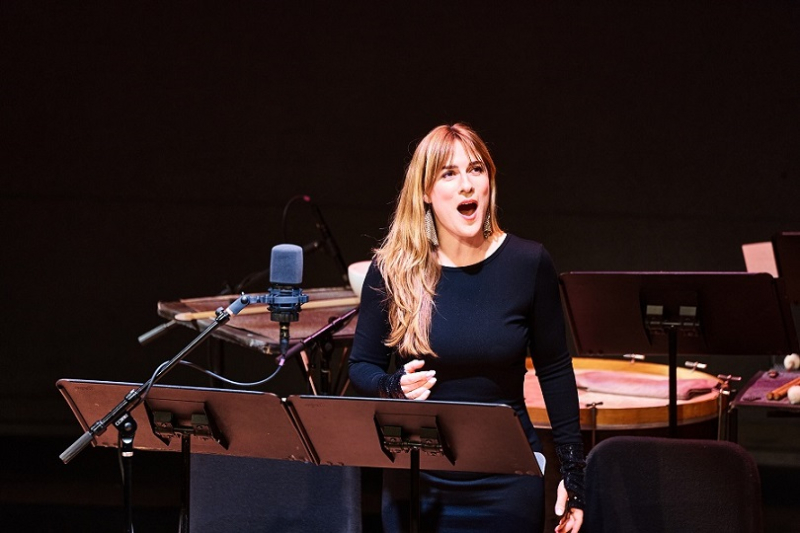
    Backtracking, the concert’s first half had offered soprano Alice Teyssier (above, photo by Rob Davidson) in Il Suono (from 2016) in which Ms. Wadden’s harp sounded in skittering passages and entrancing melismatic flourishes whilst Ms.Teyssier’s voice floated dreamily on the air, with straight tones of alluring purity.

    Suzanne Farrin Composer Portrait 101

    Above: Nuiko Wadden; photo by Rob Davidson

    Three works for solo instruments put members of the International Contemporary Ensemble in the spotlight. The first of these was polvere et ombra (2008) for harp, in which Ms. Wadden delivered swirls of notes and cascading glissandi, followed by some crisp plucked notes. The piece ends with the strings being gently brushed, almost a caress.

    Suzanne Farrin Composer Portrait 81

    Above, the evening’s string contingent: John Modney (violin), Clare Monfredo (cello), Kyle Armbrust (viola), and Evan Runyon (double bass); photo by Rob Davidson

    In Time is a Cage (2007), violinist John Modney produced a wide range of sonic motifs: tremolos and trills,  and passages of fluttering, buzzing, slithering sounds. In the piece’s most delicate moments, the music went from being impressive to being spellbinding. 

    Suzanne Farrin Composer Portrait 354

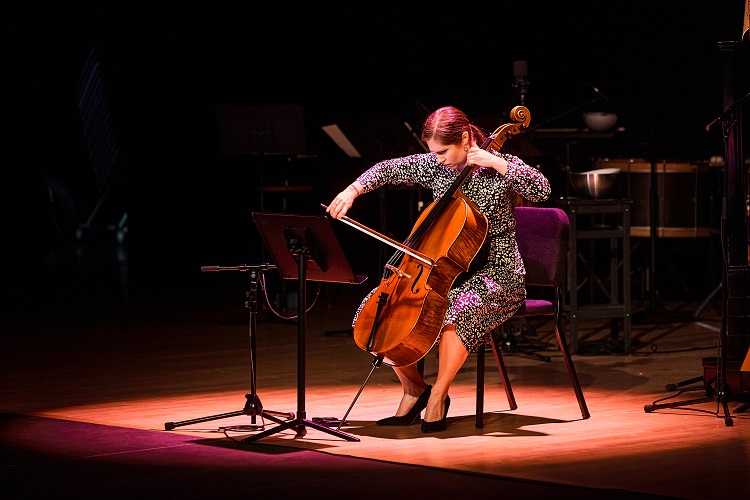
    Following the interval, cellist Clare Monfredo (above, photo by Rob Davidson) played corpo di terra (2009). From quietly tapping the strings, trills carried the music to a discordant passage. After rising to quiet, repeated notes, and a feeling of quivering, the cello drops to a drone. A lullaby-like motif turns astringent, and then rather ominous. Calming, the strings are gently brushed. There follows a sort of coda, with an upward rush to a sort of oozing sound, ending in a trembling state. Ms. Monfredo took all of this in stride, making the music feel like a poem that expresses many moods.

    Suzanne Farrin Composer Portrait 500

    Above, Evan Runyon, Nathan Davis, Alice Teyssier, and Suzanne Farrin; photo by Rob Davidson

    Concluding the evening, the world premiere of Ms. Farrin’s Their Hearts are Columns (2020) brought together Mlles. Teyssier and Wadden, Mr. Runyon, percussionist Nathan Davis, and the composer herself, seated at the ondes Martenot. This work, a setting of poems about love and its meaning to the woman’s character, begins with quiet drumming and bass tones, and then the voice of Ms. Teyssier emerged, remote and beckoning. The sound of the ondes Martenot entices the ear, like the soundtrack of a dream. The entwining timbres of this unique instrument with the bass, harp, and percussion made for some extraordinary textures, An unexpected outburst from the singer brings the work to a sudden end.

    In a mid-concert interview with the Miller’s Melissa Smey, Ms. Farrin spoke of the essential elements for  living in our increasingly disquieting world: compassion and empathy. This confirmed what I felt while listening to her music: she and I are on the same wave-length,

    ~ Oberon

  • Composer Portraits: Nicole Mitchell

    Nicole-mitchell

    Above: Nicole Mitchell

    Author: Oberon

    Thursday March 30th, 2023 – Another adventurous evening in the Miller Theatre’s ongoing Composer Portrait Series as we were introduced to the multi-talented Nicole Mitchell: composer, flautist, bandleader, educator, and the first woman president of Chicago’s Association for the Advancement of Creative Musicians (AACM).

    Ms. Mitchell brought her flute along with her this evening, joining members of the International Contemporary Ensemble, vocalist Lisa E. Harris, and violinist Mazz Swift in works she has composed from 2015 thru 2023.

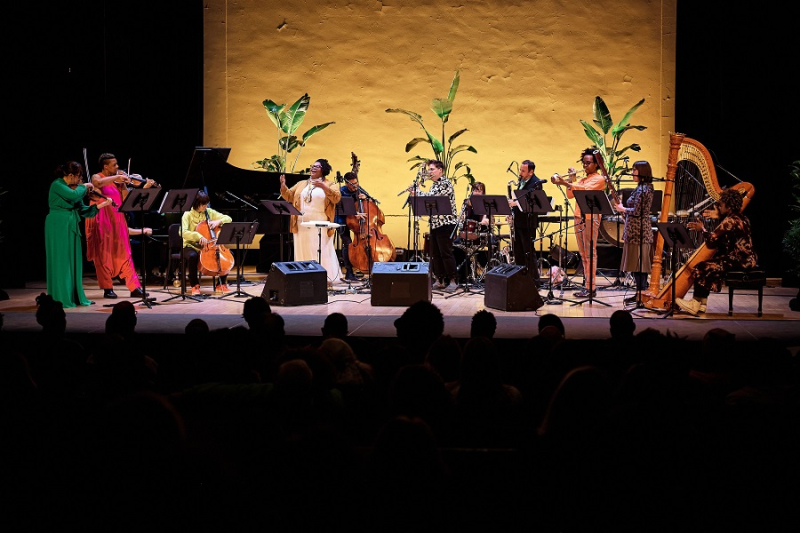
    On the Miller Theatre stage, a magic garden had been created with towering plants and clusters of candles; as the program progressed, the back panel was illuminated in varying hues. The musicians were distinctively dressed, creating the feel of a casual family gathering where every member had an invaluable place in the musical scheme.

    The evening opened with Whispering Flame, co-composed by Nicole Mitchell and Lisa E. Harris in 2017. From a busily insectuous opening instrumental passage, Ms. Harris’s rich, warm tones engaged us in a slow-rising vocal line. Ms. Mitchell’s flute playing was pristine, and she also presided over the electronics. Percussionist Clara Warnaar struck a summoning gong, and the music took on a windswept feeling, with trumpeter Jonathan Finlayson producing sputtering effects, and duetting violinists Mazz Swift and Gabriela Diaz adding a touch of lyricism. This kozmic work made for a perfect introduction to the program.

    SVfhZhko

    Above, playing Procession Time: Cory Smythe, Katinka Kleijn, Isabel Lepanto Gleicher, and Joshua Rubin; photo by Rob Davidson

    Bringing new sounds into the evening’s musical sphere, a quartet of artists played with such a wide range of colours that they created an impression of hearing a larger ensemble for Procession Time (2017). In the work’s first section, “Ritual Conception”, deep violet tones from Katinka Kleijn’s cello were matched by Joshua Rubin’s velvety bass clarinet. The music has a hesitancy about it, with Cory Smythe at the piano joining Isabel Lepanto Gleicher’s purring flute. Ms. Gleicher then takes off on a melodic flight, interrupted by the bass clarinet sounding rather ominous. Flute and standard clarinet harmonize to calming effect.

    The second section of Procession Time, “Carnival at the Cliff”, features quirky piano and cello motifs, and more harmonizing from flute and clarinet. A heavy rhythm develops, with squealing and screeching from the flute and clarinet.

    Transitions Beyond (2021) is a quintet for Ms. Harris (voice), Mr. Rubin (clarinet), and Mlles. Gleicher (flute), Diaz (violin), and Kleijn (cello). Although the program listed five movements, I could only detect four (perhaps I missed a transition along the way); but, at any rate, the work is a finely-woven sound. It starts with wordless vocalizing from Ms. Harris from which a text emerges over the sighs of a drooping cello: “I don’t want to leave you…” A violin solo turns into a dialogue for violin and cello, and soon their sounds begin to ooze, whereupon the winds take over. Ms. Harris sings a vocalise of uncanny sounds and pitches.

    The bass clarinet burbles and stutters, the violin take on a wispy feel, the singer continues to summon an array of colours. Cello and clarinet mingle, the winds sounding whimsical and the singer’s lines turning edgier. Now there is a flow of lyricism from the instruments, and a shimmering quality hovers over the singer’s low-range phrases. There is lots of beauty here, doled out so that each participating artists shines.

    The program’s first half concluded with the big hit of the evening: Building Stuff (2015, rev. 2023). This irresistible music had the whole place jumping, and provided wonderful opportunities for each of the nine players involved to shine. To a jaunty rhythm, Mr. Rubin’s clarinet sings out, followed by Ashley Jackson’s captivating harping and a sparkling xylophone motif from Clara Warnaar.

    A fantastic sway develops, steered by double-bass phenom Brandon Lopez. Mazz Swift reels off a vivid, jazzy violin solo, pianist Cory Smythe and Ms. Warnaar’s drumming combine in high style, and Ms. Mitchell’s flute adds a bright lustre. There are intriguing textures, with Sara Schoenbeck’s vibrant bassoon playing grabbing our attention, and Ms. Kleijn’s cello ever aglow with resonance. Mr. Smythe reaches into the piano to pluck some steely notes, and Ms. Jackson’s harp sounds sweet and sure. As Mr. Lopez’s fascinating rhythm steered the music to its finish, the crowd erupted in a burst of applause and cheering.  

    A6AKo05Y

    Above, the ensemble playing Inescapable Spiral; photo by Rob Davidson

    Following a charming  interview of Ms. Mitchell by The Miller’s Melissa Smey (and beautifully signed by two young people at the edge of the stage), the evening concluded with Inescapable Spiral (2017, rev. 2023) which brought together all the artists save for the composer, who listened from the hall. This long work seemed rather tame and aimless at times, especially after the fabulousness of Building Stuff, but it did let us continue to savour the individual playing of everyone involved.

    ~ Oberon