Tag: Monday April

  • James Ehnes ~ The London Philharmonic

    Thumbnail_16373_1

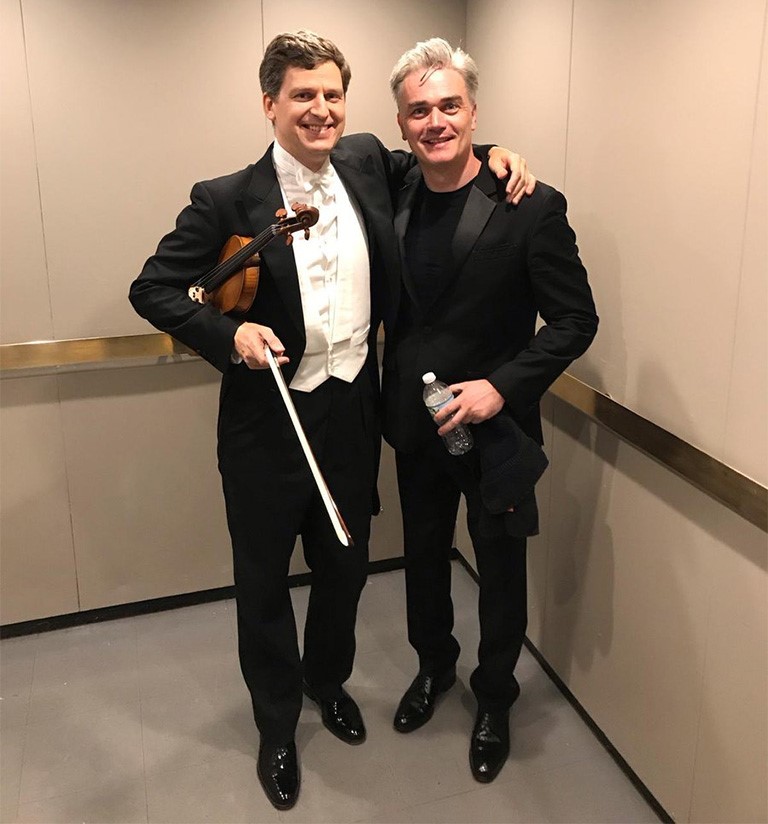
    Above: violinist James Ehnes and conductor Edward Gardner, photo from Twitter @ IntermusicaLtd

    ~ Author: Ben Weaver

    Monday April 15th, 2018 – The London Philharmonic’s second New York City concert, a part of Lincoln Center’s Great Performers series, featured some old favorites on the program. Opening with Beethoven’s great and brooding Egmont Overture (why the complete incidental music is so rarely performed is a mystery to me; the work is full of great music!) Today we have gotten quite used to Beethoven performances by reduced ensembles, even when performed by major orchestras the number of players is typically reduced to be closer to an orchestra size Beethoven would have recognized. Not so with this performance of Egmont. Maestro Edward Gardner chose the full London Philharmonic ensemble – and why not, since they all crossed an ocean? The result was a big-boned, massive sound and Gardner’s driven, dramatic reading made for on thrilling start to the concert.

    Violinist James Ehnes then joined the orchestra for Sibelius’ magnificent and never tired Violin Concerto. There is no real introduction to the work: out of the shimmering violins rises the soloist. Ehnes’ beautiful tone, perfect pitch, and deeply-felt playing kept the audience in thrall. Ehnes doesn’t make a huge sound, but the musicality and dedication he brings to every note are second to none among his generation of violinists. Here Edward Gardner was a superb accompanist: he kept the orchestra in the background, letting his soloist shine. The audience’s reaction was predictably ecstatic, allowing Ehnes to play two contrasting encores: Ysaë’s blazing Sonata No. 3 and Bach’s wistful, gentle Largo from Violin Sonata No. 3.

    Mahler’s Symphony No. 1 received a thrilling performance after the intermission. In the first movement, the slow build from hushed strings that open the work to the “full blast of Mahler” was nicely shaped and paced by Gardner. The sudden return of the opening drone had a sinister glow to it, but horns chased away the clouds and the lovely second theme, a pastorale, returned. The rustic swing of the second movement was taken quite fast, though Gardner knew to slow down for the waltz, played lovingly by the orchestra.

    Here some mannerisms from Gardner began to make themselves obvious. Draggy slow parts and extra fast faster sections became the signature of the rest of the performance. Gardner softened the edges of the third movement with its halting funeral march and the child-like melody mocking it. The final movement reinforced Maestro Gardner’s extreme tempos and I don’t think his choices worked. The slow sections began to drag and the Symphony began to lose shape. The hyper-emphasized big moments (already big in Mahler) at the expense of everything else felt contrived. But the London Philharmonic was superb (special praise for the outstanding brass section in the Mahler). It is a great ensemble, I’d go so far as to say LPO is a better orchestra, with its warmer and more versatile sound, than their big cousin, the London Symphony. 

    One curiosity about the concert is there were an awful lot of things being dropped by audience members throughout the evening. At least it wasn’t constant cell-phones, I suppose.

    ~ Ben Weaver
  • At Nai-Ni Chen’s Rehearsal

    L1370928

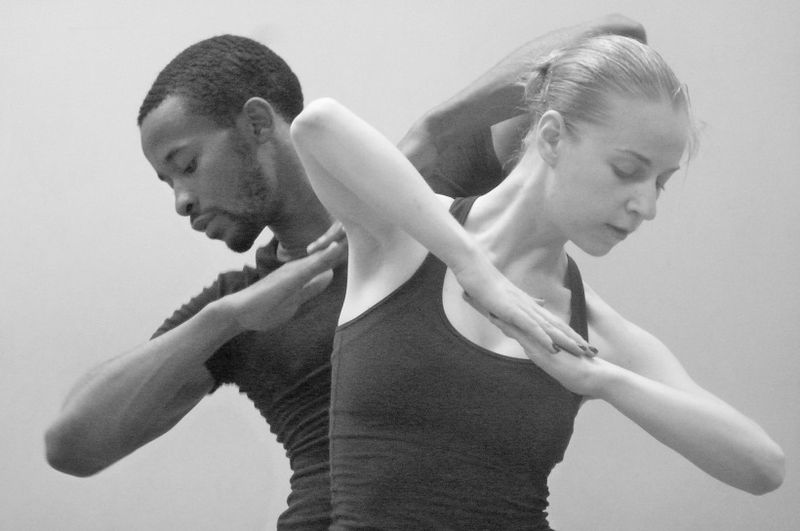
    Above: Justin Dominic and Ekaterina Chernikhova of Nai-Ni Chen Dance Company

    Monday April 14th, 2014 – In preparation for her Company’s upcoming performances at Peridance, Nai-Ni Chen invited me to watch a rehearsal today at Jacques D’Amboise’s National Dance Institute on West 147th Street. I’d never been to this venue before, and it’s really nice; Nai-Ni had a big, spacious studio to work in and her dancers – some of them new to me – look super.

    Nai-Ni Chen Dance are celebrating their 25th anniversary with these Peridance performances on April 26th and 27th, 2014: tickets and more information here.

    The Prism Saxophone Quartet will be performing a score by Chen Yi, a contemporary composer from Guangzhou, China, for Na-Ni’s newest work Not Alone, inspired by a poem by Li Bai entitled Drinking Under the Moon.

    Joan La Barbara will appear for Incense, a quartet in which her voice is heard over a tape, commissioned by the Company in 2011. Incense has been performed on Company tours since then across the U.S. and to Asia and Europe.

    The lovely young ladies of the Ahn Trio will perform original music by Kenji Bunch for Grooveboxes, an excerpt from the trio’s full-evening collaboration with Nai-Ni called Temptation of the Muses. And Glen Velez, a four-time Grammy Award winner and one of the world’s leading drum masters and an expert in Central Asian music, composed the score for Nai-Ni  Chen’s Whirlwind. Mr. Velez will appear in an excerpt from this work with the Company.

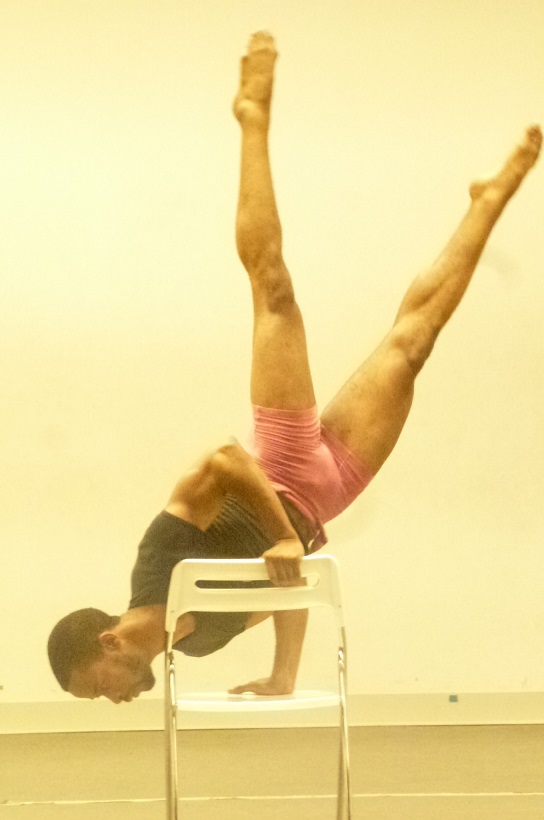
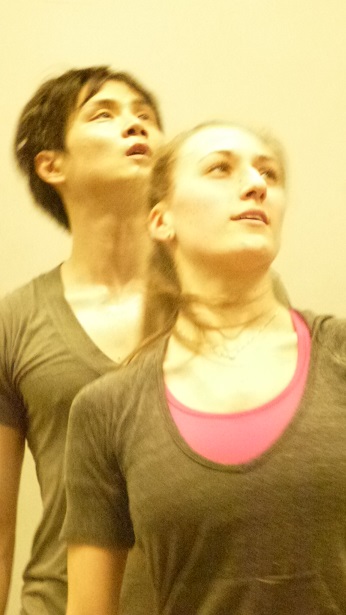
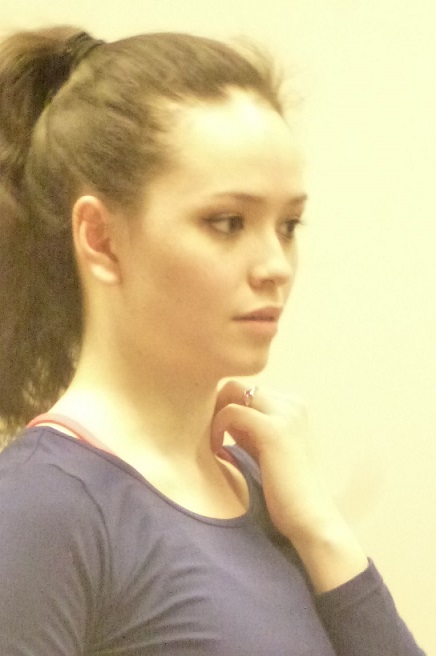
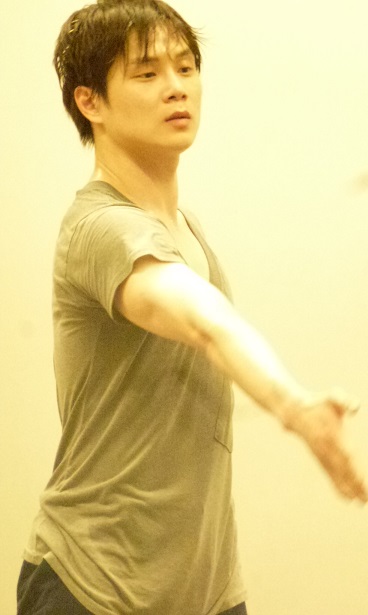
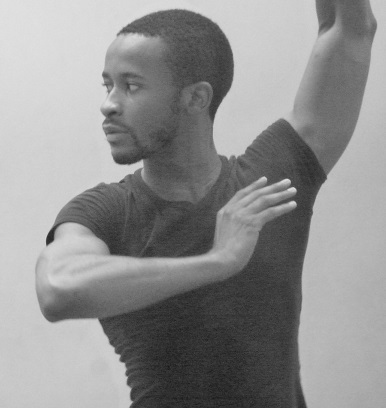
    Nai-Ni Chen is a detail-oriented choreographer and today’s rehearsal was largely spent in refining works the dancers already know quite well. Here are a few photos I took today: most of the time the dancers were moving too fast for me to capture.

    L1370651

    Kristen Lau, Daniel Johnson

    L1370675

    Justin Dominic

    L1370816

    Yoosik Kim, Greta Campo

    L1370841

    Kristen Lau

    L1370808

    Yoosik Kim

    L1370940

    Justin Dominic

  • Oratorio Society: Britten’s WAR REQUIEM

    White_dove.23095031_std

    Monday April 22nd, 2013 – The Oratorio Society of New York presented a performance of Benjamin Britten’s WAR REQUIEM at Carnegie Hall this evening. 

    One of the greatest and most meaningful choral works ever created, the WAR REQUIEM was commissioned for the re-dedication of Coventry Cathedral in 1962; the church had been almost totally destroyed by German bombs in 1940. Britten, a life-long pacifist, drew on the poetry of Wilfred Owen
    – who had been killed in 1918 (one week before the Armistice ended the war) at the age of 25 while fighting in France
    – as well as the texts of the Latin mass for the dead in setting his
    masterpiece. Though deeply spiritual in atmosphere, Britten intended the
    WAR REQUIEM to be a secular work.

    The Oratorio Society, one of New York City’s oldest cultural treasures, traces its history back to 1873. Founded by Leopold Damrosch, the Society presented their first concert on December 3,
    1873. One year later, on Christmas night, the Society began what has become an unbroken
    tradition of annual performances of Handel’s Messiah. In 1891, the Oratorio Society participated in the opening concert of what is now Carnegie Hall.

    The chorus and musicians of the Society under Kent Tritle’s baton tonight unfurled the sonic tapestry of Britten’s creation in a performance which greatly satisfied both the ear and the soul. In the composer’s structuring of the REQUIEM, the large chorus and orchestra – supporting a soprano soloist – sing the Latin texts of the mass while a chamber orchestra (led by David Rosenmeyer) accompanies the tenor and baritone soloists whose words come from the poetry of Wilfred Owen. From high up in a side balcony, the voices of children from the choir of Saint John The Divine (directed by Malcolm Merriweather) provide an angelic sound, accompanied by a small organ.

    Britten’s score, richly textured, amazes in its rhythmic and instrumental variety. Marked by off-kilter harmonies and shifting tonalities, the music is grand and theatrical one moment and poignantly stark and personal the next. The juxtaposition of public mourning and private grief – and of the liturgical and poetic texts – give the REQUIEM its unique resonance.

    Of the three vocal soloists, soprano Emalie Savoy (currently a Met Young Artist) revealed a sizeable lyric instrument with a blooming high register and a capacity to dominate the massed choral and orchestral forces. Tenor John Matthew Myers sang with a plaintive, clear and warm timbre while baritone Jesse Blumberg gave a wonderfully expressive rendering of the texts, his voice hauntingly coloured in his long final solo.

    At the close of the piece, all the participants were warmly lauded by the audience.

    “My subject is War, and the pity of War.
    The Poetry is in the pity…
    All a poet can do today is warn.” ~ Wilfred Owen

    Now, nearly a century after the poet’s warning, mankind continues to use war as a means of settling religious and ideological differences. This evening’s concert fell on Earth Day, reminding us of the fragility of the planet on which we all live. Only by turning away from gods and politics – those great dividing forces – can we hope to find a path into a safe and meaningful future. Like the poet’s two soldiers from opposing armies who find themselves dying side by side in a ditch far from their homes as the REQUIEM draws to a close, we must learn to embrace our common humanity before it’s too late.

    The evening’s participating artists will were:

    Kent Tritle, conductor
    David Rosenmeyer, chamber orchestra conductor
    Emalie Savoy, soprano
    John Matthew Myers, tenor
    Jesse Blumberg, baritone
    Choristers of the Cathedral of St. John the Divine,
    Malcolm Merriweather, conductor
    Chorus and Orchestra of the Society 

  • Dance Against Cancer: Tech Rehearsal

    P1220220

    Monday April 25, 2011 – Since I was unable to attend the Dance Against Cancer benefit performance at Manhattan Movement and Arts Center this evening, I had the good fortune to be invited to watch the technical rehearsal which started at noon today. Above: a snapshot I took of Matthew Rushing of the Alvin Ailey Company. Matthew was the first artist to tech today. 

    A lot goes into staging a dance production and while the major companies have lighting and sound crews and stage directors and stagehands all on staff, for a one-time gala like DANCE AGAINST CANCER, all these elements need to be brought together at the venue in a short span of time on the day of the performance. Having performers from several companies on the programme, the gala coordinators need to mesh schedules with classes and other rehearsals that the dancers might be involved in. Since several of the gala participants are member of NYC Ballet, they were having their traditional Monday off in the midst of preaparing for their opening week of Spring Season which starts on May 3rd. Stars from Ailey, Lar Lubovitch, Keigwin & Co and Carolina Ballet along with special guests Martin Harvey, Alex Wong and Tara Jean Popowich all had to be scheduled for tech sessions for the individual numbers in which they are involved. 

    What happens at a tech rehearsal? Musical and lighting cues are coordinated; spacing, timings, entrances and exits, even the bows are all worked out in minute detail so that the dancers will know their way around the performance space and the wings. Musicians who are playing ‘live’ for the individual numbers also get a feel for the space, find out where to enter from (invariably in the dark!) and how they will maintain visual contact with the dancers during the showing.   

    Dance Against Cancer is presented by MMAC‘s Erin Fogarty and New York City Ballet’s Daniel Ulbricht.

    Here is the announced programme:

    On The Other Side; Choreography: Benjamin Millepied; Dancers: Janie Taylor and Tyler Angle
    Love Songs; Choreography: Larry Keigwin; Dancers: Kristina Hanna and Aaron Carr
    Mozartiana (excerpt); Choreography: George Balanchine; Dancer: Maria Kowroski
    Untitled World Premiere; Choreography: Robert Fairchild; Dancers: Tara Jean Popowich and Alex Wong
    Little Rhapsodies; Choreography: Lar Lubovitch; Dancer: Attila Joey Csiki; Piano: Kathy Tagg
    Tatum Pole Boogie; Choreography: Daniel Ulbricht; Dancer: Daniel Ulbricht
    Untitled World Premiere; Choreography: Earl Mosley; Dancer: Matthew Rushing
    Who Cares (excerpt); Choreography: George Balanchine; Dancers: Sterling Hyltin and Amar Ramasar
    Untitled World Premiere; Choreography: Attila Bongar (Principal at Carolina Ballet) Dancers: Lara O’Brien and Attila Bongar
    Carmen (excerpt); Choreography: Christopher Wheeldon; Dancers: Maria Kowroski and Martin Harvey
    After the Rain; Choreography: Christopher Wheeldon; Dancers: Wendy Whelan and Craig Hall; Piano: Cameron Grant; Violin: Arturo Delmoni   

    I’ve arranged with photographer Erin Baiano, who is shooting the actual performance, to have some of her images for my blog. They will be posted here soon.