Tag: Monday February

  • Budapest Festival Orchestra ~ All-Mahler Program

    Gerhild-romberger

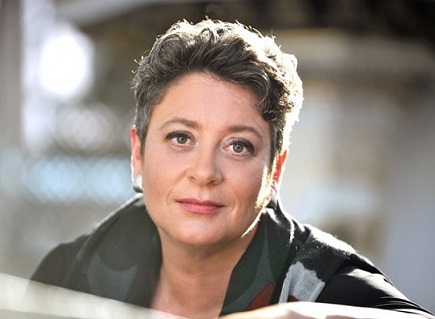
    Above: contralto Gerhild Romberger

    ~ Author: Oberon

    Monday February 24th, 2020 – The Budapest Festival Orchestra, conducted by Iván Fischer, offering Mahler’s 5th symphony, preceded by the Kindertotenlieder, sung by Gerhild Romberger, contralto, in her New York debut. The program was part of Lincoln Center’s Great Performers series.

    Ms. Romberger – previously unknown to me – was revelatory. This was my third experience of hearing the Kindertotenlieder (Songs of the Dead Children) in live performance: previously, the grand Polish contralto Ewa Podles and the inimitable Russian baritone Dmitri Hvorostovsky had given enthralling interpretations of these evocative songs, each taking a rather operatic point of view. Ms. Romberger, more intimate and poetic in her approach, was deeply moving…and the voice fascinated me.

    Handsomely coiffed, and clad in black, the contralto took up the opening song, “Nun will die Sonn’ so hell aufgeh’n” (Now Will the Sun Rise as Brightly) following its haunting introduction from the winds. Her sound is rich yet contained, projecting a sense of calm despite the bleakness of the knowledge that the sunrise can no longer bring comfort. The horn and harp add to the wistful atmosphere, and the singer’s dreamy softening of the upper notes at “…die sonne..” is indeed magical. Ambiguously, the music shifts between minor and major.

    In “Nun seh’ich wohl, warum so dunkle Flammen” (Now I See Well Why Such Dark Flames) with its gorgeously expressive start, Ms. Romberger’s beauteous palette of soft colours was at play as she described the eyes of the children, and the premonition of their death. There is a sense of consolation in the orchestral writing, but it’s the desolate feelings that of loss permeates in the singer’s touching turns of phrase. Her hands, meanwhile, communicated her emotions in gracefully-shaped gestures.

    Wenn dein Mütterlein” (When Your Dear Mother) commences with oboe and bassoon, sounding rather doleful in a motif of intervals. Here Ms. Romberger’s gifts as a storyteller are to the fore, and her sense of gentle restraint in the upper reaches of the voice is endlessly evocative. The deep, rich sound of the Budapest’s basses sustaining the final note sent a chill thru me.

    In “Oft denk’ ich, sie sind nur ausgegangen” (Often I Think They Have Only Gone Out). Mahler again allows the music to wander between major and minor, underscoring the illusion that the children have only gone out for a walk. With sweet lyricism in her upper range, the singer seeks to reassure herself – and us – that all is well. Her singing here is simply sublime. But at last comes acceptance that the children have gone to another place, wherein there is the hope of one day be reunited with their parents.

    In diesem Wetter, in diesem Braus” (In This Weather, in This Torrent) tells of the stormy weather on the day of the funeral: restless, aggressive music. In resignation, Ms. Romberger sings that the children have found rest, and her vocal control and the somber yet luminous expressiveness of her singing here reached me at the depths of my soul: so hauntingly and gently she sang as the harp sounded. A horn chorale seemed like a benediction.

    Ms. Romberger was given very warm and sustained applause following her poignant performance: returning for a solo bow, the entire orchestra joined in a moving tribute to this remarkable artist. She and Maestro Fischer were called out yet again, and while I cannot imagine an encore following the Kindertotenlieder, we can surely hope that she and the Maestro will return to New York City soon, bringing us the RückertLieder…or the Wesendonck. I can only imagine what that would be like!

    During the interval, I remained under a sort of spell from this cherishable performance: I even thought of leaving, and taking my memories of it with me to some solitary place where I could continue to meditate on what I had heard.

    Of his 5th symphony, Gustav Mahler famously said: “…a symphony must be like the world; it must embrace everything.” Mahler composed this sprawling work during the summers of 1901 and 1902, while on holiday from his job as director of the Vienna Court Opera. Prior to beginning his fifth symphony, Mahler had met the beauteous Alma Schindler, daughter of a famous landscape painter. The composer proposed to her in the Autumn of 1901, and the symphony seems to mirror Mahler’s journey from sorrow thru the dreamworld of the Adagietto to a triumphant state of happiness with his beloved.

    The symphony’s brilliant opening trumpet fanfare, played with summoning clarity and force by Tamás Pálfalvi, gave notice that a sonically vivid performance lay ahead of us. As the first two movements of this very long symphony progressed, Maestro Fischer drew inspired – and inspiring – playing from the artists of the Budapest Festival Orchestra.

    In the Scherzo, Horn soloist Zoltán Szöke came forward and was seated next to the podium. He played splendidly, sometimes raising the horn’s bell to project the music with sumptuous power. But I must admit that during this movement – with its endlessly repeated 6 note motif, played as a fugue – Mahler fatigue started to set in. It began to have the feeling of the music being too much of a good thing.  

    The classic Adagietto, sometimes considered Mahler’s “greatest hit”, features strings and harp. The conductor summoned luminous textures from the musicians, creating a depth of beauty in which we could – for a few minutes – forget the dark dangers of living in today’s uncertain world.

    In the symphony’s concluding Rondo-Finale, the Maestro and his musicians swept the celebratory feeling forward, pausing only for a couple of rather gratuitous detours, and on to its epic conclusion. The audience’s response was tumultuous.

    For all the 5th symphony’s marvels, it was – for me – the Kindertotenlieder that gave this evening its particular glow. 

    ~ Oberon

  • Oratorio Society: Sibelius ~ KULLERVO

    439px-Wettenhovi-Aspa _Kullervo_(Sibelius)

    Above: artwork by Georg Sigurd Wettenhovi-Aspa (1870-1946)

    ~ Author: Oberon

    Monday February 25th, 2019 -The Oratorio Society of New York presenting works by Berlioz, Debussy, and Sibelius at Carnegie Hall. The concert provided my first opportunity to experience Jean Sibelius’ epic choral symphony, Kullervo, live. The first half of the program was given over to two wonderfully atmospheric works featuring women’s chorus: Hector Berlioz’s “La mort d’Ophélie” from Tristia, and Claude Debussy’sSirènes from Nocturnes.

    Berlioz’s Tristia dates from 1842; the “Mort d’Ophélie” was written as a solo work, and later re-set for female chorus and orchestra. The attractive scoring of the 1849 version heard tonight brings thoughts of Les Troyens amd Les Nuits dété to mind; in fact, the composer seems to have anticipated the former and borrowed from the latter as certain motifs rise up. The women of the Oratorio Society Chorus harmonized lovingly, and the orchestra played to perfect effect.

    A song without words, the Debussy “Sirènes” (from 1899) evokes thoughts of the composer’s La Mer (of course) as well as of the haunting Pelléas et Mélisande, which the Met recently offered in a very fine performance.

    “Sirènes” surely cast a spell this evening, though the repeated themes made the piece stretch long after a bit. Still, there’s no denying the great appeal of this dreamy music. As the work moved towards its ending, a cellphone going off brought us back to reality all too abruptly.

    After a rather lengthy intermission, Jean Sibelius’ Kullervo received a superb performance under Kent Tritle’s baton. The male chorus of the Society was further fortified by the men of the Manhattan School of Music ‘s Symphonic Chorus: the combined choruses made an outstanding contribution to the performance, giving the audience cause to celebrate. The work calls for two vocal soloists, and both were marvelous: soprano Johanna Rusanen and baritone Takaoki Onishi.

    Composed in 1892, the five-movement work tells us of the mythic Kullervo, a complex, tragic figure from Finnish legend. The Introduction depicts the Finnish land and its people and introduces us to the main character. In the second movement, Kullervo’s childhood is evoked: haunted by tragedy from birth onwards, he spends his youth largely in slavery.

    The pivotal movement is the third, in which Kullervo meets and seduces (or rapes) a woman who is – unbeknownst to him – his own sister. When she learns the truth, the woman drowns herself. Kullervo laments his crime and his sister’s death; as atonement, he seeks death on the battlefield. But Death does not find him; he returns to the site where his sister died and, consumed by guilt, he falls on his sword.

    I must admit that the first two movements – very well played by the Society’s orchestra – left me with restless feelings. Full of themes, and finely orchestrated to boot, the music nonetheless seemed over-long; I kept eyeing that big chorus seated onstage, wanting them to burst into song. And when they did, the effect was thrilling: the signature choral motif – “Kullervo! Son of Kalervo!” – surges forth several times in the course of the work…and its every appearance makes the blood rush. This is, seemingly, the Scherzo of the piece.

    The two soloists have now taken their places onstage. Johanna Rusanen, a Finnish soprano who was a Young Artist at Berlin’s Deutsche Oper and has since made her mark in such roles as Venus, Ortrud, Isolde, and Marie in Wozzeck, is an intriguing stage presence with a clear-toned, full spinto sound that rang beautifully into the venerable Hall. Her long monologues were both vocally impressive and charged with dramatic accents as the character’s story unfolds. Ms. Rusanen’s voice struck me as one that should be heard at The Met. 

    The Japanese baritone Takaoki Onishi has fared well in several premiere vocal competitions. A Juilliard graduate, he was a member of the Ryan Opera Ensemble at Lyric Opera of Chicago for three seasons, where he sang several roles. His career mixes opera, concert, and recital, and I can’t wait to hear him again. A slender, handsome fellow who looks elegant in a tuxedo, Mr. Onishi possesses a baritone voice of fine quality, capable of expressive lyricism or of vivid declamation; the role of Kullervo demands both, and the baritone sang forth with distinction.

    Oratorio Society of NY at Carnegie Hall  2-25-19  photo by Anna Yatskevich  Manhattan School of Music 47166962492_8510b0d4bf_k

    During the long and loud ovation that followed, the soloists and Maestro Tritle were deservedly cheered, as were the the excellent singers and players of the Oratorio Society of New York. The above photo by Anna Yatskevich from the Manhattan School of Music captures the joy of the moment.

    Hearing the women sing Berlioz, and listening to the handsome voices of Ms. Rusanen and Mr. Onishi made me crave a concert performance of Berlioz’s Prise de Troie. How wonderful these two singers would be as Cassandra and Chorebus!

    ~ Oberon

  • Mitsuko Uchida @ Carnegie Hall

    4929_6093_Uchida-Mitsuko_Decca_Marco

    Above: Mitsuko Uchida, photographed by Marco Borggreve

    ~ Author: Oberon

    Monday February 26th, 2018 – Mitsuko Uchida in an all-Schubert recital at Carnegie Hall. I had only heard Ms. Uchida performing live once before, on Bastille Day, 1989, at Tanglewood; that evening, she played the Ravel G-major concerto, with Seiji Ozawa conducting. In 2009, some twenty years after that Tanglewood encounter, Mitsuko Uchida was named Dame Commander of the British Empire by Queen Elizabeth II.

    This evening, Dame Mitsuko walked onto the Carnegie Hall stage to an affectionate round of applause. Clad in a black trouser outfit with a golden sash and gold shoes, she bowed formally to the crowd, put on her eyeglasses, and sat down at the Steinway. For the next two hours, the pianist filled the hall – and our hearts – with her renderings of three Schubert sonatas. Her playing was by turns dramatic and poetic, and there was a wonderful feeling that her interpretations were very much at home in the venerable space: we were literally enveloped in the music.

    Mitsuko Uchida is a true artist. She isn’t here to dazzle us with theatrics or with her own personality, but to bring us great music in all its clarity and richness.

    The ongoing discussion in the realm of classical music as to whether Schubert’s piano sonatas belong in the same echelon as Beethoven’s was continued in tonight’s Playbill and in remarks overheard in intermission  conversations around us. My feeling, based on limited experiences to date, is that Beethoven’s sonatas more often reach a spiritual depth which Schubert’s – for all their beauty and fine structuring – never quite attain.

    The evening opened with the C-minor sonata, D. 958. Ms. Uchida immediately commanded the hall with the sonata’s crisp, dramatic start. As she moved forward, I initially felt she was giving too much pedal; but this notion was soon dispelled. Flurries of scales were exhilarating, and dancing themes ideally paced. The movement ends quietly.

    The Adagio brings us the first of many melodies heard throughout the evening that remind us of Schubert’s stature as a lieder composer. From its melancholy, soft start, one can imagine a voice taking up the melody; Ms. Uchida’s songful playing underscored this vocal connection throughout the concert. Some unfortunate coughing infringed on the quietest moments, but the pianist held steady and the atmosphere was preserved.

    Following a Menuetto – its unusually somber air perked up by the Allegro marking – the sonata’s dancelike final movement feels almost like a tarantella. A marvelous lightness moves forward into alternating currents of passion and playfulness. Ms. Uchida’s tossing off of several flourishing scales was particularly pleasing. 

    The A-Major sonata, D. 664, published posthumously in 1829, has variously been dated between 1819-1825. Referred to as “the little A-major” it was the shortest of the three sonatas on offer tonight, and it’s a real gem.

    This sonata’s opening Allegro moderato commences with another ‘song without words’. The pianist moves from high shimmers to dusky depths of turbulence and back again. A hesitant, sighing start to the Andante soon develops gently into minor-key passages. Ms. Uchida’s playing has a rapt, dreamlike quality and a lovely sense of mystery here; this evolves to a heavenly finish. The final Allegro commences with rippling motifs; emphatic downward scales lend drama, while waltz-like themes entice us. Throughout, the pianist’s feeling for nuance continually intrigued.
     
    Following the interval, we had the longest of the program’s three sonatas: the G-Major, D. 894 (often referred to as the Fantasie-Sonata‘), which was composed in the Autumn of 1826.

    The ultra-soft opening of this sonata found Ms. Uchida at her most compelling. As the Molto moderato e cantabile unfolds, there are high, decorative passages interspersed with big, rumbling downhill scales and waltzy motifs. Again the pianist’s scrupulous attention to detail and her control of dynamics kept the hall mesmerized. In the Andante, Ms. Uchida savoured the calm of the opening measures. Then grand passions spring up, alternating with lyrical flows from minor to major. The soft ending of this Andante was magical.

     
    Heraldry sets off the Menuetto, Allegro moderato, which later lures us with a waltz. Ms. Uchida’s caressing of the notes as the music softens was sublime. The Allegretto, full of repeats, again reminded us of how marvelous this music sounded in the hall.
     
    Greeted with an exceptionally warm standing ovation, Ms. Uchida delighted us with a miniature encore – one of Arnold Schoenberg’s “Six Little Piano Pieces” Op. 19 – which took a about a minute to play. This witty gesture was a perfect ending to a great evening of music-making.  

    ~ Oberon

  • Rehearsal: Miro Magloire’s New Saariaho Ballet

    L1910653

    Above: dancers and singers unite in Miro Magloire’s new ballet, “I AM

    ~ Author: Oberon

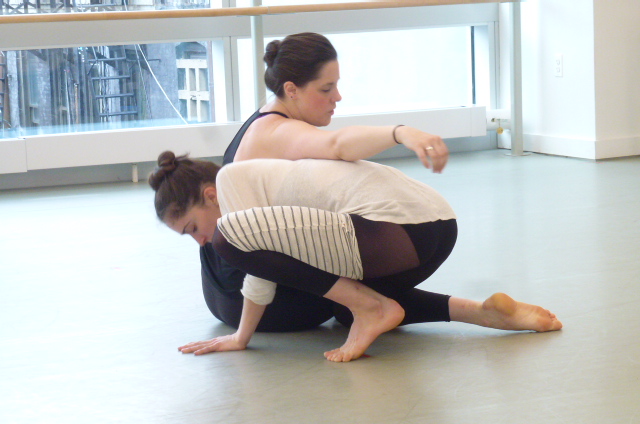
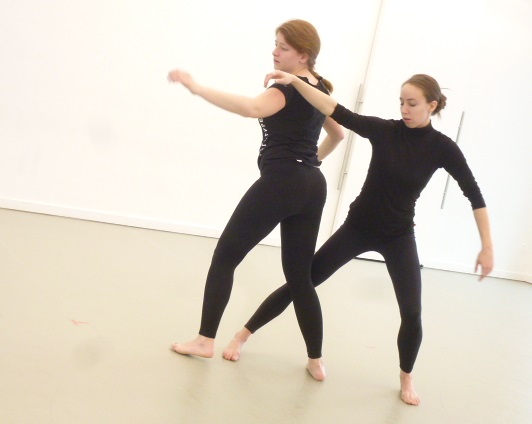
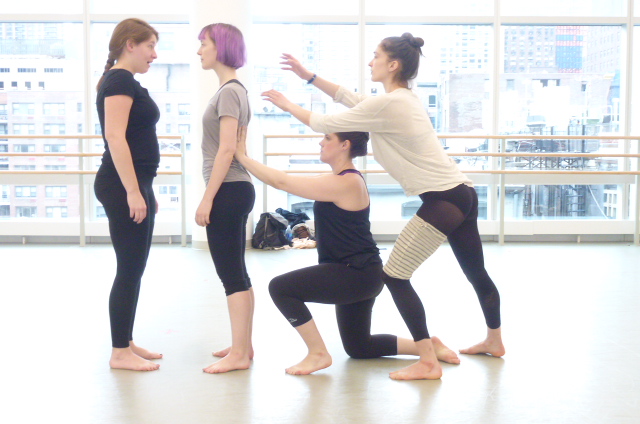
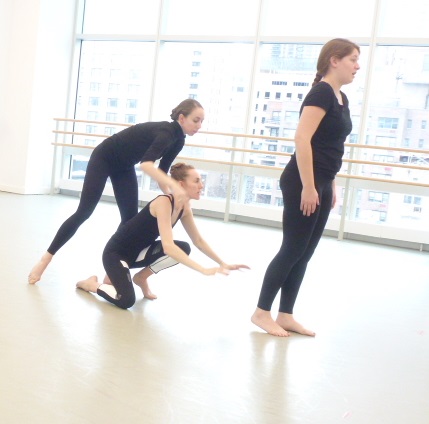
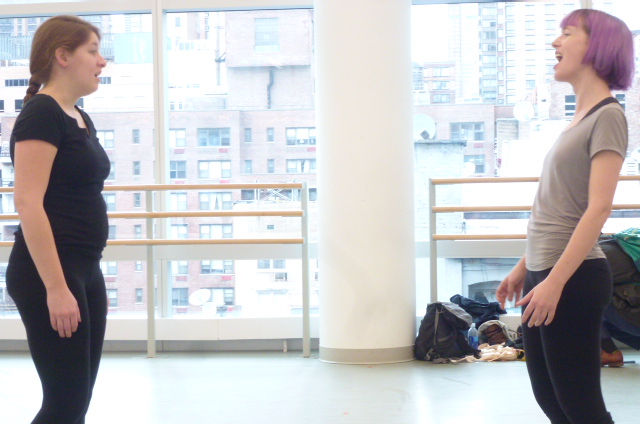
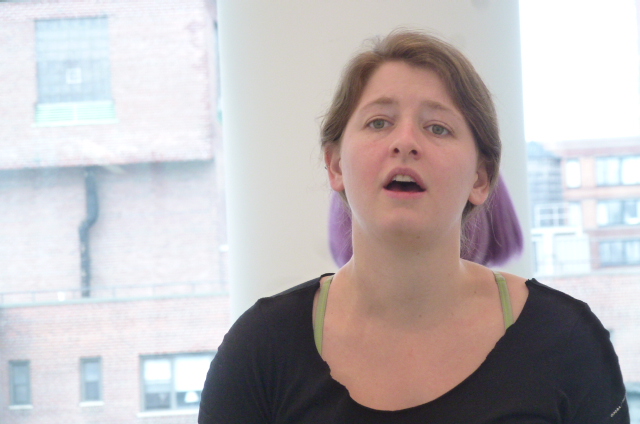
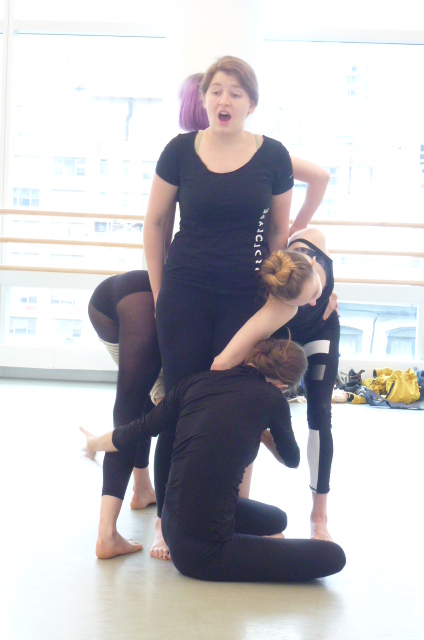
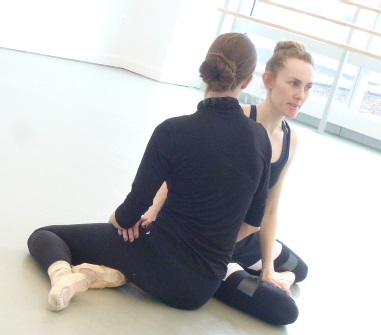
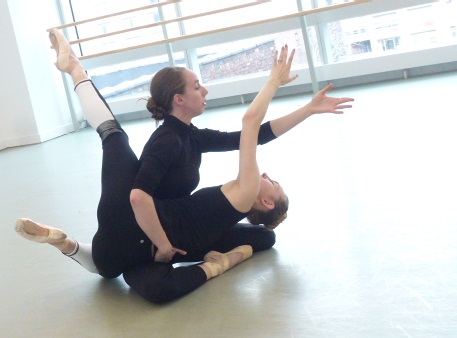
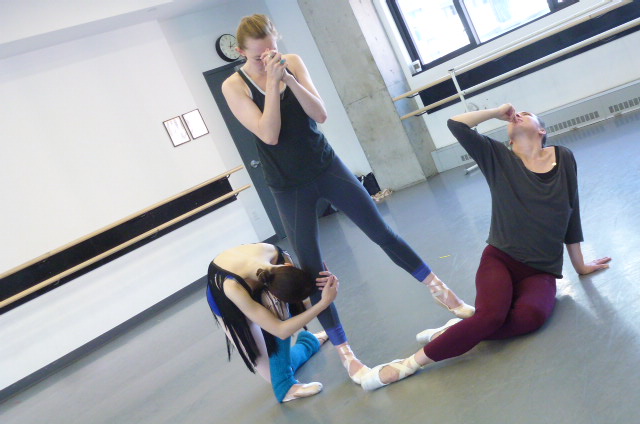
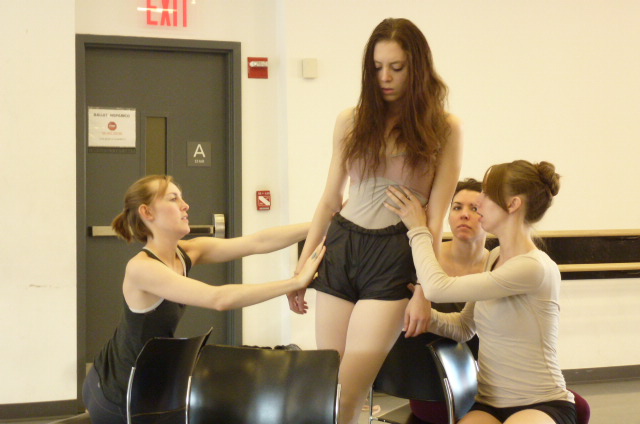
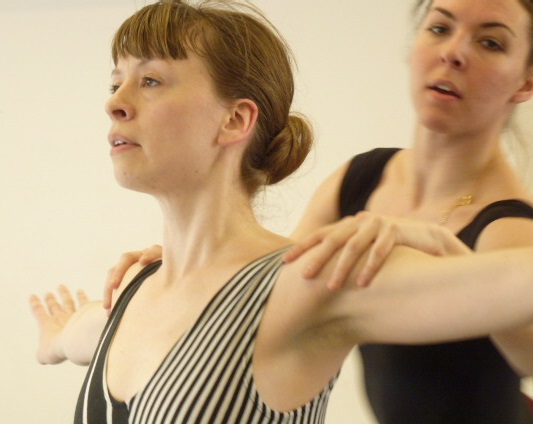
    Monday February 12th, 2018 – Since I am unable to attend this weekend’s New Chamber Ballet performances, the Company’s director, Miro Magloire, invited me to a studio rehearsal this morning of his newest creation: “I Am” set to music by Kaija Saariaho and Karin Rehnqvist.

    When I arrived this morning, the Saariaho portion of “I Am” was being rehearsed, with dancers Kristine Butler, Traci Finch, and Amber Neff; members of the vocal ensemble Ekmeles (Charlotte Mundy, Mary Mackenzie, and Elisa Sutherland) not only sing but participate in the choreography, and NCB’s violinist Doori Na and pianist Melody Fader were on hand to play the magical music of Ms. Saariaho.

    Here are some images from today’s rehearsal of “I Am“:

    L1910572

    Mary Mackenzie, Kristine Butler

    L1910586

    Amber Neff, Charlotte Mundy  

    L1910611

    Amber & Charlotte

    L1910645

    Elisa Sutherland, Traci Finch

    L1910649

    Elisa, Charlotte, Mary, and Kristine

    L1910655

    Traci, Amber, and Elisa

    L1910658

    Elisa and Charlotte face-off

    L1910709

    Elisa Sutherland

    L1910724

    Elisa encircled

    L1910771

    Mary & Kristine

    L1910780

    Kristine Butler

    L1910817

    Traci Finch, Amber Neff

    L1910834

    Traci & Amber

    L1910901

    Charlotte Mundy

    The second part of “I Am” is set to music by Karin Rehnqvist: “Davids Nimm“, a vocal trio based on Swedish shepherdess’s calls.

    Between the two parts of “I Am“, the Company will show a new ballet danced to selections from Johann Sebastian Bach’s Well-Tempered Clavier. This was being rehearsed today, with Melody Fader at the piano and dancers Sarah Atkins, Elizabeth Brown, Kristine Butler, and Amber Neff:

    L1910934

    L1910945

    Elizabeth Brown

    L1910949

    Sarah Atkins, Elizabeth Brown

    L1910986

    Amber Neff, Kristine Butler

    L1910993

    Amber Neff, Elizabeth Brown

    L1920001

    Kristine Butler, Sarah Atkins

    L1920017

    Kristine Butler with Elizabeth, Amber, and Sarah

    The performances will be February 16th and 17th, 2018 at the City Center Studios. For tickets, go here.

    ~ Oberon

  • Rehearsal: New Chamber Ballet

    L1680606

    Above: New Chamber Ballet dancers Amber Neff and Sarah Atkins

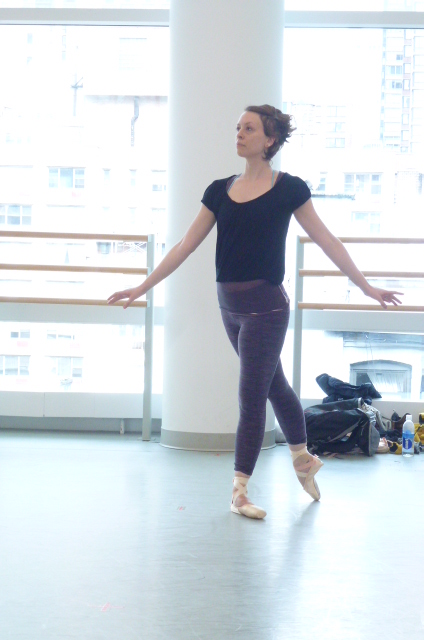
    Monday February 22nd, 2016 – I dropped in at Ballet Hispanico’s studios today where Miro Magloire, just back from choreographing the ballet sequences for Sarasota Opera’s production of Verdi’s AIDA, is preparing his New Chamber Ballet dancers for their upcoming performances: February 26th and 27th, 2016, at City Center Studios. Ticket information here.

    Marina Harss wrote a wonderful article for DanceTabs about Miro’s Sarasota experience: read it here.

    At today’s rehearsal, Miro was fine-tuning the ballets we’ll be seeing on the coming weekend at City Center Studios. Here are some photos of the dancers I took at the studio today:

    L1680617

    Amber Neff

    L1680655

    Shoshana Rosenfield, Amber Neff, Sarah Atkins

    L1680682

    Shoshana Rosenfield, Sarah Atkins

    L1680707

    Sarah Atkins, Amber Neff

    L1680826

    Shoshana Rosenfield

    L1680830

    L1680889

    Traci Finch

    L1690027

    Elizabeth Brown, Sarah Atkins

    L1690050

    Traci Finch, Elizabeth Brown

    L1690066

    Elizabeth Brown, Traci Finch

    L1690142

    Elizabeth Brown, Amber Neff

    L1690150

    Elizabeth Brown, Amber Neff

    L1690140

    Elizabeth Brown

    The works to be presented at the upcoming City Center Studio performances are: the premiere of the full version of Gravity to music by Austrian composer Friedrich Cerha, who turns 90 this month; the premiere of a new ballet to Maurice Ravel’s 2nd violin sonata; a revival of Quartet, a dramatic solo set to Arnold Schoenberg’s Six Little Piano Pieces; a revival of Two Friends, a trio danced to Claude Debussy’s violin sonata; and Miro’s recent success Voicelessness, a duet set to music by Beat Furrer.

    The dancers are Sarah Atkins, Elizabeth Brown, Traci Finch, Amber Neff, and Shoshana Rosenfield, and the music will be played live by Doori Na (violin) and Melody Fader (piano).

  • PRINCE IGOR @ The Met

    PrinceIgor-copy-2

    Above: Ildar Abdrazakov as Prince Igor at The Met

    Monday February 24th, 2014 – I fell in love with Borodin’s PRINCE IGOR back in the late 1960s when I saw several performances of it in an English-language production at New York City Opera. The staging was traditional and featured unforgettable performances by my beloved Maralin Niska (Yaroslavna) and that great singing-actor William Chapman (doubling as Khan Konchak and Prince Galitsky); much of the music became imbedded in my operatic memory, and the famed Polovtsian Dances were staged as a warriors-and-maidens extravaganza, led by the great Edward Villella who was on-loan from New York City Ballet.

    The City Opera’s production used painted drops and built set-pieces to evoke the locales, with era-appropriate costumes. It spoke to us directly of the time and place that Borodin’s music conveys. The Metropolitan Opera’s new production of PRINCE IGOR is more generalized; the women of Putivi are seen in 1940-ish dresses and coats even though the action supposedly takes place in the year 1185. 

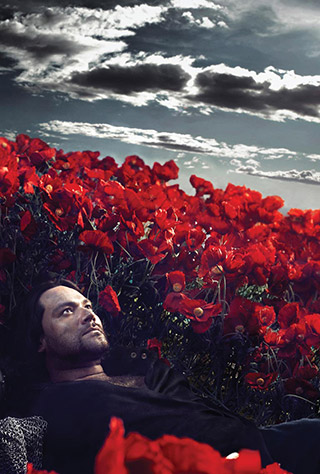
    The evening overall was a rather mixed affair: musically sound and with some interesting visual elements (the field of poppies) it does not really end up making a strong dramatic statement; this may be due in part to the episodic character of the opera itself. In this updated setting we don’t get much of a feel for exoticism. Khan Konchak for example is not seen as an Asiatic warlord with a scimitar but rather as a rather anonymous military type in a toxic-yellow uniform.

    The opening scene takes place not in a public square in Igor’s capital but rather in a great hall where the Prince’s troops assemble in preparation for going to war. This is fine, but it rather short-circuits the effect of the solar eclipse that is taken as a bad omen by the populace. Despite this warning, Prince Igor leads his troops out to fight the Khan; he is defeated and captured.

    Black-and-white films of the Prince and of his soldiers are shown during interludes; these are rather superfluous though it’s nice to see two men in a gentle embrace as they await the coming battle. The field of poppies is really very attractive and the ballet – with the dancers is gauzy cream-coloured costumes – is sensuous and flowing rather than militant and grand. I loved spotting several of my dancer-friends: Loni Landon, Michael Wright, Anthony Bocconi, Kentaro Kikuchi, Matt Van, and Bradley Shelver.

    In this production, the three scenes of Act II all take place in the same spacious great hall as the prologue; nevertheless, there are longish pauses between scenes.

    The first intermission stretched out unduly and the far-from-full house seemed bored waiting for the opera to resume. There were very short rounds of applause after the arias, which were for the most part attractively sung. A huge double explosion as the Act II curtain fell with Putivi under attack almost made me jump out of my seat.

    Gianandrea Noseda conducted with the right sense of grandeur, but also with a nice feeling for the more reflective moments. Perhaps what was missing was a Scheherazade/mystique in the Polovtsian scene. Noseda sometimes tended to overwhelm his singers; and the very open sets did not help to project the voices into the hall. The orchestra and chorus were on optimum form.

    In the title-role, Ildar Abdrazakov sang beautifully, especially in his great aria of anguish over his defeat and of his longing for his beloved Yaroslavna far away. The role, often sung by baritones, seemed to work well for Abdrazakov even though his voice is more basso-oriented. Read about Mr. Abdrazakov’s recently-issued CD of Russian arias Power Players, here. Igor’s lament is a highlight of this excellent disc.

    Stefan Kocan and Mikhail Petrenko appeared as Khan Konchak and Prince Galitsky respectively and both sang well though neither seemed as prolific of volume as I have sometimes heard them. Sergei Semishkur’s handsome tenor voice and long-floated head-tone at the end of his serenade made his Vladimir a great asset to the evening musically, though he was rather wooden onstage. The veteran basso Vladimir Ognovenko was a characterful Skula, with Andrey Popov as his sidekick Yeroshka.

    Oksana Dyka’s stunning high-C as she bade farewell to Igor in the prologue sailed impressively into the house; but later, in her Act I aria, the voice seemed unsteady and lacking in the dynamic control that made Maralin Niska’s rendering so memorable. Niska always took a flaming, sustained top note at the end of the great scene with the boyars where the palace is attacked. Dyka wisely didn’t try for it. The sultry timbre of Anita Rachvelishvili made a lush impression in the contralto-based music of Konchakovna, and it was very nice to see Barbara Dever onstage again in the brief role of Yaroslavna’s nurse: I still recall her vivid Amneris and Ulrica from several seasons ago.

    Deonarine_Kiri_046_ret4 2

    A particularly pleasing interlude came in the aria with female chorus of the Polovtsian Maiden which opens the scene at Khan Konchak’s camp. Singing from the pit, the soprano Kiri Deonarine (above) showed a voice of limpid clarity which fell so sweetly on the ear that one could have gone on listening to many more verses than Borodin provided. It was a definite vocal highlight of the evening, and also showed Mr. Noseda – and the Met’s harpist – at their senstive best.

    Metropolitan Opera House
    February 24, 2014

    PRINCE IGOR
    Alexander Borodin

    Prince Igor.............Ildar Abdrazakov
    Yaroslavna..............Oksana Dyka
    Vladimir................Sergey Semishkur
    Prince Galitzky.........Mikhail Petrenko
    Khan Konchak............Stefan Kocán
    Konchakovna.............Anita Rachvelishvili
    Skula...................Vladimir Ognovenko
    Yeroshka................Andrey Popov
    Ovlur...................Mikhail Vekua
    Nurse...................Barbara Dever
    Maiden..................Kiri Deonarine

    Conductor...............GIanandrea Noseda

  • Score Desk for DON CARLO

    L1070620

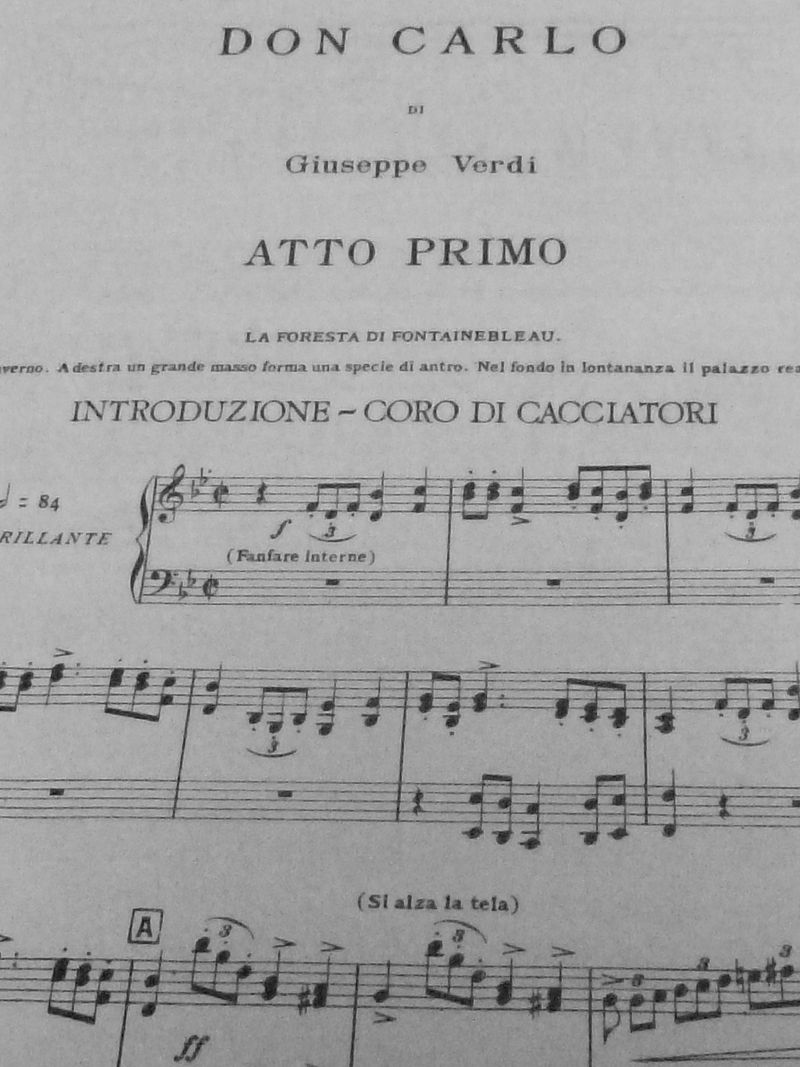
    Monday February 25th, 2013 – A powerful line-up of male principal singers drew me to this performance of Verdi’s DON CARLO at The Met. The women in the cast seemed less interesting by far; having seen the production before – and feeling no need to see it again – I took a score desk and settled in.

    DON CARLO was for years my favorite opera, but then the German repertory began to edge out the Italian in my heart and soul. Now ARIADNE AUF NAXOS, ELEKTRA and DIE WALKURE are in a sort of three-way tie for the top spot. But I still love DON CARLO and always go when it is performed. I’m not crazy about the Fontainebleau scene, and I never watch the Auto da Fe since the sight of people burning other people alive for the greater glory of some fiendish imagined god (or rather, to maintain the power of the men who created him and sustained the myth thru blood and force over the centuries) is revolting.

    Negative reviews of Loren Maazel’s conducting and of Barbara Frittoli’s singing as Elisabetta had me thinking in advance that this might be a partial CARLO for me. Added to the prospect of two Gelb-intermissions, and the fact that I was already feeling tired when I got there, it seemed that a very long evening was loooming ahead. But I found myself drawn in by the opera itself, and I always enjoy the experience of being in the House with the score in front of me. I stayed to the end and on the whole felt it was a very good evening, particularly thanks to the superb performances of Dmitry Hvorostovsky and Ferruccio Furlanetto as Posa and Philip II respectively.

    To be sure, some of Maestro Maazel’s pacing was slow. To me his conducting registered a measured sense of grandeur and dignity, and of events unfolding with a sort of epic inevitability. Often considered Verdi’s most purple opera – the colour of royalty evoked in sound – I felt Maazel’s concept worked well: there were lively passages along the way, and his Auto da Fe scene was amply majestic and well-structured. For the most part he kept his singers at the forefront; in a few places they needed all their reserves of breath to sustain the line thru the slow tempi. But, following the score, I thought the conductor had things well in hand.

    Maazel experienced some boos at his solo bow; I wonder if it was pre-meditated since it seemed to be coming from one area of the Family Circle. Recently while my friend Dmitry and I were having a pre-PARSIFAL supper, I could overhear a woman in the next booth telling her companion that she was planning to boo conductor Daniele Gatti. If she did, it got lost in the cheers. Maazel’s conducting was quirky but worked well to my ears; the only potentially boo-able performance was that of Ms. Frittoli but the audience tolerated her with polite applause.

    I find the Fontainebleau scene a needless introduction to the evening. Verdi sanctioned its elimination for performances in Italy following the premiere in Paris where five-act operas were de rigeur. Some people say, “Oh, it gives the opera context!” Undoubtedly. But we lived without it for years, savoring the gloriouly dark horn theme which opens the four-act version and immeditely sets us in the mood for this opera about royalty and religion. Tonight, with Ms. Frittoli sounding very wary, the scene seemed even more expendable than ever. It makes for such a long night, even under the best of circumstances.

    The soprano’s perilous performance serves as a reminder that a vocal career is short enough without quickening its demise by singing roles that are too heavy. Ms. Frittoli will be remembered in New York City for her exquisite singing as Desdemona in 1999; she was also a particularly fine Mimi, and as recently as 2005 she managed an impressive Fiordiligi by manipulating the dynamics to control the effects of a widening vibrato. But singing things like the Verdi REQUIEM and Donna Anna have taken their toll on her lyric instrument. Tonight the vibrato was painfully evident even at the piano level. She managed to avert disasters, though a high B-flat in the quartet was scary and she could not sustain the floated B-natural in the final duet, on “…il sospirato ben”, one of the role’s most affecting moments. Overall it was sad to experience this voice in its current state. The news that she’ll be singing Tosca later this year in Europe does not bode well.

    These performances of Elisabetta were originallly slated for Sondra Radvanovsky; when Sondra moved to BALLO instead, the Met turned to Ms. Frittoli. They should have cast about for a more appropriate alternative. When I think of the wonderful Elisabettas I have experienced – Caballe, Kabaivanska, Freni, and  Radvanovsky as well as Marina Mescheriakova’s flawless Met debut in the role – Ms. Frittoli’s pales into a haze.

    Anna Smirnova’s voice does not always fall pleasantly on the ear, being rather metallic. But she is a skilled singer who managed the filagree of the Veil Song very well and pulled out all the stops for an exciting “O don fatale” with brazenly sustained high notes. 

    Don Carlo is a bit heavy for Ramon Vargas but this very likeable tenor sang quite beautifully through most of the evening. His voice is clear and plaintive, his singing stylish and persuasive. Only near the end of the opera did a few signs of tiredness manifest themselves. His delicious singing of “Qual voce a me del ciel scende a parlar d’amore?” in the love duet was a high point of the evening.

    Eric Halvarson’s Inquisitor was powerully sung and stood up convincingy against the overwhelming Philip II of Ferruccio Furlanetto. The two bassos had a field day, trading thunderbolts in their great confrontation. Basso Miklos Sebestyen was a very impressive Friar (the Ghost of Charles V), drawing a round of applause fo his sustained low F-sharp in the St. Juste scene of Act I. Jennifer Holloway was a very fine Tebaldo but Lori Guilbeau, who has a pretty sound, seemed not to be well-coordinated with the pit as she sang her offstage lines as the Celestial Voice.

    The towering magnificence of Dmitry Hvorostovsky‘s Posa and Ferruccio Furlanetto‘s Philip II put the performance on a level with the greatest Verdi experiences of my opera-going years. Dima’s singing was velvety and suave, his breath-control mind-boggling, his singing affecting, elegant and passionate by turns. His high notes were finely managed and marvelously sustained.

    Mr. Furlanetto’s glorious singing is a throwback to the days when great Italian voices in every category rang thru the opera houses of the world.  Now nearing his fortieth year of delivering generous, glorious vocalism, the basso’s dark and brooding tones fill The Met with a special sonic thrill. His singing, so rich and deeply-felt, can thunder forth at one moment and then draw us in with hushed, anguished introspection the next. From first note to last, Furlanetto’s Philip II was simply stunning. His hauntingly tender musing on the phrase “No…she never loved me…her heart was never mine…” just before the epic climax of his great monolog moved me to tears.

    There were huge eruptions of applause and cheers after both the baritone and the basso finished their big arias; but applause nowadays tends to dwindle rather quickly and the days of show-stopping aria ovations are largely a thing of the past. 

    There were lots of empty seats which surprised me: with this starry assembly of male singers and the season’s biggest name from the conducting roster involved, I expected a fuller house.

    Dima2

    Dmitri Hvorostovsky

    Furlanetto

    Ferruccio Furlanetto

    Metropolitan Opera House
    February 25, 2013

    DON CARLO
    Giuseppe Verdi

    Don Carlo...............Ramón Vargas
    Elizabeth of Valois.....Barbara Frittoli
    Rodrigo.................Dmitri Hvorostovsky
    Princess Eboli..........Anna Smirnova
    Philip II...............Ferruccio Furlanetto
    Grand Inquisitor........Eric Halfvarson
    Priest Inquisitor.......Maxime de Toledo
    Celestial Voice.........Lori Guilbeau
    Friar...................Miklós Sebestyén
    Tebaldo................ Jennifer Holloway
    Count of Lerma..........Eduardo Valdes
    Countess of Aremberg....Anna Dyas
    Flemish Deputy..........Alexey Lavrov
    Flemish Deputy..........Paul Corona
    Flemish Deputy..........Eric Jordan
    Flemish Deputy..........Evan Hughes
    Flemish Deputy..........Joshua Benaim
    Flemish Deputy......... David Crawford

    Conductor...............Lorin Maazel

  • Tom Gold Dance @ Florence Gould Hall

    PHILIP_GOLD-4

    Monday February 27, 2012 – Tom Gold (above in a Matt Murphys photo), formerly a brilliant and popular soloist at New York City Ballet, has been touring with his own chamber ensemble of dancers for the past four years, performing in Israel and Europe. Tonight he brought his stellar group of City Ballet colleagues (and a luscious ABT guest) to Florence Gould Hall in a full evening of his own choreography.

    On the program were four works, three of which were danced to live music. This added to the immediacy of the evening, which was marked by top-notch dancing (a given, considering Tom’s roster) and genuine enthusiasm on the part of the audience. Tom’s choreography is rooted in the classical ballet vocabulary; even when the ballets take on aspects of Chinoiserie or of Argentine tango, the combinations stay true to the essence of classic technique. The dancing is non-stop – there’s no standing about or promenading in Tom’s ballets: if you are onstage, you are dancing…unless you are sitting out one of the tangos. To me it seemed the choreography was really demanding, calling for absolute technique which, of course, these dancers have.

    The opening work, ELEMENTAL, immediately set the dance in motion. Alexandre Desplat’s Far Eastern-coloured score (the only recorded music of the evening) along with the delicate gestures of the girls in their silky, short tunics gave the feeling of Orientalia with a contemporary touch. While the dancers played with the subtle wit of their characterizations, there was no stinting on the steps. Duets for Abi Stafford and Robert Fairchild, and for Sara Mearns and Jared Angle, gave us a chance to savour the star quality of four of NYCB’s finest dancers. Meanwhile a sprightly trio for Amanda Hankes, Lauren King and Kristen Segin was particularly appealing. The stage at Florence Gould seemed barely able to contain the energy of these dancers, with Russell Janzen towering over his colleagues and dancing handsomely.

    NYCB concertmaster Kurt Nikkanen and pianist Susan Walters gave luminous life to music of Satie, Poulenc and Faure for Tom’s SUITE FRANCAISE, an extended pas de deux in three movements, each with a different mood: lyric, dramatic, romantic. ABT soloist Simone Messmer was partnered by NYCB’s danseur noble de luxe Tyler Angle, a duo I’d love to see more of.

    13846_228670781857_15817871857_4711979_3734678_n

    Simone Messmer was simply ravishing; only a handful of ballerinas in my experience have the perfumed radiance of this enigmatic and sublime dancer: total gorgeousness from the moment she stepped onstage. I was thoroughly bewitched.

    Tom Gold’s MOZART VARIATIONS is an elegant tutu ballet, and a complete delight. This is the perfect point to commend Tom for his excellent musical choices, and send a signal to other choreographers that great music invariably makes your choreography all the finer. Here my lovely Abi Stafford reveled in her technical refinement with Jared Angle ever the prince of cavaliers. Russell Janzen again made his mark, as did one of NYCB‘s emerging bright lights: Kristen Segin – rather a late addition to Tom’s group – who danced charmingly. In recent seasons, my opera glasses have often been trained on Amanda Hankes, a particular favorite among my beloved NYCBers; she’s simply so fetching and I really enjoyed having the opportunity to see her dancing in this more intimate setting. Rounding out the cast of this Mozart jewel was Devin Alberda, a perfectly polished young dancer whose work always has a distinctive quality. Duo pianists Ms. Walters and Jeffery Moore gave the dancers perfect support.

    I have a thing for tango ballets…yes, really. Tom Gold’s TANGO FANTASIE provided a flourishing finale for the evening, keeping things on the up-and-up musically (tango king Astor Piazzolla and other works in the genre) while allowing the dancers to let their hair down a bit, yet with no slouching in the choreographic demands. Hot red frocks for the girls and red billowy shirts for the boys gave everything a sultry feel; when not dancing, the dancers observed their colleagues from chairs placed along the sidelines. Abi Stafford and Jared Angle danced an enticing duet, and Sara Mearns and Tyler Angle crossed paths in this nightclub more than once. Outstanding dancing from Robert Fairchild, exuding star quality even when standing still. As the dancers dipped and swayed thru the dangerous rhythms of the tango, one moment captivated: swirling out of a sexy solo passage, Sara Mearns sank into a chair where she magically arranged herself with the provocative languor of a silver screen goddess. You couldn’t take your eyes off her.

    Kurt Nikkanen and Susan Walters gave the tangos all the sinuous allure they deserve; Kurt’s silky style also stood out in an interlude before the final work began.

    Maria Kowroski, Wendy Whelan, Stephen Hanna, Suki Schorer, and Anne Bass were among the crowd, along with Stacy Caddell and Willy Burmann, both of whom are working with Tom Gold and his dancers. This was a most enjoyable evening of dance and I hope it heralds more opportunites to see Tom’s work in the future.

  • Master Class: Herman Cornejo @ MMAC

    L1020453

    Monday February 20, 2012 – Herman Cornejo, one of the most dazzling dancers on the face of the Earth, gave a Master Class at Manhattan Movement and Arts Center today. The studio was packed with young dancers and Herman generously extended the normal 90-minute class time by adding an extra half-hour for the boys. And then he stayed on beyond that, working on specifics with the guys who were – of course – thrilled with this unexpected bonus. After about five minutes of impromptu coaching, Herman asked if the studio was needed for another class; since it wasn’t, he seemed to be settling in for some intensive work with the dancers. When I left, they were still at it – with Herman demonstrating some phenomenal combinations and sharing the secrets of the phenomenal technique.

    L1020595

    Herman has a melodious speaking voice, sometimes slipping charmingly into Spanish. The Argentine premier danseur clearly loves his craft and is anxious to share his knowledge; he encourages the dancers to find the balance between lyricism and the dynamics of the movement. His own impeccable style is so fluid, graceful and yet thoroughly masculine, and he worked patiently with the boys to explore the mechanics of the basic steps on which they can build the expressive qualities of their dancing.

    Watching Herman toss off his combinations was both a revelation and an inspiration. Seeing him perform with ABT at The Met is always thrilling – a GISELLE he danced with Xiomara Reyes remains in my mind as a highlight of the last three decades of ballet-going – and watching him at close range in the studio was an inspiring experience. I’d been having kind of a down day but observing this class really gave me a rush; imagine if I’d actually been able to take the class! I found myself envying the young dancers and again wishing to be 50 years younger and knowing that this was what I was meant to have done. Illusions are by their nature sweet, as the Marquise de Merteuil would say.

    As I passed by the huge studio window while heading home, I saw that the boys were still dancing away, with Herman right in the thick of things. What a generous artist and person. I came home and grabbed my ABT schedule; I have to see Herman Cornejo onstage again at the earliest opportunity.

    My gratitude to Herman, MMAC’s Erin Fogarty and publicist Michelle Brandon Tabnick for allowing me to watch this uplifting class. Erin and I had a great time comparing our (lack of) photographic skills. A few of my pictures are here.

  • Pointe & Pirouettes @ MMAC: Francois Perron
    P1180648

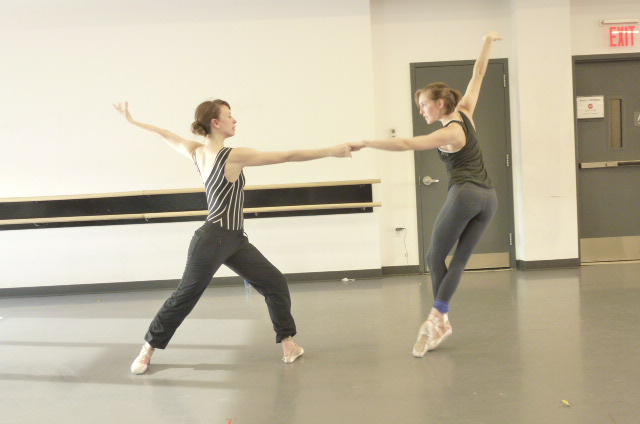
    Monday February 21, 2011 – A day-long ballet fete at Manhattan Movement and Arts Center which featured classes taught by Francois Perron and Wendy Whelan as well as toe-shoe fittings provided free of charge by various manufacturers of the satiny slippers.
    P1180687

    I arrived to watch Francois’ class at 10:30 AM. I had never met him before; he’s a tall and very charming gentleman and I really enjoyed listening to him give the exercises and combinations with his delicious accent from the Parisian boulevards. Francois had a studio full of students and he called them to order and plunged into the plies without preamble.

    P1180642

    The best description of Francois Perron’s class is, it’s a lyrical experience. His style brings out the musicality and grace of the dancers. He said one thing that struck me as so essential: “Elegance is the key.” Beyond that were some more specific suggestions: “Glue your bellybutton to your spine” (if I could master that one I would look 20 pounds thinner!) and “You won’t gain any strength from (over-bending) your wrists.” He pointed out the importance of always closing tendus in a complete 5th, especially tendus to the back, and the necessity of keeping the feet fully pointed no matter how fast you are moving.

    P1180675

    There were several notable dancers in the class; Kyle Hiyoshi (above), currently at SAB, stood out for clarity and smoothness of technique and a really nice presentation. There were others I’d love to single out but I don’t know their names: here are some of the girls I kept my eye on. Shoot me a comment if you recognize them:

    P1180636

    P1180655 

    P1180672

    P1180681

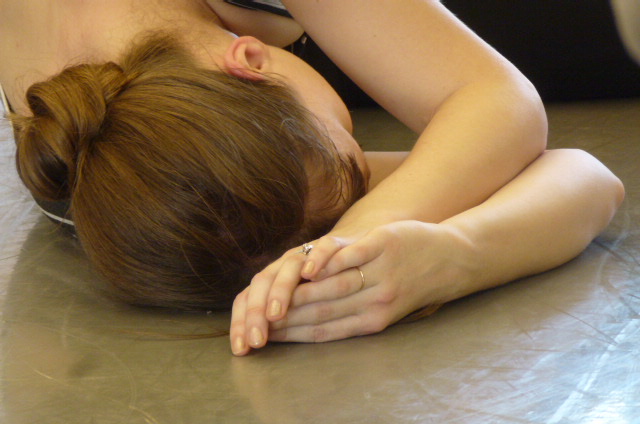
    There were others, too often too far out of the range of my small camera. I also felt a bit like an eavesdropper shooting them at their work, but I guess it is something they need to get accustomed to as dancers.

    P1180725

    In many of my pictures the dancers flashing by me appeared on my little screen only as a blur of movement.

    P1180649

    The class progressed to what seemed to me to be some pretty demanding center work. The students swept across the floor in pairs after which Francois gave them additional tips. If I was a young ballet dancer here in New York City, I’d want to take class from Francois every week. There’s an old-world feeling in his method that should not be lost.

    Following Francois’ class I ran over to Thai Basil for a delicious solo lunch, then made a quick trek to Lincoln Center to check the NYCB lobby casting sheet for changes in their final week and there ran into Wendy Whelan – wearing the most fetching coat – who was en route to MMAC to teach. Half an hour later, I was in her studio along with Matt Murphy who took time from his busy schedule to come and photograph one of our mutually favorite ballerinas giving class. That story will be found here, along with Matt’s photos.