Tag: Monday October

  • Voices from South Africa @ Weill Hall

    Siphokazi-Molteno jpg

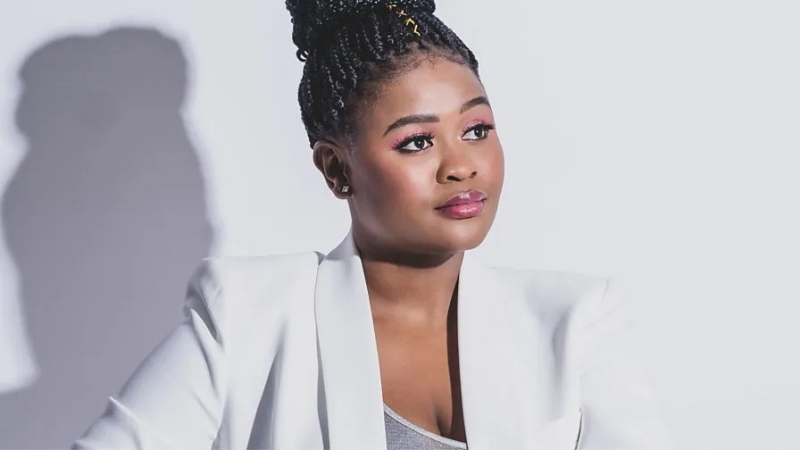
    Above: Siphokazi Molteno

    ~ Author: Oberon

    Monday October 28th, 2024 – The Met Orchestra Chamber Ensemble presenting a program of classic and contemporary works at Weill Hall. I was very keen to hear mezzo-soprano Siphokazi Molteno. who represented South Africa at the 2023 Cardiff Singer of The World competition, and who made her Metropolitan Opera debut in 2022 as Flora in LA TRAVIATA.

    Ms. Molteno opened the evening with the Brahms “Viola songs”, a pair of lullaby-like solos accompanied by viola (Shmuel D. Katz) and piano (Thomas Lausmann). The Molteno voice has a marvelous contralto richness as well as a lyrical warmth; to say she put me in mind of the great Florence Quivar is the highest compliment I can give. It’s a voice full of ‘humanity’ and a voice I will hope to hear again…and soon. Her colleagues from the MET Orchestra played sublimely, setting the evening gorgeously on its way.  

    There was then a longish pause while the stage was set for the next work, which involved five musicians: Seth Morris (flute), Tal First (viola), Hannah Cope (harp), Gregory Zuber (marimba), and Jeffrey Irving (percussion). Ndodana-breen

    Above: composer Bongani Ndodana-Breen

    The composer’s choice of instrumentation for his Rain Making really drew me in: if there’s a marimba to be heard, I want to hear it…and likewise the harp. Mr. Ndodana-Breen composed this piece in memory of Queen Modjadi, one in a line of Rain Queens of the Balobedu people in the Limpopo province of South Africa. A Rain Queen is believed to have the power to control the rain and the winds. This mythic association made the music even more intriguing for me.

    The players made a wonderful blend and the evocative sounds included a rhythmical flute, a plucked violin, and a bean bag played by the percussionist. The flute and violin trade melodic phrases, the violin shivers, the melismatic marimba enchants. Then, to a big, pounding beat propelled by the bass drum, the storm comes: the Rain Queen’s magic has succeeded. I loved this music, and watching the musicians as they entered into the spirit of the ritual; my only complaint was that the piece is too short.

    Maurice Ravel’s sultry Chansons madécasses found a most congenial interpreter in Ms. Molteno. I first heard these songs in 1975 when New York City Ballet premiered a Jerome Robbins ballet of the same title; the singer was Lorna Myers. Since then, I have frequently listened to the songs on Mira Zakai‘s marvelous recording. 

    The first of the three songs, Nahandove, has a beautifully sultry feeling: it tells of the seduction of a native woman. Jerry Grossman’s cello opens the piece, and Ms. Molteno’s voice is at its most sumptuous as she begins this tale of longing and ecstasy. Jazzy piano rhythms from Mr. Lausmann and the sound of the piping flute (played by Maron Khoury) develop a rocking feeling; the music turns pensive and then caressive. With the song’s final strophe, “Tu pars...” the tryst ends, though it seems the lovers will meet again at sunset.

    The second song, Aoua!, opens with the singer screeching a warning: do not trust the white men! The piano takes up a swaying rhythm as Ms. Molteno continues with singing of great intensity. This is violent, angry music, though eventually the cello and flute sound forlorn.

    By contrast, the final song – Il est doux – is a languid reflection on the joys of resting the shade of a tree on a late afternoon, while a lover whispers in your ear. The sensuous flute, the eerie cello on high echoing the buzzing insects with a trill, the voice and the cello entwining, solitary notes from the piano…so atmospheric.  Ms. Molteno’s singing was evocative and so pleasing to experience. The song ends with the swiftly spoken dismissal: “Go and prepare the evening meal…” 

    Mvd2022 jpg

    Following a longish interval, an ensemble of eight instrumentalists took the stage for music by Matthijs Van Dijk (above): we heard his extraordinarily powerful oratorio Moments in a Life. I had previously heard one of this Cape Town-based composer’s works [(rage) rage against the] played by the Signum Quartet in this very hall. 

    Thus, I expected a lot from the composer’s Moments in a Life, composed in 2016 for string quintet, clarinet, percussion, piano, overtone singer & narrator. Could lightning strike twice in the same place? The answer is a resounding YES!…Moments in a Life is one of the most powerful works I have ever experienced.

    The oratorio is based on the writings of Denis Goldberg, a native of Cape Town whose parents were politically active. In 1957, Denis joined the (banned) Communist Party and he was arrested and jailed in 1960 for supporting strikers. In the mid-1960s he was with other freedom fighters who were arrested for illegal acts and jailed. He remained a prisoner for 22 years, constantly being tortured and threatened with death.
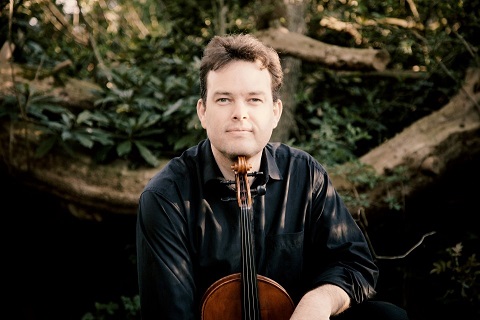
    Gareth-lubbe

    At this evening’s performance, Gareth Lubbe (above) was the narrator. Mr. Lubbe is also an overtone singer; this is a technique in which the resonance in the mouth and throat are combined with tongue, lip, and jaw movements which create a perception of overtones as being individual notes. It’s a sound that is eerie…and fascinating.

    Moments in a Life, conducted by William Long, gives us so much to take in in its 40-minute duration. Trying to follow the narrative whilst also listening to the music was a bit of a challenge for me, a dedicated note-taker: I filled three pages with notes which barely scratched the surface of the work.

    “I was sure we would not die in prison,” marks the oratorio’s opening line. As the narration moves forward, the writer recalls his first teacher, who he fell in love with. He speaks of not seeing his wife and children for more than two decades while imprisoned. A fellow freedom fighter, Looksmart Ngudle, was tortured to death. Freedom costs.

    Nelson Mandela defends the accused patriots: “An ideal for which I am prepared to die”. Sentenced to life in jail, they are moved to a harsher prison affectionately known as “Beverly Hills”: three thousand prisoners singing hymns as individuals are led away to be hanged. Ironically, a gorgeous musical theme underscores this tragedy.

    Periodically thru the work, Mr. Lubbe’s overtone singing makes a striking impression: an indescribable mixture of humming and whistling.

    As to the music, the opening measures are pensively played by clarinetist Jessica Phillips: a slow, wide-ranging solo, soon joined by piano and strings. Cellist Mariko Wyrick underscores the story of the teacher, Ms. Cook. Andrew Gantzer’s double bass, so impressive throughout the piece, tells of Looksmart’s ordeal.

    Mr. Lubbe’s voice growls deeply; percussionist Jeffrey Irving plays a rollicking ‘cadenza’. Beauteous strings, the clarinet sings again; here are glowering chords and a lament played by violist Shmuel D Katz. Mr. Lubbe has an unaccompanied solo.

    Pianist Katelan Trần Terrell and Mr. Gantzer’s bass establish a beat; Mr. Katz strums his viola. A sudden militant outburst forebodes the assassination of activist Chris Hani; a poignant violin passage (Yurika Mok and Yang Xu) underscores the narrator’s reflections on Chris’s death.

    “A petty exercise of power that harms our people.”

    At last, in the forced-labor setting of The Quarry, where Nelson Mandela and his brother freedom fighters languished, a glorious theme of hope develops: “Let Freedom Reign”. Mr. Lubbe’s otherworldly overtones are heard over a long, sustained chord.

    The audience, who had witnessed the performance is a state of awed silence, now gave the performers a fervent round of applause.  

    Back home, I went to YouTube to see what I could find about this powerful work and immediately discovered this incredible document: Moments in a Life, recorded live in concert in the Endler Hall at the Stellenbosch International Chamber Music Festival on July 16th, 2016. This, I believe, was the work’s world premiere, with Denis Goldberg – then aged 83 – reading the texts (drawn from his autobiography) himself. The great freedom fighter passed away in 2020. 

    The work is so timely right now, when our democracy stands on a precipice. If we falter, our country – and indeed the world – will be forever changed.

    ~ Oberon

  • Ensemble Connect Delights @ Weill Hall

    Screenshot 2022-10-25 at 07-45-30 Ensemble Connect

    Monday October 24th, 2022 – When I saw the announced program for this evening’s concert by Ensemble Connect at Weill Hall, I knew I had to be there: what an enticing line-up of composers…and, in the event,  it was all so dazzlingly played!

    The young musicians of Ensemble Connect are exceptionally talented; all the music tonight sounded fresh and vibrant. They are also appealing to watch. The works on this well-contrasted program spanned the years from 1717 to 1994, and it was a sonic feast from first note to last. 

    CH11266821

    Above, playing the Martinů: Yasmina Spiegelberg, Garrett Arney, Laura Andrade, and Cort Roberts; photo by Fadi Khier

    Bohuslav Jan Martinů’s rarely heard Quartet for Clarinet, Horn, Cello, and Side/Snare Drum, H. 139, dates from 1924. This rather quirky mix of instruments does – as hornist Cort Roberts pointed out in his introductory remarks – represent the four ‘families’ of the symphony orchestra: strings, winds, brass, and percussion. What delightful sounds we heard from Mr. Roberts and his colleagues: Yasmina Spiegelberg (clarinet), Laura Andrade (cello), and Garrett Arney (snare drum).

    The work is full of wit and irony, yet in the central Poco Andante comes a poignant lament that is extraordinarily moving. Snare drum and cello lead off the opening Allegro moderato, which becomes march-like as the clarinet and horn join in. A trudging feeling develops, with a horn solo which later shifts to the clarinet. The music seems about to fade away, but there’s a big bang ending.

    As the Andante commences, my companion and I were simply blown away by the depth and beauty of tone that cellist Laura Andrade produced. Ms. Andrade played in all four works this evening, and maintained her beautiful sound and sterling musicality at every moment. Ms. Spiegelberg joins the cellist with a rather mysterious air; Mr. Arney’s snare drum comments on the women’s duet, and then Mr. Roberts’ mellow horn sounded a somber theme. The cello solo returns to the touching opening passages, played with heart-rending beauty.

    At the jaunty start of the concluding Allegretto, the voices enter one by one: drum, cello, clarinet, horn. The music jogs along, with the horn ringing forth. After the instruments have exchanged lively, wry phrases, there is a little unison coda to round things off. Such a wonderful way to open the evening, and what a stroke of genius on Martinů’s part to center the work on that profound lament.

    The petite but hugely talented pianist Joanne Kang now joined the impressive Venezuelan violinist Rubén Rengel and Ms. Andrade for a simply glorious performance of Clara Schumann’s Piano Trio in G-Minor, Op. 17. Their playing was tremendously beautiful and moving, and they are as attractive to watch as to hear; their performance of this masterwork seem so vital and immediate, making it an outstanding musical experience of recent seasons

    Clara Schumann’s writing shows a mastery of counterpoint and a heartfelt gift for melody. It’s music alive with romantic ardor. The opening Allegro moderato begins in a melancholy mood, and soon develops a passionate flow of lyricism, with dramatic outbursts along the way adding a sense of urgency. Ms. Kang kept the momentum going with her perfect timing, whilst Mr. Rengel and Ms. Andrade displayed rich, abundant tone as one lustrous theme after another sprang up.  The Scherzo – “in the tempo of a minuet” – commences with an elegant passage for violin and piano; it is gentle, pensive music, and again Ms. Andrade’s plush sound warmed the soul.

    Ms. Kang lovingly played the Andante‘s waltz-like opening, soon joined by the hushed, poetic sound of Mr. Rengel’s violin; their blend carries them thru captivating harmonies. The music gets a bit wild, only to be calmed by more gorgeousness from the Andrade cello. Achingly beautiful playing from these young artists, with the cellist rounding everything of with a simple descending scale that brought tears to my eyes. 

    The trio’s final Allegretto brought forth more dazzling playing from the three musicians; Ms. Kang in particular shown here with sumptuous, large-scale playing and – later – passages of glistening arpeggios. Following a mini-fugue, the music gets grand, only to simmer down to a melody of longing, then moving onward to its epic finish. My companion and I were so thrilled by this rapturous performance.

    Eleanor+Alberga

    Following the interval, music by the Jamaican-born composer Eleanor Alberga (photo above): her String Quartet No. 2. As violist Halam Kim remarked before the playing started, the entire 18-minute single movement develops from a very brief descending phrase that opens the piece; this Mr. Rengel dashed off for us as an introductory demo: it lasts less than a second.

    From its active start, dance-like with dazzling dissonances, the piece moves on with complex harmonies and rhythmic shifts as well as witty touches, such as a repetitive figuration for the 2nd violin (Brian Hong) that made me smile. Mellowing to an andante section laced with enticing harmonies, we arrive at an intriguing passage where tremolo shivers from Mlles. Kim and Andrade underscore an eerily harmonized theme for Mssrs. Rengel and Hong. Ms. Andrade’s knockout cello playing continues to fascinate us, whilst plucked notes from Ms. Kim and Mr. Hong support a high-flying passage for Mr. Rengel’s violin.

    CH11266889

    Above, playing the Alberga quartet: Rubén Rengel, Brian Hong, Laura Andrade, and Halam Kim; photo by Fadi Kheir

    The music dances on, getting dense and with a big buildup until it turns heartfelt and lush; we seem to be headed to the finish line, but…no: a delightful return of the tremolo viola/cello combo with woozy violins pops up before the music’s energetic final measures. The piece was enthusiastically received; I was hoping Ms. Alberga might be among the audience so we could hail her for her colorful, marvelous score.

    There was a slight delay before the evening’s concluding piece as a technical glitch with the tablets took some straightening out. Ah, for the simple beauty of a paper score!

    CH11266818

    Above: the ensemble playing Bach; photo by Fadi Kheir

    It was with J. S. Bach’s Brandenburg Concerto No. 5 that the evening closed. The large ensemble featured all the players from earlier in the evening, plus bassoonist Nik Hooks – a player with rich, amiable tone and agile technique – and the proverbially “tall, dark, and handsome” Iranian/Pakistani/American flautist, Amir Farsi: limpid of tone, with a personable presence as he bends and sways to the music. Mr. Hooks and Ms. Andrade provided a very high-class continuo, with Ms. Kim and Mr. Hong the supporting strings. Mr. Rengel and Mr. Farsi played magnificently, and there was truly a sense of magic in the hall as the performance unfolded.

    CH11266826

    Above, Joanne Kang at the harpsichord for the Bach; photo by Fadi Kheir

    Of course, this is “the Brandenburg with the harpsichord”, and Mr. Kang gave us a fleet-fingered and fabulous rendition of the long cadenza. The audience, and her colleagues, could not resist breaking in with applause for her stunning playing, one of the highlights of the evening. Other treats in the Bach were the poignant blending of Mr. Rengel’s violin with Mr. Farsi’s flute in the Affetuoso, and the light and lively finale wherein Ms. Andrade and Mr. Hooks put the continuo in the spotlight.

    CH11266799

    Above, the principal players for the Bach: Rubén Rengel, Joanne Kang, and Amir Farsi; photo by Fadi Kheir

    Such a pleasing and deeply satisfying evening! For two hours, the woes of the world and the cares of daily life were forgotten. A thousand thanks to these dedicated musicians, and to the music that makes life worth living.

    All photos by Fadi Kheir, courtesy of Carnegie Hall.

  • Ensemble Connect @ Weill Hall

    Gabriella-smith-691px
     
    Above: composer Gabriella Smith
     
    ~ Author: Brad S Ross
     
    Monday October 22nd, 2018 – It was a cold night in New York City—one of those now all-too-often days where summer seems to have skipped fall entirely and moved straight into winter.  Respite could be found for the audience at the Weill Recital Hall in Carnegie Hall, however, where the immensely talented players Ensemble Connect brought some much-needed warmth to a small percentage of classical music lovers.
     
    Ensemble Connect is a two-year fellowship program with Carnegie Hall that comprises some of the finest young players in the United States.  These musicians hail from some of the nation’s top music schools, including, as the program noted, the Curtis Institute of Music, the Juilliard School, the Peabody Institute, and the University of Southern California, among others.  Indeed, there was not one sour note or poorly delivered phrase of the entire evening.
     
    The concert began with György Ligeti’s Six Bagatelles for Wind Quartet—a set of six short movements adapted from his larger piano work Musica ricercata.  Written in 1953 while the composer lived in Communist Hungary, the piece is a texturally rich and rhythmically adventurous foretaste of the polyphonic styles for which he would later come to fame with such works as Atmosphères and Lux aeterna.  Six Bagatelles opens on an amusing Allegro con spirito followed by an attractively dissonant Rubato: Lamentoso, a warm and pulsing Allegro grazioso, a spirited Presto ruvido, a richly mysterious Adagio: Mesto (written in memoriam of the composer Béla Bartók), and an energetic Molto vivace that cheekily concludes the work.  Performed with precision and zest by the members of Ensemble Connect, it was a delightful demonstration of mature musical humor—a rare quality in classical music.
     
    Next was the New York premiere Anthozoa, a 2018 Ensemble Connect commission written for violin, cello, piano, and percussion by the young American composer Gabriella Smith.  Anthozoa, as Smith explained in a brief pre-performance talk, was inspired by recordings that the composer made while scuba diving of sea life (its unique title derives from a class of marine invertebrates that encompasses corals and sea anemones).  It opened on a colorful percussion solo that is quickly joined by prepared piano, sliding pizzicato cello, and unpitched strikes on the violin.  Lengthy and propulsive soundscapes shifted throughout its twelve-minute duration revealing at times otherworldly sonorities.  Dramatic piano chords gradually emerged underneath a rushing full-ensemble crescendo before receding into a somber, elegiac diminuendo that faded to a silent finale.  Extended technique abounded in Anthozoa, which was as much fun to watch as it was to hear, and Smith received a well-earned ovation—perhaps the longest of the evening—before the concert paused for intermission.  It’s a colorful and invigorating new work, one that will hopefully find many more performances in the future.
     
    5ae73b5def11d7a7712dc59adb06728432140a61b8e6d9718e5f2a36ffcd

    Above: composer Kaija Saariaho, photographed by Maarit Kytöharju
     
    Following intermission was Light and Matter for violin, cello, and piano by the Finnish composer Kaija Saariaho.  Saariaho, who by now must be counted among the finest composers alive, more than lived up to her reputation here as a master of the craft.  Written during the autumn of 2014, Light and Matter was conceived, as the composer put it, “while watching from my window the changing light and colors of Morningside Park.”  Menacing pulses open from the lower registers of the piano and cello before being joined by a belated violin.  Once combined, they exchange a series of vivid textures and haunting atmospheres that cast a hypnotic spell for the piece’s twelve-minute duration.  This aptly complimented the October evening of its performance.
     
    The most warmth was brought to the proceedings with the final piece of the night, Johannes Brahms’s Clarinet Trio in A-minor.  Composed in 1891, the trio marked Brahms’s return to composition after he considering retiring one year before.  This is owed to his admiration of the clarinetist Richard Mühlfeld, whom Brahms regarded as “a master of his instrument.”  Clarinetists may be forever grateful of this relationship, which also led to the composition of his Clarinet Quintet in 1891 and two Clarinet Sonatas in 1894.  The Clarinet Trio, cast in four movements over approximately twenty-four minutes, comprises an inviting Allegro, a wistful Adagio, a buoyant Andantino grazioso, and an upbeat Allegro that sings the work to its final minor chord.  The trio’s sweeping musical gestures and warm consonances were the very apex of Romanticism; this, combined with the relative coziness of the Weill Recital Hall, made for a sumptuous conclusion before players and audience retired into the chilly night air.
     
    All of the musicians performed with the seemingly effortless mastery we’ve come to expect from such things, though it’s easy to forget sometimes just how much work and dedication got them there.  Each deserves a mention, and to this end I will oblige; they were the hornist Wilden Dannenberg, the cellist Ari Evan, the pianist Tomer Gerwirtzman, the percussionist Sae Hashimoto, the violinist Jennifer Liu, the clarinetist Noémi Sallai, the flautist Leo Sussman, the oboist Tamara Winston, and the bassoonist Yen-Chen Wu.  All should be cherished for their well-honed talents and can hopefully anticipate bright careers ahead.
     
    ~ Brad S Ross

  • Ensemble Connect @ Weill Hall

    EnsembleConnectBanner

    ~ Author: Scoresby

    Monday October 23rd, 2017 – In Carnegie Hall’s intimate Weill Hall, I attended an eclectic concert of American music performed by Ensemble Connect (formerly Ensemble ACJW). For those that do not know, Ensemble Connect is according to the Carnegie Hall website “a program of Carnegie Hall, The Juilliard School, and the Weill Music Institute in partnership with the New York City Department of Education.”  Each member is a two-year fellow who performs, teaches, and educates mainly (but not exclusively) in NYC. The Carnegie Hall and Paul Hall (at Juilliard) series of performances are always interesting, as the ensemble typically plays adventurous mixes of chamber music repertoire. 

    I was excited to see the program began with the wonderful clarinetist Yonnah Kim and the colorful pianist Lee Dione performing the Bernstein Sonata for Clarinet and Piano. While I had never heard the sonata before, I remembered Ms. Kim from her excellent performance last year in Golijov’s The Dreams and Prayers of Isaac the Blind. The sonata is divided into two movements, the first being having a relatively dissonant skittering melody reminiscent of Hindemith. The second is more in the mode of Bernstein’s popular style, with jazzy sections. I couldn’t help but wonder if Bernstein had been listening to the Rite of Spring when composing the piece, there are a few allusions throughout the sonata. 

    Ms. Kim captured the oscillating clarinet in the first movement part well with a clear, mysterious sound – managing to shade the lower register parts of the work with a dusty timbre. In the second movement, she added flair to the jazzy sections making them come to life. Mr. Lee managed to capture the mood well with subtle dynamic phrasing and finesse in the rhythmic sections. While I can’t say I was fond of the sonata musically, both players sounded as if they had playing together for years.

    After the sonata, Mr. Dione gave a short speech tying together the wide-ranging program; highlighting the need for distinct American voices to be heard. The second piece on the program was Missy Mazzoli’s Still Life with Avalanche, which is for flute (Rosie Gallagher), clarinet doubling as bass clarinet (Yoonah Kim), violin (Adelya Nartadjieva), viola (Andrew Gonzalez), cello (Madeline Fayette), piano (Lee Dione), percussion (Brandon Ilaw), and 3 harmonicas. The work begins with the harmonicas and strings creating an atmospheric drone that is then interrupted by the bass clarinet and piano. These interruptions build and become more frequent until the piece takes shape. It sounds like a mix of a few genres ranging from rock to contemporary classical. The players all gave a committed performance, embracing each different style of music and coordinating well. 

    The last piece on the brief first half of the program was Copland’s Sextet for clarinet (Yoonah Kim), violins (Rebecca Anderson and Adelya Nartadjieva), viola (Andrew Gonzalez), cello (Julia Yang), and piano (Mika Sasaki). The piece is a reduction of Copland’s Short Symphony, though I hadn’t heard either before. The writing is densely packed with complex rhythms, jazzy riffs, and lyrical melodies. It is an excellent piece, though there is almost too much to listen to in the first movement. Despite the difficulty of getting the timing correct on this piece, the ensemble seemed very together capturing the nervous trudging quality of the opening. Balance-wise, it was a pleasure to hear Ms. Yang’s resonant voice, she seemed to capture the bouncing character of the piece well. It keeps its momentum all the way until the first chords of the second movement. There is a dramatic shift to a quiet chorale-like second movement, which slowly builds in intensity. The strings did a good job of providing a resonant sound, contrasting the first movement well. The finale is a more calculated cacophony that really emphasizes jazzy rhythms and slides. Duets between Ms. Kim and the various strings provided a light and entertaining sound.

    The second half of the program was devoted to one of Steve Reich’s most important works: Different Trains. The piece is for a quartet and tape (sound engineer Benjamin Furiga assisting in this performance); the quartet consisting of Adelya Nartadjieva on first violin, Rebecca Anderson on second violin, Andrew Gonzalez on viola, and Madeline Fayette on cello. The tape has tracks of trains, the speech of holocaust survivors from interviews with Mr. Reich, and a taped quartet. The music and the speech imitate each other creating a hybrid between speech and music through the three movements of the piece. While certainly an important milestone in 20th century classical music and a well-crafted composition, I’ve never had an affinity for this piece. It seemed particularly strange to hear such an emotional work about the holocaust and the aftermath of World War II in Weill Hall’s intimate grandiloquent setting with gold trimming and a beautiful chandelier. 

    Nonetheless, the musicians executed the performance well, keeping their place despite the fact that there seemed to be technical issues with the spoken part of the tape (while audible some of the time, it seemed to cut in and out at times making it hard to follow). They all seemed invested in the music and it showed: many audience members around me were bobbing their heads to the hypnotic speech/rhythms. I appreciate that Ensemble Connect goes after diverse sets of repertoire that typically wouldn’t be programmed together, especially when the playing is as high caliber as it was this evening.

    ~ Scoresby

  • TURANDOT at The Met – 2nd of 4

    385682_332777790113678_298965728_n

    Above: Lise Lindstrom in the Metropolitan Opera’s production of TURANDOT

    Monday October 26th, 2015 – It’s always fun to bring someone to the opera who hasn’t been in a while or who is unfamiliar with a particular work. When my choreographer/friend Lydia Johnson and I decided to spend an evening at The Met, I quickly settled on Franco Zeffirelli’s classic production of TURANDOT. In an age where less is supposedly more when it comes to opera stagings, this TURANDOT clings to the forbidden notion that grand opera should still be grand. Is this the sort of thing the public really wants to see? A virtually full house, including tons of young people, seemed to be saying “Yes!”

    It was a good performance, but in the end it was the opera itself that was the star of the evening. Beyond the Chinoiserie which decorates the score, we have Puccini – the master-orchestrator – creating harmonies and textures that are so atmospheric. Lydia was fascinated by what she was hearing; I told her she must try FANCIULLA DEL WEST next.

    The Met Orchestra were on optimum form – and the chorus, too. Both forces were capable of lusty vigor one moment and subtle delicacy the next. Conductor Paolo Carignani paced the opera superbly and brought forth much detail from the musicians; a tendency to cover the singers at times should have been resolved by this point in the run, but instead the conductor went blithely on, seemingly unable to comprehend that a forte for Marcelo Alvarez is not the same as a forte for Mario del Monaco.

    For all that, the singing for the most part was pleasing and well-tuned to the drama of the work. David Crawford was an excellent Mandarin, ample-toned and investing the words with proper authority. Ronald Naldi as the Emperor Altoum projected successfully from his throne on Amsterdam Avenue, and Eduardo Valdes, Tony Stevenson, and – especially – Dwayne Croft made the most of the Ping-Pang-Pong scene.

    James Morris’ aged timbre made a touching effect in the music of the blind king Timur. Leah Crocetto’s soprano sounded a bit fluttery at the start, but she moved the audience with her lovingly-shaped “Signore ascolta” and was excellent in her third act scene, winning the evening’s loudest cheers at curtain call. While Marcelo Alvarez is clearly over-parted by Calaf’s music, a more thoughtful conductor could have aided the tenor in turning his lyrical approach to the role into something perfectly viable. But that didn’t happen, and while there were many handsome moments in Alvarez’s singing, at the climax of “Nessun dorma” the conductor was of no help. There was no applause after this beloved aria, even though it was actually quite beautifully sung.

    Lise Lindstrom is undoubtedly the most physically appealing Turandot I have ever beheld, and she also manages to make the character something more than a cardboard ice queen. Lindstrom’s lithe, attractive figure and her natural grace of movement were great assets in her portrayal; she looked particularly fetching in those scenes where she’s divested of the heavy robes and headpieces and seems like a young princess, almost vulnerable in her sky-blue gown and long black hair.

    After a couple of warm-up phrases in which there was a trace of cloudiness in her upper-middle voice, Lindstrom’s singing took on its characteristic high-flying power as she pulled the treacherous high notes out of thin air with assured attacks. The narrative “In questa reggia” was presented as both a vocal and verbal auto-biography, her upper range zinging over the orchestra. Lindstrom’s Riddle Scene was vividly dramatic; having experienced defeat, her plea to Altoum was urgent and moving, and the she advanced downstage to deliver the two shining top-Cs over the massed chorus. Her acting as Calaf offered her a way out was detailed and thoughtful. 

    In Act III Lindstrom was totally assured vocally, with a persuasive melting at Calaf’s kiss and a nuanced rendering of “Del primo pianto”; in the high phrases following the prince’s revelation of his name, the soprano was very much at home. She ended the opera on a high B-flat attacked softly and then expanded to a glistening brilliance.

    Lydia was very moved by the opera – and especially taken with the gestural language of Chiang Ching’s choreography – and we stayed to cheer the singers. She agreed with me, though, that dramatically the “happy ending” is incomprehensible. That Calaf should want to marry a woman who has sent dozens of men to their deaths, threatened to torture his own father, and caused the suicide of the faithful Liu just doesn’t make sense. But then, fairy tales seldom do.

    Metropolitan Opera House
    October 26th, 2015

    TURANDOT

    Giacomo Puccini

    Turandot................Lise Lindstrom
    Calàf...................Marcelo Álvarez
    Liù.....................Leah Crocetto
    Timur...................James Morris
    Ping....................Dwayne Croft
    Pang....................Tony Stevenson
    Pong....................Eduardo Valdes
    Emperor Altoum..........Ronald Naldi
    Mandarin................David Crawford
    Maid....................Anne Nonnemacher
    Maid....................Mary Hughes
    Prince of Persia........Sasha Semin
    Executioner.............Arthur Lazalde
    Three Masks: Elliott Reiland, Andrew Robinson, Amir Levy
    Temptresses: Jennifer Cadden, Oriada Islami Prifti, Rachel Schuette, Sarah Weber-Gallo

    Conductor...............Paolo Carignani

  • TURANDOT at The Met – 2nd of 4

    385682_332777790113678_298965728_n

    Above: Lise Lindstrom in the Metropolitan Opera’s production of TURANDOT

    Monday October 26th, 2015 – It’s always fun to bring someone to the opera who hasn’t been in a while or who is unfamiliar with a particular work. When my choreographer/friend Lydia Johnson and I decided to spend an evening at The Met, I quickly settled on Franco Zeffirelli’s classic production of TURANDOT. In an age where less is supposedly more when it comes to opera stagings, this TURANDOT clings to the forbidden notion that grand opera should still be grand. Is this the sort of thing the public really wants to see? A virtually full house, including tons of young people, seemed to be saying “Yes!”

    It was a good performance, but in the end it was the opera itself that was the star of the evening. Beyond the Chinoiserie which decorates the score, we have Puccini – the master-orchestrator – creating harmonies and textures that are so atmospheric. Lydia was fascinated by what she was hearing; I told her she must try FANCIULLA DEL WEST next.

    The Met Orchestra were on optimum form – and the chorus, too. Both forces were capable of lusty vigor one moment and subtle delicacy the next. Conductor Paolo Carignani paced the opera superbly and brought forth much detail from the musicians; a tendency to cover the singers at times should have been resolved by this point in the run, but instead the conductor went blithely on, seemingly unable to comprehend that a forte for Marcelo Alvarez is not the same as a forte for Mario del Monaco.

    For all that, the singing for the most part was pleasing and well-tuned to the drama of the work. David Crawford was an excellent Mandarin, ample-toned and investing the words with proper authority. Ronald Naldi as the Emperor Altoum projected successfully from his throne on Amsterdam Avenue, and Eduardo Valdes, Tony Stevenson, and – especially – Dwayne Croft made the most of the Ping-Pang-Pong scene.

    James Morris’ aged timbre made a touching effect in the music of the blind king Timur. Leah Crocetto’s soprano sounded a bit fluttery at the start, but she moved the audience with her lovingly-shaped “Signore ascolta” and was excellent in her third act scene, winning the evening’s loudest cheers at curtain call. While Marcelo Alvarez is clearly over-parted by Calaf’s music, a more thoughtful conductor could have aided the tenor in turning his lyrical approach to the role into something perfectly viable. But that didn’t happen, and while there were many handsome moments in Alvarez’s singing, at the climax of “Nessun dorma” the conductor was of no help. There was no applause after this beloved aria, even though it was actually quite beautifully sung.

    Lise Lindstrom is undoubtedly the most physically appealing Turandot I have ever beheld, and she also manages to make the character something more than a cardboard ice queen. Lindstrom’s lithe, attractive figure and her natural grace of movement were great assets in her portrayal; she looked particularly fetching in those scenes where she’s divested of the heavy robes and headpieces and seems like a young princess, almost vulnerable in her sky-blue gown and long black hair.

    After a couple of warm-up phrases in which there was a trace of cloudiness in her upper-middle voice, Lindstrom’s singing took on its characteristic high-flying power as she pulled the treacherous high notes out of thin air with assured attacks. The narrative “In questa reggia” was presented as both a vocal and verbal auto-biography, her upper range zinging over the orchestra. Lindstrom’s Riddle Scene was vividly dramatic; having experienced defeat, her plea to Altoum was urgent and moving, and the she advanced downstage to deliver the two shining top-Cs over the massed chorus. Her acting as Calaf offered her a way out was detailed and thoughtful. 

    In Act III Lindstrom was totally assured vocally, with a persuasive melting at Calaf’s kiss and a nuanced rendering of “Del primo pianto”; in the high phrases following the prince’s revelation of his name, the soprano was very much at home. She ended the opera on a high B-flat attacked softly and then expanded to a glistening brilliance.

    Lydia was very moved by the opera – and especially taken with the gestural language of Chiang Ching’s choreography – and we stayed to cheer the singers. She agreed with me, though, that dramatically the “happy ending” is incomprehensible. That Calaf should want to marry a woman who has sent dozens of men to their deaths, threatened to torture his own father, and caused the suicide of the faithful Liu just doesn’t make sense. But then, fairy tales seldom do.

    Metropolitan Opera House
    October 26th, 2015

    TURANDOT

    Giacomo Puccini

    Turandot................Lise Lindstrom
    Calàf...................Marcelo Álvarez
    Liù.....................Leah Crocetto
    Timur...................James Morris
    Ping....................Dwayne Croft
    Pang....................Tony Stevenson
    Pong....................Eduardo Valdes
    Emperor Altoum..........Ronald Naldi
    Mandarin................David Crawford
    Maid....................Anne Nonnemacher
    Maid....................Mary Hughes
    Prince of Persia........Sasha Semin
    Executioner.............Arthur Lazalde
    Three Masks: Elliott Reiland, Andrew Robinson, Amir Levy
    Temptresses: Jennifer Cadden, Oriada Islami Prifti, Rachel Schuette, Sarah Weber-Gallo

    Conductor...............Paolo Carignani

  • Sunhwa Chung|Ko-Ryo Dance Theater Rehearsal

    Wave Rising Series -1

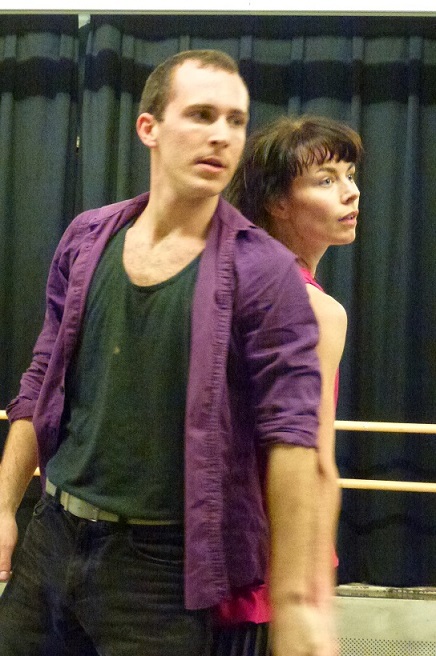
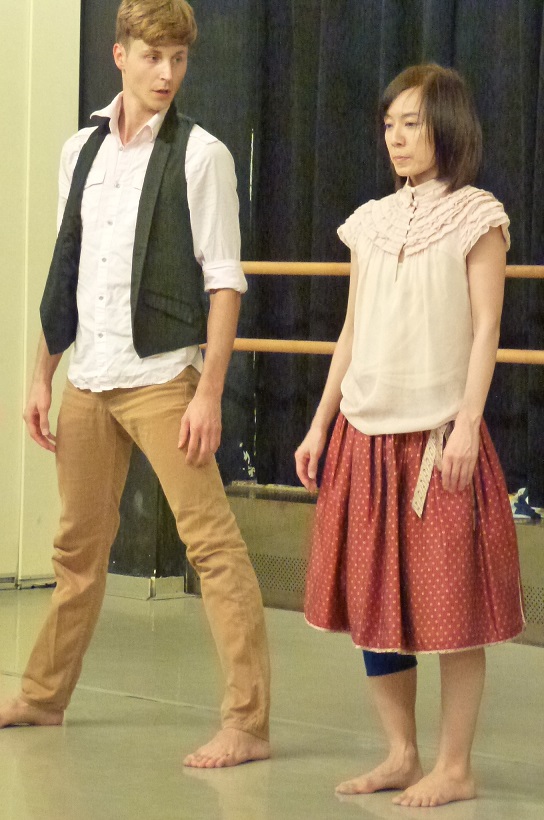
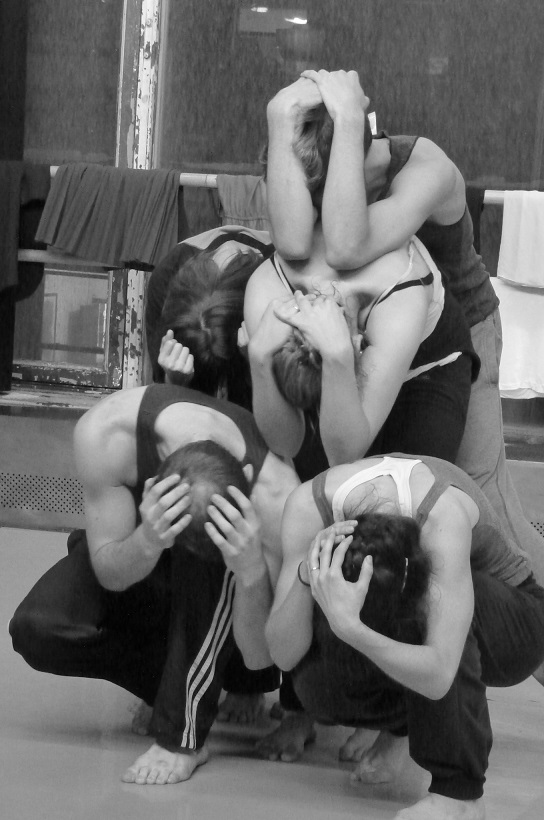
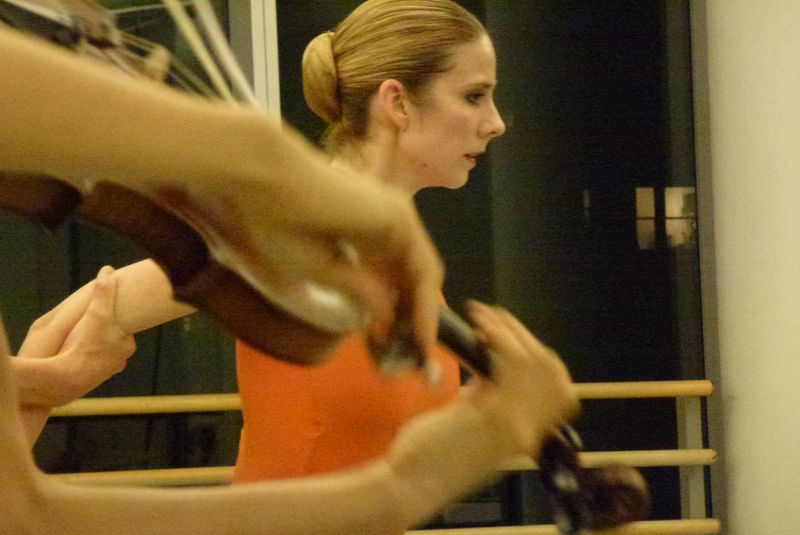
    Monday October 20th, 2014 – I stopped in at the DANY studios this evening where Sunhwa Chung’s Ko-Ryo Dance Theater were rehearsing for their upcoming performances at the John Ryan Theater in Brooklyn. They will present BACK TO AND AWAY FROM: LIFE IS EVERY DAY IV as part of the 9th annual Wave Rising Series.

    Sunhwa was polishing up the piece when I arrived; then the dancers did a complete run-thru, in costume. The dancing is fast-paced, eluding my photography skills. Here are some pictures that survived the cut:

    L1500163

    Tommy Seibold, Marie Vestermark

    L1500060

    L1500179

    Alexandre Balmain, Kumiko Hara

    L1500010

    L1500038

  • Score Desk for NORMA @ The Met

    Mistletoe

    “Il sacro vischio a mietere Norma verrà?”

    Monday October 28th, 2012 – Angela Meade is one of the most talked-about sopranos in New York City these days. Having not – to date – been really impressed by the performances of her’s that I have seen, I was still curious to hear (though not to see) her Norma, so a score desk was the place for me tonight.

    In a Met ERNANI, I felt Meade’s voice un-sorted and a bit shy of the needed power (she had no help from the conductor in that regard); in Rossini’s MOISE ER PHARAON at Carnegie Hall she sang quite beautifully. As Leonora in a Met TROVATORE, the soprano had some lovely turns of phrase and vocal effects, but was dramatically nil, especially when she got down on the floor in the duet with di Luna and floundered around, provoking titters from those around me. Her Bellini Beatrice di Tenda at Carnegie was mostly attractively sung – though somewhat tremulous of tone and a bit under-powered in places – but a breach of stage etiquette near the end of the first half dissolved any atmosphere that had been created, and we headed for the exit as soon as the act ended, while a woman seated behind us hauled out her cellphone to tell someone: “This Angela Meade is sensational, she’s so much better than Joan Sutherland!”

    So we come to Norma, a daunting role under any circumstances; having just seen Sondra Radvanovsky give a very impressive performance of the role, I approached this evening with mixed expectations, hoping Ms. Meade would come thru with flying colours. 

    Meade commenced with an authoritative rendering of Norma’s opening recitative “Sediziose voci…”; the voice was ample, and her pacing and use of words marked a fine start to this arduous role. But in the “Casta diva” the innate flutter in Meade’s tone began to intrude on my enjoyment of her singing. This is simply the nature of her voice, not really a technical flaw, and you are either going to like it or not. For me, it became increasingly irritating as the first act of the opera progressed.

    Aside from some smudgy fiorature here and there, Meade had all the notes well in hand. Her use of pianissimo in the high register is so frequent that it’s predictable, however attractive the effect might be. In the scene and duet with Adalgisa, Meade had many lovely passages but the flutter (there is no other word for it) in her voice undid any pleasure I was deriving from the evening. As the act surged towards its conclusion, the cognoscenti were expecting a high-D from the soprano; when it didn’t materilaize, at least one famous fan showed his disappointment by gesticulating wildly. I could almost hear him saying ‘Phooey!’

    Jamie Barton’s been in the news lately as winner of both the opera and lieder prizes at this year’s Cardiff Singer of the World competition. It’s a fine instrument, clear and warm and even, though as yet not a truly individual sound; one might be tempted to say it’s a baby-Horne voice. She sang very well and was clearly the audience favorite tonight; we’ll see how she develops in terms of distinctiveness. I sense a bit of tension in her upper register but otherwise the instrument seems very well-placed. The news that she’s going to sing Fricka feels a bit premature (RHEINGOLD, fine; WALKURE, probably not a great idea at this point) but hopefully she’ll stay on a steady course: it should be a long and interesting career.

    Aleksandrs Antonenko seemed in better voice than in the earlier performance I saw (with Radvanovsky) and he tackled and sustained the written high-C in his aria, not prettily but emphatically. James Morris was a bit below his current best form but still held up his corner of the vocal quartet well enough. The orchestra and chorus seemed to thrive under Maestro Frizza, who was very supportive of his principal singers.

    I left at intermission, knowing now that there’s no real need for me to attend future Angela Meade performances, unless she just happens to be singing on a night I am going. She has plenty of admirers to sustain her, come what may.   

    Metropolitan Opera
    October 28, 2013

    NORMA
    Vincenzo Bellini

    Norma...................Angela Meade
    Pollione................Aleksandrs Antonenko
    Adalgisa................Jamie Barton
    Oroveso.................James Morris
    Flavio..................Eduardo Valdes
    Clotilde................Siân Davies

    Conductor...............Riccardo Frizza

  • Ballet Next: New Works-in-Progress

    L1270067

    Above: Michele Wiles of Ballet Next

    Monday October 21st, 2013 – Ballet Next had a huge turn-out (intentional pun!) for their choreographic exhibition at Ailey tonight. Three works being created for the Company’s upcoming season at New York Live Arts were shown, all performed to live music under the direction of cellist Elad Kabilio.

    The dates for the Ballet Next performances at New York Live Arts are January 13th – 18th, 2014; further information will be forthcoming.


    L1260983

    Above: violinist Mario Gotoh played the Chaconne from the ‘Partita #2′  for the pas de deux entitled Bach 260, choreographed by Robert Sher-Machernndl, and danced by Michele Wiles and Mr. Machernndl (photo below).


    L1270057

    This duet, anchored in the classic vocabulary, takes a contemporary overlay with elements of pursuit and capture carrying the dancers about the space in movement that both sustains and sometimes counter-acts the Bach score, which Ms. Gotoh played so beautifully.


    L1270122

    All the Drops of Water
    is a duet choreographed by Michele Wiles and danced by Tiffany Mangulabnan and Ms Wiles (above). The music, a lyrical quintet by Max Richter, was performed by Hajnal Karman Pivnik and Ms. Gotoh (violins), Caroline Gilbert (viola), Mr. Kabilio (cello) and Ben Laude (piano). The musicians were seated literally inches away from me – in fact, I could read Hajnal’s score – while the two dancers in deep blue with their hair down seemed like contemporary nymphs. The choreography has a restless quality, inter-laced with moments of repose and tenderness.


    L1270222

    Surmisable Units is an ensemble work with choreography by Brian Reeder. The dancers (above) are Tiffany Mangulabanan, Michele Wiles, Steven Melendez, Kaitlyn Gilliland, and Brittany Cioce. The score, Steve Reich’s tricky and repetitive ‘Piano Phase‘, was played by Peter Dugan and Ben Laude.

    The choreography utilizes the space in quirky ways, with the dancers sometimes standing behind the two pianos (which are center-stage) and executing semaphoric arm gestures. At times the dancers wear metallic-silver face masks, making them anonymous. Solo dancing is woven in, and the combinations echo the speed and articulation of the relentless musical pulse.


    L1270157

    Above: Kaitlyn Gilliland and Michele Wiles in Surmisible Units.

    The large crowd of Company friends and supporters seemed very taken with the dancing and the music; I look forward to seeing these works in their staged settings at NYLA in the new year.