Tag: Morales Dance

  • Morales Dance @ Ailey Citigroup

    _DSC6850

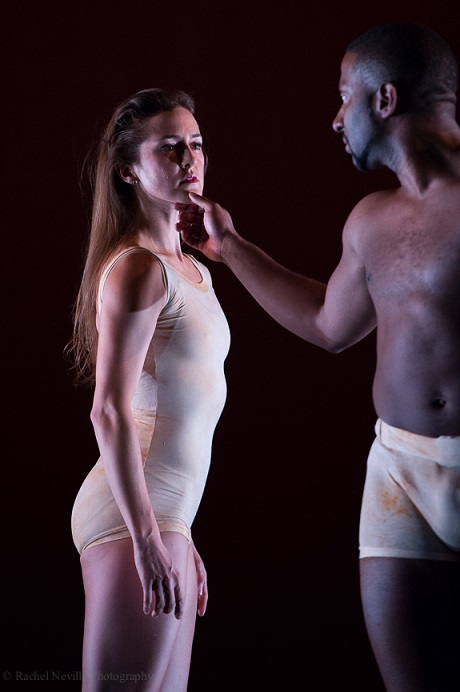
    Above: Karina Lesko and Christopher Rudd of Morales Dance; photo by Rachel Neville

    Friday April 18th, 2014 – In one of those perfect-timing happenstances, photographer Rachel Neville sent me her photos from Morales Dance‘ production entitled FOR YOU just as I was sitting down to write about the performance. Rachel’s beautiful images so perfectly captured many of the individual moments which lingered in the mind and are now made tangible thru her artistry. The only problem was in deciding which of the pictures to post since they are all so fine.

    Tonight at Ailey Citigroup Theater, Tony Morales put together a programme of new and older works which he’s choreographed, as well as bringing forth a Leni Wylliams ballet QUIET CITY (re-staged by Tony) to open the evening. 

    DSC_8896

    Above: the ensemble in QUIET CITY, photo by Rachel Neville

    Aaron Copland composed QUIET CITY from 1939 to 1941 as incidental music for a play by Irwin Shaw. Shaw’s play of the same name was a flop, never making it out of previews, and Copland’s original score went unpublished for years until it was restored to currency by sax player Christopher Brellochs. And thank goodness, because it’s really evocative music.

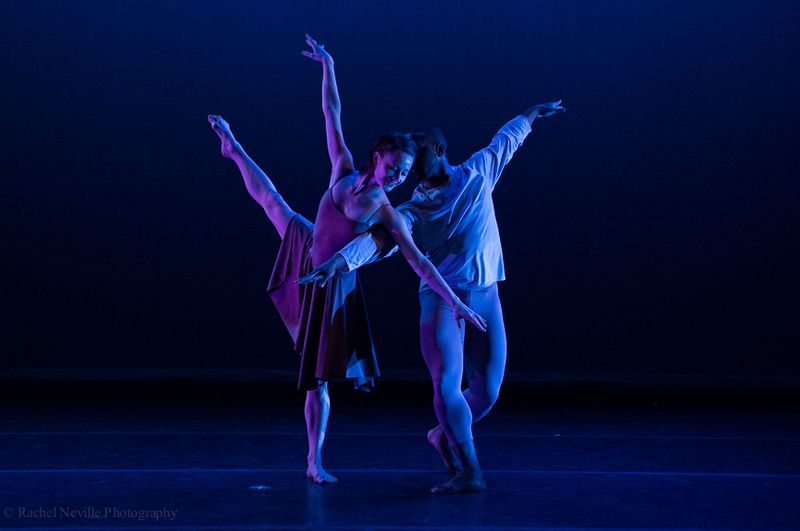
    In the Wylliams/Morales setting, the ballet opens with a stylized triple pas de deux; the three women and then the three men dance separate trios and then there are three brief, intermingling pas de deux. It’s a piece that makes big use of the space and it was very well-danced, and especially well-lit (as was the entire production) by Mike Riggs.

    DSC_8737

    Cassandra Lewis and Antonio Fini in QUIET CITY, photo by Rachel Neville
    DSC_8857

    Jessica Black and Christopher Rudd in QUIET CITY, photo by Rachel Neville

    Three familiar works from Tony Morales’ repertory followed:
    DSC_9124

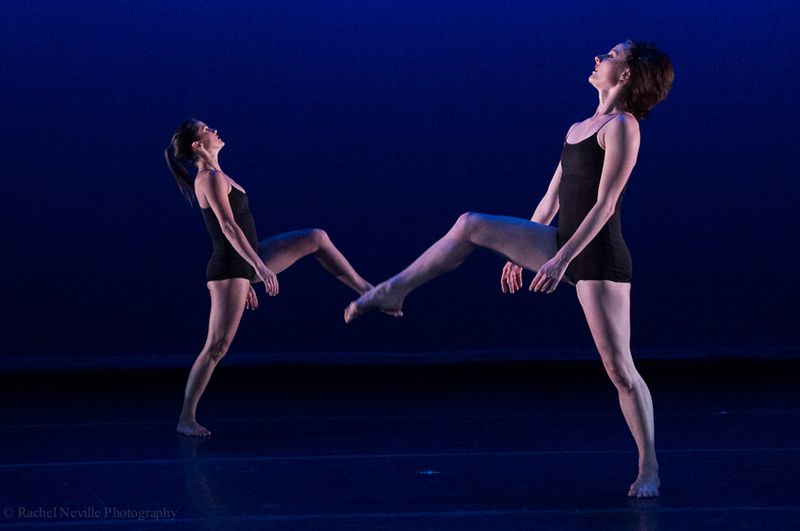
    PLEASED 2 MEET U is a duet, sometimes danced by two men and sometimes by two women, set to a folkish score by Bohuslav Martinů. Tonight this sporting, light-hearted piece was performed by Jessica Black and Karina Lesko, as seen in Rachel Neville’s photo above.

    DSC_9484

    Above: Jerome Stigler in ABLUTION, photo by Rachel Neville

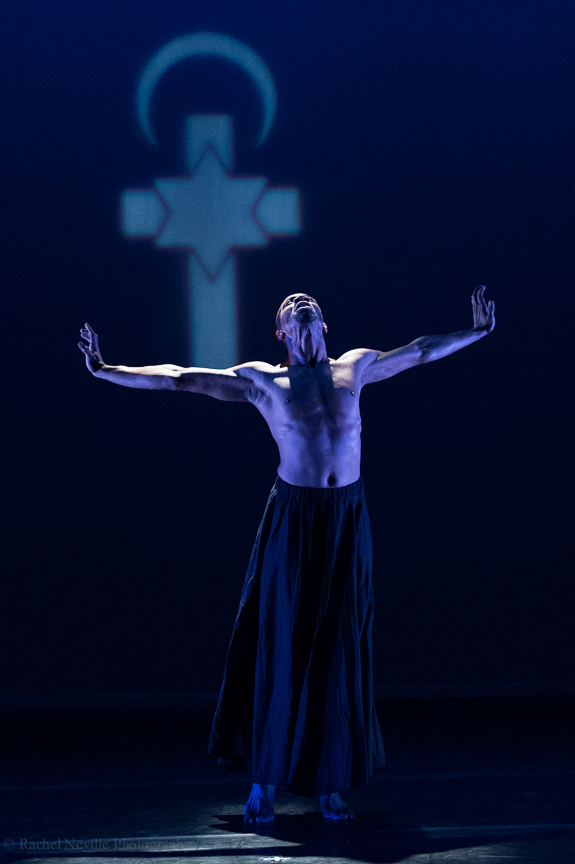
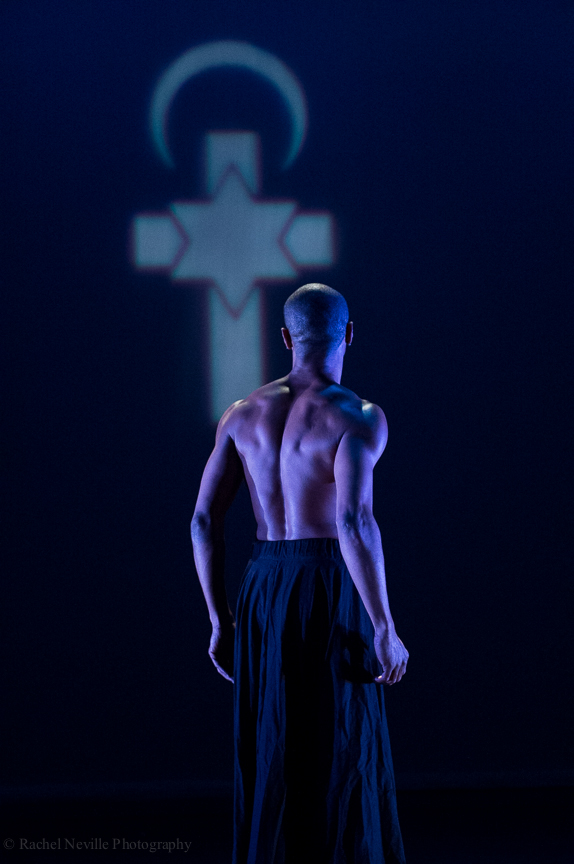
    ABLUTION, which for me is Tony Morales’ most potent work, is a solo danced to music of Bach; it was chroeographed in 1992 and retains its full power to this day. Danced tonight by Jerome Stigler, the solo is ritualistic and athletic by turns with the dancer covering the space in agile leaps or bowed down in supplication on the floor. Jerome’s performance was intense and moving.
    DSC_9582

    Above: Jerome Stigler in ABLUTION, photo by Rachel Neville
    DSC_9619

    By the way, I love the symbol of the three religions which is projected during this solo: Islam, Judaism and Christianity are united in this image – and how lovely the world would be if that image became reality. 

    _DSC6972

    Above: Christopher Rudd and Karina Lesko in TRANSITIONS, photo by Rachel Neville

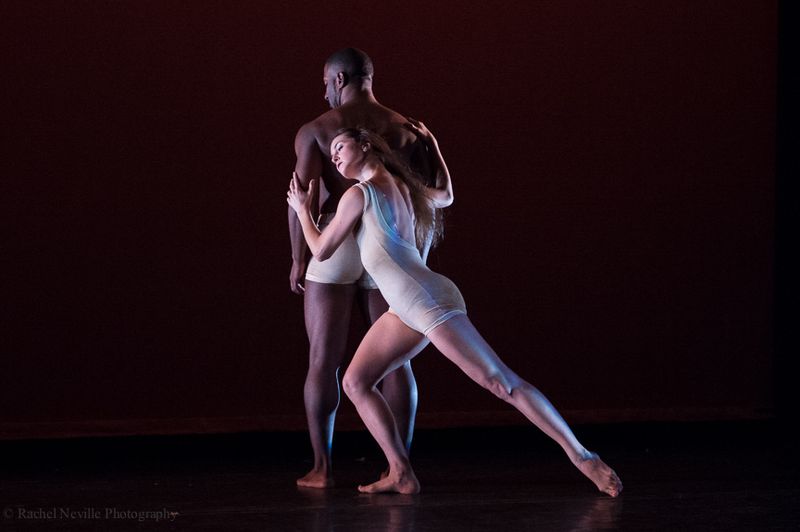
    Lyricism, passion and tenderness were drawn forth in TRANSITIONS, a 1998 duet to music of Maurice Ravel. Here the Costa Rican beauty Karina Lesko was at her most ravishing, dancing with Christopher Rudd. In the second part of this sensuous – but also sometimes wary duet – each dancer moves in an individual pool of light.
    DSC_9647

    Above: Rachel Neville’s photo of Karina Lesko and Christopher Rudd in TRANSITIONS

    DSC_9664

    Above: Karina Lesko in TRANSITIONS, photo by Rachel Neville

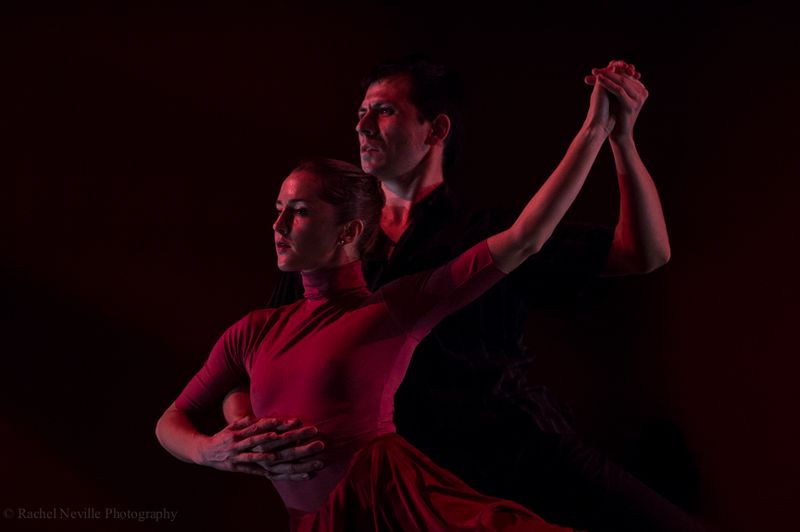
    After a pause, Tony Morales’ domestic dance drama AMOR BRUTAL was performed to a mix of songs by Manuel de Falla and the title song, performed by Tony’s father Isaac ‘Casito’ Morales on an old recording.
    _DSC7038

    Above: Karina lesko and Antonio Fini in AMOR BRUTAL, photo by Rachel Neville

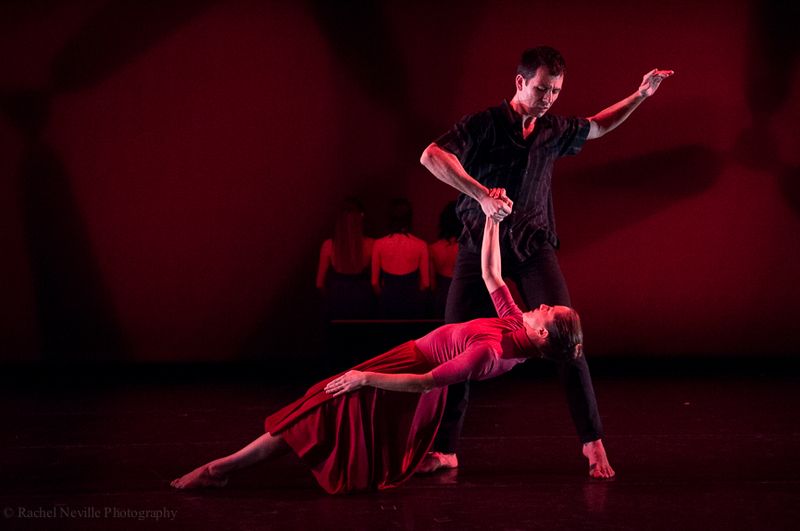
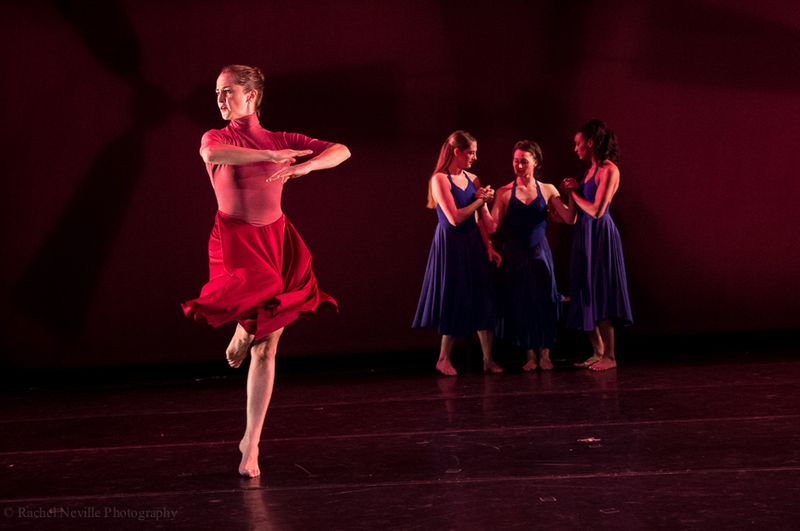
    In AMOR BRUTAL, a long-married couple – a devoted but controlling wife and a care-free husband – find themselves in a love-hate tangle as each seek to align their three teen-aged daughters’ affections and loyalty. Although she looks far too young to be the mother of grown children, Ms. Lesko did a fine job expressing the emotional turmoil of the anxious woman while the handsome Mr. Fini danced with free-spirited energy as the errant but likeable husband. Jessica Black, Elaine Gutierrez and Cassandra Lewis were the lovely daughters.
    DSC_9880

    Above: Karina Lesko and Antonio Fini in AMOR BRUTAL, photo by Rachel Neville
    DSC_9934

    Above: mother and daughters…Karina Lesko with Mlles. Lewis, Black and Gutierrez in AMOR BRUTAL, photo by Rachel Neville

    DSC_0293

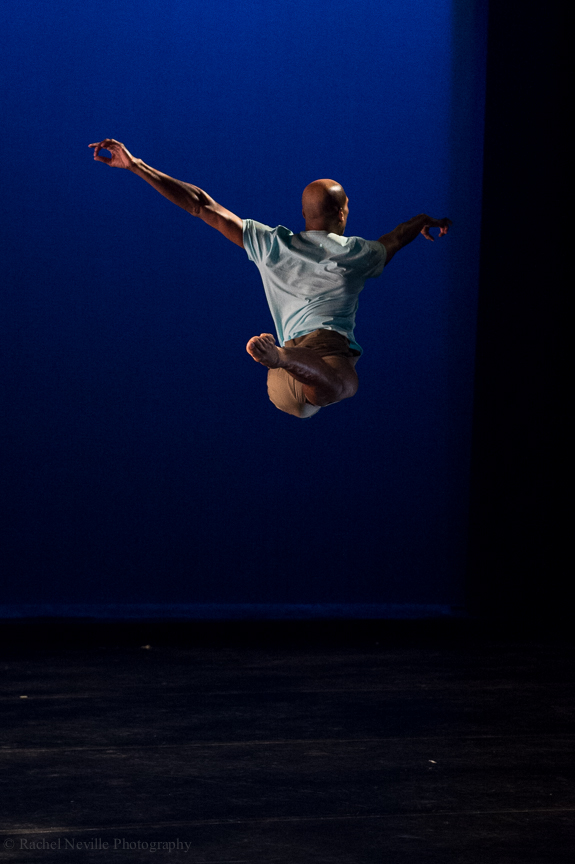
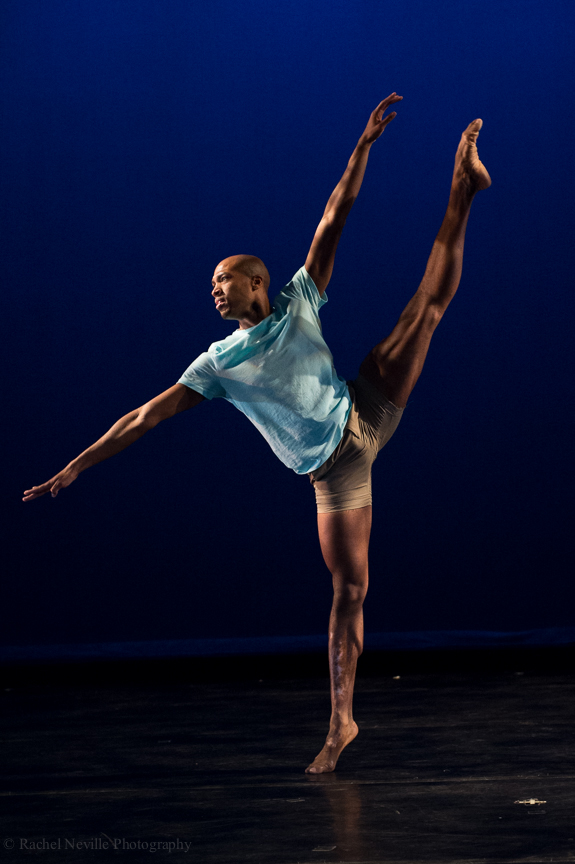
    Antonio Douthit-Boyd of the Alvin Ailey Company (above) made a guest appearance dancing a new solo by Tony Morales, FOR YOU, set to the Elton John pop classic. In this tailor-made dancework, Mr. Douthit-Boyd was able to show off his astonishing technique and his emotional generosity, to the audience’s delight. Antonio dances with his whole body and soul; what a pleasure it must be to create something on such a dancer.
    DSC_0299

    Above: a great leap by Antonio Douthit-Boyd, photo by Rachel Neville
    DSC_0391

    Above: the majestic extension of Ailey’s Antonio Douthit-Boyd, dancing Tony Morales’ FOR YOU in a Rachel Neville photo
    DSC_0570

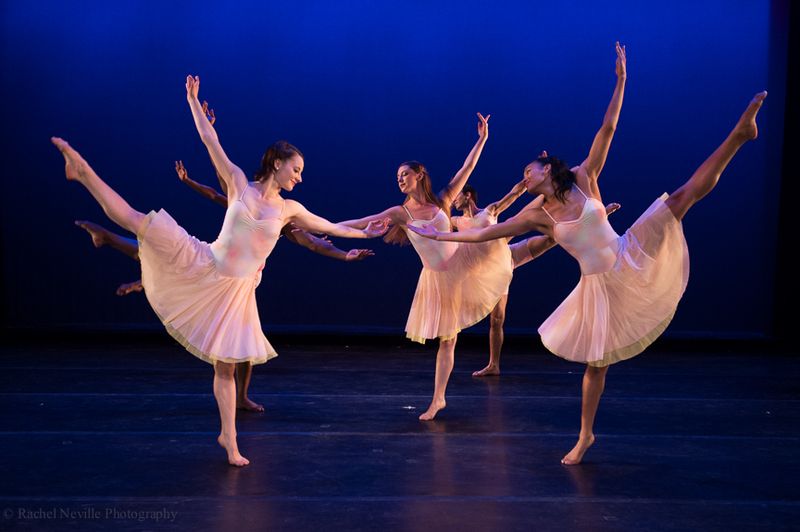
    Six young women from Ballet Forte (above) put me in mind of Isadora Duncan in the opening phrases from SCENES, a 2012 Tony Morales work dedicated to the memory of Ruth Currier. Dancing at first in silence, the sextet of nymphs begin exploring the space to music of Benedetto Marcello. Their dance has a celebratory innocence about it.
    DSC_0619

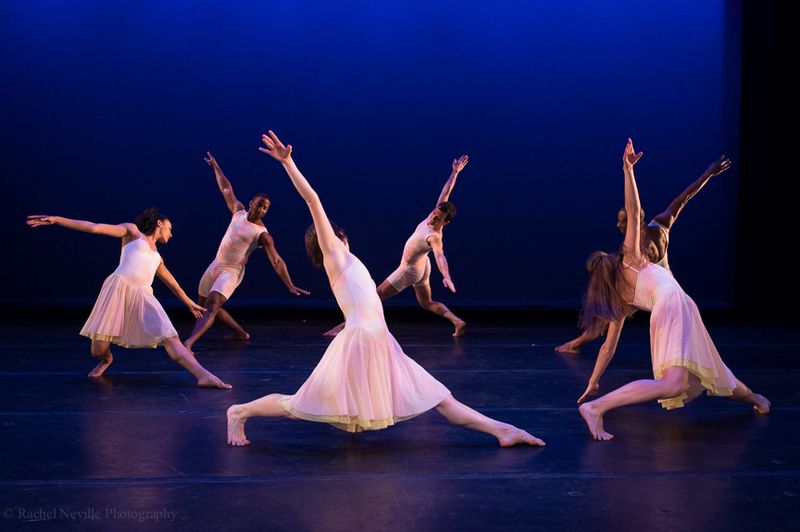
    In the ballet’s second part, six dancers from Morales Dance (above) dance in varying combinations, both in silence and to music by Chopin.

    DSC_0750

    At the end, the twelve dancers unite in a communal circle: a grace-filled final image from this evening of dance.

    All photography by Rachel Neville; my gratitude to her for her timely delivery of these inspiring images.
  • CONTRASTS at Riverside Church

    MM_TONY_M-2

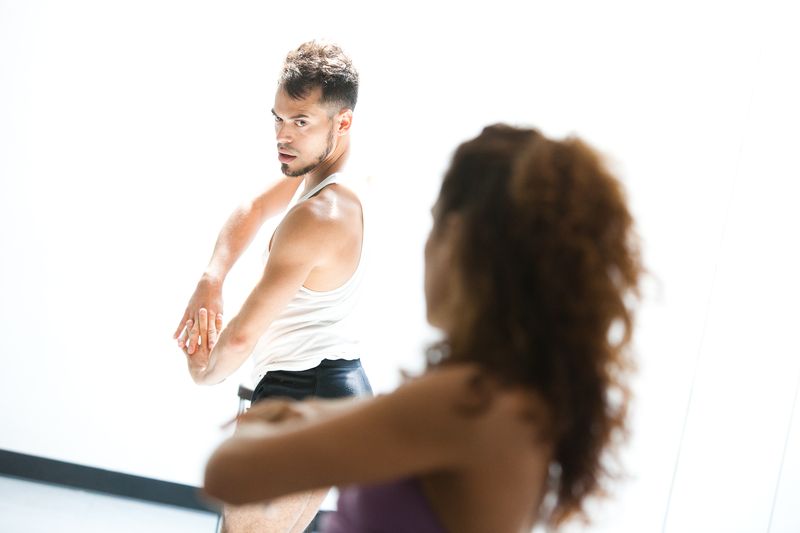
    Above: Morales Dance rehearsal photo by Matt Murphy. The dancers are Leonel Linares and Nicole Corea.

    Saturday September 22, 2012 – Tony Morales of Morales Dance is the driving force behind CONTRASTS, a programme of works by four choreographers presented at The Theater at Riverside Church. Tony’s guest choreographers are Lydia Johnson (Artistic
    Director of Lydia Johnson Dance), Yesid Lopez (Director of DeMa Dance
    Co
    ) and Henning Rübsam (Artistic Director of SENSEDANCE).

    I’d been looking forward to this alignment of dance and dancers for some time, and the evening came off very well indeed, with major kudos to Mike Riggs for his lighting designs that produced some striking images in the varied works.

    Morales Dance presented three works on the programme, opening with the Spring-like freshness of SCENES. To music of Benedetto Marcello, the dancers are first seen kneeling in a circle in a pool of light. The opening sequence has a ritualistic feel which envolves into an airy and pleasing series of dances: an allegro duet for Nicole Corea (a guest dancer from Lar Lubovitch Dance Company) and MarieLorene Fichaux, a pas de trois for Alison Cook Beatty, Jerome Stigler and Leonel Linares. Kate Loh makes a lovely impression in her dancing here (and later, in AMOR BRUTAL), A solo for Alison Cook Beatty, danced in silence, forms a bridge to the concluding passages danced to Chopin. As the work moves to its finale, the dancers return to their opening circle of light.

    Later in the evening we saw Tony Morales’ AMOR BRUTAL, a narrative work that I’ve watched being developed in the studio over time. In August, Matt Murphy produced some beautiful images at a rehearsal of the piece. Soft billows of smoke waft across the stage as singer Mary Ann Stewart and pianist Sandro Russo (performing live onstage) embark on the Manuel de Falla songs which provide the setting for this domestic drama. Nicole Corea and Leonel Linares have reached the point of no return in their marital conflict and now it’s a question of where the couple’s three daughters will set their allegiance. Nicole, dancing with her ever-radiant personal commitment, naturally assumes that her girls will be in her camp. But it’s the n’er-do-well father, danced with easy charm by Leonel, who has his daughters in the palm of his hand. The work ends with Nicole completely marginalized; the sisters (Kate Loh, Alison Cook Beatty, MarieLorene Fichaux) turn their backs on her and her husband slips out of the picture entirely. Adding a last personal touch to this work, the concluding song Amor Brutal is performed on a recording by Tony Morales’ father, who passed away earlier this year.

    Three duets comprise the final Morales work on the programme: PIANO PIECES: the first danced by Kate Loh and Alison Cook Beatty to a waltz tune, the second performed by MarieLorene Fichaux and Jerome Stigler to Scriabin, and the third danced by Nicole Corea and Leonel Linares to Scarlatti.

    The opening image of Lydia Johnson’s CHANGE OF HEART, enhanced by Mike Riggs’ lighting, caused me to gasp for breath momentarily: this work-  which I have watched being created over the past several months – and these dancers have a special significance to me. Some people close to me know of my unhappy Summer and of the rift between me and my cherished friend who should have been with me tonight watching Lydia’s work. However, sometimes the very things that remind us of past happiness also reassure us as we try to move on. Between the Bach music and the sheer expressive beauty of Lydia’s troupe of dancers, the experience was uplifting.

    For musicality and fine structuring, few people currently choreographing in the New York dance scene can compare with Lydia Johnson. There is thought, passion and tenderness in her work, and a depth of musical resonance that is very satisfying to behold. Yet for all that, in the end it’s the dancers whose ‘speaking’ of a choreographer’s unique dialect will make a dancework meaningful or not.

    This evening Lydia’s ensemble was led by two of her core dancers: Jessica Sand and Laura DiOrio. Having watched these two young women countless times in the studio or in performance, it is still and always a moving experience to see them rendering Lydia’s choreography with such clarity and grace. Reed Luplau (guest dancer from Lar Lubovitch Dance Company) created a remarkable impression in Lydia’s SUMMER HOUSE earlier this year; he wears Lydia’s style like a second skin. Katie Martin, Natalia Wodnicka and Min Seon Kim have been dancing for Lydia for the past few months and are blending well into the ensemble, each with her own distinctive signature. The newest comers to Lydia’s work – Lauren Perry, Christopher Bloom and Eric Williams – already look more than at home here, and Ms. Perry with her fresh face and feel put me in mind of a favorite dancer from the past: Kate Johnson of the Paul Taylor Dance Company.

    402235_3930921345502_183455664_n

    Rehearsal image: Laura DiOrio, Eric Williams, Jessica Sand.

    And so this particular collective of dancers worked beautifully together to develop the flowing patterns of CHANGE OF HEART: solo moments, duets and ensembles sweep graciously by on the Bach score. A pas de trois for Laura, Reed and Eric, a duet for Jessica and Reed, a men’s trio…these are some of the moments that stood out. But it’s not really a work of highlights but rather a tapestry in which each thread seems richly colourful and alive.

    The evening was entitled CONTRASTS, and so something really dark and wild was bound to crop up along the way. Henning Rubsam’s HALF-LIFE is set to a thunderously propulsive score by Laibach. With the ever-vibrant Temple Kemezis and Jacqueline Stewart on pointe, this non-stop dark revel of contemporary ballet style came lke a jolt. Paul Oisin Monaghan, one of Gotham’s most intriguing dancers, always captures the eye. And the astounding power and presence of Max van der Sterre was electrifying. Musically disturbing and on-the-edge in its movement, HALF-LIFE has a life of its own. Mike Riggs’ lighting made a big impression here.

    The one choreographer with whose work I was unfamiliar, Yesid Lopez, offered a really appealing work for four girls entitled STRINGS. The costumes – corset-like bodices and gauzy soft-hued pantalooons – were especially lovely and the music (Chopin, Nyman, Dvorak) was matched by the atmospheric glow of Mike Riggs’ lighting. Jessica Black was featured in a solo passage, and the work made me want to see more of Mr. Lopez’s choreography.