Tag: Mostly Mozart

  • Pekka Kuusisto @ Mostly Mozart

    Out_there_Kuusisto_Pekka_2018-19_03

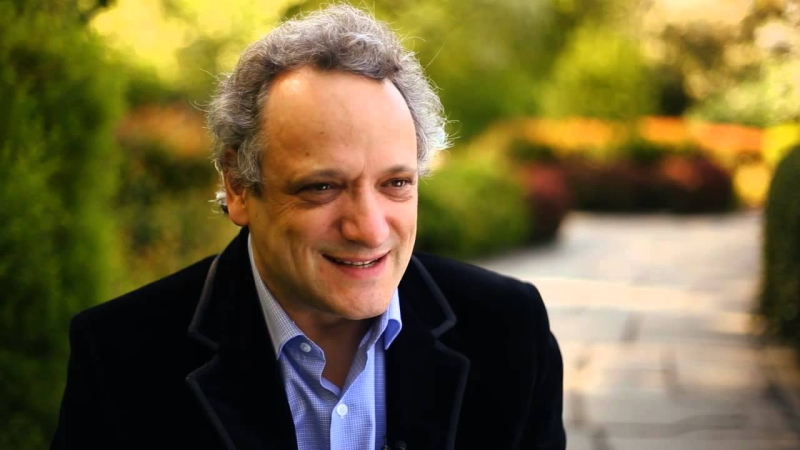
    Above: Pekka Kuusisto, photographed by Kappo Kamu

    ~  Author: Oberon

    Friday July 26th, 2019 – An unusual and exciting program at Mostly Mozart this evening as violinist Pekka Kuusisto joined the Mostly Mozart Festival Orchestra under Andrew Manze’s baton. The program featured music of Bartók, plus Mr. Kuusisto’s setting of Vivaldi’s beloved Four Seasons into which folk music from Norway and Finland has been woven.

    Béla Bartók’s Romanian Folk Dances, arranged for string orchestra by Arthur Willner, opened the evening on an upbeat note. Mr. Kuusisto and his sidekick, bassist Knut Erik Sundquist, participated as members of the ensemble, further spicing up the already lively music. What a treat to hear these pieces played live! They have an irresistible impulse, to which the two guest soloists introduced embellishments that gave an additional flair.

    The six-dance suite commences with Jocul cu bâtă (“Stick Dance”), with an interesting ‘pulling’ rhythm. Then comes the jaunty Brâul (“Sash Dance”), followed by the Pe loc (“In One Spot”) into which Mr. Kuusisto injected a spaced-out, high violin passage. Buciumeana (“Dance from Bucsum”) was my favorite of the dances, being slowish and tinged with sadness. (Sample it is Emmanuel Pahud’s flute rendition here.)

    Then came the lively Poarga Românească (“Romanian Polka”) after which Mssrs. Kuusisto and Sundquist lit into a fast and funky duet which morphed into the Mărunțel (“Fast Dance”); here the violinist exceeded the speed limit with his amazing technical facility as well as fancy foot-work – as much fun to watch as to hear. Sweeping on with the orchestra to a grand finale, the players were awarded a vociferous ovation from the crowd for their exhilarating performance.
    Mwmzzhhrm93k6f281j4m

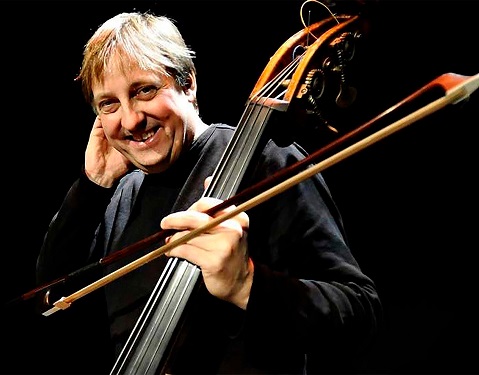
    If Mr. Kuusisto was in the limelight all evening, bassist Knut Erik Sundquist (above) made a vivid impression in his own right. I imagine that. had he not been constrained by holding onto his bass, he would have joined in the dancing. His facial expressions were priceless. 

    Without intermission, the performance continued with the ultra-familiar Vivaldi Four Seasons, rendered – as if by time-warp – as a fusion of Baroque and contemporary modes, into which Mssrs. Kuusisto and Sundquist interpolated traditional music from Finland and Norway. If you’re going to fiddle around (!) with the classics, this is the way to do it. 

    The great lilting start of “Spring” was flowing along congenially when suddenly sounds like a swarm of birds were heard. Later, the violas sounded seasick, and later still the drone of a bagpipe was evoked. In “Summer”, the strings melted and drooped, the violin and a cello engaged in an off-pitch dialog, and the music sizzled or soured before turning briskly exciting. A decrescendo brought whispers and falterings; and an en masse turn of the page was truly amusing. A storm breaks, the finale carries  on with more interruptions and some scraping motifs.

    “Summer” was perhaps the highlight of the Seasons, and a program note mentioned the fact that this concerto is “…built of exclusively unpleasant conditions, (connecting) it with the ongoing climate debate.”

    Kuusisto and Sundquist opened “Autumn” with a duet; the music sometimes took on an ‘outer space’ feeling. A snoring woman next to us rather spoilt the effect, but she woke up when Mr. Kuusisto started whistling. The tapping of bows on instruments and a ‘drunken’ passage kept us engaged. 

    Animated plucking – and a bit of humming from the orchestra members – were among the felicities of “Winter”; Mr. Kuusisto was by now in full “mad violinist” mode, his virtuosity simply mind-boggling. 

    An enormous standing ovation ensued, the audience clearly thrilled by what they had heard. Maestro Manze and the two soloists were called and re-called, to veritable tsunamis of applause. 

    Before the concert started, Maestro Manze spoke of what we were about to hear, and he asked that everyone in the audience “..stay to the end…”; I’ve never heard that kind of request at a concert. At any rate, a few people did head for the exits during The Four Seasons. But one woman, who was seated in the stage seats, attempted to leave and was sent back to her seat by an usher.

    ~ Oberon

  • Gerstein|Langrée @ Mostly Mozart

    KirillGerstein045

    Author: Oberon

    Wednesday August 16th, 1017 – How doubly grateful I felt when I saw that Kirill Gerstein (above, in a Marco Borggreve portrait) would be playing the Schumann Piano Concerto at tonight’s Mostly Mozart concert; grateful first of all because I greatly admire Mr. Gerstein as an artist, and grateful yet again for the opportunity to finally hear this concerto played live. It seems that it is not programmed all that often these days.

    It’s rather unusual to find an extended solo piano work included on an orchestral program, but Mr. Gerstein’s rendering of Brahms’ Variations on a Theme by Robert Schumann was a wonderful prelude to his performance of the Schumann concerto…or rather, it would have been, had not audience distractions nearly ruined it. The pianist’s lyric warmth and a beautiful modulations of dynamic were truly congenial, but he had no sooner commenced to play than a loud thudding noise spoiled the music: someone among the stage audience had dropped something – something heavy.

    Mr. Gerstein soldiered on, but as the variations continued a plague of coughing swept thru Geffen Hall. Hardly a bar of music went by without a cough, snort, clearing of throat, or other upper-respiratory distraction. After a while it became comical; I gave up thinking I could derive any real enjoyment from Gerstein’s playing, and I have to congratulate him for maintaining his focus: there’s no way he could have been unaware of these annoyances. Before the piece was over, something else had been dropped, and a cellphone went off. As the pianist took his bows, my friend Dmitry and I rolled our eyes; but we were determined that our evening would not be spoilt.

    The Mostly Mozart Festival Orchestra players then took their seats, and Mr. Gerstein returned with Maestro Louis Langrée for the Schumann concerto. I became intrigued with this with this work years ago thru the film Madame Sousatzka, and have waited literally decades to hear it played live. I once asked a pianist/friend why it is not performed more often, and he replied: “It’s too easy.” It may be ‘easy’ to play, but it pleases audiences and was tonight given a top-notch performance by Gerstein, Langrée, and Company.

    The first movement opens with a dramatic outburst from the soloist, followed by a simple, expressive melody played by the woodwinds; this theme will re-appear in various guises in the first and last movements.  The second movement is referred to as an Intermezzo, and it is perhaps here that the real reason pianists choose other concertos over Schumann to display their artistry is to be found: without a real adagio or andante, expressive possibilities might be considered limited. For all that, Mr. Gerstein found much to be savoured here, and his playing was clear and shining. The final movement is full of vitality and sweeps us along in its dancing rhythms, with enjoyable references back to the concerto’s opening movement.

    The Mostly Mozart woodwind players relished their opportunities here: Jon Manasse’s dulcet clarinet was a sheer balm to the ear, and Dwight Parry is a remarkable oboist. Their highlights, and the beautiful flow of Gerstein’s playing of the piano part – which includes a passage of shimmering light over delicate accompaniment – were simply the outstanding moments in a superb performance.

    For an encore, Mr. Gerstein chose an arrangement of the Romanze: Andante non troppo, con grazia from Clara Schumann’s piano concerto, opus 7, composed when Fräulein Wieck was only 13 years old. Robert Schumann later devised a setting of the Romanze for piano and cello, with just a touch of timpani at the end. It was this musical love letter we heard tonight, ravishingly played by Mr. Gerstein and Mostly Mozart’s principal cellist Ilya Finkelshteyn. Markus Rhoten’s gentle sounding of the timpani had the magical effect of a heartbeat: the heartbeat of Clara’s love for her Robert. The overall effect of this encore was truly touching.

    Maxresdefault

    The evening concluded with Maestro Langrée (above) conducting the Brahms 1st Symphony. The composer declared that this symphony, from sketches to finishing touches, took 21 years – from 1855 to 1876 – to complete.

    Tonight’s performance was rich-textured and lovingly paced, giving its 40-minute span a Beethovian air. The inner movements were particularly pleasing: the tender Andante sostenuto and the charming Allegretto. Throughout, the Mostly Mozart wind soloists gave ample pleasure – Jasmine Choi’s flute playing is priceless in it’s clarity and sheen. The symphony swept by, an affirmation of faith in the enduring power of great music as the world around us darkens.

    ~ Oberon

  • Joshua Bell @ Mostly Mozart

    Joshua-Bell

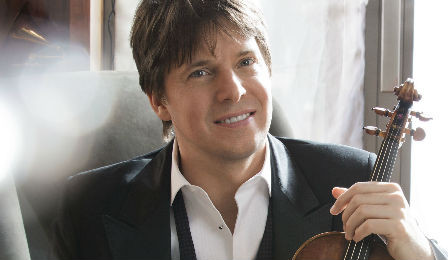
    Above: violinist Joshua Bell

    Wednesday August 17th, 2016 – Geffen Hall was packed to the rafters for Mostly Mozart tonight: all the stage seats were taken, and there was a line for ticket returns: could it have had something to do with Joshua Bell being the scheduled soloist?  Mr. Bell certainly impressed in his performance of Mozart’s 4th violin concerto, and the program overall was highly enjoyable.

    Any hearing of Felix Mendelssohn’s overture to A Midsummer Night’s Dream is bound to summon up visions of Balanchine’s enchanted forest – it’s quite amazing, in fact, when you think of the amount of narrative and dancing Mr. B was able to fit into this 12-minute overture, without ever for a moment seeming over-busy. The Mostly Mozart Orchestra coped well with the brisk tempi set by the youthful-looking conductor, Matthew Halls, and it was so much sheer fun to hear these familiar themes played live again. I must mention Jon Manasse’s lovingly-phrased clarinet solo.

    Joshua Bell then appeared to a warm greeting from the crowd. In this rendering of the Mozart violin concerto #4 in D-major, the violinist and the conductor formed a steady rapport. Unobtrusively using a score, Mr. Bell launched the solo line in the stratosphere and went on to play the Allegro vivace‘s capricious music with easy aplomb. There’s a lot of high-velocity coloratura in play here, and it culminates with a florid, witty cadenza of Mr. Bell’s own design.

    On a high, sweetly sustained note, Mr. Bell lures us into the Andante cantabile; the melody eventually dips into a lower range where his playing a balm to the ear. An elegant ‘interlude’ has a different sort of appeal; then the main theme recurs, before the violinist ascends to another high-lying cadenza. 

    After an elegant start, the Rondeau turns sprightly – a delicate mini-cadenza teases us and then there’s another more extended cadenza. The soloist joins the massed violins in a sort of chorale, and Mr. Bell continues to seize opportunities for yet two more cadenzas, the first having an ironic buzzing quality.

    As ever, Mr. Bell’s physically engaged playing is as enjoyable to watch as to hear. The random smudged note here or there was nothing to deter from the ongoing sweep of his music-making, and though I agreed with my companion that the cadenzas sometimes seemed rather too ‘modern’, they gave the performance an individuality that was refreshing in its own right.

    Beethoven’s overture to Coriolan, Op. 62, was the composer’s first opportunity to write for the stage, and his success has kept the overture in the repertory. Originally conceived as a prelude to the play of the same title by the composer’s friend Heinrich Joseph von Collin – a theatrical success in Vienna in 1802 – the overture didn’t appear until 1807, when the play’s popularity had waned. It seems that only one performance of the play with Beethoven’s overture took place: on April 17th, 1807. After that, the eight-minute overture went on to thrive as a concert number.

    This evening’s performance was finely-wrought by Maestro Halls, and most attractively played. The contrasting themes of anger and tenderness express the theme of the play: the betrayal of his duty as a Roman general by Coriolanus, and his mother’s entreaties to abandon his plan to lead the enemy forces in an attack on Rome. Her pleading is effective: Coriolanus abandons his scheme and faces his punishment.

    A warm and appealing performance of Beethoven’s “little” symphony – the 8th – concluded the evening on an optimistic note. The last time I heard this symphony performed live was in December 2013 when the Spanish conductor Rafael Frühbeck de Burgos, then in his 80th year, led the New York Philharmonic in the work and left my friend Dmitry and I with wonderful memories of the highly-respected Maestro, who passed away in June 2014. We still speak of that Philharmonic concert with special affection. 

    Timed at around twenty-five minutes, this four-movement symphony flies by: there’s no adagio to make us stop and ponder, but rather a charming and often witty flow of themes with the congeniality of dance rhythms ever-ready to buoy the spirit.

    A lively podium presence, Maestro Halls was well in his element here, and the musicians seemed fully engaged in this music which successfully blends elegance with folkish gaiety. The horns sounded plush, and again Mr. Manasse made his mark: an outstanding musician.