~ Author: Oberon
Monday September 25th, 2017 – I took a score desk for this evening’s NORMA at The Met; if memory serves, this the first time I’ve ever attended an opening night.
In 2013, Sondra Radvanovsky gave a sensational portrayal of Norma at the Met. She has sung a great deal since then, and in very demanding roles. One hoped very much that her success tonight might equal or even surpass her prior Met outing as Bellini’s noble and tragic priestess.
The evening started out on a sour note: with a scheduled start-time of 6:30 PM, the hall should have been open for seating by 6:00 PM or very shortly thereafter. Instead, ticket-holders were left standing outside closed doors for nearly 25 minutes. Balcony and Family Circle patrons were packed into the hot, airless area outside the auditorium, and many elderly people found this truly unpleasant. No announcement or explanation was given.
The house was not full as we settled in. Following the playing of the National Anthem, during which no one seemed to be kneeling but some soprano took the ‘Licia Albanese option’, there was a long pause, and at last the opera began. Then there was an immediate disruption in my area as a late-arriving patron was seated by a flashlight-wielding usher.
As I was at score desk, I cannot report on the production, but I do want to see it at some point later in the season: a friend who had attended the dress rehearsal assured me that it’s the kind of production I will like.
Carlo Rizzi has never been more than a routinier; he was absent from The Met for nine years (from 2007 to 2016) but now he’s back, conducting a new production on opening night. This was actually one of the better Rizzi experiences I have had over the years, though still not really inspired. There were some cuts taken, and also a couple of very weird re-arrangements of things, of which there were no signs in the score I was following. The orchestra played quite beautifully all evening – notably the flute solo that introduces “Casta diva” – and the chorus seemed at their best.
Michelle Bradley sang Clothilde – we’ll have to wait to hear her in something bigger to get an idea of the voice, but it seems promising – and Adam Diegel was a vocally strong and assured Flavio.
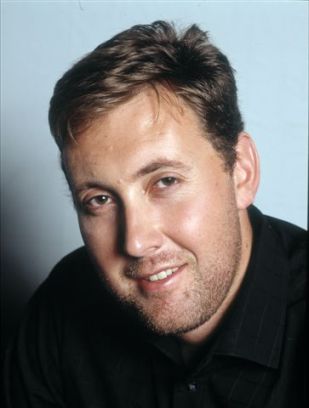
Matthew Rose (above) was a splendid Oroveso, covering the wide range impressively and bringing the role very much to prominence. Both his great scenes – “Ite sul colle” and “Ah, del Tebro” – were vocal highlights of the evening, and in an story full of broken hearts, Mr. Rose reminded us of Oroveso’s own heartache with his expressive singing in the final pages of the opera.
As Pollione, Joseph Calleja’s voice sounded huge in his opening phrases. I love the sound of his voice, and his phrasing, inflections, and mastery of working piano/pianissimo shadings into the vocal line were truly impressive. Unfortunately, much of his vocalism all evening was beset by a tendency to sing sharp, and this offset the positive aspects of his performance.
I’ve always felt that Adalgisa should be sung by a soprano; despite the thrill of hearing the voice of a Simionato, Horne, or Cossotto in this music, both its range and the character’s supposed youthfulness seem to call for a lighter quality. Joyce DiDonato’s somewhat slender voice definitely has a sopranoish quality to it, and from her first soft entry, her opening monolog (it’s not really an aria) was extremely impressive both as singing and as a portrait of the character: young, hopeful, vacillating in her romantic turmoil. Ms. DiDonato was able to bring a sense of drama to everything while remaining scrupulously musical.

Above: Joyce DiDonato
In the exciting duet for Adalgisa and Pollione that concludes the opera’s first scene there developed a remarkable atmosphere mixing desire with apprehension: Ms. Di Donato’s excellent colourings brought the young priestess’s dilemma to high relief. Stating that she must never see Pollione again draws his query: “E il nostro amor?” (“And what of our love?”) to which Ms. DiDonato replied on an exquisitely sustained top-A: “Ah…l’obbliai!” (” Let it be forgotten!”). Later, Mr. Calleja had one of his loveliest moments as he asked her, sweetly, “Abbandonarmi cosi?” (“You would abandon me, then?”). Later, Ms. DiDonato interpolated an exciting volley at “Mi lascia!” (“Leave me!”), and the end of their duet drew thunderous applause.
From this point forward, Adalgisa’s music is tightly meshed with Norma’s, so I will digress now to discuss Sondra Radvanovsky’s performance of the high priestess’s great opening scena. Establishing her authority at once, the soprano’s well-measured recitative “Sediziose voci” set the groundwork for all that will follow. Calming her people’s cries for war against the Romans, she assures them that Rome will perish – not thru their uprising but “like a viper self-stung…” Then comes the evening’s first great moment of Radvanovsky magic: a simply ravishing, sustained pianissimo high-A on “…io mieto.”
Sondra’s “Casta diva” this evening was one of the most moving and fascinating musical experiences of the past two decades: not only was it beautifully phrased and enunciated: it transcended the act of singing and took us to a higher spiritual level. At first, following along with my score, I was mesmerized not only by the soprano’s unique timbre but also by her ideal turns of phrase: it’s how I’ve always imagined this aria could be sung. I became aware of the palpable hush that had fallen over the House: the entire audience seemed spellbound, afraid to even breathe lest the spell be broken. A singer with the power to hold an opera house in the palm of her hand is a rarity today; in this heartfelt and ever-so-timely prayer for peace, Sondra’s voice seemed like a beacon of hope.
Reassuring the populace that the Roman proconsul will fall with her stunning “Cadra! Punirlo io posso!“, Sondra now sings the cabaletta “Ah bello a me, ritorna” expressing her hope that she can again find joy in her love for Pollione which has of late been strained for some reason she can’t comprehend. Despite a few passing phases where her coloratura was a bit imprecise, Sondra swept thru the first verse with aplomb, then took a cadenza up to a gorgeous ppp high-C before commencing an embellished second verse; this she crowned with a massive high-C.
In the opera’s second scene, the reason for the perceived rift between Norma and Pollione is revealed: he has fallen in love with the younger Adalgisa. In their meeting, as Adalgisa explains her predicament to Norma, the older woman is at first sympathetic; but when it’s revealed that Adalgisa’s suitor is “a Roman”, all hell breaks loose.
In this duet, Norma reassures Adalgisa with the phrase “Ah si, fa core” (“Take heart…!) which carries her up to a sustained top-C. Normally, Adalgisa repeats this phrase and mirrors Norma’s high note; tonight, instead, we went off on some interpolated tangent I’d never heard before. Finally, the two women blend voices in a harmonized cadenza: Radvanovsky and DiDonato matched up very well indeed.
When Pollione shows up (drawing titters from the audience), Sondra launches Norma’s vicious “Oh, non tremare!” with its dual assaults on high-Cs that are simply ballistic. A trace of flatness intruded at “O di qual sei tu vittima” but was quickly set to rights. The ensuing trio is given the full treatment, including a sometimes-cut ‘verse’ for Adalgisa. The stretta is then thrillingly rendered, with Sondra latching on to a stupendous high-D.
How beautifully the Met strings ‘sang’ the melody of “Teneri figli” (“Beloved children..”) at the start of Act II. In the monolog where Norma ponders killing her sons, Sondra made cunning use of chest voice. She sang the long lines of “Teneri figli” with moving inflections.
Adagisa, awash with guilt at having hurt Norma, is shocked to hear Norma ask her to take the children to Pollione and remain with him: “Pei figli suoi…” as Sondra sings with such dazzling control: “…for the sake of his children…” Ms. Di Donato again skirted a high-C that echoes Norma’s, though she seems to have the note in her range.
If my ears played me true, “Mira, O Norma” was sung in F; it might have been better taken down a have-tone as Ms. DiDonato’s voice seemed to be tiring just a bit (though still mighty attractive) and some of her highest notes seemed a bit opaque. Norma’s “Ah perche, perche…” found Sondra at her most marvelous, and together the two women achieved a truly sweet blend. The second verse of “Si, fino al’ora” included some appealing rubato effects. The audience showered the two singers with well-deserved cheers and applause.

Above: Sondra Radvanovsky as Norma in a Ken Howard/Met Opera photo
In the final scene, Norma still has so much to sing, and here Sondra pulled out all the stops and sealed her triumph in no uncertain terms. At first hopeful that Adalgisa might persuade Pollione to come back to the mother of his children (Sondra’s spun-out ppp high-C at “…del primo amore“), such hopes are dashed: Adalgisa has been unsuccessful and Pollione has vowed kidnap his beloved from the Druid temple. Now Norma’s wrath is unleashed: Roman blood shall flow in torrents – a titanic Radvanovsky high-C at “…sangue Romano!” as her warriors emit a surprising, lusty war cry. Rizzi takes the “Guerra” chorus at breakneck speed, but includes the “dawn” ending with Sondra’s floated final note.
Pollione is captured and Norma is to interrogate him. He asks only for a swift death. But in the great duet “In mia man alfin tu sei” (“Your fate is in my hands…”) she taunts him, threatening to kill his children and to reveal Adalgisa’s deceit to the people: deceit punishable by death. Using chest voice to great effect, as well as bewitching softness at “Preghi alfin?”, Sondra is simply at her peak here. Mr. Calleja’s continuing sharpness was a distraction, though.
About to name Adalgisa as a traitor, Norma is gripped by her conscience – how can she accuse the girl of the same crime she herself has committed? When the people cry out for the name of the guilty person, Norma replies “Son io!” (“It is I!”): Sondra taking my breath away yet again. In “Qual core tradisti…”, Pollione sees Norma for the noble, honest woman she is and repents his actions. They will die together at the stake. Sondra’s remarkable piano singing in this ensemble, and her majestic top-B, can be added to the endless list of vocal jewels in her performance.
The end is reached: Norma and Pollione face the pyre together. Then Norma remembers her children: she knows they will be executed as Roman bastards. She confesses the fact of her motherhood to her father, Oroveso, who at first shuns her. Then, in a final overwhelming plea, “Deh, non volerli vittime” (“Do not let them be the victims of my own misdeeds..”), Norma slowly wins her father over. From her piano first pleadings to the overwhelming power of her joy when Oroveso relents, Sondra transforms this passage into the crowning glory of her magnificent performance.

Above: Sondra Radvanovsky as Norma at The Met
Catch the curtain calls here.
~ Oberon
 Oberon's Glade