Tag: New Chamber Ballet

  • 10th Anniversary @ New Chamber Ballet

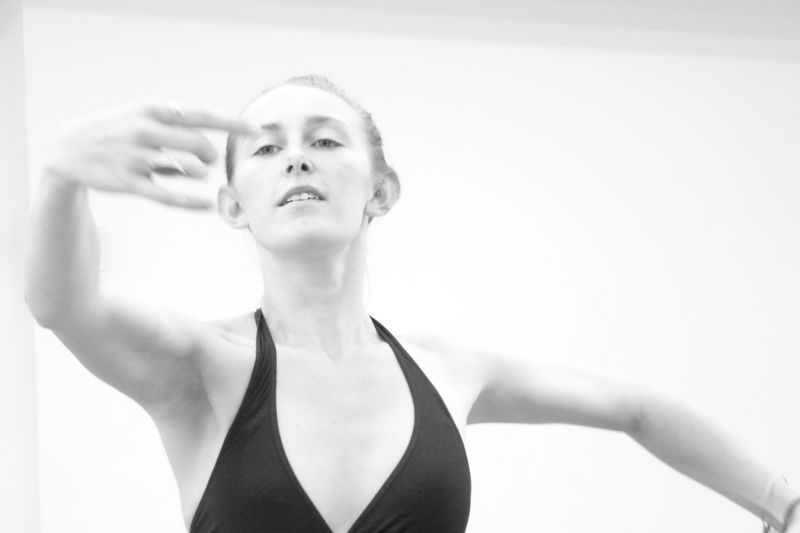
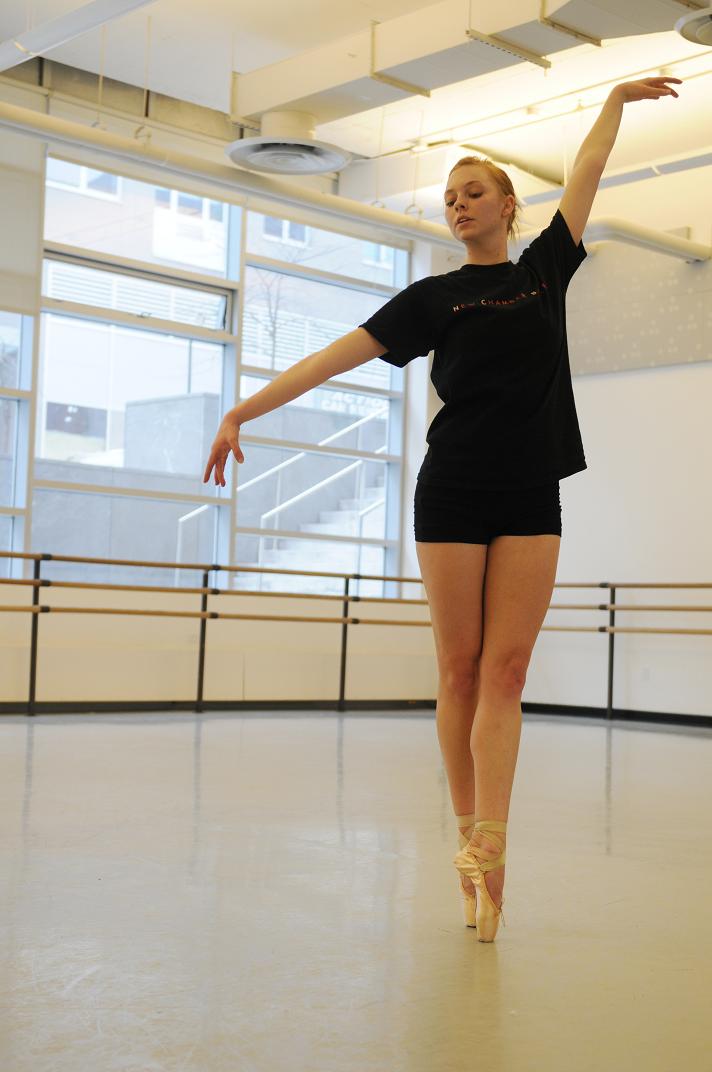
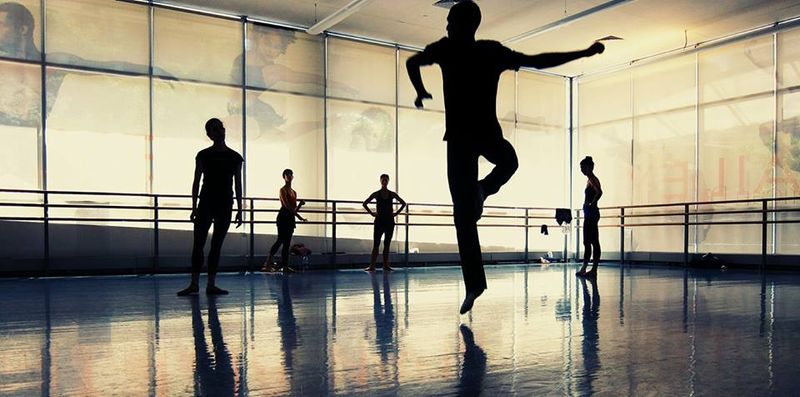
    Miro ncb rehearsal

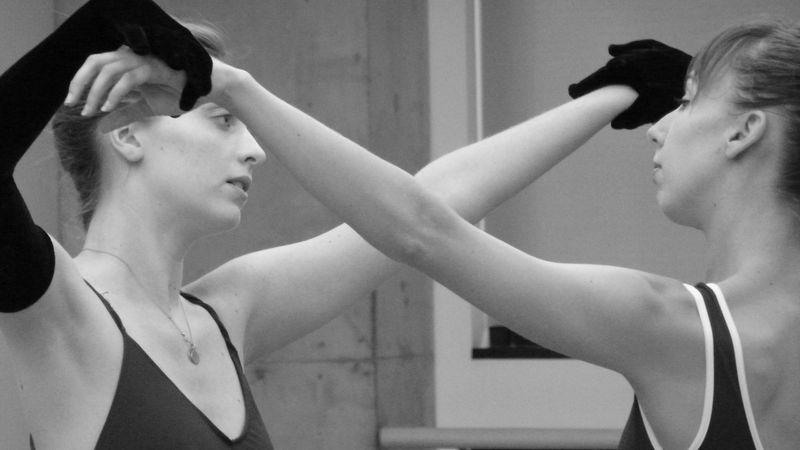
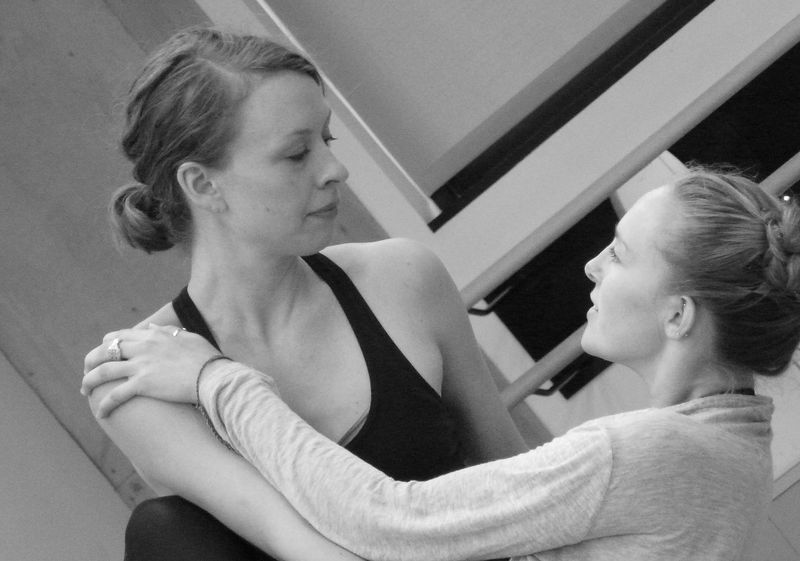
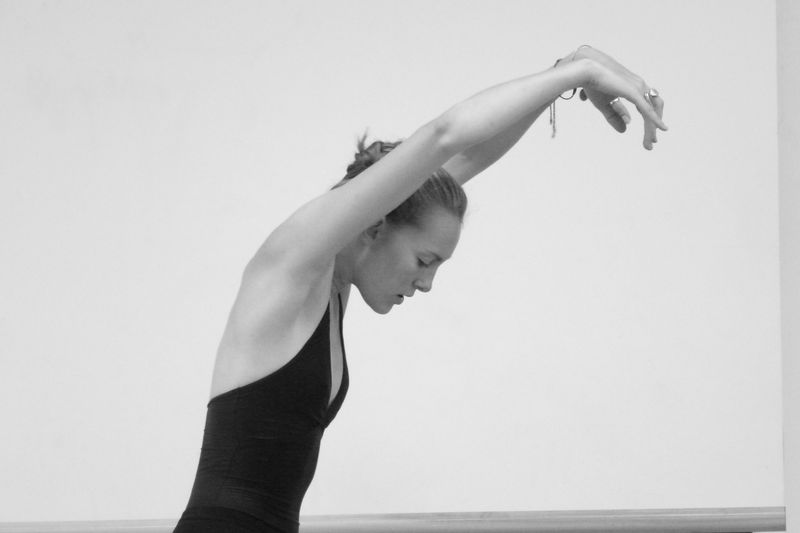
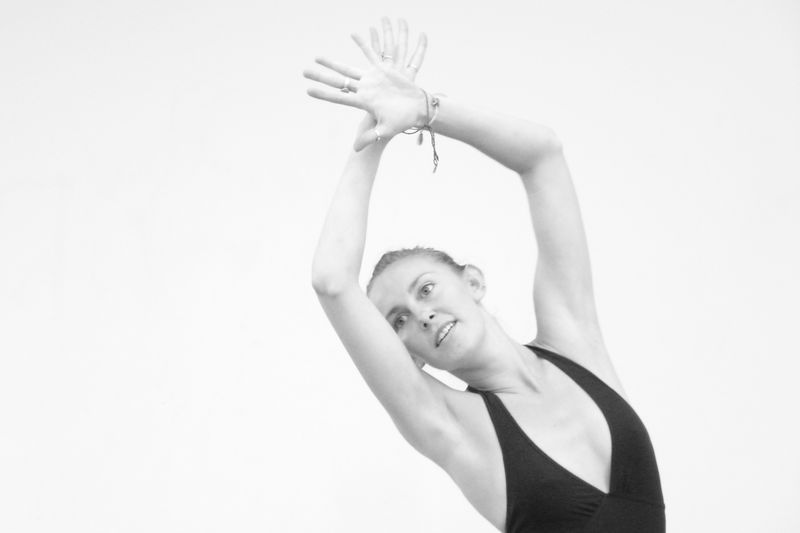
    Above: New Chamber Ballet company class; photo by Amber Neff

    Friday September 19th, 2014 – Miro Magloire’s New Chamber Ballet have inaugurated their tenth anniversary season with a programme featuring three Miro Magloire premieres and a work by NCB resident choreographer Constantine Baecher’s “Happy Dance Of The Wild Skeletons” (to music of John Cage), as well as Miro’s intriguing “Tilting and Leaning“, set to piano music by Pierre Boulez.

    Over the past decade, New Chamber Ballet have carved out a special niche for themselves in the Gotham dance world. Their “up-close-and-personal” concerts – always danced to live music – have drawn ever-expanding audiences, and tonight they played to a standing-room-only crowd.

    Much praise is due pianist Melody Fader and violinist Doori Na who perform the often complex scores that Miro likes to use with a high level of musicality. Exceptional tonight was their performance of Mauricio Kagel’s ‘Klangwölfe’ for the ballet RAW.

    In recent seasons Miro has presented narrative works: domestic dramas about ghosts, sibling rivalries, or mysterious letters. This evening’s three new works are more abstract though of course certain themes might be implied. The first ballet is aptly titled FAST FORWARD; danced to Beethoven’s ‘Rondo for Violin and Piano’, the work has three ballerinas – Sarah Atkins, Holly Curran, and Traci Finch – rushing about the space in speedy (even risky) combinations. The breathless quality of the movement is a fine response to the zesty drive of the Beethoven as played by Doori and Melody.
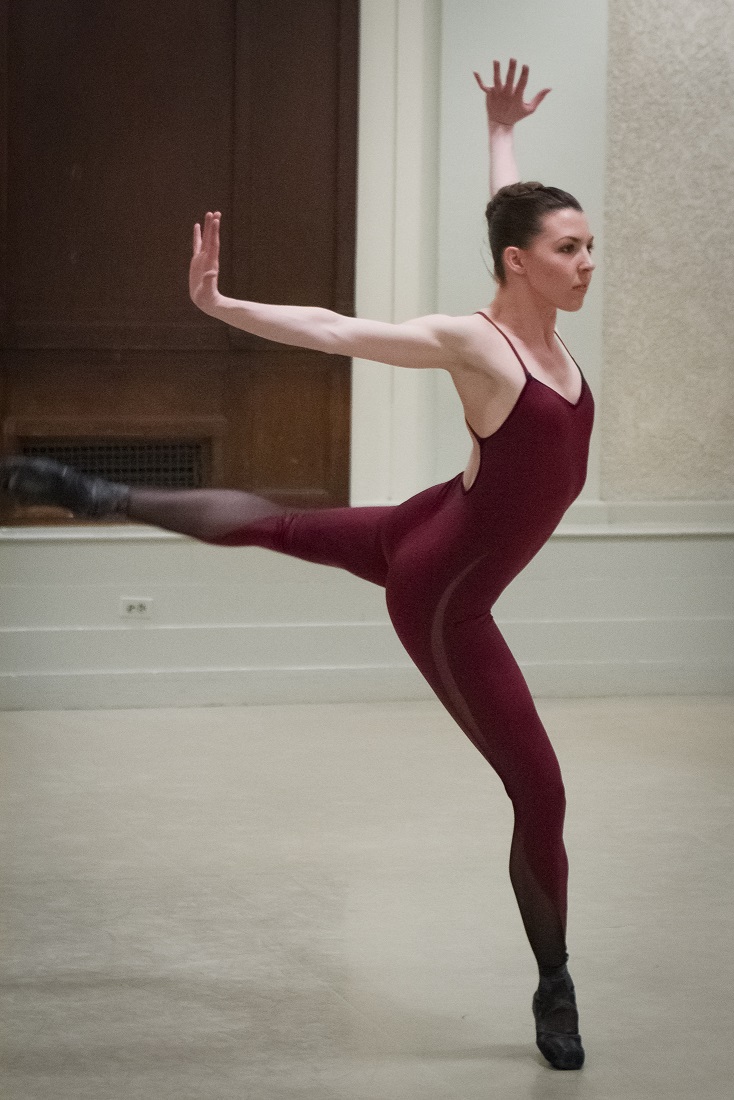
    Miro020-3289003989-O

    Above: Sarah Artkins in Miro’s TILTING/LEANING; photo by Adam Jason

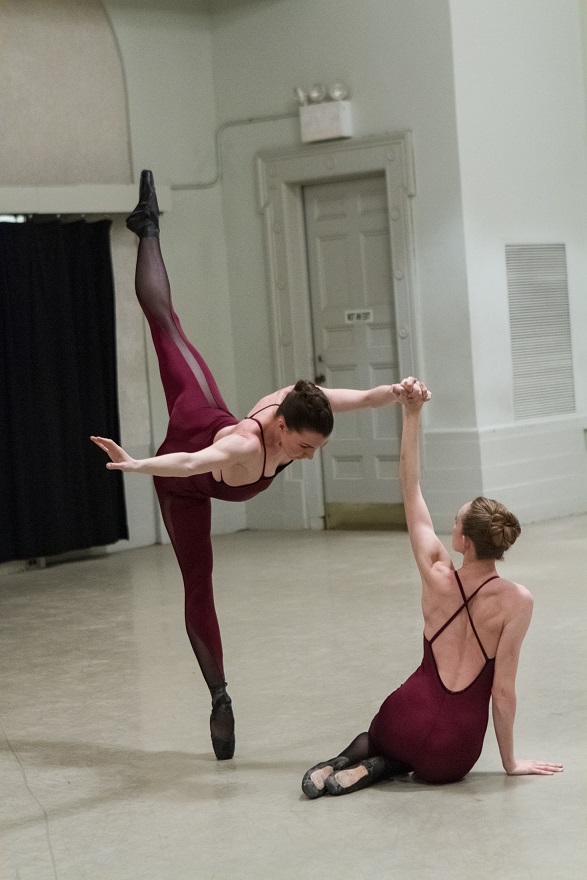
    Melody Fader took in stride the demands of Pierre Boulez’s ‘Notations’ which accompanies last season’s intriguing duet TILTING/LEANING. Dressed in Sarah Thea Swafford’s sleek wine-coloured body tights, dancers Sarah Atkins, Traci Finch, and Amber Neff go from intense to playful and back again in choreography where they balance against one another in unique and quirky shapes.
    Miro052-3289006317-O

    Supported arabesques are a signature motif in TILTING/LEANING (Sarah and Amber above, in an Adam Jason photo). At the end Sarah and Amber appear to ‘fold’ Traci into an improbable little bundle. This ballet rewards repeated viewings with its resonant nuances.
    L1480519

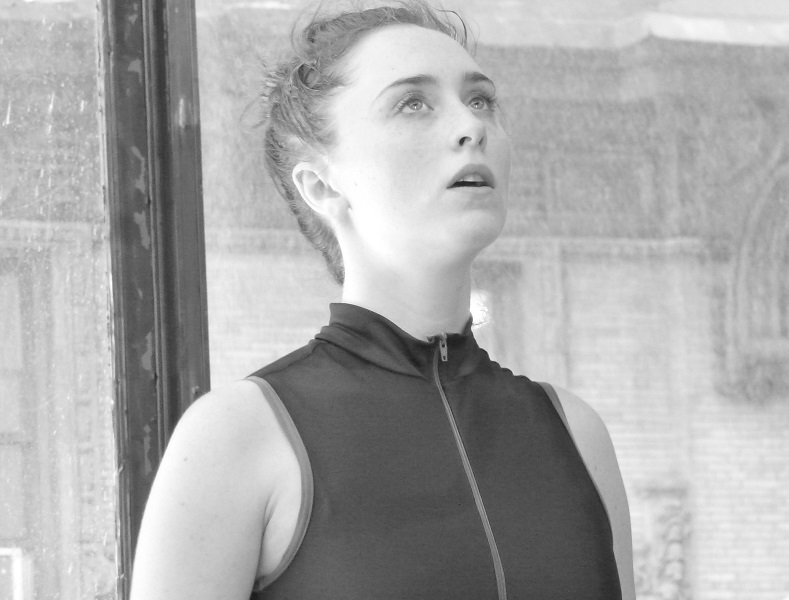
    For Holly Curran (rehearsal image, above), Miro has created an unusual tour de force solo entitled IN THE COLD. While Melody Fader spins out some Satie at the piano, Holly appears alternately shell-shocked, frantic, or trembling with the chills. Repetitive, compulsive moves give way to a spacious manège of leaps; the dancer periodically assumes a potent arabesque or pauses to rearrange herself before contemplating her next move. The solo, which choreographically rather plays against the expected responses to the Satie melodies, was excellently mastered by dancer and pianist.
    10486513_10152694171488571_8874687051716580051_n

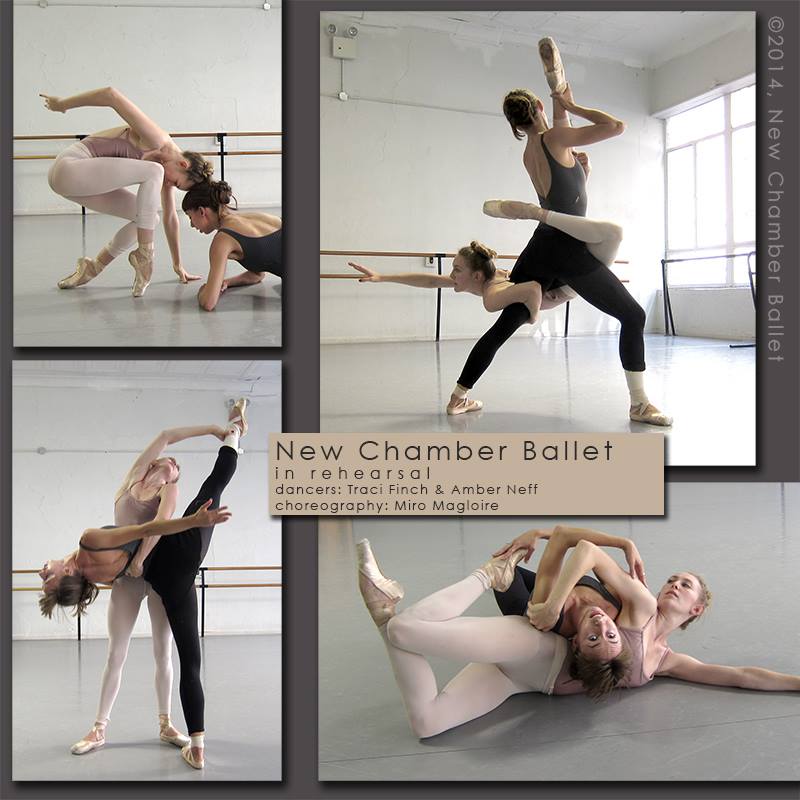
    Above: rehearsal images from Miro’s new duet RAW

    Miro’s meshing of music and movement created yet another fresh vision with RAW. Introducing the work, Miro spoke affectionately of the German-Argentine composer Mauricio Kagel who was Miro’s composition teacher. The choreographer pays homage to his musical mentor with one of his most inspired works to date: RAW is such a fascinating piece that when it ended I immediately wanted to see (and hear) it again.

    Doori Na – his strings muted – and Melody Fader evoked a misterioso atmosphere: Doori showed great control as he spun out a thread of sound, and Melody later drew forth a shimmering, high-lying theme from the keyboard. Dancers Traci Finch and Amber Neff are literally entwined much of the time in this duet; their handling of the strenuous partnering motifs, including lifts and intimate bondings, gave the ballet a captivating intensity. An aggressive passage eventually leads to serene, almost worshipful images as Amber leans against the piano and Traci kneels at her feet. RAW seems to veer from sensuous to sterile to pensive, and it is perhaps Miro’s most intimate creation to date.

    To end the evening, Miro invited the viewers to circle the dancefloor, the better to watch Constantine Baecher’s impetuous romp of a duet, HAPPY DANCE OF THE WILD SKELETONS. Melody Fader plays John Cage’s ‘Bacchanale’ on a prepared piano as dancers Traci Finch and Amber Neff – in girlish playsuits and bobbi-sox – indulge in playful, slap-happy hijinx. Their hair comes down at the end, as they revel in the sheer joy of being silly.

    Happy anniversary, Miro!

    The Company’s next performances will be on November 21st and 22nd. 2014. Visit their website here.

  • New Chamber Ballet: Baecher and Magloire

    1426491_541344345952393_316149436_n

    Saturday November 23, 2013 – New Chamber Ballet‘s 2013-2014 season continued this evening with a program featuring a Miro Magloire premiere and a revised version of a Constantine Baecher ballet. As always at New Chamber Ballet, live music was an essential component of the performance: pianist Melody Fader and violinist Doori Na were in their element, particularly in the very demanding (commissioned) score by Michel Galante for Miro’s new ballet.

    In Miro’s “A Present” which opened the evening, three women (Elizabeth Brown, Holly Curran, and Amber Neff) go to great lengths to have and to hold onto a necklace which has been sent them by an unknown admirer. A note is enclosed with the gift, but we never learn who it is from or what it says. After some under-handed pilfering and a frantic chase, the bauble is destroyed and the note torn to shreds. Doori Na played a suite of melodies from Tchaikovsky’s Nutcracker, arranged for solo violin, while the three girls fought for possession of the mysterious gift.

    Another conflict ballet comes in the form of Miro’s “Sister, My Sister” wherein dancer Amber Neff is annoyed – to the point of becoming homicidal – by her sister, soprano Charlotte Mundy. The Morton Feldman score calls for Ms. Mundy to vocalize on single, sustained notes. This gets under her sister’s skin. Melody Fader and Doori Na (unseen) played the angular Feldman score as the two women battled it out.

    “Stay With Me”, the new Magloire/Galante collaboration, is perhaps Miro’s finest achievement to date. There are narrative undercurrents but no specific scenario is suggested: the ballet is essentially two duets – the first for Holly Curran and Traci Finch and the second danced by Ms. Curran with Sarah Atkins. The girls wear simple tights and halter tops. In the first duet, Holly and Traci dance an entwined mirror-image adagio; Traci at one point executes a wonderfully fluid backbend. Sarah Atkins silently observes the end of the Traci/Holly duet and then she takes Traci’s place – as the latter walks away – and continues the dance with Holly. The choreography presents a stylized language of intimacy, and the mystery of who these women are and what they mean to one another remains unsolved as the ballet ends.

    IMG_20131117_220510_edited

    Above: dancers Holly Curran and Traci Finch in a rehearsal image by Amber Neff

    The Galante score for “Stay With Me” is fascinating and it challenges the two musicians in terms of both technique and stamina. The piece opens with both piano and violin playing in the highest range. Doori’s violin slithers up and down rapid chromatic scales or lingers for measure after measure on a single pinging tone, while Melody at one point produces a series of sweeping downhill glissandi covering the full keyboard; elsewhere the piano writing favors ethereal high shimmers. Kudos to these two musicians for their spell-binding performance. “Stay With Me” is a ballet I will want to see and hear again soon.

    Constantine Baecher’s “Allow You To Look At Me” was originally a sort of joint-biography of Mr. Baecher and dancer Elizabeth Brown and their long-time association. In tonight’s revision, now titled “Allow You To Look At Me Again” that intensely personal element has been discarded in favor of a more generalized narrative about what it means to perform and to expose oneself to public scrutiny. Narrator Jonathan Parks-Ramage now reads the biographies of each of the three participants – Ms. Brown, Holly Curran and Mr. Baecher – rather than the former poetic story of Constantine and Elizabeth’s mutual admiration. At the piano, Melody Fader plays familiar melodies which underline the personal facets of each dancer’s self-view. The solo for Elizabeth Brown, danced to Debussy’s ever-poignant Clair de Lune, was the evocative apex of the ballet and a lovely portrait of this dictinctive dancer. The work, though now less personal, remains powerful.


  • In the Studio with Miro Magloire

    L1200876

    Above: Holly Curran and Traci Finch rehearsing for New Chamber Ballet

    Wednesday August 28th, 2013 – Miro Magloire, always one of the busiest people on the New York City dance scene, is busier than ever these days. Not only is he preparing for the upcoming performances of his New Chamber Ballet (September 6th & 7th at City Center Studios) but he is also creating five new works for the Austrian Cultural Forum’s Moving Sounds Festival for a performance on September 20th, as well as looking ahead to New Chamber Ballet‘s tour to Germany.

    For the Moving Sounds Festival, New Chamber Ballet will team up with
    the Argento Chamber Ensemble for a program of five new ballets – and a
    revival – to music by contemporary Austrian and American composers. A world premiere collaboration with
    composer Michel Galante, a new work to a new score by composer Nina C.
    Young, and new creations to scores by Beat Furrer, Georg Friedrich Haas,
    and Arthur Kampela will be featured. The program – which will also include a revival of Miro’s ECHOES to music by Anton Webern – takes place at the Bohemian National Hall, Czech Center, 321 East 73rd Street, NYC on September 20th. Visit the Festival’s page here.

    I stopped in at Ballet Hispanico today where Miro and his dancers – Elizabeth Brown, Sarah Atkins, Holly Curran, Amber Neff and Traci Finch – were working on some of the new rep. Composer Nina C Young dropped by to see the piece Miro is creating to her score.

    Here are some photos I took of the new works in rehearsal:

    L1200839

    Ellizabeth Brown and Amber Neff

    L1200709

    Traci Finch and Holly Curran

    L1200794

    Amber Neff

    L1200807

    Elizabeth Brown

    L1200932

    Holly Curran, Amber Neff

    The final half-hour of the rehearsal time was devoted to Amber Neff working on the solo IN A SIMPLE BLACK DRESS, one of my favorites among Miro’s ever-expanding repertoire of intimate ballets. Here are some images of Amber rehearsing this solo:

    L1200988

    L1210107

    L1210054

    L1210147

    L1210189

  • Miro Magloire Goes Classical: New Chamber Ballet

    6a00d8341c4e3853ef017615b0efb6970c

    Above: Elizabeth Brown of New Chamber Ballet, photo by Kokyat. Click to enlarge.

    Saturday November 17, 2012 – Performances at New Chamber Ballet always feature live music, and quite often it is music that has been written in the 20th or even the 21st century. Tonight’s programme varied a bit from the New Chamber Ballet norm as three of the four works choreographed by the Company’s director Miro Magloire were set to works of Old Masters: Bach, Handel and Tchaikovsky.  In such company, the fourth work – by Karlheinz Stockhausen – gave the evening a nice tangy jolt.

    Super-familiar melodies from THE NUTCRACKER were transcribed for solo violin and played with alternating currents of delicacy and gusto by Clara Lyon. There were no candy canes or snowflakes to be seen, however: instead, three women (Elizabeth Brown, Nora Brown and Holly Curran) became obsessed with a gift-wrapped silvery pendant that changed hands several times in the course of the ballet. Technically demanding solos were spun thru the musical fabric, and elements of chase and deceit played out as each girl tried to claim the bauble for her own.

    Melody Fader attacked the hammering motif that opens Karlheinz Stockhausen’s Klavierstuck IX with flair; Elizabeth Brown and Holly Curran sit on either side of the pianist as Miro’s KLAVIERSTUCK commences: a ballet that became a memorial to the composer who passed away in 2007, shortly after having given Miro his blessing to choreograph the piece. The piano itself becomes the central element of the ballet, functioning as a barre and as an altar. Miro’s affectionate gesture to the composer he so admired has become New Chamber Ballet’s signature work.

    After a short break, Melody Fader switched modes and played a transcription of a Handel violin sonata (arranged by Miro) as the Company’s newest member Nora Brown gave lyric sweep to the pure classic vocabulary of the solo SPIEGELEIN. Wearing Candice Thompson’s fetching pale rose and white tunic, Nora’s graceful dancing had a lovely fresh quality.

    Its premiere having been delayed a couple of months, Miro’s new ballet THE OTHER WOMAN proved one of his finest works to date. Set to Bach’s B-minor sonata (played by Clara Lyon and Melody Fader) this ballet about duplicity and its resulting emotional impact on the personalities involved struck close to home. Elizabeth Brown and Holly Curran are the two women – and who could choose between them? – while Sarah Atkins en travesti gives a wonderful performance as the object of their affections. Sarah, in a black suit and bowler hat, danced her jaunty solo with  élan while the two girls vied for his attention in a situation where someone is bound to lose.

    New Chamber Ballet‘s audience continues to grow, with new faces among the crowd of familiar long-time supporters. In their mixture of classic, on-pointe dancing and live music in an intimate setting, Miro’s evenings hold a unique place in the Gotham dance scene. Their next performances are slated for February 15th and 16th, 2013.

  • Miro Magloire/New Chamber Ballet

    Copy of 12-2

    Friday June 24, 2011 – Miro Magloire and his New Chamber Ballet hold a unique place on the New York City dance scene. Performing works deeply rooted in classical ballet technique, NCB use an intimate studio setting to bring the viewer as close to dance as one can get. As a composer and musician, Miro puts an equal value on the music we experience at his performances: performed live by excellent musicians, we frequently hear works by contemporary composers that we might not otherwise get to know. 

    Miro’s troupe of ballerinas allow us not only to enjoy their individual dance-personalities up close but also to observe the technique of dancing on pointe in a way that can’t be grasped in the large venues where ABT and New York City Ballet perform. 

    Miro Magloire frequently re-visits his earlier works and brings them back with fresh details. Tonight’s opening THE GAME was originally developed under the title TABLE. Much of the piece looks as it did in the earlier version, but a deck of cards has been added giving a focus to the subtle combat between the two seated women. Madeline Deavenport and Katie Gibson (top photo by Kokyat) each periodically skitters away from the table to dance in jaggedly expressive phrases. Violinist Erik Carlson’s mastery of the Brian Ferneyhough score underlines the tension between the two players; Katie wins the game as the cards go flying across the studio space.

    Miro’s working on a new piece to Lucio Berio which will be shown in the Fall, In the meantime, pianist Melody Fader gave us a musical preview tonight, playing Leaf from Six Encores as a solo interlude.

    Lieder by Schubert, Schumann, Brahms and Wagner inspired LOVE SONG SOLOS, which premiered tonight. However, there is no singing involved. Instead Miro used the songs as a map, transcribing them for maracas (!) which he skilfully played himself. Who but Miro would imagine such a musical departure? But it works. Three dancers – Katie Gibson, Alexandra Blacker and Elizabeth Brown – each have a solo. They wear mossy green tunics by costumier Candice Thompson. Devoid of a literal story line, the dances nonetheless echo the emotional aspects of the original songs: passion, serenity, agitation and longing are conjured in movement. This unusual work gives each dancer ample expressive opportunity.

    Choreographer Emery LeCrone calls for sustained energy levels from three dancers – Lauren Toole, Victoria North and Maddie Deavenport – in CHAMBER DANCES. This three-movement work set to John Adams’ Road Movies propels the dancers thru in-sync trio passages with relesntless pacing. A calmer central movement gives way to more bursts of movement in the finale. Each girl has a solo in which Emery builds on individual attributes to give us a personal look at each dancer while never stinting on technical demands.

    A real workout for the threesome, CHAMBER DANCES signals Emery LeCrone’s ongoing ascent in the choreographic sphere. Earlier in the day, I got to watch another work that Emery is developing for the Guggenheim’s Work & Process series. More about that – with Matt Murphy photos – coming soon.

    Copy of 6-3

    Alexandra Blacker is a dancer Kokyat and I have really admired in her performances with New Chamber Ballet. This past January we just happened upon Alexandra working in the studio with Emery LeCrone and Deborah Wingert on the solo VIRTUOSA for New Chamber Ballet; that’s where Kokyat took the above photo. Alexandra will now be moving back to California; it’s been lovely getting to watch her in several works with NCB during this past season.