Tag: New Met

  • Waiting for Elisabeth Grümmer

    The most-read article from Oberon’s Grove:

    Gruemmer

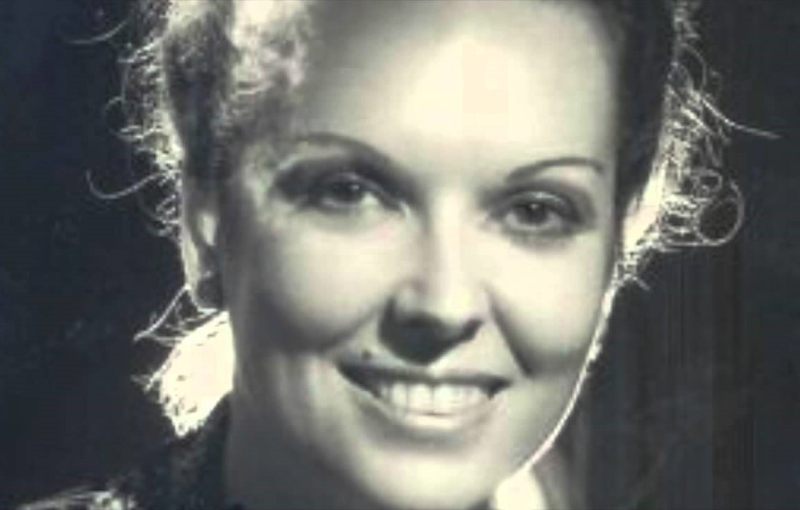
    ~ In 1967 the Metropolitan Opera held its first June Festival. Having just opened the ‘New Met’ in September 1966, ticket demand for the premiere season at Lincoln Center had been phenomenal and the Company seized the opportunity to add several performances in the month of June. This was a bonanza for the fans and also provided the general public, who were curious to see the interior of the new opera house, expanded possibilities. The Met offered some very fine casting that June, and topping the list of exciting events (at least from the fans’ point of view) was the belated Met debut of the German soprano Elisabeth Grummer. 

    Grümmer was 57 at the time, and had already had a very successful career in Europe and had made several top-class recordings, working with Europe’s finest conductors. She had made her debut with the Met on tour in Boston earlier that Spring and was now coming to the House in the role of Elsa in Wieland Wagner’s production of LOHENGRIN.

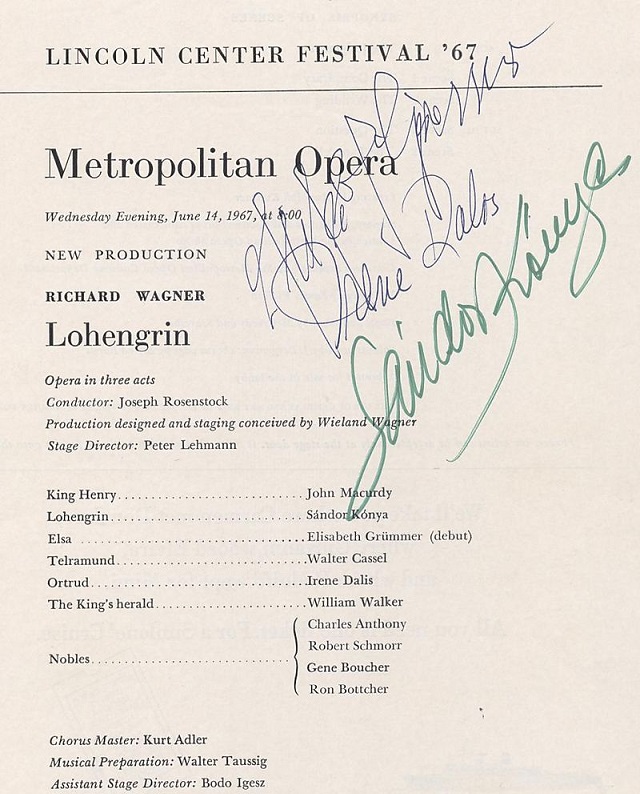
    This was my first chance to see this opera; Sandor Konya was at that time the leading exponent of the title role, and my beloved Irene Dalis was singing her venomous Ortrud. Stalwarts Walter Cassel, John Macurdy and William Walker completed the cast. Andre Cluytens, who was to have conducted this production of LOHENGRIN, had died the previous summer and so Joseph Rosenstock was on the podium. I suppose by international standards that Rosenstock was considered a routinier but – inexperienced as I was – I was simply thrilled to be there.

    Grümmer made her entrance, and I recall the entire phalanx of Family Circle standees were waiting with collectively bated breath for her first line, which she deployed with a silvery pianissimo: “Mein armer bruder!”  We were under her spell immediately and she went on to sing a really thrilling Elsa and to win a very warm acclaim from the packed house. Although nearing the end of her career, Grümmer had maintained her clarity of sound; the voice had a lyrical feeling but she was able to ride the ensembles  with a bit of metallic thrust. It was an exciting debut but after repeating the role once, she never sang at the Met again. (She did appear as the Marschallin at the New York City Opera the following season.)

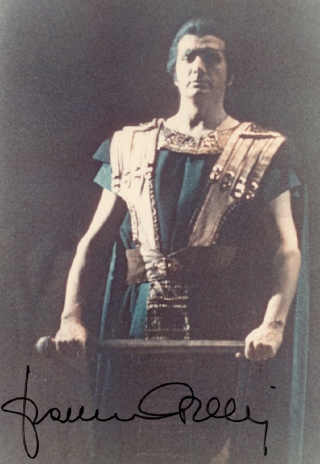
    A large contingent of fans gathered at the stage door. Sandor Konya came out and was so kind; aside from signing my programme he gave me a beautiful photo of himself as Lohengrin. Irene Dalis  appeared and she even remembered me and thanked me for coming. Then the crowd began to drift away. I knew Grümmer hadn’t left yet and I couldn’t imagine why no one wanted her autograph after such an exciting debut.

    After a few moments only a half-dozen of us remained. A chorister walked out and someone asked him if Miss Grümmer was coming out soon: “Oh, she doesn’t sign autographs!” Someone else emerged and saw us: “You waiting for Grümmer? She won’t sign.” The other fans left. I figured at least I would get a glimpse of her. It had been an hour since the curtain had fallen, and I was exhausted. But something kept me there.

    A car pulled up; the driver got out. He looked at me and said, “If you’re waiting for Elisabeth Grümmer, you’re wasting your time.  She doesn’t like giving autographs.”  I shrugged, trying to pretend that I WASN’T waiting for Elisabeth Grümmer.

    Finally the stage door opened and Ms. Grümmer walked out with a gentleman. They got in the car and closed the doors. But they didn’t leave. I stood by the stage door holding my program and pen, looking as forlorn as I could. I was 19 but looked younger, and I hoped she would take pity on me. The driver was pointing at me and the soprano looked my way hesitantly. Then she suddenly rolled down her window and gestured to me. Neither of us spoke, but I handed her the program. She briskly wrote her name and handed it back to me with just a trace of a smile. I thanked her and made a little bow; she rolled up the window and the car pulled away.

    Click to enlarge:
    6a00d8341c4e3853ef00e553e3255c8833-800wi
  • Biancamaria Casoni ~ Dalila in Italian

    Casoni copy

    Biancamaria Casoni sings Dalila’s seduction aria from SAMSON & DALILA in Italian. Ms. Casoni was my first-ever Cherubino in NOZZE DI FIGARO when the Rome Opera came to the (then) New Met in 1968.

    I love the subtleties in Ms. Casoni’s interpretation; she makes Dalila’s aria intimately persuasive. Her phrasing and the softness of her timbre are alluring, and her long line and vocal control are impressive…especially as it’s a live performance.

    Listen here

  • 55 Years Ago ~ TURANDOT @ The Met

    Birgit (2)

    On September 26th, 1966, I attended my first opera at the New Met: a performance of Puccini’s TURANDOT starring Birgit Nilsson (above), Franco Corelli, Teresa Stratas, and Bonaldo Giaiotti, conducted by Zubin Mehta.

    A few weeks earlier, I had taken an over-night bus from Syracuse to New York City and joined the ticket line for the opening performances at the new opera house. Read about my adventure here.

    I had seen the Met’s Cecil Beaton production of TURANDOT previously, at the Old Met. It was considered quite lavish at the time, but within a couple decades it was wildly surpassed by the elaborate Franco Zeffirelli setting. Birgit and Franco seemed thoroughly at home on the Beaton sets, their by-play with Turandot’s all-day-lollipop/sceptre, was always commented upon by the fans, who gauged the scene to determine how well the two superstars were getting along on a given evening.

    Turandot-1 jpg
    My diary entry was very brief:

    “First performance at the New Met!! Magnificent evening, dazzling experience. After hearing Nilsson and Corelli on Saturday matinee broadcasts, it was electrifying to hear them “live“; you can’t really tell how immense and thrilling their voices are over the radio. They are great stars!

    Teresa Stratas was excellent as Liu, and my favorite bass, Bonaldo Giaiotti, sounded great. Uppman, Nagy, Anthony, and Goodloe – all singers know from the broadcasts – were fine. Mehta tremendous!

    There was huge applause after each act, and many curtain calls. The Corelli fans in particular went crazy.”

    After the ovation finally ceased, I went to the stage door where a huge crowd of people were waiting to meet the artists. They finally came out, and they were all very nice to me. Stratas signed my program, and Birgit signed the photo at the top of this article.

    Franco

    I’d brought along the above photo of Corelli as Radames for him to sign; he seemed genuinely pleased to see this picture of himself, and the fans gathered around him were gasping, “Where did you find this???” 

    I remember that I slept very little after getting back to The Henry Hudson Hotel that night. I was really wound-up: I had been going to the opera sporadically since 1962 – plus catching every Met broadcast and building a big record collection. But this evening marked the start of the next phase of my operatic career. I began coming down to New York for long weekends, taking the over-night bus from Syracuse and staying at the Henry Hudson; opera was everything to me.

    After spending the Summer of 1974 on Cape Cod with TJ, working for a small ballet company, I moved into his dorm room at Sarah Lawrence College where we spent the 1974-1975 academic year together. We went down to the opera (and also the ballet!) constantly, taking a bus from Bronxville to the A train station at 207th Street – the station that’s now a block from where I live.

    After he graduated, we moved to Hartford; we were poor, and trips to New York City were few and far between. But after we broke up, I got my own place place and began spending frequent long weekends in NYC again. My promiscuous phase – can 25 years be considered a phase? – started at this point.

    Finally, in 1998, shortly before my 50th birthday, I moved to New York City. This had been my plan since that first solo excursion to join the Met ticket line in late Summer 1966, but Hartford had been a 22-year detour.

    Now, at last, I was home.

    ~ Oberon