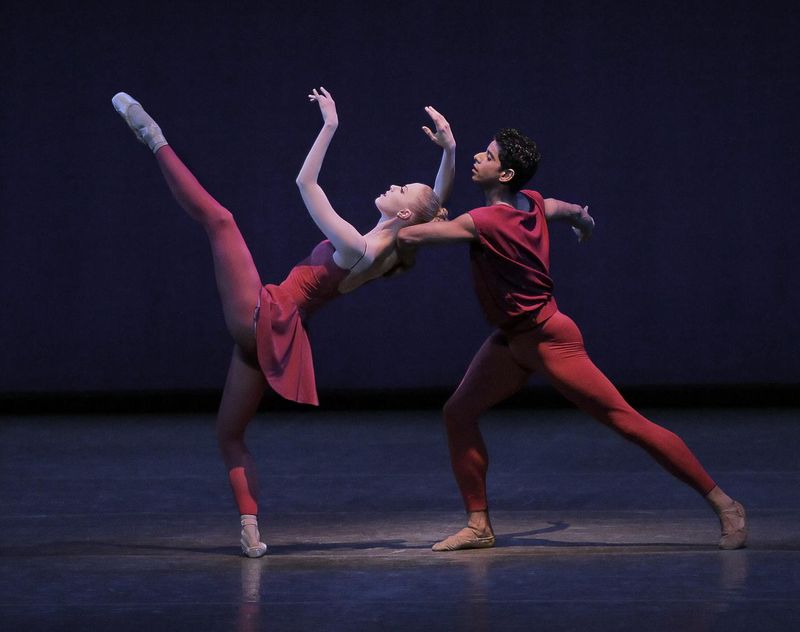
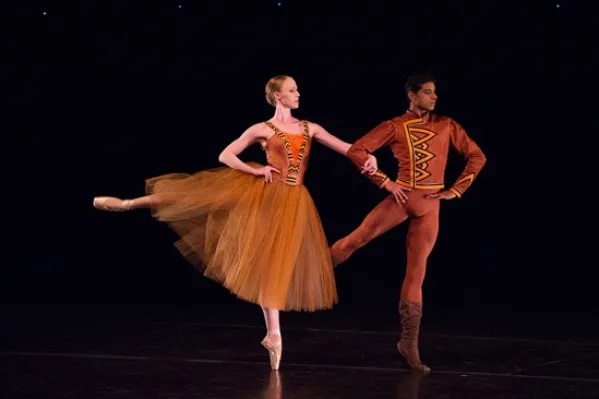
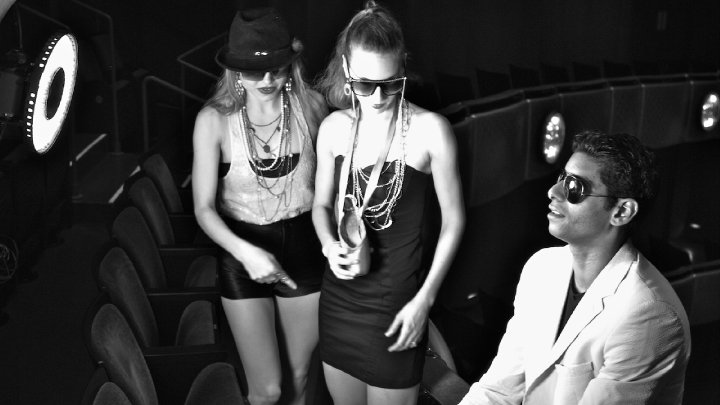
Tag: New York City Ballet

  • Wendy & Pauline

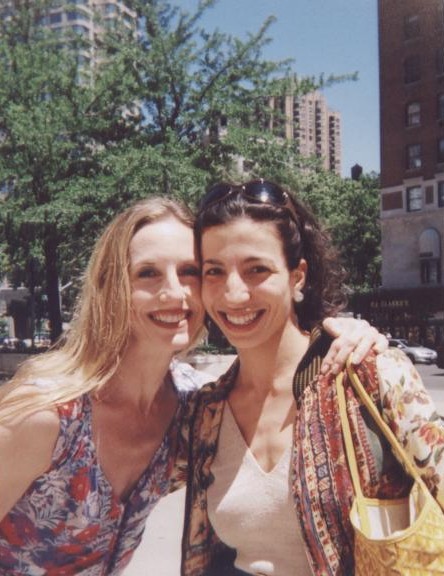
    (Imported from Oberon’s Grove, a 2007 story of one of my most memorable days as a blogger: a chance meeting with New York City Ballet’s Wendy Whelan and Pauline Golbin)
    wendy pauline c

    This was my big opportunity as a blogger: having Wendy Whelan and Pauline Golbin and my camera all in the same place at the same time. To be honest, I almost always have my camera with me but I rarely work up the nerve to ask any of the dancers if I can take their picture. However, it was such a gorgeous day (6/23/07) and the girls were in such a great mood that I said ‘what the heck’ and asked them. I just love the results, if I do say so myself. And I will tell you that these two dancers have an awful lot to do with not only my devotion to NYC Ballet but the way I have come to watch the Company.

    After going to NYCB pretty often in the late 1970s, I sort of wavered; I was really into opera, and whenever I would come down to NYC from Hartford, opera was my main priority. It’s too bad because every time I did squeeze in a visit to the State Theatre I just loved it. I missed entire careers there, and dancers I really admired came & went without me being aware of it.

    In 1996 I was dating a Japanese guy named Toshi who lived on the East Side; he was a textile designer with an incredible eye. One night on a whim, I took him to NYC Ballet. Walking home across Central Park, I asked him if any of the dancers had made an impression. “Wendy Whelan. Can’t you see she is on a whole other level from the other dancers?” I had seen her dance a few times and always really liked her. So we started going pretty frequently and I realized he was right. There seemed to be something almost profound about everything she did – not profound in a weighty sense but in a way of making you feel and think about what she was doing as being more than just dancing.

    After I moved here in 1998 there was a season when most of the principal ballerinas were either sick, injured, or pregnant. Wendy, along with Yvonne Borree and Miranda Weese, was carrying the whole season and since there were lots of ballets that Yvonne & Miranda didn’t do, Wendy ended up dancing at literally every performance, and often two – and sometimes three – ballets a night. Far from getting tired of her or craving a different face and body, I became addicted. Wei and I went more and more frequently, just to see what she would do. We fell under her spell. Going so often simply became a habit, and when  the other ballerinas rejoined the ranks we found that Wendy had managed to get us hooked on the whole scene.

    It was Pauline Golbin who turned me into a corps-watcher. And again it was Toshi who noticed her. I must say that until 1996 I didn’t pay much attention to the corps. I knew they were there and that Mr B had given them plenty to do on any given night, but I couldn’t tell one bun-head from the next, and the boys I hardly ever even noticed. So after one piece, Toshi asked me: “Who is that girl with the black hair and the wonderful smile?” Hmmmm, well there’s about a dozen of ’em onstage; I couldn’t answer his question. We came out the side doors and this very girl dashed past us in a striking coat, scarf,  and hat.”That’s her! So chic!!” said Toshi. So next time we went we started looking for her; it became a ritual to find this girl onstage. Then, during an intermission, we scanned thru the season booklet and found her: Pauline Golbin.

    By watching for Pauline, I started  to notice how demanding the corps work was at NYCB, and that they weren’t just a mass of anonymous bodies but beautiful/handsome people who were doing amazing things. I began matching names to faces and hoping to see certain dancers get some of the featured roles. I began watching the corps much more intensely, and it really gave the performances a whole other dimension. There have been many nights when I have gone to a performance just because someone from the corps that I like had landed a solo.  Of course, I love to see them get promoted though I realize not everyone can be a soloist. Though many of them should be.

    wendy pauline 2 copy

    Pauline is famous for her hats, and I said something about it…and she reached into her bag and pulled one out. In the book ROUND ABOUT THE BALLET, Wendy was asked: “Is there anything people don’t know about you that you’d like them to know?” and she replied: “I’m a funny person! I think I come across as so serious in ballets. But I’m a pretty silly girl. I don’t know if people realize that.” So it didn’t surprise me when she started cutting up and trying to get under Pauline’s hat.

    As they strolled into the theatre, I really felt like I’d truly been in the right place at the right time.
  • NYCB Flashback ~ Wendy Whelan’s Farewell

    (Bringing this 2014 article forward from the Grove to celebrate the one-and-only Wendy Whelan.)

    ww by matt murphy

    Above: Wendy Whelan, photographed by Matt Murphy

    Saturday October 18th, 2014 – No two ballerina farewells are ever alike. Darci Kistler’s farewell marked the end of an era, as she was considered “the last Balanchine ballerina”. At Heléne Alexopoulos’ gala we celebrated one of the greatest beauties ever to grace the stage. Yvonne Borree’s farewell was the most touching, Kyra Nichols’ the most moving. I missed the farewells of Jenifer Ringer and Janie Taylor, saying ‘goodbye’ to them in the days prior to their final bows, simply because I couldn’t imagine NYCB without them. Miranda Weese wasn’t given the full farewell treatment as she wasn’t retiring, just changing companies. I missed her even before she was gone, and I still miss her.

    Tonight, Wendy Whelan’s farewell summoned up an enormous range of emotions, just as her dancing has always done. The programme was well-chosen to underscore her association with four great choreographers, including a complete performance of one of her signature ballets, Balanchine’s LA SONNAMBULA, excerpts from works by Jerome Robbins, Alexei Ratmansky, and Christopher Wheeldon, plus a special pièce d’occasion: a new pas de trois devised for Wendy, Tyler Angle, and Craig Hall in a choreographic collaboration of Chris Wheeldon and Alexei Ratmansky.

    Daniel Capps was on the podium for the opening SONNAMBULA and the concluding Vivaldi/Richter setting for the premiere of BY 2 WITH & FROM; Andrews Sill led the Shostakovich score for CONCERTO DSCH. Throughout the evening, Company musicians were featured: pianist Cameron Grant playing the Chopin for GATHERING; Susan Walters at the keyboard for CONCERTO DSCH; violinist Arturo Delmoni with Cameron Grant for AFTER THE RAIN; and violinist Kurt Nikkanen for the Vivaldi/Richter. For each of them, Wendy had a very cordial greeting, and at the end of the evening she stepped to the edge of the stage and swept into a deep curtsey to thank the NYCB orchestra for their invaluable support throughout her career. That was a particularly lovely moment.

    The emotional temperature ran high all evening; in fact several people I talked to spoke of how they had experienced unusual mood swings from giddiness to despair throughout the day, anticipating Wendy’s dancing whilst regretting that it would be her last time on this stage. 

    Following LA SONNAMBULA‘s opening scene and divertissements, Wendy appeared to the first ovation of the night. She conveyed the mystery of the sleepwalker with her pin-pointe bourrées; in a trance, she managed to totally ignore Robert Fairchild’s endless attempts to intrude on her private world. Earlier in the work, Sara Mearns, Amar Ramasar, Likolani Brown, Megan Mann, Devin Alberda, David Prottas, Lauren King, Antonio Carmena, and Daniel Ulbricht were all vividly present, and they joined in the applause for Wendy during the bows.

    In the DANCES AT A GATHERING excerpt, Wendy joined Abi Stafford and Rebecca Krohn in dances of sisterly joy; Jared Angle, Adrian Danchig-Waring and Zachary Catazaro were the handsome cavaliers. In the passage where the girls are flung from one boy to the next, Zachary made an amazing catch of Wendy as she hurtled thru the air into his arms.

    It was that poignant piano theme in Shostakovich’s concerto #2 – played with great clarity by Susan Walters – that really put me over the edge. Wendy and Tyler Angle danced the adagio from CONCERTO DSCH luminously, with such expressive lyricism. A beautiful sextette of supporting dancers conveyed the quiet intensity of the little vignette Ratmansky has created for them here: Alina Dronova, Gretchen Smith, Lydia Wellington, Joshua Thew, Justin Peck, and our newly-promoted-to-soloist Russell Janzen. How thrilled they all must have been to share these moments with Wendy one last time.

    Wendy and Craig Hall then danced the pas de deux from Wheeldon’s AFTER THE RAIN, holding the audience in an enraptured state as the crystalline purity of the Arvo Pärt’s ‘Spiegel im Spiegel’ stole thru the silent hall in all its poignant grace. It seemed that time stood still here, allowing us to immerse ourselves in the spell-binding artistry of these immaculate dancers.

    In between the three above-listed shorter works, brief films were shown while Wendy changed costumes. In these films, the ballerina I have had the honor to know revealed so many facets of her personality. In one utterly Wendy moment, she played up the mock-jealousy of finding Craig Hall emerging from a rehearsal with ‘another woman’: Rebecca Krohn. That made me laugh out loud. 

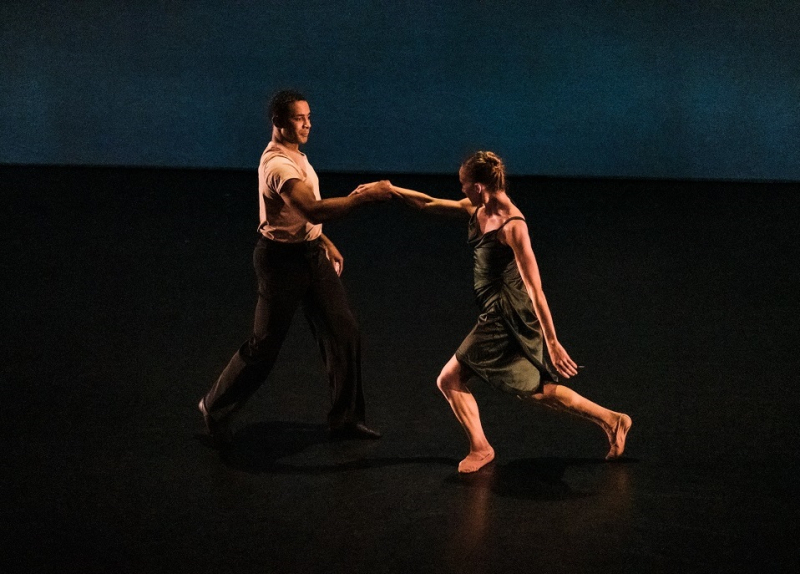
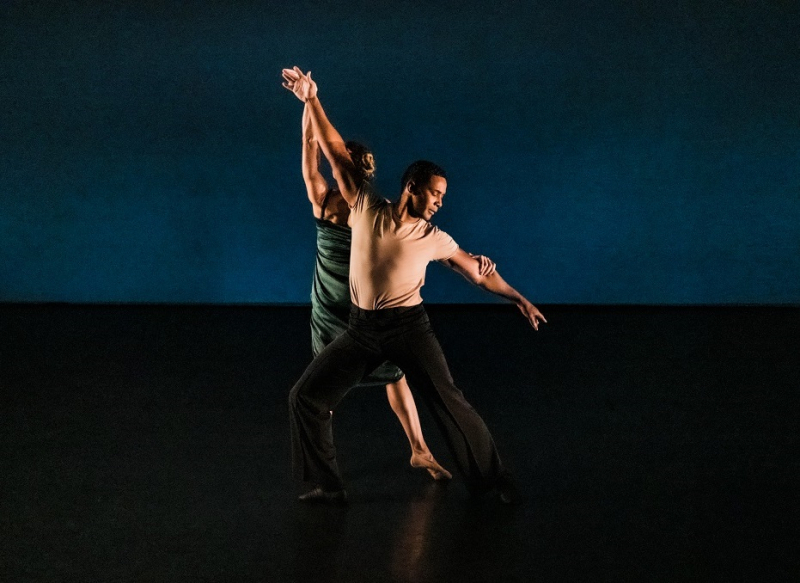
    And all to soon, we had reached the end. The Ratmansky/Wheeldon collaboration provided an excellent setting for Wendy’s last dance on Mr. B’s stage. With her two princes – Tyler Angle and Craig Hall – she conveyed the supple strength, tenderness, gentle wit, and sheer overwhelming beauty that have made her one of the great dance icons of our time. The ballet ends with Wendy reaching for the stars.
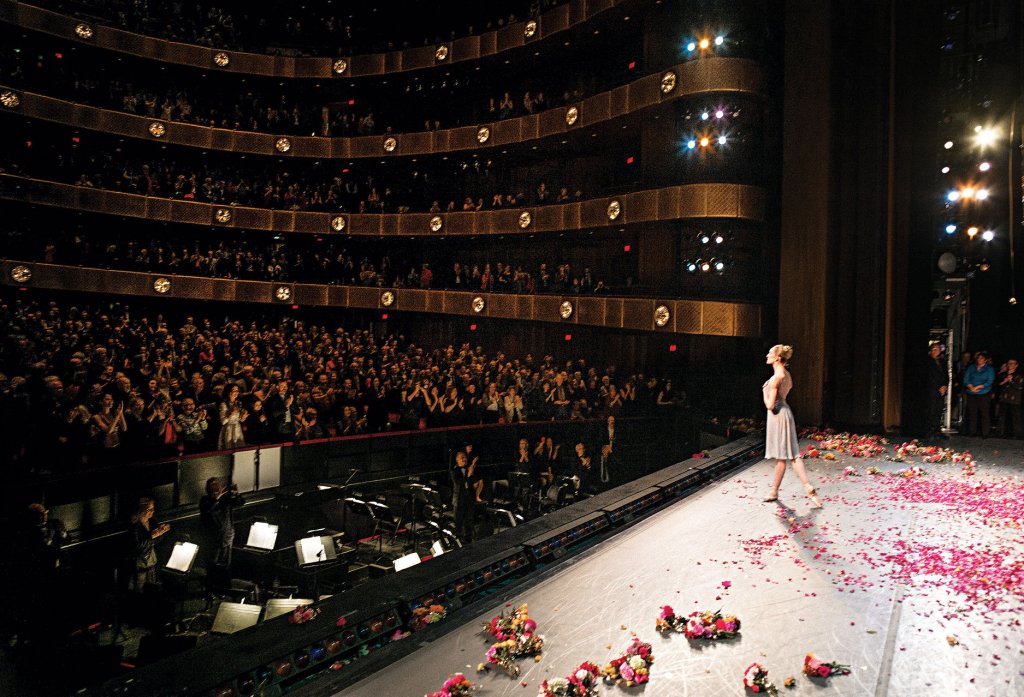
    At a farewell, the actual dancing often takes a back-seat to the event. The ballerina appears in selections from her cherished roles and as we savor her artistry one last time while secretly we are looking forward to the downpour of rose petals, the flinging of bouquets, the embraces of colleagues, the inevitable “last bow”, and the opportunity to express our admiration in unbridled clapping and shouting.

    ww farewell

    For Wendy, the huge ovation at the end signified not only our appreciation for all she has accomplished in her magical career to date, but also our plain unvarnished love for her as a human being.

    As the applause at long last echoed away, I started walking up Broadway, planning to attend the after-party. But then I just felt a need for solitude and reverie, so I jumped on the train at 72nd Street and came home. I was thinking yet again that it has been my great good fortune to have been in this City at the same time as Wendy Whelan.

    LA SONNAMBULA: Whelan, R. Fairchild, Mearns, Ramasar, Mann, Brown, Alberda, Prottas, King, Carmena, Ulbricht

    DANCES AT A GATHERING (Excerpt): A. Stafford, Whelan, Krohn, Danchig-Waring, Catazaro, J. Angle [Solo Piano: Grant]

    CONCERTO DSCH (Second Movement): Whelan, T. Angle [Solo Piano: Walters]

    AFTER THE RAIN Pas de Deux: Whelan, Hall [Solo Piano: Grant; Solo Violin: Delmoni]

    NEW WHEELDON/RATMANSKY (World Premiere): *Whelan, *T. Angle, *Hall [Solo Violin: Kurt Nikkanen]

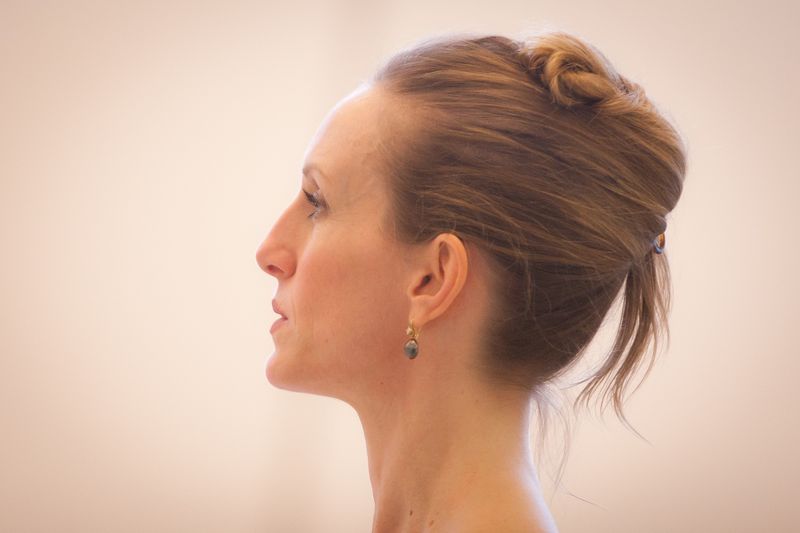
    (It took me a long time to settle on a portrait of Wendy to headline this article. Matt Murphy took the picture at the top when Wendy guest-taught a class at Manhattan Movement and Arts Center a couple of years ago. To me, the photo is her…I love the wispy strands of hair at the nape of her neck, and her utterly unique beauty.)

    Bringing this story up to date, Wendy is currently the Associate Artistic Director of the New York City Ballet.

  • It’s All Because of Renata Tebaldi

    (One of my earliest long articles for Oberon’s Grove: the story of how my obsession with opera started.)

    tebaldi copy

    In a way, I could say that I am where I am today because of Renata Tebaldi. It’s simplistic, and of course there are a million things which influence our choices as time goes by. But it was Tebaldi who made me fall in love with opera; it was opera that brought me to New York City on my own for the first time in 1966;  it was in New York City that I – the proverbial small town boy – discovered that I was not the only male in the world attracted to other men; it was a fellow opera fan who introduced me to New York City Ballet; it was my devotion to opera and ballet that kept me coming to NYC from Connecticut for 22 years – and spending a fortune.  And finally it was the desire to have opera & NYCB at my fingertips that finally got me to move here in 1998. And once I did, I met Wei. So, I owe it all to Renata!

    It was on January 12, 1959 that I happened to watch the Bell Telephone Hour; Tebaldi sang excerpts from MADAMA BUTTERFLY. I know the exact date because the performance has been released on video. This was not my first exposure to operatic singing; my parents had some classical LPs in their collection and there were snippets of Flagstad and Lily Pons on these. But nothing that moved me or drew me in like watching Tebaldi’s Cio-Cio-San. That was the beginning.

    My parents bought me my first 2-LP set of opera arias; I found out about the Saturday afternoon Met broadcasts; I subscribed to OPERA NEWS; I wrote fan letters to singers I heard on the radio. I used my tiny earnings from my paper route and working in my father’s store to buy a few more LPs. I plastered a big bulletin board in my room with pictures of singers. My parents took me to my first opera at the Cincinnati Zoo. Then they took me to the Old Met.  But it was a lonely obsession; I had no one to share it with.

    In 1966 when the new Met opened, I was allowed (freshly out of high school) to make my first trip to NYC alone. I got a room at the Empire Hotel and timidly went across the street to Lincoln Center.

    tebaldi ticket line c

    There I found a group of people sitting outdoors along the North side of the Opera House. “Sign in and take a number,” said a girl who was minding the line. Somewhere I still have my tag; I think I was number 57. I sat down and soon people started talking to me; I suppose to the many gay men the sight of a novice seventeen-year-old must have been tantalizing even though I was pretty ordinary looking. But people were so nice: what operas did I want to see? What singers did I like? After 5 years of having no one to talk about opera to, I thought I was in heaven. I shyly mentioned liking Gabriella Tucci, who I had seen at the Old Met. So the Tucci fans gathered and we talked about her.

    I ended up not leaving the line for 3 days and 2 nights. The late summer air was comfortable; we slept (or stayed awake) on the pavement. We sang thru complete operas: we sang all of TOSCA and someone jumped into the (empty) fountain at the end. People gave me soda, a few of the girls brought home-made baked goods. Pizzas were ordered, and Chinese take-out. Someone smuggled out a recording of a rehearsal of FRAU OHNE SCHATTEN  – a work most of us were totally unfamiliar with. I was devastated hearing the voice of Rysanek in that music for the first time. Franco Corelli served coffee one night; Franco Zeffirelli came out and got in someone’s sleeping bag. News filtered out about the new productions that were being rehearsed. There was a flurry of excitement when Leonie Rysanek was spotted at the far end of the Plaza. The crowd, now hundreds strong, surged around her. In a panic, she gestured for security guards from the House to come to her aid. Once inside, she turned and waved to us.
    Finally the box office opened; I got my tickets: TURANDOT, TRAVIATA, GIOCONDA, ANTONY & CLEOPATRA, RIGOLETTO. I had made my first friends in NYC; I had addresses and phone numbers of people who would send me tapes and get more tickets for me.
    Grubby and ecstatic, I went back to the Empire. My pants were slipping down: I hadn’t been eating. I took the bus back to Syracuse, asleep. My parents picked me up and took me home. I fell asleep in the bathtub.

    Soon after, I was back in NYC for the performances I had bought. For some strange reason, I had also stopped by the New York State Theatre and bought a ticket for their Opening Night of Handel’s GIULIO CESARE. Beverly Sills was singing Cleopatra. I had heard her already when NYCO toured to Syracuse and she sang Rosalinda in FLEDERMAUS. The CESARE was of course Beverly’s “big bang”.

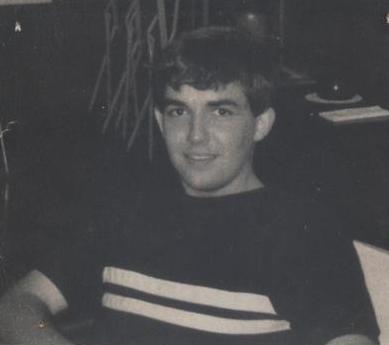
    This was what I looked like during that summer of 1966; I loved this t-shirt and wore it literally every day until it wore out. My sweet Jeanette says I was “embedded in it.”

    tebaldi me
  • Zwilich & Barber @ Carnegie Hall

    Zwilich

    Above: composer Ellen Taaffe Zwilich

    ~ Author: Oberon

    Saturday December 28th, 2024 – The New York String Orchestra were back at Carnegie Hall this evening, following up their Christmas Eve concert in the same Hall with a program of Zwlilich, Barber, and Brahms. I’d been down with flu-like symptoms for a couple of days, and debated whether I should attend tonight’s concert, but I couldn’t pass up a chance to experience the Barber violin concerto played live in this hall. Whether I could make it to the evening’s end remained to be seen.

    1983 Pulitzer Prize-winner Ellen Taafe Zwilich’s composed her Prologue and Variations for string orchestra on a commission from the Chattanooga Symphony, which premiered it under the baton of Richard Cormier in 1984. In her remarks on this piece, the composer spoke of her wish to celebrate “the special sonorities, character, and expressiveness of the string orchestra”. In tonight’s performance, the young players of the New York String Orchestra truly did the composer proud. 

    The violins open the piece, with start-and-stop phrases, soon picked up by the cellos. The violins then soar over an insistent beat. After a passage of luminous softness, the celli and basses cushion sizzling violins motifs. The opening theme recurs, and then a series of slow, mysterious sustained tones lead to a full stop.

    An animated section quietens to a slightly ominous lulling atmosphere. Then an agitato springs up, full of scale-work and insistent bowing. The music turns pensive, with brooding celli and deep basses. A trudging rhythm and fading violins lead to the work’s eerie ending.

    Enthusiastic applause greeted the musicians, and then Maestro Laredo gestured to Ms. Zwilich in her first tier box to rise for a bow; well-deserved bravas greeted the composer, now in her 85th year.

    Koh jpg

    Above: Jennifer Koh – I borrowed this stunning photo from her Facebook page

    Violinist Jennifer Koh then took the stage for the Barber, my enduring favorite among all the violin concertos I have heard thru the years. Ms. Koh looked striking in a silver-gray gown, her hair a bright, fiery red.

    This was Barber’s first effort in the concerto genre, written on a 1939 commission for the then-astonishing sum of $1000. When the originally scheduled soloist, Iso Briselli, found the concerto’s third movement too short and inconsequential, the work was premiered in 1941 by Albert Spalding; it was great success, and became one of Barber’s most beloved works, perhaps second only to his Adagio for Strings.

    Aside from concert performances, I have heard this music many times at New York City Ballet, where in 1988 Peter Martins premiered his ballet of the same title at the Company’s American Music Festival. The  ballet brings together a pair of ballet dancers and a pair of bare-footed modern dancers. The original cast starred Merrill Ashley and Adam Lüders as the classical couple, and Paul Taylor Dance Company’s delightful Kate Johnson and the charismatic choreographer/dancer David Parsons as the modern couple. Tonight’s performance was spectacular both for Ms. Koh’s fascinating way with the music, and for Maestro Laredo’s savvy exploration of the score, which allowed us to savour the composer’s gift for orchestral detail.

    Ms. Koh’s timbre has a vast colour-palette, ranging from burnished purple to shimmering silver. The very opening note of the piece always intrigues me, as Barber has the piano intone the first phrase along with the violin; Bo Zhang, at the Steinway, highlighted the keyboard’s participation throughout the concerto. 

    Ms. Koh’s playing of the familiar opening melody immediately seized my imagination; her tone has a special, spiritual quality that always gives meaning to the music. The gorgeous main theme, played by the entire orchestra, inevitably stirs my soul. Oboe (William Dunlop) and clarinet (Keyu (Frank) Tao) sing clearly over a steady pulse; violin and piano mesh, Ms. Koh rising to a shining top note. Pianist and violinist unite. The music turns grand, with a huge build-up and then my favorite moment of all: a dramatic plunge to the basses’ deepest notes. Now Ms. Koh’s violin hovers on high, descends, rises again to a delicate, suspended note; her cadenza is entrancing. Oboe, clarinet, and timpani draw us on to the movement’s conclusion. Throughout, the pianist has managed to be both prominent and unobtrusive…really impressive.

    Mr. Dunlop’s playing of the oboe solo that opens the Andante was hauntingly beautiful. The celli take up the theme, the basses sound richly, the horn solo (Engelberth Mejia-Gonzalez) glows. Out of the marvelous sonic blend, Ms. Koh’s violin rises poignantly to a shimmering trill as the trumpet (Bailey Cates) and piano interject before the violinist takes up the andante‘s opening melody with heart-rending passion. A sense of grandeur fills the hall. But then, a loudly dropped object somewhere upstairs killed the movement’s marvelous finish. Why do these things always happen at the worst possible moment?

    The timpani commences the final, brief Presto, in the course of which Ms. Koh plays what feels like thousands of notes with amazing dexterity and commitment. The celli scamper up the scale. So many notes!  All this rhythmic energy comes to a sudden halt after a final violin flourish.

    The audience cheered Ms. Koh’s intense and thrilling performance. My companion – who had played the Barber in his schooldays – and I were feeling a kind of elated exhaustion, and so we took leave of Carnegie Hall for 2024.

    ~ Oberon

  • Voices from South Africa @ Weill Hall

    Siphokazi-Molteno jpg

    Above: Siphokazi Molteno

    ~ Author: Oberon

    Monday October 28th, 2024 – The Met Orchestra Chamber Ensemble presenting a program of classic and contemporary works at Weill Hall. I was very keen to hear mezzo-soprano Siphokazi Molteno. who represented South Africa at the 2023 Cardiff Singer of The World competition, and who made her Metropolitan Opera debut in 2022 as Flora in LA TRAVIATA.

    Ms. Molteno opened the evening with the Brahms “Viola songs”, a pair of lullaby-like solos accompanied by viola (Shmuel D. Katz) and piano (Thomas Lausmann). The Molteno voice has a marvelous contralto richness as well as a lyrical warmth; to say she put me in mind of the great Florence Quivar is the highest compliment I can give. It’s a voice full of ‘humanity’ and a voice I will hope to hear again…and soon. Her colleagues from the MET Orchestra played sublimely, setting the evening gorgeously on its way.  

    There was then a longish pause while the stage was set for the next work, which involved five musicians: Seth Morris (flute), Tal First (viola), Hannah Cope (harp), Gregory Zuber (marimba), and Jeffrey Irving (percussion). Ndodana-breen

    Above: composer Bongani Ndodana-Breen

    The composer’s choice of instrumentation for his Rain Making really drew me in: if there’s a marimba to be heard, I want to hear it…and likewise the harp. Mr. Ndodana-Breen composed this piece in memory of Queen Modjadi, one in a line of Rain Queens of the Balobedu people in the Limpopo province of South Africa. A Rain Queen is believed to have the power to control the rain and the winds. This mythic association made the music even more intriguing for me.

    The players made a wonderful blend and the evocative sounds included a rhythmical flute, a plucked violin, and a bean bag played by the percussionist. The flute and violin trade melodic phrases, the violin shivers, the melismatic marimba enchants. Then, to a big, pounding beat propelled by the bass drum, the storm comes: the Rain Queen’s magic has succeeded. I loved this music, and watching the musicians as they entered into the spirit of the ritual; my only complaint was that the piece is too short.

    Maurice Ravel’s sultry Chansons madécasses found a most congenial interpreter in Ms. Molteno. I first heard these songs in 1975 when New York City Ballet premiered a Jerome Robbins ballet of the same title; the singer was Lorna Myers. Since then, I have frequently listened to the songs on Mira Zakai‘s marvelous recording. 

    The first of the three songs, Nahandove, has a beautifully sultry feeling: it tells of the seduction of a native woman. Jerry Grossman’s cello opens the piece, and Ms. Molteno’s voice is at its most sumptuous as she begins this tale of longing and ecstasy. Jazzy piano rhythms from Mr. Lausmann and the sound of the piping flute (played by Maron Khoury) develop a rocking feeling; the music turns pensive and then caressive. With the song’s final strophe, “Tu pars...” the tryst ends, though it seems the lovers will meet again at sunset.

    The second song, Aoua!, opens with the singer screeching a warning: do not trust the white men! The piano takes up a swaying rhythm as Ms. Molteno continues with singing of great intensity. This is violent, angry music, though eventually the cello and flute sound forlorn.

    By contrast, the final song – Il est doux – is a languid reflection on the joys of resting the shade of a tree on a late afternoon, while a lover whispers in your ear. The sensuous flute, the eerie cello on high echoing the buzzing insects with a trill, the voice and the cello entwining, solitary notes from the piano…so atmospheric.  Ms. Molteno’s singing was evocative and so pleasing to experience. The song ends with the swiftly spoken dismissal: “Go and prepare the evening meal…” 

    Mvd2022 jpg

    Following a longish interval, an ensemble of eight instrumentalists took the stage for music by Matthijs Van Dijk (above): we heard his extraordinarily powerful oratorio Moments in a Life. I had previously heard one of this Cape Town-based composer’s works [(rage) rage against the] played by the Signum Quartet in this very hall. 

    Thus, I expected a lot from the composer’s Moments in a Life, composed in 2016 for string quintet, clarinet, percussion, piano, overtone singer & narrator. Could lightning strike twice in the same place? The answer is a resounding YES!…Moments in a Life is one of the most powerful works I have ever experienced.

    The oratorio is based on the writings of Denis Goldberg, a native of Cape Town whose parents were politically active. In 1957, Denis joined the (banned) Communist Party and he was arrested and jailed in 1960 for supporting strikers. In the mid-1960s he was with other freedom fighters who were arrested for illegal acts and jailed. He remained a prisoner for 22 years, constantly being tortured and threatened with death.

    Gareth-lubbe

    At this evening’s performance, Gareth Lubbe (above) was the narrator. Mr. Lubbe is also an overtone singer; this is a technique in which the resonance in the mouth and throat are combined with tongue, lip, and jaw movements which create a perception of overtones as being individual notes. It’s a sound that is eerie…and fascinating.

    Moments in a Life, conducted by William Long, gives us so much to take in in its 40-minute duration. Trying to follow the narrative whilst also listening to the music was a bit of a challenge for me, a dedicated note-taker: I filled three pages with notes which barely scratched the surface of the work.

    “I was sure we would not die in prison,” marks the oratorio’s opening line. As the narration moves forward, the writer recalls his first teacher, who he fell in love with. He speaks of not seeing his wife and children for more than two decades while imprisoned. A fellow freedom fighter, Looksmart Ngudle, was tortured to death. Freedom costs.

    Nelson Mandela defends the accused patriots: “An ideal for which I am prepared to die”. Sentenced to life in jail, they are moved to a harsher prison affectionately known as “Beverly Hills”: three thousand prisoners singing hymns as individuals are led away to be hanged. Ironically, a gorgeous musical theme underscores this tragedy.

    Periodically thru the work, Mr. Lubbe’s overtone singing makes a striking impression: an indescribable mixture of humming and whistling.

    As to the music, the opening measures are pensively played by clarinetist Jessica Phillips: a slow, wide-ranging solo, soon joined by piano and strings. Cellist Mariko Wyrick underscores the story of the teacher, Ms. Cook. Andrew Gantzer’s double bass, so impressive throughout the piece, tells of Looksmart’s ordeal.

    Mr. Lubbe’s voice growls deeply; percussionist Jeffrey Irving plays a rollicking ‘cadenza’. Beauteous strings, the clarinet sings again; here are glowering chords and a lament played by violist Shmuel D Katz. Mr. Lubbe has an unaccompanied solo.

    Pianist Katelan Trần Terrell and Mr. Gantzer’s bass establish a beat; Mr. Katz strums his viola. A sudden militant outburst forebodes the assassination of activist Chris Hani; a poignant violin passage (Yurika Mok and Yang Xu) underscores the narrator’s reflections on Chris’s death.

    “A petty exercise of power that harms our people.”

    At last, in the forced-labor setting of The Quarry, where Nelson Mandela and his brother freedom fighters languished, a glorious theme of hope develops: “Let Freedom Reign”. Mr. Lubbe’s otherworldly overtones are heard over a long, sustained chord.

    The audience, who had witnessed the performance is a state of awed silence, now gave the performers a fervent round of applause.  

    Back home, I went to YouTube to see what I could find about this powerful work and immediately discovered this incredible document: Moments in a Life, recorded live in concert in the Endler Hall at the Stellenbosch International Chamber Music Festival on July 16th, 2016. This, I believe, was the work’s world premiere, with Denis Goldberg – then aged 83 – reading the texts (drawn from his autobiography) himself. The great freedom fighter passed away in 2020. 

    The work is so timely right now, when our democracy stands on a precipice. If we falter, our country – and indeed the world – will be forever changed.

    ~ Oberon

  • Dancing With Glass @ The Joyce

    MakiNamekawa_Photo by Steven Pisano

    Above: pianist Maki Namekawa, photo by Steven Pisano

    ~ Author: Oberon

    Tuesday November 28th, 2023 – The long-awaited opening of Dancing With Glass at The Joyce: a program wherein several of Philip Glass’s études were performed by pianist Maki Namekawa; five of the études had been choreographed by prominent artists in the danceworld: Lucinda Childs, Chanon Judson of Urban Bush Women, Justin Peck of the New York City Ballet, Brazilian tap artist Leonardo Sandoval, and Los Angeles-based choreographers Bobbi Jene Smith and Or Schraiber.

    A packed house, which included some luminaries of the NYC dance scene, seemed mesmerized both by the music and the dancing. Ms. Namekawa is a pianist with a special affinity for the works of contemporary composers; she played eleven of the études in the course of the evening, commencing with the spellbinding Etude #1. Her playing was remarkably clear, committed, and soul-filling.

    OrlandoHernandez_LeonardoSandoval_LucasSantana_AnaTomioshi_Photo by Steven Pisano

    The dancing commenced with a fabulous tap-dance setting of the 7th étude, choreographed by Leonardo Sandoval, who was tapping along with his mates Ana Tomioshi, Orlando Hernandez, and Lucas Santana (photo above by Steven Pisano). Noé Kains was onstage with the quartet, and he was dancing along when suddenly he stepped to the edge of the stage and eased his way down to the pit where he took over the keyboard and played the 7th étude to perfection. Meanwhile, his fellow tapsters – such gorgeous humans – continued to dance in sync, with brilliant solo moves etched into the choreography. An exhilarating start to the evening’s dancing.

    BobbiJeneSmith_Photo by Steven Pisano

    Above: Bobbi Jene Smith, photo by Steven Pisano

    Bobbi Jene Smith (co-choreographer of the memorable DEO for the Martha Graham Dance Company in 2019) and her husband Or Schraiber both choreographed and performed the familiar Etude #8. On a dusky, hazy stage, an anxious man and a moody woman take us thru various states of a romantic relationship. Each dressed all in black, with Ms. Smith’s luxuriant hair playing its own role, the dancers are hypnotic movers and shapers of phrase. Passion underscores everything: the wounded man is rejected, but – true to life – within seconds the couple are kissing again. Touches of humor are subtly woven in…and at the end, aggression turns to peace in the twinkling of an eye. The piece, marvelous in every way, made me think of so many evenings spent at home with my partner. 

    ChanonJudson_Photo by Steven Pisano

    Tall, lithe, and elegant in a sky-blue Josie Natori frock, Chanon Judson of Urban Bush Women (above, photo by Steven Pisano) took the stage for Etude #11. John Torres’ lighting – a major contribution to the evening’s pleasures – was especially perfect here. Ms. Judson danced with compelling authority and grace to the vividly dramatic music. Veering from madness to repose, this long-limbed goddess filled the space with her magnetic presence and riveting moves. Overcome by trembling, she is finally becalmed as the pulsating music fades to silence.

    Patricia Delgado_Photo by Steven Pisano

    Justin Peck’s setting of Etude #6 brought a stunning performance from Patricia Delgado (above, photo by Steven Pisano); I had only seen Ms. Delgado once previously, when she appeared in a 2009 gala here in New York featuring many alumni from the School of American Ballet. In her Glass solo tonight, she was fascinating to watch. Clad in a black trouser outfit, she is seated in a chair at curtain-rise. The music’s fast staccati underscore her restlessness. She at times ventures a few steps from her chair, but always returns to this safe haven. As the music turns grand, her mental instability becomes palpable. Ms. Delgado is both a gorgeous mover and a subtle actress. At the end, unable to cope, the woman seeks to hide herself from the world under her chair.

    CaitlinScranton_KyleGerry_Photo by Steven Pisano

    Clad in white and looking like angels, dancers Caitlin Scranton and Kyle Gerry (above, photo by Steven Pisano) reveled in the flow of Lucinda Childs’ luminous choreography in Etude #18. Sometimes dancing side-by-side and at other times moving about the space with a sense of other-worldly beauty, the dancers perfectly embodied the lyricism of this particular Glass piece. 

    Bringing the evening full circle, Ms. Namekawa played the last of the études: #20. This rather long work gave us a chance to reflect on the evening, whilst savouring the pianist’s poised musicality. As the applause commenced, all of the dancers appeared onstage to receive the audience’s wholehearted accolades. Ms. Namekawa then drew Philip Glass from his seat to the side of the piano, while the standing crowd hailed him with a joyous ovation.

    All photos by Steven Pisano.

    ~ Oberon

  • Lydia Johnson Dance @ NYLA ~ 2022

    Ensemble

    Above: the dancers of Lydia Johnson Dance in Lydia Johnson’s For Eli; photo by Dmitry Beryzokin

    Saturday September 17th, 2022 – Lydia Johnson Dance performing at New York Live Arts in Chelsea. Having missed two New York seasons due to the ongoing pandemic, the Company took the opportunity to appear at NYLA in September rather than wait until their accustomed performance time in the Spring: the dancers of course were anxious to perform again, and guest artist Craig Hall of New York City Ballet fame was available…so: on with the show!

    Unfortunately, I was feeling sick and could not attend any of the performances; but I did see all four of the works being presented when I dropped in at a studio rehearsal the previous week. My friend Dmitry Beryozkin photographed the dress rehearsal, and sent me some images. So this is not a review, really, but simply a photo gallery. 

    The Company were not idle during the long shutdown: they spent a week at Kaatsbaan, where Lydia worked on new creations, they danced (outdoors) in Connecticut, and they gave a warmly-received studio showing at the Martha Graham Studio Westbeth on May 2022, previewing two new works: Glide Path and For Eli. 

    Glide Path opened tonight’s show: it’s set to music by the contemporary quartet ETHEL. Here are some of Dmitry’s evocative photos from the dress rehearsal of Glide Path:

    DSCF6446

    Minseon Kim and Chazz Fenner-McBride

    DSCF6455

    The ensemble of women

    DSCF6507

    Katie Lohiya

    DSCF6627

    Chazz Fenner-McBride and Willy Laury

    DSCF6648

    Emily Sarkissian, Minseon Kim, Amanda Egan, Michael Miles, and Michelle L. Siegel

    DSCF6709

    Willy Laury and Laura DiOrio

    DSCF6721

    Laura DiOrio and Willy Laury

    Next came For Eli, a poignant work commissioned by New Jersey-based artist Laura Lou Levy, in memory of her pianist-son Eli, who loved playing the music of Frédéric Chopin.

    A series of Dmitry Beryozkin’s images from For Eli:

    DSCF6840

    Michelle L. Siegel, Michael Miles, Minseon Kim, Amanda Egan, and Laura DiOrio

    DSCF6939

    Willy Laury, Michael Miles, Katie Lohiya, Amanda Egan, and Minseon Kim

    DSCF6944

    Katie Lohiya

    DSCF7056

    Amanda Egan, Emily Sarkissian

    DSCF7123

    Chazz Fenner-McBride and Willy Laury

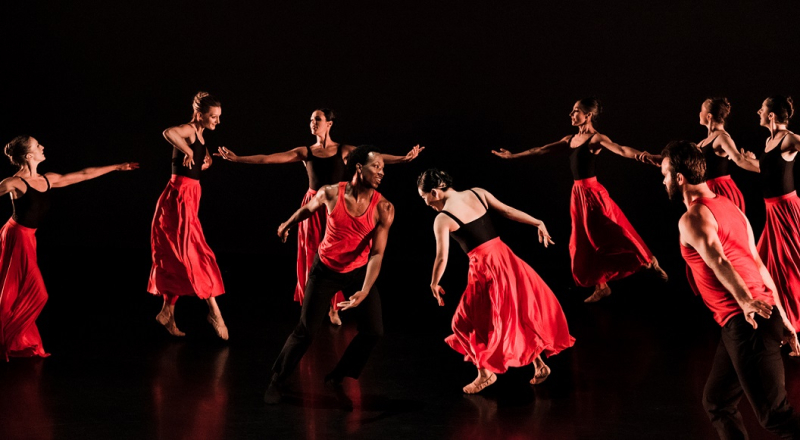
    Following the interval, Craig Hall joined Lydia’s dancers for Time…and again, a new work set to Oscar Peterson recordings of jazz standards. This marked a return engagement for the former New York City Ballet star, whose performances in Lydia’s haunting Night and Dreams in 2019, dancing with Laura DiOrio, were deeply moving. Craig and Laura have reunited for Time…and again, joined by three other couples for a series of duets.

    Photos from this jazz work by Dmitry Beryozkin:

    DSCF7304

    Katie Lohiya and McGee Maddox

    DSCF7305

    Katie & McGee, Amanda & Laura, Minseon & Michael

    DSCF7377

    Laura DiOrio & Craig Hall

    DSCF7425

    Craig Hall & Laura DiOrio

    DSCF7456

    Laura & Craig

    DSCF7549

    Amanda Egan & Chazz Fenner-McBride

    DSCF7617

    Katie Lohiya & McGee Maddox

    DSCF7760

    Crag Hall

    DSCF7920

    Katie Lohiya with Michael, Laura, and Willy

    The music of Henryk Górecki makes a colossal impression in the evening’s concluding work, Undercurrent. Here are some of Dmitry Beryozkin’s pictures from this ballet:

    DSCF8146

    McGee Maddox, Chazz Fenner-McBride, and Michael Miles

    DSCF8361

    Students from Lydia’s school participated in the finale of Undercurrent

    DSCF8379

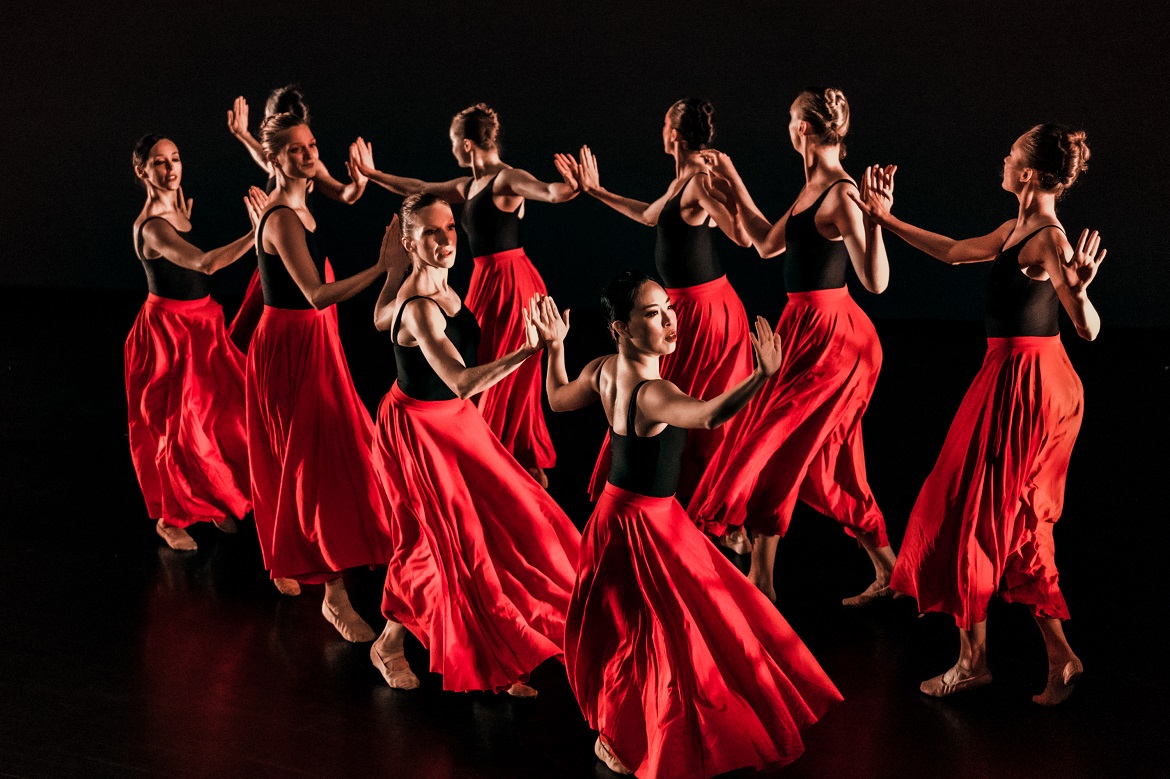
    The Company women in swirling red skirts

    DSCF8390

    The full Company onstage

    DSCF8393

    Michael Miles and Minseon Kim, center

    DSCF8434

    Michael Miles and student dancer Stella Weihrauch

    DSCF8446

    DSCF8486

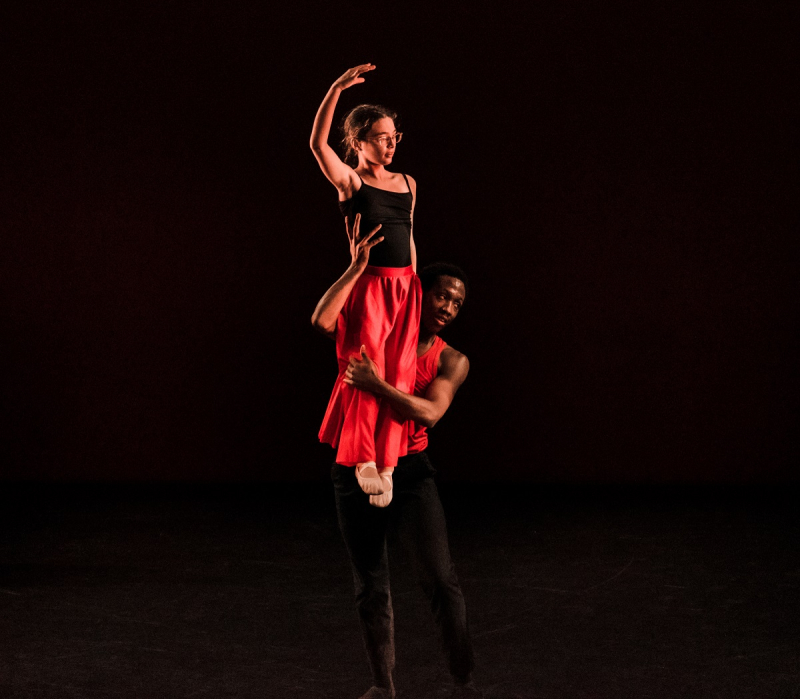
    Laura DiOrio, aloft, as Undercurrent come to an end

    All photos by Dmitry Beryozkin

    ~ Oberon

  • Farewells: Amar Ramasar

    Amar

    Above: New York City Ballet principal Amar Ramasar

    Author: Oberon

    Sunday May 29th, 2022 matinee – This afternoon, we bade farewell to one of New York City Ballet‘s most popular stars: Amar Ramasar. I remember so clearly seeing the handsome young man with the engaging smile for the first time on Mr. B’s stage during the 2000-2001 season. His ascent thru the ranks came quite soon and seemed inevitable: a soloist by 2006 and a principal in 2009.

    Thru the ensuing seasons, I enjoyed seeing Amar countless times. Among the ballets in which he made a vibrant impression were Balanchine’s AGON, BRAHMS-SCHOENBERG QUARTET, FOUR TEMPERAMENTS, LIEBESLIEDER WALTZES, STRAVINSKY VIOLIN CONCERTO, SYMPHONY IN C, SYMPHONY IN THREE MOVEMENTS, UNION JACK, and WHO CARES?; Jerome Robbins’ DANCES AT A GATHERING, FANCY FREE, FOUR SEASONS, GLASS PIECES, IN THE NIGHT, and WEST SIDE STORY; Bigonzetti’s OLTREMARE, LUCE NASCOSTA, and AMARIA; Peter Martins’ CHICHESTER PSALMS and FEARFUL SYMMETRIERS; Jorma Elo’s SLICE TO SHARP; and Ratmansky’s RUSSIAN SEASONS and PICTURES AT AN EXHIBITION.

    Amar has also appeared on Broadway in CAROUSEL and WEST SIDE STORY.

    Amar discusses Ratmansky’s PICTURES AT AN EXHIBITION here.

    Here’s some photos of Amar with his renowned partners:

    Amar & becky russian seasons john ross

    With Rebecca Krohn in RUSSIAN SEASONS; photo by John Ross

    Amar starling symph in 3 moves kolnik

    With Sterling Hyltin in SYMPHONY IN THREE MOVEMENTS; photo by Paul Kolnik

    Amar tess fearful symetries kolnik

    With Teresa Reichlen in FEARFUL SYMMETRIES; photo by Paul Kolnik

    Amar tess polyphonia kolnik

    Again with Tess, in POLYPHONIA; photo by Paul Kolnik

    Amar tiler divert 15 kolnik

    With Tiler Peck in DIVERTIMENTO #15; photo by Paul Kolnik

    Tess amar  C Duggan in the night jpg

    With Teresa Reichlen in IN THE NIGHT; photo by Christopher Duggan

    AMARIA jpg

    With Maria Kowroski in Mauro Bigonzetti’s AMARIA, danced at Maria’s farewell performance

    Twirl sara amanda amar

    Above: in 2010. Amar appeared with Sara Mearns and Amanda Hankes in Kristin Sloan’s brief film, TWIRL; I was planning to post a link to the film here, but it’s no longer available. Sara was to have danced Titania in Amar’s farewell performance this afternoon, but she was out with an injury.

    I met Amar in passing several times, and once at one of Emery LeCrone’s rehearsals. He was always extremely friendly and upbeat, and always ready with an infectious laugh.

    ~~~~~~~~~~~~~~~~~~~~~~~~~~~~~~~~~~~~~~~~~~~~~~~~~~~~~~~~~~~~~~~~~~~~~~~~~~~~~~~~~~~~~~~~~~~~

    I’ve loved Mr. B’s MIDSUMMER NIGHT’S DREAM ever since I first saw it in May of 1977 with a fantastic cast headed by Karin von Aroldingen and Robert Weiss as the fairy queen and king, Patricia McBride and Helgi Tomasson in the second act pas de deux,and Jean-Pierre Frohlich (no less!) as Puck. You can see how I became spoiled rotten from my early days of ballet-going.

    Amar sterling

    For his farewell, unfortunately, Amar did not have an evening of ballets of his own choosing, but rather he was scheduled to dance the divertissement pas de deux in Act II of MIDSUMMER NIGHT’S DREAM with Sterling Hyltin (photo above by Paul Kolnik). In the days running up to the farewell matinee, there were numerous cast changes due to illness and injury; then Amar himself sustained an injury, and it was arranged that he would dance only the adagio in today’s performance; sportingly, Andrew Veyette took over the allegro sections, squiring Sterling handsomely. When Amar finally appeared, the crowd went absolutely berserk, with a roaring flood of applause that obliterated several bars of music.

    Amar looked very serious throughout the adagio, partnering Sterling with tender loving care. They won a tumultuous, extended ovation, embracing frequently as the applause rolled on. In the ballet’s grand finale, Amar finally began to smile – that dazzling smile that has won the hearts of so many ballet fans over the years. 

    The entire performance had a special glow. The orchestra, under Clothilde Otranto’s genial baton, sounded wonderful in this magical score to which Balanchine tells the tale so very clearly, without a wasted note or gesture. Unity Phelan, my first dark-haired Titania since Karin, was lovely, and Daniel Ulbricht’s Oberon was simply delightful both in his virtuosity and his acting. Harrison Ball was a spectacular Puck, his characterization tinged with just a hint of darkness. 

    As the mortals Helena and Hermia, Isabella LaFreniere and Ashley Laracey were finely-contrasted: Isabella the more lyrical and wistful, Ashley the more dramatic. Ashley’s solo, alone in the woods at night, was a masterpiece all its own. Their suitors, Aaron Sanz and Peter Walker, were lively and played their parts engagingly. Gil Bolden was a terrific Bottom, the recently-promoted Chun Wai Chan looked dashing as Titania’s Cavalier, and Alexa Maxwell was a brilliant Butterfly, having her own personal triumph. Dazzling me – and the entire House – with her vivid beauty, spacious dancing, and fabulous fouettés, Emily Kikta displayed full-fledged star-power as Hippolyta, causing the noble Preston Chamblee, as the Duke of Athens, to fall to his knees and ask her to marry him.

    With Puck drifting skyward in the ballet’s final moments, the audience burst into applause; after some bows before the curtain, Amar finally stood alone on the big stage and the audience unleashed a deafening hurricane of cheers. Amar leapt off the stage to embrace Peter Martins, then resumed his place center-stage as a procession of well-wishers came forward to greet him. How wonderful to see the gorgeous Lourdes Lopez and her husband carrying bouquets to Amar; and moments later, Gonzalo Garcia surprised Amar by bringing forth the beloved Joaquin de Luz. The ovation went on and on and on, Amar clearly moved by the outpouring of love. He pounded his heart and seemed on the verge of tears.

    Outside the stage door, a huge crowd gathered to wish Amar well. But after an hour, he still had not emerged, and people began drifting away. If he’d come out sooner, he would have been there til nightfall, signing autographs and being photographed. 

    Amar-Ramasar igor burlak

    Above: Amar Ramastar, photo by Igor Burlak

    Hail and farewell, Amar! Thank you for brightening our lives. I hope I’ll see you around town from time to time in the years ahead.

    ~ Oberon

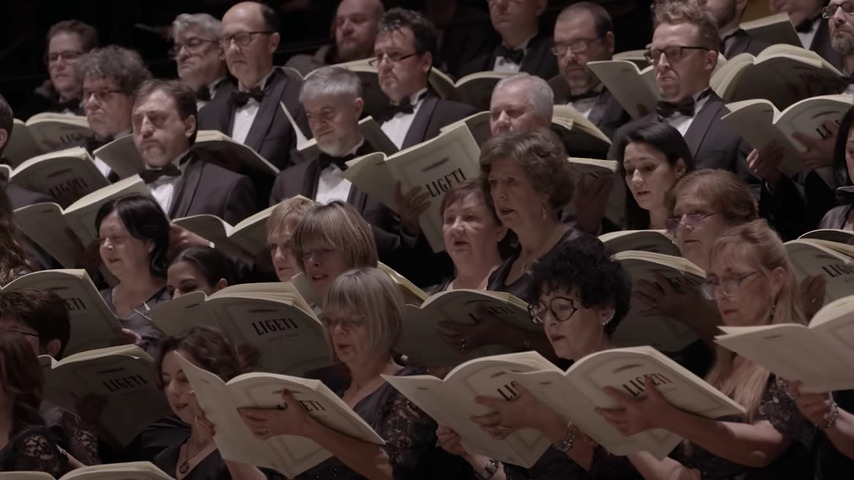
  • György Ligeti ~ Requiem

    Snapshot ligeti

    Above: soloists Victoire Brunel and Makeda Monnet

    A performance of György Ligeti’s Requiem from Paris, 2018. Watch and listen here.

    Makeda Monnet, soprano / Victoire Bunel, mezzo-soprano
    Chœur National Hongrois / Csaba Somos, Chef de chœur
    Orchestre du Conservatoire de Paris / Ensemble intercontemporain
    Matthias Pintscher, direction 

    Snapshot ligeti 2

    Above: members of the Chœur National Hongrois

    I first took an interest in the music of György Ligeti (1923-2006) after seeing Christopher Wheeldon’s 2001 masterpiece POLYPHONIA at New York City Ballet. Chris turned to the music of Ligeti again for his 2002 ballet MORPHOSES. Both these danceworks featured the beloved NYCB partnership of Wendy Whelan and Jock Soto.

  • Paul Taylor Dance Company/City Center/2022

    ROSESHarnage Ho by Steven Pisano

    Above: John Harnage and Madelyn Ho in Paul Taylor’s Roses; photo by Steven Pisano 

    ~ Author: Oberon

    (Click on each image to enlarge…)

    Wednesday March 24th, 2022 – Opening night of the Paul Taylor Dance Company‘s 2022 season at City Center. Two Taylor masterworks book-ended the program, with a premiere by the Company’s recently-designated Resident Choreographer, former New York City Ballet principal ballerina Lauren Lovette, in between.

    This was my first time seeing the Company since several popular Taylor stars left, starting with Michael Trusnovec and followed by Laura Halzack, Parisa Khobdeh, Michelle Fleet, Jamie Rae Walker, Heather McGinley, James Samson, Robert Kleinendorst, and Sean Mahoney. Incoming new dancers were just getting their feet wet two years ago when the pandemic caused a prolonged pause in their progress. So, for me, tonight was a reunion and a re-discovery.

    As an ardent admirer of the music of Richard Wagner, Paul Taylor’s Roses is one of my favorites among his numerous masterworks. It moves me so deeply each time I see it…and hear it. The story of the first performance of Wagner’s Siegfried Idyll, played on the staircase at Villa Tribschen on the morning of December 25, 1870, by a small chamber orchestra, is one of my favorite tales out of musical history. It was the composer’s birthday and Christmas gift to his beloved Cosima, and marked one of the happiest days of their life together. You can read about it here.

    Roses - Jessica Ferretti  Shawn Lesniak and Company_photo by Steven Pisano

    Above: Jessica Ferretti and Shawn Lesniak in Roses; photo by Steven Pisano

    Roses opens with five couples onstage, the women in long black gowns. The pairings tonight were: Jessica Ferretti with Shawn Lesniak, Christina Lynch Markham with Jake Vincent, Raechelle Manalo with Alex Clayton, Madelyn Ho with John Harnage, and Kristin Draucker with Michael Apuzzo. Watching these beautiful creatures in a series of duets summoned many emotions in me – all of them warm and reassuring – for they are the future of the Paul Taylor Dance Company, and that future is in good hands. All these dancers radiated confidence, and their performances were suffused with poetry and light. The audience took a special liking to Ms. Ho and Mr. Harnage…understandably: they were superb. 

    As the Siegfried Idyll reaches its end, we have found a place of tranquility in an ever-darkening world; the music and dancing have nourished the spirit, and one cannot imagine that anything more beautiful and poignant could possibly follow it. But then Jada Pearman and Lee Duveneck, clad in pristine white, appear to dance one of the most entrancing of Paul Taylor’s duets. Set to a score by Heinrich Baermann which features a clarinet solo played sublimely by the Orchestra of St. Luke’s inimitable Jon Manasse, this pas de deux had a particularly hypnotic effect tonight. Mr. Duveneck towers over the petite and radiant Ms. Pearman, his partnering so protective and tender, and her dancing a vision of grace. The five couples remain seated on the floor at the rear of the stage during this duet, keeping echoes of the Siegfried Idyll in our consciousness. A genuine “Taylor ovation” greeted the dancers during their bows.

    Anticipating Ms. Lovette’s new work, I was pleased to read of her choice of music, and intrigued by the piece’s title: Pentimento. I first discovered the music of the Argentine composer Alberto Ginastera many years ago when a pianist I was dating played some of it for me on his baby grand, which took up most of the space in his little studio apartment. “Pentimento” is an Italian word meaning repentance; in the art world, it refers to a painter’s regret when a piece he is working on does not come out quite as he wanted it to; he paints over and re-uses the canvas, but with the passing of time, the original picture may bleed thru, causing a ghostly image.

    Pentimento (Lovette) - Lee Duveneck and Company_photo by Whitney Browne

    Above: Lee Duveneck and the ensemble in Lauren Lovette’s Pentimento; photo by Whitney Brown

    My expectations for the Lovette work were high, and the opening moments, with the dancers in silhouette against a glowing backdrop, boded well. Christina Lynch Markham, her hair down, has a dramatic solo passage which finds her in a state of worry and agitation; she clutches a red scarf as she dances…and finally collapses. Now the scarf will be passed from dancer to dancer, each one having a featured solo amidst the ensemble. Thus we watched the lively Lisa Borres, a tormented Jada Pearman (who emits a scream at one point), the willowly and wonderful Maria Ambrose, the pale and somewhat mysterious Lee Duveneck, and the bold and beautiful Devon Louis being put thru their paces.

    Clad in dreary costumes that might have come off the racks at Old Navy, the community perform athletic combinations, with Tayloresque gestures; they roll about on the floor, form brief alliances, strike quirky poses, and gather – with expressions of care and concern – to watch their colleagues go thru the motions. Meanwhile, the Ginastera music, not his best by far, has become sort of an after-thought. My mind started to wander; the audience, so engrossed by Roses, began to get restive.

    Pentimento was well-received, but during the intermission I could not sense the sort of buzz that usually follows a premiere. I suppose having your new work debuted between two classics by one of the great choreographers of all time would be somewhat daunting. We shall see where this collaboration goes in the future.     

    Brandenburgs - Jada Peaman and Company - photo by Ron Thiele

    Above: Jada Pearman and the Taylor men in Brandenburgs; photo by Ron Thiele

    Paul Taylor’s festive Brandenburgs, to the immortal music of Johann Sebastian Bach, made for a perfect end to the evening. Tonight, the ballet looked as fresh and vibrant as it ever has…and that music!  The magnificent Taylor dancers soar on the wings of Bach’s score; they inspire and uplift us at a time when hope and joy are in short supply.

    Brandenburgs - Madelyn Ho  John Harnage  Maria Ambrose  Jada Pearman - photo by Ron Thiele

    Above: John Harnage and Maria Ambrose in Brandenburgs with Madelyn Ho and Jada Pearman kneeling; photo by Ron Thiele

    The male ensemble – Lee Duveneck, Alex Clayton, Devon Louis, Adam Dickerson, and Jake Vincent – race about the stage in trademark Taylor patterns. Blindingly handsome and charismatic, John Harnage held the audience in the palm of his hand simply by being there. His dancing is so clear and so poetic. And later – standing stock still as he watches his three muses  (Maria Ambrose, Jada Pearman, and Madelyn Ho) dance solos to dazzle him – he looked like a young god. Mr. Harnage’s adagio pas seul, was a portrait of masculine beauty. Then Brandenburgs sweeps onward to its final pose: an uplifting celebration of music and dance, and of the human spirit.

    Danceworld luminaries among the audience included Justin Peck, Troy Schumacher, Damian Woetzel, and Edward Villella.

    All photos by the credited photographers, courtesy of Paul Taylor Dance Company. Many thanks to the Company’s wonderful press liaison de luxe, Lisa Labrado. 

    ~ Oberon