Tag: New York City Opera

  • Eileen Schauler Has Passsed Away

    Eileen Schauler

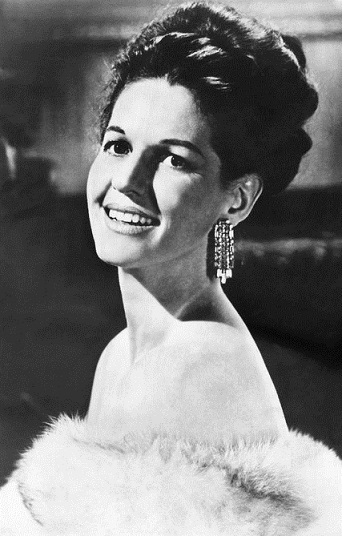
    Soprano Eileen Schauler, a pillar of the New York City Opera in my earliest years of opera-going, has passed away at the age of 92.  

    A native of New Jersey, Ms. Schauler studied at Juilliard. She first made her mark as a powerful Katerina Ismailova at New York City Opera; among her other roles were Anna Maurrant in STREET SCENE, Lizzie Bordon, the Marschallin, and the Governess in TURN OF THE SCREW. She was admired for her stage presence and committed acting as well as for her emotionally engaged singing. I saw her as Tosca (a performance that marked Placido Domingo’s conducting debut) and as a fiery Santuzza.

    After retiring from the stage, she taught both privately and at college.

    Eileen Schauler – TOSCA aria – in English – Pasadena 1967

    Eileen Schauler as Tosca – Act III excerpt – in English – Pasadena 1967

  • Judith Raskin

    Hqdefault

    American soprano Judith Raskin (above) began taking voice lessons while attending Smith College. She began concertizing, and in 1957 sang Sister Constance in a televised performance of Poulenc’s DIALOGUES OF THE CARMELITES. She made her New York City Opera debut as Despina in 1959, and enjoyed a personal success there in the title-role of Douglas Moore’s BALLAD OF BABY DOE

    Ms. Raskin made her Metropolitan Opera debut in 1962 as Susanna in NOZZE DI FIGARO and went on to give more than a hundred performances with the Met company over the next decade. Her roles included Marzelline, Nanetta, Sophie in ROSENKAVALIER, Zerlina, Pamina, and Micaela.

    69628137_10216986455747630_1200814637679902720_n
    I first saw Judith Raskin onstage as Pamina in the Marc Chagall production of THE MAGIC FLUTE. She made such a beautiful impression in Mozart’s sublime music. Later I saw her in her signature role as Susanna in NOZZE DI FIGARO. Her last Met performance was as Marzelline in 1972.

    Judith Raskin sang with the opera companies of Chicago and San Francisco, and appeared as Pamina at the Glyndebourne Festival, She also performed frequently in concerts, most notably with the Cleveland Orchestra under George Szell. And she once said, ““In my heart of hearts, I have always been a recitalist.”

    After retiring from the stage, Judith Raskin taught at the Manhattan School of Music. She passed away in 1984.

    Judith Raskin sings Samuel Barber’s Knoxville: Summer of 1915 here.

    ~ Oberon

  • M.N. as E.M.

    6a00d8341c4e3853ef00e5550e0ebc8834

    Soprano Maralin Niska in the final scene of Leoš Janáček’s The Makropoulos Affair. The role of Emilia Marty, in Frank Corsaro’s multi-media production for New York City Opera, was one of the great triumphs of the Niska career.

    Maralin Niska as Emilia Marty – finale of The Makropoulos Affair – NYCO 9~5~71

  • Nicholas di Virgilio: Two Fausts

    Nicholas_di_virgilio

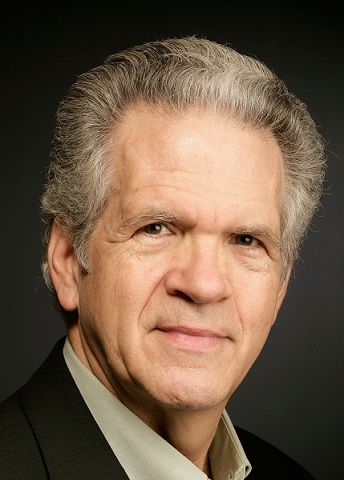
    American tenor Nicholas di Virgilio (above) was a stalwart of the New York City Opera during the Company’s heady time in the late 1960s and early 1970s. Having moved from City Center to the New York State Theatre, and bolstered by the ‘overnight success’ of Beverly Sills, New York City Opera became a true  mecca for opera-lovers, providing serious competition for The Met next-door with a company of wonderful singing-actors and a more adventurous repertoire. I heard literally hundreds of really memorable performances there.

    In addition to his busy operatic career, Mr. di Virgilio was well-known as a concert artist. In 1963, he participated in a performance of Benjamin Britten’s WAR REQUIEM with the Boston Symphony at Tanglewood which has been preserved on DVD; Erich Leinsdorf conducts, and Phyllis Curtin and Tom Krause are the other vocal soloists.

    LeonardBernstein_SMK63152-1489517478-440x440

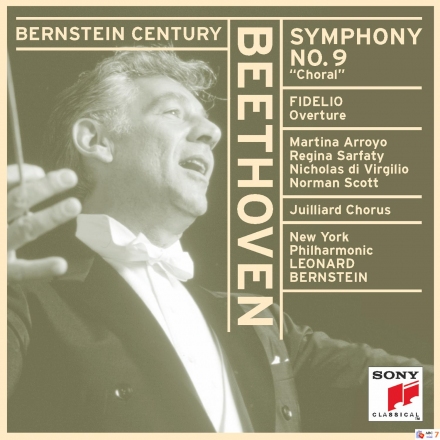
    Mr. di Virgilio is the tenor soloist in Leonard Bernstein’s 1964 recording of the Beethoven 9th, and the tenor also sang Mozart’s D-minor REQUIEM at a memorial service for President John F Kennedy in January of 1964, under Leinsdorf’s baton; the performance was televised. Composer Dominic Argento dedicated his Six Elizabethan Songs to Nicholas di Virgilio.

    In 1970, at New York City Opera, I chanced to hear Nicholas di Virgilio sing Faust in both the Gounod and Boito settings of the story of an aging philosopher who sells his soul to the devil. I was particularly amazed by his taking the high-C in “Salute demeure” in a lovely piano.

    Nicholas di Virgilio – FAUST aria – NYCO 3

    Nicholas di Virgilio – Da campi dai prati – MEFISTOFELE – NYCO 1970

    ~ Oberon

  • Jon Crain

    J crain

    Tenor Jon Crain sang with the New York City Opera and at The Met, where his roles included Don Jose, Narraboth in SALOME, and Matteo in ARABELLA. He also participated in a studio recording of CAROUSEL with Roberta Peters, Alfred Drake, Claramae Turner, and Norman Treigle, and in an abridged English-language recording of TALES OF HOFFMANN issued by The Metropolitan Opera. Crain appeared on radio programs devoted to opera and song. 

    Following his retirement, the tenor joined the music faculty at West Virginia University. He passed away in 2003.

    Jon Crain ~ Ariadne auf Naxos – excerpt in English ~ 1958

  • William Stone

    William Stone

    William Stone is an American baritone who gave some very impressive performances at New York City Opera in the 1980s and 90s, most notably as Germont in TRAVIATA, Zurga in PECHEURS DES PERLES, and Count Almaviva in NOZZE DI FIGARO. He also sang at The Met from 1998-2003, and extensively throughout North America as well as at such premiere European theatres as the Monnaie, La Scala, Opéra National de Paris, and at the Wexford Festival.

    Among the baritone’s many recordings is an especially impressive performance of William Walton’s BELSHAZZAR’S FEAST.

    William Stone – Hai già vinta la causa! ~ NOZZE DI FIGARO

  • Jerry Hadley

    Quartet

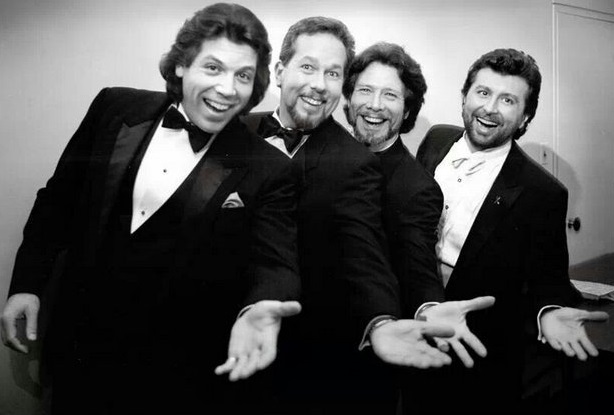
    Above, an all-star quartet: Thomas Hampson, James Morris, Samuel Ramey, and Jerry Hadley

    Back in 1980, at the New York City Opera, a young tenor singing the role of Gastone in TRAVIATA made me prick up my ears with his brief lines. It was Jerry Hadley. He is one of a four singers who captivated me initially in a small role and went on to a major career; the others were Samuel Ramey (1st Nazarene in SALOME), Kathleen Battle (Shepherd in TANNHAUSER), and Lisette Oropesa (Cretan Woman in IDOMENEO). They all became great favorites of mine.

    Hadley had a generous lyric tenor with an Italianate sense of warmth and passion. The voice was clear and ardent, and he looked good onstage. He sang quite a lot at New York City Opera – where I saw him as Alfred in FLEDERMAUS, as Faust, and Nadir in PECHEURS DES PERLES. I also was present when he sang the title-role in Mozart’s IDOMENEO (Strauss version) at the Mostly Mozart Festival.

    In 1987, Hadley made his Met debut as des Grieux in MANON and sang 125 performances there – in roles as diverse as Donizetti’s Edgardo, Mozart’s Ferrando and Don Ottavio, and Stravinsky’s Tom Rakewell. I saw him at The Met as Alfredo in TRAVIATA, Tamino in ZAUBERFLOETE, and Lensky in EUGENE ONEGIN. His final Met performances were in the title-role of Harbison’s THE GREAT GATSBY in 2002. He committed suicide in 2007, at the age of 55.

  • Patricia Brooks as Violetta

    6a00d8341c4e3853ef00e54ff4f69f8833-800wi

    I’ve seen more than a eighty different sopranos in the title-role of Verdi’s TRAVIATA over the years. Patricia Brooks’s interpretation of the role of Violetta in Frank Corsaro’s memorable production for the New York City Opera in 1966, with Placido Domingo as Alfredo, remains at the top of the list. Employing her rather slender and agile voice to optimum effect, she created a portrait of the doomed courtesan that has resonated over the decades. Paradoxically feverish and fragile, Brooks moved audiences – literally – to tears.

    Listening again, nearly fifty years on, to my in-house recording of the Act I scena brings back a flood of memories of the myriad nuances – both vocal and dramatic – that gave the Brooks Violetta its unique place in the opera’s performance history.

    One thing about Ms. Brooks in this role: she was forever making tiny changes in both her singing and her acting of the role, maintaining its freshness over the half-dozen times I saw her in the role. As Matthew Epstein, a great Brooks admirer, said: “No two Brooks Violettas are alike!”

    Patricia Brooks as Violetta – w Molese – NYCO – 9~28~69

    There were other Violettas who moved and thrilled me, but none quite reached the soul of the desperate woman who sacrifices her own happiness so that someone else may be happy.

  • Maralin as Marguerite

    M niska

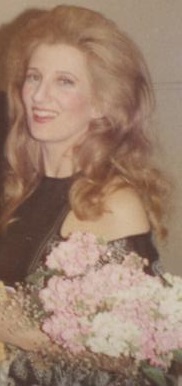
    Maralin Niska (above), the American soprano who passed away on July 9th, 2016, was one of a handful of singers whose performances could induce me to travel – first from Syracuse, NY, to see her in several roles at New York City Opera, and later from Hartford, CT – where TJ and I had settled in the mid-1970s – to Lincoln Center, where she was singing at both the State Theatre and The Met.

    Once, she even came to Hartford to sing Violetta, replacing another soprano on short notice. We were so excited when we arrived at The Bushnell and saw the announcement of the cast change; we rushed to the stage door to leave her a message, and en route we found her, just thirty minutes before curtain time, banging desperately on what she thought was the stage door. She was so happy to see us, not least because we were able to lead her to the proper entrance.

    Violetta, Mimi, Tosca, Butterfly, Nedda, Countess Almaviva…these were some of the roles from the standard repertoire in which Niska thrilled me. Her triumphs in such great dramatic vehicles as Cherubini’s Medea, Strauss’s Salome, and Janacek’s Emilia Marty were the stuff of operatic legend. In roles as diverse as Yaroslavna in PRINCE IGOR, the Composer in ARIADNE AUF NAXOS, Rosalinda in FLEDERMAUS, and Elisabetta I in MARIA STUARDA, she achieved miracles of characterization and of voice.

    Yet for all that, is was – curiously enough – as Marguerite in FAUST that Maralin gave a (somewhat unexpectedly) sensational performance that has lingered so clearly in my mind over the ensuing years. In the unforgettable Frank Corsaro production – in which the devil wins – Maralin left the notion of Marguerite as a shrinking violet in the dust. Faust’s love for the girl signaled not only her romantic but also her sexual awakening.

    In the Garden Scene, on the brink of having her, Faust backs off, causing Maralin/Marguerite to burst into frantic sobs of frustration; when he reappears after Marguerite’s ecstatic invocation, there’s no going back. 

    As the opera draws to its end, Faust comes to rescue Marguerite from prison, where she awaits execution for murdering her child. The demented girl imagines they are back in the garden; she ignores Faust’s pleas to come away. When Mephistopheles appears to urge theme to hurry, Marguerite sees him for what he is and turns to fervent prayer. Faust tries one last time to persuade her to flee, but she turns on him, crying: “Pourquoi ces mains rouge de sang? Va! … tu me fais horreur!”  (“Why are your hands red with blood? Go!…you fill me with horror!”) No soprano has done that last line quite like Maralin.

    Heavenly voices declare Marguerite’s salvation; she begins to climb a steep staircase, but at the top of it, double doors fly open, and instead of an angelic host she is greeted by a towering executioner, masked and carrying an monstrous axe. Faust rushes up the steps to try to save her, but the doors are slammed shut in his face. Mephistopheles steps out of the shadows, calling Faust’s name quietly, and waving the contract with which Faust had sold away his soul to the devil in Act I.

    I’ve been able to preserve some excerpts from one of Maralin’s performances in this role at NYC Opera; the date was March 15, 1970, and her colleagues were Nicholas di Virgilio (Faust) and Norman Treigle (Mephistopheles). The original tapes are in a fragile state – I was lucky they played well enough to save them to MP3. The sound quality leaves much to be desired, but hearing these scenes brings back wonderful memories for me:

    Niska – FAUST aria – NYCO 3

    FAUST – Garden Scene exc – Niska – di Virgilio – Treigle – NYCO 3

    Maralin Niska & Norman Treigle – scene from FAUST – NYCO 3~15~70

    FAUST – finale – Niska – di Virgilio – Treigle – NYCO 3

    Photographer Beth Bergman has created a beautiful memorial in photos to Maralin Niska on her website: visit the page here.
  • La Mia Gilda!

    6a00d8341c4e3853ef00e553c65d718833-800wi

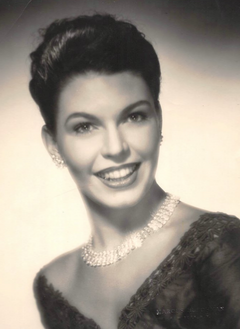
    A lovely lady with a lovely voice, Gilda Cruz-Romo became my friend in 1969 around the time of her New York City Opera debut. We have stayed in touch ever since, and today I want to share this brief sample of her singing:

    Gilda Cruz-Romo – In quelle trine morbide – MANON LESCAUT -Met dress rehearsal 1973