Tag: New York City

  • Hockney @ The Met Museum

    L1910337

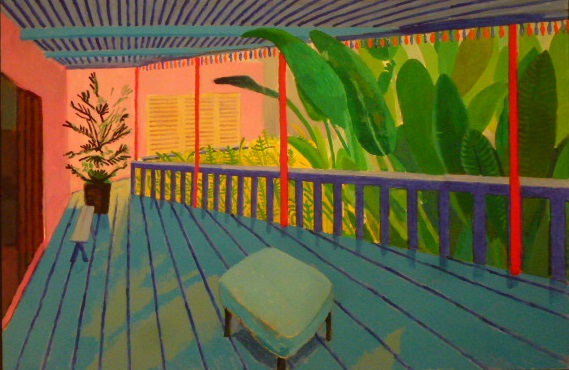
    If you’re in New York City, please take the time to visit the David Hockney exhibit at The Metropolitan Museum of Art; it runs thru February 25th, 2018. My friend Debbie and I were there earlier today and we both genuinely enjoyed seeing representative works from the various ‘eras’ of Hockney’s career. I particularly loved all the shades of blue on his canvases.

    L1910368

    Garden With Blue Terrace ~ 2015

    L1910360

    Breakfast at Malibu, Sunday, 1989

  • Destinations: A Dancer’s Journey

    _MG_3049

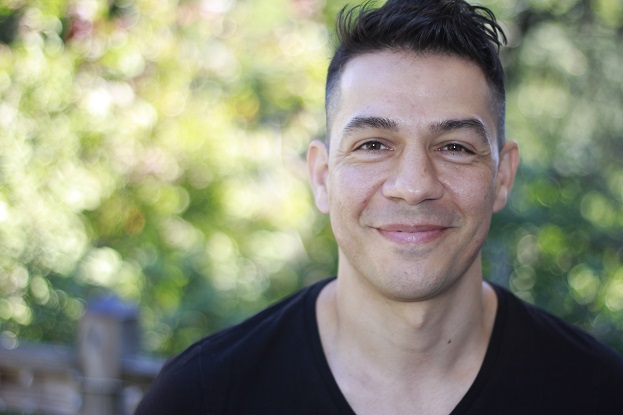
    Above: Francesco Pireddu

    In 2011, the Sardinian dancer Francesco Pireddu appeared with Roberto Villanueva’s BalaSole Dance Company here in New York City. Francesco’s solo, Silence, was a highlight of the show. A few weeks ago, I heard from Francesco; together we arranged for him to write an article for my blog. And here it is:

    ~~~~~~~~~~~~~~~~~~~~~~~~~~~~~~~~~~~~~~~~~~~~~~~~~~~~~~~~~~~~~~~~~~~~~~~~~~~~~~~~~~~~~~~~~~~~

    Destinations: A Dancer’s Journey ~ Guest Author: Francesco Pireddu

    Hi. My name is Francesco Pireddu. And, like each one of us, I have a story.

    When I look at my childhood I see a small, very small village in the middle of the mountains, in the beautiful Italian island called Sardinia. My parents, myself, three brothers and one sister. A big Italian family surrounded by gorgeous nature, visited by particularly cold winters and delighted with bright and hot summers. There was not much to do, apart from going to school, doing the homework and help my mother out in the house. Discipline, simplicity and rigor were the key notes of my family’s life. I was profoundly drawn to everything that wasn’t there: dance, performance, self-expression in the deepest form. I needed to explore. And, as soon as I finished high school, I left.

    > First destination: Rome. I was excited, determined and scared. Dance and acting: that’s all I wanted to do, and I ran to register at the most prestigious acting school. I was told that, first things first, there was a “three-monologues-audition” to prepare. Three monologues? Did I have to perform three monologues in front of a bunch of people? No, thanks. I was too shy. Very self-conscious. The day after, I registered at one of the most famous dance schools and I felt so much better. Ballet, modern and improvisation classes: I was in my element. The movement was a beautiful journey. My body language was exposed and explored.

    > Second destination: Tuscany. Without a formal audition I was chosen to perform with Micha Van Hoecke, the renowned Belgian director. He was preparing RIGOLETTO, one of the greatest Italian operas by Giuseppe Verdi. Later, I joined Lindsay Kemp’s ensemble and toured the country with LE MASCHERE, a joyful and engaging operetta by Mascagni based on La Commedia dell’Arte. I was happy and proud of being part of such huge productions, and working with Lindsay Kemp, the great choreographer and director who worked closely with artists such as David Bowie and Kate Bush, is definitely one of the best experiences of my career.

    In Tuscany I also kept working on my craft and I intensely studied ballet with Marina Van Hoecke, a gifted and demanding teacher who trained Maurice Bejart’s male dancers for more than a decade. Her gentle and tough personality, her immense knowledge and captivating spirit defined profoundly my journey and improved my foundation.

    > Third destination: London. One day, Marina, out of the blue, said to me: “I don’t want you in my class anymore. Go somewhere else”. I was devastated. Speechless. I could not understand. I didn’t do anything wrong and I was a devoted student. Why was she pushing me away? It took me many years to understand that the people who really love you and believe in you are the ones who let you go or make you go. Since then, rejection hurts me minimally. I like to believe that that lesson was part of the training.

    In London I performed at the Royal Opera House, Covent Garden, in productions such as BORIS GODUNOV and LA FORZA DEL DESTINO, and I studied ballet with teachers such as Roland Price, Romayne Grigorova, Joan Hewson and Raymond Chai.

    > Fourth destination: New York. On my first day in the Big Apple I walked from 42nd street to 75th and Broadway and I ended up at Steps Dance Studio. I still remember the energy, the vibrancy that only a dance studio emanates. I was watching a ballet class and eating a massive walnut muffin. A tall and gentle lady was next to me. She was staring at me and started to ask me simple questions such as: what’s your name? Where are you from? Are you a dancer…..? And a conversation was born. She asked me to audition for her company and, a week later, I found myself in Hartford, Connecticut, rehearsing the Albano NUTRACKER. We performed in different cities and at Mohegan Sun arena.

    6a00d8341c4e3853ef015434168d1f970c-800wi

    I am still in New York City and so many beautiful things have happened: I performed at New York Live Arts with Balasole Dance Company (photo above, by Kokyat); at Dixon Place I co-created a solo with the director Albert Andrew Garcia for his new show “Tryptych”, and I was cast as a dancer and actor in the off-Broadway musical “The Raja’s Son and Princess Labam”. Last season I was in AIDA at the  Metropolitan Opera and I am currently in their production of TURANDOT. Along the way I was cast in numerous commercials such as: Chase Bank Holiday, JA Bank, Mountain Dew, Bud Light beer and Pima cotton sheets. I made my screen debut in the movie “Top Broker” and I just finished shooting the first season of the series “Play Love”.

    7566C6AF-85FA-4FB2-BD6C-99D1257F4CFB

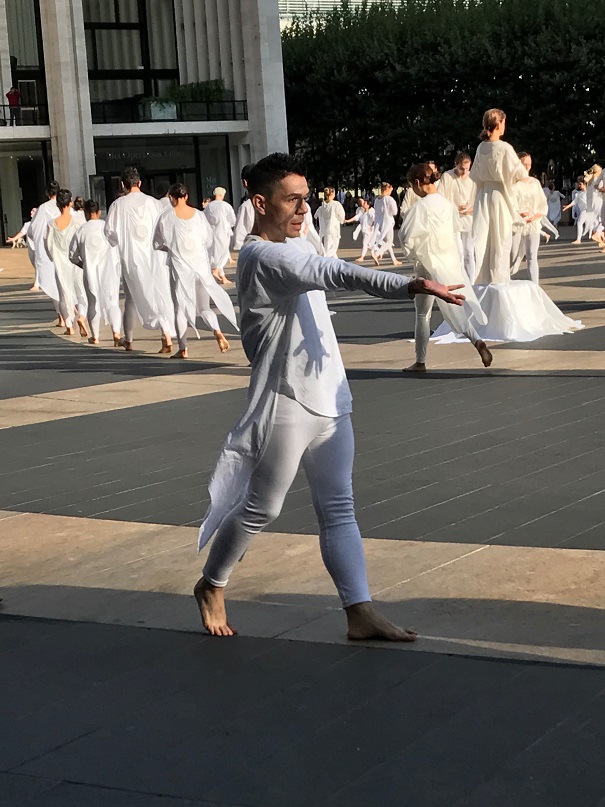
    Above: Francesco performing in Table of Silence

    Last September I joined the Buglisi Dance Company at the Lincoln Plaza in Table of Silence: with a beautiful and emotional dance tribute we remembered and honored the victims of 9/11 and the event was seen livestream all over the world. I was honored to be part of such a remarkable event.

    Oh, and in New York City I closed the circle: I trained full-time for two years at HB Studio, the prestigious acting school.

    IMG_5690

    I treasure my experiences. From a village of 600 people, zero money and infinite obstacles, my journey surprises me every day. Next destination: the next rejection(s)! Only then and there do miracles happen.”

    ~ Guest Author: Francesco Pireddu

  • Julia Claussen

    Julia_Claussen

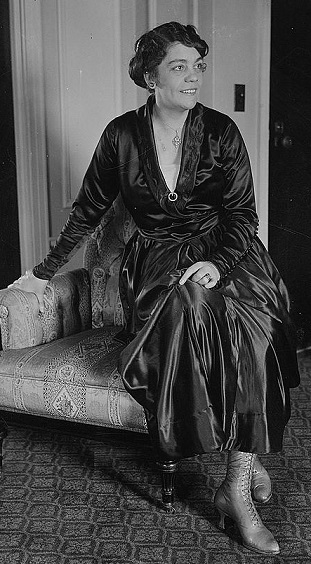
    Swedish mezzo-soprano Julia Claussen studied at the Royal Academies of Stockholm and Berlin, made her operatic debut in Stockholm in 1903, and sang at Paris, London, and Chicago.

    From her debut there as Dalila in 1917 until 1932, Julia Claussen was a mainstay at the Metropolitan Opera in New York City. She sang Azucena, Amneris, Ortrud, Fricka, Brangaene, Kundry, Venus, Marina in BORIS GODUNOV, Laura in LA GIOCONDA, and other roles for a total of nearly 175 performances at the Old House and on tour. She frequently participated in the opera and song concerts that were regular features of Met seasons at that time. 

    An interview with Julia Claussen here. She died at Stockholm in 1949.

    Julia Claussen – Schmerzen from Wagner’s Wesendonck Lieder

  • Restless Creature: The Film

    P13844553_p_v8_aa

    RESTLESS CREATURE, the documentary about Wendy Whelan that dance lovers everywhere have been waiting for, is now playing (thru June 6th) at Film Forum down on Houston Street in New York City. Since, as most of my readers know by now, I’ve been on the disabled list for several weeks, I had the good fortune of receiving a link to watch the film at home.

    Very soon after I moved to New York City and started working at Tower Records, Wendy Whelan came in to shop one afternoon. She had been my dream dancer since I first took note of her as an outstanding, unique ballerina in my favorite dance company: New York City Ballet. Feeling overwhelmingly shy in the presence of my idol, I managed to croak out an uncertain “Hello, Wendy!” Incredibly, she seemed equally shy. We talked about the weather.

    From that day on, I ran into her frequently – both at the store and around Lincoln Center, where I loved hanging out for hours in hopes of seeing my beloved dancers coming and going from rehearsals and performances. Whenever Wendy passed by, she always stopped to chat; she has an incredible sense of humor, and a knack for making whoever she’s talking to feel…blessed. 

    I have a million Wendy Whelan stories, and I’ll put some links to some of my favorites at the end of this article. But right now, it’s showtime! Roll RESTLESS CREATURE… 

    ~~~~~~~~~~~~~~~~~~~~~~~~~~~~~~~~~~~~~~~~~~~~~~~~~~~~~~~~~~~~~~~~~~~~~~~~~~~~~~~~~~~~~~~~~~~~
    Restless-Creature-WP-Christopher-Duggan-Photographer-hr_20130415_057-e1432316688150

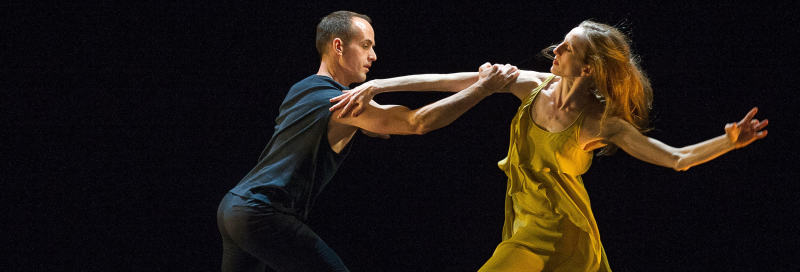
    Above: Brian Brooks and Wendy Whelan, photo by Christopher Duggan

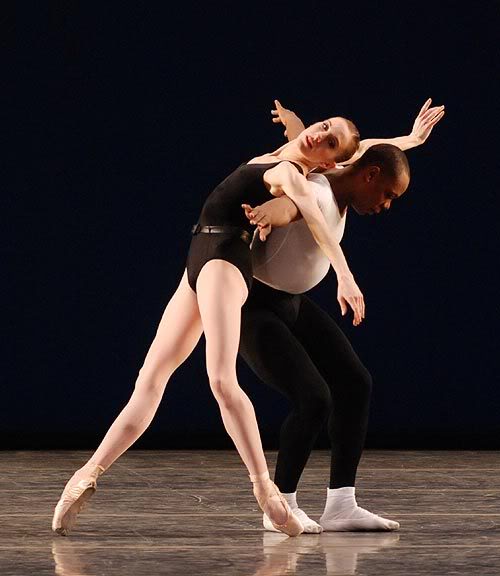
    When I think of Wendy Whelan, the word that always comes to mind is: gratitude. Gratitude, not simply for her sublime artistry as a dancer, or her wit and warmth as a friend, but a true feeling of being thankful that our dance careers – hers performing, mine observing – have dovetailed so perfectly. From the first memories of singling her out on a stageful of magnificent dancers in her early days at New York City Ballet down to this very afternoon – watching her in the strikingly candid and deeply moving documentary RESTLESS CREATURE – Wendy has been one of those people who – quite simply – makes life worth living.

    The film opens with some footage from Jerome Robbins’ GLASS PIECES, with Wendy and Adrian Danchig-Waring in the pas de deux. Within seconds, the pristine beauty and ineffable mystique of Wendy Whelan have already moved me to tears. And that’s how I spent the entire 90-minute span of watching this film: on a roller-coaster of emotion as Wendy’s transition from prima ballerina to contemporary dancer de luxe is observed at close range in scene after scene which reveal both a deep vulnerability and a powerful strength of will in this complex and supremely human woman.

    “If I don’t dance, I’d rather die!” says Wendy early in the film; we then follow her on her journey beyond classical ballet and into another realm of dance: a journey marked by a surgical intervention with all its attendant hope and despair.

    Courageously, Wendy even lets us eavesdrop in the operating room, and we can only marvel at the technological advances that make what once would have been an unthinkable procedure go forward smoothly. From thence, with her handsome husband David Michalek ever a quiet pillar of strength, the ups and downs of recovery are chronicled. “It’s depressing to think of what I can’t do anymore,” Wendy broods, as she works thru physical therapy. Yet all the time, the future beckons.

    She speaks of roles having been taken away from her at New York City Ballet and of a conversation with Peter Martins that devastated her when he said, “I don’t want people to see you in decline.” With raw honesty, Wendy admits this episode caused her debilitating pain.

    But she carries on; her first gentle barre is an obstacle to be overcome: she is anxious to get back to work. With a focus on what she can do, her RESTLESS CREATURE program has taken shape: she will dance duets – not on pointe –  with each of four choreographers. But the recovery process stalls as pain begins to creep back in. When a hawk appears outside her window, Wendy takes it as an omen and postpones the RESTLESS CREATURE tour. The toll this decision takes on her is potent.

    But, resilience is in her nature. She works thru the pain and finds her strength again. Wendy plans her farewell program at New York City Ballet, determined to take leave of the House of Mr B during her 30th year with the Company. One last surprise comes her way: Alexei Ratmansky asks her to dance in his new creation PICTURES AT AN EXHIBITION. She is thrilled by the invitation, and seems to be having a blast doing it. {Wendy is currently staging PICTURES AT AN EXHIBITION for Pacific Northwest Ballet.}

    The night of the farewell is beautifully documented: Wendy dances with her next-generation partners Tyler Angle and Craig Hall, finishing the evening in a pas de trois specially crafted by Christopher Wheeldon and Akexei Ratmansky which ends with Wendy aloft, leaving the past behind and reaching for the future.

    Throughout the film there are delightful glimpses of people I love: Lynne Goldberg, Emily Coates, Sean Stewart, Maria Kowroski and Martin Harvey, Gonzalo Garcia, Edward Watson, Ask LaCour, Chris Bloom, Reid Bartelme, Abi Stafford, Tiler Peck, Sean Suozzi, Joshua Thew, Allegra Kent, Jacques D’Amboise, Wendy Perron, Gillian Murphy, Ethan Stiefel, Gwyneth Muller, Chuck Askegard, and oh-so-many more. Three of Wendy’s most marvelous cavaliers are seen: Jock Soto, Philip Neal, and Peter Boal. Mr. Boal pays Wendy an incredible – and honest – compliment when he says, “You changed how people behave in this profession.”

    Watching the film made me think yet again of Wendy as a very special kind of star, for while it is wonderful to be admired, applauded, honored, and revered as an artist, it is even more rewarding to be loved, not only for what you do but for who you are.
    Wendywhelanagon1_kolnik

    At the very end of RESTLESS CREATURE, there is one final tugging of the heartstrings: the film is dedicated to the memory of Albert Evans.

    ~~~~~~~~~~~~~~~~~~~~~~~~~~~~~~~~~~~~~~~~~~~~~~~~~~~~~~~~~~~~~~~~~~~~~~~~~~~~~~~~~~~~~~~~~~~~

    Here are some past articles from my blog about Wendy Whelan that you might enjoy reading:

    Wendy & Pauline

    RITE OF SPRING 

    LABYRINTH WITHIN

    Wendy Teaching

    Celebrating Wendy Whelan

    NYCB Farewell

    RESTLESS CREATURE @ The Joyce

    Hostess With The Mostess

  • Barbara Conrad Has Passed Away

    B Conrad

    Mezzo-soprano Barbara Conrad has passed away; famously the center of a racist imbroglio during her college days at the University of Texas, Ms. Conrad went on to a long and distinguished career. 

    In 1957, when she was 19 years old, Barbara Conrad was chosen to play Dido, the queen of Carthage, opposite a white student as her lover in a production of Henry Purcell’s DIDO & AENEAS. The interracial pairing stirred up a major controversy: Ms. Conrad drew death threats from white students, who harassed her with phone calls. The case reached the Texas legislature, which threatened to withdraw funding from the university if she was not replaced in the production. When university officials caved in to the legislature’s demands, Ms. Conrad was publicly gracious, but on a personal level she was devastated.

    Harry Belafonte offered to pay the young singer’s tuition at any school of her choice if she desired to transfer, but she stuck things out in Austin. Belafonte later arranged for Ms. Conrad to fly to New York City for auditions; the trip’s expenses were underwritten by Eleanor Roosevelt.

    Putting the past behind her, Conrad emerged as a distinctive singer and stage personality; she sang at both the New York City Opera and at The Met, where I saw her as Maddalena in RIGOLETTO and Preziosilla in FORZA DEL DESTINO. She was also heard at The Met as Annina in ROSENKAVALIER, Hecuba in LES TROYENS, and as Maria in the Met’s premiere performances of PORGY AND BESS.

    Ms. Conrad appeared with major opera companies and orchestras, and worked with such conductors as  Maazel, Bernstein, and Levine. She went on to teach at the Manhattan School of Music, where she co-founded the Wagner Theater Program.

    Amazingly enough, I got to hear Barbara Conrad yet again: in 2008, she sang Fricka in the Wagner Theater Program’s semi-staged WALKURE. She was “…vivid, larger-than-life…her frustration and anger grandly portrayed. Despite some tension on the uppermost notes, Conrad’s intense, chesty sound and authoritative command of the stage elicited applause as she made her exit…”

    Incredibly, part of this WALKURE performance is to be found on YouTube. It will give you an idea of Ms. Conrad’s vibrant performance as the queen of the gods.

    There was a post-script to the story: a few days after the WALKURE, Barbara Conrad came to Tower Records where I was working. I struck up a conversation with her, using her Fricka as an entrée. She was beyond gracious, and so tickled that I recalled seeing her as Preziosilla; I remarked that not only had she made a smouldering physical impression, but that she was the one Preziosilla in my experience who really made something of the music.

    Barbara Conrad is the subject of a documentary, WHEN I RISE.

    Here’s a sampling of Ms. Conrad’s singing, from her repertoire of spirituals:

    Barbara Conrad sings ‘Deep River’

    May she rest in peace.

  • Yvonne Naef

    Yvonne Naef

    Yvonne Naef sang wonderful performances as Fricka and Waltraute at The Met 2004 to 2009; she also sang Amneris there, which I inexplicably missed. How I would love to hear her here in New York City again.

    Ms. Naef is an impressive Sieglinde on Simone Young’s recording of DIE WALKURE, with Stuart Skelton as Siegmund:

    Yvonne Naef – DIE WALKURE ~ Der Manner Sippe – Simone Young cond

    And here’s Yvonne Naef in a more intimate setting:

    Yvonne Naef ~ Als ihr geliebter schied – Zemlinsky

  • Celebrating Alan Gilbert’s 50th Birthday

    1617_GilbertBdayFeb23_3240x1256

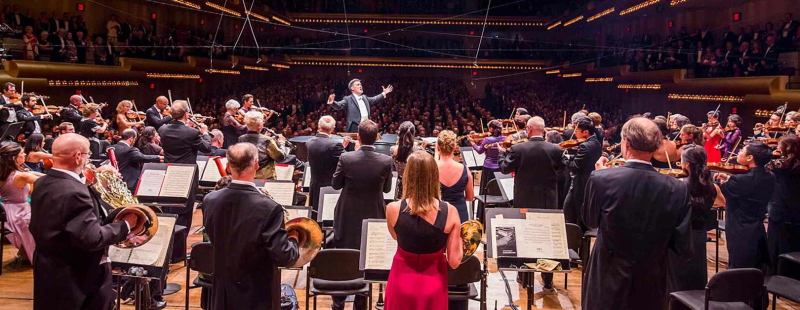
    Thursday February 23rd, 2017 – An array of stars from the classical music firmament were on hand to celebrate the 50th birthday of The New York Philharmonic‘s Music Director Alan Gilbert. Click on the above photo to enlarge.

    “Life begins at 50!”…at least it did for me: the life I’d always hoped to live, here in New York City with my beloved, with everything I enjoy – music, dance, art, food, a nearby park – at my fingertips, and good friends to share things with. Alan Gilbert’s tenure as Music Director coincides with my own embrace of The Philharmonic. I would go once in a while during the Mehta-Boulez-Masur-Maazel years, but in recent seasons I have rarely missed a program; I have become an admirer of several of the orchestra’s musicians, and of Alan’s leadership. He’ll soon be embarking on a new phase of his career, and so it was truly pleasing to be there tonight, joining with the stellar party guests onstage to salute the Maestro.

    The first half of the evening was devoted to music of the Three Bs: Bach, Beethoven, and Brahms. After welcoming speeches, Alan Gilbert strode out to a warm greeting from the packed house. Paolo Bordignon was at the harpsichord as Pamela Frank and Frank Huang took up the opening Vivace of Bach’s Concerto for Two Violins in D minor, BWV 1043, playing with festive vitality. Pamela Frank was then joined by Joshua Bell for the Largo ma non tanto, and how beautifully their timbres blended: deeply satisfying music-making. I’d hoped Alan Gilbert might play tonight, but the third movement of the Bach brought forth Lisa Batiashvili and Mr. Huang in the vivacious Allegro

    I think this was the first time I have heard this piece outside of its ballet setting: Balanchine’s masterpiece CONCERTO BAROCCO is frequently given across the Plaza. Throughout tonight’s concert rendering, the choreography danced in my head.

    Phenomenal back-to-back performances by two of the world’s great pianists followed: Emanuel Ax cast a magic spell over the music of Brahms: the Andante from the 2nd piano concerto. How gently Mr. Ax caressed this music, and how poignant was the sound of Carter Brey’s cello in his long solo passage. The cello returns near the end of the movement as Mr. Ax plays a series of delicate trills.

    Yefim Bronfman then took command of the Steinway in a thrillingly virtuosic Allegro con brio from Beethoven’s Piano Concerto No. 3. With some wonderful interjections from the Philharmonic’s wind soloists along the way, the pianist brought both passion and nuance to his playing. As his spectacular rendering of the cadenza drew to its close on a series of gossamer trills, the orchestra re-entered creating an exquisite sense of quietude. 

    Joshua Bell’s fiery playing and unbridled physicality evoked the audience’s rousing ovation for his performance of the Allegro energico from Max Bruch’s first violin concerto. Moments later, a very different aspect of Mr. Bell’s artistry was gorgeously evidenced as he joined Renée Fleming for Richard Strauss’s “Morgen!“; the warmth of the soprano’s voice and the silken serenity of Mr. Bell’s phrasing created a tranquil atmosphere, like basking in sunlight on some distant seashore.

    Ms. Fleming then gave one of her trademark arias, “Marietta’s Lied” from Erich Korngold’s DIE TOTE STADT; the song’s romance and mystery were conveyed by the soprano in the high-rising arcs of the vocal line over a dreamlike orchestration that features harp, piano, and celesta. The music becomes passionate; then the singer speaks a couple of lines, as she tries to recall the words of the second verse. Once again the haunting melody is sung, followed by an evocative postlude. Intoxicating moments.

    Lisa Batiashvili offered “Goin’ Home“, the ‘spiritual’ that was drawn from the principal theme of the Largo of Antonin Dvořák’s New World symphony, arranged by Fritz Kreisler, and adapted by T. Batiashvili. This was played with rich emotion and lovely tone by the comely Ms. Batiashvili; the only problem is that the song is quite brief, leaving us craving more Batiashvili.

    Gershwin’s An American in Paris, a favorite work of Alan Gilbert’s, was the closing work of the evening; not my cup of tea, but of course superbly played. 

    Frock watch: being a party night, the women of the Philharmonic did not all wear regulation black; Cynthia Phelps looked radiant in a “gamorous” slit-skirt emerald green number. Pamela Frank wore a black gown shot with silver, and be-jeweled shoes which would have made Cinderella envious. Lisa Batiashvili, ever the picture of elegance, wore a sleek, satiny gun-metal creation with a hint of Grecian style. And Renée Fleming looked every inch the diva in vermilion with a long golden shawl.

    Renée led us in singing ‘Happy Birthday, Dear Alan’ with the standing audience saluting the conductor and everyone singing full-voice. Maestro Gilbert basked in the embraces of the great musicians who had gathered to honor him; then they all seemed to be heading off together to continue the party into the wee hours as Alan waved goodbye to the crowd.

  • Teresa Stich-Randall

    T s-r

    Teresa Stich-Randall (above) sang Donna Anna in DON GIOVANNI in the first performance I ever attended at the Old Met, in 1963. It took place only a few days after the assassination of John F Kennedy, but the plans had been made, the hotel booked, and opera tickets paid for, so my parents decided we should go ahead and make the trip to New York City. On the evening following the DON GIOVANNI, we saw FAUST.  

    Teresa Stich-Randall was a native of New Hartford, Connecticut. She studied at Columbia University where, in 1947, she created the role of Gertrude Stein in THE MOTHER OF US ALL by Virgil Thomson.

    Arturo Toscanini ‘discovered’ Stich-Randall, calling her “the find of the century”. He engaged her for a series of performances with his NBC Symphony Orchestra, including the High Priestess in AIDA and Nannetta in FALSTAFF (1950), both of which remain available commercially. She also sang regularly for him in his last years, as a soprano soloist in many choral works.

    She went on to become a beloved star of the Vienna State Opera, where she performed regularly for two decades. In 1963 the Austrian government conferred on Stich-Randall the honorary title of Kammersängerin; she was the first American to be so honored. She was renowned for her Mozart interpretations.

    Today, Stich-Randall is perhaps best-known for her participation as Sophie in the classic 1959 recording of DER ROSENKAVALIER conducted by Herbert von Karajan and featuring Elisabeth Schwarzkopf and Christa Ludwig.

    It was from Stich-Randall’s LP on the Westminster label that I became familiar with the great Mozart soprano arias.

    Teresa Stich-Randall – Non mi dir ~ DON GIOVANNI

    There is a brief post-script to my Stich-Randall story. In 1980, she returned to Connecticut to care for her aging mother. One Sunday morning, I read in the Hartford Courant a small notice that Stich-Randall was giving a recital that afternoon at a church in New Hartford. It was impossible for me to get there, but I sent her a letter and was surprised to receive a charming reply from the soprano. After her mother passed away, Stich-Randall returned to Vienna where she died in 2007.

  • Dmitri Hvorostovsky @ Carnegie Hall

    20110128_dmitri-hvorostovsky-3

    Wednesday February 17th, 2016 – No one in the realm of classical music needs to be told the background of tonight’s Carnegie Hall recital by the great baritone Dmitri Hvorostovsky. He has, since his 1989 winning of the Cardiff Competition, become one of the most admired and beloved of artists; his current personal health battle has his devotees worldwide praying for him and pulling for him. Now, for the second time since his diagnosis, he has come to New York City to honor his commitments to sing for us.

    Carnegie Hall was completely sold out, and the applause greeting Dima and his pianist, the excellent Ivari Ilja, was particularly warm. The program was a taxing one for the voice – songs by Glinka, Rimsky-Korsakov, Tchaikovsky, and Richard Strauss – and Hvorostovsky sang with his characteristic generosity, tenderness, and passion. It is – and always has been – a uniquely beautiful voice, one of the very very few today that gives such constant and pleasing rewards. 

    A bit of sharpness in the first Glinka song soon vanished as the voice warmed to the hall. As the Glinka set continued, the caressive warmth of the voice came to the fore. Always a singer possessed of a vast dynamic range, Dima tonight moved impressively from haunting soft passages to thrillingly sustained, powerful top notes, and everything was coloured with emotional hues from longing to tranquility to regret.

    Rimsky-Korsakov’s “Not the wind, blowing from the heights” was an especially marvelous rendering in the evening’s first half, and – after the interval – Hvorostovsky gave us some of the Tchaikovsky romances that have been among his signature pieces: songs that he has helped to popularize throughout the world. These were beautifully voiced.

    In the evening’s concluding group of Strauss songs, so familiar yet so welcome in these hauntingly sung interpretations, Hvorostovsky expressiveness was at full flourish. 

    One audience distraction after another intruded on the evening, but these complaints we will set aside for now, and feel instead a sense of gladness just to have been there.

  • TURANDOT at The Met – 4th of 4

    Backstage

    Above: a Met TURANDOT blast-from-the-past with Birgit, Franco (Z, not C), Jimmy, Eva, Liz, and Placi

    Saturday January 30th, 2016 matinee – I took a score desk this afternoon to hear the fourth of four sopranos who have sung the role of Turandot during the current Met season. My history of Turandots at The Met goes back to the Old House, where Mary Curtis-Verna was the first soprano I heard in the role. Since then, I have witnessed almost every singer to tackle this part in New York City, from The Big B (Birgit Nilsson) to sopranos you never heard of, several of them at New York City Opera where a perfectly nice Beni Montresor production held forth for many seasons. 

    At The Met, where Franco Zeffirelli’s extravaganza (which replaced Birgit’s Cecil Beaton setting in 1987) has been home to such post-Birgit divas as Eva Marton, Dame Gwyneth Jones, Ghena Dimitrova, and Jane Eaglen, audiences still cheer – as they did today – the massive vision of the royal palace as it comes into view midway thru Act II.

    Act I today was very pleasing to hear: after a dragging tempo for the opening scene of the Mandarin’s address (grandly declaimed by David Crawford, who had the breath control to fill out the slo-mo phrases), conductor Paolo Carignani had everything just about right. The score is a marvel of orchestration: so much detail, so many textured layers of sound. I simply love listening to this music, especially passages like “O taciturna!” where Carignani drew forth such evocative colours from his players.

    Anita Hartig sang very attractively as Liu, her voice reminding me just a bit of the wonderful Teresa Zylis-Gara’s. Hartig did not do a lot of piano/pianissimo singing, which can be so very appealing in this music, but she had the power to carry easily over the first act’s concluding ensemble. The Romanian soprano’s concluding B-flat in “Signore ascolta” was first taken in straight tone; she then allowed the vibrato to seep in: quite a lovely moment.  Hartig’s voice has an unusual timbre and just a touch of flutter to bring out the vulnerability of the character.

    I was likewise very impressed and moved by the singing of Alexander Tsymbalyuk as Timur: mellow and warm of tone, and with a deep sense of humanity. 

    Whilst not holding a candle to such past Calafs as Corelli, Tucker, McCracken, Domingo, or Pav, Marco Berti did very well in Act I: his idiomatic singing carried well (though Carignani swamped him a couple of times, unnecessarily), and his piano approach to the opening phrases of “Non piangere, Liu” was finely judged. Berti firmly sustained his final call of “Turandot!” at the act’s conclusion.  

    The three ministers – Dwayne Croft, Tony Stevenson, and Eduardo Valdes – did well, especially as they reminded Berti/Calaf that La vita è così bella! These three singers, as far as I know, sang these trio roles at every performance of TURANDOT this season and made a fine job of it; but a ‘second cast’ might have been given an opportunity. Variety is the spice of operatic life, after all.

    After the ridiculously long intermission, Act II started well but then things began to unravel a bit. Mr. Croft experienced some hoarseness, and Mr. Berti didn’t sound solid in the vocally oddly-placed lines at “Figlio del cielo!” where he re-affirms to the old Emperor his desire to play Turandot’s riddle game. A silence of anticipation filled the house just as Nina Stemme was about to commence “In questa reggia“, but the moment was spoilt by voices from the lighting bay at the top of the hall shouting “Have you got her?” The chatter continued through the opening measures of the aria.

    Ms. Stemme’s now-prominent vibrato sounded squally at first; the phrasing was uneven and frankly the singing had a rather elderly quality. The top notes were rather cautiously approached and seemed a bit unstable, though she was mostly able to disguise the effort. Concerns about producing the tone seemed infringe on her diction, with some odd results. The opening challenge of the riddle scene – “Straniero! Ascolta!” – did not have the desired ring. 

    Stemme’s posing of the riddles was a mixed bag vocally – and Berti’s responses were clipped, with traces of hoarseness creeping in. By the third riddle, the soprano seemed to be gaining steadiness. In the great moment after her defeat when Turandot is called upon by Puccini to blaze forth with two high-Cs over the chorus, Stemme made no impact on the first one and was assisted by the chorus soprani for the second.  Berti responded with a skin-of-his-teeth high-C on “…ti voglio tutto ardente d’amor!” but the tenor came thru with a pleasingly tender “…all’alba morirò…” before the chorus drew the act to a close.

    I debated staying for the third act, mainly to hear Hartig and Tsymbalyuk, but the thought of another 40-minute intermission persuaded me otherwise. Returning home, I found a message from a friend: “So, who was the best of the Met’s four Turandots?” The laurel wreath would go to Lise Lindstrom. Jennifer Wilson in her one Met outing was vocally savvy but it would have been better to have heard her a few years earlier. The role didn’t seem a good fit for Goerke or Stemme, who expended considerable vocal effort to make the music work for them (Goerke more successfully, to my mind) but both would have perhaps been wiser to apply their energy to roles better suited to their gifts (namely, Wagner and Strauss). Still, it was sporting of them to give La Principessa a go.

    As with the three earlier TURANDOTs I attended this season, and the many I’ve experienced in this Zeffirelli setting over the years, the house was packed today. Even Family Circle standing room was densely populated. To me, this indicates the opera-going public’s desire for the grand operas to be grandly staged.

    There’s a rumor circulating that today’s performance marked the final time this classic production will be seen. It seems a mistake to discard it, since it originated fully-underwritten by Mrs. Donald D. Harrington, revivals have always been generously supported by major Met donors, and it obviously does well at the box office. Why put a cash cow out to pasture? It’s already been suggested that the next Met TURANDOT production will be set in Chinatown in the early 1900s and will star Anna Netrebko and Jonas Kaufmann (who will cancel), with Domingo as Altoum.

    Metropolitan Opera House
    January 30th, 2016 matinee

    Giacomo Puccini's TURANDOT

    Turandot................Nina Stemme
    Calàf...................Marco Berti
    Liù.....................Anita Hartig
    Timur...................Alexander Tsymbalyuk
    Ping....................Dwayne Croft
    Pang....................Tony Stevenson
    Pong....................Eduardo Valdes
    Emperor Altoum..........Ronald Naldi
    Mandarin................David Crawford
    Maid....................Anne Nonnemacher
    Maid....................Mary Hughes
    Prince of Persia........Sasha Semin
    Executioner.............Arthur Lazalde
    Three Masks: Elliott Reiland, Andrew Robinson, Amir Levy
    Temptresses: Jennifer Cadden, Oriada Islami Prifti, Rachel Schuette, Sarah Weber-Gallo

    Conductor...............Paolo Carignani