Tag: New York Philharmonic

  • Mozart & Bartók @ The NY Philharmonic

    Week32-BrandonPatoc_0059

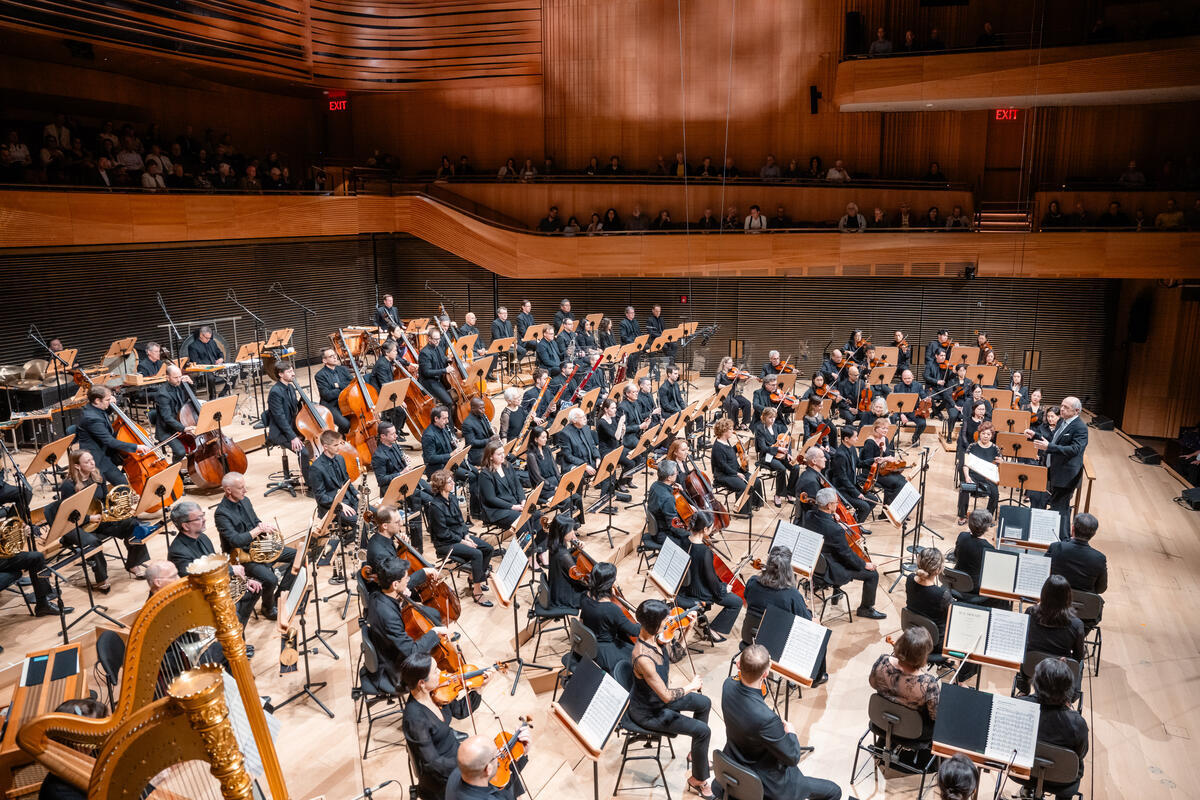
    Above: performance photo by Brandon Patoc

    ~ Author: Mark Anthony Martinez II

    Saturday April 26th, 2025 – The New York Philharmonic played a fantastically curated concert of Mozart and Bartók. Although the throughline of the pieces isn’t immediately apparent, the pairing of Mozart at his most theatrical — with the Magic Flute Overture and his Fifth Violin Concerto — with Bartók’s The Wooden Prince, originally written as music for a ballet, made for a fantastic night of music.

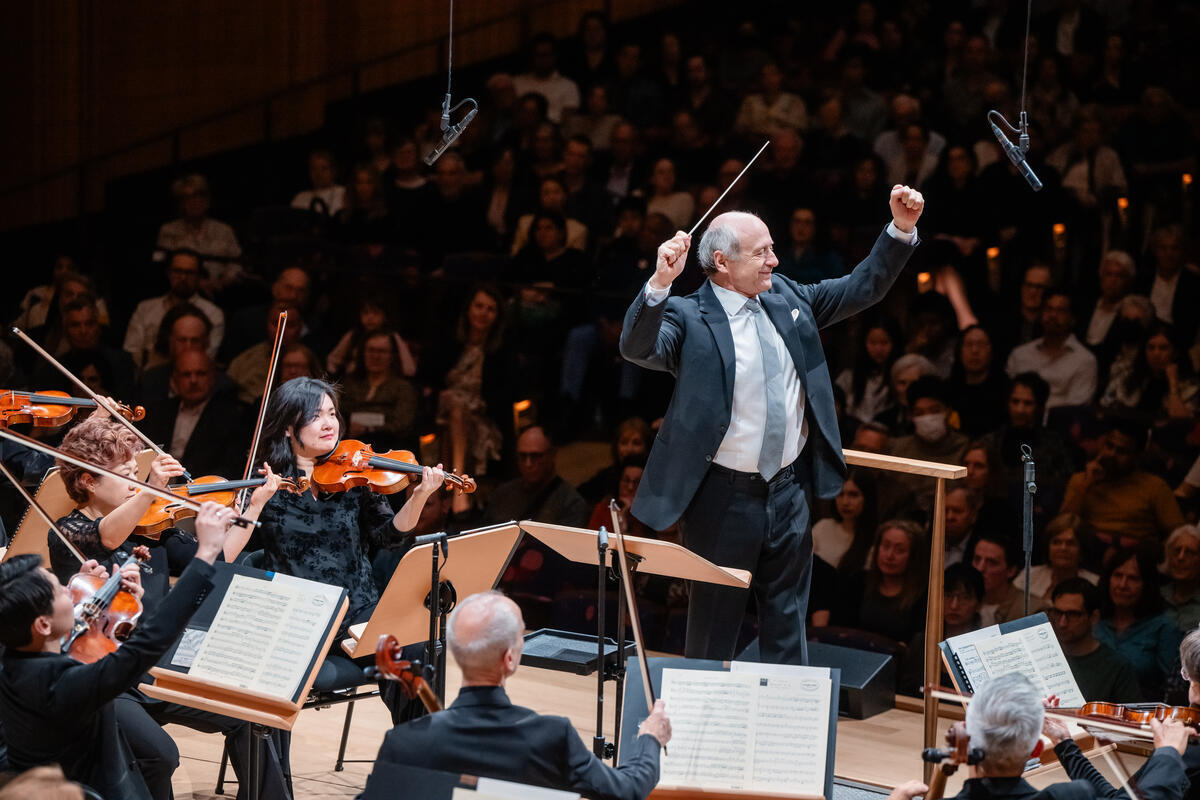
    The guest conductor was Iván Fischer, and he conducted marvelously: at ease in the music while simultaneously seeming to really have fun. Maestro Fischer appeared to conduct The Magic Flute Overture from memory at the podium, moving through the different sections of the piece with wide arm gestures.

    I had just recently seen The Magic Flute at the Metropolitan Opera the week before, so the piece was still fresh in my memory. Something very interesting was that, when I heard it that night at the Philharmonic, the overture seemed more like a symphonic suite than an overture to a stage play. It seemed more related to Mozart’s Jupiter Symphony somehow in this moment, rather than the opening to Così fan tutte. The music was played perfectly, with every dynamic crystal clear in execution. Maybe it was the perfection of how the piece was played that made it seem more symphonic and less like a piece written for the stage, where inevitably something new happens every night.
    Week32-BrandonPatoc_0013

    I particularly liked the restraint that Maestro Fischer (above, photo by Brandon Patoc) showed in the moments of the overture where silence mattered more than sound, such as the callback to the brass opening punctuated with long rests. The rests seemed longer than usual, but the impact was memorable because of it.

    The audience gave a very warm and deserved applause, after which the orchestra reduced in size to prepare for the violin concerto.

    Lisa b

    The soloist, Lisa Batiashvili (above), came out in a very memorable bright yellow dress with a baby blue sash around her waist. Normally, I don’t notice what soloists wear in performances, but this outfit seemed too intentional, almost as if it were making a statement. I thought that the color scheme seemed coincidentally similar to the Ukrainian flag until I saw a giant brooch of the U.S. Stars and Stripes cinching the sash onto her. So whatever the intent was, I’m sure it meant something to those more sartorially inclined.

    Batiashvili played the Mozart with clear familiarity with the style and music. Normally, I feel soloists tend to lean into the fiery, show-stopping nature of concertos, but Batiashvili tended toward austerity and restraint in her playing for the first two movements. The piece was played in a way that seemed courtly: certainly pleasant, but not too forward to draw attention to itself. Things changed when Batiashvili reached the cadenza of the first movement. The cadenza started out seeming to be in a Mozartian style, then veered into the chromatic and atonal. It wasn’t bad by any means, and certainly showcased Batiashvili’s virtuosity. It was just surprising to hear something so very non-classical in such a quintessentially classical piece. I read the program afterwards and saw that the cadenza was composed by a 15-year-old Georgian composer named Tsotne Zedginidze, which made quite a lot of sense in hindsight.

    I quite enjoyed the unconventional cadenza because it made me look forward to hearing the other cadenzas, which were also newly composed, one of them by the soloist herself. The other cadenzas were more traditional in nature though, which maybe was a good pairing with the one anachronistic one.

    The third movement was where Batiashvili took off and seemed to have the typical soloist verve. I had never heard the finale of this concerto before, and I loved the effects that gave the whole piece the moniker of “Turkish.” The sections where Batiashvili played the more exotic melody and the strings played col legno seemed like a vision into the future of where classical music would head with early Romanticism. The sections sounded more like Mendelssohn in one of his symphonic overtures rather than Mozart, and I was thrilled to hear it.

    After the concerto, Batiashvili gave several curtain calls, and it seemed like there was going to be an encore, but in the end, one didn’t come.

    Before the concert began, I overheard some audience members chatting and wondering why the screen normally used for super-titles for lyrics was open. Another audience member joked that it was just so they could make sure to tell people to silence their cell phones before the show.

    During intermission, the size of the orchestra ballooned, and it was almost impossible to fit more musicians on the stage. Before he started the Bartók piece, Maestro Fischer gave a short introduction. He told the audience that the piece was originally written for a short ballet, and — in an unconventional but amazing idea — had the original stage directions for the ballet projected onto the aforementioned screen while The Wooden Prince was being played.

    This piece was another first for me, and it was truly a masterpiece. The piece starts with a humming sound that almost feels like what you’d expect from a movie showing deep space.

    The story of The Wooden Prince follows a prince who falls in love with a princess, who is guarded by a fairy. The prince is blocked from being able to see the princess by the fairy, who enchants the forest in which they are to physically prevent the prince from reaching her.

    The stage directions were such a wonderful idea because they showed where Bartók’s mind went when he was creating the music for each physical gesture. At first, I thought there were going to be instruments tied to each of the characters, but in the end, the entire orchestra was involved in every scene to provide complete sonic storytelling.

    I found myself thinking about how The Wooden Prince compared with some of the other great ballets, like Tchaikovsky’s Swan Lake and Stravinsky’s Rite of Spring. The conclusion I came to was that The Wooden Prince was uniquely its own masterpiece.

    ~ Mark Anthony Martinez II

    (Performance photos by Brandon Patoc, courtesy of the NY Philharmonic)

  • The Composers are Present at the New York Philharmonic

    Geffen-Hall-1

    ~ Author: Lane Raffaldini Rubin

    Saturday March 29th, 2025 – Not one but two composers were present at David Geffen Hall tonight to receive enthusiastic ovations for their music performed by Leonard Slatkin and the New York Philharmonic. It was, in a sense, a family affair. The composer John Corigliano has been a friend of Slatkin’s and the Philharmonic for half a century, while the other composer, Cindy McTee, is Slatkin’s wife. While the third composer of the evening—Dmitri Shostakovich—was not on hand, this evening’s concert was a testament to the vitality of music of the present era.

    Cindy McTee’s 2010 piece Double Play is a two-movement fantasia on Charles Ives’s 1908 composition The Unanswered Question. More than just an exercise in Ivesian orchestral writing, the piece is a sonic lava lamp of shifting ambiguities and cinematic episodes. A low drone in the double basses unifies the fragmentary material in the woodwinds while hushed string chords oscillate between gorgeous dissonance and consonance.

    The second movement, entitled “Tempus Fugit”, begins with the ingenious tick-tocking of an ensemble of mallets, sounding like a cupboardful of disagreeing clocks and metronomes. The Ivesian writing of the first movement returns under this misaligned timekeeping, establishing an fascinating non-relationship between the disparate concepts of the two movements.

    This juxtaposition is muddied in the second movement by the inclusion of passages of chase-scene-style music and Gershwin-like big-band flourishes (although played brilliantly crisply by the Philharmonic brass). McTee’s piece was intricately orchestrated and finely crafted but went on a bit longer than it needed to and wouldn’t have suffered from cuts in the second movement.

    A1A06759

    Above: Cindy McTee and Leonard Slatkin take a bow; photo by Chris Lee. 

    For John Corigliano’s 2020 piece Triathlon the soloist Timothy McAllister brought three saxophones to the stage. In writing the piece, Corigliano asked himself “what would happen if I wrote a concerto for saxophonist and orchestra, not saxophone and orchestra.” McAllister, the preeminent classical saxophonist for whom the concerto was written, is, after all, a skilled player of the soprano, alto, and baritone saxophones. Corigliano exploits the unique qualities of all three in Triathlon.

    The first movement, “Leaps” for soprano saxophone, bursts right out of the gate with slinking high and low figures, bustling orchestral sounds, and swaggering bravura material for the soloist. McAllister’s playing is assured and confident while maintaining a chamber music sensibility, which suits well the elaborate dialogues that Corigliano writes between the soloist and various voices in the woodwinds and brass. One notable section of this movement appears to quote Ravel’s children’s opera L’enfant et les sortilèges with ravishingly mysterious textures in the woodwinds, providing a fluttering backdrop for lyrical solos in the soprano saxophone.

    The second movement, entitled “Lines”, hews close to its name by eschewing rhythmic figuration in favor of “linear” melodic material. This movement for alto saxophone occupies a hybrid sound-world somewhere between the hazy atmosphere of Coltrane and the broad horizons of Copland’s A Lincoln Portrait.

    Things get wilder in the third movement, which begins with a baritone saxophone cadenza of key clicks, slap tonguing, and other extended techniques up and down the range of the instrument. “Licks”, the title of this movement, has multiple meanings as the soloist seems to riff and improvise and produce very physical sounds from the tongue itself. The entire movement is a rollicking pseudo-improvisatory accompanied recitative. In a fun plot twist at the very end of the piece, McAllister picks up the soprano sax for one last picaresque lick.

    A1A07046

    Above: Timothy McAllster and Maestro Slatkin playing the Corigliano; photo by Chris Lee

    In the second half of the program, Slatkin led the Philharmonic in Shostakovich’s Symphony No. 5 of 1937. It’s a piece that is, as Slatkin writes, “a bit more familiar for both musicians and audience”. Indeed, it was an admirable if conventional performance, with thrilling—booming—climaxes, flawless details across the woodwinds, and propulsive treatment of dramatic transitions.

    A1A08985

    Throughout the concert, Slatkin (above, photo by Chris Lee) frequently put down his baton to conduct with his hands, only to pick the baton back up within the same movement. Slatkin holds the baton from the end of its long handle, rather than gripping it, which means that he relies on his left hand to communicate finer-grain detail to the players. His conducting was at its best when he put down the baton (as in the first movement of McTee’s piece and the sublime Largo of Shostakovich), allowing him to be expressively geometric—an impressively effective semaphore for the musicians. During the Shostakovich Largo, which he conducted from memory, I wondered where his baton had gone, since there was no music stand on the podium for him to rest it on. When the movement was over, he reached behind the folder on the first desk of the violas to retrieve his baton from where he had stashed it. Meant to be invisible, it was just one of the many clever details that added up to this superbly crafted concert.

    ~ Lane Raffaldini Rubin 

    Performance photos by Chris Lee, courtesy of the New York Philharmonic

  • Ben Weaver @ The “New” Geffen Hall

    Geffen hall

    ~ Author: Ben Weaver

    Saturday November 19th, 2022 – It is wonderful to be back at David Geffen Hall to hear the New York Philharmonic. I love the new space, which is far more attractive than the previous relic of 1960s hideousness. Bringing the stage forward to make room for seating  behind the orchestra – something practically every European concert hall has been doing for decades – shrinks the auditorium and creates an intimate space. I thought I’d be distracted by the people behind the orchestra, but the design of the stage – with its horizontal lines and wood trims – creates a nice frame for the eye to focus, so my gaze was always on the players, rarely above them. (Except when someone turned on their phone flashlight to find something they dropped…that’s when one wishes one had a cannon to shoot the audience member right into the sun.) But otherwise, the hall is gorgeous.

    And the sound is spectacular. For decades NY Philharmonic audiences had to listen to music land with a thud and the glorious sound of this orchestra never bloomed. No more. This was the reason these renovations were essential and long overdue. We can finally hear this great orchestra in all its sonic glory! Tonight’s concert gave us a wide range of musical styles to appreciate the varied nuances of the new acoustic.

    The announced program for this concert was supposed to begin with Jean Sibelius’ glorious tone poem Oceanides. Alas, it was replaced with an Igor Stravinsky piece I’ve always found to be rather a waste of time: Symphonies of Wind Instruments. Composed in 1920 and revised in 1945-47, it is a shapeless, senseless series of tedious honking. Occasionally echoes of Le Sacre du printemps do not save it. Its premiere was not a success (“hisses and laughter”) and with good reason. Fortunately it only lasts 10 minutes. One can’t fault the wonderful Philharmonic wind section here because they played wonderfully and it is good to hear them play in isolation. I wish more music was programmed generally to showcase specific sections of the orchestra.

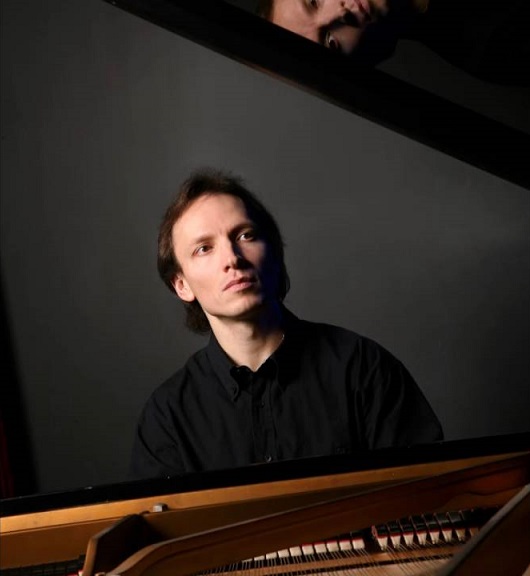
    Béla Bartók’s Concerto for Two Pianos, Percussion, and Orchestra, composed in 1937 as a sonata for two pianos and transformed into its current concerto form in 1940, is a virtuosic tour-de-force. One can easily see that the work was conceived as a sonata for two pianos because the orchestral contribution is rather spare throughout. The two pianists dominate, but the percussionists get a fair workout as well. The caustic, rhythmic Bartók is on full display here, the pianists and percussionists taking turns trading blows. The first and second movements are particularly aggressive, though the second movement in a more creepy way. The strings are struck with bows, adding to the percussive nature of the piece. Pianists Daniil Trifonov and his former teacher Sergei Babayan were spectacular. Playing – and occasionally swaying – in perfect sync, their ability to bring beauty and lyricism into Bartók’s most caustic music was magical. The three Philharmonic percussionists – Christopher Lamb, Daniel Druckman  and Markus Rhoten – were in perfect sync with the two star pianists. The lighter and almost humorous final movement was a lively conclusion to this difficult work. Conductor Hannu Lintu coordinated everyone spectacularly.

    Hannu lintu

    Finland – home of Maestro Lintu (above) – dominated the second half of the program. Kaija Saariaho’s Ciel d’hiver – lifted from her larger 2003 composition Orion – was a gorgeous sensory experience. Saariaho has a highly unique sound palette, her ability to create otherworldly sounds are extraordinary. There’s a timelessness and weightlessness to her music; it’s as if it has always been there, like primordial space – it is all around us. The transparency of the sound can now be appreciated in the new acoustics.

    Jean Sibelius’ Symphony No. 7 – composed in 1924 – finally allowed us to hear the Philharmonic in its combined glory, and to appreciate the acoustics of the new Hall. If Saariajo’s music is like a frozen lake, Sibelius is a surging river and ocean of sound. His ability to make you feel the cold wind of a Finnish winter has always been a distinct feature of his extraordinary music. A relatively brief single-movement work, the Seventh realized Sibelius’ desire to pare down his music to the barest essentials. (Sadly he seems to have pared himself down to nothing just two years later. Only two major works followed the Seventh, and then Sibelius stopped composing – though he lived another 30 years!)

    The symphony is made of 11 interconnected sections, some highly lyrical (recalling the more Romantic Sibelius of yore), and some far more abstract. The symphony’s final note, held by the strings, raising in volume and intensity – by turns sinister and unfinished – always reminds me of the harrowing Interlude in Berg’s Wozzeck, after Wozzeck has murdered Marie. A sustained note full of terror and hysteria. How can a single note contain so much emotion? And yet it can. Here Sibelius, like Berg before – although more subtle than Berg – shows us how.

    Hannu Lintu has this music in his bones and brought out the most extraordinary performance from the Philharmonic. The climaxes were shattering, and because of the clear acoustic in the new Hall, they were shattering in volume and clarity, as well as emotion. The music simply glowed.

    ~ Ben Weaver

  • Philharmonic Ensembes~Ewazen/Stravinsky/Dvořák

    Ewazen

    Above: composer Eric Ewazen

    Author: Oberon

    Sunday March 27th, 2022 matinee – I always enjoy the Philharmonic Ensembles series at Merkin Hall, and I was very glad to be there this afternoon for an excellent program. The players of the New York Philharmonic love playing chamber music together when time allows, and this afternoon’s lineup of artists was really impressive.

    Composer Eric Ewazen greeted us prior to the program’s opening work: his Ballade, Pastorale, and Dance for the unusual combination of flute, horn, and piano. The last time I heard an Ewazen score was in 2018, when the composer’s violin concerto was used by the great choreographer Paul Taylor for his last major work: Concertiana. Today, introducing his Ballade, Pastorale and Dance, Mr. Ewazen touched on his Ukrainian heritage, and then the performance began.

    William_wolfram

    For the Ewazen trio, the tall and distinguished pianist William Wolfram (above) was joined by the Philharmonic’s stellar flautist Mindy Kaufman, and the orchestra’s current Acting Associate Principal Horn, the radiant Leelanee Sterrett.

    The opening Ballade begins with a darkish motif from the piano, soon joined by the mellow depth of the horn and the gleaming upper range of the flute. The blend of these three voices was really delectable, making me wish other composers would write for this particular combination. From a long flute trill and spiraling piano figurations, the music turns animated, and then calms for a really gorgeous andante. Then another burst of vigor, and another contrasting slower passage before a brisk final statement.

    Rippling sounds from Mr. Wolfram keyboard introduced a lovely Pastorale theme from Ms. Sterrett’s horn, which is then harmonized by Ms. Kaufman’s flute. Here, the contrast between burnished richness of the horn with the silvery sweetness of the flute truly delighted the ear. Lovely phrases follow, one after another, and then Ms. Sterrett’s horn sings a lyrical theme over the warbling flute and the piano’s arpeggios. A feeling of hope seems to rise within us as the Ballade reaches its solemn end.

    With sparkling sounds from Ms. Kaufman’s flute, and with Mr. Wolfram’s piano sounding in the upper octaves, we are ready to Dance. Ms. Sterrett’s summoning horn draws us in to this lively and tuneful music, which gets quite grand as the work comes to its close.  Such a unique treat this music is! Other choreographers might do well to follow Paul Taylor’s lead and have a listen to Mr. Ewazen’s music.

    More music I’d never heard before – Igor Stravinsky’s Octet for Winds – came next. For this, a brilliant ensemble drawn from the ranks of the Philharmonic’s wind sections were gathered: Robert Langevin, flute; Pascual Martínez Forteza, clarinet; bassoonists Judith LeClair and Kim Laskowski; trumpeters Christopher Martin and Thomas Smith, with Colin Williams on trombone and George Curran on bass-trombone. Mr. Langevin, in his introductory remarks, told us a story about a dream Stravinsky had had in which this particular set of instruments were playing together, and he wrote this octet to try to capture what he’d heard in his dream.

    The Octet is in three movements, though there was no discernible break between the second and third. A trumpet note introduces the Sinfonia, followed by a blending of woodwind voices. The full ensemble engage in music that is wittily paced and harmonized. A brassy march springs up, with trumpet calls and chuckling bassoons. The Sinfornia comes to a sudden halt.

    The Theme and Variations, which runs directly into the Finale, starts out with plodding brass and unison woodwinds; they then switch roles. Scurrying bassoons herald a military brass band passing by, and everyone falls in. Suddenly, I hear a waltz, with Mssrs. Langevin and Martínez Forteza taking the lead. Brilliant rhythms briefly take over, then there’s a slow bassoon passage, taken up by the clarinet and the brass. The music becomes chorale-like, before the flute and clarinet have a dialogue. The bassoons, sounding jolly, are joined by the clarinet; shifting rhythms carry us to the Octet‘s finish.     

    The afternoon’s program ended with a magnificent performance of Antonín Dvořák’s beloved Piano Quintet in A-major, Op. 81, one of his most familiar and oft-played works. The musicians here were violinists Kuan Cheng Lu and Su Hyun Park, violist Rebecca Young, and cellist Ru-Pei Yeh, with Mr. Wolfram returning to the piano. Ms. Young introduced the piece, and then took up her viola to regale us in the numerous opportunities Dvořák provides for the instrument. Kuan Cheng Lu played the many magical violin melodies with Olde World sweetness, warmth, and emotion; and the composer has also been generous to the second violinist: Su Hyun Park, playing beautifully this afternoon. And the cello is prominent throughout, with Ru-Pei Yeh providing cordial tone and rhythmic finesse. At the piano, Mr. Wolfram sustained the excellent impression he made in the Ewazen, making me wish to hear him in a solo recital.

    The applause throughout the afternoon was rather subdued; the audience consisted largely of senior citizens (anyone older than me is a senior citizen!) and perhaps they lack the stamina to clap for a long time. I honed my applauding skills during the 20-minute ovations that often ensued during the last Golden Age at the opera, which ended years ago. These days, applause lasting more than five minutes is extremely rare. Well, we live in different times now: everyone’s constantly in a rush – to get to the theatre, and then to get home. As my commadre used to say, “No time for love.” 

    ~ Oberon

  • Chen/Honeck @ The NY Philharmonic

    Schulhoff

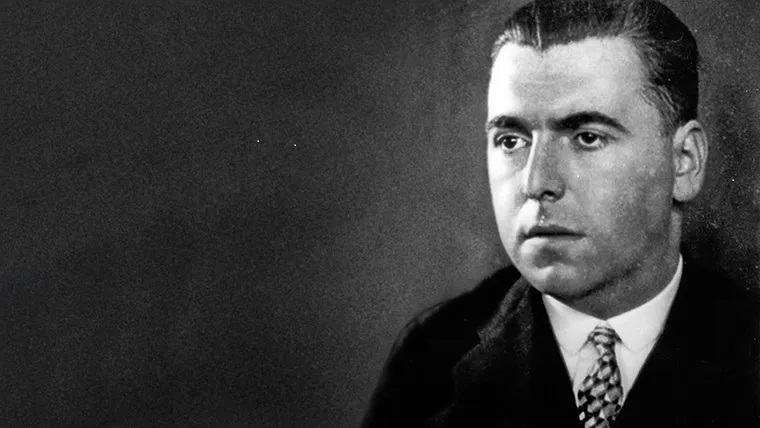
    Above: composer Erwin Schulhoff

    ~ Author: Ben Weaver

    Thursday February 24th, 2022 – Conductor Manfred Honeck returned to the New York Philharmonic with a thrilling concert of old chestnuts and a fresh take on an unfamiliar classic. Maestro Honeck and composer Tomáš Ille have created some marvelous orchestral arrangements of familiar pieces like a suite of Richard Strauss’ Elektra, Dvořák’s Rusalka, among others. In 2021 they premiered what may be their most successful collaboration yet: an orchestral arrangement of Erwin Schulhoff’s Five Pieces for String Quartet, composed in 1923 (and dedicated to Darius Milhaud).

    Shulhoff’s marvelous composition, a collection of dances (including a valse, a tango, and a tarantella), is a lively and inventive piece. Honeck and Ille created a highly imaginative suite, filled with a wide range of colors, with a touch of jazz (a style of music Schulhoff loved). Each movement – featuring a great deal of fun percussive instruments (including a marimba, a vibraphone, woodblock, tambourines, tom-toms, and castanets) – burst at the seams with excitement. A playful Alla Serenata gives way to a blousy Czeca. A soulful and passionate Tango milonga (with a lovely solo played by concertmaster Sheryl Staples) is followed by a head-spinning Tarantella, all played magnificently by the orchestra. Special kudos to the percussion section who juggled their instruments with aplomb.  And more kudos to Honeck and Ille for giving this wonderful pieces new life.

    Schulhoff is not as known as he should be. He was born Ervín Šulhov (Erwin Schulhoff being the Germanized version of the name) in 1894 in Bohemia. When he was 6 years old, Antonín Dvořák told his family to prepare their child for a musical career. Schulhoff was friends with people like Alban Berg. Schulhoff was arrested by the Nazis in 1941 and died in the Wülzberg Concentration Camp in Bavaria on August 18, 1942.

    Ray chen

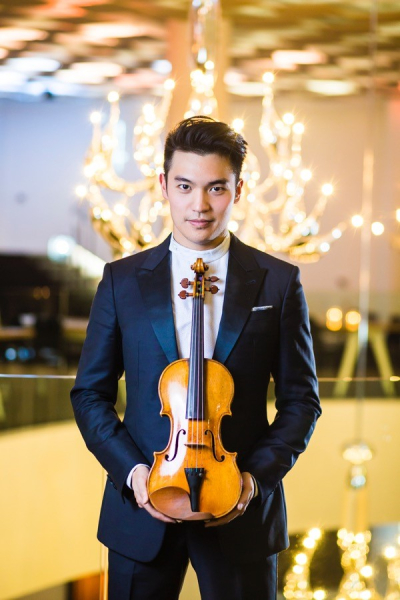
    Above: violinist Ray Chen

    Felix Mendelssohn’s famous E minor Violin Concerto, composed in 1844, is one of the standard violin concertos in the repertoire. Young violinist Ray Chen was making his Philharmonic debut this season and there’s alway ssome risk playing a work as familiar as this because everyone has heard it numerous times and no doubt has some favorites already in mind. Chen was dazzling. His playing is gorgeous and secure, with beautifully honeyed tones from the violin, and a very passionate and committed interpretation. He received wonderful support from Maestro Honeck, who supported the soloist at every turn. The audience greeted Chen enthusiastically. As an encore, he played dazzling variations on Waltzing Matilda, the unofficial anthem of Australia, the country of Chen’s birth. 

    Manfred_Honeck Felix_Broede

    Above: Maestro Manfred Honeck, in a Felix Broede portrait

    Antonín Dvořák’s cheerful Symphony No. 8 (composed in 1889), is one of his most enduring works. I’ve always called it Dvořák’s “Pastoral” symphony. Filled with sunshine and joy, melodies you feel like you’ve known your entire life (including a magical Waltz of the third movement), it came as a big contrast from the dark and stormy Symphony No. 7. Maestro Honeck clearly loves his work (he conducted it without a score), etching every moment and phrase with relish. The orchestra (including another wonderful solo from Sheryl Staples) was on peak form once again. A rousing ovation was well-deserved.

    ~ Ben Weaver

  • Stravinsky’s FIREBIRD @ The NY Philharmonic

    Pintscher_matthias_1819

    Above: composer and conductor Matthias Pintscher

    ~ Author: Brad S. Ross

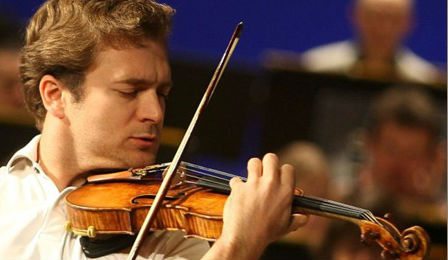
    Thursday February 21st, 2019 – It was an evening of exquisite sounds Thursday night at David Geffen Hall as the guest conductor Matthias Pintscher led the New York Philharmonic in music by two early 20th-century greats sandwiching one of his own, composed almost exactly a century years later.  Pintscher, a German-born composer and conductor now residing in New York City, has quickly built a reputation as one of the finest younger composer–conductors of recent memory to emerge on the world stage.  On this night, he brought with him a much-welcomed performance of his recent violin concerto, featuring the talents of the renowned French violinist Renaud Capuçon.

    The evening began with Maurice Ravel’s “Alborada del gracioso” (“Dawn Song of the Jester”) from his 1905 piano suite Miroirs, which he had transcribed for orchestra in 1918.  Ravel, a master of orchestration above all, peppered this score with myriad and most enjoyable colors, including numerous pizzicato phrases, muted brass, and varied percussive bursts.  Pintscher brought the best out of the Philharmonic, which performed here with precision and grace.  It made for a lively and dynamic opening piece.

    Violinist-Renaud-Capucon-

    Above: Renaud Capuçon

    Next up was Pintscher’s own mar’eh, a concerto for violin and orchestra composed in 2011 on a commission from the Lucerne Festival, Alte Opera Frankfurt, and the London Philharmonic Orchestra, which was here receiving its New York premiere.  Its title comes from a Hebrew word meaning “face sign” or, as the composer’s note indicates, “the aura of a face, a beautiful vision, something wonderful which suddenly appears before you.”  Why he chose to write it in lower case is as mystifying to me as any other inexplicably ungrammatical contemporary music title.

    The piece began quite eerily on a single suspended note played high on Capuçon’s violin, joined only by an ominous rumble in the percussion.  A languid melody soon entered, trading between Capuçon and various brass soloists, as dark colors began to emerge throughout the orchestra.  Following this menacingly silent introduction, a series of tantalizing full-ensemble swells seemed to indicate a change of direction for mar’eh before the work fell back into another series of quietly shifting timbres.  This carried on for some time until the same solitary high note and percussive rumble returned to bookend the concerto.

    Extended technique abounded throughout mar’eh and the players, including Capuçon, were at their absolute finest, but it was nevertheless hard to shake a sense of dissatisfaction when it was all over.  What the piece lacked was a sense of direction—momentum.  Its tempo always leaned toward the adagio, if that, and its dynamics, aside from the occasional fortissimo burst, rarely seemed to escape mezzopiano.  For a duration of roughly 23 minutes, this made for a hard-going listening experience.  The audience was politely receptive to it, however, even if their enthusiasm seemed more directed at its soloist than the composer.

    After intermission was the third and final piece of the night: Igor Stravinsky’s mighty Firebird.  Written in 1910, The Firebird marked the first of the composer’s many fruitful collaborations with the ballet impresario Sergei Diaghilev—a relationship that would also produce the likes of Petrushka and The Rite of Spring.  Premiering only eight days after his 28th birthday, it was also Stravinsky’s breakout piece and one that placed him on the world stage as one of the finest composers of his time and beyond.

    The audience knew it was in for a treat from the moment it began, as those memorable and ominous opening bars in the cello and bass harbingered the danger ahead.  The First Tableau was equal parts beautiful and menacing leading up to its volatile climax (the unforgettable “Infernal Dance of All Koschei’s Subjects”) and the haunting lullaby that follows.  The Second Tableau redeemed this carnage and misery with its exuberant and triumphant finale—one of the grandest in all classical music.

    The experience of hearing these magnificent bars played live by an orchestra as fine as the New York Philharmonic is one I wish every person on Earth could experience for himself.  The ethnomusicologist John Blacking once defined music as “humanly organized sounds…” if this be so, then these are no doubt some of the finest sonorities ever compiled by a single person.

    The crowd was quick to its feat upon conclusion with many shouts of “Bravo!”  This was easily one of the most animated displays of approval I’ve witnessed all season.  Pintscher and company received several curtain calls and every section of the ensemble was given a chance to take their bows.  The adulation was much-deserved for Pintscher and this stupendous orchestra, the gem of New York City.  Bravo, indeed.

    ~ Brad S. Ross

  • Emmanuelle Haïm @ The NY Philharmonic

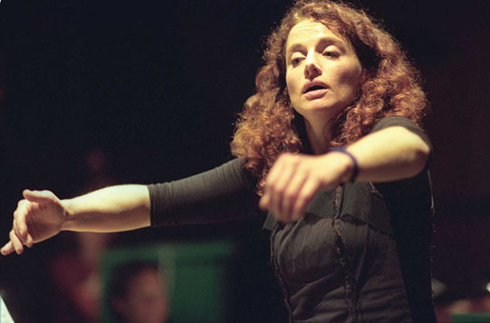
    Haim1hdl17105

    Above: Emmanuelle Haïm

    ~ Author: Oberon

    Wednesday November 21st, 2018 – Music of Handel and Rameau was on this evening’s bill as Baroque specialist Emmanuelle Haïm made her New York Philharmonic debut. Neither composer’s name is really associated with the orchestra (MESSIAH of course being the exception), but their music was most welcome tonight, following in the wake of a pair of less-than-enjoyable ‘contemporary’ works we’d just recently heard at Carnegie Hall.

    From first note to last, the music offered this evening – and the Philharmonic’s playing of it – seemed truly fresh and vital. And Ms. Haïm is so engaging to watch: her deep affection for the music is evident at every turn, and her conducting has an embracing style which drew superb playing from the orchestra. On Thanksgiving eve, we wondered how big of a crowd might turn out, but the house was substantially full. It was the most attentive audience of the classical music season to date – always a good sign.

    It was fun to enter the auditorium this evening and see two harpsichords parked on the Geffen Hall stage, one for Ms. Haïm, the other for Paolo Bordignon. Handel’s Concerto Grosso, Op. 6, No. 1, calls for a relatively small ensemble of musicians, with Sheryl Staples as concertmaster.

    From her first downbeat, Ms. Haïm’s conducting had a choreographic feeling. Swaying with the music, her gestures resonated like balletic port de bras. One could imagine her, gorgeously gowned and bejeweled, leading the dancing at Versailles in another lifetime. What a marvelous presence!

    In the Concerto Grosso, violinists Sheryl Staples and Qian Qian Li along with cellist Carter Brey, form a musical sub-set, playing trio motifs with elegance and verve.  The Allegro movements sparkled, the Adagio soothed and charmed, the exhilarating finale was full of life.

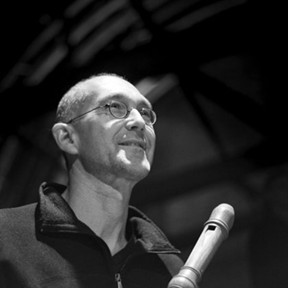
    58216

    Two of Handel’s Water Music suites were performed. In the first, No. 3 in G-minor, the tall and slender Sébastien Marq (above) brought his polished recorder tone and technique to the mix. Switching from alto to soprano after the suite’s first movement, Mssr. Marq piped away to captivating effect. Oboes, bassoon, bass, and theorbo add textures that constantly lure the ear, and a violin solo in the Minuet was graciously played by Ms. Staples. The familiar tunes of the final Gigues made for a happy ending.

    Philharmonic horn players Richard Deane and Allen Spanjer joined the ensemble for the Water Music Suite #1 in F-major; they were seated on the highest riser alongside oboist Sherry Sylar, a second young oboist I didn’t recognize, and bassoonist Kim Laskowski. These five artists made musical magic as the suite sailed forward.

    Ms. Sylar’s plangent playing of a solo in the Adagio was pure beauty, and the two hornsmen reveled in the harmonized coloratura passages of the second Allegro. The woodwind trio blended lovingly in the Andante, and then the noble horns graced the Minuet. In the Air, our string trio from the Concerto Grosso emerged again, to lovely effect, as the horns sustained long notes in support. Horn calls open the Minuet, and then the suite dances on with a Bourrée-Hornpipe-Bourrée combination: swift and light to start, with a woodwind trio intervention, and then a fast finale that tripped the light fantastic.

    Applause filled the hall; Ms. Haïm came out for a bow, but made a bee-line for the upper riser, where she drew the horn players from their chairs, then had Ms. Sylar take a solo bow (to warm shouts of ‘brava!‘), and then had the mystery oboist and Ms. Laskowski rise. What a fine gesture!  

    Selections from Rameau’s opera Dardanus, arranged as a suite by Ms. Haïm, made a splendid effect as the program’s second half. The opera, a classic five-act Tragédie en musique which premiered in 1739, follows Dardanus – the son of Zeus and Electra – in his feud with King Teucer. Their eventual pact of peace is reached as Dardanus marries Teucer’s daughter Iphise, who he’d met through the intervention of the sorcerer Isménor.

    If the plot sounds unlikely, the score is enchanting. An enlarged ensemble tonight brought abounding grace and drama to music which covers an extraordinary range of rhythms and textures. Among the many sonic treats are the sound of a repeatedly dropped chain in the “Entry of the Warriors“, a delicate blend of flutes and triangle in the Air, and the suggestive shaking of the tambourine.

    Ms. Haïm’s Philharmonic debut was a sure success; she passed among the musicians, greeting them individually as the applause rolled on. I hope she will come back to the Philharmonic in the future, bringing more Baroque gems with her. And what might she do with Gluck, Mozart, or Berlioz?

    ~ Oberon

  • Maxim Vengerov @ Carnegie Hall

    Maxim-Vengerov

    Above: violinist Maxim Vengerov

    ~ Author: Oberon

    Tuesday October 30th, 2018 – Three wonderfully contrasted violin sonatas were on offer tonight at Carnegie Hall as the renowned Maxim Vengerov took the stage, joined by the excellent Roustem Saïtkoulov at the Steinway.

    About ten years ago, Mr. Vengerov – as most classical music-lovers know – developed a mysterious arm/shoulder ailment that took nearly four years to diagnose and treat. He returned to the stage in 2012, and I first heard him live in 2015, playing the Tchaikovsky violin concerto with the New York Philharmonic. It was a thrilling performance, and tonight I was very excited to be hearing him again. In the grand and glorious setting of Carnegie Hall tonight, Mssrs. Vengerov and Saïtkoulov made a most congenial collaboration, to the great benefit of the music they’d chosen, and to the great delight of the audience.

    Johannes Brahms’ Violin Sonata No. 3 in D-Minor is in four movements rather than the more usual three. It opens with an achingly romantic lyrical theme, aglow with passionate colours. The Vengerov/Saïtkoulov partnership brought a lot of nuance to the music, with a lovely dynamic palette and finely dovetailed modulations. In a heartfelt piano passage, Mr. Saïtkoulov’s playing moved me. An intoxicating, soulful finish seemed to entrance the audience.
     
    The Adagio commences with a wistful melody, sublimely tailored; the players’ astute attention to dynamics again kept up their intriguing effect. The familiar descending theme of this movement brought a feeling of plushy, Olde World magic, but then a dropped program booklet and a cellphone intrusion ruined the ending.
     
    Rhythmic vitality, and some charming plucking motifs, adorned the Scherzo, which has a somewhat sentimental quality: no mere jesting here.

    Then players immediately launched the concluding Presto agitato, full of great swirls of notes and a rich mix of colours. Syncopations are at work here; the music builds and subsides, and then re-bounds in a rush to the finish. Prolonged applause, but the players did not come out for a bow.

    George Enescu wrote his Violin Sonata No. 2 in F-Minor at the age of seventeen, reportedly in the space of a fortnight. Mssrs. Vengerov and Saïtkoulov play in unison for the sonata’s rather mysterious start. Turbulence is stirred up, but reverts to the unison motif. The piano then shimmers as the violin sings above with rising passion. Vengerov and Saïtkoulov both demonstrated great control of dynamics as the music took on a restless quality. They play in unison again, moving to a quiet finish.
     
    A sad song opens the second movement, marked Tranquillement, pervaded by a strangely lovely feeling of melancholy. Again Mr. Vengerov displays pinpoint control of line in an affecting soft theme that rises to an exquisite sustained note. There’s a darkish quality from the piano as the violin is plucked. Then: a sudden stop. The music resumes – so quietly – with a shivering violin tremolo. The ending is simply gorgeous.
     
    The concluding movement, marked simply Vif (“Lively”), starts off all wit and sparkle; both musicians savor the animation, tossing in wry soft notes from time to time. The music turns briefly grand, then softens, and the liveliness resumes. The players are on the verge of exceeding the speed limit when they suddenly veer into an unexpected ‘romance’. But wit prevails in the end.
     
    Roustem Saïtkoulov  Piano
     
    Above: pianist Roustem Saïtkoulov
     
    Maurice Ravel’s Violin Sonata was premiered in Paris on May 30, 1927, with none other than George Enescu as violin soloist, and Ravel himself at the piano. The opening Allegretto starts quietly, with a piano theme that is taken up by the violin. Mr. Vengerov sweetens his tone here, making the most of the melodic possibilities. The violin trembles over a shadowy piano passage, and then a transportive lyricism builds, with the violin rising and lingering. A heavenly conclusion: sustained violin tone over a shimmering piano.
     
    To open the Blues: Moderato, the violinist plucks in altering soft and emphatic notes. The piano sounds rather glum at first, then starts pulsing persuasively as the violin gets jazzy, bending the phrases enticingly.
     
    From a gentle start, the Perpetuum mobile finale lives up to its name. The piano goes scurrying along, and Mr. Vengerov turns into a speed demon. The music rocks along – Rhapsody in Blue and Fascinatin’ Rhythm are evoked briefly – with the violinist verging on manic whilst Mr. Saïtkoulov’s playing stays light and luminous.
     
    The concluding works on the printed program both felt very much like encores: Heinrich Ernst’s decorative incarnation of The Last Rose of Summer and Nicolo Paganini’s super-elaborate take on the great aria Di tanti palpiti from Rossini’s TANCREDI (arranged by Fritz Kreisler) each had an “everything-but-the-kitchen-sink” feeling. Mr. Vengerov managed the fireworks well, drawing a celebratory audience response. My feeling was that one or the other of these two virtuoso pieces would have sufficed.
     
    As an encore, Fritz Kreisler’s Caprice Viennois was beautifully played. The audience then began streaming out. We were in the lobby when we heard a second encore commencing; but it was too late to double back.
     
    ~ Oberon

  • van Zweden’s Bruckner 8th @ The NY Phil

    JaapVanZweden

    Above: Jaap van Zweden, Musical Director of The New York Philharmonic

    ~ Author: Oberon

    Friday September 28th, 2018 – This evening was our first opportunity to hear Jaap van Zweden lead The New York Philharmonic since he officially took up the position of Musical Director. My friend Ben Weaver and I splurged and bought tickets to this concert because Bruckner is always on our must-hear list. In 2014, I had my first live encounter with the composer’s 8th in this very hall, under Alan Gilbert’s baton. It was a revelation.

    Tonight, Jaap van Zweden offered Conrad Tao’s Everything Must Go as a prelude to the Bruckner 8th. Does this massive symphony need a prelude? No. As with many ‘new’ works we’ve encountered over the past few seasons, Everything Must Go is expertly crafted but it sounds like so much else: by turns spare and noisy, with frequent percussive bangs and pops, this eleven-minute piece (it felt longer) passed by without providing any sense of the composer’s individual voice. Perhaps hearing more of Mr. Tao’s work – music not yoked to an existing masterpiece that employs the same orchestral forces – will lead us to discover who he is.

    Since there was no pause between the Tao and the Bruckner, the audience’s response to Everything Must Go could not be gauged. I wonder if the young composer took a bow at the end; we had headed out as the applause commenced.

    For the first two movements of the Bruckner, I was enthralled. The orchestra sounded truly superb, and Maestro van Zweden held sway with a perfect sense of the music’s architecture. It was a tremendous relief and balm to emerge from the day’s madness (the Kavanaugh hearings) into Bruckner’s vibrant world.

    The Philharmonic musicians offered rich tone and marvelous colours, the brass sounding grand and the violins singing lyrically in their big theme. The music has a Wagnerian sense of the monumental, and a ceaseless melodic flow. Among the solo moments, Sherry Sylar’s oboe stood out. At one point there’s an almost direct quote from Tchaikovsky’s SLEEPING BEAUTY. During a respite/interlude, softer themes mingle before a splendid onslaught from the brass turns grandiose. The movement ends on a murmur.

    The Scherzo has as its main and oft-repeated theme a churning 5-note figure that has worked its way into the soundtrack for GAME OF THRONES. As the movement progresses, the harp makes a lovely effect, as do the entwining voices of solo woodwinds. Textures modify seamlessly, sustaining our pleasure.

    A deep sense of longing suffuses the opening of the Adagio, with its rising passion. Again the harp glimmers magically. The rise and fall of great waves of sound bring passages of almost unbearable beauty; there’s a spectacular build-up to music of searing passion which evaporates into soft halo of solo winds. As the music re-builds, a Tchaikovskian glory permeates. It seems, though, that Bruckner cannot quite decide how to end this epic movement.

    Pulsing, march-like, and majestic, the Finale leads us onward. A big swaying rhythm from the timpani leads into a huge tsunami of sound. The work began to feel like a series of climaxes, though, and traces of brass fatigue started to crop up. The Maestro and the musicians were engulfed by gales of applause and cheers at the end. 

    I’m probably in a minority in feeling that Alan Gilbert’s 2014 rendering of the Bruckner 8th with the Philharmonic reached me on a deeper level, as well as being more exhilarating. “Well, it was faster!”, Ben Weaver would say. À chacun son goût…

    ~ Oberon

  • van Zweden’s Bruckner 8th @ The NY Phil

    JaapVanZweden

    Above: Jaap van Zweden, Musical Director of The New York Philharmonic

    ~ Author: Oberon

    Friday September 28th, 2018 – This evening was our first opportunity to hear Jaap van Zweden lead The New York Philharmonic since he officially took up the position of Musical Director. My friend Ben Weaver and I splurged and bought tickets to this concert because Bruckner is always on our must-hear list. In 2014, I had my first live encounter with the composer’s 8th in this very hall, under Alan Gilbert’s baton. It was a revelation.

    Tonight, Jaap van Zweden offered Conrad Tao’s Everything Must Go as a prelude to the Bruckner 8th. Does this massive symphony need a prelude? No. As with many ‘new’ works we’ve encountered over the past few seasons, Everything Must Go is expertly crafted but it sounds like so much else: by turns spare and noisy, with frequent percussive bangs and pops, this eleven-minute piece (it felt longer) passed by without providing any sense of the composer’s individual voice. Perhaps hearing more of Mr. Tao’s work – music not yoked to an existing masterpiece that employs the same orchestral forces – will lead us to discover who he is.

    Since there was no pause between the Tao and the Bruckner, the audience’s response to Everything Must Go could not be gauged. I wonder if the young composer took a bow at the end; we had headed out as the applause commenced.

    For the first two movements of the Bruckner, I was enthralled. The orchestra sounded truly superb, and Maestro van Zweden held sway with a perfect sense of the music’s architecture. It was a tremendous relief and balm to emerge from the day’s madness (the Kavanaugh hearings) into Bruckner’s vibrant world.

    The Philharmonic musicians offered rich tone and marvelous colours, the brass sounding grand and the violins singing lyrically in their big theme. The music has a Wagnerian sense of the monumental, and a ceaseless melodic flow. Among the solo moments, Sherry Sylar’s oboe stood out. At one point there’s an almost direct quote from Tchaikovsky’s SLEEPING BEAUTY. During a respite/interlude, softer themes mingle before a splendid onslaught from the brass turns grandiose. The movement ends on a murmur.

    The Scherzo has as its main and oft-repeated theme a churning 5-note figure that has worked its way into the soundtrack for GAME OF THRONES. As the movement progresses, the harp makes a lovely effect, as do the entwining voices of solo woodwinds. Textures modify seamlessly, sustaining our pleasure.

    A deep sense of longing suffuses the opening of the Adagio, with its rising passion. Again the harp glimmers magically. The rise and fall of great waves of sound bring passages of almost unbearable beauty; there’s a spectacular build-up to music of searing passion which evaporates into soft halo of solo winds. As the music re-builds, a Tchaikovskian glory permeates. It seems, though, that Bruckner cannot quite decide how to end this epic movement.

    Pulsing, march-like, and majestic, the Finale leads us onward. A big swaying rhythm from the timpani leads into a huge tsunami of sound. The work began to feel like a series of climaxes, though, and traces of brass fatigue started to crop up. The Maestro and the musicians were engulfed by gales of applause and cheers at the end. 

    I’m probably in a minority in feeling that Alan Gilbert’s 2014 rendering of the Bruckner 8th with the Philharmonic reached me on a deeper level, as well as being more exhilarating. “Well, it was faster!”, Ben Weaver would say. À chacun son goût…

    ~ Oberon