Tag: New York Philharmonic

  • Philharmonic Ensembles|Reinecke Rules!

    Reinecke-770x470

    Above: composer Carl Reinecke (1824 – 1910)

    ~ Author: Oberon

    Sunday May 27th, 2018 – The last in this season’s Philharmonic Ensembles series at Merkin Hall. These concerts, in which artists from the New York Philharmonic perform masterpieces, rarities, and contemporary works from the chamber music repertory, are always highly enjoyable. Today’s expertly-devised program introduced me to the delightful music of Carl Reinecke, and works by Vivaldi, Penderecki, and Brahms were also superbly played.

    Harpsichordist Paolo Bordignon introduced the opening work, Vivaldi’s Trio Sonata, Op.1, No. 3, in which he was joined by Duoming Ba (violin), Peter Kenote (viola) and Satoshi Okamoto (bass). Hearing this music on a gloomy day, following a distressing week, was a perfect palliative. In this four-movement work (the third being very brief), both the playing and the communication between the musicians drew us immediately into the elegant and lively world of Vivaldi, far from the madding crowds and disconcerting headlines of daily life.

    I was particularly intrigued by the beautiful instrument Mr. Okamoto was playing with such agility and charm. You can see it, and hear him playing, in this brief film.

    In a striking contrast, we next had Krzysztof Penderecki’s Duo concertante for violin and double bass, which was composed in 2010 on a commission from violinist Anne-Sophie Mutter. It was played this afternoon by Kuan Cheng Lu, violin, and Rion Wentworth, bass. The composer devised the piece as a sort of conversation between the two instruments; Ms. Mutter described it as two voices “evading each other”: while one soloist is developing a musical theme, the other falls nearly silent.

    With their expert timing, and a clear sense of enjoyment in what they were doing, the two musicians gave a performance full of vitality, precision, and wit. Among the words I jotted down along the way: agitation, brooding, mini-scherzo, jazzy bass, plodding, shimmering, almost a march, soft and high, ultra-sustained bass note, pensive violin, a dance, tapping and stamping at the end. The audience were clearly much taken with this piece, and the playing of it: loud, enthusiastic applause followed.

    The afternoon provided an opportunity to make the acquaintance of a composer new to me, Carl Reinecke. How his music has eluded me until now is inexplicable. He was a prolific composer of operas, symphonies, concertos, and chamber music, as well as a highly regarded conductor, pianist, and pedagogue. Franz Liszt hired Reinecke as piano teacher for his daughter, Cosima, who later married Richard Wagner. In 1904, at the age of 80, Reinecke made recordings of seven works playing on a piano roll; thus he was the earliest-born pianist to have his playing preserved in any format.

    Reinecke’s Trio for oboe, horn, and piano was composed in 1886. The Philharmonic’s principal oboist Liang Wang was joined by Howard Wall, horn, with Zhen Chen at the piano for today’s performance of this work, steeped in the Romantic spirit. This is music that’s terrifically appealing. 

    The piece also moved me on a personal level, for my sister played oboe and I the horn back in our youthful years in the little town. The sounds of these two instruments today, played with such tonal richness and impeccable musicality by Mssrs. Wang and Wall today, pleased me deeply.

    The composer’s cordial theme for the opening Allegro moderato must have greatly pleased the composer, for he repeats it over and over. Gorgeously played by Mr. Wang, the melody has an exotic feel. The horn joins and the music expands. A romance-tinged piano solo brings Mr. Zhen into the mix, his playing colourful and alert. A great horn theme, abundantly toneful in Mr. Wall’s ‘singing’ of it, leads to a grand passage. The voices entwine, and after a martial bit, melodies flow on with increased drama. A da capo develops a sense of urgency, which eventually subsides.

    The Scherzo, Molto vivace has charm of its own; it’s witty and bubbly, and gets a five-start rating as scherzi go. The players relished every turn of phrase, with the pianist having a lot to do. This scherzo has a sudden end; you could almost hear the audience smiling.  

    The melodic warmth of the cavatina-like Adagio brought forth a rich horn theme upon which Mr. Wall lavished the kind of tonal plushness that turned a frustrated horn player like me green with envy. And he has such prodigious reserves of breath at his command. When Mr. Wang joined, a fabulous tone-fest filled the hall. More sonic glamour from Mr. Wall in a glorious mix with the piano followed; sumptuous harmonies abounded as the movement came to its conclusion.  

    In the opening passages of the Rondo finale, Mr. Zhen had just the right feeling for what sounds like a forerunner of the piano rag. The music, full of mirth and magic, gave all three players abundant opportunity to shine, singly and as a collective. The audience response was heartfelt, as the music and playing merited. This was one of the great musical treats of the season which is now nearing its end.

    Sustaining the Romantic aura of the Reinecke, the concert concluded with the Piano Trio No. 1 of Johannes Brahms, played by Hannah Choi, violin, Patrick Jee, cello, and Steven Beck, piano. Mr. Jee spoke with great affection of this music, which clearly means so much to him. When the performance ended, he seemed in a highly emotional state – a state reflected in his rich, resonant playing. 

    The work begins pensively. After a brief piano introduction comes the marvelous cello solo theme of which Mr. Jee had spoken. His playing of it reflected what the music means to him: sheer beauty. Ms. Choi and Mr. Back prolonged the atmosphere which the cellist had established, savouring the themes and reveling in the the blendings of their voices. This long first movement, with its achingly lovely melodies and modulations, gave a great deal of pleasure.

    The Scherzo made me think of hunters on the chase; it becomes exuberant before being overtaken by an almost pastoral theme which becomes quite grand before a da capo takes us back to the hunt.

    The Adagio is like a meditative dream from which we don’t want to awaken. Woven in are luminous solo passages for each of the three instruments whilst in blended passages their tonal appeal was most affecting.

    The final Allegro is waltzy and minorish, a perfect opportunity to cease note-taking and just enjoy watching Ms. Choi and Mssrs. Jee and Beck playing their way thru this melodious music. How can we thank such artists? Only by standing and cheering.

    Emerging from the hall, the wind had kicked up – brisk and refreshing. The afterglow of this concert is strong and lasting.

    ~ Oberon
  • Mälkki/Skride @ NY Phil

    ~ Author: Scoresby

    Thursday January 11 2018 – Last night at the New York Philharmonic was an evening that I had been looking forward to for a long time. It was conducted by Susanna Mälkki and featured violinist Baiba Skride. I had never heard Ms. Mälkki conduct the New York Philharmonic before, but had heard her during her days as music director of Ensemble intercontemporain, her debut at the Chicago Symphony a few years ago, and most recently conducting L’Amour de Loin. She is one of those conductors that I don’t necessarily agree with stylistically, but she always has an interesting and unique interpretation that is worth hearing.

    The performance began with Baiba Skride performing the Tchaikovsky Violin Concerto in D major, Op. 35, which while a warhorse is also one of the most difficult concerti in the violin repertoire. Immediately from the orchestral introduction it was clear that Ms. Mälkki had prepared the orchestra well – all of the textures were transparent and grand. Ms. Skride for her part had a warm interpretation but that didn’t indulge in large romantic gestures. Instead, she played the piece as one might play Brahms. Each of the tuttis were more memorable though as I don’t think I’ve heard an orchestral accompaniment as vibrant or full of life for a piece like this. Ms. Mälkki followed Ms. Skride’s lead in taking out extravagant gestures usually found in the concerto. In the second tutti, the orchestra felt light, brisk, with the trumpets sounding grand above the violins. Ms. Mälkki produced an almost frantic tempo in the lead up to the cadenza. Ms. Skride was at her best in the fast skittering parts of the first movement, but seemed to have trouble with some of the technical sections of the piece.

    Capture

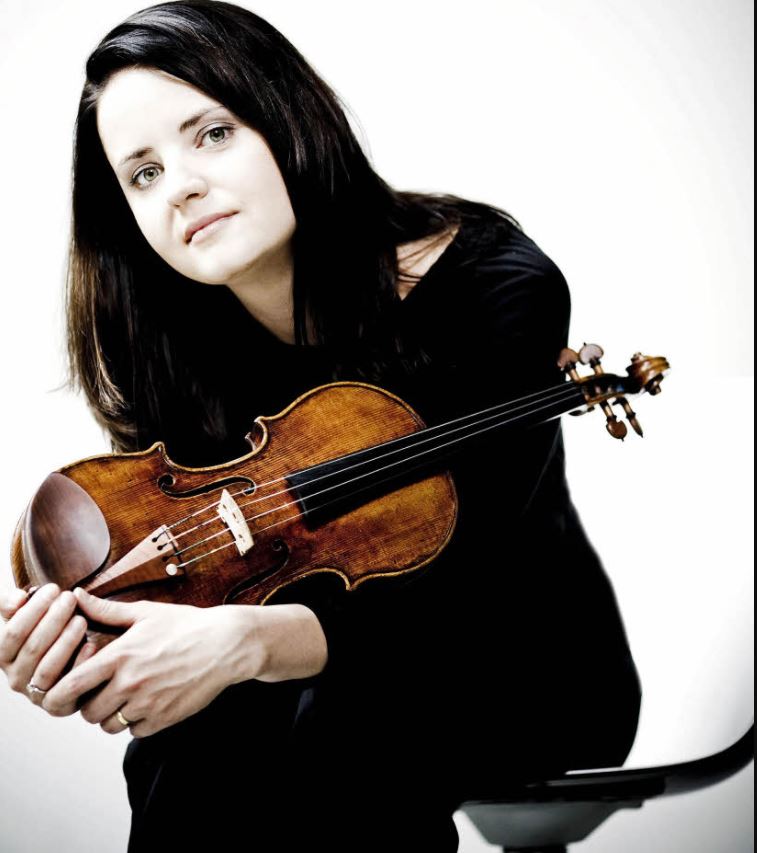
    Above: Violinist Baiba Skride; Photo Credit: Marco Borggreve

    The second movement was the best of the concerto, in part because there was more direct interplay between Ms. Skride and the orchestra. Principal clarinet Anthony McGill’s duet with Ms. Skride was crafted beautifully; each note sounding like velvet. Ms. Skride took the third movement at a blistering pace and seemed more in her element here. She got a folksy, scraggily sound out of the violin that made the music feel more dance like.

    After intermission Ms. Mälkki led the orchestra in the NY Premiere of an older piece of Esa-Pekka Salonen’s called Helix. While not the most exciting work by Salonen, this is an enjoyable overture-style piece that builds in momentum and dynamics until the very end. It begins with low gongs beating with high flutes coming in way above them. This extreme tonal range gives an almost primordial sound that one would hear in Ives. As with all Salonen pieces, this one relies on dance-like motifs mixed with a lot of orchestral coloring – thus it made sense to pair with the Debussy that would come later. Most impressive was that as the pieces gains momentum and becomes denser, Ms. Mälkki managed to create absolute clarity with the orchestra. Every instrument could be heard near the end, evening with banging percussion and wild dancing from all the instruments. Ms. Mälkki’s style of conducting reflects this precision: it is punctilious and clear; every beat is perfectly straight.

    Capture

    Above: Conductor Susanna Mälkki; Photo by: Simon Fowler

    The final piece on the program was Debussy’s La Mer. Ms. Mälkki had an unusual interpretation that I found to be thrilling and dull at the same time. On one hand, particularly in the first and last movements, I have never heard the piece played with so attention to orchestral coloring. The winds and the brasses sparkled, the strings gushed at times, and there were thrashes, yet also beautifully delicate moments. Through all three movements every part of the orchestral was ringing with sound and clear. There wasn’t a note out of place. That said, Ms. Mälkki seemed to eschew all sense of ambiguity and impressionism in her interpretation using the same precision as in the Salonen. This worked well in the second movement which has a lot of counterpoint and fast runs, but it made the mystery of the music disappear in the others. I can imagine that anyone that enjoys a more sensual Debussy would be bored by this interpretation, but it is hard to argue with the interpretation as a whole when the orchestra has that much color. Ms. Mälkki obviously has the respect of the orchestra; the players were playing the best I’ve heard them in the past few years and were giving it their all.  I look forward to hearing Ms. Mälkki’s return.

    ~ Scoresby

  • Augustin Hadelich @ The NY Philharmonic

    0920_augustin-hadelich02

    Above: Augustin Hadelich; photo Jesse Costa/WBUR.

    Author: Scoresby

    Thursday May 25th 2017 – In a flavorful all-Czech program, the young conductor Jakub Hrůša made his New York Philharmonic debut at David Geffen Hall. The violinist Augustin Hadelich was featured on the program, returning to the New York Philharmonic. While I had never heard Mr. Hrůša before, I have been a fan of Mr. Hadelich’s for some time.

    The first piece on the program was the enigmatic Dvorak Violin Concerto in A minor, Op. 53. This is a virtuosic showpiece from early on in Dvorak’s career and has never been a favorite of mine. Mr. Hadelich gave an astoundingly clean, dexterous, and lyrical account once again proving he is a superb interpreter. In the first movement he managed to structure the wandering sections and yet still find time to pause to savor the lyrical sections. The orchestra had a warm sound, but the orchestral writing for this piece is too large for a solo violin. Nonetheless, the musicians blended well with Mr. Hadelich’s tone, creating a very satisfying performance. There was a moment at the end of the first movement in which the horn and violin seemed to fuse timbres creating a beautiful effect evoking a warmer version of a woods call. These sensual movements made the piece much more exciting than I had expected.

    Another was the way the woodwinds played the searing melody during the first movement – it felt like the one could feel the energy from that section of the orchestra. During the virtuosic final movement, Mr. Hadelich managed to playfully entertain with the many Czech dances – the orchestra following his lead well under Mr. Hrůša. Right before launching into the fast pace finish, Mr. Hadelich took one dramatic pause as if to breathe. It was perfectly timed and made the rush to the finish even more alert. As an encore, he gave a technically perfect and surprisingly lyrical account of Paganini’s Caprice No. 1. Mr. Hadelich managed to squeeze all the color that one can out of a showpiece like that.

    2016_09_Herzau_Jakub_Hrusa-9568_72dpi

    Above, conductor Jakub Hrůša photographed by Andreas Herzau

    The evening’s second half started with three of Dvroak’s Slavonic Dances: Op. 46, No. 1; Op. 72, No.2; and Op. 72, No. 7. The first one is a loud colorful fanfare that sounds nationalistic. Mr. Hrůša led a clear account that let the instruments breathe – the crowd burst into applause at the finish of this dance. The second is a much more tragic/lyrical piece which was deftly handled. While indulging for some of the thick textures, Mr. Hrůša made sure to keep the orchestra at bay to build into the third piece in the set – which sounded similar to the opening fanfare. These were crowd-pleasers certainly, but played well and with a sense of purpose.

    After having read about it and listened to it on recording for many years, I finally got the chance to hear Janacek’s Taras Bulba, Rhapsody for Orchestra. This imaginative piece is loosely based on Gogol’s eponymous novella – but Janacek picks three particular scenes to set into music. The first depicts the son of Taras Bulba falling in love with a Polish woman, which eventually ends when Taras executes him for treason. The music itself alternates between sweeping sections depicting the tryst and intense war sounds. In the background of both sections the organ and bells are a constant reminder of his fate.

    Mr. Hrůša drew a colorful and dramatic account, creating extremes in the alternate sections while having enough charisma to push through the piece. The orchestra emphasized the special sound effects well. The ending chord with the organ and bells created an almost vacuum-like effect, throwing the hall into silence. During the second movement, Taras Bulba’s other son is captured by the Polish and is watching them dance as his death draws nearer and nearer. Eventually after meeting Taras Bulba he is executed.

    Here the orchestra sounded much lighter than in the first movement. The harps in the introduction lifted up the entire orchestra, playing both passionately and lyrically. The players managed to produce pulsing dance rhythms well, making the dance seem stuttering and intense. I noticed many similarities between the structure of this movement and Janacek’s second string quartet. He uses the violins in many of the same ways and the opening chords of the quartet appear through the entirety of second movement of the orchestral piece. I also noticed that Janacek manages to create sweeping opera-like sections. Mr. Hrůša managed to get deep anxious playing from the orchestra leading into the final bars. As if to add to the musical drama some audience member shouted a defiant “Nooo!” just as the movement was ending.

    While the last movement depicts Taras Bulba dying, he also sees his own soldiers escaping capture. Thus the music Janacek compose during this movement is mighty and proud. While well played, Mr. Hrůša had the orchestra climax in volume too early, making the other large dynamics less powerful.

    Nonetheless, one of my favorite parts of the piece is when the percussion strikes silencing all of the other instruments. The horns then slowly come in out of sync with each other, creating a call and response echoing effect. The orchestra pulled this off perfectly – building to a dramatic ending with the organ and bells being used to maximum effect. The result was both terrifying and uplifting, transporting the audience to the idealist vision of Janacek’s fantasy.

    ~ Scoresby

  • Brahms|Thorvaldsdottir|Salonen @ NY Phil

    A gilbert foto michael j lutch

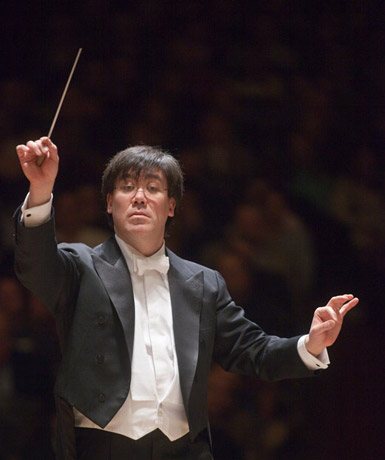
    Above: Alan Gilbert, in a Michael J Lutch photo

    Author: Scoresby

    Tuesday May 23rd 2017 – Now in the final weeks of his tenure as music director, Alan Gilbert led the New York Philharmonic at David Geffen Hall in the last of four concerts of a diverse program. Guest soloists included the respected violinist Leonidas Kavakos, soprano Anu Komsi, and soprano Piia Komsi (both sopranos in their NY Philharmonic Subscription debuts). It also happened to be a night devoted to the retiring members of the NY Philharmonic and such there was a ceremony right after intermission.

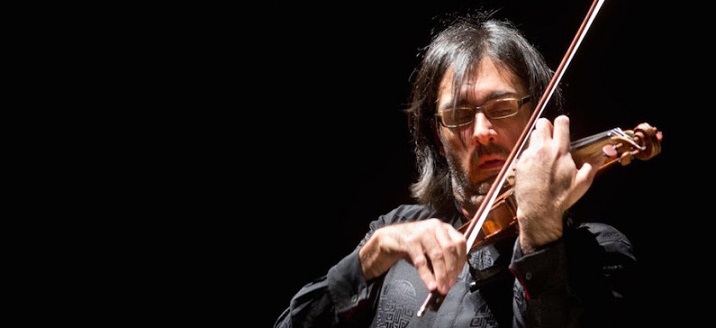
    Leonidas-kavakos

    The program started out with the classic Brahms’s Concerto in D major for Violin and Orchestra, Op. 77. I have heard Mr. Kavakos (above)  a few times before and have always enjoyed his performances. This Brahms was taken at a slow pace in the first movement. Mr. Kavakos seemed to use a style of playing with very light bow pressure and many staccato notes, which emphasized the more modernist elements of the work (particularly in the cadenza). While most players make this into a flashy piece, both the orchestra and Mr. Kavakos seemed to be tempered, bordering on torpid. They did bring transparency and structure, emphasizing each phrase.

    Opening with a sensual organ-like chorale, the second movement seemed more effective at this tempo. It allowed the orchestra to breathe through some of the more beautiful tutti sections and Mr. Kavakos time to care for each line. The finale was Mr. Kavakos at his best, finally managing to fully synchronize with the orchestra and lunging through difficult technical demands.

    After the intermission was the annual New York Philharmonic ceremony honoring both the retiring and retired musicians. This is a time-honored tradition in which retiring musicians give a speech – it is also a nice time for former musicians to come back to the orchestra.

    Dawn_hannay

    As the violist and Chairperson of the Musician’s Orchestra Committee Dawn Hannay (above) pointed out in her memorable speech, the musicians and history of an organization are vital in creating a particular sound. “Without the musicians, the conductor is just waiving their arms around.”

    Photo by Kristinn Ingvarsson

    Above: Anna Thorvaldsdottir; photo by Kristinn Ingvarsson

    The second piece on the program was the New York premiere of Aeriality by the young Icelandic composer Anna Thorvaldsdottir. While this was my first time hearing any of her work live, I have been relishing two recent discs of her music  for the past few years – one released by Deutsche Grammophon and the other recorded by International Contemporary Ensemble. It was a pleasure to hear this rich music live, which is a completely different experience than listening to an album. As with many of Ms. Thorvaldsdottir’s pieces, the sound is huge and immersive.

    In some ways, one might consider this piece as much an ambient soundscape as it is a structured musical piece. The percussion seems the only thing grounding about the music; it otherwise shifts through a variety of textures and colors – almost like moving through space. It is a evokes strong visuals of a primordial landscape in my mind. The clusters, density, and waves of sound all increase until a climactic moment when the music turns into light, feathery texturing. It really felt like the orchestra arrived somewhere it fell silent. The performers drew a big sound and played well. Mr. Gilbert led a slower account that accentuated the many textures, but also felt a little less structured.

    The program closed with the New York premiere of a work by the esteemed composer and conductor Esa-Pekka Salonen. The piece was an older one from his output entitled Wing on Wing, inspired by the completion of Frank Gehry’s Walt Disney Concert Hall. It includes two sopranos who move to different parts of the hall, percussionists who also play from different parts of the hall, the electronic sounds of a fish, and the voice of Frank Gehry himself.

    The sopranos Anna and Pii Komsi did an excellent job through difficult descending and ascending passages that evoked the sounds of a siren. While the orchestra played rivetingly throughout the work, the electronics sounded a little kitschy. The piece has classic Salonen sound of colorful open sounding chords with interesting textures from a variety of instruments. It evoked both Ligeti’s Atmosphères and Debussy’s Jeux, melded with Salonen’s creative rhythms.

    The moment that grabbed the most was the final purely orchestral section, in which the orchestra bursts into a frenetic dance anchored by the percussion. It was lovely to hear the New York Philharmonic present important contemporary composers and a nice reminder of the importance of the musicians in the orchestra.

    ~ Scoresby

  • Jonathan Biss|NY Philharmonic

    Jonathan_Biss_104_credit_Benjamin_Ealovega
    Above: pianist Jonathan Biss in a Benjamin Ealovega portrait

    Author: Scoresby

    Thursday April 20th, 2017 – The promising young conductor Courtney Lewis shared his New York Philharmonic subscription debut (he was the Assistant Conductor there from 2014 – 2016) with the pianist Jonathan Biss. The program was split between two orchestral works bookending two piano concerti. While individually the pieces were interesting, it was a little unclear how the program fit together. It was my first time hearing Mr. Lewis live and my first time hearing Mr. Biss in an orchestral performance – though I have enjoyed his solo performances in the past.

    The first selection on the program was Part Two Scene One of Berlioz’s Roméo et Juliette, Dramatic Symphony after Shakespeare’s Tragedy, Op. 17. The scene is broken down into a tone poem of sorts with the subtitles: Romeo Alone, Sadness, Distant Sounds of a Concert and a Ball, and Great Festivities in the Capulet’s Palace. While a Berlioz fan, I had never heard this particular work before. After last night’s performance I immediately went home and listened to the full piece online – it is some of Berlioz’s most original composing.

    1MlJi1ft

    Mr. Lewis (above) and the orchestra had superb dynamic control, starting from just a hush in the beginning that evoked a person meandering through a forest with the lighting shimmering and shifting under different trees. The music itself reminded me so much of the creeping chromaticism and lush sounds in Tristan and Isolde that I kept expecting to hear the famous Tristan Chord. Berlioz doesn’t go that far though, and instead the piece opens up into a great party scene.

    Mr. Lewis led this change in atmosphere marvelously – shifting from a tragic meditative walk into a brash, almost militaristic ball. This wasn’t light dance music in Mr. Lewis’s interpretation; instead, there were crashes and thumps with the percussion implying the coming tragedy. It was satisfying to see that the players seem to have genuine affection for him and it felt like they wanted him to succeed.

    Next on the program was the young composer Timo Andres’s The Blind Banister: Concerto for Piano and Chamber Orchestra with Jonathan Biss performing the piano part. The piece was composed as a companion piece to Beethoven Piano Concerto No. 2 in B-flat major, Op. 19 (on the program later), though as Mr. Andres admits in his notes there are few similarities other than a motif he takes from the cadenza of the Beethoven. Mr. Andres’s piece centers on downward/upward scalar motion and suspended seconds. It is tonal and has layers upon layers of atmosphere, with the piano a fabric holding it together. Mr. Lewis did a good job of highlighting different timbres in the score, while Mr. Biss gave the piece a dedicated performance. The woodblocks in the second movement were particularly fun to hear.

    The second half started with the underappreciated gem of the Beethoven Piano Concerti: No. 2 in B-flat major, Op. 19. I have always had affinity for this piece, being dainty and expressive at the same time. Mr. Biss was at his best in the first and last movements, playing with a touch as light as a feather. It was impressive hearing how he could change the color of a particular phrase with his changes in articulation, ranging from buttery legatos to harpsichord-like plucking.

    In the Adagio the orchestra shined – I thought the brass section sounded lovely with a warm sound. Mr. Biss played the dynamics of the adagio well, but didn’t have the same ease and gloss as he did in the first movement. The Rondo was played brusquely and with finesse; all of the structures were very tight. Mr. Biss did a good job of keeping the tune playful, making it sound like something someone could whistle. The orchestra gave an equally nimble performance.

    The final piece on this eclectic program was Elgar’s In the South (Alassio), Op. 50.  I’ve never had an affinity for Elgar before, but this unknown piece to me reminded me a lot of Strauss mixed with Italian folk tunes. Mr. Lewis played through the large swells of romanticism well. The quietest sections were the most memorable, with a charming duet between the harps and Associate Principal Viola Rebecca Young being a highlight of the evening. During the denser moments of the piece, some of the middle range instruments sounded muddy, but this is was due more to Elgar’s writing than Mr. Lewis’s conducting. Overall Mr. Lewis proved more than capable and demonstrated he is a flexible conductor well on his way to a major career. Mr. Biss lived up to his reputation as a fine Beethoven interpreter and a subtle artist. 

    ~ Scoresby

  • Barnatan|Honeck @ The NY Philharmonic

    Barnatan_16-500x500

    Thursday February 16th, 2017 –  Beethoven’s 1st piano concerto, with soloist Inon Barnatan (above), and Mahler’s 1st symphony were paired in tonight’s New York Philharmonic performance under the baton of Manfred Honeck.

    Beethoven’s 1st piano concerto was used by choreographer Helgi Tomasson in 2000 for his gorgeous ballet PRISM, originally danced by Maria (‘Legs’) Kowroski and Charles Askegard at New York City Ballet: that’s how I fell in love with this particular concerto. Throughout the third movement tonight, I was recalling Benjamin Millepied’s virtuoso performance of Tomasson’s demanding choreography.

    Israeli pianist Inon Barnatan, currently the first Artist-in-Association of the New York Philharmonic, has thrilled me in the past with his playing both with the Philharmonic and in frequent appearances with Chamber Music Society of Lincoln Center. And I don’t use the word ‘thrilled’ lightly. 

    Mr. Barnatan’s playing of the Beethoven this evening was remarkable as much for its subtlety as for its brio. Maintaining a sense of elegance even in the most whirlwind passages, the pianist had ideal support from Maestro Honeck and the artists of the Philharmonic. The cascading fiorature which sound soon after the soloist’s entrance were crystal-clear; with Mr. Barnatan relishing some delicious nuances of phrase along the way, we reached the elaborate cadenza where the pianist demonstrated peerless dexterity, suffusing his technique with a sense of magic.

    From the pianissimo opening of the Largo, Mr. Barnatan’s control and expressiveness created a lovely sense of reverie. He found an ideal colleague in Pascual Martinez Forteza, whose serenely singing clarinet sustained the atmosphere ideally. Maestro Honeck and the orchestra framed the soloist with playing of refined tenderness; the Largo left us with a warm after-glow.  

    The concluding Rondo: Allegro is one of the most purely enjoyable finales in all the piano concerto literature. Good humor abounds, the music is expansive, and a jaunty – almost jazzy – minor key foray adds a dash of the unexpected. Mr. Barnatan was at full-sail here, carrying the audience along on an exuberant ride and winning himself a tumult of applause and cheers. He favored us with a brisk and immaculately-played Beethoven encore, and had to bow yet again before the audience would let him go. 

    Inon Barnatan has, in the past two or three years, become a ‘red-letter’ artist for me – meaning that his appearances here in New York City will always be key dates in my concert-planning. His Gaspard de la Nuit at CMS last season was a true revelation, and tonight’s Beethoven served to re-affirm him as a major force among today’s music-makers. 

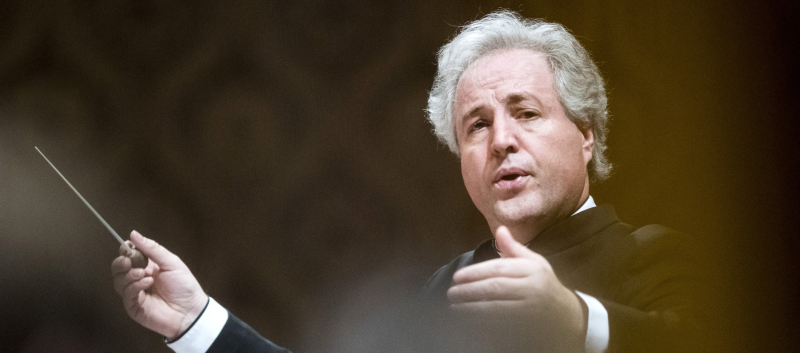
    Manfred-honeck-header

    Maestro Honeck (above) returned to the podium following the interval for the Mahler 1st. In the course of the symphony’s 50-minute span, the Maestro showed himself to be a marvelous Mahler conductor. The huge orchestra played splendidly for him, and the evening ended with yet another resounding ovation.

    From the ultra-soft opening moments of the first symphony, which Mahler described as sounds of nature, not music!”, this evening’s performance drew us in. The offstage trumpet calls seem to issue from a fairy-tale castle deep in a mysterious forest. The Philharmonic’s wind soloists – Robert Langevin, Philip Myers, and Liang Wang among them – seized upon prominent moments: Mr. Wang in fact was a key element in our pure enjoyment of the entire symphony. The pace picks up, and a melody from the composer’s Wayfarer songs shines forth; the music gets quite grand, the horns opulent, the trumpets ringing out, and so on to a triumphant climax.

    The symphony’s second movement, a folkish dance, also finds the horns and trumpets adding to the exuberance. After a false ending, a brief horn transition sends us into a waltzy phase, with winds and strings lilting us along. Then the movement’s initial dance theme returns, accelerates, and rushes to a joyful finish.

    The solemn timpani signals the ‘funeral music’ of the third movement; a doleful round on the tune of “Frère Jacques” ensues, but perhaps this is tongue-in-cheek Mahler. Mr. Wang’s oboe again lures the ear, and a Wayfarer song is heard before a return to the movement’s gloomy opening atmosphere. The unusual intrusion of a brief gypsy-dance motif melts away, and the funeral cortege slowly vanishes into the mist.

    Maestro Honeck took only the briefest of pauses before signaling the dramatic start of the finale. A march, a lyrical theme, a romance that grows passionate: Mahler sends everything our way. After several shifts of mood, it begins to feel like the composer is not quite sure how he wants his symphony to end. Various motifs are heard again, and at last Mahler finds his finish with a celebratory hymn, the horn players rising to blaze forth resoundingly.

  • More Rachmaninoff @ The NY Phil

    Daniil-trifonov-4-rach-logo-w

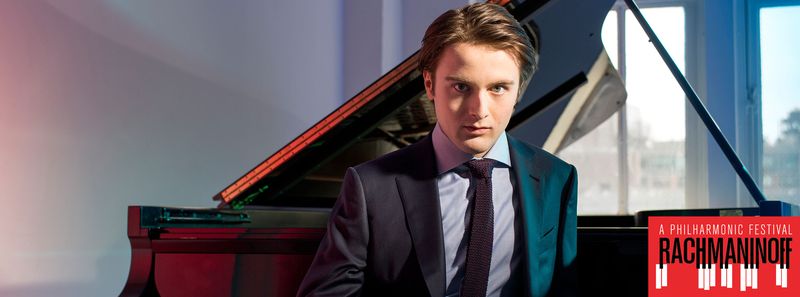
    Saturday November 21st, 2015 – The New York Philharmonic‘s Rachmaninoff Festival continued tonight, bringing together pianist Daniil Trifonov (above) and conductor Neeme Järvi for the composer’s 4th piano concerto. The evening opened with Arkady Leytush’s orchestration of Rachmaninoff’s Russian Song, Op. 11, No. 3 and ended with Maestro Järvi and the orchestra on peak form for the Rachmaninoff 1st symphony. Incredibly, the symphony was having its NY Philharmonic premiere performances in this series of concerts.

    The Russian Song is a deep, soulful song; lasting all of five minutes, it was a beautifully-played prelude for the concerto which followed. The basic theme goes thru moody rhythmic and harmonic shifts, with the sound of chimes and hammered bells giving a liturgical feeling. Just as we are getting immersed in these sounds, the piece is over. 

    Daniil Trifonov scored another hit with the Philharmonic audience in this, his second program in the orchestra’s Rachmaninoff series. The piano concerto No. 4 took Rachmaninoff nearly two years to complete and the result was unusually long as concertos go. At its premiere in 1927 – with the composer at the keyboard and Leopold Stokowski conducting the Philadelphia Orchestra – the critics bashed the piece and the composer set about editing it; it has come down to us in a relatively compact form of 25 minutes duration.

    Mr. Trifonov filled these minutes with luxuriant playing. From its sweeping start thru the pensive opening of the ensuing Largo, the third movement’s vivid cadenza, and on to the uninterrupted and varied demands the composer makes on the pianist in the final Allegro Vivace, Trifonov displayed an ideal blend of lyricism and the virtuosity. Finishing in triumph, the pianist basked in a prolonged standing ovation, and responded to the audience’s cheers with a briskly delicate rendering of the ‘Silver’ Fairy’s variation from SLEEPING BEAUTY. A magical moment.

    N jarvi

    Neeme Järvi (above)

    For all the felicities of Trifonov’s playing, I have to say that the piano concerto #4 didn’t really seize my imagination as a musical experience; but the Symphony No.1 absolutely did.

    This symphony was composed in 1895, and its 1897 premiere, conducted by an allegedly drunk Alexander Glazunov, was nothing less than a disaster and sent Rachmaninoff into a deep depression. The work was withdrawn, the score – in a two-piano draft – languishing in the archives of the Glinka Museum in Moscow. It wasn’t until after the composer’s death that the orchestra parts were found in the archives of the Leningrad Conservatory. The symphony was reconstructed in full and given a ‘second premiere’ in Moscow in 1945, where it was at last accorded a warm welcome. It now recognized as a exemplar of the Rachmaninoff style.

    The only mystery is why it has taken so long for the Philharmonic to present it, for these performances mark the orchestra’s first of this work. It was an unalloyed pleasure to encounter this symphony live, and thanks to Maestro Järvi and the artists of this great orchestra, the performance was truly engrossing.

    A veritable treasure chest of melodic and rhythmic delights, the 1st symphony provides numerous opportunities for the principal players to ‘sing’: Anthony McGill (clarinet), Liang Wang (oboe), and Robert Langevin (flute) all outstandingly clear and true, and tonight’s concertmaster Michelle Kim in a lovely violin solo. A grand passage for massed horns and violins was especially gratifying for me, a one-time horn player.

    I gave up trying to take notes (*) midway thru the symphony: I simply wanted to take it all in and savor the live experience. I’ll search the symphony out on YouTube and delve into it more deeply next week, but I do want to mention the particular inventiveness of the concluding Allegro con fuoco which starts with military drum rolls and eventually develops into a true Rachmaninoff ‘big melody’. Liang Wang’s dulcet oboe sounds yet again, then some wonderful rhythmic patterns develop. Things build, and then – out of the blue – there’s a tremendous, walloping bang on the gong: the sound is allowed to evaporate into thin air as the other musicians sit silently. Then they take up a last melodic passage, building to a big finale.

    My hope is that this symphony will soon be programmed for additional Philharmonic performances…hopefully under Maestro Järvi’s baton.

    * (The main reason I stopped taking notes was the distraction of a cellphone ringing in our immediate vicinity; a minor annoyance during the concerto, it became a full-blown nuisance during the symphony.  The ushers came twice to attempt to isolate the source without disrupting the music, but the irritant continued. For a few moments I lost the thread of my concentration, and then I decided just to surrender to the music for the rest of the evening.)

  • Bychkov-Batiashvili-Capuçon @ The NY Phil

    Bychkov-semyon-batiashvili-lisa-capucon-

    Thursday October 22nd, 2015 – A Brahms-centric program at The New York Philharmonic this evening, with two of the Master’s most beloved works and an impressive contemporary work inspired by his music.

    Detlev Glanert’s Brahms-Fantasie is one of the most appealing pieces of ‘new’ music I have experienced in the current century. So much ‘classical’ music being written today is expertly crafted and impressive in a cerebral way, but little of it reaches the heart or soul. In this 12-minute, overtly Brahmsian homage, Mr. Detlev eschews the current trend for over-reliance on percussion for achieving effects, and he is unafraid of melody.

    After a dynamic opening statement, the music simmers down to a misterioso passage followed by a delicate section of single notes, quietly played. A dolorous theme develops, with a slow buildup to an episode of rhythmic grandeur. Following some rather gnarly phrases, a minor-key dance eventually gives way to a big turmoil of voices before settling back into simmering mystery. Near the end, a brass chorale takes on a gloomy aspect. Glanert shows his skill at creating varying moods, and the Philharmonic players made the most of the melodic opportunities afforded them, with Maestro Bychkov in sure and steady command.

    Next up was the Brahms “Double” concerto. “I have had the amusing idea of writing a concerto for violin and cello …If it is at all successful, it might give us some fun,” wrote Johannes Brahms to Clara Schumann in the summer of 1887.

    The two soloists – particular favorites of mine: violinist Lisa Batiashvili and cellist Gautier Capuçon – were warmly welcomed when they appeared onstage. As these two artists are as attractive to the eye as to the ear, we were in for a thoroughly absorbing experience. Mr. Capuçon’s soulful playing blends ideally with the silken style of Ms. Batiashvili, and as theme after theme was summoned up by these remarkable players – their voices echoing or entwining – the audience was drawn deeply into the music.

    The central andante was especially congenial this evening, with its beautiful opening melody which is played by the soloists and the strings, enhanced by the orchestra’s solo flute, bassoon, and clarinet. In the concluding movement, Batiashvili and Capuçon were at their most alluring as they introduced the familiar mellifluous second theme. The concerto then sailed on to its inspired finale; the audience erupted in hearty applause the moment the final note had sounded, and an enthusiastic ovation called the soloists and Maestro back twice. 

    Following the interval, we had the Brahms 1st symphony. The composer declared that this symphony, from sketches to finishing touches, took 21 years – from 1855 to 1876 – to complete.

    Here we could bask in Maestro Bychkov’s ideal pacing and his obvious affection for the music; he is a conductor who favors depth over theatricality. And so for 40 minutes we were immersed in this symphony with its wealth of themes and its somewhat Beethovian air. The inner movements were particularly impressive today: the wistful Andante sostenuto with its lovely duet for solo violin and horn, and the charming Allegretto. In the finale (and all evening, actually), Philip Myers and the Philharmonic horns produced wonderfully plush, resonant sound. And it is here that Brahms makes his most obvious salute to Beethoven with a majestic theme, first heard in the strings, that evokes the “Ode to Joy” from Beethoven’s 9th.

    Tonight’s Program:

    DETLEV GLANERT: Brahms-Fantasie
    BRAHMS: Concerto for Violin and Cello A minor op. 102 (Double Concerto)
    BRAHMS: Symphony No. 1 in C minor, Op.68

  • Philharmonic Finale: JOAN OF ARC

    Joanpiffard

    Above: Joan of Arc, a late-19th century painting by Harold H. Piffard

    Saturday June 13th, 2015 – Jeanne dArc au bûcher (Joan of Arc at the Stake), an oratorio by Arthur Honegger, was the final offering of the New York Philharmonic’s 2014-2015 season. Leave it to Alan Gilbert to end an exciting season with a big bang: Honegger’s epic work unfolded in a staged version which captured both the gravitas and the insouciant sarcasm of the score.

    Jeanne dArc au bûcher was originally commissioned by Ida Rubinstein, who had enflamed Paris when she appeared with Diaghilev’s Ballets Russes in the title role of Cléopâtre in 1909, and Zobéide in Scheherazade in 1910. Rubinstein premiered Jeanne d’Arc with her own Company at Basel in 1938; she bade farewell to the stage in the same work in 1939.

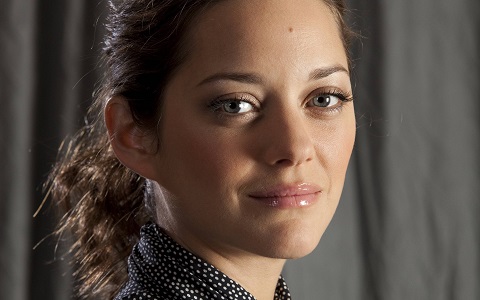
    The New York Philharmonic last performed the oratorio in 1994 with Marthe Keller in the title role. For the current performances, the superb French actress Marion Cotillard has taken on the role of Jeanne which she has previously performed at Orléans and Barcelona, and most recently on a tour of Monaco, Toulouse and Paris in the present production by Côme de Bellescize.

    Arthur Honegger’s setting of Claudel’s text centers on Joan of Arc’s last moments of life at the stake, where she sees the events of her life pass before her eyes before succumbing to a terrifyingly painful death. Her confessor, Brother Dominique, reads to her from the book of her life, starting with her trial and conviction for heresy and witchcraft in 1431 and goes back even further, beyond Charles VII’s coronation, to her awakening to the voices of the saints – Catherine and Margaret – in her country garden as a young maiden. Honegger’s theatrical setting calls for three speaking actors – as Joan, Brother Dominique, and a Narrator, respectively – as well as singing soloists and adult and children’s choruses.

    The often quirky score includes parts for saxophone, piano, and the electronic ondes martenot, and the musical influences range from plain chant and Baroque to folksong and jazz. The Philharmonic musicians were at their customary high level of play, and Maestro Gilbert’s detailed handling of the score made the best possible case for this unusual work.

    A runway wraps around the partially sunken orchestra, with the children’s chorus and various players coming into close range of the audience. Behind the orchestra, the adult chorus on risers loom up on either side of the grim stake, which rests on a small platform where Brother Dominique attempts to ease the horror of Joan’s impending torturous death by reminding her of her past good deeds and the notion of heavenly reward.

    The mood of the piece veers sharpy from piety to farce, with the presiding dignitaries at Joan’s sham trial portrayed as a pig and a donkey. The evening’s most memorable moments came at the end, as deep red light representing the consuming flames filled not only the stage but much of the auditorium. As everything faded to black, every chorister and musicians held up a small faerie light, leaving us with a vision of the eternal stars.

    Marion-Cotillard

    Above: Marion Cotillard; her portrayal of Joan was a tour de force, her wonderful voice encompassing both the irony and the terror of her speeches. From girlish sing-song to her witty responses to her captors thru to the earthy, guttural expressions of her fear of death, and at last her final ecstasy, Cotillard gave a masterful performance, as touching to watch as to hear. 

    Her fellow actors – Eric Génovèse as Brother Dominique and Christian Gonon (as narrator, and in multiple smaller roles ) – were ideally cast both in terms of their voicing of the lines and their characterizations. Among the various supporting roles, two singers stood out: soprano Erin Morley, radiant-toned in the high-lying phrases of the Virgin, and tenor Thomas Blondelle who sang fearlessly and with clear projection in the taxing tessitura of Porcus, the pig-magistrate, and in other smaller roles. Everyone, in fact, sounded well in this sometimes tricky music, and both choruses – the adults and the children – made a very fine effect.

  • Shostakovich Reflected @ Chamber Music Society

    Images of D S

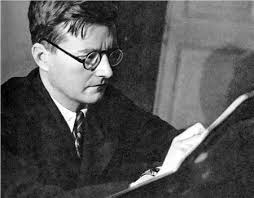
    Above: Dmitry Shostakovich

    Sunday November 23rd, 2014 – We seem currently to be in the midst of an impromptu Shostakovich Festival at the halls of Lincoln Center. Last night, the New York Philharmonic gave an epic performance of the composer’s 8th symphony under the baton of Jaap van Zweden. This afternoon, Chamber Music Society of Lincoln Center offered a very satisfying programme entitled Shostakovich Reflected, with works by Sibelius and Debussy mixed with a Shostakovch song cycle and his Trio #2. At the Metropolitan Opera, the composer’s LADY MACBETH OF MTSENSK is holding forth, conducted by James Conlon (I’ll see it on November 29th). In February, New York City Ballet will jump in with a revival of Christopher Wheeldon’s ballet, MERCURIAL MANOUVRES, set to the Shostakovich piano concerto #1. The Philharmonic meanwhile will offer two more Shostakovich symphones later in their season: the 5th (conducted by Long Yu, from January 22nd-24th, 2015) and the 10th (Alan Gilbert conducting; from April 8th-11th, 2015).

    At Alice Tully Hall today, Chamber Music Society‘s Shostakovich Reflected programme again left me searching for adjectives (superlatives, really) to describe the level of music-making by the participating artists: musicians who are rapidly becoming icons for me much as the great opera singers were back in my early days of opera-going in the 1960s and 1970s.

    The Sibelius Trio in G minor opened the programme today; this brief, single-movement work has a rather dark-hued, wintry feel. The music evokes a sense of longing but also of resignation. It’s unknown why Sibelius never enlarged upon this work beyond the opening movement, though he apparently made sketches, they were never developed. Yura Lee (violin), Mark Holloway (viola), and Jakob Koranyi gave a deeply-felt performance, establishing the mood so convincingly that one wanted it to go on. 

    Soprano Dina Kuznetsova then appeared for Shostakovich’s Seven Romances on Poems of Alexander Blok, with Gilbert Kalish at the Steinway, Yura Lee, and Mr. Koranyi. The soprano’s voice at first seemed overwhelming in the hall, but soon the proper balance was found and she and the musicians worked in a fine state of rapport, the vocal line now well-controlled with some very expressive dynamics. Mr. Kalish played with his customary mixture of finesse and passion, and both Ms. Lee and Mr. Koranyi displayed their intrinsic mastery of their instruments in songs where the accompanying voices take a prominent place. The audience reacted with great enthusiasm to this set, calling the artists back three times. 

    It’s always nice to find links to the ballet on programmes of symphonic or chamber music; this afternoon my friend Monica Wellington and I were especially pleased to hear Claude Debussy’s Six épigraphes antiques for Piano, Four Hands, which we both love in its danced incarnation at New York City Ballet: ANTIQUE EPIGRAPHS, a Jerome Robbins masterpiece with an all-female cast. Gilbert Kalish and Soyean Kate Lee shared keyboard, with much hand-crossing. Their refined playing evoked Nature and the rites and rituals of a long-lost tribe. 

    The concert concluded with a thrilling performance of Shostakovich’s Trio No. 2 in E minor, composed fifty years after the opening Sibelius trio. This work opens with solo cello playing in the highest register; here Mr. Koranyi displayed incredible control. Violin and piano (the two Ms. Lees) join in a fugue; the underlying feeling is one of pensive melancholy, the playing from all three artists nothing less than ravishing. New themes rise up, and the music flows with much interchange of the three voices.

    The brisk and rather jagged scherzo that follows seems alternately joyous and frantic: a lively dancelike theme cascades along, played with marvelous virtuosity by our trio tonight. The piano ripples thru scale passages or emphatic rhythmic motifs; the violin and cello alternately pluck and sing.

    Yura Lee’s poignant introduction of the third movement’s lamenting theme set the tone for this Largo, with its heart of darkness. The voices melded in music which seemed to summon up the despairing tread of a funeral procession, the misty veil shot thru with glimpses of burnished light. 

    The finale sweeps aside this heavy sense of grief, yet proceeds under a threat of returning gloom. The pianist sets the music marching, and there’s more dance-rhythms as well; wit and humor are not forbidden, but are delivered with irony. The song-like theme of the first movement is recalled, setting up a continuum of memory even as the work plunges forward.

    I can’t say enough in praise of the three musicians who wrought this superb performance. And the  audience clearly shared my sense of deep appreciation: at the end, everyone stood up and cheered as the players were summoned back for repeated bows.

    The Program:

    The Artists: