Tag: New York Philharmonic

  • Mozart & Shostakovich @ The NY Phil

    Jaap

    Above: conductor Jaap van Zweden

    Saturday evening November 22nd, 2014 – Venturing out after my off-again-on-again cold caused me to miss some events earlier in the week, I found tonight’s finely-contrasted programme at the New York Philharmonic both soothing (the elegant, melodious Mozart) and grandly stimulating (the epic Shostakovich). It was all played to perfection, under the baton of Jaap van Zweden.

    Mozart wrote his Sinfonia Concertante for violin and viola sometime in 1779; the work is cast in three movements in the traditional fast/slow/fast concerto style, the soloists backed by a neat ensemble of two oboes, two horns, and strings. Although one of the composer’s most popular works, this was my first chance to exprience it live.

    1415-1120b

    Above: Sheryl Staples, Cynthia Phelps

    To play this Mozart masterwork, NY Philharmonic principals Sheryl Staples (violin) and Cynthia Phelps (viola) stepped forward, much to the delight of the orchestra’s many fans. The two women struck up a lovely rapport, trading themes with silken assurance and harmonizing gracefully. Maestro van Zweden propelled the ensemble forces with stately finesse; he did not seem pleased that applause rose up after the first movement (which also happened, more annoyingly, during the Shostakovich). In the quiet radiance of the second movement, the Andante, Ms. Staples intones the opening melody which Ms. Phelps then takes up with an alto resonance. Throughout the work, the two women and the Maestro showed spot-on dynamic control and a mutual sense of phrasing that gave this listener great pleasure.

    The stage setting was then re-configured to accommodate the large forces called upon by Dmitry Shostakovich for his 8th symphony, written in 1943. The composer was ever falling in and out of favor with Communist authorities; his 8th was basically proscribed as having no artistic value. This ban lasted nearly a decade, after which the symphony began to find its way. Along with Shostakovich’s other symphonies, the 8th now stands at the center of the symphonic repertoire.

    Tonight’s large audience at Avery Fisher Hall were clearly enthralled to experience to piece which, in the course of its sprawling hour-long duration, veers from the bleak to the savagely intense to a darkly luminous introspection.

    The half-hour opening movement is a masterful tone poem in itself; embarking on a slow build-up, it leads to fiendish outcries by the horns, massive percussive waves which evaporate only to recoil and strike again, and a marvelous, plaintive cor anglais solo. The second movement, an ironic dance with a piping flute, is followed by a second scherzo-like movement, a militaristc polka with a massive unison theme. The Largo transports us to a shadowed realm; the solo horn emerges, then flute, then clarinet; the winds take on a flutter-vibe, the clarinet returns. In the concluding movement, bassoon, flute, and cellos sing forth in succession; big, brassy waves of calamity strike, then the deep brass voices hum as the bass clarinet brings further riches. Solo violin, cello, and bassoon take turns, returning to a satiny violin passage. The massive forces are now quietened to a shimmer as the cello and double bass gently persuade us that rest, if not peace, may finally come.

    Maestro van Zweden wrought this wondrous music into a sonic mural in which the horrors of war and deprivation, the Devil dancing with Fate, and the human spirit’s will to survive are painted in rich colours. The many solo voices to which Shostakovich gave such expressive opportunities displayed yet again the unfailing grace and musical stature of the Philharmonic artists.

    Jaap van Zweden continues his work with the Philharmonic in the week ahead with a programme that features the Beethoven 7th along with Hilary Hahn playing the Korngold violin concerto. Details here. As we left the Hall tonight with the audience was heaping cheers on the conductor, I of course was thinking how much I’d like to hear him conduct some Wagner.

  • Bartok & Bruckner @ The NY Philharmonic

    Medium_071220_bronfman

    Above: Yefim Bronfman

    Friday October 24th, 2014 – After experiencing Yefim Bronfman’s magnificent renderings of all the Beethoven piano concertos (and the triple concerto!) in a series of New York Philharmonic concerts last season, my friend Dmitry and I were keen to hear the pianist live again. Tonight, Mr. Bronfman’s playing of the Bartok 3rd marked the first of two concerts we’ll be attending this season which feature the pianist, the second being his performance of the Brahms 2nd concerto with the Chicago Symphony under Riccardo Muti at Carnegie Hall on January 31st, 2015.

    Bela Bartok, who had fled Europe for America in 1940 to escape the rise of National Socialism, composed his third piano concerto as a birthday gift for his pianist-wife Ditta Pasztory-Bartok, working on it during the summer of 1945 at Saranac Lake, New York. Already in the final stages of lukemia, the composer returned to New York City where he died on September 26th, 1945, leaving the concerto unfinished. The task of orchestrating the final 17-measures, drawing from Bartók’s notes, eventually fell to the composer’s friend Tibor Serly.

    Tonight’s performance found Mr. Bronfman at his finest, his fleetness of technique to the fore as his hands rippled up and down the keyboard, summoning forth one Bartokian marvel after another. He and Maestro Alan Gilbert formed a very simpatico union over this music, and the orchestra were at their best also: their many colourful eddies of sound swirling around the solo piano line. Mr. Bronfman’s dynamic range, his delightful dexterity, and his wonderfully genial personality combined to make this a truly enjoyable half-hour of music-making. The pianist, basking in enthusiastic applause at the end, bowed graciously to his fellow musicians, celebrating their mutual admiration.

    Following the intermission, a genuinely thrilling experience for me: hearing the Bruckner 8th live for the first time. Everyone who follows my blog knows that, after decades of devoting myself to opera and dance, I’m now exploring the symphonic and chamber repertories; works that are thrice-familiar to most  classical music lovers are new discoveries for me. Of course, having worked at Tower Records for almost a decade before they closed up shop, I did hear a lot of symphonic music day in and day out, some of it subconsciously absorbed; but there was no opportunity to stop and savor anything. So despite the familiarity of many thematic passages in the Bruckner tonight, it was all fresh and fantastic to me.

    At a time when performances of Wagner’s music here in New York seem increasingly rare (The Met has only MEISTERSINGER to offer us this season, following on their ‘No Wagner’ season of 2013-2014) tonight’s Bruckner, with its Wagnerian sonorities, was a welcome treat.

    Bruckner’s 8th opens murmuringly, but soon the composer begins to expand into marvelous arches of sound. The huge orchestra, resonating in the dense textures of intermingling voices of strings and winds, maintained clarity under Alan Gilbert’s steady baton. The 8th’s opening movement has been described as “simply shattering, destroying every attempt at criticism.” And Bruckner himself referred to the passage where the brass ring out the main theme repeatedly as “the announcement of Death…” This is followed by a surprising silence and the gentle, faltering heartbeat of the timpani.

    In the scherzo, a big familiar theme dances forth; and then its in the adagio where I finally lost my heart to this symphony. This incredibe movement, marked in the score as  “Solemn and slow, but not dragging”, opens up great vistas of panoramic sonic-painting. The harps are evocative indeed, and the massive waves of sound wash over us, suddenly to evaporate in a delicate waltz-like theme. The horns then blaze forth majestically; the overall sensation is life-encompassing.

    Throughout this cinematic symphony, the ear and the soul are equally gratified. In the culminating fourth movement Bruckner’s architecture evokes a great cathedral wherein the listener is alternately overwhelmed by epic grandeur or sinks into a state of reverent contemplation.

    In the end, this performance of this massive symphony – surely Wagnerian in its looming grandeur but also at times making me think of Tchaikovsky – gave so much pure satisfaction. I found myself wishing that Bruckner had written operas: what a thrill it would be to hear huge, dramatic voices soaring over his glorious orchestral soundscapes.

  • Unsuk Chin/Mahler @ The NY Phil

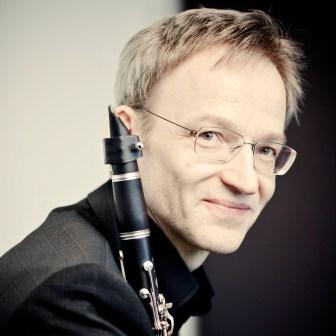
    Kari Kriikku

    Above: clarinet soloist Kari Kriikku

    Saturday September 27th, 2014 – The first subscription concert of the New York Philharmonic‘s 2014-2015 season featured a new clarinet concerto by the Korean composer Unsuk Chin and Mahler’s symphony #1. The Mahler evoked one of the most vociferous audience responses I’ve experienced since I started going to the Philharmonic frequently.

    A pre-concert mini-lecture-demo by Maestro Gilbert – with Mr. Kriikku giving some examples of the techniques called for by Unsuk Chin in the clarinet concerto – was somewhat spoilt by the distraction of late seating. Once the concerto proper started, all was well and the audience showed great attentiveness as this new sonic experience unfolded.

    Mr. Kriikku’s mastery of his instrument was beyond impressive; the clarinet truly became an extension of the artist. He showed an ability to sustain two tones at the same time, to make the ebony resonate at the faintest of volume levels, to wheeze and to squwak, and even to sustain long phrases seemingly without drawing breath.

    Ms. Chin draws from aspects of Asian folk music, overlain by textures of sound that are beyond contemporary. These layers are dense but drawn out by the Philharmonic musicians with sterling clarity. A vast array of percussion instruments are called into play, including a wine glass, a washboard, and two fishing reels. The soundscape veers from eerie near-silence to outbursts of intense shreiking from Mr. Kriikku.

    Overall, I felt the work (which seemed a bit too long at times) was more impressive than actually pleasing or meaningful. Surely it affords the player an opportunity to extend his range far beyond what might be considered to be in the realm of possibility. But, like much new music these days, neither the heart nor the soul were engaged. 

    The Mahler 1st, which premiered in Budapest in 1889, is classically referred to as “the Titan”; and while a programme note admonishes the listener from attaching that label to it, surely the final movement is a titanic experience.

    Back in 1889, the symphony had five movements instead of the four which we experience today. The composer deleted the original second movement – Blumine (‘Bouquet of Flowers’) – after the premiere, leaving us with the first movement in which Mahler represents “the waking of Nature after a long Winter” followed by a Scherzo (“The wind in my sails”). In the slow movement that comes next, solo double-bass sets forth the theme based on the French nursery song ‘Frère Jacques‘ (hearing it caused a rustle of appreciation among the audience): the movement depicts “The Hunter’s Funeral” with its vision of a hunter’s last cortege, the coffin drawn by animals. And at last we reach the epic graudeur of the finale which Mahler called “Dall’Inferno” – From Hell”: an outpouring of despair coming from a deeply wounded heart.

    These programmatic references in the end seem only to reflect Mahler’s desire to connect with the more conservative elements of his audience. The symphony is pure music, from start to finish, whatever allusions one might draw on hearing it. The orchestra gave a huge, glistening performance of the work, with the final movement being particularly magnificent. As the final chord resounded, the audience rose their feet in unison and commenced a long, loud ovation which Maestro Gilbert and the players truly deserved.

  • Beethoven Piano Concertos @ NY Phil III

    310696_2199382298108_399524588_n

    Wednesday June 25th, 2014 – The New York Philharmonic presenting the final programme of their 2013-2014 subscription season at Avery Fisher Hall; over the past two weeks, the orchestra have offered the first four Beethven piano concertos with Alan Gilbert on the podium and Yefim Bronfman at the Steinway. Tonight Mr. Bronfman played the 5th (‘Emperor’) concerto as the concert’s finale; earlier in the evening, he was joined for the Triple Concerto by the Philharmonic’s soon-to-retire concertmaster Glenn Dicterow, and the principal cellist Carter Brey join Mr. Bronfman. This same programme will be repeated on June 26th, 27th, and 28th, the final evening marking Glenn Dicterow’s farewell performance with the Philharmonic.

    The Triple Concerto (1804) opens with a traditional Allegro in which the solo voices are introduced one by one: the cello, then the violin, and finally the piano. In the Largo which follows (and is rather short), the concerto finds its heart with a melody, introduced by the cello, which displays the expressive richness that characterize the greatest passages of Beethoven’s works. Without pause, the final Rondo alla Polacca commences; again the insistently repeated phrases of the cello are prominent. This rondo features joyful themes seemingly inspired by Polish folk music, with lively shifts from major to minor.

    The performance, though thoroughly enjoyable, somehow never really developed a rapport between the three solo players, mainly due to the fact that Mr. Bronfman, of necessity, had his back to his string-playing collegues. Mssers. Dicterow and Brey were able to communicate directly with one another, whilst Mr. Bronfman was left in his own (beautiful) world.

    20130205193002_la-1337491-et-bronfman-1-lkh

    Following the intermission, Yefim Bronfman’s playing of the ‘Emperor’ concerto this evening was a superb finale to this NY Philharmonic Beethoven Concerto Festival. This majestic work was given a vibrant performance by the pianist and the artists of the Philharmonic, all wonderfully woven together by Maestro Gilbert’s baton.

    By this Saturday, Mr. Bronfman will have played on thirteen evenings over a three week period: an exhausting schedule, yet the pianist’s playing seemed awesomely fresh and vital tonight, with his uncanny mastery of dymanics always giving a shimmer to the sound. For all his technical brilliance, Bronfman’s playing also has a noble, heartfelt quality that makes his playing so deeply satisfying. The waves of applause that have engulfed him at each of these concerts have been very moving to experience. And it’s to our good fortune that he will be back at Avery Fisher Hall in late October 2014 playing the Bartok 3rd with Alan Gilbert on the podium. The dates are already on my calendar.

  • Gautier Capuçon @ The NY Philharmonic

    Gc

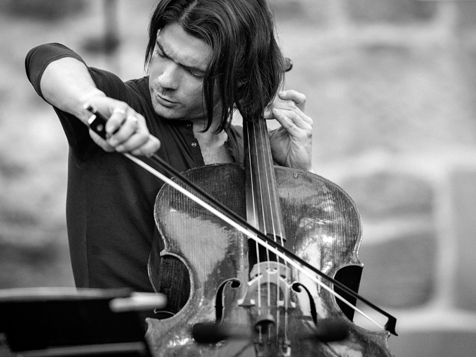
    Friday January 24th, 2014 matinee – Cellist Gautier Capuçon (above) gave an inspired rendering of the Shostakovich cello concerto #1 at this afternoon’s New York Philharmonic concert. Conducted by Andrey Boreyko, the programme was book-ended by works of two Russian composers with close ties to the world of classical ballet.

    The name Nikolai Tcherepnin immediately conjures visions of the Ballets Russes, for it was he who not only conducted the first performance of Diaghilev’s troupe in the West (on May 19th, 1909, at the Chatelet) but also composed the score of that evening’s opening ballet – Le Pavillon d’Armide – which swept the Parisians into a fever as they beheld Karsavina and Nijinsky onstage.

    Today the Philharmonic opened their concert with Tcherepnin’s tone poem The Enchanted Kingdom which dates from 1909-1910. The “kingdom” referred to in the work’s title is that of Katschei the Immortal – yes, the same sorcerer who was soon to appear in the Fokine/Stravinsky Firebird. In seems fact, Tchrepnin’s score may have been under consideration by Diaghilev as a setting for Fokine’s ballet. That didn’t transpire, but the score Tchrepnin left us is quite magical in its own right.

    The huge orchestra under Maestro Boreyko gave a richly-coloured performance: right from its sombre opening, this music reveals a vibrant sound-palette: celesta, piano and harp produce magical effects while solo wind voices add characterful touches. The cinematic central melody is simply gorgeous.

    Gautier Capuçon then took the stage for the Shostakovich; this charismatic artist took all the demands that the composer sets before the cellist in his stride. M. Capuçon’s playing of the central theme of the moderato literally gave me the chills, such was the spell he was able to cast; and as he played he sometimes seemed to be gazing off into some distant horizon: truly poetic. In the very long and technically demanding cadenza, the cellist’s clarity and his mastery of dynamics was most impressive – and a great smile illuminated his face when this sustained solo passage came to an end and the orchestra began to play again. Capuçon’s playing won the audience’s unstinting praise, and after the customary bows with the conductor the soloist was called out yet again for a solo bow, evoking a standing ovation.

    The Shostakovich was excellently played by the artists of the Philharmonic, with the prominent horn solos finding Philip Myers at his finest: amazingly plush sound, a real treat for the ear.

    Boreyko

    Above: conductor Andrey Boreyko

    The Philharmonic’s final offering today was the Tchaikovsky Suite #3, immortalized for dance lovers in Balanchine’s marvelous ballet of the same name. Of course throughout this performance the Balanchine choreography unfolded in the mind’s eye. Is there any music so romantically overpowering as the Élégie, especially when played as sumptuously as it was today? Throughout the forty-minute piece (it seems much shorter when there’s dancing to be watched), Maestro Boreyko kept a precise pulse: he was especially adept in the subtle rhythmic shifts of the Valse, and the final polonaise was regally done. The playing was stellar.

  • Celebrating Britten @ The NY Philharmonic

    2926592313

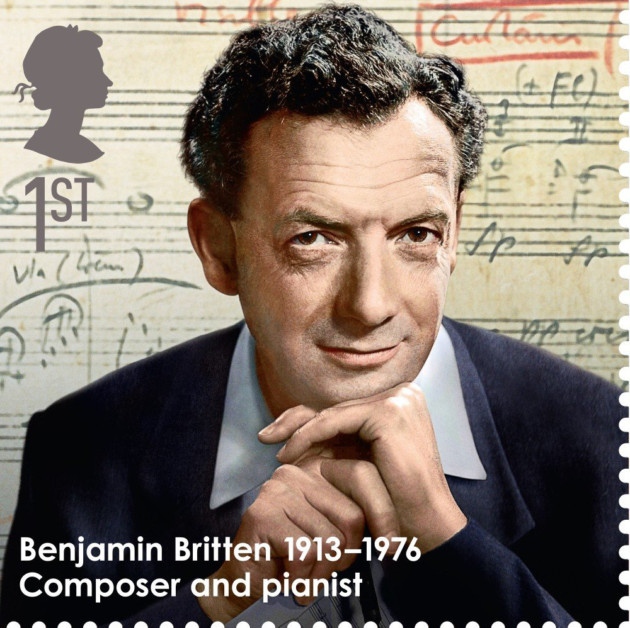
    Thursday November 21, 2013 – The New York Philharmonic‘s celebration of the 100th anniversary of the birth of Benjamin Britten was a lovely fête which brought forth the composer’s familiar Serenade for Tenor, Horn and Strings and the less-frequently-performed Spring Symphony.

    The performance took on added drama when the scheduled tenor was forced to withdraw for health reasons literally on the eve of the concert. This caused the Philharmonic to launch a desparate search for tenors who could 1) sing this demanding music and 2) were available on such short notice. Things turned out very well indeed, with a disarmingly attractive performance of the Serenade by Michael Slattery and a thoroughly impressive rendering of the Spring Symphony by Dominic Armstrong who, as Maestro Alan Gilbert told us, had never so much as looked at the score til the morning of the performance.

    The richly emotional Serenade for Tenor, Horn and Strings opens and closes with solo passages for horn which are played without use of the valves that stabilize pitch. The instrument is difficult enough to play as it is – I know: I played horn in high school – but Britten throws in this extra complication to render the sound with a ‘hunting horn’ ambiance. Thus the Philharmonic’s formidable principal horn, Philip Myers, appeared onstage with two horns – one for the Prologue and Epilogue, and the second ‘normal’ horn for the remaining movements of the work.

    Britten sets the Serenade’s poems, which span five centuries of English verse, in the upper range of the tenor voice; this gives the music an air of rather eerie innocence, yet the singer must also show great maturity in terms of both technique and sensitivity to the texts. The vocal movements are: “Pastoral” (with text by Charles Cotton), a hymn to sunset which sounds like a lilting lullabye; “Nocturne” (to words by Alfred, Lord Tennyson), where the horn calls echo as evening falls over the land; William Blake’s “Elegy”, which addresses a dying rose and is tinged with plaintive melancholy. In the Serenade‘s most unsettling passage, to an anonymous 15th-century text, the “Dirge” is a fugue of relentless, creeping madness evoking the fires of Hell which will ‘burn thee to the bare bone…and Christ receive thy soul’ (this song haunts me for days everafter whenever I hear it). In sharp contrast, Ben Jonson’s “Hymn” is light-hearted and upbeat, bringing the singer’s task to an ‘excellently bright’ conclusion. As the voice falls silent, the offstage horn closes the Serenade on a benedictive note.

    M slattery

    I had heard tenor Michael Slattery (above) often during his time at Juilliard, and was pleased to be present at his impromptu Philharmonic debut tonight. Slender and boyish in his elegant tux, Michael took the high tessitura in stride, with many felicitous passages of vocal color and inflection: his diction was clear and touchingly expressive. Philip Myers played with gleaming, burnished tone and exceptional power in the phrases that serve as a counter-poise to the voice. Maestro Gilbert drew evocative playing from the string ensemble, and the entire performance had a nocturnal incandescence that was truly pleasing. Michael Slattery reacted with disarming sincerity to the audience’s warm applause, being called out with Mr. Myers and the conductor for extra bows.

    The Spring Symphony was commissioned by the Koussevitzky Music Foundation and is dedicated to Serge Koussevitzky and the Boston Symphony Orchestra though it was actually premiered at the Conncertgebouw in Amsterdam during July 1949 before its American premiere the following month at Tanglewood by Koussevitzky and the BSO. Britten calls for a huge orchestra, adult and children’s choruses, and three vocal soloists. The score is dazzling in its range of instrumental colours and textures, and the texts include both hymns of praise to the coming of Spring and some charming moments of levity in depicting day-to-day happenings. This work is quintessentially British: the poems invoke English pastoral imagery and the deftly ‘sudden’ ending – “And now, my friends, I cease” – is punctuated by a  plump C-major chord.

    Maestro Gilbert marshalled his forces for a thoroughly impressive and enjoyable performance: a special “hurrah” for the Brooklyn Youth Chorus who are called upon to both sing and whistle. The ‘save the day’ performance by tenor Dominic Armstrong revealed an attractive voice with mastery of dynamics and colours as well as of textual incisiveness that belied his unfamiliarity with the work. The slender and very pretty soprano Kate Royal has a feather-light lyric soprano and sang charmingly while the distinctive voice of Sasha Cooke – heard only two days earlier at Chamber Music Society – stood out for glowing tone and poetic resonance.

    This was my first time experiencing the Spring Symphony – I’d never even heard it on a recording – and it was a very good idea of Maetro Gilbert’s to choose it as a birthday salutation for the composer, for it is not often performed.

    I must register one tiny complaint – nothing to do with the music or the musicians – but I do wish that plastic water bottles could be banned from the concert stages. In the ‘old days’ small tables were set next to the soloists’ chairs with glasses of water which the singers could sip decorously between numbers. Now we have a distracting ritual of bending over, uncapping the bottle and gulping away like basketball players on the bench. The ‘old way’ of hydrating is much more elegant, and far less conspicuous.

  • Haydn, Rouse & Gilbert’s Wagner

    Ax

    Above: pianist Emanuel Ax, soloist with the New York Philharmonic this evening

    Friday June 21st, 2013 – The New York Philharmonic‘s current Artist-in-Residence, Emanuel Ax, and Composer-in-Residence, Christopher Rouse, were both featured in the first half of this evening’s programme at Avery Fisher Hall.  After the intermission, the orchestra’s Music Director Alan Gilbert led a performance of his own RING JOURNEY: music drawn from Richard Wagner’s epic RING Cycle. 

    In the Playbill, Maestro Gilbert answers the “…terrible question: who is you favorite composer?” with the name ‘Haydn’. His admiration was evident in the joyous clarity of his shaping of the composer’s Piano Concerto No. 11 in D Major. Emanuel Ax’s playing had a youthful gleam, turning the melodic lines with elegance and the cadenzas with polished perfection, his trills lovingly defined. Pianist, players and conductor meshed their artistry in pure music-making that was deeply satisfying to experience.

    I first heard the music of Christopher Rouse from a Yo-Yo Ma recording of the composer’s Cello Concerto. At the New York City Ballet, Peter Martins has created two ballets to Rouse works: the 2002 INFERNAL MACHINE (seen earlier this year) and the 2006 FRIANDISES.

    In its New York première performances,
    Rouse’s Symphony No. 3 is a tribute to the Prokofiev 2nd symphony, the “symphony of iron and steel” (Prokofiev’s words). The orchestral forces are huge and the opening statements are a cacophonous but lucid fanfare, thunderous and epic. Later, in the more lyrical passages of the work, the composer finds unusual veins of beauty: a passage involving oboe and harp made me think of FIREBIRD. Throughout, the dense sound textures were vividly expressed by the orchestra’s super-human players, and Maestro Gilbert shaped the whole into a persuasive, and gigantic, statement.

    Alan Gilbert’s RING JOURNEY takes its inspiration from Erich Leinsdorf’s earlier arrangement of the Cycle’s immortal themes. RING fanatics (Mr. Gilbert is one, by his own description) draw their life blood from this music, and the standing ovation that greeted the conductor at the end of the evening seemed to me to indicate that people want to hear more of Gilbert’s Wagner.

    Alan Gilbert’s RING JOURNEY, which he rightly describes as a ‘suite’ rather than a ‘fantasy’, commences with the ‘Ride of the Valkyries’ and continues chronologically thru excerpts from WALKURE, SIEGFRIED and GOTTERDAMMERUNG. Gilbert shows a sure and steady hand at maintaining the flow of the music; some of the passages he chose to include are ‘transitional’ in the operatic sense, but they are gorgeous transitions and by exploring them here Gilbert steers clear of a ‘greatest hits’ feeling.

    The overall span of the piece was quite glorious, and the playing was simply superb: a special ‘bravo‘ to Philip Myers who stepped offstage to play Siegfried’s horn call with splendid warmth and amplitude.

    In view of such grandeur and musicality it seems selfish to ask for more; but I’d hoped to hear the Rhinemaidens’ trios, the Entry of the Gods into Valhalla, the Winterstürme theme, the Sword motif, and most especially Brunnhilde’s poignant “Ewig war ich”  – the core melody of the SIEGFRIED Idyll. The answer, dear Maestro Gilbert, is that you must program more of the RING in the next few seasons, especially in view of the fact that The Met can’t deliver it anytime soon.

    Hearing this music so spectacularly played and watching Mr. Gilbert’s loving sculpting of it from the podium, I couldn’t help but wish for voices. As the conductor built the introducton to the GOTTERDAMMERUNG prologue duet with breath-taking clarity and passion, I desperately wanted Christine Goerke or Lise Lindstrom to burst thru the door and launch into Zu neuen Taten!