Tag: New York

  • André Watts|ORPHEUS @ Carnegie Hall

    Watts11_high - david bazemore

    Above: pianist André Watts, photo by David Bazemore

    ~ Author: Oberon

    Thursday October 26th, 2016 – Pianist André Watts joined ORPHEUS this evening as the beloved chamber orchestra kicked off their 2017-2018 Carnegie Hall season with a New York premiere and classics by Mozart and Beethoven. We learned that 600 school-children were in attendance – up in the balcony – having been provided with tickets free of charge. A subtitle for the program might have been “Pianists Who Compose”, as Mozart, Beethoven, and Iyer each first won renown at the keyboard. 

    Vijay-Iyer

    American composer Vijay Iyer (above) is a jazz pianist, bandleader, producer, electronic musician, and writer. Tonight ORPHEUS offered the New York premiere of Mr. Iyer’s Asunder, an eclectic and vastly pleasing work that suits the ORPHEUS players to perfection.

    In his program note, Mr. Iyer said that, on first receiving the ORPHEUS commission, he thought of writing a piece that would reflect the current deep divisions in our country and “…how it feels to be an American today: pulled apart, broken, anxious, untethered…” He thought of writing big, violent music but then he chose instead to write a piece that “…imagines unity anew…” Bravo! for taking such a stance, Mr. Iyer.

    Asunder is presented in four movements; it opens with pacing horns and an oddly noble feeling. Pulsing rhythms and a somewhat ominous timpani carry us thru to a passage for strident winds. Swirls of notes from both strings and winds allude to the movement’s title: Agitated. It ends with dour, deep sounds.

    Marked Patient and mysterious, the second movement begins with plucking and a jazzy piccolo solo over bass and cello. A Mid-Eastern flavour permeates; following a build-up to an almost militant passage, a Glassian repetitive motif takes over and we settle into a slow sway.

    Calm and precise, like clockwork begins with a gorgeous flute solo; bell tones and other percussive effects designate the effect of time. A repeated downward passage is repeated just a few too many times (my sole reservation about the work).

    Solo oboe over bass accompaniment opens the concluding Lush movement; then a rather drowsy clarinet takes over. The Mid-East is evoked again as the music assumes the feeling of a desert journey, then pulses up over deep bass notes. The glockenspiel sounds again, and after a plucked passage the finale turns cinematic.

    Percussionist Maya Gunji did a great job in the Iyer, as did several of her woodwind colleagues, though I couldn’t see them clearly enough to name names. And the strings sounded superb…all evening, in fact. Mr. Iyer was called to the stage and was enthusiastically applauded by audience and musicians alike.

    The Steinway was then rolled out, and André Watts appeared to a warm welcome from the Carnegie audience.

    André Watts came to public prominence at the age of 16 when Leonard Bernstein chose him as a soloist, making his New York Philharmonic debut on one of the orchestra’s Young People’s Concerts – a concert which was broadcast nationwide on CBS-TV. Two weeks later, Bernstein again called upon the young and charismatic Mr. Watts to substitute at the last minute for the ailing Glenn Gould in performances of Liszt’s E-flat Concerto with the New York Philharmonic. In 1976, André Watts’ recital for the Live From Lincoln Center series was the first full-length recital broadcast in the history of television.

    The Watts career has spanned over half a century, interrupted at times by health issues. Now 70 years old, he plays with the energy and distinction that have endeared him to audiences worldwide over the decades; he played, in fact, like a very jeune homme.

    Mozart’s Piano Concerto No. 9, composed in January 1777, picked up the appellation “Jeunehomme” “young man”) by mistake when Mozart’s mention (in a letter) of the name of the young pianist who inspired the work –  Victoire Jenamy (1749-1812) – somehow got scrambled from Jenamy to Jeunehomme. Victoire was the daughter of the famous 18th-century ballet master Noverre, and she was apparently in Salzburg during the winter of 1776-77 where she met Mozart. This was the first of the composer’s piano concertos to appear in print, published in Paris around 1780.

    My first impression of Mr. Watts as he began to play (I’d never heard him live before) was: “He makes the piano sing!” This concerto is very demanding, and – as the pianist remarks in his program note – shows such  maturity of writing from a 21-year-old that we could easily be convinced it comes from a later time in the Mozart’s career. It is, overall, music that brings genuine comfort and joy.

    In the opening Allegro, Mr. Watts displayed a light touch in a series of delicious trills, with much charming filigree; yet there was also warm power and rhythmic vitality to be enjoyed. An elaborate cadenza held the audience in silent thrall. The following Andantino begins in a somber mood, and the pianist’s sad song (again with some sweet trills) was expressively played. As a more hopeful feeling rises, the orchestra has a really lovely passage: the music has an unusual sense of containment, of assurance and grace. A downward-flowing cadenza, with yet more intriguing trills, showed Mr. Watts’ control and artistic depth.

    The finale, a Rondo, commences with virtuosic feats from the pianist. A fine flow develops, with cascades of piano notes. In the middle of the movement, Mozart injects a courtly Minuet interlude, introduced by the soloist who unfurls the melody gently over a pizzicato accompaniment. Another cadenza, now with a rising aspect, again gives us savourable trills.

    The audience abundantly hailed Mr. Watts and the ORPHEUS players: a full standing-ovation ensued. We hoped for an encore, but the pianist – perhaps wisely – left us to our Mozartean reveries.

    Following a longish intermission, the Beethoven 1st symphony provided a perfect finale to the evening. We’d just heard this work a couple of weeks ago, played by the Orchestra of St. Luke’s in this very hall. It’s such a cordial piece, and I’ve grown really fond of it. It was nice to hear it again so soon. 

    The Beethoven 1st is the symphony that seems to start mid-phrase. The ORPHEUS players gave a marvelous performance, with a breadth and richness of sound that filled the venerable space. Rhythmic acuity and some lovely solo bits from the winds players engaged us from first note to last, and made for an impressive end to a thoroughly satisfying evening of music-making.

    The Program:

    VIJAY IYER: Asunder (New York Premiere)

    MOZART: Piano Concerto No. 9, K. 271 “Jeunehomme

    BEETHOVEN: Symphony No. 1

    ~ Oberon
  • At Catherine Gallant’s Rehearsal

    L1730590

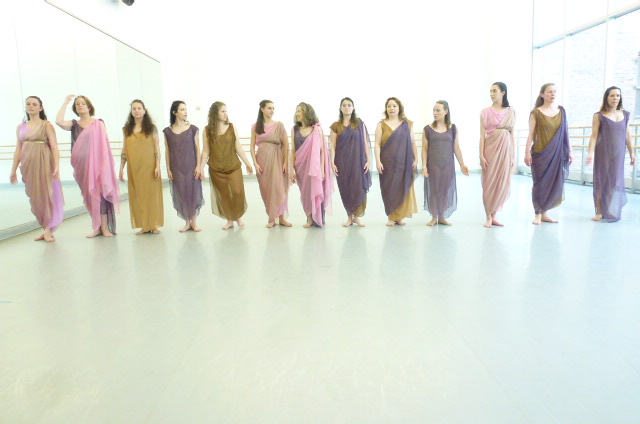
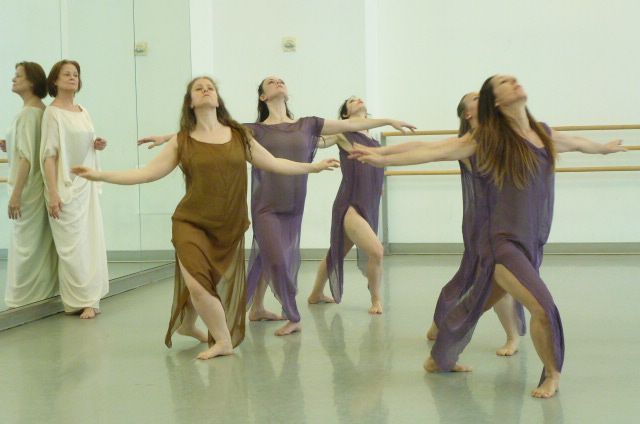
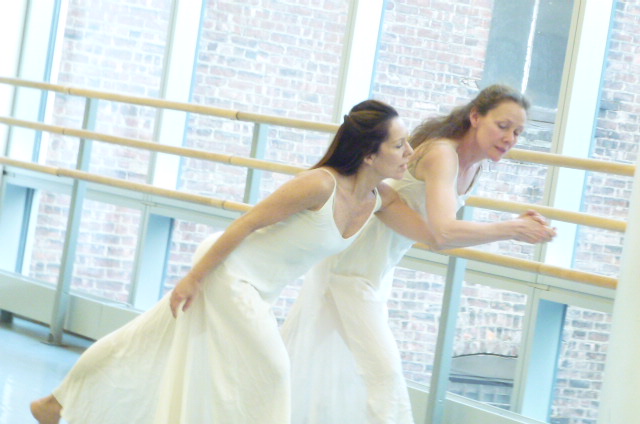
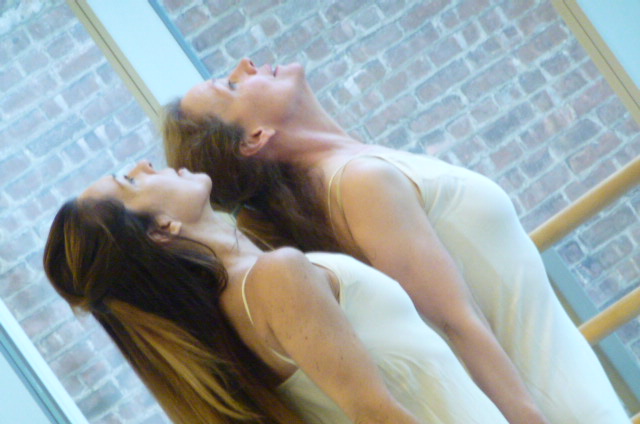
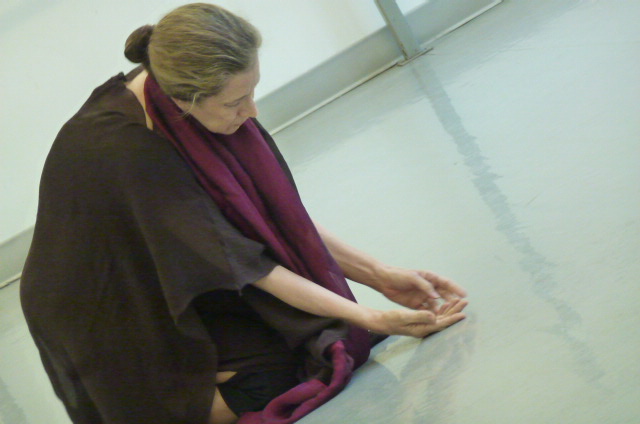
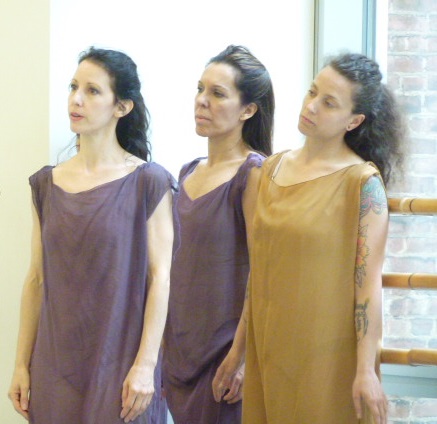
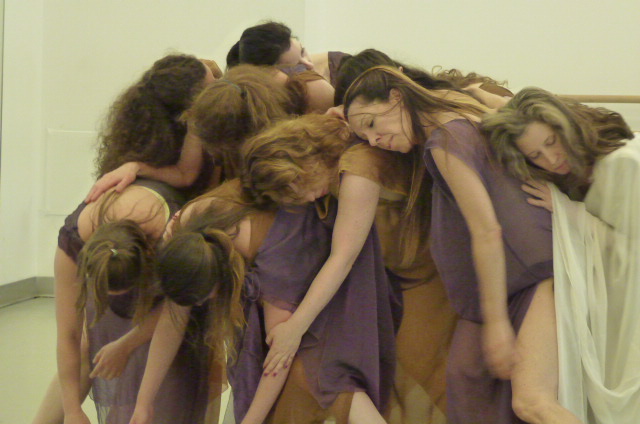
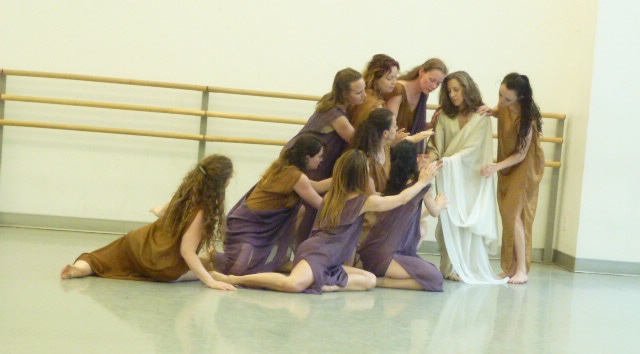
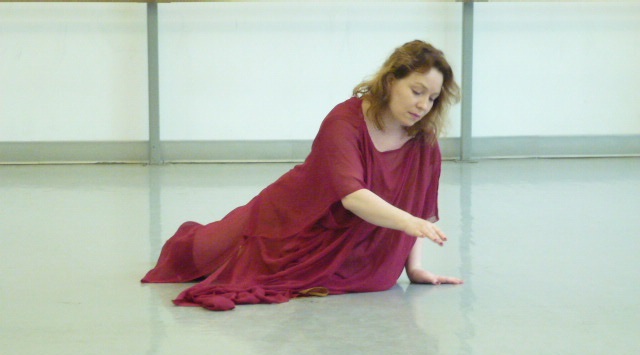
    Saturday June 11th, 2016 – I stopped in at the Ailey Studios this afternoon where Catherine Gallant and her very attractive troupe of dancers were in rehearsal, preparing for their upcoming performances at Danspace (St. Mark’s Church, 131 East 10th Street. New York, NY). Performance dates are June 23rd – June 25th, 2016, and you can purchase tickets here.

    Retrograde Universe is the title of this world-premiere production presented by Catherine Gallant/DANCE and Dances by Isadora, led by Artistic Director and Choreographer Catherine Gallant. Retrograde Universe includes four pieces by Gallant and three Isadora Duncan works. From Isadora, we will have an historical re-animation of Duncan’s Beethoven No. 7, which has not been performed since 1979; Three Scriabin Etudes, danced by Kristen Foote of the Limón Company on opening night; and Valse Brillante. Gallant’s Retrograde UniverseFinally, The Secret and Meeting #12 will show the contemporary aspects of the Company. The performance will feature musicians Christina Courtin and Yegor Shevtsov, and a visual creation from Nadia Lesy.

    In observing these lovely women today – going about their work with such dedication and such beauty of movement and expression – one feels a direct connection both with the well-spring of modern dance and with the indomitable feminine spirit. Gallant’s company is a collective of generational diversity and highly individual personalities molded into a community by their shared devotion to dance. 

    Today’s rehearsal included detailed work on some of the pieces to be shown at Danspace as well as a run-thru of the program. The woman swiftly changed costumes between works, while speaking quietly to one another and sharing a feminine bond: the atmosphere serious, but also light of heart and spirit.

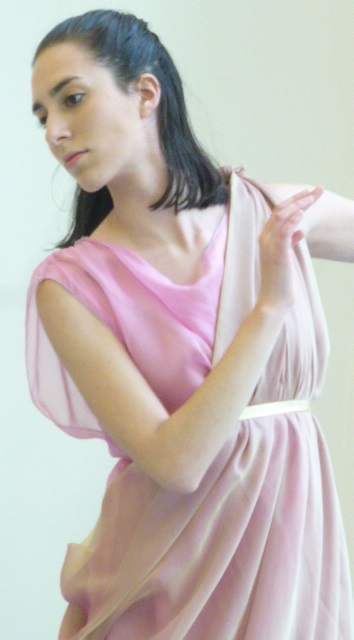
    Here are some images that I was able to capture in the studio; much of the dancing was simply too fast-paced for me to capture, but I think the distinctive personalities of this bountiful band of women show thru.

    L1730455

    L1730489

    L1730541

    Ella Lang

    L1730657

    Francesca Todesco in Isadora Duncan’s Mother

    L1730671

    L1730687

    Janete Gondim and Eleanor Bunker in Catherine Gallant’s The Secret

    L1730697

    Janete and Eleanor in The Secret

    L1730706

    Eleanor Bunker

    L1730721

    Janete and Eleanor in The Secret. I was particularly moved by this dancework, and look forward to writing more about it after seeing it in performance.

    L1730737

    Michelle Cohen in Retrograde Universe

    L1730746

    The ensemble in Retrograde Universe

    L1730753

    Michelle Cohen

    L1730775

    Loretta Thomas

    L1730766

    Loretta Thomas

    L1730801

    Catherine Gallant

    L1730825

    Loretta Thomas

    L1730834

    Loretta Thomas

    L1730886

    Michele Cohen, Janete Gondim, and Margherita Tisato

    L1730889

    Catherine Gallant

    L1730913

    L1730925

    L1730931

    L1730946

    Michelle Cohen

    L1730952

    Catherine Gallant, Michelle Cohen

    L1730956

  • Preview: Mats Ek’s AXE @ Martha Graham

    AXE

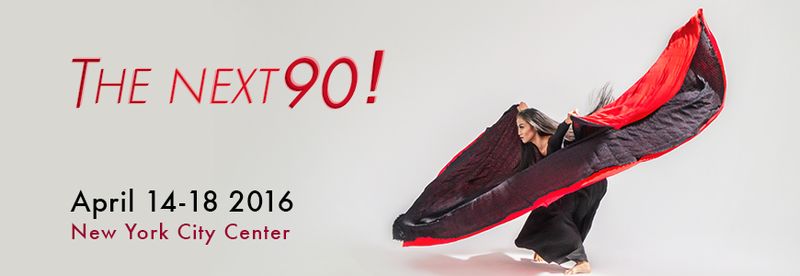
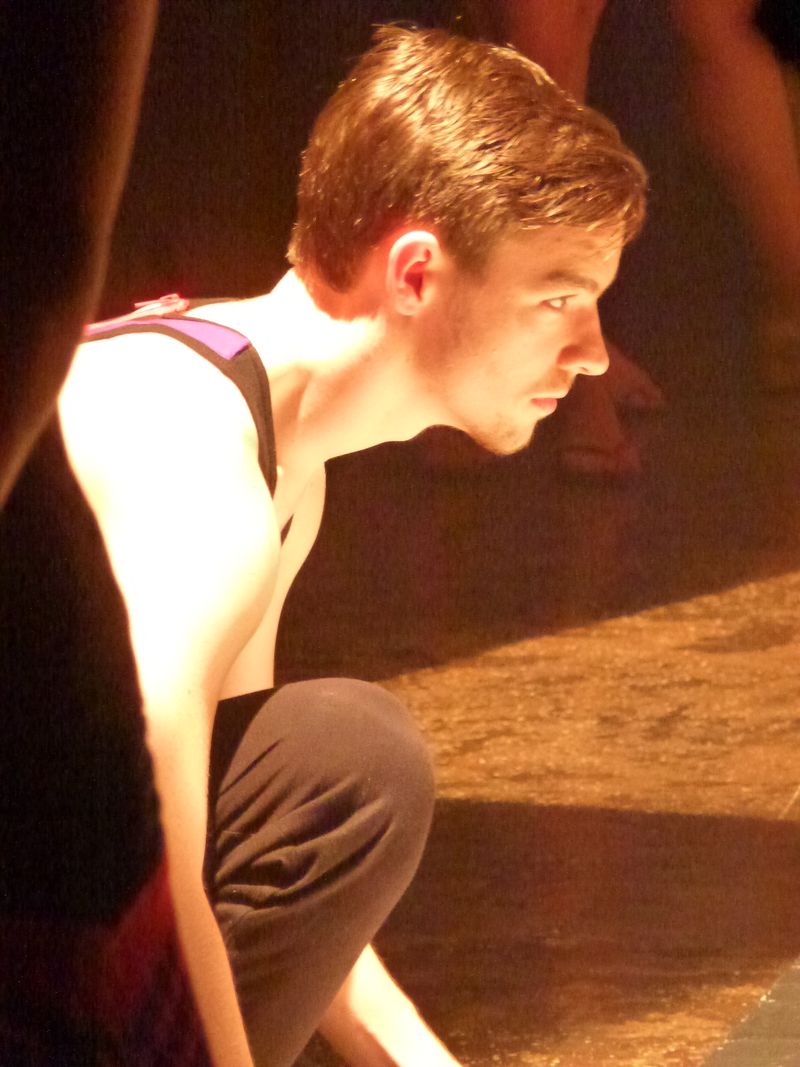
    Wednesday October 14th, 2015 – The Martha Graham Dance Company premiered Mats Ek’s AXE at the Jacob’s Pillow Dance Festival in August 2015, and will give the work’s New York premiere at NY City Center in April 2016 as part of the Company’s 90th Anniversary celebration. This evening, friends and fans of the Graham Company gathered for a studio preview of the Ek duet, which was danced by Company principals Ben Schultz (above) and PeiJu Chien-Pott (below).

    6a00d8341c4e3853ef01b7c716ffe8970b

    These studio events at the Graham homespace at Westbeth on Bethune Street are a great bonus for the Company’s many avid followers: whether introducing us to a new work or delving into explorations of the established classics of the Graham repertoire, we are given an opportunity to experience the works in an intimate setting and have an insider’s look at the creative or re-creative process. And of course there is also the genuine thrill of encountering the phenomenal  Graham dancers at close range.

    The staged version of AXE is based on a work Ek originally created on film. It is an intense domestic-drama duet which revolves around a man splitting wood, observed by his long-time mate. Layered in subtle sheets of emotion, the work takes on a profound quality that transcends the physical action. In a stroke of genius, Ek sets the duet to music of Tomaso Albinoni, giving it a timeless quality.

    Janet Eilber, the Graham Company’s artistic director, spoke of her long-held desire to have an Ek work in the Company’s repertoire, and of how it came to pass, thru chance and persistence. In brief, four Graham dancers – PeiJu Chien-Pott, Anne O’Donnell, Ben Schultz, and Lloyd Knight – traveled to Sweden where the choreographer worked with them to transform his film into a live dancework. The result is nothing less than extraordinary.

    Prior to showing us a full run-thru of the work, Ms. Eilber queried the four dancers about their experience of working with the choreographer who, it seems, was both detail-oriented and enigmatic. PeiJu and Ben then demonstrated key phrases from the ballet before presenting an absolutely stunning ‘performance’ of AXE that literally gave me goosebumps.

    AXE will be a must-see ballet when the Company celebrate their 90th anniversary at City Center in April 2016. It fits superbly into the Graham repertoire, and dance-lovers owe a debt of gratitude to Ms. Eilber for having secured it for us.

    Season-Announce-header

    PeiJu Chien-Pott (above) heralds the coming season…I cannot wait!    

  • Verdi REQUIEM at St John the Divine

    164572_1653439729885_6792945_n

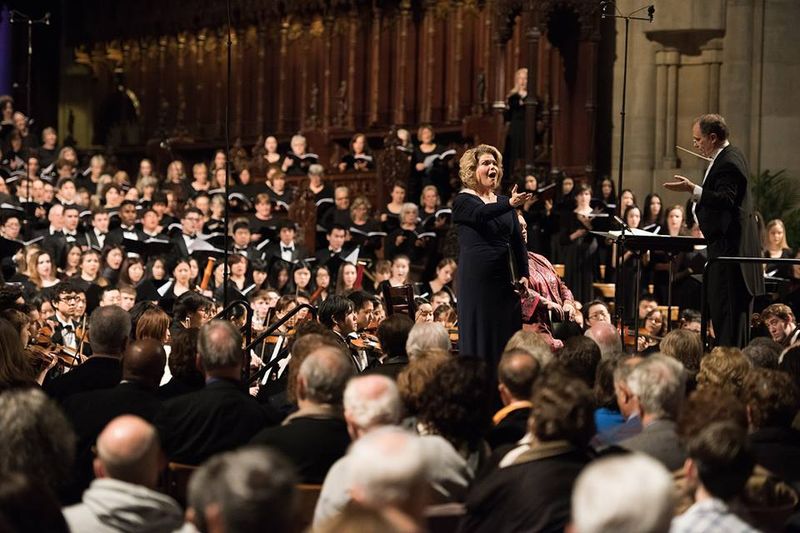
    Thursday March 26th, 2015 – Oratorio Society of New York presenting the Verdi REQUIEM at the Cathedral of St John the Divine. This was my second experience of this magnificent work in a sacred setting: many years ago I attended a performance of it in the Chapel at Trinity College, Hartford CT. On that evening, an organ and a small ensemble of instrumentalists played in lieu of a full orchestra, but the work still made a vivid impression. Tonight we had the admirable young musicians of the Manhattan School of Music Orchestra (and their symphonic chorus) joining the Oratorio Society for a full-force rendering of Verdi’s ‘sacred opera’.

    A huge audience – an overflow crowd, actually – filled the cathedral and (except for one cellphone beeping at a particularly inopportune moment) they listened in reverential silence. It was overall a very fine performance of the REQUIEM but sonically it was problematic in that the reverberant echoing throughout the huge space often turned the music into a blur. Much of the music’s definition was lost, and much detail from the inner orchestral voices vanished in the clouds of echo. There was the illusion of notes being played twice, and the music sometimes seemed to be fighting itself.

    Kent Tritle conducted, and a strong quartet of soloists took part:

    Jennifer Check, soprano
    Sara Murphy, mezzo-soprano
    Alex Richardson, tenor
    Matthew Boehler, bass

    These four singers often seemed to me to be swamped by the sound of the orchestra and chorus flowing over them in both directions. How they managed to pick up their cues, I will never know. Nevertheless, there were many savorable vocal passages. Mr. Boehler, who made a fine impression recently in IOLANTA at The Met, projected the text with vivid dynamic detail, and Mr. Richardson sang musically and with passion.

    Sara Murphy, whose opulent mezzo made a marvelous impact when she sang Ligeti and Schnittke with the American Symphony Orchestra earlier this season, was very impressive tonight both for beauty of tone and clarity of projection. So much music I want to hear her sing! 

    11111962_913591532037896_5248156677226624389_n

    Jennifer Check (above, photo by Brian Hatton), who stepped in to the soprano part rather late in the day, sounded lovely. Her voice has power but also a silvery lyrical quality, and in the Offertorio she produced a spine-tingling sustained piano E-natural (which modulates magically to an E-flat…one of the most felicitous moments in this glorious work). For the great final ‘aria’, Requiem aeternam, Ms. Check closed her score and gave an intense, very personal performance of this prayerful solo; using her right hand in gently expressive gestures, she seemed to send forth a benediction of peace and tranquility.

  • Installation: Cedar Lake

    L1180461

    Wednesday July 24th, 2013 – Cedar Lake Contemporary Ballet‘s interim artistic director Alexandra Damiani conceived and directed this evening’s expansive and stimulating installation which was presented at my favorite New York dance venue: Cedar Lake‘s home space on West 26th Street.

    Thirty-two young dancers who had participated in this year’s Cedar Lake 360° summer intensive culminated their experience by joining Company members in a panoramic dance presentation featuring Clifton Taylor’s imaginative lighting, and sexy costuming by Cedar Lake‘s Matthew Rich. Company members Jason Kittelberger & Acacia Schachte, Jon Bond, Rachelle
    Scott and Ebony Williams each had a hand in the choreography, their work blended into a seamless montage of movement along with repertory excerpts from Sidi Larbi Cherkaoui and Andonis Foniadakis. All of this took place to the accompaniment of a sweepingly propulsive sound collage developed by (and including  original music by) Jasper Gahunia.

    Cedar Lake’s installations are both fascinating and frustrating: as an audience member you get to wander the space, sometimes actually coming into contact with the dancers. There are always three or four dance elements going on simultaneously in different areas of the space and that’s what leads to a bit of frustration: while watching one module of movement your eye is caught by something happening across the crowded room. After the first ten minutes I was thinking that even if I could attend all four showings of the installation I would still not be able to take it all in.

    The student dancers were super; many intriguing dance personalities are developing here and I feel certain several of them will become familiar to us as their careers develop. Of course it was exciting to see the Company members, some of them dancing and others on the side-lines.

    L1180428

    Photography is encouraged during Cedar Lake installations but I’m not skilled enough to take advantage of the situation, given the speed of the movement and the ever-shifting light. Only when a dancer is momentarily still (Company member Billy Bell, above) was my camera of any use to me. So for the most part I simply watched the event unfold, trusting that there will be images forthcoming from more seasoned photograhers.

  • Oratorio Society: Britten’s WAR REQUIEM

    White_dove.23095031_std

    Monday April 22nd, 2013 – The Oratorio Society of New York presented a performance of Benjamin Britten’s WAR REQUIEM at Carnegie Hall this evening. 

    One of the greatest and most meaningful choral works ever created, the WAR REQUIEM was commissioned for the re-dedication of Coventry Cathedral in 1962; the church had been almost totally destroyed by German bombs in 1940. Britten, a life-long pacifist, drew on the poetry of Wilfred Owen
    – who had been killed in 1918 (one week before the Armistice ended the war) at the age of 25 while fighting in France
    – as well as the texts of the Latin mass for the dead in setting his
    masterpiece. Though deeply spiritual in atmosphere, Britten intended the
    WAR REQUIEM to be a secular work.

    The Oratorio Society, one of New York City’s oldest cultural treasures, traces its history back to 1873. Founded by Leopold Damrosch, the Society presented their first concert on December 3,
    1873. One year later, on Christmas night, the Society began what has become an unbroken
    tradition of annual performances of Handel’s Messiah. In 1891, the Oratorio Society participated in the opening concert of what is now Carnegie Hall.

    The chorus and musicians of the Society under Kent Tritle’s baton tonight unfurled the sonic tapestry of Britten’s creation in a performance which greatly satisfied both the ear and the soul. In the composer’s structuring of the REQUIEM, the large chorus and orchestra – supporting a soprano soloist – sing the Latin texts of the mass while a chamber orchestra (led by David Rosenmeyer) accompanies the tenor and baritone soloists whose words come from the poetry of Wilfred Owen. From high up in a side balcony, the voices of children from the choir of Saint John The Divine (directed by Malcolm Merriweather) provide an angelic sound, accompanied by a small organ.

    Britten’s score, richly textured, amazes in its rhythmic and instrumental variety. Marked by off-kilter harmonies and shifting tonalities, the music is grand and theatrical one moment and poignantly stark and personal the next. The juxtaposition of public mourning and private grief – and of the liturgical and poetic texts – give the REQUIEM its unique resonance.

    Of the three vocal soloists, soprano Emalie Savoy (currently a Met Young Artist) revealed a sizeable lyric instrument with a blooming high register and a capacity to dominate the massed choral and orchestral forces. Tenor John Matthew Myers sang with a plaintive, clear and warm timbre while baritone Jesse Blumberg gave a wonderfully expressive rendering of the texts, his voice hauntingly coloured in his long final solo.

    At the close of the piece, all the participants were warmly lauded by the audience.

    “My subject is War, and the pity of War.
    The Poetry is in the pity…
    All a poet can do today is warn.” ~ Wilfred Owen

    Now, nearly a century after the poet’s warning, mankind continues to use war as a means of settling religious and ideological differences. This evening’s concert fell on Earth Day, reminding us of the fragility of the planet on which we all live. Only by turning away from gods and politics – those great dividing forces – can we hope to find a path into a safe and meaningful future. Like the poet’s two soldiers from opposing armies who find themselves dying side by side in a ditch far from their homes as the REQUIEM draws to a close, we must learn to embrace our common humanity before it’s too late.

    The evening’s participating artists will were:

    Kent Tritle, conductor
    David Rosenmeyer, chamber orchestra conductor
    Emalie Savoy, soprano
    John Matthew Myers, tenor
    Jesse Blumberg, baritone
    Choristers of the Cathedral of St. John the Divine,
    Malcolm Merriweather, conductor
    Chorus and Orchestra of the Society 

  • Checking In With Tom Gold Dance

    6a00d8341c4e3853ef016762aa026d970b-800wi

    Tom Gold Dance will be performing at Kykuit, the Rockefeller Estate in Sleepy Hollow, New York on June 27th, 2012. Abi Stafford (in a Matt Murphy photo above), principal ballerina at New York City Ballet will share the stage with her fellow NYCBers: principal Jared Angle, and corps de ballet dancers Likolani Brown, Amanda Hankes, Gretchen Smith, Devin Alberda and Russell Janzen. Tom Gold himself will put on his dancing shoes again and appear in two of the works on the programme.

    On Monday June 25th, I stopped in at City Center Studios where Tom and his dancers were putting the finishing touches on the works to be danced at Kykuit. They’d started rehearsing at the ungodly hour of 10:00 AM yet they all seemed full of vim and vigor. New York City Ballet pianist Susan Walters was at the keyboard and Willy Burmann, Tom’s designated ballet master, was giving out tidbits of advice to the dancers: invariably he was spot on.

    Put me in a room with dancers from NYCB and I’m happy – especially with this particular bunch of dancers who happen to be among my favorites in my favorite Company. It’s incredible to see these great technicians at close range. Tom’s choreography looks really demanding to me: a virtuoso himself, he asks for virtuosity in his ballets. He’s chosen top-notch music: Faure, Satie, Poulenc, Gershwin and – in his newest creation – classic songs by Noel Coward and Ivor Novello which will be sung live by vocalist Sasha Weiss.

    The Coward/Novello ballet, entitled Mad About The Boy, features Amanda Hankes dancing an elegant solo to the title song. My opera glasses frequently get ‘stuck’ on Amanda during NYCB performances; I so enjoyed watching her today. The ballet has a Gosford Park air about it, with Likolani Brown and Devin Alberda as the below-stairs couple kicking things off with a charming duet. Abi Stafford, Gretchen Smith, Jared Angle, Russell Janzen and Tom Gold take turns whirling around the salon in pairs and solos while the songs remind us of a more innocent time…though of course, it wasn’t really.

    Another ensemble work, Faure Fantasy, will open the Kykuit evening, and Abi Stafford and Jared Angle will dance in Tom’s setting of the Gershwin Preludes. Likolani Brown and Russell Janzen perform Suite Francaise, three duets in contrasting moods set to music by the French immortals Faure, Satie and Poulenc.

    Earlier this year, Tom Gold Dance gave their full-evening New York City debut performance at Florence Gould Hall. In the coming months the Company will tour to Spain and Cuba, with anticipated performances in New York City this Autumn.

  • 2280 Pints!

    Buckets lift

    Friday May 27, 2011 – From the many invitations that I receive each week to dance events, this one from The Neta Dance Company caught my eye because of the title of the work they are presenting: 2280 Pints! Described as a dancework for seventeen dancers and 57 5-gallon plastic buckets, it just sounded so quirky that I had to give it a go.

    P1230913

    On entering the space at Dance Theater Workshop, we find the dancers posed like living statues as the music of Chopin’s second piano concerto fills the air. Each dancer has a white plactic bucket. Coins are distributed to the incoming audience members who then wander among the dancers, pressing pennies into the dancers’ open palms or dropping them into the buckets. A bell rings; suddenly the dancers break their poses and rush into the audience, grabbing people at random. Each dancer takes a guest onto the stage and arranges him/her in a statuesque pose. Thus did my friend Kokyat make his New York stage debut.

    From there, a roller-coaster ride of movement and music commences. Neta Pulvermacher deploys her squad of dancers and their fifty-seven buckets in a richly imaginative series of danced and mimed tableaux, set to a musical smorgasbord that runs the gamut from Mozart to Sonny & Cher. 

    The buckets are arranged, stacked, knocked over, sent skidding across the floor; they become hats, shoes, podiums, spotlights, drums, sinks, stepping-stones; they are hoisted and lowered over the playing area.  The dancers come and go as each musical number unfolds; sometimes there are big ensembles with everyone moving in unison and playing the buckets like percussionists kits. Other moments are more intimate: a girl sings the old Charlie Chaplin tune “Smile” (sings it really well, too) while four dancers simply raise and lower buckets over their faces, revealing their features as droll masks.

    Does it sound like a mish-mash? To an extent, it is. What saves it and makes it brilliant is the musicality of Neta’s choreographic style and the sheer energy and commitment of her dancers. One or two segments seem to stretch out a bit long but at those times one can focus on the individual personalities of the very attractive young performers. A giant plus to the production comes from the lighting by B. Lussier.

    I loved running into Taylor Gordon (either I go for months without seeing Taylor or I see her every day for a week) and to see Deborah Wingert and Matthew Westerby again. Many thanks to Alessandra Larson for inviting us to this really enjoyable evening.

    2280 Pints! continues at Dance Theater Workshop (on West 19th off 8th Avenue) thru Saturday evening. Kids over 5 will get a kick out of it at a Saturday matinee. Details here, with a video trailer.