Tag: Nir Arieli

  • Fadi J Khoury Dance @ NYLA

    Back-company

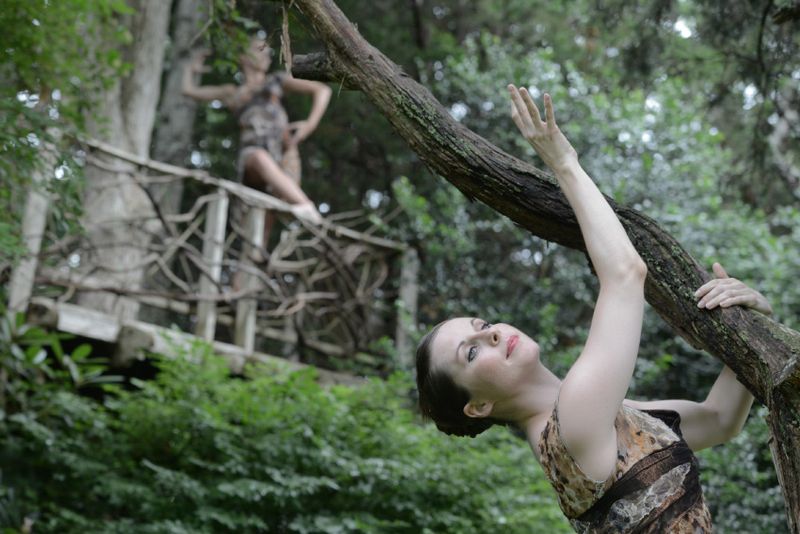
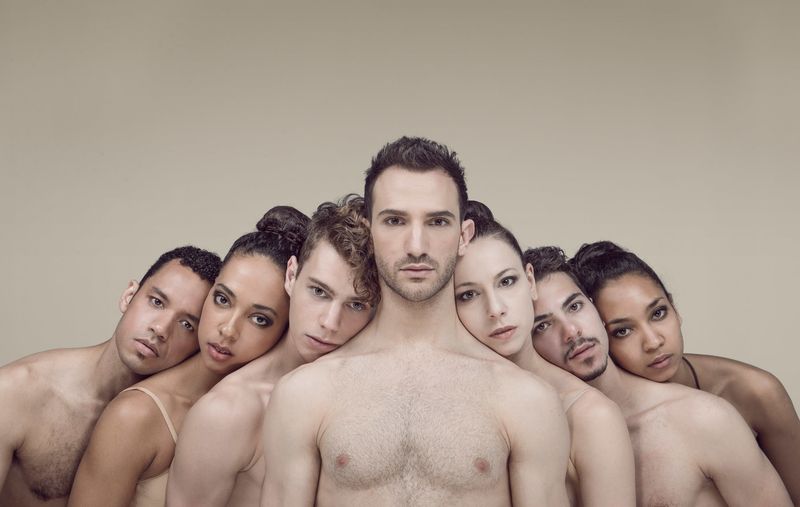
    Above: the artists of Fadi J Khoury Dance, photo by Nir Arieli

    Wednesday July 23rd, 2014 – Fadi J Khoury Dance enjoyed a highly successful opening night at New York Live Arts, the first of two sold-out evenings. Founded by Fadi Khoury, a native of Iraq, the Company boasts an international roster: dancers from Turkey, Spain, Italy, France, Costa Rica, and Colombia join together to present danceworks in a style in which Fadi, as choreographer, has skillfully merged elements of ballet and ballroom, with a dash of distinctively Middle Eastern spice thrown into the mix. 

    I met Fadi and his partner, Sevin Ceviker, when they were dancing with Nejla Yatkin’s troupe; another of tonight’s dancers, the lovely Karina Lesko, has also danced for Nejla and for Morales Dance.

    The opening work tonight, TANGO UNFRAMED, was danced to a collage of tango-oriented music by Ron Jackson, Emilio Solla, and Rosa Antonelli. Judith Daitsman’s lighting designs were an intrisic element in the evening’s visual appeal. 

    Blending the sultry sophistication of the tango with a fusion of ballet and contemporary movement, TANGO UNFRAMED opens with a striking vision of the lithe and charismatic Fadi Khoury standing in a pool of light. His solo dancing is marked by expansive port de bras and an elegance of phrasing which is underscored by a subtle sensuality. Sevin Ceviker, in high heels and a pretty frock, appears in her own spotlight and establishes a connection with Fadi.

    The three other couples come and go from the dance; there is a female ensemble segment and then a finely-wrought duet for Sevin and Fadi, danced to a piano solo. They display a mystic affinity both for the music and for one another.

    Fadi has been onstage all the time up to this point, but now the space clears and the stage remains empty for a piano interlude. Then there is an amusing quartet where two girls set their sights on two boys only to find that the boys have their sights set on one another.

    Sevin and Fadi commence another duet which blossoms into the work’s closing ensemble for the entire Company.  The audience responded with genuine enthusiasm to this evocative, passionate work. 

    The intermission stretched a bit long and though I usually dislike hearing music played during intermissions at dance performances – it tends to detract from the music the choreographer has chosen to set his dances to – some Middle Eastern melodies here would have been welcome. 

    ARABESQUE opens with Sevin Ceviker seated upstage in a lighted space as fog swirls about. The music is ominous, with an outer-space feeling. She remains on the floor for a while, then rises to dance on pointe. The other women join her, dancing to a big beat, then suddenly Fadi explodes onto the scene with a spacious jeté.

    The bleak sound of the desert wind signals the start of a ritualistic duet for Sevin and Fadi; they are kneeling, facing upstage, and they remain on the floor for a long time but luckily Fadi is a choreographer who knows what to do with floor time and so the duet sustained our interest, especially when Fadi sank back in a pair of voluptuous backbends.

    The ensemble intrudes, the boys bare chested in satiny midnight blue tights. Then Sevin and Fadi resume their duet, the music driving to a pounding beat: things get sexy, yet the movement remains balletic. The girls dance to a swirl of Arabic music, then the boys come leaping on one by one. Sevin and Fadi continue to dance in their own private realm.

    In a new section, two couples appear, followed by a boy’s trio and a trio for the girls which melds into a dance for all six. Sevin and Fadi ignite another duet passage, which leads into the concluding ensemble for the whole Company.

    The composers drawn upon for ARABESQUE are Mercan Dede, Samer Ali and Said Mrad: a very effective mixture, and again Ms. Daitsman’s lighting was excellent.

    The evening ended with a rousing standing ovation and the Company dancers were all greeted with cheers, marking an auspicious start for Fadi J Khoury Dance. Let’s see where this success leads them!
  • Martha Graham @ City Center 2014

    6a00d8341c4e3853ef019104b3b731970c-800wi

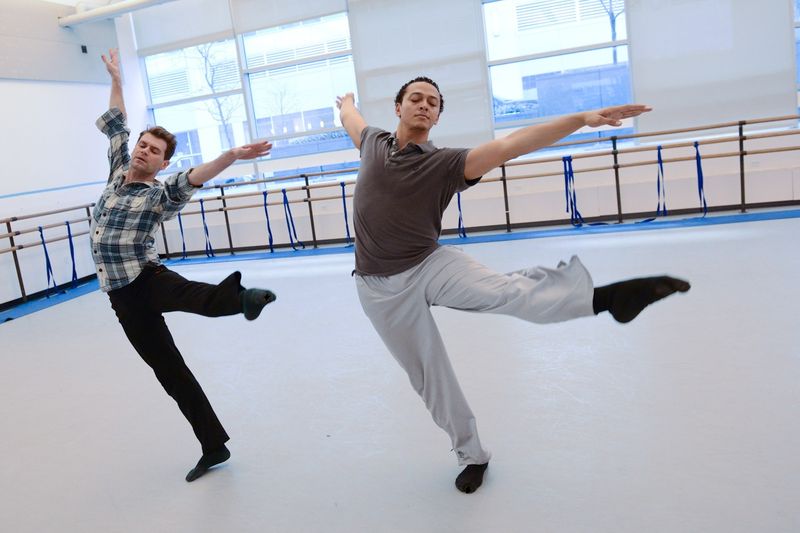
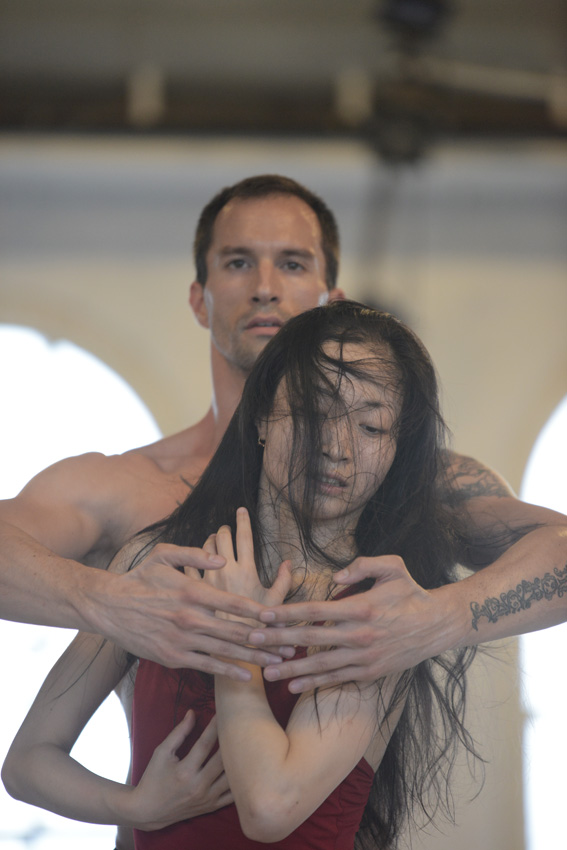
    Above: Xiaochuan Xie and Ben Schultz rehearsing Martha Graham’s RITE OF SPRING; photo by Nir Arieli.

    Thursday March 20th, 2014 – Spring was in the air as Martha Graham Dance Company took the City Center stage tonight in a grand performance; Graham’s two (very different) Springtime classics – APPALACHIAN SPRING and RITE OF SPRING – framed the premiere of Nacho Duato’s darkly primeval DEPAK INE. The dancing was on such a phenomenal level, with the Company’s established and rising stars joining forces to create a vivid ensemble of boundless energy and commitment. And I was so happy to run into my fellow Graham-fan, the incomparable Wendy Whelan.

    Whenever Janet Eilber, the Company’s Artistic Director, steps forward to welcome us to a Graham event, I always wish that she was dancing. After her brief opening remarks, the curtain rose on a performance of the 70-year-old Graham masterpiece APPALACHIAN SPRING that had all the freshness and vigor of youth. The iconic Noguchi setting – so bare-boned yet so evocative – and the Americana-essence of Aaron Copland’s score were inhabited by a stellar cast and the ballet soared yet again.

    As the Pioneering Woman, Katherine Crockett’s goddess-like stature imparted a strength of heart and soul drawn from the land and an indomitable feminine spirit. Katherine’s power of gesture and her royal extension, as well as her resonant stillness as she observes the wedding rituals, create an unforgettable character. Lloyd Knight was likewise on spectacular form as the Preacher; whether standing stock still upon the Rock of Ages or marshalling his joy-filled followers, Lloyd’s strength of personality and technical mastery made for a vivid portrayal.

    Blakeley White-McGuire as the bride illuminated the character of this young and hopeful woman with a perfect mixture of vulnerability and joy. Dancing with pure clarity, Blakeley’s nuanced portrayal – both in action and reaction – was so inspiring. She was joined by the long-limbed Abdiel Jacobsen as the Husbandman in what I believe was a role-debut. Abdiel’s beautiful line and fluency of technique were aligned with a far-gazing handsomeness, making for a compleat performance. Towering over his bride, it was clear Abdiel would be Blakeley’s pillar of strength thru all the changing years that the couple would face. The poetry of their portrayals brought tears to my eyes.

    The world premiere of DEPAK INE, created by Nacho Duato to a score by Arsenije Jovanovic and John Talabot, drew a fervent ovation from the audience. Darkness reigns as the curtain rises, with the prone body of PeiJu Chien-Pott face down on the stage-left floor. She will remain totally still throughout the ballet’s opening movement.

    Emerging from the shadowed recesses at the rear of the stage, other dancers approach PeiJu. They soon fall into a kozmic dance with many comings-and-goings, and laced with spectacular feats of partnering. Absolutely amazing dancing from Natasha Diamond-Walker, Blakeley White-McGuire, Ying Xin, Abdiel Jacobsen (in a striking long-skirted costume), Lloyd Knight, and Lorenzo Pagano. To deep chant and exotic jungle sounds, these thrilling dancers do inhuman things with their bodies: unstinting power and commitment propel them through physical feats of uncanny speed and dexterity. 

    Then PeiJu begins to stir; she rises out of a drugged slumber as three dark-clad men – Tadej Brdnik, Ben Schultz and Lloyd Mayor – loom up out of her nightmare. A staggeringly ominous Rave beat fills the hall with a relentless loudness that threatens to bring the house down, literally. PeiJu, in a fantastical performance, is assulted by the men…ravaged, thrown down, lifted and passed from one to another. At last she returns to her silent sleep; in a repetition of the ballet’s opening passage, the other dancers approach her as at the start. At last she is borne away by Abdiel as the curtain falls.

    Giving herself over fully to the choreographer’s demands, PeiJu Chien-Pott scored a definitive triumph. All of the dancers as well as the choreographer were hailed with a mammouth standing ovation. The work, while impressive and sonically overwhelming, is a bit too long and somewhat predictable: that the woman will rise from her stupor and return to it, and that the ballet will ‘start again’, and that she’ll be carried off…all of this happened as if on cue. For me, it was the mastery of the ballet’s ultra-demanding choreography by the dancers that made DEPAK INE worthwhile.

    Sadly, the evening’s closing RITE OF SPRING was seriously compromised for those sitting around me by the incessant chattering of a small child a few seats away. How inconsiderate of the mother not to take the child out; thus those spell-binding moments of piano/pianissimo which Stravinsky created to offset the forceful sonic assaults of his music were simply ruined.

    Nevertheless, this is a Graham masterpiece that thrills us to the core. Graham’s marvelous use of stylized movement for the male and female corps, their ritualistic gestures and worshipful kneelings, fill the stage with a sense of structure and the relentless process of a rite from which the victim cannot possibly hope to escape.

    Snatched by the Shaman almost at random from the back of one of the acolytes, Xiaochuan Xie is suddenly transformed from a nameless girl to the center of the community’s sacrificial dances. Her performance is at once ravishing and disturbing. The lovely and vulnerable Xiaochuan’s terror is ignored by the implacable Shaman intent on shedding her blood to appease the unseen gods and guarantee a bountiful harvest. Ben Schultz is simply ideal as the Shaman, his physique symbolic of his god-like stature in the tribe, and his focus on his duty to the gods intense and unwavering. Maurizio Nardi and Tadej Brdnik are the ministers of death, and the entire ensemble dance with tremendous power and inspiration.

    In the end, the two great Graham works were what made the evening resonate. The dancing all night was simply thrilling and Martha’s double tribute to Spring showed us why her divine gifts still keep giving, some hundred-and-twenty years after her birth. Choreographers come and go, geniuses stay with us forever.

  • Amanda Selwyn’s Green Afternoon

    Impr 176 copy

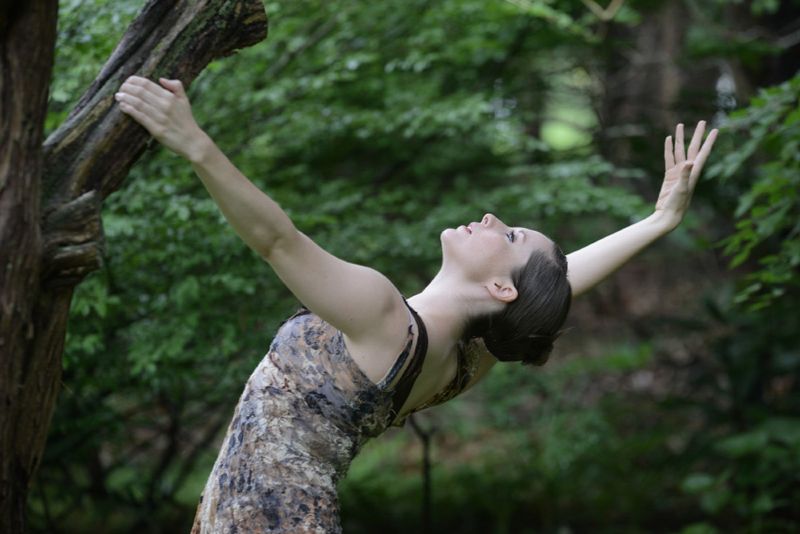
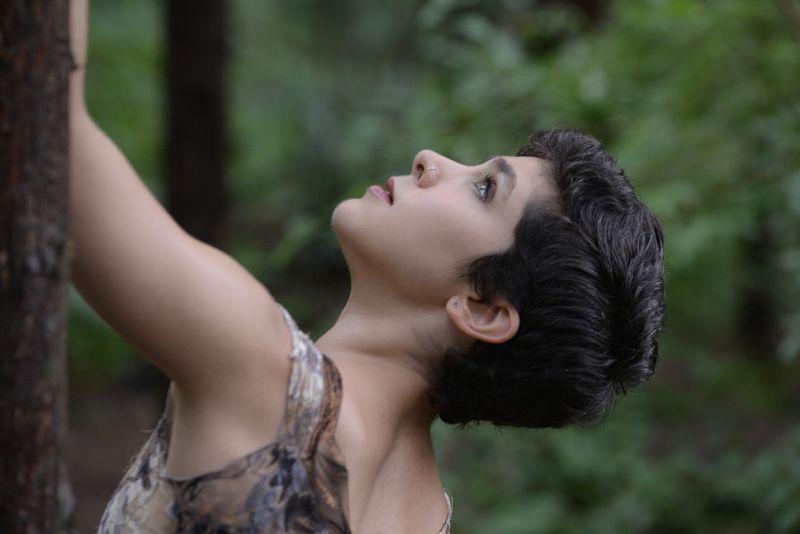
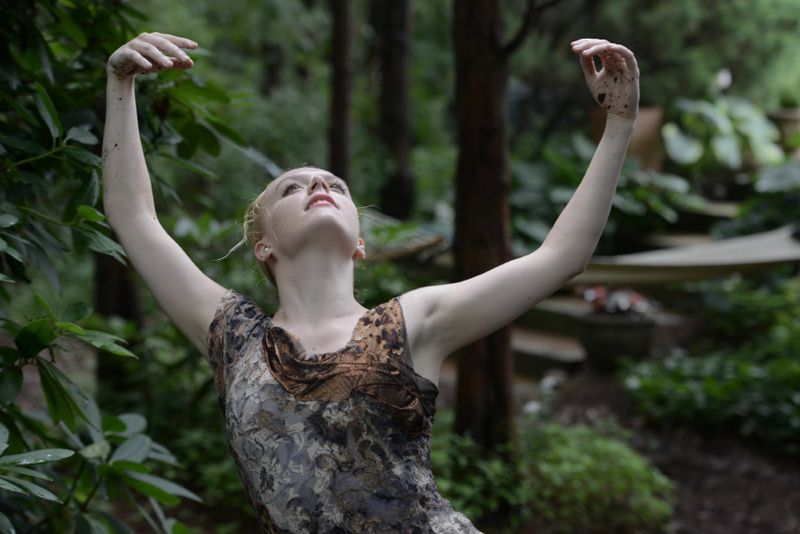
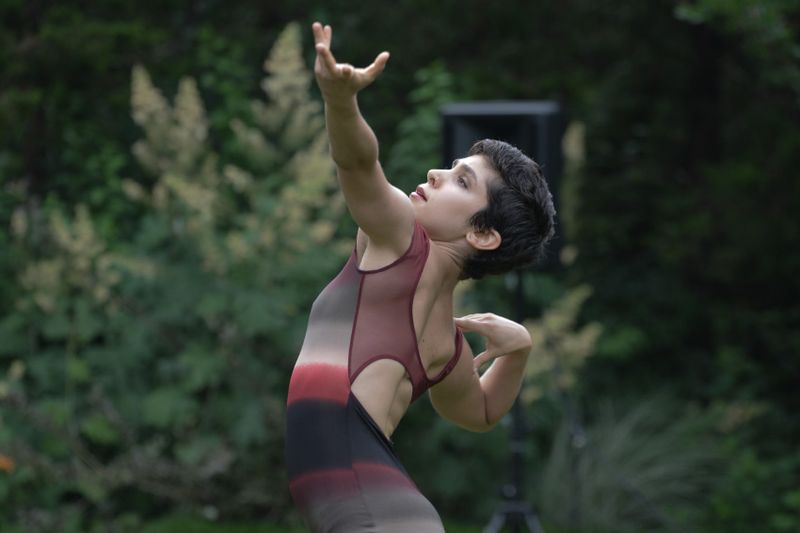
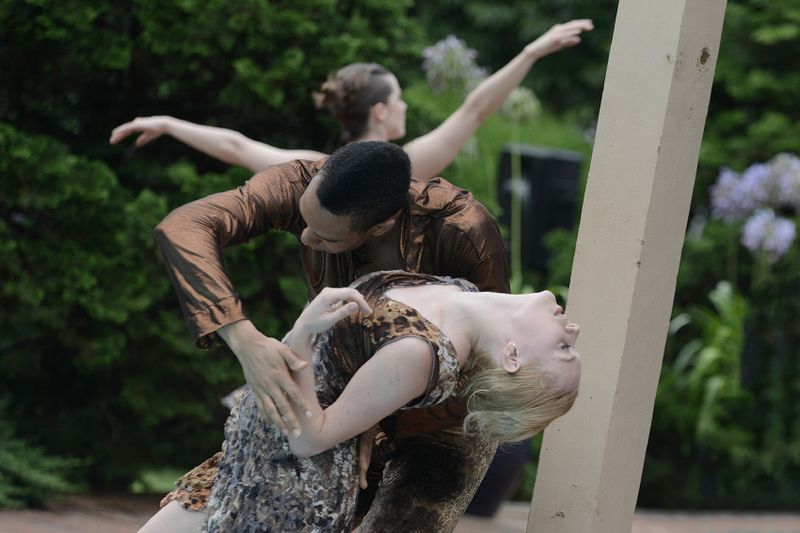
    On June 13th, 2013 Amanda Selwyn Dance Theatre offered a summer evening of dance at a private function in East Hampton. Photographer Nir Arieli produced these images of Amanda’s dancers from this outdoor event.

    Click on each photo to enlarge.

    Impr 052 copy

    Jenny Gillan

    Impr 037 copy

    Emily Pacilio

    Impr 115 copy

    Torrey McAnena

    Impr 098 copy

    Randall Anthony Smith

    Prmnc 016 copy

    Emily Pacilio

    Impr 016 copy

    Sarah Buscaino

    Impr 062 copy

    Jenny Gillan

    Amanda Selwyn Dance Theatre recently performed IT’S A GAME at Manhattan’s New York Live Arts; an article about the performance may be found here.

  • A Dance Experience to Cherish

     NIR_4591 - Copy

    Above: Attila Joey Csiki and Clifton Brown. Photo by Nir Arieli. Click on the image to enlarge.

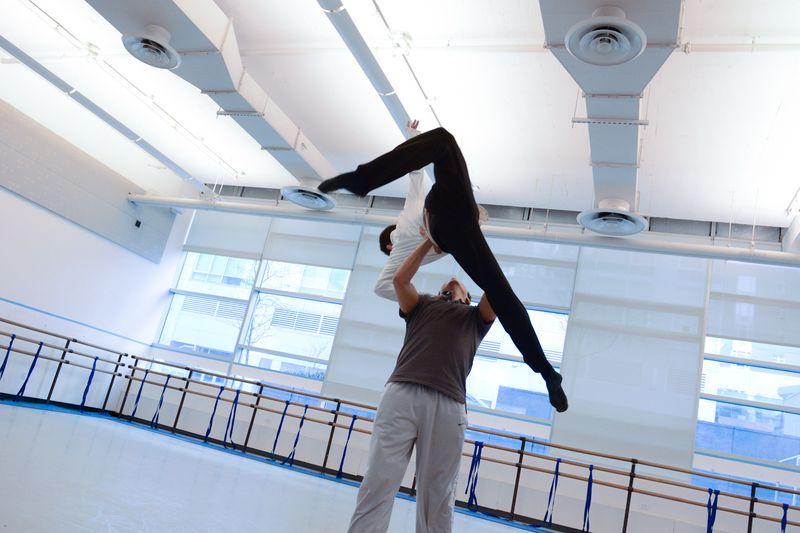
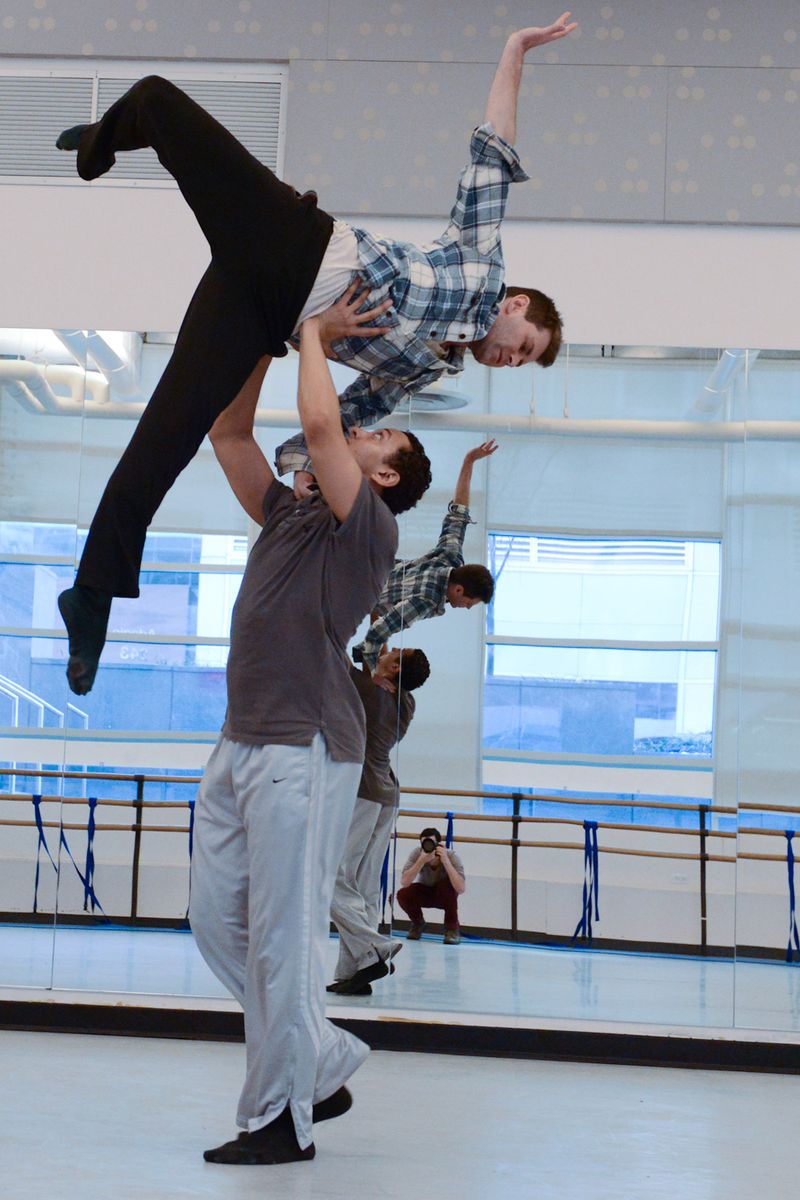
    Sunday January 27, 2013 – I’ve had the great good fortune in recent years to witness some truly unforgettable moments in dance that the rest of the world isn’t privy to. In the Autumn of 2012 Wendy Whelan gave me a precious gift when she arranged for me to sneak into one of her rehearsals – it was such a transformative experience, though I never wrote about it on my blog for fear of getting her in trouble with the powers that be. I had the memorable opportunity of watching Adrian Danchig-Waring’s first-ever rehearsal of APOLLO. And I was at a MORPHOSES rehearsal when Pontus Lidberg kept dancing after the scheduled studio time had run out. He didn’t ask me to leave, he simply danced on in his own private world and I sat there in a breathless state. Yuan Yuan Tan, Katherine Crockett, Maria Kowroski, Laura Halzack, Veronika Part…I’ve seen them all at their most beautiful – up close and personal – freed from the theatricality of a performance and simply working on their craft, immersed in the music and the movement. 

    Dancers and choreographers have been so kind and generous, welcoming me into their studios and sharing the creative experience with me. In this way I have gotten as close as one can get to dance without actually dancing. At the end of a rehearsal, the dancers invariably will come up for an embrace and always they will say: “I’m all sweaty!” Your sweat is my holy water, please don’t apologize.

    NIR_4238

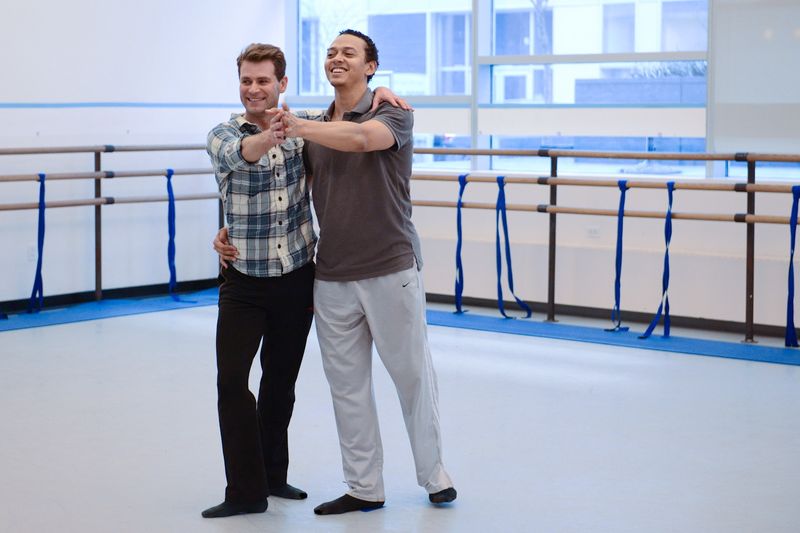
    So a week ago Attila Joey Csiki (above) contacted me and invited me to a reherasal of a Lar Lubovitch duet, set to Mozart, to be danced by Attila and Clifton Brown at an upcoming gala in Washington DC.  Mozart, Lubovitch, Attila and Clifton…what could be finer? I arranged to meet photographer Nir Arieli at the MMAC studios; it turned out to be an hour of dance that I’ll never forget.

    Lar Lubovitch created this dancework in 1986 – when the AIDS epidemic was decimating the world – and he named it CONCERTO 622 after the Mozart work usually referred to as “the Clarinet Concerto”. The pas de deux for two men is danced to the concerto’s adagio, music which became familiar to an audience that stretched far beyond the world’s concert halls when it was played in the epic film OUT OF AFRICA.

    NIR_3893 copy

    We arrived at the studio today for the final hour of the rehearsal; Clifton Brown has danced this work before but Attila Joey Csiki has not. Mr. Lubovitch had them ironing out the timing of certain passages, including a big lift which must be honed to perfection to make its effect. The boys ran thru the segment several times, and Clifton’s keen eye and astute preparation soon had it mastered: his wonderfully deep plié as Attila came hurtling towards him was something to behold, and he swept his fellow danseur overhead in one sweepingly seamless motion.

    NIR_4296

    Then Mr. Lubovitch put the music on and the dancers began the first of two full runnings of the duet. Quite honestly my reaction surprised me: chills ran up my spine, my heart started racing, I could barely keep myself from crying. This is a piece that transcends its components – music, choreography and dancing – and speaks to us of things that can only be felt, not seen. The two men are tender and noble, they console and support one another and their passion pulsates just below the surface. The duet is not sentimental or overtly romantic; it has a luminous purity that springs from the celestial melodies of the genius Mozart. The choreographer has found the heart of the music and exposes it to us in movement that seems inevitable. I’ll never again be able to listen to this adagio without seeing Attila and Clifton in my dreamworld.

    NIR_3589

    After a break and a bit more tweaking of certain partnering elements, the dancers began again and once again they moved me so deeply…words can’t express it. If they are this gorgeous in the studio, what will they be like onstage? I sincerely hope we will have a chance to find out.

    I hated to see the hour drawing to its close, and was feeling deeply grateful to Mr. Lubovitch for his kindness in allowing us to be in the studio today. Attila and Clifton were packing up, beautifully drenched in perspiration; their mutual affection and admiration was so evident: “We used to be rivals,” Attila said. “And now we are friends dancing together.”

    More images from the rehearsal:

    NIR_4885

    Clifton Brown

    NIR_4740

    NIR_4541

    NIR_4571

    NIR_4362

    NIR_4924

    All photos by Nir Arieli.