Tag: NY Philharmonic

  • Ben Weaver @ The “New” Geffen Hall

    Geffen hall

    ~ Author: Ben Weaver

    Saturday November 19th, 2022 – It is wonderful to be back at David Geffen Hall to hear the New York Philharmonic. I love the new space, which is far more attractive than the previous relic of 1960s hideousness. Bringing the stage forward to make room for seating  behind the orchestra – something practically every European concert hall has been doing for decades – shrinks the auditorium and creates an intimate space. I thought I’d be distracted by the people behind the orchestra, but the design of the stage – with its horizontal lines and wood trims – creates a nice frame for the eye to focus, so my gaze was always on the players, rarely above them. (Except when someone turned on their phone flashlight to find something they dropped…that’s when one wishes one had a cannon to shoot the audience member right into the sun.) But otherwise, the hall is gorgeous.

    And the sound is spectacular. For decades NY Philharmonic audiences had to listen to music land with a thud and the glorious sound of this orchestra never bloomed. No more. This was the reason these renovations were essential and long overdue. We can finally hear this great orchestra in all its sonic glory! Tonight’s concert gave us a wide range of musical styles to appreciate the varied nuances of the new acoustic.

    The announced program for this concert was supposed to begin with Jean Sibelius’ glorious tone poem Oceanides. Alas, it was replaced with an Igor Stravinsky piece I’ve always found to be rather a waste of time: Symphonies of Wind Instruments. Composed in 1920 and revised in 1945-47, it is a shapeless, senseless series of tedious honking. Occasionally echoes of Le Sacre du printemps do not save it. Its premiere was not a success (“hisses and laughter”) and with good reason. Fortunately it only lasts 10 minutes. One can’t fault the wonderful Philharmonic wind section here because they played wonderfully and it is good to hear them play in isolation. I wish more music was programmed generally to showcase specific sections of the orchestra.

    Béla Bartók’s Concerto for Two Pianos, Percussion, and Orchestra, composed in 1937 as a sonata for two pianos and transformed into its current concerto form in 1940, is a virtuosic tour-de-force. One can easily see that the work was conceived as a sonata for two pianos because the orchestral contribution is rather spare throughout. The two pianists dominate, but the percussionists get a fair workout as well. The caustic, rhythmic Bartók is on full display here, the pianists and percussionists taking turns trading blows. The first and second movements are particularly aggressive, though the second movement in a more creepy way. The strings are struck with bows, adding to the percussive nature of the piece. Pianists Daniil Trifonov and his former teacher Sergei Babayan were spectacular. Playing – and occasionally swaying – in perfect sync, their ability to bring beauty and lyricism into Bartók’s most caustic music was magical. The three Philharmonic percussionists – Christopher Lamb, Daniel Druckman  and Markus Rhoten – were in perfect sync with the two star pianists. The lighter and almost humorous final movement was a lively conclusion to this difficult work. Conductor Hannu Lintu coordinated everyone spectacularly.
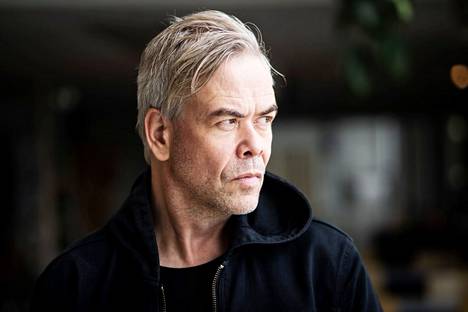
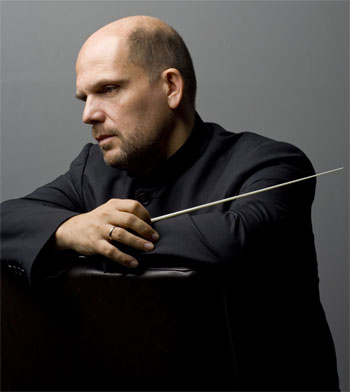
    Hannu lintu

    Finland – home of Maestro Lintu (above) – dominated the second half of the program. Kaija Saariaho’s Ciel d’hiver – lifted from her larger 2003 composition Orion – was a gorgeous sensory experience. Saariaho has a highly unique sound palette, her ability to create otherworldly sounds are extraordinary. There’s a timelessness and weightlessness to her music; it’s as if it has always been there, like primordial space – it is all around us. The transparency of the sound can now be appreciated in the new acoustics.

    Jean Sibelius’ Symphony No. 7 – composed in 1924 – finally allowed us to hear the Philharmonic in its combined glory, and to appreciate the acoustics of the new Hall. If Saariajo’s music is like a frozen lake, Sibelius is a surging river and ocean of sound. His ability to make you feel the cold wind of a Finnish winter has always been a distinct feature of his extraordinary music. A relatively brief single-movement work, the Seventh realized Sibelius’ desire to pare down his music to the barest essentials. (Sadly he seems to have pared himself down to nothing just two years later. Only two major works followed the Seventh, and then Sibelius stopped composing – though he lived another 30 years!)

    The symphony is made of 11 interconnected sections, some highly lyrical (recalling the more Romantic Sibelius of yore), and some far more abstract. The symphony’s final note, held by the strings, raising in volume and intensity – by turns sinister and unfinished – always reminds me of the harrowing Interlude in Berg’s Wozzeck, after Wozzeck has murdered Marie. A sustained note full of terror and hysteria. How can a single note contain so much emotion? And yet it can. Here Sibelius, like Berg before – although more subtle than Berg – shows us how.

    Hannu Lintu has this music in his bones and brought out the most extraordinary performance from the Philharmonic. The climaxes were shattering, and because of the clear acoustic in the new Hall, they were shattering in volume and clarity, as well as emotion. The music simply glowed.

    ~ Ben Weaver
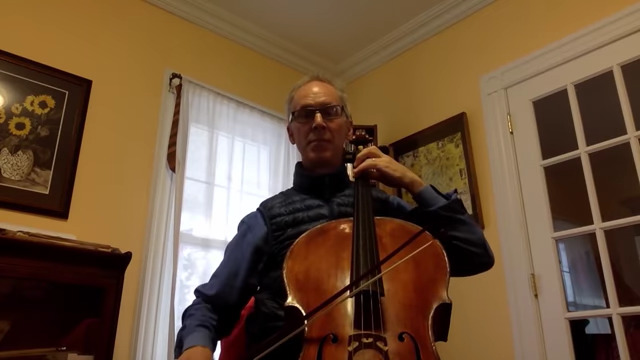
  • NY Philharmonic Cellists ~ Bach @ Home

    Snapshot bach celli

    Above: NY Philharmonic cellist Eric Bartlett

    Cellists of The New York Philharmonic play Bach’s Suite No. 1 for Unaccompanied Cello in G-major from their homes during the pandemic.

    Watch and listen here.

  • Yuja Wang @ The NY Philharmonic

    Thumbnail_Photo by Caitlin Ochs

    Above: pianist Yuja Wang with the NY Philharmonic, photo by Caitlin Ochs

    ~ Author: Ben Weaver

    Wednesday March 27th, 2019 – March 27th was supposed to be an extra-special evening at the New York Philharmonic: the orchestra had announced a one-night-only performance by legendary pianist Maurizio Pollini in honor of the 40th anniversary of his debut with the orchestra (also functioning as a Pension Fund Benefit Gala). Pollini’s appearances with the orchestra have been infrequent over the years, though he did play Chopin’s Piano Concerto (same one as his 1969 debut, Op. 11) in 2015. Alas, it was not to be: the orchestra announced that because of an illness, Mr. Pollini would not be able to appear. Though Mr. Pollini is truly irreplaceable, the Philharmonic did manage to secure a starry replacement: Yuja Wang, in town for appearances at Carnegie Hall, agreed to step in on short notice. The program remained the same: Schumann’s ever popular Piano Concerto in A minor was the centerpiece and Ms. Wang did not disappoint. 

    Though it is alleged that many pianists do not like performing Schumann’s sole piano concerto because they do not find it sufficiently technically demanding, sometimes finding the heart of music can be more demanding than any technical fireworks. Ms. Wang, dispatching every note with ease, also plumbed the depths of Schumann’s great work from the opening moments. The solo section at the beginning of the concerto was played quietly, wistfully, almost regretfully, before the orchestra surged forth. Maestro Jaap van Zweden, always a considerate accompanist, allowed Ms. Wang plenty of leeway to shape her solo moments. Ms. Wang summons a clean, beautiful and strong sound from the Steinway. The lovely slow movement was full of feeling and grace, and the exciting finale was playful and rhythmically alive.

    Ms. Wang is beloved by NY audiences and they demanded encores: she is famous for generous amounts of encores, though tonight she may have been asked to limit it to only two (the audience wanted more.) A gorgeous transcription (by Liszt) for solo piano of Schubert’s heartbreaking Lied Gretchen am Spinnrade kept the audience holding its collective breath. And pianist Arcadi Volodos’ entertainingly jazzy/bluesy arrangement of Mozart’s famous Rondo Alla Turca from the Piano Sonata No. 11 brought down the house. (My companion, whose husband is an established jazz musician who regularly performs with artists like Norah Jones, said approvingly: “You go girl!”)

    The Schumann concerto was sandwiched between two orchestral works. Johan Wagenaar’s forgotten Cyrano de Bergerac Overture, Op. 23 opened the program. This very melodic and entertaining 1905 composition, with its echoes of Wagner and Richard Strauss, deserves more attention than it gets. (Before Maestro Zweden reintroduced it to the Philharmonic’s rep in 2018 it was last performed by the orchestra in 1921 under Willem Mengelberg.) 

    The concert closed with a familiar rendition of Beethoven’s Symphony No. 7, which Wagner once called “the apotheosis of dance.” Maestro Zweden and NY Philharmonic musicians played, one could inelegantly say, the hell out of it. The moody opening quickly gave way to a series of rapturous melodies and dances. The famous Allegretto – many conductors go much too heavy, others speed through it thoughtlessly – was perfectly judged by Zweden. The rest of the symphony built to a thrilling, breathtaking and breathless finale.

    ~ Ben Weaver

  • Shaham|Sokhiev @ The New York Philharmonic

    43631700_10158224011972293_9087441948343533568_n

    Above: violinist Gil Shaham and conductor Tugan Sokhiev, photo by Chris Lee/NY Philharmonic

    ~ Author: Oberon

    Thursday October 25th, 2018 – An all-Russian evening at The New York Philharmonic. Tugan Sokhiev, Music Director of Orchestre National du Capitole de Toulouse, was making his Philharmonic debut on the podium, with Gil Shaham as violin soloist.

    Alexander Borodin composed In the Steppes of Central Asia to honor Tsar Alexander II on the 25th anniversary of his coronation. The eight-minute work has an ethereal start, from which emerges a plaintive clarinet solo played by Pascual Martínez-Forteza; this artist’s sumptuous tone was a joy to hear throughout the evening. Maestro Sokhiev held sway over the music, which was gorgeously played – especially by the celli. Solos for English Horn and flute, a rich passage for the horns, and the violins in a tutti of cinematic sweep kept the ear constantly allured. The music becomes majestic, worthy of a venerable Tsar.

    As the work progressed, I was very much put in mind of the composer’s opera Prince Igor, and found myself wondering where Peter Gelb’s expensive poppy field might be languishing.

    Mr. Shaham then joined the orchestra for Prokofiev’s Violin Concerto No. 1. This work was choreographed by Jerome Robbins in 1979; the ballet, Opus 19/The Dreamer, is by far my favorite from the Robbins catalog, and is frequently performed by the New York City Ballet.  It’s always wonderful to experience music I’ve come to know at the ballet in its original concert setting, and it goes without saying that the choreography danced in my mind during Mr. Shaham’s marvelous performance.

    Prokofiev’s knack for blending lyricism and irony was a continual source of pleasure in tonight’s performance by Mssrs. Shaham and Sokhiev. The concerto’s haunting opening, with the shining, silver – almost astringent – sound of Mr. Shaham’s violin draws us into a dreamlike state. Everything is magical, with the violas pulsing as the soloist engages in shimmering fiorature. The music becomes driven, only to meld into a slow cadenza. Then a chill sets in, with the flute shimmering. Mr. Shaham, returning to the original melody, lets the sound vanish into thin air.

    In the ensuing Scherzo, the music abounds in sarcasm; Mr. Shaham met all the technical demands with impetuous energy, including some really gritty playing. This is such amazing music to experience, right up to its sudden end.

    The the work’s final movement commences with a moderate-tempo, march-like theme, first played by the bassoon, and later by the brass.  Mr. Shaham’s playing of the songful melodies Prokofiev gifts him was luxuriantly modulated. His tone taking on a nocturnal iridescence, the violinist made the concerto’s final moments pure heaven.

    Mr. Shaham played a 30-second delight of an encore his announcement of which I could not hear. It was witty little treat, but a cellphone interjection at the start was not welcome.

    Sokhiev-8-crdit-Patrice-Nin-1024x680

    Above: Maestro Tugan Sokhiev, photo by Patrice Nin

    I last heard Tchaikovsky’s Symphony No. 4 played by the Philharmonic in 2016 in at performance that impressed and even thrilled me sonically, without reaching me on a spiritual level. Tonight, Maestro Sokhiev achieved that last distinction in a performance of soaring lyricism and searing passion, played splendidly by the orchestra. Perhaps it is true that it takes a conductor with a Russian soul to find the deepest resonances of Russian music.

    Tchaikovsky’s fourth symphony grew out of a highly emotional period of the composer’s life. After a disastrous attempt at marriage, he suffered from writer’s block whilst also struggling with depression and pondering his sexuality. He finished the symphony in 1877 and it was premiered in 1888.  The the opening bars of music stand as a metaphor for Fate; in Tchaikovsky’s own words: “…the fatal power which prevents one from attaining the goal of happiness”.

    This evening’s performance was thrilling in every way. From the splendid opening and straight thru to the end, the orchestra were on peak form. The depth of sound from the ensemble – and the numerous solo passages that frequently sing forth – constantly impressed, and the Maestro had everything under fingertip control. From the grandest imperial passages to the uncanny delicacy of the more restrained moments, his mastery of colour and balance seemed ideal. My companion for the evening, Ben Weaver, who knows this music inside out, was very taken with Sokhiev’s pacing ,which made the symphony seem fresh to him.

    The Philharmonic’s soloists produced an endless flow of enchanting playing: Mr. Forteza and his colleagues – Robert Langevin (flute), Sherry Sylar (oboe), and Judith LeClair (bassoon) – seized upon the generous melodic gifts which Tchaikovsky lavished upon them. The horns were plush, the trumpets and trombones commanding in their fanfares. The timpanist was a marvel of velvet touch is the waltzy passage of the first movement, and in the ‘interlude’ of the otherwise Allegro finale, the triangle sounded with a pristine glimmer.

    There seemed to be a particular sheen on the string playing tonight, and they made the pizzicati of the Scherzo dazzlingly alive. Watching Maestro Sokhiev cue them and entice their keen manipulation of the dynamic range during this captivating movement was a treat in itself.

    In recent days, the feeling that we are poised now of the edge of an abyss makes music, poetry, art, and Nature seem more vivid and essential than ever. A beautiful face among the crowd tonight captured my imagination, but filled me with apprehension that such innocence may soon be swept away in a tide of hatred.

    ~ Oberon

  • Salon Seánce @ Tarisio

    ~Author: Scoresby

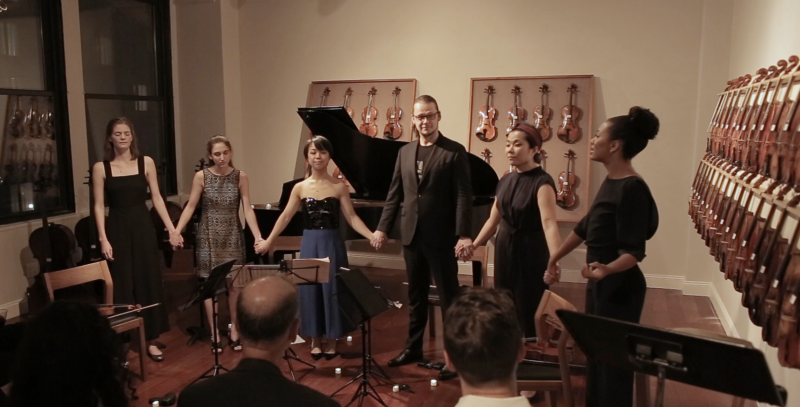
    Thursday October 19 2018 – After the many concerts I’ve reviewed in the past week or so that had theatrical elements, ranging from the NY Philharmonic’s MUTED to Berlioz’s Lélio, it was satisfying to hear a performance that finally seemed to strike the rare balance between excellent music and intellectually interesting theater. Salon Séance, co-founded by siblings violinist Mari Lee (an ensemble connect Alumnus) and Simon Lee (who provided the research for the work), performed its unusual structure in the show room of the string instrument auction house Tarisio with electric candles all over the stage and a backdrop of 50 or so rare instruments. Essentially, this performance consisted of full pieces of music by a specific composer being played, punctuated with short theatrical monologues that illuminate context in which those pieces were composed while threading a common theme through it all. The theme of this concert about Britten and Auden was addressing the question “How Do I live in a Broken World?”

    Screen Shot 2018-10-24 at 5.42.55 PM
    Above Ms. Valla leading the musicians in contacting Britten’s spirit; photo credit: Rodrigo Aranjuelo

    In the opening, actress Sagine Valla was alone​ as​ the five​ musicians walked toward the stage speaking to her. Because of this unusual setup there was none of the traditional clapping as the musicians entered, a welcome relief from the usual program. After a bit of awkward dialogue, the performance became interesting when the musicians and Ms. Valla gathered in a circle to summon the spirit of Benjamin Britten. After a few unsuccessful attempts, she suggested for the musicians to play something to rouse Britten. The quartet then launched into the first movement of his String Quartet No. 1, Op. 25 played by fantastic chamber musicians and the performance didn’t let up until the end of the evening.

    The quartet performing included violinists Rebecca Anderson (an Ensemble Connect Alumnus) and Mari Lee, cellist Mihai Marica (a regular at CMS at Lincoln Center), and violist Ayane Kozasa (a founding member of the Azuri Quartet). The first movement of this piece alternates between two contrasting themes that slowly develop using each other as springboards. The first is a slow ethereal theme layered with nostalgia played with the violins and viola in the highest ranges of their instruments while the cello plucks an almost child-like theme in a completely different register. Ms. Anderson, Ms. Lee, and Ms. Kozasa did a wonderful job of sustaining the high-pitched melody cleanly while Mr. Marica’s warm pizzicatos filled the room. The group brought verve to the raucous second theme, but they were best in the closing bits of the movement as the first theme turns from sweetness to longing.

    Instead of moving into the next movement, Ms. Valla (now taken by Mr. Britten’s spirit) began to talk in the first person about Britten’s life during the time the quartet was composed. Ms. Valla (with Noelle Wilsons’s brilliant script) painted Britten’s move to New York and the way his love of California made him long to be back in England. She also introduced the moment Britten met poet W.H. Auden who later became the core of the evening’s drama.

    After a riveting performance of the other three movements, Ms. Lee, Ms. Valla, and pianist Julia Hamos joined together for the most creative part of the evening. While Ms. Lee and Ms. Hamos performed the Waltz, March, and Moto perpetuo from Britten Violin Suite, Op. 6, Ms. Valla gave a monologue about Britten’s travels through Europe. At first, she talked about how he went to Vienna and found it magical just as the Waltz began. As Ms. Valla transitioned to talk about the way Britten felt alienated by the rise of Nazism the music moved into the sinister the March. Ms. Valla’s monologue wasn’t constant, there was plenty of space for the music too. Instead it was sort of a trio between the three performers. While Ms. Lee and Ms. Hamos were a bit too loud for Ms. Valla at times, it is hard to play a difficult piano part softly enough for a speaker in such a small space (the audience fit only perhaps 40 people).

    The drama of the night reached its peak when the text shifted back to Britten’s fraught relationship with Auden as the Moto perpetuo begins. Here Mr. Lee’s detailed research and Ms. Wilson’s energetic script paid off as Ms. Valla captured Britten’s jealously and infinite admiration for Auden, all while their personal connection soured. As the music broke off, Ms. Valla recited an emotionally abusive letter Auden sent to Britten, essentially lambasting him for what Auden thought was naivety and privilege on Britten’s part. Ms. Valla then claimed to lose Britten’s spirit from exhaustion and the piece goes into intermission.

    Screen Shot 2018-10-24 at 5.48.16 PM

    Above: Ms. Anderson, Ms. Lee, Mr. Marica, and Ms. Kozasa; Photo Credit: Rodrigo Aranjuelo

    After intermission, “Britten” talked about the horror he felt at World War II and performing at the Bergen-Belsen Concentration Camp with Menhuin for survivors, “I never felt the same after that trip.” It was his vehement belief that art was a panacea for those dark times. With this in mind, the quartet performed the complete String Quartet No. 2, Op. 36 which was composed contemporaneously. While the first two movements are lovely, the Chacony is one of Britten’s most substantial pieces of music. Each quartet member (Ms. Lee and Ms. Anderson switched positions) gave her/his all in the difficultly paced movement, getting every nuance from the sunny bursts of optimism that end the work to the sinewy dissonant textures that start the movement. It was among the liveliest chamber music performances I’ve heard this year, but with Ms. Valla’s speech in mind about the war it became even more emotionally potent.

    The genius of Ms. Lee’s production and Mikael Södersten’s direction is that the speech never sounds corny and the music is from top notch performers. This a serious historically informed piece about Britten’s inner life that links directly with the music they perform, almost like immersive program notes that both the novice and aficionado can enjoy. My only wish is that there was more speech in the second half of the program. Nonetheless, it is a relief from the staid concert environment. From the audience members I talked to afterword seemed to make even the most jaded listeners seemed won over – a rewarding evening all around. I look forward to seeing the project’s next production with the next composer. 

    ~Scoresby

    To recap, the performers:

    Rebecca Anderson, violin

    Julia Hamos, piano

    Ayane Kozasa, viola

    Mari Lee, violin/co-creator

    Simon Lee, researcher/co-creator

    Mihai Marica, cello

    Mikael Södersten, director/advisor

    Sagine Valla, actor

    Noelle P. Wilson, playwright

    The program:

    Britten String Quartet No. 1, Op. 25

    Britten Violin Suite, Op. 6 selections

    Britten String Quartet No. 2, Op. 36

  • Berio Sinfonia@NY Phil

    Author: ~Scoresby

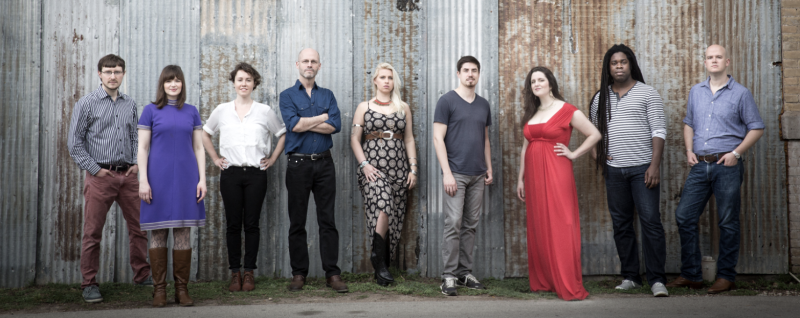
    Thursday May 24 2018 – “The unexpected is always upon us. Well, I must have said this before since I say it now” says Berio’s sprawling five movement work for orchestra and microphoned vocal octet: Sinfonia2018 marks the 50th anniversary of Berio’s opus magnum. It was commissioned by the NY Philharmonic for its 125th anniversary (Berio delivered the score a year late) and the work, more than most, feels like a stamp of its time. Written for Leonard Bernstein and the jazzy pop group the Swingle Singers originally, the music has a wide range references, from Mahler to Boulez. The text draws from Beckett, Lévi-Strauss, and Berio’s own writings. Some of the words are purposely difficult to hear, moving in and out of focus at Berio’s will. With music that is both funny and saturated with anxiety of events of 1968, the meaning of this piece is purposely obscured. 

    Screen Shot 2018-05-30 at 2.15.20 PM

    From the Archives: Composer Luciano Berio

    It is a commentary both in a universal sense and a musical sense (the performers even narrate the music in real time, almost like a sports commentator in the third movement). 50 years later, it feels both relevant and a glimpse into a specific period. Philosopher Walter Benjamin wrote in his Thesis on the Philosophy of History: 

              This is how one pictures the angel of history. His face is turned toward the past . . . The storm irresistibly propels him into the future to which his back is turned, while the pile of debris before him grows skyward.  

    I never thought I’d hear a musical representation of Benjamin’s words, but Berio is able to so in this piece.

    Each of the first four movements (the fifth was added a few years later) has its own feel and exists in a completely different sound world then the others. The fifth ties the disparate entities together in a sort of amalgam of the movements. This evening, the New York Philharmonic presented the work with Seymon Bychkov conducting his second week in a row and the young new music ensemble Roomful of Teeth in its New York Philharmonic debut. It should be said, because this work has such a textual importance it was surprising that the NY Philharmonic opted to not use either supertitles or issue a libretto – particularly for the third movement of the piece. While in English, Berio’s tricky text is important and purposely difficult to hear at times. 

    In the mysterious opening of first movement, Mr. Bychkov managed to guide the orchestra with an incisive sound while blending with the organ-like Roomful of Teeth. Speech is incredibly important to Berio, in his works he always mimics it. Here, the Philharmonic took this to heart. As a singer would finish a line, the instrumentalists would pick up the melody imitating the singer’s timbre and speech pattern. It was an impressive transformation from speech to music and vice versa, making the weaving textures of the piece wonderful to hear. This magical effect reminded me a lot of Boulez’s Répons, composed nearly twelve years later. This is the only performance of the work I’ve heard where I could clearly hear all of the singers – the Philharmonic’s sensitive accompaniment surely the reason. The second movement comprises of a memorial to Martin Luther King Jr. The precise and pouncing brass/percussion outbursts balanced the more Gregorian chant-like singing texture that sits below – at once given the impression of being static and lurching forward. Mr. Bychkov drew a wide range of color from the orchestra, balancing the many textures while still making the outbursts sound percussive. The music briefly devolves into a march near the end before dissipating and here the orchestra seemed to blend into quietness of the hall.

    Screen Shot 2018-05-30 at 2.17.19 PM
    Above: Some of the members of vocal group Roomful of Teeth; Photo Credit: Bonica Ayala of BONICA AYALA PHOTOGRAPHY

    The third movement is the most experimental music Berio wrote. It has the third movement of Mahler’s Symphony No. 2 underlying it (which is in itself a setting of Mahler’s St. Anthony’s Sermon to the Fish from Das Knaben Wunderhorn) with many additions. Berio makes sure that the Mahler is never lost through the entire movement, but it comes in out of focus while the singers do everything from congratulating the conductor to singing about the anxiety of the role of art in politics. Mr. Bychkov managed to untangle the chaos of the music by making each texture transparent and audible, even in the most cacophonous sections. Whether through melody or rhythm, the Mahler was easily heard as were the slew of extra-musical references. Roomful of Teeth for their part, made the movement at once entertaining and somber, even getting laughs from some audience members. During the serious moments, such as questioning the point of art, they took a dedicated tone. This is incredibly difficult music to perform, but I can’t imagine it being rendered better. 

    In the fourth movement which has many short outbursts and feels comparatively sparse and calm, Mr. Bychkov’s precise conducting and the orchestra’s sharp sound provided a respite. The fifth movement’s recollections brought in bits of each of the other movements, almost like a summary of the entire work. It was wonderful to hear because it felt like a retrospective that tied everything together. The much younger looking crowd than usual (many hipster looking men in their late 20’s/early 30’s, likely do to Roomful of Teeth’s dedicated following) gave a well-deserved enthusiastic applause. Mr. Bychkov, Roomful of Teeth, and the NY Philharmonic couldn’t have performed the piece better, showing why at 50 this remains one of the most important symphonic works composed.

    Returning from intermission, the New York Philharmonic did its annual Milestones speeches, honoring members of the New York Philharmonic who are retiring and who have been a part of the orchestra for a certain number of years. This year, they honored the 25th anniversaries of Oboist Robert Botti, Principal Violist Cynthia Phelps, violist Robert Rinehart, and horn player R. Allen Spanjer. They also retiring members Mark Schmoockler (44 years), Vladimir Tsypin (35 years), and Archivist Barbara Haws (34 years). Ms. Haws gave a stirring speech about the importance of history and the connections that occur from a true institution like the New York Philharmonic. Her speech dovetailed perfectly with the Sinfonia, “The present honors the past. 100 years ago, seems like today.” 

    Screen Shot 2018-05-30 at 2.20.50 PM
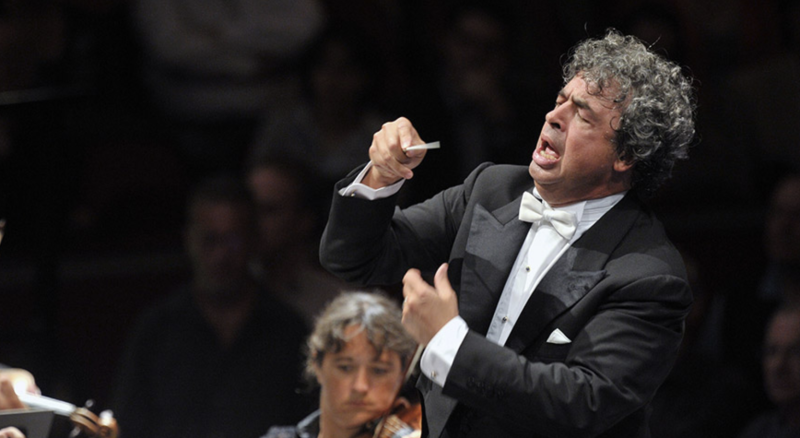
    Above: Conductor Semyon Bychkov; Photo credit: Chris Christodoulou

    After, the group performed Strauss’s last tone poem: An Alpine Symphony. The pairing of these two seemingly unrelated works comes from a line in the Sinfonia when the main narrator in the third movement makes a sarcastic jibe about the Alpine Symphony, saying something the effect of maybe a grand work like the Alpine Symphony will grow flowers (while discussing the lack of political potency music has). Mr. Bychkov and the Philharmonic were in top form. While this is personally my least favorite Strauss piece, Mr. Bychkov gave one of the best interpretations one could want. He made the strings sound vigorous, the brass warm, and the music layered. The orchestra crafted a round, gentle, and rolling sound – which contrasted the first half’s incisiveness well. During the exciting stormy sections, it was fun watching the percussionist get up to play the Thunder Sheet for its brief appearance. It was clear after this performance that Mr. Bychkov can get this orchestra to sound its best – I look forward to hearing him again soon.

  • Carter Brey: Schumann @ The NY Phil

    Tumblr_m2ozpelCxd1qa028to1_1280

    Above: NY Philharmonic principal cellist Carter Brey, with his colleague Eileen Moon

    Thursday April 28th, 2016 – Performances of Robert Schumann’s cello concerto seem to be something of a rarity, so I was glad of an opportunity to hear it at The New York Philharmonic tonight. I always love to see the orchestra’s principal players stepping out for a soloist turn. Carter Brey’s playing was most enjoyable, as was watching him play; his colleagues swamped him with affectionate applause as he took his bows.

    A new work by Franck Krawczyk opened the concert. I’m fairly open to new music; when new works are programmed, I am always hoping for two things: that the composer might go beyond good craftsmanship and somehow touch the soul, and that there would be something to remember in the music. I found both tonight in Mr. Krawczyk’s Après, having its world premiere in these performances.

    Both my companion and I felt a sense of narrative in Après: she envisioned a scene in nature with large trees and roaming beasts while I imagined the final days of a war and its immediate aftermath. The program notes imply no story of any kind, but the composer does pay homage to Beethoven, Kurtag, and Dutilleux. 

    Après commences with a poignant, intense theme, the lower voices glowering. A big passage for strings, with the violins soaring upward and the violas then exuding calm follows; a single sustained note from the clarinet introduces somber winds, and things turn ominous. For a few seconds the music ambles restlessly, with percussive effects introduced quietly: chimes, cymbals, snare drum. 

    Suddenly, a clattering arises: all the musicians begin to drum on their stands or tap their instruments. The horns herald an odd dance. An unsettled feeling – almost of being trapped – develops and there’s a huge build-up which evaporates to a single note from the piano.

    The crack of a whip sparks a march-like section, with loud chimes. The lower winds darken, only to give way to the work’s most fantastical passage: the mingling of solo harp and piano creates an eerie tranquility. So atmospheric! The winds re-enter, the violins lament, the harp and piano sound together again. Brass and percussion swell to a great loudness, the violas are plucked, and then, in a wisp, the harp gives us a mysterious ending.

    The youthful-looking composer appeared for a bow; having heard Après – with that bewitching harp and piano motif – and having read of Mssr. Krawczyk’s musical roots (he was an accordionist), I’ll be finding more of his music to explore in the less hectic days of Summer. Of the new works presented in recent months by the Philharmonic, I rate Après very highly indeed.

    Mr. Brey then appeared for the Schumann concerto. Both the work and his playing of it were thoroughly pleasing, as was the feeling he conveyed of truly enjoying the music and of listening to his colleagues attentively in those moments when the soloist is silent. 

    Three movements are listed for this concerto, but they are played without pauses in between so that it becomes an arc, a sort of cello tone-poem. It opens with a heartfelt, rather sad theme. Even when things become more animated, there is a sense of longing. Mr. Brey’s playing is subtle and refined in the more sustained passages: there’s a constant stream of melody for the cello over commenting strings. Rising scales recur, and the French horn has some lovely moments.

    There’s an ironic waltz, with the pensive cello playing deep and lulling as the violins and violas are gently plucked. A tender cello theme leads to what ‘should be’ a cadenza, but the orchestra continues to play a part.

    Suddenly a dance erupts, and Mr. Brey’s animated fiorature cover a wide range at high speed. The virtuosity continues, with the orchestra stately or turbulent by turns, to the end; the audience couldn’t restrain their applause, breaking in before the final note had faded away. The tall cellist was warmly hailed, embraced by the conductor, and lionized by his colleagues.

    The program concluded with the Brahms 2nd symphony; it was (needless to say) gorgeously played, and Alan Gilbert’s vision of it is most congenial. I very much enjoyed watching the Maestro’s podium choreography tonight.

    In a letter on his second symphony, written around the time of its premiere, Brahms apparently referred to the state of melancholy as a signature of this work. There is, to be sure, a tinge of sad regret that runs thru the music, but also passages of hope, romance, affirmation. Overall, it is a warmly wonderful infusion for the spirit.

    The Brahms Second is rather front-loaded; the first two movements together last about 30 minutes while the final two together take less that half that time. The third and fourth movements – for all their  appeal and zest – seem somewhat light-weight after the riches of the first two. Of course, everyone is listening for the famous “lullaby” – which my grandmother actually sang to us when we were small: “Go to sleep, go to sleep, it is night-time for baby.” I also remember Christa Ludwig singing the ‘Brahms Lullaby’ as an encore at a recital she gave in this very hall many moons ago. The theme recurs in various guises throughout the opening movement of the 2nd symphony.

    Horns and winds welcome us, and a unison violin theme develops grandly and spreads thru the orchestra; the playing is resplendent. A horn solo lingers in the memory. The cellos play a lovely theme at the start of the second movement; horns and winds again mingle voices and the adagio moves opulently forward. Winds play over plucked celli, dancing thru the third movement towards a presto finish, and in the fourth movement a gentle start soon goes grand…and oddly Russian. The broad flow of melodies is simply delightful to bask in as the symphony sails to a spirited finale. Maestro Gilbert and his players were at their very finest here (all evening, actually) and the applause was still echoing as I walked up the aisle. 

    Tonight’s concert honored The Philharmonic’s retirees – four who are currently playing their final season, and several former members who were in the audience tonight and who stood for a bow. Retiring violist Irene Breslaw and violinist Carol Webb each made heartfelt speeches, recalling the high points of their years with the orchestra and speaking fondly of their colleagues. Their words were very moving.

    Flautist Sandra Church and violinist Newton Mansfield (a 55-year Philharmonic veteran!) are also in their final season; and violist Katherine Greene was honored tonight as she is celebrating her 25th anniversary with the orchestra.

  • NY Philharmonic Taps Jaap van Zweden

    VAN-ZWEDEN-Jaap.323125854_std

    The New York Philharmonic have just announced that Jaap van Zweden (above) will succeed Alan Gilbert as the orchestra’s music director. van Zweden’s 5-year contract commences with the 2018-2019 season; he will be music director designate for the 2017-2018 season.

    Maestro van Zweden was my personal choice for the position. The NY Philharmonic concerts that I have attended in recent seasons when he was on the podium have been particularly gratifying; and the musicians seem to respond to him both on an artistic and a human level.

    Here’s my article about a wonderful NY Philharmonic concert van Zweden led earlier this season; at the end of it, I expressed my thoughts about him taking over the music director’s post. I am really happy that it’s come to pass, and I look forward to many more concerts under his baton.

  • Mozart & Shostakovich @ The NY Phil

    Jaap

    Above: conductor Jaap van Zweden

    Saturday evening November 22nd, 2014 – Venturing out after my off-again-on-again cold caused me to miss some events earlier in the week, I found tonight’s finely-contrasted programme at the New York Philharmonic both soothing (the elegant, melodious Mozart) and grandly stimulating (the epic Shostakovich). It was all played to perfection, under the baton of Jaap van Zweden.

    Mozart wrote his Sinfonia Concertante for violin and viola sometime in 1779; the work is cast in three movements in the traditional fast/slow/fast concerto style, the soloists backed by a neat ensemble of two oboes, two horns, and strings. Although one of the composer’s most popular works, this was my first chance to exprience it live.

    1415-1120b

    Above: Sheryl Staples, Cynthia Phelps

    To play this Mozart masterwork, NY Philharmonic principals Sheryl Staples (violin) and Cynthia Phelps (viola) stepped forward, much to the delight of the orchestra’s many fans. The two women struck up a lovely rapport, trading themes with silken assurance and harmonizing gracefully. Maestro van Zweden propelled the ensemble forces with stately finesse; he did not seem pleased that applause rose up after the first movement (which also happened, more annoyingly, during the Shostakovich). In the quiet radiance of the second movement, the Andante, Ms. Staples intones the opening melody which Ms. Phelps then takes up with an alto resonance. Throughout the work, the two women and the Maestro showed spot-on dynamic control and a mutual sense of phrasing that gave this listener great pleasure.

    The stage setting was then re-configured to accommodate the large forces called upon by Dmitry Shostakovich for his 8th symphony, written in 1943. The composer was ever falling in and out of favor with Communist authorities; his 8th was basically proscribed as having no artistic value. This ban lasted nearly a decade, after which the symphony began to find its way. Along with Shostakovich’s other symphonies, the 8th now stands at the center of the symphonic repertoire.

    Tonight’s large audience at Avery Fisher Hall were clearly enthralled to experience to piece which, in the course of its sprawling hour-long duration, veers from the bleak to the savagely intense to a darkly luminous introspection.

    The half-hour opening movement is a masterful tone poem in itself; embarking on a slow build-up, it leads to fiendish outcries by the horns, massive percussive waves which evaporate only to recoil and strike again, and a marvelous, plaintive cor anglais solo. The second movement, an ironic dance with a piping flute, is followed by a second scherzo-like movement, a militaristc polka with a massive unison theme. The Largo transports us to a shadowed realm; the solo horn emerges, then flute, then clarinet; the winds take on a flutter-vibe, the clarinet returns. In the concluding movement, bassoon, flute, and cellos sing forth in succession; big, brassy waves of calamity strike, then the deep brass voices hum as the bass clarinet brings further riches. Solo violin, cello, and bassoon take turns, returning to a satiny violin passage. The massive forces are now quietened to a shimmer as the cello and double bass gently persuade us that rest, if not peace, may finally come.

    Maestro van Zweden wrought this wondrous music into a sonic mural in which the horrors of war and deprivation, the Devil dancing with Fate, and the human spirit’s will to survive are painted in rich colours. The many solo voices to which Shostakovich gave such expressive opportunities displayed yet again the unfailing grace and musical stature of the Philharmonic artists.

    Jaap van Zweden continues his work with the Philharmonic in the week ahead with a programme that features the Beethoven 7th along with Hilary Hahn playing the Korngold violin concerto. Details here. As we left the Hall tonight with the audience was heaping cheers on the conductor, I of course was thinking how much I’d like to hear him conduct some Wagner.