Tag: NYCB

  • Wendy & Pauline

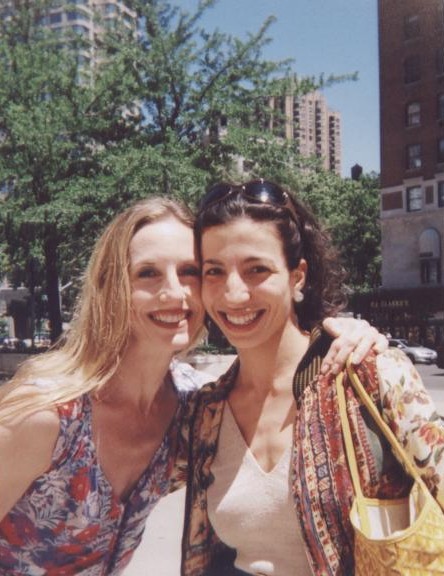
    (Imported from Oberon’s Grove, a 2007 story of one of my most memorable days as a blogger: a chance meeting with New York City Ballet’s Wendy Whelan and Pauline Golbin)
    wendy pauline c

    This was my big opportunity as a blogger: having Wendy Whelan and Pauline Golbin and my camera all in the same place at the same time. To be honest, I almost always have my camera with me but I rarely work up the nerve to ask any of the dancers if I can take their picture. However, it was such a gorgeous day (6/23/07) and the girls were in such a great mood that I said ‘what the heck’ and asked them. I just love the results, if I do say so myself. And I will tell you that these two dancers have an awful lot to do with not only my devotion to NYC Ballet but the way I have come to watch the Company.

    After going to NYCB pretty often in the late 1970s, I sort of wavered; I was really into opera, and whenever I would come down to NYC from Hartford, opera was my main priority. It’s too bad because every time I did squeeze in a visit to the State Theatre I just loved it. I missed entire careers there, and dancers I really admired came & went without me being aware of it.

    In 1996 I was dating a Japanese guy named Toshi who lived on the East Side; he was a textile designer with an incredible eye. One night on a whim, I took him to NYC Ballet. Walking home across Central Park, I asked him if any of the dancers had made an impression. “Wendy Whelan. Can’t you see she is on a whole other level from the other dancers?” I had seen her dance a few times and always really liked her. So we started going pretty frequently and I realized he was right. There seemed to be something almost profound about everything she did – not profound in a weighty sense but in a way of making you feel and think about what she was doing as being more than just dancing.

    After I moved here in 1998 there was a season when most of the principal ballerinas were either sick, injured, or pregnant. Wendy, along with Yvonne Borree and Miranda Weese, was carrying the whole season and since there were lots of ballets that Yvonne & Miranda didn’t do, Wendy ended up dancing at literally every performance, and often two – and sometimes three – ballets a night. Far from getting tired of her or craving a different face and body, I became addicted. Wei and I went more and more frequently, just to see what she would do. We fell under her spell. Going so often simply became a habit, and when  the other ballerinas rejoined the ranks we found that Wendy had managed to get us hooked on the whole scene.

    It was Pauline Golbin who turned me into a corps-watcher. And again it was Toshi who noticed her. I must say that until 1996 I didn’t pay much attention to the corps. I knew they were there and that Mr B had given them plenty to do on any given night, but I couldn’t tell one bun-head from the next, and the boys I hardly ever even noticed. So after one piece, Toshi asked me: “Who is that girl with the black hair and the wonderful smile?” Hmmmm, well there’s about a dozen of ’em onstage; I couldn’t answer his question. We came out the side doors and this very girl dashed past us in a striking coat, scarf,  and hat.”That’s her! So chic!!” said Toshi. So next time we went we started looking for her; it became a ritual to find this girl onstage. Then, during an intermission, we scanned thru the season booklet and found her: Pauline Golbin.

    By watching for Pauline, I started  to notice how demanding the corps work was at NYCB, and that they weren’t just a mass of anonymous bodies but beautiful/handsome people who were doing amazing things. I began matching names to faces and hoping to see certain dancers get some of the featured roles. I began watching the corps much more intensely, and it really gave the performances a whole other dimension. There have been many nights when I have gone to a performance just because someone from the corps that I like had landed a solo.  Of course, I love to see them get promoted though I realize not everyone can be a soloist. Though many of them should be.

    wendy pauline 2 copy

    Pauline is famous for her hats, and I said something about it…and she reached into her bag and pulled one out. In the book ROUND ABOUT THE BALLET, Wendy was asked: “Is there anything people don’t know about you that you’d like them to know?” and she replied: “I’m a funny person! I think I come across as so serious in ballets. But I’m a pretty silly girl. I don’t know if people realize that.” So it didn’t surprise me when she started cutting up and trying to get under Pauline’s hat.

    As they strolled into the theatre, I really felt like I’d truly been in the right place at the right time.
  • NYCB Flashback ~ Wendy Whelan’s Farewell

    (Bringing this 2014 article forward from the Grove to celebrate the one-and-only Wendy Whelan.)

    ww by matt murphy

    Above: Wendy Whelan, photographed by Matt Murphy

    Saturday October 18th, 2014 – No two ballerina farewells are ever alike. Darci Kistler’s farewell marked the end of an era, as she was considered “the last Balanchine ballerina”. At Heléne Alexopoulos’ gala we celebrated one of the greatest beauties ever to grace the stage. Yvonne Borree’s farewell was the most touching, Kyra Nichols’ the most moving. I missed the farewells of Jenifer Ringer and Janie Taylor, saying ‘goodbye’ to them in the days prior to their final bows, simply because I couldn’t imagine NYCB without them. Miranda Weese wasn’t given the full farewell treatment as she wasn’t retiring, just changing companies. I missed her even before she was gone, and I still miss her.

    Tonight, Wendy Whelan’s farewell summoned up an enormous range of emotions, just as her dancing has always done. The programme was well-chosen to underscore her association with four great choreographers, including a complete performance of one of her signature ballets, Balanchine’s LA SONNAMBULA, excerpts from works by Jerome Robbins, Alexei Ratmansky, and Christopher Wheeldon, plus a special pièce d’occasion: a new pas de trois devised for Wendy, Tyler Angle, and Craig Hall in a choreographic collaboration of Chris Wheeldon and Alexei Ratmansky.

    Daniel Capps was on the podium for the opening SONNAMBULA and the concluding Vivaldi/Richter setting for the premiere of BY 2 WITH & FROM; Andrews Sill led the Shostakovich score for CONCERTO DSCH. Throughout the evening, Company musicians were featured: pianist Cameron Grant playing the Chopin for GATHERING; Susan Walters at the keyboard for CONCERTO DSCH; violinist Arturo Delmoni with Cameron Grant for AFTER THE RAIN; and violinist Kurt Nikkanen for the Vivaldi/Richter. For each of them, Wendy had a very cordial greeting, and at the end of the evening she stepped to the edge of the stage and swept into a deep curtsey to thank the NYCB orchestra for their invaluable support throughout her career. That was a particularly lovely moment.

    The emotional temperature ran high all evening; in fact several people I talked to spoke of how they had experienced unusual mood swings from giddiness to despair throughout the day, anticipating Wendy’s dancing whilst regretting that it would be her last time on this stage. 

    Following LA SONNAMBULA‘s opening scene and divertissements, Wendy appeared to the first ovation of the night. She conveyed the mystery of the sleepwalker with her pin-pointe bourrées; in a trance, she managed to totally ignore Robert Fairchild’s endless attempts to intrude on her private world. Earlier in the work, Sara Mearns, Amar Ramasar, Likolani Brown, Megan Mann, Devin Alberda, David Prottas, Lauren King, Antonio Carmena, and Daniel Ulbricht were all vividly present, and they joined in the applause for Wendy during the bows.

    In the DANCES AT A GATHERING excerpt, Wendy joined Abi Stafford and Rebecca Krohn in dances of sisterly joy; Jared Angle, Adrian Danchig-Waring and Zachary Catazaro were the handsome cavaliers. In the passage where the girls are flung from one boy to the next, Zachary made an amazing catch of Wendy as she hurtled thru the air into his arms.

    It was that poignant piano theme in Shostakovich’s concerto #2 – played with great clarity by Susan Walters – that really put me over the edge. Wendy and Tyler Angle danced the adagio from CONCERTO DSCH luminously, with such expressive lyricism. A beautiful sextette of supporting dancers conveyed the quiet intensity of the little vignette Ratmansky has created for them here: Alina Dronova, Gretchen Smith, Lydia Wellington, Joshua Thew, Justin Peck, and our newly-promoted-to-soloist Russell Janzen. How thrilled they all must have been to share these moments with Wendy one last time.

    Wendy and Craig Hall then danced the pas de deux from Wheeldon’s AFTER THE RAIN, holding the audience in an enraptured state as the crystalline purity of the Arvo Pärt’s ‘Spiegel im Spiegel’ stole thru the silent hall in all its poignant grace. It seemed that time stood still here, allowing us to immerse ourselves in the spell-binding artistry of these immaculate dancers.

    In between the three above-listed shorter works, brief films were shown while Wendy changed costumes. In these films, the ballerina I have had the honor to know revealed so many facets of her personality. In one utterly Wendy moment, she played up the mock-jealousy of finding Craig Hall emerging from a rehearsal with ‘another woman’: Rebecca Krohn. That made me laugh out loud. 

    And all to soon, we had reached the end. The Ratmansky/Wheeldon collaboration provided an excellent setting for Wendy’s last dance on Mr. B’s stage. With her two princes – Tyler Angle and Craig Hall – she conveyed the supple strength, tenderness, gentle wit, and sheer overwhelming beauty that have made her one of the great dance icons of our time. The ballet ends with Wendy reaching for the stars.

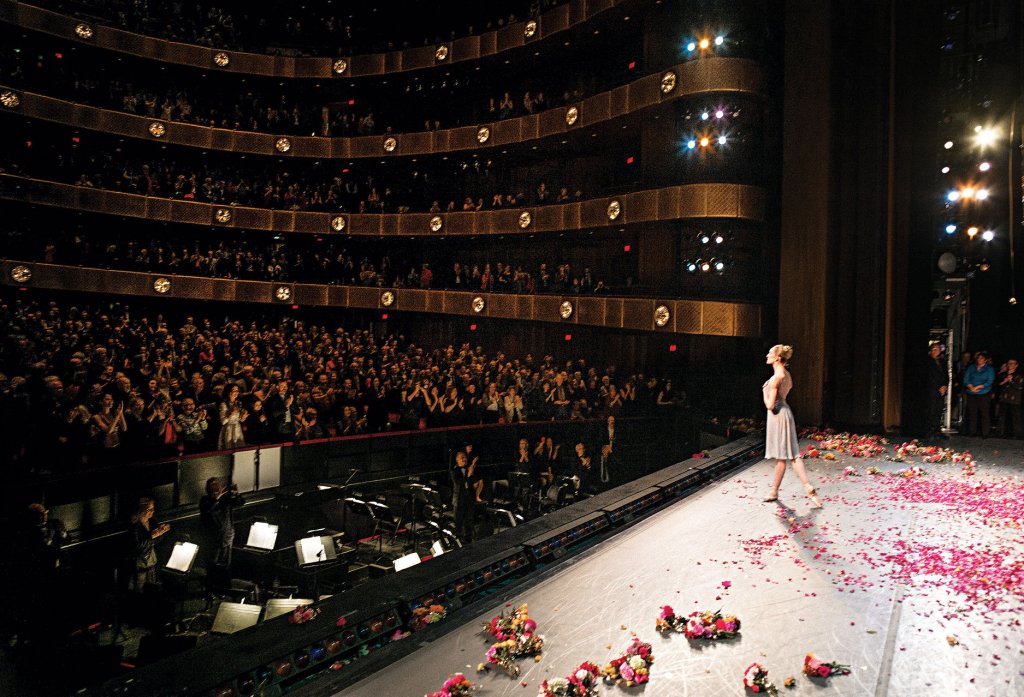
    At a farewell, the actual dancing often takes a back-seat to the event. The ballerina appears in selections from her cherished roles and as we savor her artistry one last time while secretly we are looking forward to the downpour of rose petals, the flinging of bouquets, the embraces of colleagues, the inevitable “last bow”, and the opportunity to express our admiration in unbridled clapping and shouting.

    ww farewell

    For Wendy, the huge ovation at the end signified not only our appreciation for all she has accomplished in her magical career to date, but also our plain unvarnished love for her as a human being.

    As the applause at long last echoed away, I started walking up Broadway, planning to attend the after-party. But then I just felt a need for solitude and reverie, so I jumped on the train at 72nd Street and came home. I was thinking yet again that it has been my great good fortune to have been in this City at the same time as Wendy Whelan.

    LA SONNAMBULA: Whelan, R. Fairchild, Mearns, Ramasar, Mann, Brown, Alberda, Prottas, King, Carmena, Ulbricht

    DANCES AT A GATHERING (Excerpt): A. Stafford, Whelan, Krohn, Danchig-Waring, Catazaro, J. Angle [Solo Piano: Grant]

    CONCERTO DSCH (Second Movement): Whelan, T. Angle [Solo Piano: Walters]

    AFTER THE RAIN Pas de Deux: Whelan, Hall [Solo Piano: Grant; Solo Violin: Delmoni]

    NEW WHEELDON/RATMANSKY (World Premiere): *Whelan, *T. Angle, *Hall [Solo Violin: Kurt Nikkanen]

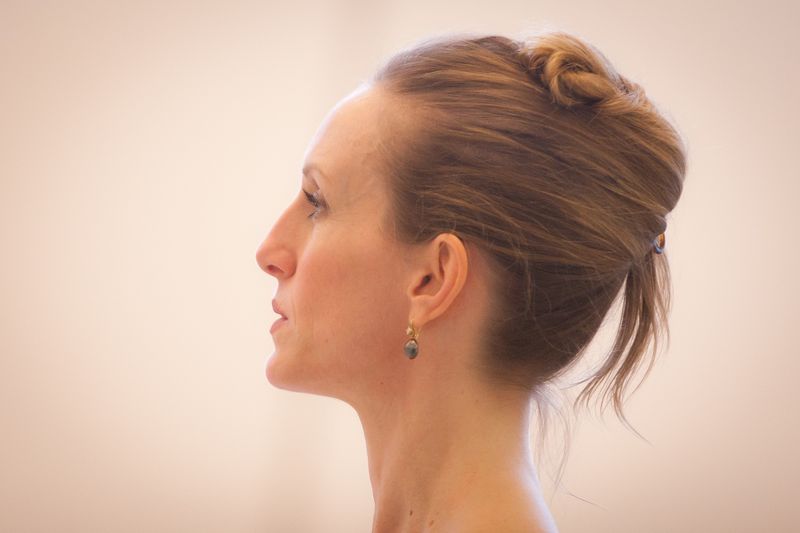
    (It took me a long time to settle on a portrait of Wendy to headline this article. Matt Murphy took the picture at the top when Wendy guest-taught a class at Manhattan Movement and Arts Center a couple of years ago. To me, the photo is her…I love the wispy strands of hair at the nape of her neck, and her utterly unique beauty.)

    Bringing this story up to date, Wendy is currently the Associate Artistic Director of the New York City Ballet.

  • It’s All Because of Renata Tebaldi

    (One of my earliest long articles for Oberon’s Grove: the story of how my obsession with opera started.)

    tebaldi copy

    In a way, I could say that I am where I am today because of Renata Tebaldi. It’s simplistic, and of course there are a million things which influence our choices as time goes by. But it was Tebaldi who made me fall in love with opera; it was opera that brought me to New York City on my own for the first time in 1966;  it was in New York City that I – the proverbial small town boy – discovered that I was not the only male in the world attracted to other men; it was a fellow opera fan who introduced me to New York City Ballet; it was my devotion to opera and ballet that kept me coming to NYC from Connecticut for 22 years – and spending a fortune.  And finally it was the desire to have opera & NYCB at my fingertips that finally got me to move here in 1998. And once I did, I met Wei. So, I owe it all to Renata!

    It was on January 12, 1959 that I happened to watch the Bell Telephone Hour; Tebaldi sang excerpts from MADAMA BUTTERFLY. I know the exact date because the performance has been released on video. This was not my first exposure to operatic singing; my parents had some classical LPs in their collection and there were snippets of Flagstad and Lily Pons on these. But nothing that moved me or drew me in like watching Tebaldi’s Cio-Cio-San. That was the beginning.

    My parents bought me my first 2-LP set of opera arias; I found out about the Saturday afternoon Met broadcasts; I subscribed to OPERA NEWS; I wrote fan letters to singers I heard on the radio. I used my tiny earnings from my paper route and working in my father’s store to buy a few more LPs. I plastered a big bulletin board in my room with pictures of singers. My parents took me to my first opera at the Cincinnati Zoo. Then they took me to the Old Met.  But it was a lonely obsession; I had no one to share it with.

    In 1966 when the new Met opened, I was allowed (freshly out of high school) to make my first trip to NYC alone. I got a room at the Empire Hotel and timidly went across the street to Lincoln Center.

    tebaldi ticket line c

    There I found a group of people sitting outdoors along the North side of the Opera House. “Sign in and take a number,” said a girl who was minding the line. Somewhere I still have my tag; I think I was number 57. I sat down and soon people started talking to me; I suppose to the many gay men the sight of a novice seventeen-year-old must have been tantalizing even though I was pretty ordinary looking. But people were so nice: what operas did I want to see? What singers did I like? After 5 years of having no one to talk about opera to, I thought I was in heaven. I shyly mentioned liking Gabriella Tucci, who I had seen at the Old Met. So the Tucci fans gathered and we talked about her.

    I ended up not leaving the line for 3 days and 2 nights. The late summer air was comfortable; we slept (or stayed awake) on the pavement. We sang thru complete operas: we sang all of TOSCA and someone jumped into the (empty) fountain at the end. People gave me soda, a few of the girls brought home-made baked goods. Pizzas were ordered, and Chinese take-out. Someone smuggled out a recording of a rehearsal of FRAU OHNE SCHATTEN  – a work most of us were totally unfamiliar with. I was devastated hearing the voice of Rysanek in that music for the first time. Franco Corelli served coffee one night; Franco Zeffirelli came out and got in someone’s sleeping bag. News filtered out about the new productions that were being rehearsed. There was a flurry of excitement when Leonie Rysanek was spotted at the far end of the Plaza. The crowd, now hundreds strong, surged around her. In a panic, she gestured for security guards from the House to come to her aid. Once inside, she turned and waved to us.

    Finally the box office opened; I got my tickets: TURANDOT, TRAVIATA, GIOCONDA, ANTONY & CLEOPATRA, RIGOLETTO. I had made my first friends in NYC; I had addresses and phone numbers of people who would send me tapes and get more tickets for me.

    Grubby and ecstatic, I went back to the Empire. My pants were slipping down: I hadn’t been eating. I took the bus back to Syracuse, asleep. My parents picked me up and took me home. I fell asleep in the bathtub.

    Soon after, I was back in NYC for the performances I had bought. For some strange reason, I had also stopped by the New York State Theatre and bought a ticket for their Opening Night of Handel’s GIULIO CESARE. Beverly Sills was singing Cleopatra. I had heard her already when NYCO toured to Syracuse and she sang Rosalinda in FLEDERMAUS. The CESARE was of course Beverly’s “big bang”.

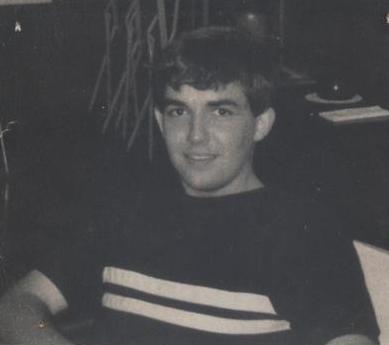
    This was what I looked like during that summer of 1966; I loved this t-shirt and wore it literally every day until it wore out. My sweet Jeanette says I was “embedded in it.”

    tebaldi me
  • My First – and Only – Public Appearance

    coppelia size

    (This article originally appeared on Oberon’s Grove in 2008. I’ve brought it forward to the Glade as it’s about an especially meaningful period of my life.)

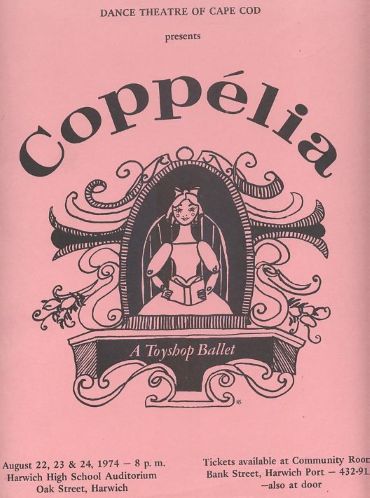
    When I was twenty-five I fell in love with a 17-year-old kid who spent his summers working for a small ballet company, Dance Theatre of Cape Cod. He invited me to spend a summer with him there; we would live in a room in a big house in Harwichport across the street from the studio.

    Within a week after we got there, he was totally immersed in the ballet. They were mounting COPPELIA at the end of the summer; he was dancing Franz and also was the business manager for the school. He and Helen, the woman who ran the program, were very close. I could see that I was going to be playing second fiddle to COPPELIA all summer.

    At this point in my life, I had never seen a ballet performance; just tidbits on TV. I was a big opera fan, but whenever there was a ballet in an opera performance I was bored to death.

    coppelia 2

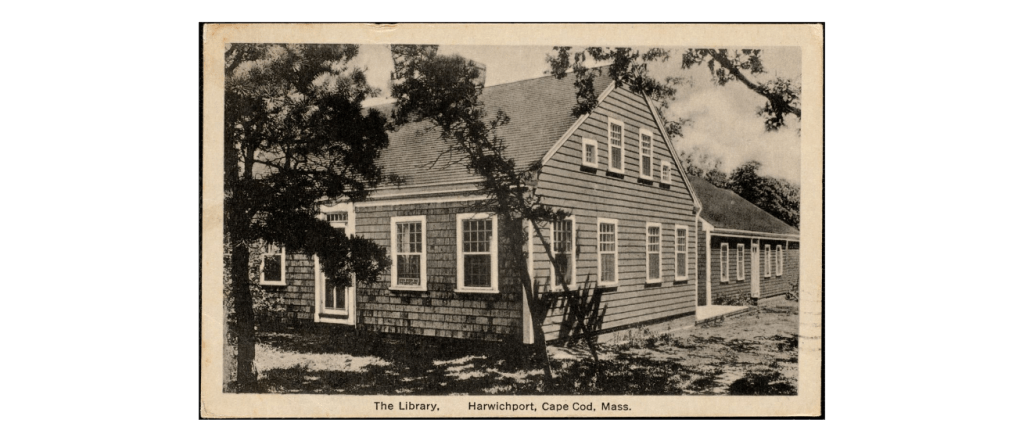
    The studio was located behind (and connected to) the Harwichport Town Library, directly across the street from the house where we were staying. So, the music of COPPELIA wafted over from the studio, and that drew me there. When I first walked into the studio I was much intrigued by the musty smell of old costumes that were hung out to air, and the girls (ages 8-16) were dazzled to have a man watching them. They became giggly and adorable.

    The teacher eyed me with the sort of interest that small-time ballet mistresses have eyed young men for decades: could she transform me into a “dancer”?  She had TJ to play Franz, she had a local actor to play Doctor Coppelius, and the boyfriend of one of the girls to play the Mayor. She wanted very much to have another male in her production, especially to pique the jealousy of the rival ballet school a few miles away.

    “I’m planning to stage a little folk dance in the third act,” she said to me. “Would you think about it? I’ll make it easy for you…” TJ was poking me in the ribs, “Say yes!” She played the piece for me: it would be myself and one of the girls; the music (which Balanchine uses for the Jesterettes) was bouncy and the piece was short.  Realizing that if I didn’t join in I would be seeing very little of TJ all summer, I said OK.

    Then came the clincher: I had to take class. This gave me pause, but only for a minute. I was slender then, and in reasonably good shape. We drove to a small dance supply shop in Hyannis where TJ helped me get a dance belt, tights and slippers.

    My first class was a riot. The beginners class, 8- and 9-year-olds, were thrilled to have a man in their class. They all wanted to stand next to me at the barre. When we began tendus, the teacher waltzed up to me and said: ” Point your foot!” to which I replied “Point my foot…at what?”

    The studio had a ghost, Ada, who we contacted nightly using a Ouija board. She was a nurse who told us she had cared for soldiers returning home after World War I. How she ended up in a dance studio was never revealed. (I have since found out that the building did indeed house recuperating soldiers upon their return from Europe!)

    I found that I had a natural affinity for ballet, not that I would have guessed. I began rehearsing my dance; my partner was a beautiful black-haired 14-year-old named Elaine. We got on perfectly. We played a betrothed couple who danced at Swanhilda’s wedding fete. Elaine was light and springy so the lifts were easy.In the dance, she did most of the work. Lots of stomping and romping. The piece ended with me on one knee; I reeled her in from some turns she was doing, she sat on my other knee and we smooched.

    coppelia 3

    Above: only known photo of me wearing tights…with my partner Elaine Aronson, a talented 14-year old.

    Costumes…I wore a blue satin vest, white tights and shirt, and blue suede boots. Elaine wore a white “peasant” dress with red character shoes and flowers in her hair. One of the mothers did my makeup. We had 3 performances, and our dance was a hit. One night one of Elaine’s friends tossed her a bouquet when we were bowing. Little kids asked us for our autographs.

    After that summer TJ and I moved to Hartford; eventually we split up. I continued taking class for about 3 years. Whenever I hear the music of COPPELIA I’m transported back to that sweltering studio and that care-free time.

    Beth Taylor had danced Swanhilda in our performances; the following winter she danced the Sugar Plum Fairy in another company’s NUTCRACKER. TJ and I drove down to the Cape in wintry weather to see her; aside from Beth several of the kids who had been in COPPELIA were dancing in the NUTCRACKER.

    coppelia 4c

    TJ took this picture of me & Beth after the show; it was the last time I ever saw her, or any of the other people I’d spent my memorable summer with.  

  • Shanghai Grand Theatre ~ LADY WHITE SNAKE

    White snake

    ~ Author: Oberon

    Saturday July 26th, 2025 – Wei was with me tonight for The Shanghai Grand Theatre’s production of LADY WHITE SNAKE, playing a brief run at Lincoln Center. The program note provides this outline of the story: “The legend of the White Snake is a classic Chinese folk tale about Bai Suzhen, a snake spirit who transforms into a beautiful woman in order to experience life and love as a human. She falls in love with and marries a mortal named Xu Xian, but their relationship is threatened by a Buddhist monk named Fahaj, who recognizes Bai Suzhen’s true identity. The story explores themes of love, sacrifice, and the conflict between the mortal and supernatural worlds.”

    There’s much more to the story than that, but I chose to focus more on the choreography and the music rather than on the narrative. The Shanghai company, under the direction of the marvelous Yuanyuan Tan, a longtime star of San Francisco Ballet who I once had the opportunity to meet, is full of beauteous dancers of both sexes. 

    I guess I was expecting a more mythic approach to the story; much of the time the look and feel were quite contemporary. Most of the visuals were stunning. The musical score, by Xu Zhou, which featured passing nods to Chinese folk music, was – in general – more redolent of Rachmaninoff and Borodin: grand, cinematic, and a bit glossy. The choreography, by Wang Peixian, is mainly rooted in classical ballet, with some acrobatic passages for the men woven in. Sets, lighting, and video designs were all strikingly impressive, especially the presence of an enormous bell hovering over the scene.  

    It’s been a while since I took notes in the House of Balanchine; I’d forgotten that it’s nearly as pitch-black as The Joyce. I soon found that I’d over-written existing comments with newer ones. 

    The storytelling was quite clear in Act I; Act II was less compelling, with some scenes feeling over-extended. The choreography lost some of its potency as the ballet progressed, though the level of dancing never faltered. The principals in the cast danced and acted to perfection: Liu Sirui as the White Snake and Wang Nianci as the Green Snake are beauties: my husband referred to them as sisters. Both women danced and acted with finesse and deep commitment. Sun Jiayong as Xu Xian, husband of the White Snake, was poetic, elegant of movement, and an attentive partner. As the rather sinister Psychologist, Fa Hai, Su Hailu gave a stunning performance, his acrobatic feats dazzling to behold. 

    Though losing some momentum after the interval, the production continued to be visually engrossing. The audience seemed thoroughly tuned in to the story-telling, though I began to think the tale of Lady White Snake might be more persuasively told as an opera rather than a ballet. A bit of research revealed that there is indeed an operatic setting of the story: Madame White Snake, composed by Zhou Long and premiered in Boston in 2010; two friends of mine – Ying Huang and Michael Maniaci – were in the cast. 

    The evening ended with a tumultuous ovation and a set of staged curtain calls that sustained the applause for several minutes. One delightful aspect of the performance for me was running into my long-time fellow NYC Ballet fan, Lynne Goldberg, and two of my beloved Graham divas: Xin Ying and Natasha Diamond-Walker.

    ~ Oberon

  • Zwilich & Barber @ Carnegie Hall

    Zwilich

    Above: composer Ellen Taaffe Zwilich

    ~ Author: Oberon

    Saturday December 28th, 2024 – The New York String Orchestra were back at Carnegie Hall this evening, following up their Christmas Eve concert in the same Hall with a program of Zwlilich, Barber, and Brahms. I’d been down with flu-like symptoms for a couple of days, and debated whether I should attend tonight’s concert, but I couldn’t pass up a chance to experience the Barber violin concerto played live in this hall. Whether I could make it to the evening’s end remained to be seen.

    1983 Pulitzer Prize-winner Ellen Taafe Zwilich’s composed her Prologue and Variations for string orchestra on a commission from the Chattanooga Symphony, which premiered it under the baton of Richard Cormier in 1984. In her remarks on this piece, the composer spoke of her wish to celebrate “the special sonorities, character, and expressiveness of the string orchestra”. In tonight’s performance, the young players of the New York String Orchestra truly did the composer proud. 

    The violins open the piece, with start-and-stop phrases, soon picked up by the cellos. The violins then soar over an insistent beat. After a passage of luminous softness, the celli and basses cushion sizzling violins motifs. The opening theme recurs, and then a series of slow, mysterious sustained tones lead to a full stop.

    An animated section quietens to a slightly ominous lulling atmosphere. Then an agitato springs up, full of scale-work and insistent bowing. The music turns pensive, with brooding celli and deep basses. A trudging rhythm and fading violins lead to the work’s eerie ending.

    Enthusiastic applause greeted the musicians, and then Maestro Laredo gestured to Ms. Zwilich in her first tier box to rise for a bow; well-deserved bravas greeted the composer, now in her 85th year.

    Koh jpg

    Above: Jennifer Koh – I borrowed this stunning photo from her Facebook page

    Violinist Jennifer Koh then took the stage for the Barber, my enduring favorite among all the violin concertos I have heard thru the years. Ms. Koh looked striking in a silver-gray gown, her hair a bright, fiery red.

    This was Barber’s first effort in the concerto genre, written on a 1939 commission for the then-astonishing sum of $1000. When the originally scheduled soloist, Iso Briselli, found the concerto’s third movement too short and inconsequential, the work was premiered in 1941 by Albert Spalding; it was great success, and became one of Barber’s most beloved works, perhaps second only to his Adagio for Strings.

    Aside from concert performances, I have heard this music many times at New York City Ballet, where in 1988 Peter Martins premiered his ballet of the same title at the Company’s American Music Festival. The  ballet brings together a pair of ballet dancers and a pair of bare-footed modern dancers. The original cast starred Merrill Ashley and Adam Lüders as the classical couple, and Paul Taylor Dance Company’s delightful Kate Johnson and the charismatic choreographer/dancer David Parsons as the modern couple. Tonight’s performance was spectacular both for Ms. Koh’s fascinating way with the music, and for Maestro Laredo’s savvy exploration of the score, which allowed us to savour the composer’s gift for orchestral detail.

    Ms. Koh’s timbre has a vast colour-palette, ranging from burnished purple to shimmering silver. The very opening note of the piece always intrigues me, as Barber has the piano intone the first phrase along with the violin; Bo Zhang, at the Steinway, highlighted the keyboard’s participation throughout the concerto. 

    Ms. Koh’s playing of the familiar opening melody immediately seized my imagination; her tone has a special, spiritual quality that always gives meaning to the music. The gorgeous main theme, played by the entire orchestra, inevitably stirs my soul. Oboe (William Dunlop) and clarinet (Keyu (Frank) Tao) sing clearly over a steady pulse; violin and piano mesh, Ms. Koh rising to a shining top note. Pianist and violinist unite. The music turns grand, with a huge build-up and then my favorite moment of all: a dramatic plunge to the basses’ deepest notes. Now Ms. Koh’s violin hovers on high, descends, rises again to a delicate, suspended note; her cadenza is entrancing. Oboe, clarinet, and timpani draw us on to the movement’s conclusion. Throughout, the pianist has managed to be both prominent and unobtrusive…really impressive.

    Mr. Dunlop’s playing of the oboe solo that opens the Andante was hauntingly beautiful. The celli take up the theme, the basses sound richly, the horn solo (Engelberth Mejia-Gonzalez) glows. Out of the marvelous sonic blend, Ms. Koh’s violin rises poignantly to a shimmering trill as the trumpet (Bailey Cates) and piano interject before the violinist takes up the andante‘s opening melody with heart-rending passion. A sense of grandeur fills the hall. But then, a loudly dropped object somewhere upstairs killed the movement’s marvelous finish. Why do these things always happen at the worst possible moment?

    The timpani commences the final, brief Presto, in the course of which Ms. Koh plays what feels like thousands of notes with amazing dexterity and commitment. The celli scamper up the scale. So many notes!  All this rhythmic energy comes to a sudden halt after a final violin flourish.

    The audience cheered Ms. Koh’s intense and thrilling performance. My companion – who had played the Barber in his schooldays – and I were feeling a kind of elated exhaustion, and so we took leave of Carnegie Hall for 2024.

    ~ Oberon

  • Voices from South Africa @ Weill Hall

    Siphokazi-Molteno jpg

    Above: Siphokazi Molteno

    ~ Author: Oberon

    Monday October 28th, 2024 – The Met Orchestra Chamber Ensemble presenting a program of classic and contemporary works at Weill Hall. I was very keen to hear mezzo-soprano Siphokazi Molteno. who represented South Africa at the 2023 Cardiff Singer of The World competition, and who made her Metropolitan Opera debut in 2022 as Flora in LA TRAVIATA.

    Ms. Molteno opened the evening with the Brahms “Viola songs”, a pair of lullaby-like solos accompanied by viola (Shmuel D. Katz) and piano (Thomas Lausmann). The Molteno voice has a marvelous contralto richness as well as a lyrical warmth; to say she put me in mind of the great Florence Quivar is the highest compliment I can give. It’s a voice full of ‘humanity’ and a voice I will hope to hear again…and soon. Her colleagues from the MET Orchestra played sublimely, setting the evening gorgeously on its way.  

    There was then a longish pause while the stage was set for the next work, which involved five musicians: Seth Morris (flute), Tal First (viola), Hannah Cope (harp), Gregory Zuber (marimba), and Jeffrey Irving (percussion). Ndodana-breen

    Above: composer Bongani Ndodana-Breen

    The composer’s choice of instrumentation for his Rain Making really drew me in: if there’s a marimba to be heard, I want to hear it…and likewise the harp. Mr. Ndodana-Breen composed this piece in memory of Queen Modjadi, one in a line of Rain Queens of the Balobedu people in the Limpopo province of South Africa. A Rain Queen is believed to have the power to control the rain and the winds. This mythic association made the music even more intriguing for me.

    The players made a wonderful blend and the evocative sounds included a rhythmical flute, a plucked violin, and a bean bag played by the percussionist. The flute and violin trade melodic phrases, the violin shivers, the melismatic marimba enchants. Then, to a big, pounding beat propelled by the bass drum, the storm comes: the Rain Queen’s magic has succeeded. I loved this music, and watching the musicians as they entered into the spirit of the ritual; my only complaint was that the piece is too short.

    Maurice Ravel’s sultry Chansons madécasses found a most congenial interpreter in Ms. Molteno. I first heard these songs in 1975 when New York City Ballet premiered a Jerome Robbins ballet of the same title; the singer was Lorna Myers. Since then, I have frequently listened to the songs on Mira Zakai‘s marvelous recording. 

    The first of the three songs, Nahandove, has a beautifully sultry feeling: it tells of the seduction of a native woman. Jerry Grossman’s cello opens the piece, and Ms. Molteno’s voice is at its most sumptuous as she begins this tale of longing and ecstasy. Jazzy piano rhythms from Mr. Lausmann and the sound of the piping flute (played by Maron Khoury) develop a rocking feeling; the music turns pensive and then caressive. With the song’s final strophe, “Tu pars...” the tryst ends, though it seems the lovers will meet again at sunset.

    The second song, Aoua!, opens with the singer screeching a warning: do not trust the white men! The piano takes up a swaying rhythm as Ms. Molteno continues with singing of great intensity. This is violent, angry music, though eventually the cello and flute sound forlorn.

    By contrast, the final song – Il est doux – is a languid reflection on the joys of resting the shade of a tree on a late afternoon, while a lover whispers in your ear. The sensuous flute, the eerie cello on high echoing the buzzing insects with a trill, the voice and the cello entwining, solitary notes from the piano…so atmospheric.  Ms. Molteno’s singing was evocative and so pleasing to experience. The song ends with the swiftly spoken dismissal: “Go and prepare the evening meal…” 

    Mvd2022 jpg

    Following a longish interval, an ensemble of eight instrumentalists took the stage for music by Matthijs Van Dijk (above): we heard his extraordinarily powerful oratorio Moments in a Life. I had previously heard one of this Cape Town-based composer’s works [(rage) rage against the] played by the Signum Quartet in this very hall. 

    Thus, I expected a lot from the composer’s Moments in a Life, composed in 2016 for string quintet, clarinet, percussion, piano, overtone singer & narrator. Could lightning strike twice in the same place? The answer is a resounding YES!…Moments in a Life is one of the most powerful works I have ever experienced.

    The oratorio is based on the writings of Denis Goldberg, a native of Cape Town whose parents were politically active. In 1957, Denis joined the (banned) Communist Party and he was arrested and jailed in 1960 for supporting strikers. In the mid-1960s he was with other freedom fighters who were arrested for illegal acts and jailed. He remained a prisoner for 22 years, constantly being tortured and threatened with death.

    Gareth-lubbe

    At this evening’s performance, Gareth Lubbe (above) was the narrator. Mr. Lubbe is also an overtone singer; this is a technique in which the resonance in the mouth and throat are combined with tongue, lip, and jaw movements which create a perception of overtones as being individual notes. It’s a sound that is eerie…and fascinating.

    Moments in a Life, conducted by William Long, gives us so much to take in in its 40-minute duration. Trying to follow the narrative whilst also listening to the music was a bit of a challenge for me, a dedicated note-taker: I filled three pages with notes which barely scratched the surface of the work.

    “I was sure we would not die in prison,” marks the oratorio’s opening line. As the narration moves forward, the writer recalls his first teacher, who he fell in love with. He speaks of not seeing his wife and children for more than two decades while imprisoned. A fellow freedom fighter, Looksmart Ngudle, was tortured to death. Freedom costs.

    Nelson Mandela defends the accused patriots: “An ideal for which I am prepared to die”. Sentenced to life in jail, they are moved to a harsher prison affectionately known as “Beverly Hills”: three thousand prisoners singing hymns as individuals are led away to be hanged. Ironically, a gorgeous musical theme underscores this tragedy.

    Periodically thru the work, Mr. Lubbe’s overtone singing makes a striking impression: an indescribable mixture of humming and whistling.

    As to the music, the opening measures are pensively played by clarinetist Jessica Phillips: a slow, wide-ranging solo, soon joined by piano and strings. Cellist Mariko Wyrick underscores the story of the teacher, Ms. Cook. Andrew Gantzer’s double bass, so impressive throughout the piece, tells of Looksmart’s ordeal.

    Mr. Lubbe’s voice growls deeply; percussionist Jeffrey Irving plays a rollicking ‘cadenza’. Beauteous strings, the clarinet sings again; here are glowering chords and a lament played by violist Shmuel D Katz. Mr. Lubbe has an unaccompanied solo.

    Pianist Katelan Trần Terrell and Mr. Gantzer’s bass establish a beat; Mr. Katz strums his viola. A sudden militant outburst forebodes the assassination of activist Chris Hani; a poignant violin passage (Yurika Mok and Yang Xu) underscores the narrator’s reflections on Chris’s death.

    “A petty exercise of power that harms our people.”

    At last, in the forced-labor setting of The Quarry, where Nelson Mandela and his brother freedom fighters languished, a glorious theme of hope develops: “Let Freedom Reign”. Mr. Lubbe’s otherworldly overtones are heard over a long, sustained chord.

    The audience, who had witnessed the performance is a state of awed silence, now gave the performers a fervent round of applause.  

    Back home, I went to YouTube to see what I could find about this powerful work and immediately discovered this incredible document: Moments in a Life, recorded live in concert in the Endler Hall at the Stellenbosch International Chamber Music Festival on July 16th, 2016. This, I believe, was the work’s world premiere, with Denis Goldberg – then aged 83 – reading the texts (drawn from his autobiography) himself. The great freedom fighter passed away in 2020. 

    The work is so timely right now, when our democracy stands on a precipice. If we falter, our country – and indeed the world – will be forever changed.

    ~ Oberon

  • Sejong Soloists @ Zankel Hall

    240522 Sejong Here & Now Festival-5

    Above: Maestro Earl Lee, photo by Emilio Herce

    Author: Oberon

    Wednesday May 22nd, 2024 – Celebrating their 30th anniversary this evening at Zankel Hall, Sejong Soloists presented the US premiere of Unsuk Chin’s “Puzzles and Games” from Alice in Wonderland, and the world premiere of Texu Kim’s With/out book-ending a spectacular performance of Felix Mendelssohn’s Octet. It was one of most enjoyable concerts of the season, joining such Springtime delights as violinist Lun Li’s Young Concert Artists recital at the Morgan Library, the Orchestra of St. Luke’s splendid Brahms REQUIEM at Carnegie Hall, and Chamber Music Society of Lincoln Center’s thrilling program, Songs and Snow, on my list of musical events that have kept my spirits up in these chaotic times.

    240522 Sejong Here & Now Festival-13

    Making her Carnegie debut tonight, soprano Juliana Zara (above, photo by Emilio Herce) was the soloist in the Unsuk Chin work, a daunting 20-minutes of singing which at times carries the singer into the highest range of the soprano voice. Ms. Zara never seemed daunted by the vocal writing: in fact, she seemed to revel in it. Conductor Earl Lee and his musicians gave the singer perfect support, whilst also seeming to savor the composers’ quirky and colorful writing for the ensemble.

    One by one, oboe, clarinet, flute, and bassoon join in the introductory phrases to Alice – Acrostic before Ms. Zara’s clear, lyrical voice is heard. This brief song ends with deep chords. Pizzicati are passed about in the introduction to If I Never Reach the Gardens, with gentle (slightly eerie) passages for the strings (and did I hear a harmonica?) before the music turns woozy; the soprano speaks much of the poem. The third and fourth songs, on the Curiouser and Curiouser theme, seem to run together. The music stays groggy, the words largely spoken, until a crashing chord is struck. Dotty rhythms and semi-singing in Who In The World Am I? are underscored by by insectuous strings and burbling winds before the flute has a final say.

    The piano introduces The Tale-Tail of the Mouse, with melodramatic sprechstimme from the soprano. Spaced-out harmonies and scurrying flutes lead to the final words: “Condemned to Death”. I thought I detected a musette in the atmospheric lullaby Sleep Tight My Ugly Baby, though my ears may have deceived me. The music is filled with droopy sighs; a sense of quietude settles in, and night chimes are heard. In Cat’s Aria, Ms. Zara ventured impressively into the upper extremes of the soprano range, lingering there is a series of amazing (and intentionally annoying) meows-in-alt.

    Twinkle, Twinkle Little Star has a delightful delicacy about it; then the music turned livelier and a catchy xylophone ‘cadenza’ established a playful mood. The music fades away at the end. The final song is Speak Roughly To Your Little Boy, introduced by a drum roll. A pulsing beat accompanies this mean mother’s lecture, with tambourine and bassoon interjecting. Now the vocal line goes completely bonkers – Ms. Zara didn’t simply manage it, she triumphed over it – as cymbal crashes bring this dazzling, quirky piece to a close. The soprano basked in a shouting ovation from the crowd, so truly deserved; she graciously signaled her thanks to the musicians and the Maestro.

    240522 Sejong Here & Now Festival-31

    Above: Ms. Zara, Maestro Lee, and the ensemble; photo by Emilio Herce

    The first time I heard the Mendelssohn Octet played live was at the New York City Ballet, where, in 2004, Peter Martins created a lovely ballet to this score, written by the composer at the ripe young age of 16. It is a veritable treasure chest of melodic and rhythmic felicities, and tonight it elevated my mood – constantly dragged down of late by the darkness that is spreading throughout the world – to one of great joy. 

    240522 Sejong Here & Now Festival-57

    An octet of prestigious string players (above photo by Emilio Herce) was led this evening by the Metropolitan Opera’s concertmaster David Chan, and the NY Philharmonic’s concertmaster, Frank Huang. From the Sejong Soloists’ roster, violinists Daniel Cho and Andrew Wan, violists Brian Chen and Paul Laraia, and cellists Ole Akahoshi and Jesús Castro-Balbi joined to create an ensemble alive with multi-hued timbres which created a very cordial blend.

    The Mendelssohn Octet is a four movements, with the opening Allegro moderato con fuocoin my opinion, one of the greatest movements in all the string quartet repertoire – being the longest by far. It opens with joyous arpeggios and vibrant accompaniments. A more lyrical second theme has an elegant feel. The Andante brings restfulness, but with a rather intense middle section that offers contrast. Mendelssohn is the King of Scherzi, and here we are offered a feast of trills and an ethereal lightness of textures. The concluding Presto is both deliciously agitated and cunningly witty. There were times when the piece seemed almost like a concerto, thanks to David Chan’s virtuosity. 

    240522 Sejong Here & Now Festival-69

    Above, taking a bow after the Octet; photo by Emilio Herce

    240522 Sejong Here & Now Festival-82

    Above, the soloists for the Texu Kim premiere: David Chan, Daniel Cho, Andrew Won, and Franck Huang; photo by Emilio Herce

    Violins remained in the spotlight for the world premiere of Texu Kim‘s With/out, which was positively brilliant. This is a concerto for four violinists, with string orchestra and a single percussionist. Frank Huang now took the lead, with Mssrs. Chan, Cho, and Wen again creating a stellar quartet. 

    The opening movement, lonesome and fluorescent, starts with a hesitant pulse; the musicians interject melodic fragments and quirky sighs. There are touches of humor, and a fresh bass beat is taken up. A short downward motif is passed among the four soloists (it will recur in the final movement), and the music becomes briefly grand, with repetitive pulsings. Then there’s a whirlwind…until a whip cracks, restoring order. A brief da capo leads to an other-worldly conclusion.

    The second movement, subdued and imploding, is darker and a bit eerie. The four violins play in unison, and then a shivering misterioso mood sets in. The basses strike up, again the whip cracks, and the beating timpani feels like a slow, swaying dance. The sound-textures are varied, holding our keen interest; each soloist shines in turn. After briefly turning epic, there is a passage of harmonizing for the orchestra’s violins. A sustained trill from Frank Huang leads to a sudden stop.

    The final movement, festive!!, has an oddly familiar start: an homage to Stravinsky with a brief quote from his Violin Concerto. This gave my companion and I a jolt, as we are both Balanchine fans. The timpani plays a role, setting up a forward impetus. There is an intermezzo, with the descending motif from the first movement popping up again. The music becomes cinematic and, after a lull, rebounds to a finale.

    240522 Sejong Here & Now Festival-90

    Above: composer Texu Kim joins the musicians for a bow following his with/out, photo by Emilio Herce

    The hall erupted in a lively ovation which doubled in intensity when the charming, youthful-looking composer (he’s 34) hoisted himself onto the stage as cries of bravo! rang out. A perfect end to a perfect evening. 

    ~ Oberon

    Performance photos by Emilio Herce, courtesy of Beverly Greenfield/Kirshbaum Associates


  • Hubbard Street @ The Joyce

    Shota

    Above: Shota Myoshi of Hubbard Street Dance Chicago

    ~ Author: Oberon

    Wednesday March 20, 2024 – So great to see Hubbard Street Dance Chicago again! When I lived in Hartford, we’d go up to see them each Summer when they came to Jacob’s Pillow. Tonight at The Joyce, they offered a finely-devised program which was musically and stylistically varied, and superbly danced.

    Coltrane choate burnett foto michelle reid

    Above: dancers Jacqueline Burnett and Aaron Choate in Coltrane’s Favorite Things; photo by Michelle Reid

    Lar Lubovitch’s Coltrane’s Favorite Things was created in 2010 and was taken into the Hubbard Street rep in 2023. I confess that I’ve had a lifelong allergy to jazz, and while I admire John Coltrane’s inventive take on the Rogers and Hammerstein hit from The Sound of Music, I must admit that there were times when the music seemed endless. But: no worries! Mr. Lubovitch’s flowing, fleet-footed choreography filled the stage with movement, and the dancers seemed to be having a blast dancing it. 

    There may have been some cast changes from the listing in the Playbill, but one distinctive dancer stood out: Shota Myoshi (photo at the top) is a petite young man who dances large. His sheer joy at executing the technical feats of the choreography seemed to set the tone for his colleagues. Everyone danced their hearts out, winning a vociferous ovation at the end of the piece.

    On leaving the hall at the end of the show, I ran into the irrepressible JJ (aka Jonathan E Alsberry), an iconic Lubovitch dancer who is now Senior Rehearsal Director at Hubbard Street. And with him was the great man himself: Lar Lubovitch. So wonderful to see them again!

    Rena butler

    Hubbard Street’s giving the New York premiere performances of Rena Butler’s Aguas Que Van, Quieren Volver during this run; production photo above. It is a captivating work in every regard. And the first acclaim goes to lighting designer Julie E Ballard; her settings seemed to create a narrative of their own in the work, which details the shifting emotions of a ménage à trois. From some performance photos I found, it looks like this piece is sometimes danced (as tonight) by a man and two women, and other times by a woman and two men. 

    This evening, the dancers were Jacqueline Burnett, Simone Stevens, and Eliot Hammons. They were technically perfect, and emotionally powerful. Each has solos to dance – Ms. Burnett’s being particularly well-choreographed, and beautifully danced – and the partnering ranges from sexy to quirky. Ms. Stevens brought a nervous energy to her dancing, and a personal intensity, whilst the tall Mr. Hammons moved and partnered with a distinctive personal grace; he seemed to be holding the triangle together by sheer force of will and desire. The music, which often has a sexy sway, was sublime, especially the ‘title song’.

    At the end, order is restored – at least for the moment: beautiful final image of the threesome standing together. The work captivated me on a personal level, as I recalled the difficulties we faced in our own ménage à trois back in the early 1990s. Jealousy undid us.  

    Barton

    The program ended with a masterpiece: return to patience by Aszure Barton, sent to a score by Caroline Shaw that may have been inspired by Satie.  To me, this seemed to be a contemporary renewal of the tradition of ‘the white ballet’: everything is purely and wondrously white as the lights slowly come up on the entire company standing in place. Balanchine’s Serenade is cunningly given a graceful nod as the dancers in unison shift their feet into first position. Thereafter, thoughts of Swans, Wilis, Shades, and Sylphs constantiy dance thru the mind. Solos (again Ms. Burnett and Mr. Hammons stood out) are woven into passages for groups and fleeting partnering motifs. Mr. Myoshi was again entrancing.

    The group dances in sync, with lyrical arabesques and slow ‘leaning’ passages.The tempo speeds up, but only a bit, for another solo from Mr. Hammons, joined by a sextet. The movement becomes more animated, with a male quartet and a female solo observed by all in a semi-circle. There is a reverential bow, but that is not quite the end.

    Ms. Barton’s work held the audience under a spell, and then the dance seemed to recede as if we had experienced a dream that fades away. There was a moment of silence, before the audience responded with fervent applause.    

    ~ Oberon

  • Dancing With Glass @ The Joyce

    MakiNamekawa_Photo by Steven Pisano

    Above: pianist Maki Namekawa, photo by Steven Pisano

    ~ Author: Oberon

    Tuesday November 28th, 2023 – The long-awaited opening of Dancing With Glass at The Joyce: a program wherein several of Philip Glass’s études were performed by pianist Maki Namekawa; five of the études had been choreographed by prominent artists in the danceworld: Lucinda Childs, Chanon Judson of Urban Bush Women, Justin Peck of the New York City Ballet, Brazilian tap artist Leonardo Sandoval, and Los Angeles-based choreographers Bobbi Jene Smith and Or Schraiber.

    A packed house, which included some luminaries of the NYC dance scene, seemed mesmerized both by the music and the dancing. Ms. Namekawa is a pianist with a special affinity for the works of contemporary composers; she played eleven of the études in the course of the evening, commencing with the spellbinding Etude #1. Her playing was remarkably clear, committed, and soul-filling.

    OrlandoHernandez_LeonardoSandoval_LucasSantana_AnaTomioshi_Photo by Steven Pisano

    The dancing commenced with a fabulous tap-dance setting of the 7th étude, choreographed by Leonardo Sandoval, who was tapping along with his mates Ana Tomioshi, Orlando Hernandez, and Lucas Santana (photo above by Steven Pisano). Noé Kains was onstage with the quartet, and he was dancing along when suddenly he stepped to the edge of the stage and eased his way down to the pit where he took over the keyboard and played the 7th étude to perfection. Meanwhile, his fellow tapsters – such gorgeous humans – continued to dance in sync, with brilliant solo moves etched into the choreography. An exhilarating start to the evening’s dancing.

    BobbiJeneSmith_Photo by Steven Pisano

    Above: Bobbi Jene Smith, photo by Steven Pisano

    Bobbi Jene Smith (co-choreographer of the memorable DEO for the Martha Graham Dance Company in 2019) and her husband Or Schraiber both choreographed and performed the familiar Etude #8. On a dusky, hazy stage, an anxious man and a moody woman take us thru various states of a romantic relationship. Each dressed all in black, with Ms. Smith’s luxuriant hair playing its own role, the dancers are hypnotic movers and shapers of phrase. Passion underscores everything: the wounded man is rejected, but – true to life – within seconds the couple are kissing again. Touches of humor are subtly woven in…and at the end, aggression turns to peace in the twinkling of an eye. The piece, marvelous in every way, made me think of so many evenings spent at home with my partner. 

    ChanonJudson_Photo by Steven Pisano

    Tall, lithe, and elegant in a sky-blue Josie Natori frock, Chanon Judson of Urban Bush Women (above, photo by Steven Pisano) took the stage for Etude #11. John Torres’ lighting – a major contribution to the evening’s pleasures – was especially perfect here. Ms. Judson danced with compelling authority and grace to the vividly dramatic music. Veering from madness to repose, this long-limbed goddess filled the space with her magnetic presence and riveting moves. Overcome by trembling, she is finally becalmed as the pulsating music fades to silence.

    Patricia Delgado_Photo by Steven Pisano

    Justin Peck’s setting of Etude #6 brought a stunning performance from Patricia Delgado (above, photo by Steven Pisano); I had only seen Ms. Delgado once previously, when she appeared in a 2009 gala here in New York featuring many alumni from the School of American Ballet. In her Glass solo tonight, she was fascinating to watch. Clad in a black trouser outfit, she is seated in a chair at curtain-rise. The music’s fast staccati underscore her restlessness. She at times ventures a few steps from her chair, but always returns to this safe haven. As the music turns grand, her mental instability becomes palpable. Ms. Delgado is both a gorgeous mover and a subtle actress. At the end, unable to cope, the woman seeks to hide herself from the world under her chair.

    CaitlinScranton_KyleGerry_Photo by Steven Pisano

    Clad in white and looking like angels, dancers Caitlin Scranton and Kyle Gerry (above, photo by Steven Pisano) reveled in the flow of Lucinda Childs’ luminous choreography in Etude #18. Sometimes dancing side-by-side and at other times moving about the space with a sense of other-worldly beauty, the dancers perfectly embodied the lyricism of this particular Glass piece. 

    Bringing the evening full circle, Ms. Namekawa played the last of the études: #20. This rather long work gave us a chance to reflect on the evening, whilst savouring the pianist’s poised musicality. As the applause commenced, all of the dancers appeared onstage to receive the audience’s wholehearted accolades. Ms. Namekawa then drew Philip Glass from his seat to the side of the piano, while the standing crowd hailed him with a joyous ovation.

    All photos by Steven Pisano.

    ~ Oberon