Tag: Opera

  • Teresa Stich-Randall ~ Vier letzte Lieder

    Stich-randall c

    Teresa Stich-Randall (above) sings Strauss’s Vier letzte Lieder, with the Radio-Symphonieorchester, Vienna, conducted by László Somogyi. The recording dates from June 1964.

    Listen here. 

    In November of 1963, I attended my first-ever performance at the Metropolitan Opera (at the Old Met!). It was DON GIOVANNI, and Ms. Stich-Randall sang Donna Anna.

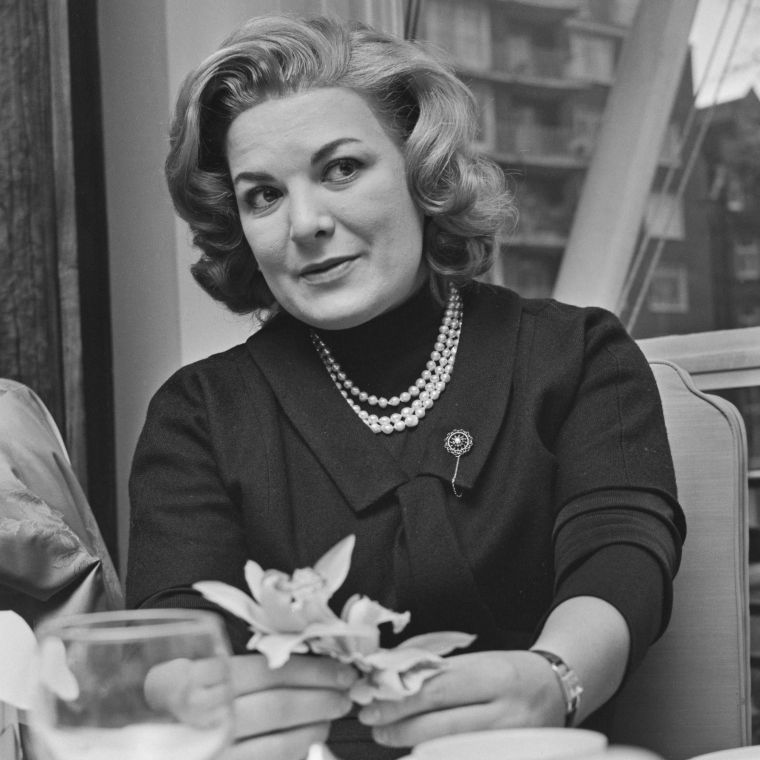
  • Remembering Hildegard Behrens

    behrens c

    (This article appeared on Oberon’s Grove in 2009, following Ms. Behrens’ death at the age of 72.)

    “It is so difficult for me to comprehend that Hildegard Behrens has died. She was only 72 and it seems not all that long ago that my friend Bryan and I visited her in her dressing room after what was to be her penultimate Met performance: as Marie in Berg’s WOZZECK.

    Hildegard Behrens was one of a half-dozen singers who, in the nearly half-century that I’ve been immersed in the world of opera, made an impression that transcended mere vocalism and acting. Her voice was utterly her own: a ravaged, astringent quality often beset her timbre – the price of having given so unsparingly of her instrument in some of opera’s most taxing roles. And yet she could produce phrases of stupendously haunting beauty, and she could suddenly pull a piano phrase out of mid-air. Her unique mixture of raw steely power, unmatched personal intensity and a deep vein of feminine vulnerability made her performances unforgettable even when the actual sound of the voice was less than ingratiating.

    So many memories are flooding back this morning while I am thinking about her: the Wesendonck Lieder she sang at Tanglewood during my ‘Wagner summer’…a rare chance to hear her miscast but oddly moving singing of the Verdi REQUIEM…her televised RING Cycle from the Met…her wildly extravagant ‘mad scene’ in Mozart’s IDOMENEO…her passionate Tosca and Santuzza, cast against the vocal norm…a solo recital at Carnegie Hall…the dress rehearsal of the Met revival of her ELEKTRA  where she made up (and how!) for an off-night at the premiere. Hildegard Behrens was also the holder of the Lotte Lehmann Ring, which was left to her by her great colleague Leonie Rysanek upon Rysanek’s untimely death in 1998.

    behrens 2

    It was in fact the Behrens Elektra, sung in concert at Tanglewood with the Boston Symphony Orchestra under Seiji Ozawa in August 1988 that has always seemed to me the very epitome of what an operatic portrayal can be. In a black gown and violently teased hair, the soprano (announced as being indisposed by allergies) transformed a stand-and-deliver setting into a full-scale assault on the emotions. I’ll never forget that performance and I was fortunate a week later to record it from a delayed broadcast.

    In the great scene in which Elektra recognizes her long-lost brother, Behrens transported me right out of this mortal world. Here it is, from her 1994 Met performance with Donald McIntyre.

    It’s going to be hard for me now to listen to Hildegard – her Berlioz Nuits d’Ete is my favorite recording of those beloved songs, unconventional as her voice sounds in that music – or to watch her on film as Brunnhilde or Elektra. For a while I will just let the memories play.”

    behrens tosca

    Above: Ms. Behrens as Tosca

    behrens 4

    Above: the soprano in concert with Daniel Barenboim

  • Singers: Jeannette Pilou

    (I have imported this story from Oberon’s Grove…it used to include lots of photos, but I just wanted to save what I’d written back in 2007. Here is a photo I took of her that she loved…she was so sweet as signed it for me.)

    pilou

    Around noon on October 7, 1967, I bought a big bunch of yellow chrysanthemums from a street vendor and rushed over to the stage door of the Metropolitan Opera House; the flowers were for one of my idols at the time, the Italian soprano Mirella Freni who was singing Juliette in Gounod’s ROMEO & JULIETTE that afternoon. I bounded up the steps to the Met’s stage door reception area and approached the desk. An indifferent woman was there, talking on the phone. When she finally hung up, she ignored me. “I want to leave these flowers for Miss Freni!” I said.  She looked up at me wearily and said, “Miss Freni is ill and is not singing this afternoon.”  Walking out, I held the door for a chorister who was coming in; “Want some flowers?” I said to her, handing her the mums. A few hours later I had fallen in love.

    Gay men fall in love with women all the time; of course, it isn’t ‘that kind’ of love. It’s usually an attraction to their beauty and their talent, tinged with a bit of regret that it couldn’t ever be the ‘other kind’ of love. That is exactly how I always felt about Jeannette Pilou. She made her Met debut that afternoon as Juliette and for the next few years she was a singer who intrigued me so often with the delicacy and charm of her singing, her unfailingly fresh dramatic interpretations of some of opera’s most beloved characters, and her modest sincerity and great kindness. The stages at Lincoln Center have been home to so many beauties, from Carol Neblett to Helene Alexopoulos, and Pilou was one of the most memorable of them all.

    Jeannette Pilou was born in Egypt and could trace her heritage to the Greeks, but for me she was always a French soprano. Her voice was lyrical with a metallic thread that gave it an easy projection. It was not in itself one of those beautiful instruments that immediately melt the listener; she never had a long breath line and her top register could get an edgy quality. Her appeal vocally was in the way she phrased and used a delicate pastel palette to make music you’d heard a hundred times seem new and alive. Aside from her incredible physical appeal, Pilou’s interpretations invariably brought those little gestures and expressions that you always remember. In the final act of TRAVIATA when the dying Violetta rises from her sickbed to be reunited with her beloved Alfredo, Pilou hastily looked at herself in the mirror before turning to present her ravaged face to her lover. I’ve never forgotten that moment of desperation which spoke so clearly of Violetta’s helpless regret over her fate.

    But I’ve gotten ahead of myself, because I must start with that debut Juliette which is where my love affair began. Pilou looked so fetching on her first entry at the Capulet ball, spiraling into her little introductory “Ecoutez, ecoutez!” with a voice that wafted clearly into the big house. Not long after, she won her first big applause at the Met singing Juliette’s waltz, “Je veux vivre” with easy scale-work, pointed diction and youthful vivacity; she even touched on the high-D in the cadenza which Freni had been omitting. Moments later Pilou encountered her handsome Romeo, Franco Corelli, and the chemistry was apparent from the start. Corelli was having quite a success as Romeo at the Met with his passionate vocalism, thrilling the house with a stunning diminuendo on the final B-flat of “Ah, leve-toi soleil!”. He was one of the few tenors at that time who looked good in tights, too. In their love duets, Corelli really seemed smitten with Jeannette and they sounded wonderful together. Corelli drew a thunderous ovation when he took a full-throttle top C upon Romeo’s banishment from Verona. The afternoon ended with a mammoth ovation; the curtain calls had been designed so that the title characters always bowed together and they came out several times until finally Jeannette made the beautiful gesture of withdrawing to let Franco have a solo call. The house exploded and Franco was so gracious when he brought Jeannette out again. In addition to the lovely impression her Juliette had made, Jeannette had endeared herself to the legion of Corelli fans in no uncertain terms. I met her after the performance and she was so lively and sweet, and even more beautiful up close than she had seemed to be onstage. Her speaking voice was so intimate and enchanting; I immediately added her to the list of singers whose performances would be a priority.

    Violetta in the Cecil Beaton production of TRAVIATA was my next Pilou role; she looked every bit as striking as Moffo in these costumes.  She was paired with the light-voiced tenor Luigi Alva  and they made a beautiful blend in the duets. Jeannette was so moving in the great Act II duet with Germont (Robert Merrill) where she struggled valiantly to maintain her composure as her fragile world crumbled around her. Phrase after phrase of wonderfully modulated vocalism wove a spell.  A few years later, Pilou stepped in to a broadcast of TRAVIATA replacing Montserrat Caballe; I was in the house enjoying Jeanette’s portrayal and her colleagues Carlo Bergonzi & Sherrill Milnes so much. A downward transposition in “Sempre libera” caused something of a scandal among the fans; I thought it was a rather minor transgression in view of what she was able to convey in the role.

    Micaela in CARMEN followed with Jeannette making a particularly lovely impression in the Act I duet with Nicolai Gedda. This was the infamous Jean-Louis Barrault production set inside the bullring. The cast, led by Grace Bumbry, almost managed to overcome the awkward staging; Jeannette’s big aria was lovingly phrased. Next came Zerlina in DON GIOVANNI in which she presented a very youthful, zesty portrayal of the peasant girl; singing opposite the Don of the young Puerto Rican heartthrob Justino Diaz, Jeannette reveled in the seductive expressiveness of “La ci darem la mano”.

    Jeannette & Franco Corelli created an atmosphere of extraordinary romance when they appeared together in BOHEME. This was one of Jeannette’s most moving portrayals,  using her mastery of parlando in the Act I narrative and spinning out some fragile piani in her ‘Addio senza rancor’. Franco was in prodigious voice, his singing so passionate and virile but also very tender; he was obviously smitten with his beautiful Mimi and changed the words in the love duet from “Dammi il braccio, mia piccina” to “Dammi il braccio, mia bambina.” In the moving trio where Rodolfo tells Marcello of Mimi’s hopeless ill-health, not knowing that Mimi is listening, Franco tore his heart out and the audience burst into a volley of bravos mid-act. Jeannette & Franco carried the romance of their characters into the curtain calls.

    At the dress rehearsal of NOZZE DI FIGARO in February 1972, Jeannette had one of her most attractive roles in Susanna. She gave a portrayal free of soubrette cuteness, utterly natural. Vocally she was in the captivating company of Cesare Siepi, the reigning Figaro of the day, the radiant Pilar Lorengar (Contessa) and the beloved and versatile Evelyn Lear (Cherubino). On the podium the great Karl Bohm served up perfect tempi and ideally supported his singers. The ensembles and gentle comic by-play were a joy. FIGARO soared. The photo shows Jeannette with one of New York’s best-known opera fans, Lois Kirschenbaum.

    It was amusing to walk Jeannette out from her dressing room after the rehearsal; when we came to the main reception area it was jammed with singers coming and going from coachings and I very much enjoyed observing the effect Jeannette had on all the men, including some very well-known tenors and baritones. If she was aware of the waves she was causing, it didn’t show; she greeted everyone with easy, modest charm and left them all panting in her wake.

    Later in the month, Jeannette took part in a memorable evening when FALSTAFF was revived. Sir Geraint Evans and Regina Resnik trod the boards with grand portrayals of Sir John and Dame Quickly. Renata Tebaldi was singing Alice Ford for the first time at the Met. The orchestra launched the scampering introduction to the second scene and when the curtain rose and the audience caught sight of the great Italian diva, the place erupted. The applause obliterated the music and when it died down the singers had lost their way; “Start over!” someone yelled and that is exactly what Christoph von Dohnanyi (debut) did. Jeannette was a cuddly Nannetta. In a magical moment she arrived at Herne’s Oak dressed as the Queen of the Fairies on a white Shetland pony. Her aria, “Sul fin d’un soffio” was spun out of moonlight. At the end of the romping ensemble which concludes the opera, Jeannette tackled a bright top-C. The curtain calls were so much fun and the audience truly reluctant to let the singers go. I had an aisle seat in the orchestra and sitting two rows ahead of me was Franco Corelli. I thought it was pretty nice of him to come out and support his long-time colleague Tebaldi. After the performance I spent a long time backstage with Jeannette who was in a particularly sociable mood. Everyone else had gone home, but she seemed in no hurry to leave. I said goodnight and came out to find Corelli pacing back-and-forth near the stage door with a limo waiting. Did they have a date? If so, she may have been standing him up.

    Jeannette and Nicolai Gedda were reunited in a wonderful performance of Gounod’s FAUST; the Met’s production was rather ugly (though later replaced by an even uglier one) but along with Cesare Siepi’s famed Mephistopheles, the singers carried the day.  The role really suited Jeannette to perfection: her clarity of enunciation of the French text added to the sweetness and dexterity of her singing made the long ‘Roi du Thule’ and Jewel Song sequence delightful. Later she and Gedda harmonized rapturously in the ‘Laissez-moi’ duet (the highlight of the score, in my opinion) and Jeannette sang the concluding lines of the Garden Scene (‘Il m’aime!’) with slowly mounting ecstasy. As the tides turned against Marguerite, Jeannette relied on the metallic thread in her voice to project over the orchestra in the Church Scene and in the ascending phrases of the final trio.

    It was a long time before I saw her onstage again; I spent some time in Houston and she was busy at other opera houses. In fact four years elapsed before I next saw her, again as Marguerite in FAUST, this time opposite the less-than-romantic looking but mellifluous Stuart Burrows in the title role. Jeannette’s interpretation had deepened although the production had deteriorated further with an especially awful ballet now being interpolated. She and Burrows rescued the evening.

    There was another very long hiatus before her next – and for me her most memorable – Met role as Melisande in Debussy’s masterpiece in 1983. The production was murky and grim (it has since been replaced by a far more atmospheric one) but musically it was so rewarding both in James Levine’s brooding traversal of the dense score and in the ideal interpretations of the three principal roles: Pilou as Melisande, Dale Duesing as Pelleas and the unforgettable Jose van Dam as Golaud.  As the gentle and mysterious Melisande, Jeannette ‘spoke’ her lines with a refined sense of lyricism and she was so moving in her simplicity and deeply feminine vulnerability. The overwhelming sadness of watching Melisande’s life fade away following the birth of her daughter left me feeling bereft.

    Two years later I saw Jeannette onstage for the last time, singing Nedda in PAGLIACCI. The tension in her upper register had taken its toll but she had some wonderful lyric passages, most notably in the duet with Silvio, and she mounted a fiery defense in the final moments before Nedda is brutally murdered.

    I had long since stopped visiting singers backstage but I did run into her in the Met lobby during her final season of Neddas and Micaelas and she was as lovely and gracious as ever. In the years since I first met Jeannette Pilou, the memories of her portrayals and of her easy kindness to a young and eager fan have stayed with me vividly.

    Here is Jeannette singing Juliette’s entrance and Waltz @ The Met.

  • David Rendall Has Passed Away

    Rendall-david don ottavio c

    Above: David Rendall as Don Ottavio in DON GIOVANNI

    It’s sad to learn of the death of British tenor David Rendall, who enjoyed a brilliant international career until an onstage injury forced his premature retirement.

    Read about Mr. Rendall’s rise from his studies at the Royal Academy of Music, London, to his great successes on the world’s foremost opera stages here. He later wrote of his sad demise here

    I had the good fortune to see David Rendall onstage at the Metropolitan Opera House where he sang more that 130 performances in NY City and with the Company on tour, beginning with his 1980 debut as Ernesto in DON PASQUALE. My first chance to hear him came when the Met brought their DON GIOVANNI to Boston. I later saw him – an expert Mozartean – in COSI FAN TUTTE and IDOMENEO, as well as Matteo in Strauss’s ARABELLA. His other Met roles included David in MESTERSINGER, Alfredo in LA TRAVIATA, and Tamino in ZAUBERFLOETE.

    In 1983, David participated in the Met’s 100th anniversary gala, joining such luminaries as Edda Moser and Sesto Bruscantini in an ensemble from Rossini’s ITALIANA IN ALGERI, which brought down the House. Watch it here.

    One of my favorite Rendall recordings is of the English-language production of Donizetti’s MARY STUART, which marked Dame Janet Baker’s farewell to the English National Opera; listen to their lovely duet here.

    And here is the tenor’s “Il mio tesoro” from Mozart’s DON GIOVANNI.

    David Rendall was married to the beloved mezzo-soprano Diana Montague; their son, Huw Montague Rendall, upholds the high musical standards set by his parents in his highly successful career in opera and lieder.

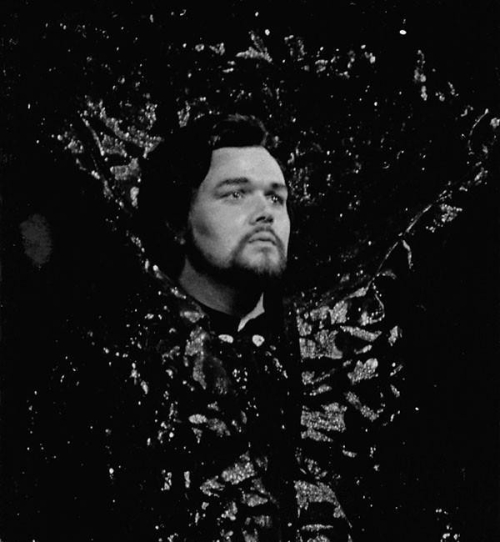
  • TRISTAN UND ISOLDE: Jones & Kollo

    Scanned Section 31-1

    ~ Author: Oberon

    Recalling the day I spotted this DVD of TRISTAN UND ISOLDE on the shelf at the Library of the Performing Arts. The production is from the Deutsche Oper Berlin, filmed on tour at Tokyo in 1993. It stars Dame Gwyneth Jones and Rene Kollo (photo above), two veteran Wagner specialists who were in their mid-50s at the time. During a few days of break from live opera and symphonic performances, I watched this TRISTAN one act at a time on three successive days of bitter cold weather. Despite flaws, I found it to be a moving experience.

    TRISTAN is an opera that took me a long time to embrace. Following my first live performance of it – the thrilling prima of a new production at The Met in 1973 with Birgit Nilsson and Jess Thomas in the name roles – I still found myself shying away from repeated viewings. It was the Dieter Dorn/Jürgen Rose Met production that finally brought me under the spell of this great opera; unfortunately, that gorgeous setting has since been discarded for a tedious updated production – set on a 20th-century battle cruiser – that makes little dramatic sense. Who knows when I’ll see TRISTAN in the theatre again?

    On the DVD, I found the Deutsche Oper’s simple and spare Götz Friedrich production serviceable – though lacking in poetry – in the first two acts. There’s a lot of standing about, but perhaps that’s the nature of the piece. One exciting moment comes at the close of the Liebesnacht, when the stage is flooded with light at King Marke’s return. And I was deeply moved that it is Kurwenal, not Isolde, who collapses in despair over the mortally wounded Tristan as the curtain falls on Act II.

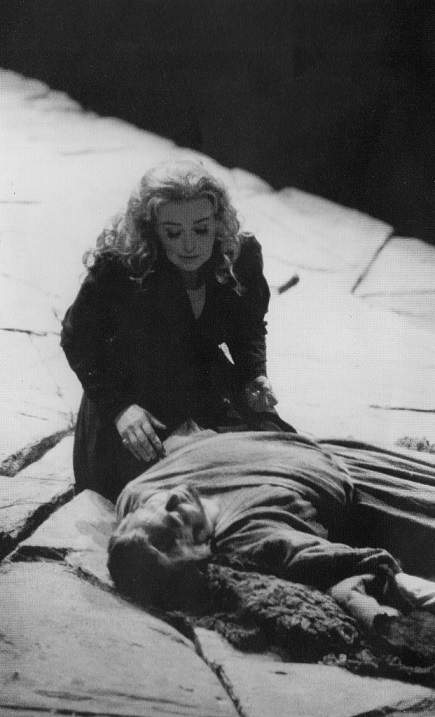
    In the third act, the production reaches its zenith. On an outcropping of rock at Castle Kareol, bathed in silvery light from a desolate sun, Tristan lies near death. During the long scene between Tristan and his faithful retainer Kurwenal, the relationship between the two men has never seemed so poignant (this is thanks in part to Gerd Feldhoff’s splendid acting as Kurwenal). Isolde arrives, her auburn hair now streaming loose, and seeks to revive her lover. The confusion of the arrival of the second ship is well-handled: Kurwenal slays Melot, but then he too meets his death. King Marke’s lamenting words are unheeded by Isolde, who has left earthly matters behind.

    Maestro Jiří Kout shapes the yearning prelude thoughtfully; his conducting throughout the long opera manages to be both passionate and respectful of the singers. At curtain-rise, Clemens Bieber’s singing of the Sailor’s plaintive song is very effective.      

    Dame Gwyneth Jones, possessor of one of the biggest voices ever unleashed in an opera house, shows off that power to fine effect when she chooses; but much of the music is quietly and expressively sung, displaying the soprano’s incredible control. Her highest notes are steady and strong. Annoyingly and inexplicably, the filming continually shows us Tristan rather than Isolde during her Act I Narrative and Curse. While Dame Gwyneth looks rather mature – the costuming in Acts I and II is a bit dowdy – she is entirely credible. Her Liebestod is not vocally perfect, but it moved me deeply. A year after this performance was filmed, I saw the soprano as Elektra at The Met where her singing had staggering force and brilliance.

    Rene Kollo’s experienced Tristan is cannily sung; his tone can display a steady beat, but he is nonetheless vocally persuasive throughout. His third act is truly impactful; passing moments of vocal strain can be overlooked in view of the power and commitment of Kollo’s singing and acting. 

    Hanna Schwarz, Chereau’s Fricka and a splendid Met Klytemnestra in 1999 and 2002, is a bewitching Brangaene; her voice is lyrical yet well-pointed. Ms. Schwarz, slender and graceful, appears to have materialized from out of the Mists of Avalon. Magnificent singing, awash with heartbreak, sets Robert Lloyd among the finest of King Markes.

    5a9227538e4ebb2db0d340baa39aefb5

    I’ve seen some mighty impressive Kurwenals in my day, but I think Gerd Feldhoff (above) takes the prize – not only for his the clumsy sincerity of his declarations of love for and loyalty to Tristan, but also for his truly beautiful and moving vocalism. His performance makes the third act unforgettable.

    Maestro Kout gives us an expressive rendering of the “Wesendonck” prelude to Act III. Also making a strong mark in the final act are the superb English horn player, tenor Uwe Peper’s crippled and touchingly voiced Shepherd, and Ivan Sardi’s Steersman.

    Peter Edelmann, whose father Otto was an iconic Baron Ochs, beams with smug self-satisfaction as he betrays Tristan: a small but telling bit of characterization.

    I’ll be returning to this DVD in future, for so many reasons.

    ~ Oberon 

  • PAGLIACCI – Metropolitan Opera Record Club ~ 1958

    guarrera

    Above: Frank Guarrera

    During the pandemic, all sorts of operatic treasures had popped up on YouTube. I think that the collectors who have their own channels are finding time to post more, digging deep into their archives. It’s such a boon for music lovers, who – up til then – had been mostly deprived of live in-venue performances..

    Here we have Leoncavallo’s PAGLIACCI from a recording made in 1958 for the Metropolitan Opera Record Club. All of the singers in the cast were dear to me in my earliest days of opera fandom.

    Listen here.

  • CMS: Beethoven Quartet Cycle ~ Finale

    Calidore_Beethoven

    Above: the Calidore String Quartet, photo by Frank Impelluso

    ~ Author: Ben Weaver

    Sunday May 18th, 2025 – Chamber Society of Lincoln Center reached the end of its 2024-25 Beethoven String Quartets cycle, performed by the the outstanding Calidore String Quartet. For the sixth and final concert the quartet – violinists Jeffrey Meyers and Ryan Meehan, violist Jeremy Berry, and cellist Estelle Choi – performed Beethoven’s quartets Nos. 14 and 16.

    String Quartet No. 14 in C-sharp minor, Op. 131, composed in 1825-1836, and has been studied and individually praised by the likes of Richard Wagner, Robert Schumann, and Franz Schubert – who had it played for him privately a week before his death. Composed in seven movements played without a break, it opens with a somber melody on the first violin. The rest of the musicians enter one by one, the music remaining austere and calm, perhaps reflecting Beethoven’s deep faith as it resembles parts of his earlier Missa Solemnis. Wagner once wrote that this was “the saddest thing ever said in notes.” The Calidores played this beautifully, with extreme care and dedication. The music shifts to a playful dance and then back to darkness, and then back again and again. The playful Scherzo (marked Presto), with its charming melody, zooms around like a playful puppy, lovingly played by the Calidores. There’s a memorable moment towards its conclusion where all four instruments play pianissimo in their highest registers, then the volume is quickly raised, which felt like being suspended in zero gravity and then quickly falling down. The Finale is a violent march with occasional soaring melodies to break up the clouds.

    The Quartet No. 16 in F major, Op. 135 ended up being Beethoven’s almost-last composition for the string quartet. (The only thing remaining was the new final movement for Quartet No. 13, which ended up being the very last piece Beethoven ever composed.) It opens once again with a somber melody, but unlike the darkness of the earlier quartets, this one is simply mournful and lovely. The Calidores held the audience in thrall with the beauty of their playing. The second movement, Vivace, is wonderfully chaotic, as if ready to unravel at any point. The following Lento assai, cantabile e tranquillo is Beethoven at his most lyrical, full of stops and starts, like breathing of a dying man. And the Finale: Grave, ma non trope tratto, begins ominously and violently, but ends on a lighter, even triumphant, note.

    The terrific musicians of the Calidore Quartet undertook a monumental challenge, performing all sixteen of Beethoven’s String Quartets in a single season. The works themselves are the Mount Everest of the string quartet repertoire and the challenges are enormous. Beethoven wrote his string quartets in three batches of his life and career: early, middle, and late. They show a profound progress of an artist who became the leading figure of Romanticism, sturm und drang; but also a musician of frequently surprising humor. Mssrs. Meyers, Meehan, Berry, and Ms. Choi combine all the elements needed to bring these million faces of Beethoven to life.

    ~ Ben Weaver

  • Jadwiga Rappé Has Passed Away

    Rappe

    One of my favorite contraltos, the Polish concert and opera singer Jadwiga Rappé (above), has passed away at the age of 73. Ms. Rappé performed at the most prestigious venues in Europe, Asia, and North America, and she leaves behind more than fifty recordings. She worked with such illustrious conductors as Chailly, Sir Colin Davies, Harnoncourt, Nagano, Janowski, and Antoni Wit.

    I first became intrigued by Ms. Rappé’s voice after hearing a recording of her singing in Krzysztof Penderecki’s Seven Gates of Jerusalem – a work in which she had sung the world premiere performance at Jerusalem in 1997 under the baton of Loren Maazel. In 2001, she sang the premiere performance of Wojciech Kilar’s Missa pro pace at Warsaw, conducted by Kazimierz Kord. Works were composed specially for her contralto voice by Juliusz Łuciuk, Piotr Moss, and Krzysztof Baculewski. In 2008, in Prague, she took part in the world premiere of Ladislav Kubik’s Gong ~ Sinfonietta for solo mezzo-soprano, Mixed choir and orchestra, and in July 2011 she premiered Paweł Mykietyn’s Symphony no.3 at the National Philharmonic in Warsaw.

    Jadwiga Rappé’s operatic repertoire included works by Gluck, Handel, Ponchielli, Verdi, Wagner, and Richard Strauss. Erda in Wagner’s RING Cycle was her most frequent stage role: she appeared in nine different premiere productions of the cycle at opera houses around the world, and she recorded the role for EMI under the baton of Bernard Haitink. She scored  successes as Gaea in Strauss’s Daphne, and as Clytemnestra.

    Her discography includes recordings on several labels: BMG Music, Teldec, Erato, Denon, Orfeo, Philips, Decca, Chandos, CD-Accords, and Naxos.

    After retiring from performing, Jadwiga Rappé taught at the Fryderyk Chopin University of Music, and later headed the board of the Witold Lutosławski Society.

    Ms. Rappé sings the aria “Weh ihnen, dass sie von mir weichen” from Mendelssohn’s ELIAS here.

    And here is “Zasmuconej” by Mieczysław Karłowicz.

    The contralto sings Cagion son io del mio dolore” from Handel’s SERSE here.

  • Remembering Sixten Ehrling

    Ehrling

    When I had moved to New York City in 1998 and was working at Tower Records, Maestro Sixten Ehrling came in frequently. He was rather cranky the first time I met him: he did not guess that I knew who he was, and he barked at me that no one on the store staff had offered to help him. I let him cool down for a couple of seconds, then I made a small bow, and said: “You conducted my first RING operas, Maestro!”

    From then on, and for years to come, Maestro Ehrling was a customer I always looked forward to seeing. He had a million stories, including tales of how antagonistic the Met musicians were towards him during those RING performances. He taught me how to pronounce the names of the RING characters: “…say ZEEEG-lin-da, not See-GLIN-da!”)

    Then there was his tale of a recording session he had scheduled with Victoria de los Angeles on the day after her marriage. A couple of times, I forfeited my lunch hour just to stay and chat the Maestro up.

    Maestro Ehrling was married to a former ballerina, a very kind woman with Old World manners. As time went by, the Maestro became increasingly feeble and unsteady. He sometimes came in unshaven, wearing rumpled clothing. Then, for a while, Madame would come in alone to get CDs for him, saying he was under the weather but slowly on the mend. For a few weeks, she too stopped coming in. I sensed that Mr. Ehrling had taken a turn for the worse.

    The news came out that Maestro Ehrling had passed away. I wondered if Madame would remain in New York City (I believe they had a daughter living here). Then one day, she came in. She walked up to me with a gentle smile, saying, “I wanted to thank you for always being so kind to Sixten!”  I almost burst into tears. She became teary also. There was nothing more to be said. She held out her hand, which I kissed, and then she left.

  • @ My MET Score Desk for the New AIDA/3rd of 3

    Garace jagde ken howard

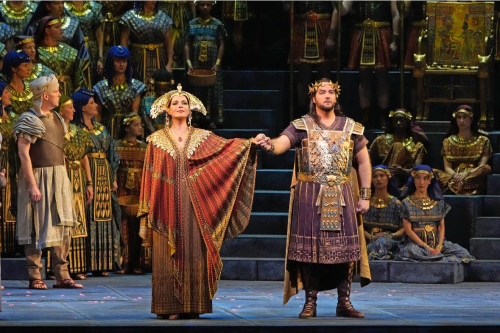
    Above: Elīna Garanča and Brian Jagde as Amneris and Radames; a Ken Howard/MET Opera photo

    ~ Author: Oberon

    Sunday April 27th, 2025 matinee – Two of the opera world’s brightest stars joined the cast today for the first of four Metropolitan Opera performances of Verdi’s AIDA, concluding this season’s run of the new production: Elīna Garanča, who had recently withdrawn from some European performances but who thankfully made it here to sing for us, was Amneris this afternoon, and the great Mongolian baritone Amartuvshin Enkhbat, whose Met debut as Germont in 2022 was truly impressive, as was his Amonasro this afternoon. Both of these singers came to worldwide recognition after participating in the Cardiff Singer of the World competition, the mezzo in 2001 and the baritone in 2015.  

    The only aspect of today’s performance that I wasn’t looking forward to was the presence on the podium of Yannick Nézet-Séguin, whose fast-and-loud, brass-happy conducting has spoiled several Met performances for me. 

    After a the opera’s expressive prelude, superbly played by the MET Orchestra, the huge voice of Morris Robinson drew us immediately into the story. As Radames, the stentorian tenor sound of Brian Jagde responded to the hint that Robinson/Ramfis had just dropped with an urgent recitative and then commenced the “Celeste Aida” which was taken a bit faster than usual; the tenor’s massive top notes immediately impressed the crowd, winning Jagde enthusiastic applause: with this man in command, the Egyptians were sure to win the coming battle.

    Ms. Garanča as Amneris enters, immediately making a lovely vocal impression as a lyrical princess; in her elegant phrasing, her every note spoke of her deep affection for Radames. A dulcet clarinet solo introduces Angel Blue’s Aida. The orchestra was sometimes too loud during the ensuing trio.

    Krzysztof Bączyk immediately made an excellent vocal impression as the King, as did the clear-toned Messenger of Yongzhao Yu. “Su del Nilo” felt a bit rushed, but Mr. Bączyk and Mr. Robinson traded bass sonorities to fine effect. Ms. Garanča chimes in…but from the pit, a N-S noise fest is developing. Angel Blue soars above the ensemble, then immediately commences “Ritorna vincitor!” in which Aida’s dilemma is introduced: she is torn between her love for Radames and love of her homeland. Some nice, chesty resonances underscore her anguish, though her topmost range seemed a bit tight. Her lyrical, prayerful ending of the aria was truly beautiful.

    As the action moves to the Temple of Vulcan, Tessa McQueen’s offstage Priestess is too far upstage to make an immediate impression but soon she is moved to a more congenial spot from which to display her attractive voice. There are lovely harmonies from the priests, and then ballet commences, only to have the music’s beautiful sense of calm (played with nice rubato touches) spoilt by someone’s coughing fit. Morris Robinson’s fabulous introduction to the consecration ritual, and Mr. Jagde’s heroic response, soon fall victim to over-playing from the N-S pit, nearly swamping the voices. 

    Bringing the house lights up a bit prior to the ensuing boudoir scene really shatters the mood; there’s a late seating, with latecomers stumbling about in the near darkness whilst people who’d arrived on time think it’s a bathroom break. Cellphones come on throughout the hall. Chatter spoils the ensuing opening harp solo as the women’s chorus seeks to restore the mood after this intrusion of reality.

    Ms. Garanča’s thrice-voiced, dreamy summoning of her beloved is so seductive. After the ballet interlude, the Egyptian princess baits her Ethiopian rival. Sparks fly as their rivalry is revealed; Amneris has the upper hand, and Ms. Garanča’s “Figlia de’ Faraino!” is blisteringly set forth. Some of Ms. Blue’s higher notes are a bit harsh, but her touching prayer at the end – Numi pieta!” – sounded gorgeous.

    The Triumphal Scene is grandly done, orchestra and chorus blazing away – interspersed with more lyrical passages – and then the ballet boys bring down the House with their bold, stomping dance. Mr. Bączyk sounds splendid as the King greets the conquering hero: Radames. The prisoners of war are brought in, among them the incognito King of Ethiopia – Aida’s father, Amonsaro – in the person of Amartuvshin Enkhbat. N-S lets loose the brass, but the baritone is unfazed, singing handsomely. Angel Blue produces a shining top-C. Now Mssrs. Robinson and Bączyk exchange bass sonorities as they debate the fate of the prisoners…of course, the priest wins. Bączyk now gives his daughter’s hand in marriage to Radames, with Ms. Garanča revelling in her triumph. The concluding ensemble was a bit messy. 

    On the banks of the Nile, Morris Robinson again impresses as he leads Amneris to a all-night prayer vigil. Angel Blue phrases the “O patria mia” poetically, her lyricism to the fore. She doesn’t float the top-C, but she makes much of the ensuing lament with a neat crescendo and then a hushed “…mai più…!” 

    Amartuvshin Enkhbat is authoritative and truly impressive as he tells his daughter what she must now do in the name of her country. His wonderful phrasing as he manipulates her leads to some very fine cantabile passages from Ms. Blue. The orchestra again overplays, but the baritone rises to the challenge with an epic “Non sei mia figlia!” Ms. Blue’s anguish is palpably voiced, and her father responds with the inspiring “Pensa che un popolo, vinto, straziato!”; here the orchestra gave truly marvelous support, making it a highlight of the performance.

    Radames now appears, and Ms. Blue treats us to a very seductive “La tra foreste vergini” as she tempts him to run away with her. The soprano’s turnings of phrase here is most inviting. But Mr. Jagde is unsure…his dolce B-flat as he ponders his choices was magical indeed. There was an intrusion by someone in distress in the audience, which killed much of the atmosphere as the duet moved to its end; Ms. Blue’s closing B-flat was short and unsteady; then the stretta was on the wild side, the soprano’s top not really assured. Amonasro’s reappearance sealed the baritone’s success, and then Mr. Jagde nailed his “Io resto a te!” with amazing power and thrust.

    Elīna Garanča now took command of the Met stage with a Judgement Scene in which every word and note counted. Her “Vorrei salvarlo…” was full of hesitant hope, and then the chilling orchestral passage, ending on a splendid clarinet low note, brought Radames before her. Simply gorgeous clarinet playing underscored Ms. Garanča’s beautifully desperate plea, to which Mr. Jagde responded with a great outpouring of tone. Garanča’s brilliant “Morire!!?” was phrased immediately into her ensuing entreating passages. Jagde silenced her with a massive B-flat. Tension reaches a boiling point, Garanča’s voice rising to two scorching B-flats as her desperation overwhelmed her.

    Radames is led away, and Ms. Garanča’s lament is hauntingly sung, her anguish over her jealously having caused Radames’s downfall marked by a pianissimo intoning of “…io stessa lo gettai!” fading to a whisper. Morris Robinson’s chilling calls of “Radames!” must still be echoing somewhere in the univese. Soft drum rolls ominously underscore the ensuing trial, with Robinson/Ramfis becoming increasingly impatient.

    Harsh accents from the orchestra underscore the death penalty prouncement, the deep brass voices terrifying. Ms. Garanča’s pleas are in vain; in her fury she curses the priests, soaring to a climatic top A. A prolonged ovation ensued, the crowd cheering the beloved mezzo in a well-deserved salute.

    The final scene opened with Mr. Jagde’s doom-ladened phrases of farewell to Aida. When she steps from the darkness of the tomb, the great farewell duet commences. Here one wished for more piano singing from Ms. Blue but overall the duetting voices were wonderfully expressive and moving. Then Ms. Garanča’s solemn invocation of peace lingered on the air as darkness fell.

    The ovation when Elīna Garanča took her first solo bow was genuinely tumultuous; a bouquet flew onto the stage, and the comely Elīna literally prostrated herself in response to the waves of love pouring across the footlights. 

    ~ Oberon